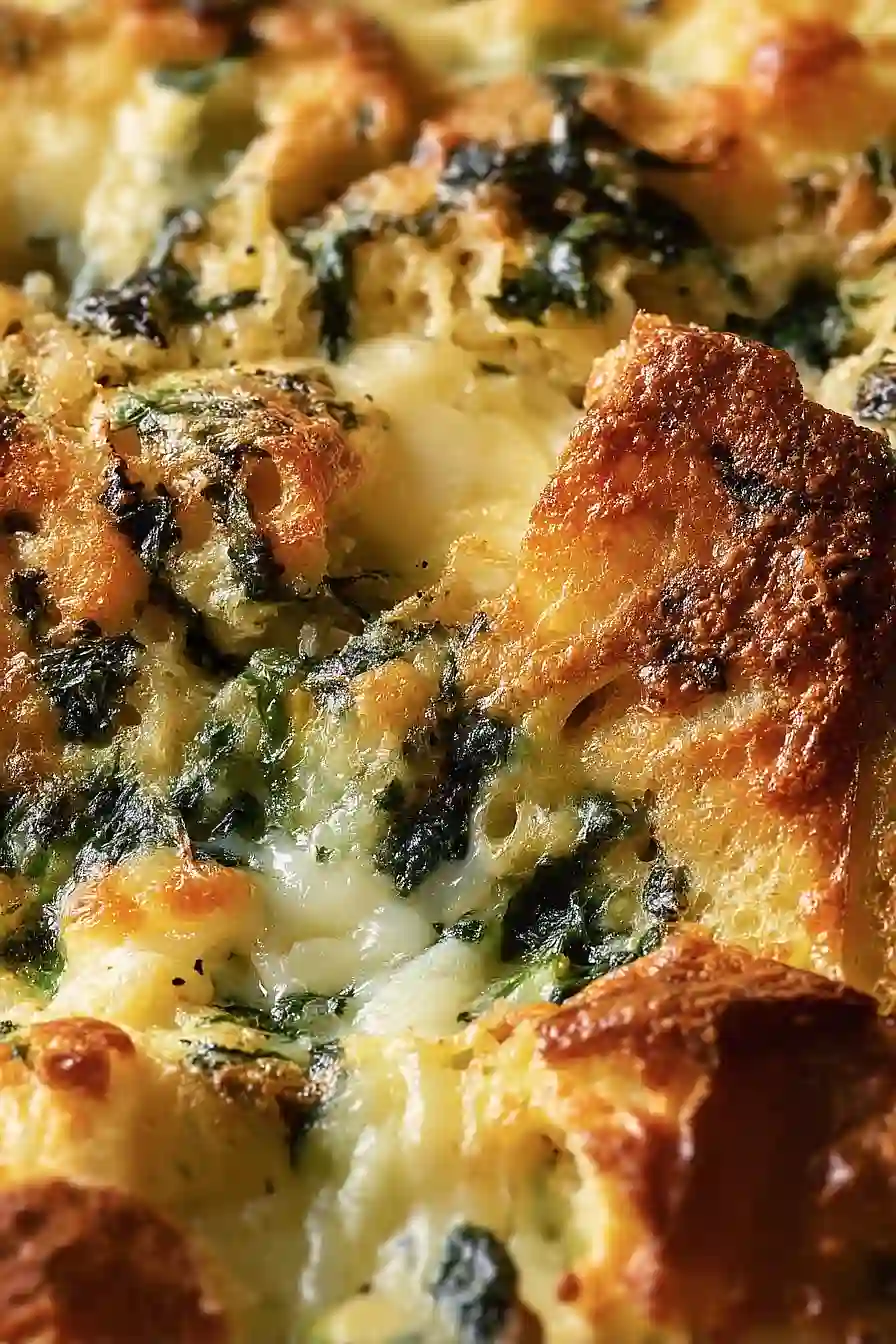
If you ask me, stratas are one of the smartest breakfast dishes you can make.
This savory bread pudding combines custardy eggs with hearty Italian bread, earthy spinach, and two types of cheese. The Gruyère adds a nutty richness while the Parmigiano-Reggiano brings a sharp, salty punch.
You assemble everything the night before, let it soak in the fridge, then pop it in the oven the next morning. Sautéed onions and garlic add depth, and a hint of nutmeg and Dijon mustard round out the flavors.
It’s a crowd-pleasing dish that works for brunch, breakfast-for-dinner, or any time you want something warm and filling.

Why You’ll Love This Spinach and Cheese Strata
- Make-ahead friendly – You can assemble this strata the night before and just pop it in the oven the next morning, making it perfect for stress-free brunches or holiday breakfasts.
- Feeds a crowd – This recipe serves plenty of people, so it’s great for family gatherings or when you have guests staying over.
- Packed with flavor – The combination of Gruyère and Parmigiano-Reggiano with garlic and Dijon mustard creates a savory, satisfying dish that tastes way fancier than the effort required.
- Uses simple ingredients – Most of these ingredients are pantry staples or easy to find at any grocery store, and frozen spinach means no washing or chopping greens.
- One-dish meal – Everything bakes together in one pan, giving you a complete breakfast with protein, vegetables, and carbs without juggling multiple pots and pans.
What Kind of Bread Should I Use?
Italian sandwich bread is your best bet for this strata because it has a sturdy texture that holds up well when soaked in the egg mixture without turning to mush. You can usually find it in the bakery section of your grocery store, and it’s often sold as a long loaf that’s perfect for slicing into cubes. If you can’t find Italian sandwich bread, a French baguette or even a good sourdough loaf will work just fine. Day-old bread is actually better than fresh for this recipe since it’s a bit drier and will soak up all that eggy goodness without falling apart.

Options for Substitutions
This strata is pretty forgiving when it comes to swaps, so feel free to work with what you have:
- Frozen spinach: Fresh spinach works great too – you’ll need about 1½ pounds. Sauté it until wilted, then squeeze out the excess water just like you would with frozen. You could also try kale or Swiss chard for a different flavor.
- Italian sandwich bread: French bread, sourdough, or even a sturdy white bread will do the job. Just avoid soft sandwich bread as it gets too mushy. Day-old or slightly stale bread actually works better since it soaks up the egg mixture without falling apart.
- Gruyère: Swiss cheese is the easiest swap since it’s similar in flavor. You could also use fontina, Emmental, or even sharp white cheddar if you want something more budget-friendly.
- Parmigiano-Reggiano: Pecorino Romano or any hard Italian grating cheese will work here. In a pinch, pre-grated Parmesan from the store is fine too.
- Half-and-half: You can use whole milk for a lighter version, or mix equal parts milk and heavy cream if you don’t have half-and-half on hand. The strata will still turn out creamy and delicious.
- Nutmeg: If you’re out of nutmeg, just leave it out – it adds a nice touch but isn’t essential to the recipe.
Watch Out for These Mistakes While Baking
The biggest mistake when making strata is not squeezing out enough water from the thawed spinach, which can make your casserole watery and prevent it from setting properly – use a clean kitchen towel or several layers of paper towels and really press down hard until no more liquid comes out.
Another common error is skipping the overnight refrigeration step, as the bread needs at least 8 hours (or a minimum of 4 hours) to fully absorb the egg mixture, otherwise you’ll end up with dry bread cubes floating in liquid custard.
Don’t overbake your strata either – it’s done when the center is just set and slightly jiggly, not when it’s completely firm, since it will continue cooking as it cools and can become rubbery if left in the oven too long.
Finally, let the strata rest for about 10 minutes after baking before cutting into it, which allows the custard to firm up and makes serving much cleaner.
What to Serve With Spinach and Cheese Strata?
Since strata is such a hearty, filling dish, I like to keep the sides light and fresh to balance everything out. A simple arugula or mixed greens salad with a lemony vinaigrette cuts through the richness of all that cheese and cream perfectly. Fresh fruit is another great option – try a bowl of mixed berries or sliced melon on the side, especially if you’re serving this for brunch. If you want something a bit more substantial, crispy bacon or breakfast sausage links make a nice addition, and don’t forget some fresh orange juice or mimosas if you’re feeding a crowd!
Storage Instructions
Store: Leftover strata keeps really well in the fridge for up to 4 days. Just cover it tightly with plastic wrap or aluminum foil, or transfer individual portions to airtight containers. It actually tastes great cold straight from the fridge, or you can warm it up for a quick breakfast or lunch.
Make Ahead: This is one of those recipes that’s actually better when you make it ahead! Assemble the whole thing the night before, cover it with plastic wrap, and let it sit in the fridge overnight. The bread soaks up all that eggy goodness, and you just pop it in the oven the next morning.
Freeze: You can freeze baked strata for up to 2 months. Let it cool completely, then wrap individual portions in plastic wrap and foil, or freeze the whole thing in a freezer-safe container. Thaw it overnight in the fridge before reheating.
Reheat: Warm up individual slices in the microwave for about 1-2 minutes, or reheat larger portions covered with foil in a 350°F oven for 15-20 minutes until heated through. The texture stays nice and custardy either way.
| Preparation Time | 20-30 minutes |
| Cooking Time | 70-80 minutes |
| Total Time | 90-110 minutes |
| Level of Difficulty | Medium |
| Servings | 8 servings |
Estimated Nutrition
Estimated nutrition for the whole recipe (without optional ingredients):
- Calories: 3100-3400
- Protein: 135-150 g
- Fat: 170-190 g
- Carbohydrates: 250-280 g
Ingredients
For the filling:
- 2 oz Parmigiano-Reggiano cheese (finely grated)
- 1 large yellow onion (diced into 1/4-inch pieces)
- 1 lb frozen spinach (thawed and squeezed dry)
- 3 tbsp unsalted butter (I use Kerrygold)
- 6 oz Gruyère cheese (freshly grated)
- 12 oz Italian bread (cut into 3/4-inch cubes)
- 3 garlic cloves (freshly minced)
For the custard:
- 1.75 tsp salt
- 9 large eggs
- 0.25 tsp ground nutmeg (for warmth and depth)
- 0.75 tsp black pepper (freshly ground preferred)
- 2 tbsp Dijon mustard (adds subtle tang)
- 2.75 cups half-and-half (room temperature)
Step 1: Prepare the Mise en Place and Toast the Bread
- 12 oz Italian bread
- 6 oz Gruyère cheese
- 2 oz Parmigiano-Reggiano cheese
- 1 large yellow onion
- 3 garlic cloves
- 1 lb frozen spinach
Cut the Italian bread into 3/4-inch cubes and spread them on a baking sheet.
Toast them in a 325°F oven for about 10-12 minutes, stirring halfway through, until they’re lightly golden and slightly dried out but still tender inside.
This prevents them from becoming soggy when soaked in the custard.
While the bread toasts, grate both the Parmigiano-Reggiano and Gruyère cheeses finely, dice the onion into 1/4-inch pieces, mince the garlic, and squeeze the thawed spinach very thoroughly in a clean kitchen towel to remove as much moisture as possible—this is crucial for preventing a watery strata.
Step 2: Sauté the Aromatics and Spinach
- 3 tbsp unsalted butter
- 1 large yellow onion
- 3 garlic cloves
- 1 lb frozen spinach
Melt the butter in a large skillet over medium heat.
Add the diced onion and cook for 4-5 minutes, stirring occasionally, until softened and just beginning to turn golden at the edges.
Add the minced garlic and cook for about 30 seconds until fragrant, then add the squeezed spinach and stir constantly for about 2 minutes to combine.
I like to add a small pinch of salt here to help draw out any remaining moisture from the spinach.
Let the mixture cool slightly while you butter your baking dish.
Step 3: Assemble the Strata Layers
- 3 tbsp unsalted butter
- toasted bread cubes from Step 1
- sautéed spinach mixture from Step 2
- 6 oz Gruyère cheese
- 2 oz Parmigiano-Reggiano cheese
Butter a 9×13-inch baking dish generously.
Create three even layers by distributing one-third of the toasted bread cubes on the bottom, followed by one-third of the sautéed spinach mixture from Step 2, then one-third of the mixed cheeses.
Repeat this layering twice more, finishing with a cheese layer on top.
This triple-layering technique ensures even distribution of flavors and textures throughout the strata.
Step 4: Prepare and Pour the Custard
- 9 large eggs
- 2.75 cups half-and-half
- 2 tbsp Dijon mustard
- 1.75 tsp salt
- 0.75 tsp black pepper
- 0.25 tsp ground nutmeg
In a large bowl, whisk together the eggs, room-temperature half-and-half, Dijon mustard, salt, black pepper, and ground nutmeg until smooth and well combined.
The room-temperature half-and-half is important—if it’s too cold, it can cause the eggs to seize up slightly.
Pour this custard mixture evenly over the layered bread and cheese, making sure it soaks into all the crevices.
I find that tilting the baking dish slightly as you pour helps the custard reach the corners.
Step 5: Chill the Strata
Cover the baking dish with plastic wrap and refrigerate for at least 1 hour, though overnight is even better.
This resting period allows the bread to fully absorb the custard and gives the flavors time to meld together, resulting in a much more cohesive and flavorful dish.
Step 6: Bake and Rest
Remove the strata from the refrigerator and let it sit at room temperature for about 15 minutes.
Preheat your oven to 325°F.
Bake uncovered for 70-80 minutes, until the top is golden brown and a knife inserted into the center comes out clean or with just a few moist crumbs (the residual heat will continue to cook it slightly).
Remove from the oven and let it rest for 10-15 minutes before serving—this helps it set and makes it easier to slice and serve.

Delicious Spinach and Cheese Strata
Ingredients
For the filling:
- 2 oz Parmigiano-Reggiano cheese (finely grated)
- 1 large yellow onion (diced into 1/4-inch pieces)
- 1 lb frozen spinach (thawed and squeezed dry)
- 3 tbsp unsalted butter (I use Kerrygold)
- 6 oz Gruyère cheese (freshly grated)
- 12 oz Italian bread (cut into 3/4-inch cubes)
- 3 garlic cloves (freshly minced)
For the custard:
- 1.75 tsp salt
- 9 large eggs
- 0.25 tsp ground nutmeg (for warmth and depth)
- 0.75 tsp black pepper (freshly ground preferred)
- 2 tbsp Dijon mustard (adds subtle tang)
- 2.75 cups half-and-half (room temperature)
Instructions
- Cut the Italian bread into 3/4-inch cubes and spread them on a baking sheet. Toast them in a 325°F oven for about 10-12 minutes, stirring halfway through, until they're lightly golden and slightly dried out but still tender inside. This prevents them from becoming soggy when soaked in the custard. While the bread toasts, grate both the Parmigiano-Reggiano and Gruyère cheeses finely, dice the onion into 1/4-inch pieces, mince the garlic, and squeeze the thawed spinach very thoroughly in a clean kitchen towel to remove as much moisture as possible—this is crucial for preventing a watery strata.
- Melt the butter in a large skillet over medium heat. Add the diced onion and cook for 4-5 minutes, stirring occasionally, until softened and just beginning to turn golden at the edges. Add the minced garlic and cook for about 30 seconds until fragrant, then add the squeezed spinach and stir constantly for about 2 minutes to combine. I like to add a small pinch of salt here to help draw out any remaining moisture from the spinach. Let the mixture cool slightly while you butter your baking dish.
- Butter a 9x13-inch baking dish generously. Create three even layers by distributing one-third of the toasted bread cubes on the bottom, followed by one-third of the sautéed spinach mixture from Step 2, then one-third of the mixed cheeses. Repeat this layering twice more, finishing with a cheese layer on top. This triple-layering technique ensures even distribution of flavors and textures throughout the strata.
- In a large bowl, whisk together the eggs, room-temperature half-and-half, Dijon mustard, salt, black pepper, and ground nutmeg until smooth and well combined. The room-temperature half-and-half is important—if it's too cold, it can cause the eggs to seize up slightly. Pour this custard mixture evenly over the layered bread and cheese, making sure it soaks into all the crevices. I find that tilting the baking dish slightly as you pour helps the custard reach the corners.
- Cover the baking dish with plastic wrap and refrigerate for at least 1 hour, though overnight is even better. This resting period allows the bread to fully absorb the custard and gives the flavors time to meld together, resulting in a much more cohesive and flavorful dish.
- Remove the strata from the refrigerator and let it sit at room temperature for about 15 minutes. Preheat your oven to 325°F. Bake uncovered for 70-80 minutes, until the top is golden brown and a knife inserted into the center comes out clean or with just a few moist crumbs (the residual heat will continue to cook it slightly). Remove from the oven and let it rest for 10-15 minutes before serving—this helps it set and makes it easier to slice and serve.