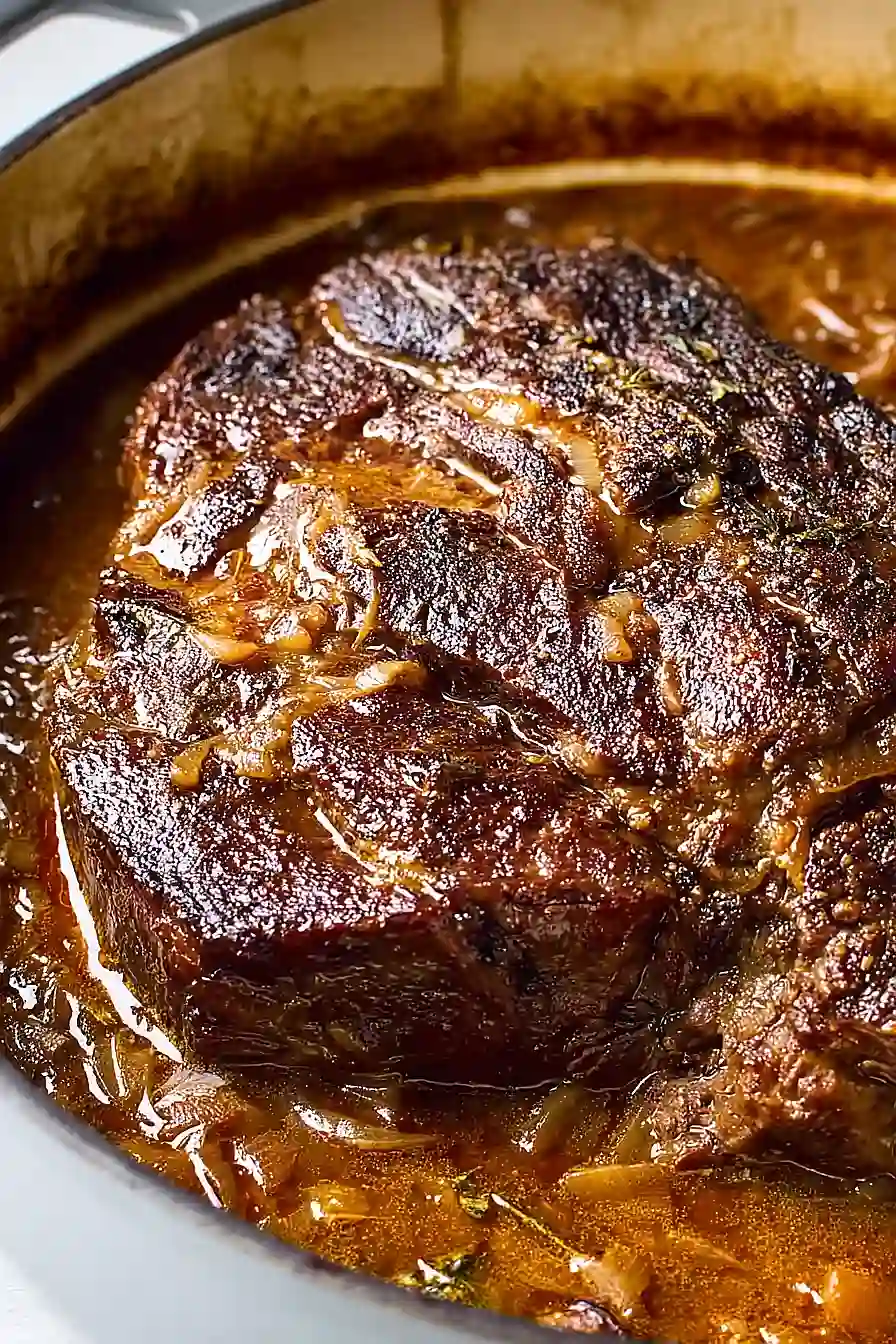
I didn’t even know what an electric roaster was until my neighbor showed up at a potluck with one under her arm, serving the most tender corned beef I’d ever tasted. She’d cooked the whole meal in that thing—meat, potatoes, cabbage, everything. I’d always done my corned beef on the stovetop, babysitting it for hours and heating up my entire kitchen in the process.
Turns out, an electric roaster does all the work for you. You toss everything in, set the temperature, and walk away. No pot-watching, no steam covering your windows, and no juggling multiple pots to fit all your vegetables. Plus, it frees up your stove for other things—or better yet, for nothing at all.
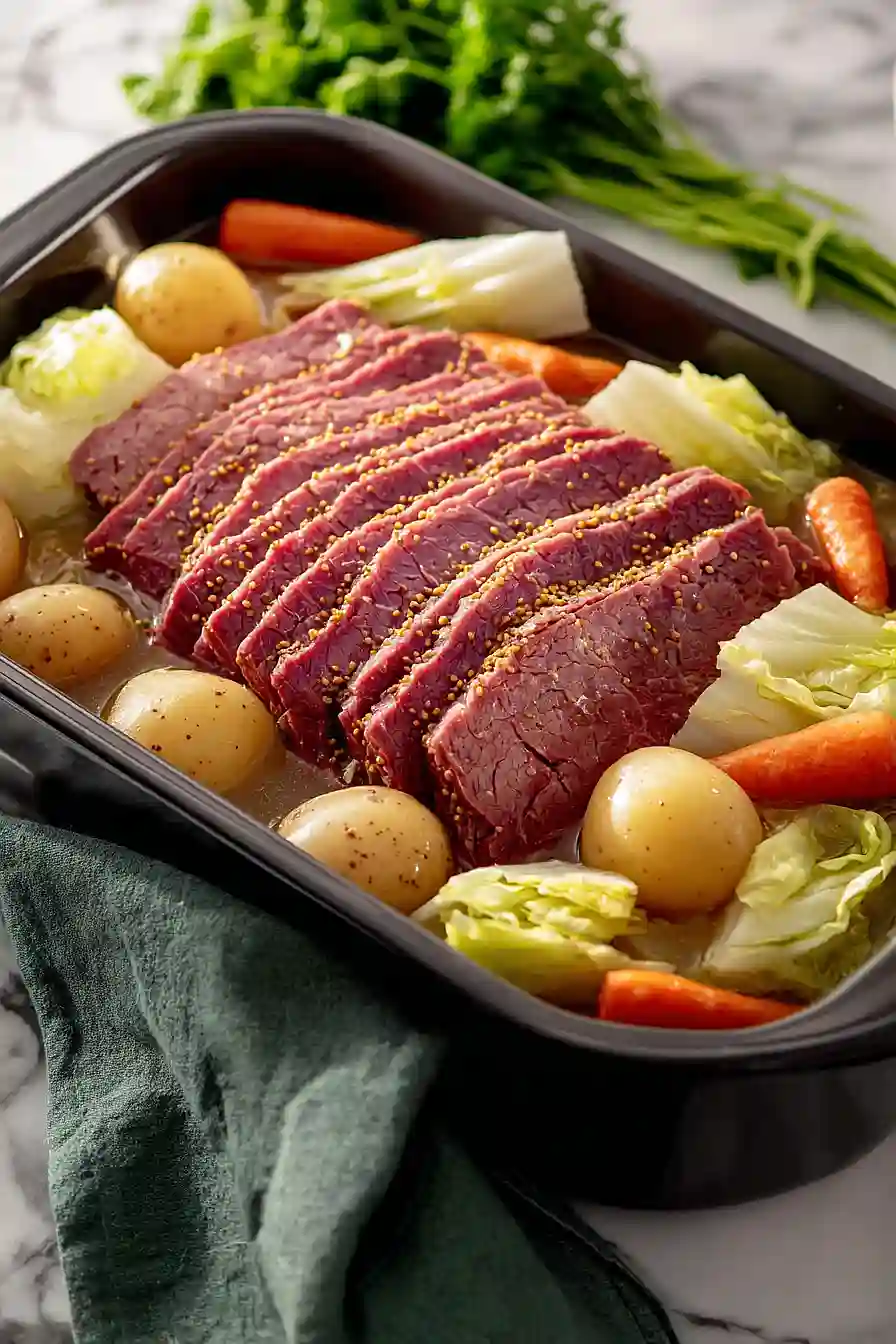
Why You’ll Love This Corned Beef and Cabbage
- Perfect for feeding a crowd – This electric roaster recipe makes enough corned beef and cabbage to serve a large group, making it ideal for St. Patrick’s Day gatherings or family reunions.
- Hands-off cooking – Just set up your electric roaster and let it do all the work while you focus on other things. No constant checking or stirring required.
- One-pot meal – Everything cooks together in the roaster, so you get tender meat and perfectly cooked vegetables without juggling multiple pots and pans.
- Simple ingredients – This recipe uses straightforward, easy-to-find ingredients that come together to create a classic, satisfying meal.
- Great for leftovers – The generous portions mean you’ll have plenty of tasty leftovers for sandwiches, hash, or quick reheated meals throughout the week.
What Kind of Corned Beef Should I Use?
You’ll find two main cuts of corned beef at the grocery store: the flat cut and the point cut. The flat cut is leaner and slices more evenly, which makes it great for presentation, while the point cut has more marbling and fat, which means it’ll be more tender and flavorful after the long cooking time. Either cut will work perfectly fine in your electric roaster, so just grab whichever one looks good or fits your budget. Most corned beef comes pre-brined in a vacuum-sealed package with a spice packet included, and that’s exactly what you want for this recipe.

Options for Substitutions
This classic dish is pretty straightforward, but here are some swaps you can make if needed:
- Corned beef brisket: The corned beef is really the star here and shouldn’t be substituted – it’s what makes this dish what it is. However, if you’re serving fewer people, you can easily scale down to a 3-4 lb brisket and adjust the vegetables accordingly.
- Beef broth: Water works just fine in place of beef broth since the corned beef releases plenty of flavor during cooking. You can also use chicken broth if that’s what you have on hand.
- Potatoes: Any potato variety works here – russets, red potatoes, or Yukon golds all hold up well. Just cut larger potatoes into chunks so everything cooks evenly.
- Cabbage: Green cabbage is traditional, but you can use savoy cabbage for a slightly milder flavor. I’d avoid red cabbage though, as it can discolor the other vegetables.
- Vegetables: Feel free to add parsnips or turnips alongside the carrots and celery for extra variety. You can also leave out the celery if it’s not your thing – it won’t change the dish much.
Watch Out for These Mistakes While Cooking
The biggest mistake people make with corned beef is not checking the liquid level throughout cooking – since this recipe cooks for several hours, the broth can evaporate and leave your meat dry, so add more broth or water if the level drops below the rack.
Overcrowding the roaster with vegetables too early will steam them into mush, which is why potatoes go in first (they need more time) and the cabbage, onions, celery, and carrots wait until later in the cooking process.
Another common error is cutting the cabbage into tiny pieces when larger wedges actually hold their shape better and won’t turn to mush during the long cooking time.
Finally, don’t skip letting the corned beef rest for 10-15 minutes after removing it from the roaster, and always slice against the grain – cutting with the grain will give you tough, chewy meat instead of tender slices.
What to Serve With Corned Beef and Cabbage?
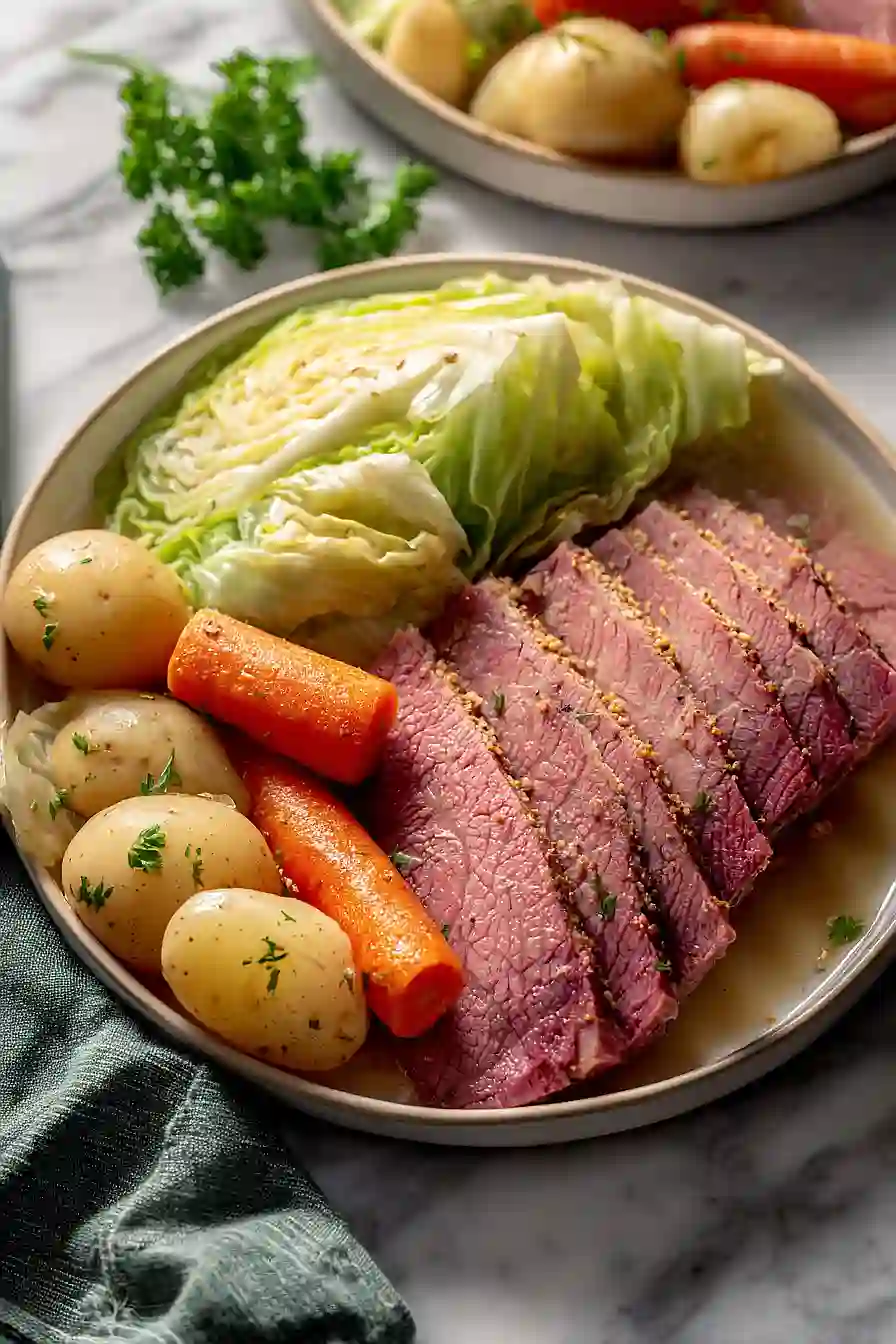
This hearty dish is pretty much a complete meal on its own, but I love serving it with some crusty rye bread or Irish soda bread on the side for soaking up all those delicious juices. A dollop of whole grain mustard or horseradish sauce is perfect for adding a little kick to each bite of the tender corned beef. If you want to round out the meal, a simple cucumber and dill salad or some pickled vegetables work great to cut through the richness of the meat. Some people also like to serve it with a cold beer or a glass of Irish stout to really complete the experience.
Storage Instructions
Store: Keep your leftover corned beef and cabbage in separate airtight containers in the fridge for up to 4 days. I like to store the meat and veggies separately because they reheat better that way, and you can mix and match portions throughout the week.
Freeze: The corned beef freezes really well for up to 3 months when wrapped tightly in plastic wrap and then placed in a freezer bag. I don’t recommend freezing the cabbage since it gets mushy, but the potatoes and carrots are fine to freeze if you want.
Reheat: Warm up individual portions in the microwave with a splash of broth to keep everything moist, or reheat gently on the stovetop over medium-low heat. The corned beef is also delicious sliced cold for sandwiches the next day!
| Preparation Time | 15-20 minutes |
| Cooking Time | 150-210 minutes |
| Total Time | 165-230 minutes |
| Level of Difficulty | Medium |
| Servings | 16 servings |
Estimated Nutrition
Estimated nutrition for the whole recipe (without optional ingredients):
- Calories: 8000-9000
- Protein: 600-700 g
- Fat: 550-650 g
- Carbohydrates: 300-350 g
Ingredients
For the meat:
- 12 lb corned beef brisket (I use Grobbel’s brand for better marbleization)
- 7 cups beef broth (I prefer Swanson Beef Broth for a richer base)
- 4 cloves garlic, smashed
For the vegetables:
- 12 potatoes (cut into 2-inch chunks for even cooking)
- 2 heads cabbage (sliced into 3-inch thick wedges)
- 2 large onions, quartered
- 8 ribs celery, roughly chopped
- 1.5 lb carrots (peeled and cut into 3-inch lengths)
- 1/2 tsp freshly ground black pepper
Step 1: Prepare the Roaster Base and Beef
- 12 lb corned beef brisket
- 7 cups beef broth
- 4 cloves garlic, smashed
- 1/2 tsp freshly ground black pepper
Place the rack in your electric roaster and pour in the beef broth.
Unwrap the corned beef brisket (discard any spice packet that came with it) and place it fat-side up directly on the rack.
Season the top generously with the freshly ground black pepper and scatter the smashed garlic cloves around it.
Cover the roaster, set the temperature to 300°F, and let it begin cooking—this low, moist heat will slowly break down the tough brisket into tender, flavorful meat.
Step 2: Prepare All Vegetables While Beef Cooks
- 12 potatoes
- 2 heads cabbage
- 2 large onions
- 8 ribs celery
- 1.5 lb carrots
While the beef is cooking, prepare all your vegetables during the first hour.
Cut the potatoes into 2-inch chunks, slice the cabbage into 3-inch thick wedges, quarter the onions, roughly chop the celery, and cut the carrots into 3-inch lengths.
I like to keep everything in separate bowls by cooking time needed—this makes the next steps much smoother and prevents you from hunting for ingredients.
Step 3: Add Potatoes After Initial Cooking
- 12 potatoes
After the beef has cooked for 1 hour, carefully remove the roaster lid (watch out for the steam).
Add all the potato chunks directly to the broth around the beef, nestling them down so they’re partially submerged.
This timing allows the potatoes to cook long enough to become tender but not so long that they fall apart.
Cover the roaster again and continue cooking.
Step 4: Add Remaining Vegetables and Finish Cooking
- 2 heads cabbage
- 2 large onions
- 8 ribs celery
- 1.5 lb carrots
After the potatoes have cooked for about 45 minutes to 1 hour (about 1 hour 45 minutes to 2 hours total into cooking), add the cabbage, onions, celery, and carrots from Step 2 to the roaster, arranging them around the beef.
Cover and continue cooking.
I always check the internal temperature of the beef with a meat thermometer—you’re aiming for 145°F for a tender result, which usually takes 1.5 to 2 more hours depending on the exact thickness of your brisket.
Step 5: Rest and Serve
Once the beef reaches 145°F internal temperature, carefully remove it from the roaster and let it rest on a cutting board for 10 minutes before slicing—this keeps the meat juicy.
The vegetables will continue to stay warm in the broth.
Slice the beef against the grain into thick slices and arrange on a serving platter with all the vegetables.
Pour some of the cooking broth over everything for serving.
Easy Corned Beef and Cabbage in an Electric Roaster
Ingredients
For the meat::
- 12 lb corned beef brisket (I use Grobbel’s brand for better marbleization)
- 7 cups beef broth (I prefer Swanson Beef Broth for a richer base)
- 4 cloves garlic, smashed
For the vegetables::
- 12 potatoes (cut into 2-inch chunks for even cooking)
- 2 heads cabbage (sliced into 3-inch thick wedges)
- 2 large onions, quartered
- 8 ribs celery, roughly chopped
- 1.5 lb carrots (peeled and cut into 3-inch lengths)
- 1/2 tsp freshly ground black pepper
Instructions
- Place the rack in your electric roaster and pour in the beef broth. Unwrap the corned beef brisket (discard any spice packet that came with it) and place it fat-side up directly on the rack. Season the top generously with the freshly ground black pepper and scatter the smashed garlic cloves around it. Cover the roaster, set the temperature to 300°F, and let it begin cooking—this low, moist heat will slowly break down the tough brisket into tender, flavorful meat.
- While the beef is cooking, prepare all your vegetables during the first hour. Cut the potatoes into 2-inch chunks, slice the cabbage into 3-inch thick wedges, quarter the onions, roughly chop the celery, and cut the carrots into 3-inch lengths. I like to keep everything in separate bowls by cooking time needed—this makes the next steps much smoother and prevents you from hunting for ingredients.
- After the beef has cooked for 1 hour, carefully remove the roaster lid (watch out for the steam). Add all the potato chunks directly to the broth around the beef, nestling them down so they're partially submerged. This timing allows the potatoes to cook long enough to become tender but not so long that they fall apart. Cover the roaster again and continue cooking.
- After the potatoes have cooked for about 45 minutes to 1 hour (about 1 hour 45 minutes to 2 hours total into cooking), add the cabbage, onions, celery, and carrots from Step 2 to the roaster, arranging them around the beef. Cover and continue cooking. I always check the internal temperature of the beef with a meat thermometer—you're aiming for 145°F for a tender result, which usually takes 1.5 to 2 more hours depending on the exact thickness of your brisket.
- Once the beef reaches 145°F internal temperature, carefully remove it from the roaster and let it rest on a cutting board for 10 minutes before slicing—this keeps the meat juicy. The vegetables will continue to stay warm in the broth. Slice the beef against the grain into thick slices and arrange on a serving platter with all the vegetables. Pour some of the cooking broth over everything for serving.