There’s something so comforting about twirling pasta around your fork and knowing you made the whole meal from scratch. Spaghetti with tomato sauce was one of the first recipes I learned to make when I moved out on my own. It seemed fancy at the time, but really it’s just a few simple ingredients working together.
I still make this dish at least once a week because it’s reliable and my kids actually eat it without complaining. The sauce comes together while the pasta cooks, so dinner is ready in about twenty minutes. Plus, I usually have everything I need already sitting in my pantry.
The best part? You can make it exactly how your family likes it. Want more garlic? Add more garlic. Need it less spicy for the kids? Skip the red pepper flakes. It’s the kind of recipe that works with whatever you have on hand.

Why You’ll Love This Spaghetti with Tomato Sauce
- Classic comfort food – There’s nothing quite like a bowl of perfectly cooked spaghetti with rich tomato sauce – it’s the kind of meal that feels like a warm hug.
- Simple, wholesome ingredients – This recipe uses basic pantry staples and fresh vegetables that you probably already have on hand, making it an easy go-to dinner option.
- Quick weeknight meal – Ready in under an hour, this dish is perfect for busy evenings when you want something satisfying without spending all night in the kitchen.
- Family-friendly favorite – Kids and adults alike will love this timeless combination, and you can easily customize it with extra cheese or herbs to suit everyone’s taste.
- Budget-friendly – Using affordable ingredients like pasta, tomatoes, and basic vegetables, this recipe delivers maximum flavor without breaking the bank.
What Kind of Spaghetti Should I Use?
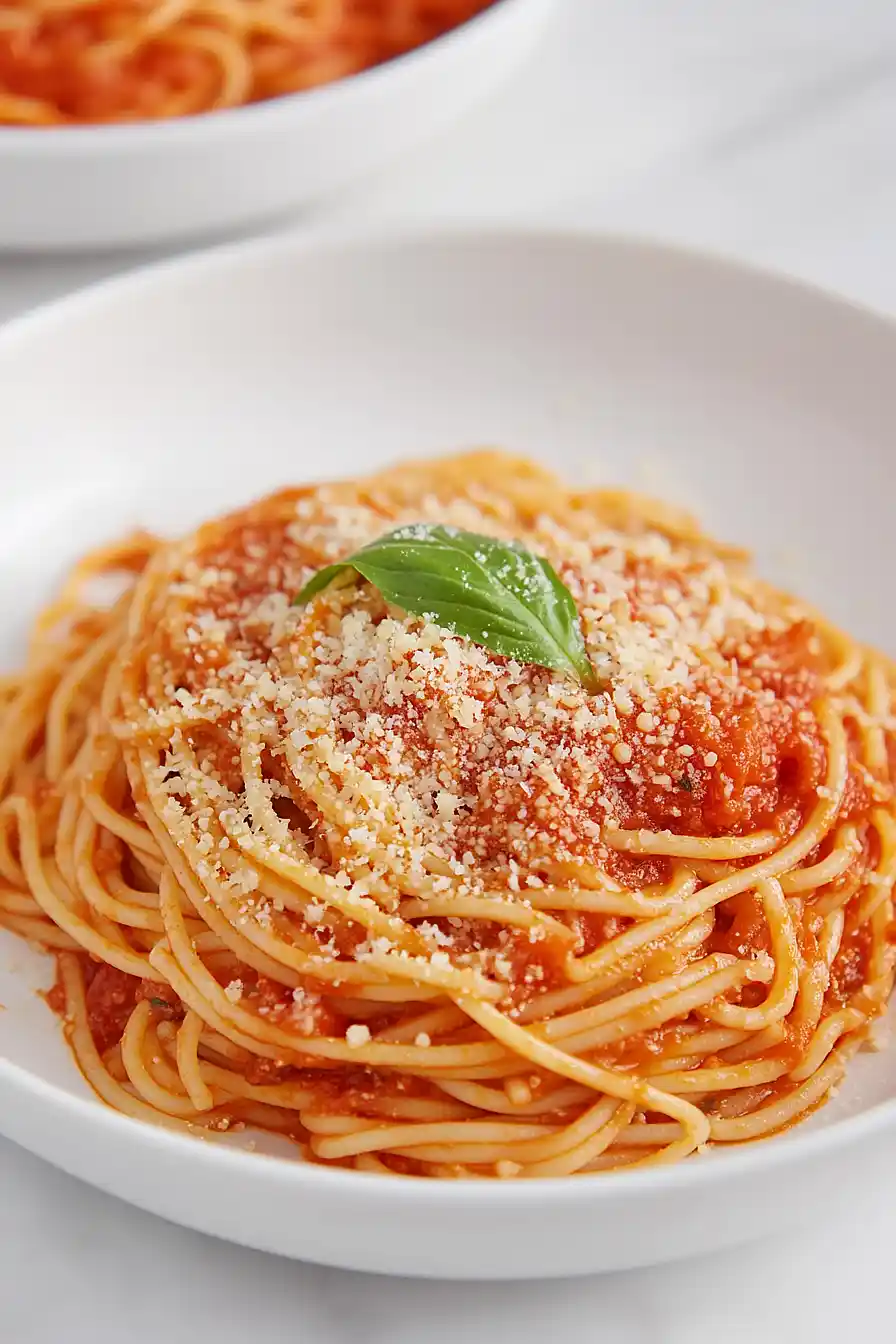
You can absolutely use store-bought dried spaghetti for this recipe, and it will taste great. If you’re feeling ambitious, homemade fresh pasta will give you a more tender texture and slightly richer flavor, but don’t stress if you don’t have the time or ingredients to make it from scratch. When choosing dried spaghetti, look for brands made from durum wheat semolina, as they hold their shape better and have a nice bite to them. The most important thing is to cook your pasta until it’s al dente – firm to the bite – since it will continue cooking slightly when you toss it with the hot tomato sauce.
Options for Substitutions
This classic recipe is pretty forgiving when it comes to swaps, so here are some options if you need them:
- Spaghetti: Any long pasta works great here – try linguine, angel hair, or fettuccine. Even shorter shapes like penne or rigatoni will do the job, though they’ll give you a different eating experience.
- Tomato sauce: If you don’t have homemade sauce, good quality canned crushed tomatoes work well. You can also use marinara sauce, though you might want to simmer it a bit longer with your aromatics to develop more flavor.
- Fresh basil: Dried basil can work in a pinch – use about 1 teaspoon for every tablespoon of fresh. You could also try fresh oregano or a mix of Italian herbs.
- Parmesan cheese: Pecorino Romano gives a sharper, saltier flavor that’s traditional in many Italian dishes. Grana Padano is another good option that’s similar to Parmesan but often more affordable.
- Aromatics (onion, carrot, celery): This holy trinity of vegetables creates the flavor base, so try not to skip them entirely. If you’re missing one, just use more of the others – the carrot adds sweetness while the celery brings earthiness.
Watch Out for These Mistakes While Cooking
The biggest mistake people make with spaghetti is not using enough water – you need at least 4-6 quarts of well-salted water per pound of pasta to prevent sticking and ensure even cooking. Another common error is rinsing the pasta after draining, which removes the starch that helps the sauce cling to the noodles, so skip the rinse and toss immediately with your sauce. Don’t forget to save a cup of that starchy pasta water before draining – adding a splash to your sauce creates a silky, restaurant-quality finish that brings everything together. Finally, avoid letting your garlic burn when sautéing your vegetables, as burnt garlic will make the entire dish taste bitter – keep the heat at medium and watch it carefully until it’s just golden.
What to Serve With Spaghetti?
A classic Caesar salad is my go-to side for spaghetti with tomato sauce – the crisp romaine and tangy dressing balance out all that rich pasta perfectly. Garlic bread is another must-have since you’ll want something to soak up any leftover sauce on your plate. If you’re feeling fancy, try serving it alongside some roasted vegetables like zucchini or bell peppers, which complement the fresh basil and tomato flavors beautifully. A simple arugula salad with lemon vinaigrette also works great if you want to keep things light and fresh.
Storage Instructions
Refrigerate: Leftover spaghetti with tomato sauce keeps really well in the fridge for up to 4 days in a covered container. I actually think it tastes even better the next day because all those flavors have time to meld together. Just store the pasta and sauce together – no need to separate them.
Freeze: This pasta freezes great for up to 3 months in freezer-safe containers or bags. I like to portion it out into individual servings so I can grab just what I need for a quick lunch. The texture might be slightly softer after freezing, but it’s still delicious.
Reheat: To warm it up, add a splash of water or extra tomato sauce to prevent it from drying out, then heat it on the stove over medium-low heat while stirring. You can also microwave it, but stir it halfway through and add a bit of liquid if needed. Fresh basil and a sprinkle of parmesan on top makes it taste like new again.
| Preparation Time | 10-15 minutes |
| Cooking Time | 30-40 minutes |
| Total Time | 40-55 minutes |
| Level of Difficulty | Medium |
Estimated Nutrition
Estimated nutrition for the whole recipe (without optional ingredients):
- Calories: 600-900
- Protein: 20-30 g
- Fat: 12-30 g
- Carbohydrates: 110-160 g
Ingredients
For the pasta:
- 1 lb spaghetti (or fresh homemade if preferred)
- Salt to taste (for pasta water)
For the sauce:
- 1/2 carrot (roughly chopped)
- Salt to taste
- 2 cups tomato sauce (San Marzano preferred for deeper flavor)
- 3 tbsp extra virgin olive oil (adds richness and silky texture)
- 1/4 onion (roughly chopped)
- 1 celery stalk (roughly chopped)
- Fresh basil leaves (torn just before serving for best flavor)
For serving:
- Parmesan cheese, freshly grated (never pre-grated for superior melting and flavor)
Step 1: Prepare Mise en Place and Start Water
- 1/4 onion, roughly chopped
- 1/2 carrot, roughly chopped
- 1 celery stalk, roughly chopped
- Salt for pasta water
Roughly chop the onion, carrot, and celery into similar-sized pieces so they cook evenly.
Fill a large pot with water and place it on high heat—you want it boiling by the time you finish making the sauce base, which saves significant time.
Salt the water generously once it reaches a boil; it should taste like seawater.
This parallel timing is key to efficiency.
Step 2: Build the Sauce Base
- 3 tbsp extra virgin olive oil
- 1/4 onion, roughly chopped
- 1/2 carrot, roughly chopped
- 2 cups tomato sauce
- 1 celery stalk, roughly chopped
- Salt to taste
Heat the extra virgin olive oil in a medium saucepan over medium heat until it shimmers.
Add the chopped onion and carrot, stirring occasionally until they soften and become translucent, about 5-7 minutes.
Pour in the tomato sauce and add the celery stalk along with a pinch of salt.
I like to add salt early to the sauce base rather than only at the end—it allows the flavors to meld more completely during the simmer.
Reduce heat to low and let the sauce simmer gently for 30 minutes, stirring occasionally to prevent sticking.
Step 3: Cook the Pasta
- 1 lb spaghetti
Once your salted water is at a rolling boil (from Step 1), add the spaghetti and stir immediately to prevent clumping.
Cook according to package directions, usually 9-12 minutes for dried pasta, until it reaches al dente—tender but with a slight bite.
Reserve about 1 cup of pasta water before draining; the starch in this water helps the sauce cling to the noodles.
Drain the pasta but do not rinse it, as the residual starch helps the sauce adhere.
Step 4: Finish the Sauce and Plate
- sauce base from Step 2
- Fresh basil leaves
When the sauce has finished simmering (from Step 2), tear the fresh basil leaves by hand just before adding them—this preserves their aromatic oils better than chopping.
Stir the basil into the sauce and remove from heat.
Cover briefly to let the basil infuse, about 2 minutes.
I find that finishing with fresh basil off the heat keeps its brightness intact rather than cooking it away.
Taste and adjust salt as needed.
Step 5: Combine and Serve
- cooked pasta from Step 3
- sauce from Step 4
- pasta water from Step 3
- Parmesan cheese, freshly grated
- Fresh basil leaves for garnish
Add a splash of reserved pasta water (from Step 3) to the sauce to loosen it slightly—this creates a silky sauce that coats the pasta beautifully.
In a large bowl or on individual plates, combine the drained pasta with the sauce and toss gently to coat.
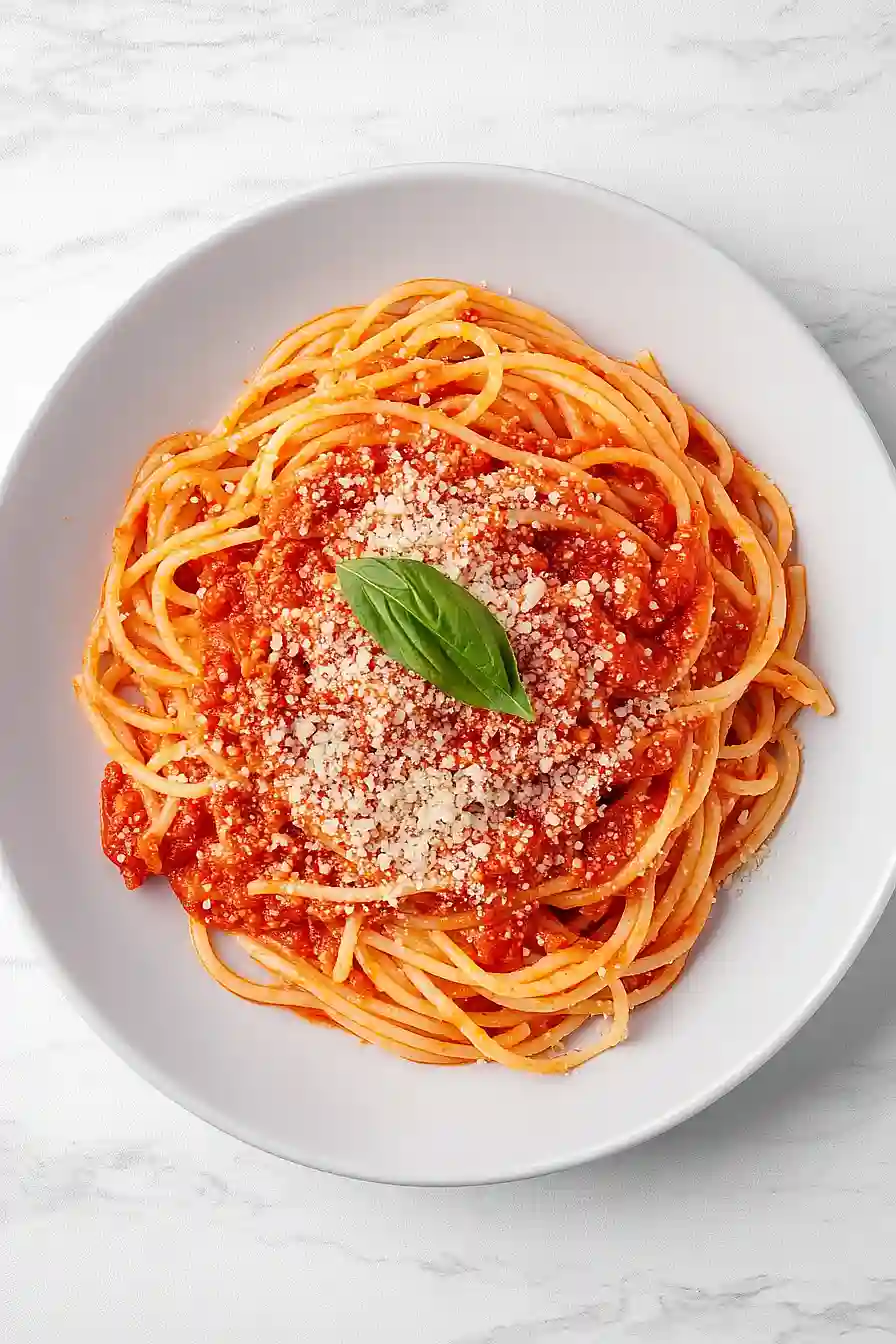
Top generously with freshly grated Parmesan cheese and an extra basil leaf or two.
Never use pre-grated Parmesan here; freshly grated cheese melts into the warm pasta and distributes evenly, while pre-grated cheese tends to clump and sit on top.