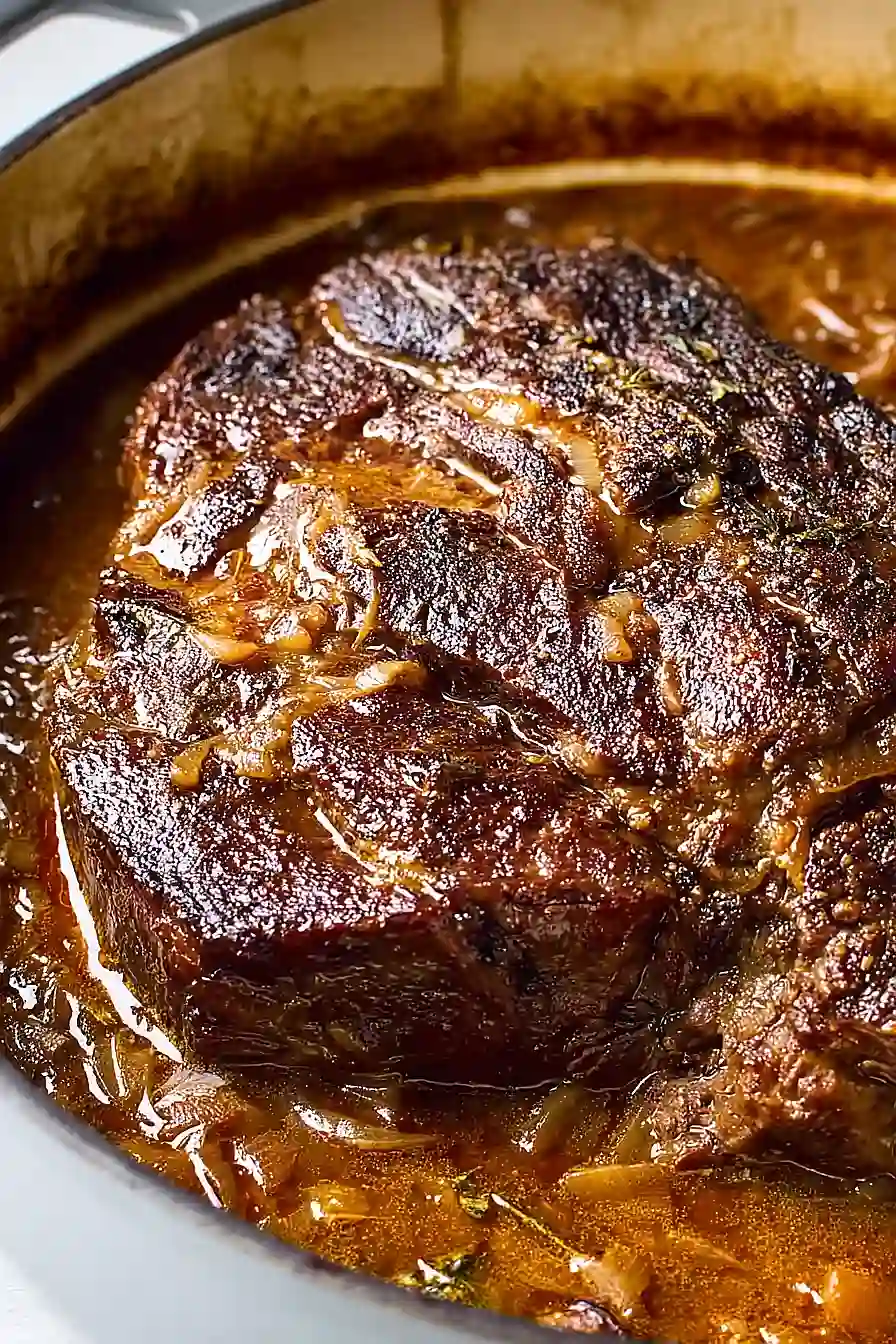
Finding a hearty, comforting dinner that practically cooks itself can feel impossible when you’re juggling work, family, and everything in between. Most of us don’t have hours to spend hovering over the stove, and let’s be honest—weeknight dinners often end up being the same rotation of quick fixes that leave everyone wanting something more satisfying.
That’s exactly why this smoked pork hock and sauerkraut recipe has become one of my cold-weather favorites. It’s the kind of meal that fills your house with amazing smells while you go about your day, requires minimal hands-on time, and delivers fall-off-the-bone tender meat with deep, savory flavors that taste like you spent all day cooking.

Why You’ll Love This Smoked Pork Hock and Sauerkraut
- Rich, smoky flavor – The smoked pork hock infuses the entire dish with a deep, savory taste that pairs perfectly with the tangy sauerkraut.
- Perfect for cold weather – This hearty, warming dish is exactly what you want on a chilly day when you need something filling and comforting.
- Traditional comfort food – With classic ingredients like caraway seeds, juniper berries, and bay leaves, this recipe brings authentic, old-world flavors to your table.
- Great for meal prep – The long cooking time means the flavors develop beautifully, and the leftovers taste even better the next day.
- Feeds a crowd – Between the pork hock, bacon, and chorizo sausages, this dish serves plenty of people without breaking the bank.
What Kind of Smoked Pork Hock Should I Use?
Most smoked pork hocks you’ll find at the grocery store or butcher shop will work great for this recipe. You can usually find them in the meat section near the ham or in the freezer aisle, and they’re typically already fully cooked and smoked, which means you’re really just heating them through and letting all those flavors meld with the sauerkraut. If you have a choice between a meatier hock and a bonier one, go for the one with more meat on it since you’ll get more to eat. Some stores sell them individually wrapped, while others sell them in pairs, so just grab what you need based on how many people you’re feeding.

Options for Substitutions
This traditional dish has some room for flexibility, though a few ingredients are key to getting that authentic flavor:
- Smoked pork hock: This is really the star of the show and hard to substitute, but if you can’t find it, try smoked ham hocks or a smoked pork shoulder. The smoking is what gives this dish its signature taste, so stick with smoked meat if possible.
- Sauerkraut: Fresh sauerkraut from the refrigerated section works best, but jarred or canned will do in a pinch. Just make sure to rinse it well if it’s too salty for your taste.
- Chorizo sausages: You can swap these with kielbasa, andouille, or any other smoked sausage you prefer. Each will bring its own flavor profile to the dish.
- Chicken stock: Beer (a lager or pilsner works great) or a mix of both stock and beer is traditional. You could also use vegetable or pork stock if that’s what you have on hand.
- Juniper berries: These add a nice piney note, but if you can’t find them, just leave them out. The dish will still taste great without them.
- Caraway seeds: These are pretty important for that classic sauerkraut flavor, but if you’re not a fan, you can reduce the amount or skip them entirely.
Watch Out for These Mistakes While Cooking
The biggest mistake when making this dish is not rinsing your sauerkraut before squeezing out the juice, which can leave it way too salty and overpowering – give it a quick rinse under cold water first, then squeeze it dry for a more balanced flavor.
Another common error is skipping the browning step for the bacon and sausages, as this creates a flavorful base that makes the whole dish taste better, so don’t rush through it even though it takes a few extra minutes.
When adding your liquid, make sure it comes about halfway up the pork hock rather than covering it completely, since you want the meat to braise slowly instead of boil, which keeps it tender and prevents the sauerkraut from getting mushy.
Finally, check your pork hock after the first 1.5 hours – if the meat isn’t pulling away from the bone easily, give it another 30 minutes before adding the sausages back in.

What to Serve With Smoked Pork Hock and Sauerkraut?
This hearty dish calls for some simple sides that can soak up all those smoky, tangy flavors. Boiled or mashed potatoes are my go-to since they balance out the richness of the pork and sauerkraut perfectly. A slice of good rye bread or pumpernickel on the side is great for mopping up the juices, and it fits right in with the German-style flavors. If you want to add something fresh to the plate, a crisp cucumber salad with dill and a bit of vinegar cuts through the heaviness and adds a nice crunch.
Storage Instructions
Store: This dish actually gets better after a day or two in the fridge! Once it cools down, transfer everything to an airtight container and keep it refrigerated for up to 4 days. The flavors really meld together nicely overnight, making your leftovers even tastier than the first serving.
Freeze: You can freeze portions of this for up to 3 months in freezer-safe containers. I like to separate the meat from the sauerkraut mixture before freezing so I can thaw just what I need. Just make sure to leave a bit of headspace in your container since the liquid will expand when frozen.
Reheat: Warm it up slowly on the stovetop over medium-low heat, stirring occasionally and adding a splash of chicken stock or water if it seems dry. You can also reheat individual portions in the microwave, but the stovetop method really brings back that fresh-cooked texture best.
| Preparation Time | 20-30 minutes |
| Cooking Time | 150-180 minutes |
| Total Time | 170-210 minutes |
| Level of Difficulty | Medium |
| Servings | 6 servings |
Estimated Nutrition
Estimated nutrition for the whole recipe (without optional ingredients):
- Calories: 3350-3700
- Protein: 230-260 g
- Fat: 215-240 g
- Carbohydrates: 75-95 g
Ingredients
For the bouquet garni:
- 1/2 head garlic (halved lengthwise, unpeeled)
- 2 bay leaves
- 1 1/2 tsp black peppercorns (freshly ground preferred for more flavor)
- 8 juniper berries
For the braise:
- 3 lb smoked pork hock (bone-in preferred for best flavor)
- 4 bacon strips (diced into 1/4-inch pieces)
- 1 tsp caraway seeds (adds traditional Eastern European flavor)
- 1/2 head garlic (halved lengthwise, unpeeled)
- 4 cups chicken stock
- 2 cups sauerkraut (I use Libby’s)
- 1 tbsp dried oregano
- 2 yellow onions (quartered for braise)
For the sausages:
- 4 chorizo sausages (or other smoked sausage variety)
Step 1: Prepare the Aromatic Bundle and Mise en Place
- 1/2 head garlic
- 2 bay leaves
- 1 1/2 tsp black peppercorns
- 8 juniper berries
- 4 bacon strips
- 2 yellow onions
- 1 tsp caraway seeds
- 1 tbsp dried oregano
- 2 cups sauerkraut
- 3 lb smoked pork hock
- 4 cups chicken stock
- 4 chorizo sausages
Gather all your ingredients and prepare them before cooking begins.
Create a sachet (herb bundle) by combining the peppercorns, bay leaves, juniper berries, and one half-head of garlic (halved lengthwise and unpeeled).
You can tie these together in cheesecloth or simply add them loose to the braising liquid—I prefer loose so the flavors distribute more evenly throughout the dish.
Dice the bacon into 1/4-inch pieces, quarter the yellow onions, and have the sauerkraut, chicken stock, caraway seeds, oregano, and pork hock ready.
Preheat your oven to 325°F.
Step 2: Build the Flavor Base with Bacon, Sausage, and Aromatics
- 4 bacon strips
- 4 chorizo sausages
- 1 tsp caraway seeds
- 2 yellow onions
In a large Dutch oven or braising pot, render the diced bacon over medium heat until the fat is released and the bacon is just beginning to crisp, about 5-7 minutes.
Add the chorizo sausages and brown them on all sides until they develop a golden crust, about 8-10 minutes total.
Remove the sausages and set aside—they’ll finish cooking later in the braise.
Toast the caraway seeds in the remaining bacon fat for about 15 seconds until fragrant, then add the quartered onions and cook for 4-5 minutes, stirring occasionally, until they begin to soften and caramelize slightly.
This step builds the foundational flavors that will carry through the entire dish.
Step 3: Layer in Aromatics and Sauerkraut
- 1/2 head garlic
- 1 tbsp dried oregano
- 2 cups sauerkraut
With the onions still in the pot, add the other half-head of garlic (halved lengthwise and unpeeled) and the dried oregano, stirring for about 30 seconds until fragrant.
Add the sauerkraut and stir well to combine with the bacon fat and aromatics, coating everything evenly—this ensures the sauerkraut absorbs all those developed flavors from the bacon and spices.
The sauerkraut’s acidity will also help balance the richness of the pork.
Step 4: Braise the Pork Hock with Herbs and Stock
- aromatic bundle from Step 1
- 3 lb smoked pork hock
- 4 cups chicken stock
Nestle the smoked pork hock into the center of the sauerkraut mixture and scatter the aromatic bundle (peppercorns, bay leaves, juniper berries, and first half-head of garlic from Step 1) around it.
Pour the chicken stock around the pork hock, ensuring the liquid comes about three-quarters of the way up the meat but doesn’t completely submerge it.
Cover the pot with a tight-fitting lid and transfer to the preheated 325°F oven.
Braise for 1.5 hours—the low, gentle heat allows the pork hock to become tender while the sauerkraut absorbs the smoky, herbaceous flavors.
Step 5: Return Sausages and Finish Braising
- browned chorizo sausages from Step 2
Remove the pot from the oven and carefully nestle the browned sausages from Step 2 back into the braising liquid, distributing them among the sauerkraut.
Cover the pot again and return it to the oven for an additional 1 hour.
This allows the sausages to finish cooking gently, absorbing the braising liquid’s flavors while the pork continues to become increasingly tender and flavorful.
Step 6: Shred the Pork and Assemble the Dish
- braised pork hock from Step 4
- braised sausages from Step 5
- sauerkraut mixture from Steps 3-5
Remove the pot from the oven and let it rest for 5 minutes before handling.
Transfer the pork hock to a cutting board and let it cool slightly until it’s easy to handle.
Using two forks or your hands, shred the meat away from the bone—the meat should pull apart easily after the long braise.
Slice the sausages into 1/2-inch thick rounds.
Discard the aromatic bundle and garlic halves (they’ve done their job flavoring the liquid), then gently fold the shredded pork and sliced sausages back into the sauerkraut in the pot, mixing everything together so the meat is evenly distributed throughout.
Step 7: Serve
Ladle the smoked pork hock, sausages, and sauerkraut into bowls or plates, making sure each serving gets plenty of the flavorful braising liquid.
Serve hot with sharp mustard on the side for cutting through the richness of the pork and adding a bright, acidic contrast.
This is a rustic, hearty dish that’s perfect for cool weather and pairs beautifully with crusty bread or boiled potatoes.

Gluten-Free Smoked Pork Hock and Sauerkraut
Ingredients
For the bouquet garni:
- 1/2 head garlic (halved lengthwise, unpeeled)
- 2 bay leaves
- 1 1/2 tsp black peppercorns (freshly ground preferred for more flavor)
- 8 juniper berries
For the braise:
- 3 lb smoked pork hock (bone-in preferred for best flavor)
- 4 bacon strips (diced into 1/4-inch pieces)
- 1 tsp caraway seeds (adds traditional Eastern European flavor)
- 1/2 head garlic (halved lengthwise, unpeeled)
- 4 cups chicken stock
- 2 cups sauerkraut (I use Libby's)
- 1 tbsp dried oregano
- 2 yellow onions (quartered for braise)
For the sausages:
- 4 chorizo sausages (or other smoked sausage variety)
Instructions
- Gather all your ingredients and prepare them before cooking begins. Create a sachet (herb bundle) by combining the peppercorns, bay leaves, juniper berries, and one half-head of garlic (halved lengthwise and unpeeled). You can tie these together in cheesecloth or simply add them loose to the braising liquid—I prefer loose so the flavors distribute more evenly throughout the dish. Dice the bacon into 1/4-inch pieces, quarter the yellow onions, and have the sauerkraut, chicken stock, caraway seeds, oregano, and pork hock ready. Preheat your oven to 325°F.
- In a large Dutch oven or braising pot, render the diced bacon over medium heat until the fat is released and the bacon is just beginning to crisp, about 5-7 minutes. Add the chorizo sausages and brown them on all sides until they develop a golden crust, about 8-10 minutes total. Remove the sausages and set aside—they'll finish cooking later in the braise. Toast the caraway seeds in the remaining bacon fat for about 15 seconds until fragrant, then add the quartered onions and cook for 4-5 minutes, stirring occasionally, until they begin to soften and caramelize slightly. This step builds the foundational flavors that will carry through the entire dish.
- With the onions still in the pot, add the other half-head of garlic (halved lengthwise and unpeeled) and the dried oregano, stirring for about 30 seconds until fragrant. Add the sauerkraut and stir well to combine with the bacon fat and aromatics, coating everything evenly—this ensures the sauerkraut absorbs all those developed flavors from the bacon and spices. The sauerkraut's acidity will also help balance the richness of the pork.
- Nestle the smoked pork hock into the center of the sauerkraut mixture and scatter the aromatic bundle (peppercorns, bay leaves, juniper berries, and first half-head of garlic from Step 1) around it. Pour the chicken stock around the pork hock, ensuring the liquid comes about three-quarters of the way up the meat but doesn't completely submerge it. Cover the pot with a tight-fitting lid and transfer to the preheated 325°F oven. Braise for 1.5 hours—the low, gentle heat allows the pork hock to become tender while the sauerkraut absorbs the smoky, herbaceous flavors.
- Remove the pot from the oven and carefully nestle the browned sausages from Step 2 back into the braising liquid, distributing them among the sauerkraut. Cover the pot again and return it to the oven for an additional 1 hour. This allows the sausages to finish cooking gently, absorbing the braising liquid's flavors while the pork continues to become increasingly tender and flavorful.
- Remove the pot from the oven and let it rest for 5 minutes before handling. Transfer the pork hock to a cutting board and let it cool slightly until it's easy to handle. Using two forks or your hands, shred the meat away from the bone—the meat should pull apart easily after the long braise. Slice the sausages into 1/2-inch thick rounds. Discard the aromatic bundle and garlic halves (they've done their job flavoring the liquid), then gently fold the shredded pork and sliced sausages back into the sauerkraut in the pot, mixing everything together so the meat is evenly distributed throughout.
- Ladle the smoked pork hock, sausages, and sauerkraut into bowls or plates, making sure each serving gets plenty of the flavorful braising liquid. Serve hot with sharp mustard on the side for cutting through the richness of the pork and adding a bright, acidic contrast. This is a rustic, hearty dish that's perfect for cool weather and pairs beautifully with crusty bread or boiled potatoes.