If you ask me, garlic soup is nature’s best cold remedy.
This comforting bowl of goodness makes the perfect sick-day meal that’s packed with healing power and warmth. Fresh garlic and simple broth come together with a few kitchen staples to create something truly soothing.
It’s made with whole garlic cloves that simmer until they’re soft and mellow, then blended into a smooth, creamy base. A touch of herbs and a squeeze of lemon help the whole thing come together.
It’s a go-to recipe that actually tastes good while helping you feel better, perfect for those sniffly days when you need some comfort.
Why You’ll Love This Garlic Soup
- Natural cold remedy – Packed with immune-boosting garlic and warming spices like turmeric, this soup is like a hug in a bowl when you’re feeling under the weather.
- Quick and easy – Ready in under an hour with simple chopping and simmering, this comforting soup comes together faster than you’d expect.
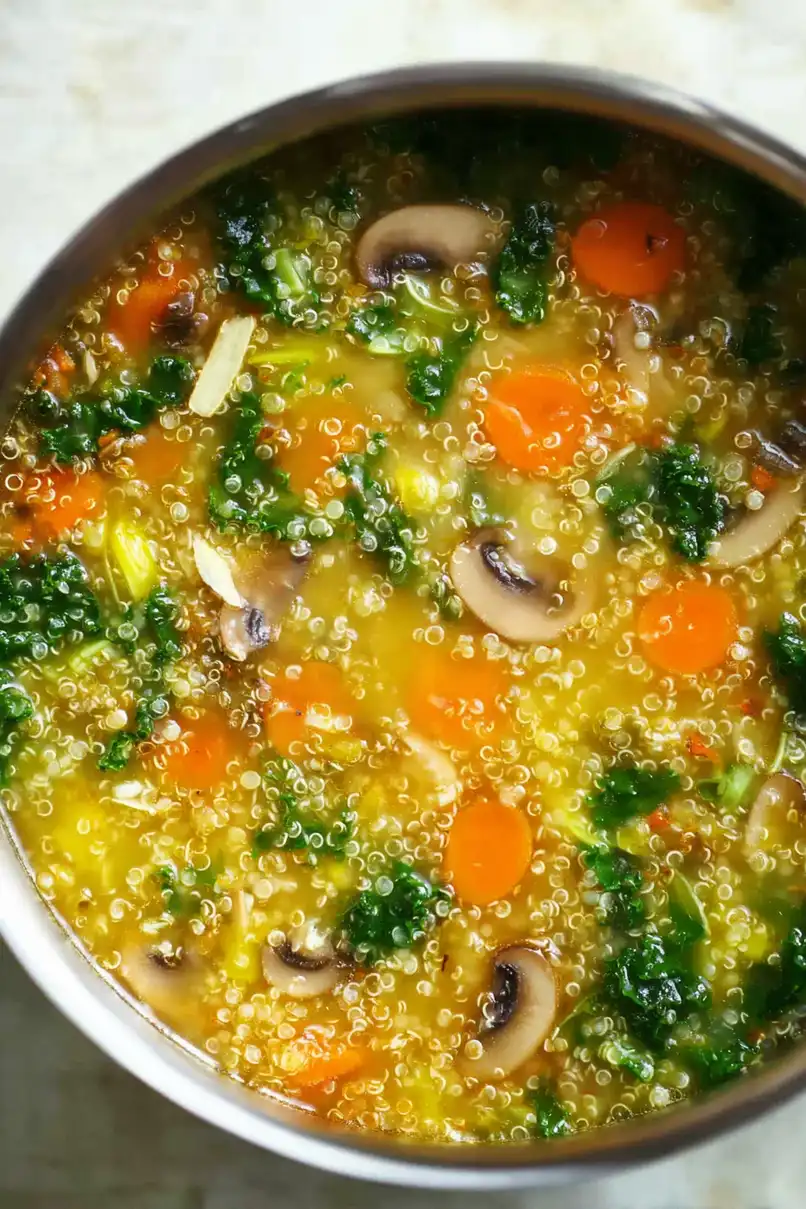
- Healthy and nutritious – With protein-rich quinoa, fiber-packed vegetables, and leafy greens, you’re getting a complete meal that nourishes your body while it heals.
- Flexible ingredients – You can easily swap quinoa for lentils or use spinach instead of kale, making this recipe work with whatever you have in your pantry.
- Comforting and warming – The rich vegetable broth combined with aromatic garlic and herbs creates the perfect cozy soup to soothe your throat and warm you up from the inside out.
What Kind of Garlic Should I Use?
Fresh garlic is really the star of this healing soup, so you’ll want to use good quality bulbs that feel firm and heavy in your hand. Avoid any garlic that feels soft, has green shoots sprouting from the top, or shows dark spots – these are signs it’s past its prime. Regular white garlic from the grocery store works perfectly fine, though if you can find hardneck varieties at a farmers market, they tend to have a more complex flavor. When you’re mincing your garlic, try to do it right before adding it to the pan since garlic starts to lose its potency once it’s cut and exposed to air.
Options for Substitutions
This healing soup is pretty forgiving when it comes to swaps, so don’t worry if you’re missing a few things:
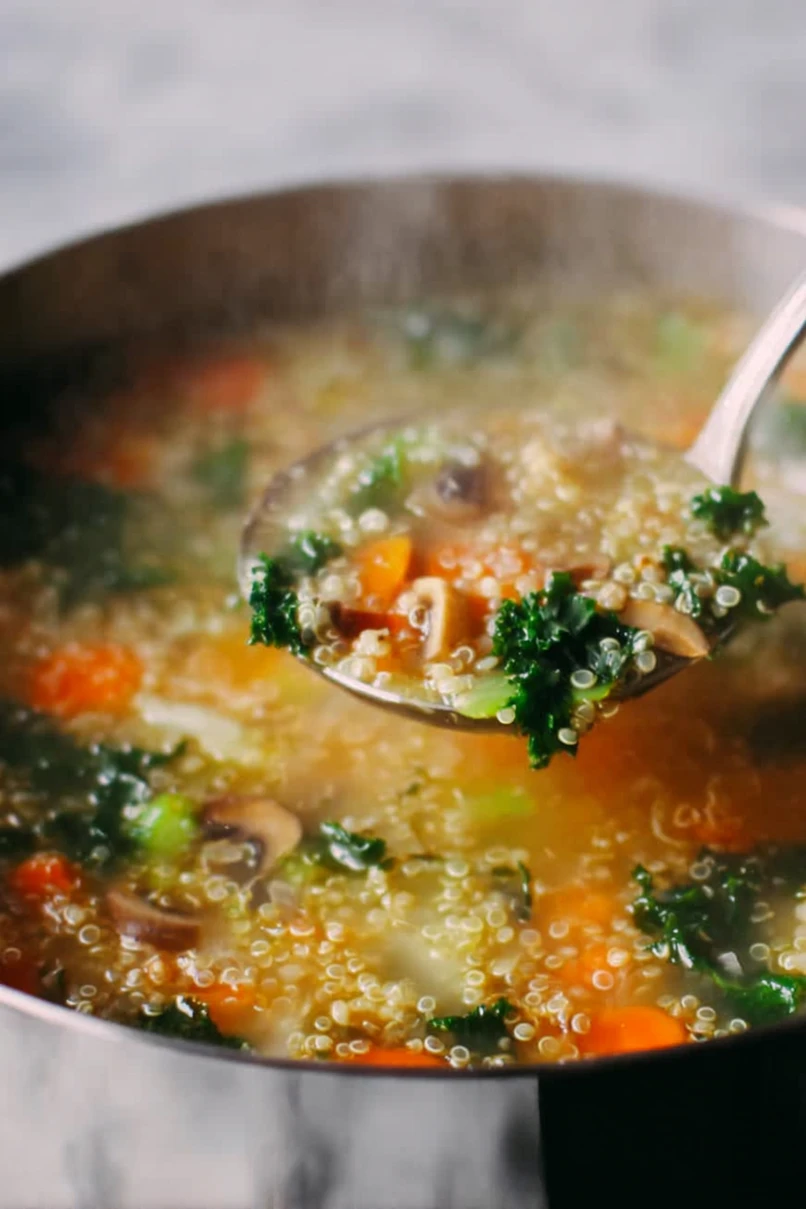
- Quinoa: You can easily swap quinoa for red or green lentils – just add them at the same time and cook until tender. Rice, barley, or even small pasta shapes work too, though cooking times will vary.
- Kale: Spinach or Swiss chard make great substitutes for kale. Since spinach wilts faster, add it in the last 2-3 minutes of cooking instead of with the quinoa.
- Cremini mushrooms: Any mushroom variety works here – button mushrooms, shiitake, or portobello all add that earthy flavor. You can even skip them entirely if mushrooms aren’t your thing.
- Vegetable broth: Chicken broth works just as well if that’s what you have on hand. In a pinch, you can use water with extra bouillon cubes or paste.
- Coriander: Fresh parsley or cilantro can replace coriander if you can’t find it. Start with less since cilantro has a stronger flavor.
- Garlic: This is the star of the show for fighting colds, so I wouldn’t recommend reducing it. But if fresh garlic isn’t available, you can use garlic powder – about 1/4 teaspoon per clove.
Watch Out for These Mistakes While Cooking
The biggest mistake when making garlic soup is burning the garlic, which happens fast and turns your healing broth bitter – keep the heat at medium and stir constantly when sautéing those minced cloves.
Another common error is adding the quinoa too late in the cooking process, so make sure to give it at least 15-20 minutes to cook through properly, or if you’re substituting lentils, they’ll need even more time to become tender.
Don’t dump all the turmeric in at once without stirring, as it can clump together and create bitter pockets – mix it with a little broth first to create a smooth paste before adding it to the pot.
Finally, wait until the very end to add your kale (or spinach substitute) since these greens only need 2-3 minutes to wilt, and overcooking them will make them mushy and dull in color.
What to Serve With Garlic Soup?
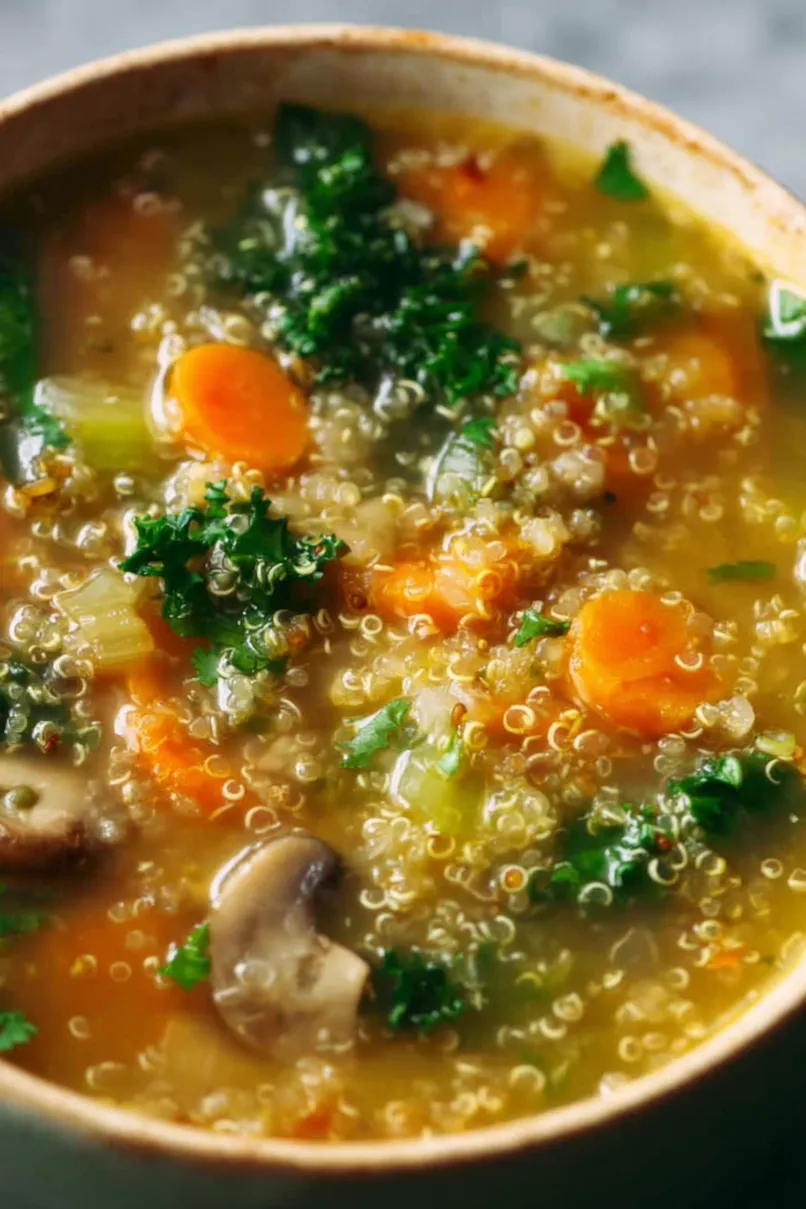
This healing garlic soup is perfect on its own when you’re feeling under the weather, but a slice of warm crusty bread or some simple crackers can help soak up all those good-for-you flavors. If you’re up for it, try serving it with a light grilled cheese made with mild cheese so it doesn’t compete with the garlic, or just toast some bread and rub it with a cut garlic clove for extra immune-boosting power. A squeeze of fresh lemon juice right before eating adds a nice bright note that pairs well with all the earthy vegetables. Since this soup is packed with quinoa and kale, it’s already pretty filling, so you really don’t need much else alongside it.
Storage Instructions
Refrigerate: This healing garlic soup keeps really well in the fridge for up to 5 days in an airtight container. I actually think it tastes even better the next day because all those garlic and herb flavors have more time to meld together. Perfect for when you’re feeling under the weather and want something nourishing ready to go.
Freeze: You can freeze this soup for up to 3 months in freezer-safe containers or bags. Just leave some room at the top for expansion. I like to freeze it in individual portions so I can thaw just what I need when a cold hits.
Warm Up: Heat the soup gently on the stovetop over medium-low heat, stirring occasionally until it’s nice and hot. If you’re reheating from frozen, let it thaw in the fridge overnight first. You might need to add a splash of broth or water if it seems too thick after storing.
| Preparation Time | 10-15 minutes |
| Cooking Time | 25-35 minutes |
| Total Time | 35-50 minutes |
| Level of Difficulty | Easy |
Estimated Nutrition
Estimated nutrition for the whole recipe (without optional ingredients):
- Calories: 550-650
- Protein: 14-18 g
- Fat: 25-30 g
- Carbohydrates: 70-80 g
Ingredients
For the soup base:
- 1 large carrot (finely diced into 1/4-inch pieces)
- 1/2 cup quinoa (rinsed thoroughly)
- 3 tbsp extra-virgin olive oil (I use California Olive Ranch)
- 5 cremini mushroom caps (finely chopped)
- 1/8 tsp ground turmeric
- 1 large onion (chopped into 1/2-inch pieces)
- 5 garlic cloves (freshly minced for best flavor)
- 6 cups vegetable broth
- Salt, black pepper, and red pepper flakes to taste (freshly ground pepper preferred)
- 1/4 cup fresh coriander (freshly chopped)
To finish:
- 3 garlic cloves (freshly minced)
- 1 cup kale (finely shredded)
Step 1: Prepare Mise en Place and Toast Aromatics
- 1/2 cup quinoa, rinsed
- 1 large onion, chopped into 1/2-inch pieces
- 5 garlic cloves, freshly minced
- 1 large carrot, finely diced into 1/4-inch pieces
- 5 cremini mushroom caps, finely chopped
- 1 cup kale, finely shredded
- 3 garlic cloves, freshly minced
- 1/4 cup fresh coriander, freshly chopped
- 3 tbsp extra-virgin olive oil
- 1/8 tsp ground turmeric
- Red pepper flakes to taste
- Salt to taste
Rinse the quinoa thoroughly under cold water and set aside—this removes the bitter coating and ensures better texture.
Chop the onion into 1/2-inch pieces, mince 5 garlic cloves, dice the carrot into 1/4-inch pieces, finely chop the mushroom caps, shred the kale, mince the remaining 3 garlic cloves separately, and chop the fresh coriander.
Having everything prepped before you start cooking ensures you can focus on building flavors without interruption.
Heat the olive oil in a large pot over medium heat, then add the chopped onion, 5 minced garlic cloves, ground turmeric, a pinch of red pepper flakes, and a small pinch of salt.
Cook for 3-5 minutes, stirring occasionally, until the onion becomes translucent and fragrant—the turmeric should bloom in the oil, releasing its anti-inflammatory compounds that make this soup so healing.
Step 2: Build Flavor with Vegetables
- Aromatic base from Step 1
- 1 large carrot, finely diced
- 5 cremini mushroom caps, finely chopped
- 1/4 cup fresh coriander, freshly chopped
Add the diced carrot, chopped mushrooms, and fresh coriander to the pot and cook for 3-4 minutes, stirring occasionally.
I like to keep the heat at medium so the vegetables release their flavors without browning too quickly, which preserves their delicate healing properties.
The mushrooms will soften and begin to release their earthy umami notes, which adds depth to the broth.
Step 3: Simmer Quinoa and Build the Broth
- Vegetable mixture from Step 2
- 1/2 cup quinoa, rinsed
- 6 cups vegetable broth
- Salt and black pepper to taste
Pour in the vegetable broth and add the rinsed quinoa, stirring well to combine.
Bring the mixture to a boil over medium-high heat, then immediately reduce the heat to medium-low, cover the pot with a lid, and simmer gently for 15-20 minutes until the quinoa is tender and has absorbed the flavors of the broth.
The gentle simmer ensures the quinoa cooks evenly without breaking apart, while the covered pot traps steam that helps soften all the vegetables.
Season with salt and freshly ground black pepper to taste.
Step 4: Finish with Fresh Garlic and Kale
- Simmered soup from Step 3
- 1 cup kale, finely shredded
- 3 garlic cloves, freshly minced
- Salt and black pepper to taste
Remove the pot from heat and stir in the shredded kale and the reserved 3 freshly minced garlic cloves.
Let the soup sit uncovered for 1-2 minutes—the residual heat will soften the kale while the fresh raw garlic adds a bright, peppery bite that enhances the soup’s immune-boosting properties.
I always add fresh garlic at the very end because raw garlic provides the strongest antimicrobial benefits, which is lost when garlic is cooked for too long.
Taste and adjust seasoning with additional salt, pepper, or red pepper flakes as needed, then serve immediately while warm and fragrant.