If you ask me, onions don’t get nearly enough credit as the star of a dish.
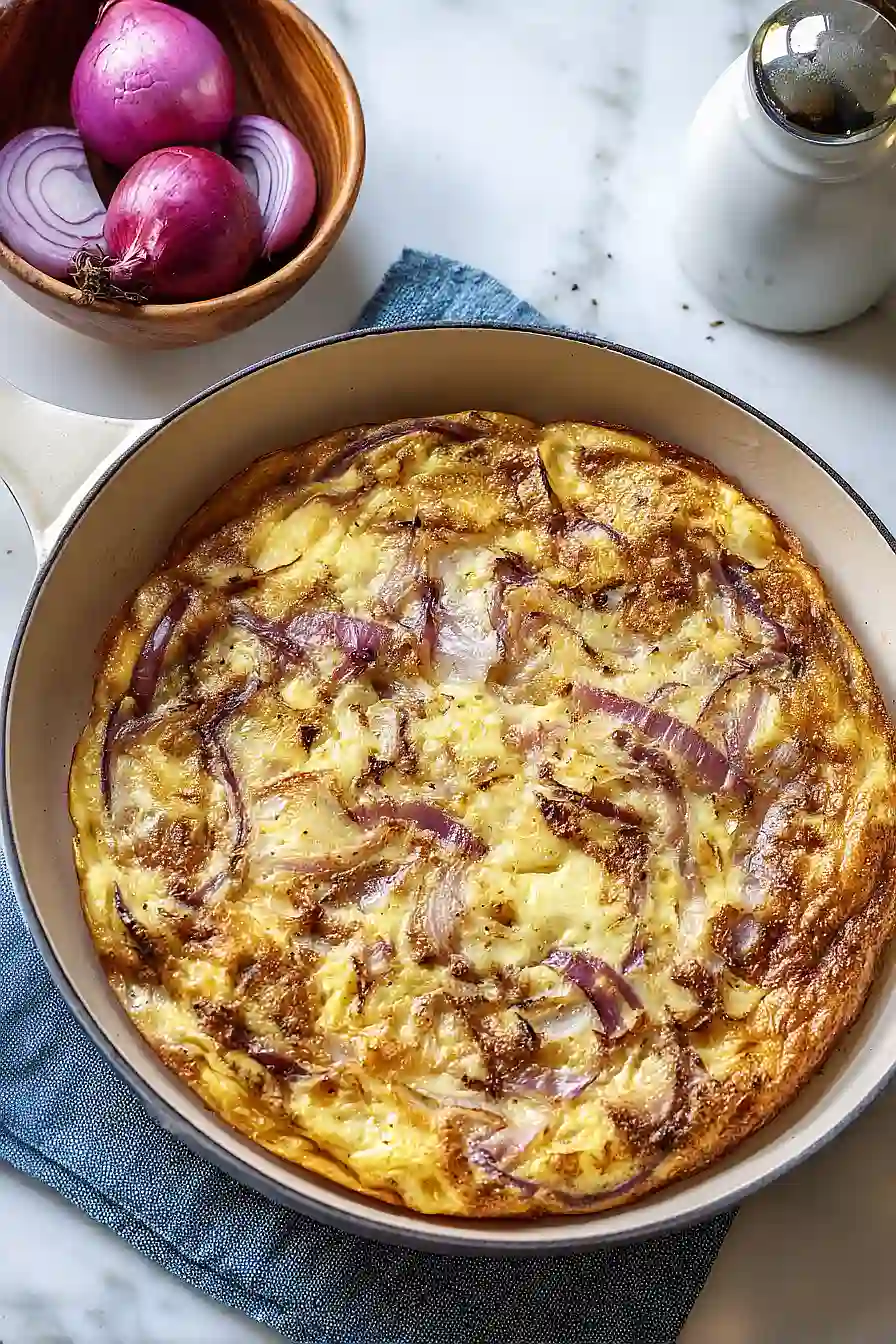
This Italian egg dish puts sweet caramelized onions front and center, where they belong. Slowly cooked until golden and tender, the onions get mixed with fluffy beaten eggs and a bit of Parmigiano-Reggiano.
The whole thing comes together in one skillet—you cook the onions low and slow, pour in the eggs, and finish it under the broiler until just set. Fresh herbs and a pinch of red pepper flakes round out the flavors.
It’s simple comfort food that works for breakfast, lunch, or a light dinner, and it tastes just as good at room temperature as it does warm.
Why You’ll Love This Frittata
- Minimal ingredients – With just onions, eggs, and a few pantry staples, this Italian classic proves you don’t need a long shopping list to make something delicious.
- Perfect for any meal – Whether you’re looking for a quick breakfast, easy lunch, or light dinner, this frittata works beautifully at any time of day.
- High-protein and filling – The eggs and cheese pack plenty of protein to keep you satisfied, making it a great option for a healthy, balanced meal.
- Ready in under an hour – From start to finish, you’ll have this frittata on the table in about 45 minutes, making it ideal for busy weeknights.
What Kind of Onions Should I Use?
For frittata di cipolle, you have some flexibility with your onion choice. Yellow onions are the most common option and work great because they become sweet and mellow when cooked down slowly. White onions will give you a slightly sharper flavor, while sweet onions like Vidalia or Walla Walla will make your frittata even more mild and caramelized. Whatever type you choose, make sure to slice them thinly and cook them low and slow until they’re soft and golden – this is key to getting that classic Italian frittata flavor where the onions practically melt into the eggs.
Options for Substitutions
This simple frittata is pretty forgiving when it comes to swaps:
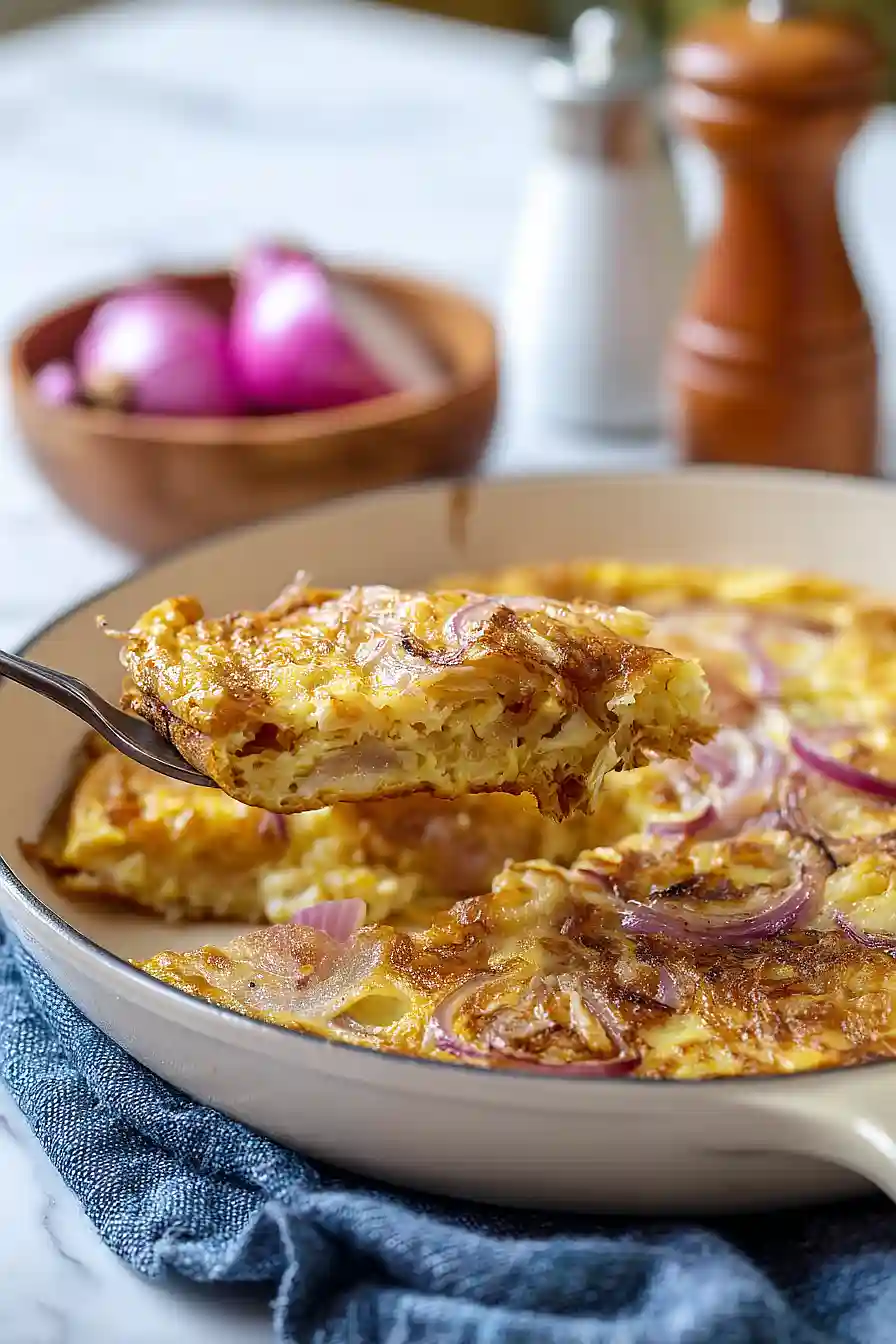
- Onions: Yellow onions work great here, but you can use white onions or even shallots for a milder, sweeter flavor. Red onions will add a bit more bite and color to your frittata.
- Eggs: Eggs are the base of this dish, so you really can’t substitute them. They’re what makes a frittata a frittata.
- Parmigiano-reggiano: If you don’t have parmesan on hand, pecorino romano is a solid swap – just know it’s a bit saltier, so adjust your seasoning accordingly. Grana padano works too and tastes pretty similar.
- Olive oil: Butter works nicely in place of olive oil and gives the frittata a richer taste. You can also use a mix of both for the best of both worlds.
- Herbs: Fresh herbs like parsley, basil, or thyme are all good choices. Dried herbs work in a pinch – just use about a third of the amount since they’re more concentrated.
Watch Out for These Mistakes While Cooking
The biggest mistake people make with frittatas is cooking them over high heat the entire time, which leads to a rubbery, overcooked bottom while the top stays runny – once you pour in the eggs, reduce the heat to medium-low so everything cooks evenly.
Another common error is flipping the frittata too early when the eggs are still too loose, making it fall apart during the flip, so wait until the edges are fully set and only the very center jiggles slightly.
To avoid a bland frittata, make sure your onions are deeply caramelized and golden before adding them to the eggs – this takes patience, but those sweet, soft onions are what make this dish special.
Finally, don’t skip cooling the onions before mixing them with the eggs, as hot onions can start cooking the eggs prematurely and create an uneven, clumpy texture instead of a smooth mixture.
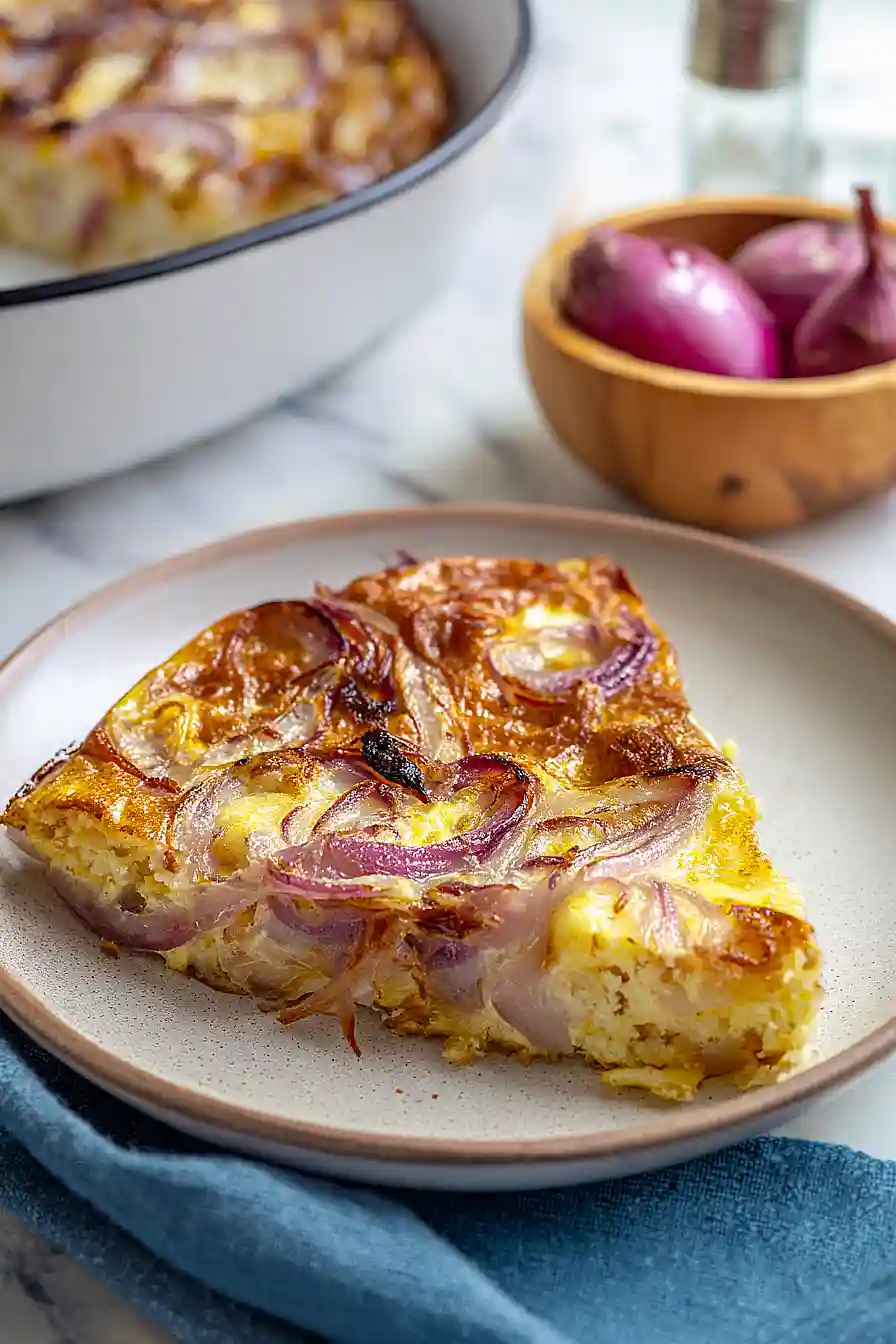
What to Serve With Frittata di Cipolle?
This onion frittata is perfect for any meal of the day, so I like to pair it with a simple arugula salad dressed with lemon juice and olive oil to balance out the richness of the eggs and cheese. A crusty baguette or some toasted ciabatta on the side is great for mopping up any bits left on your plate. If you’re serving this for brunch, it goes really well with roasted potatoes or a side of sautéed greens like spinach or kale. For a light lunch or dinner, try adding some sliced prosciutto or a bowl of mixed olives to round out the meal.
Storage Instructions
Store: This frittata keeps really well in the fridge for up to 4 days in an airtight container. I actually think it tastes even better the next day after all the flavors have had time to meld together. It’s great to slice up and pack for lunches throughout the week.
Freeze: You can freeze individual slices wrapped in plastic wrap and then placed in a freezer bag for up to 2 months. This makes it super easy to grab a quick breakfast or lunch portion whenever you need it.
Serve: Frittata is one of those dishes that’s good hot, warm, or even cold straight from the fridge. If you want to warm it up, just microwave individual slices for about 30-45 seconds, or reheat in a 300°F oven for 10 minutes until warmed through.
| Preparation Time | 25-35 minutes |
| Cooking Time | 20-30 minutes |
| Total Time | 45-65 minutes |
| Level of Difficulty | Medium |
| Servings | 4 servings |
Estimated Nutrition
Estimated nutrition for the whole recipe (without optional ingredients):
- Calories: 400-500
- Protein: 22-27 g
- Fat: 30-36 g
- Carbohydrates: 18-24 g
Ingredients
- 3 large onions (thinly sliced, about 1/8-inch thick)
- 4 large eggs
- sea salt, to taste
- freshly ground black pepper, to taste
- extra virgin olive oil (divided, for sautéing and finishing)
- 3 tablespoons grated Parmigiano-Reggiano cheese
- 2 tablespoons fresh minced herbs (such as parsley or chives)
- pinch of red pepper flakes
Step 1: Caramelize the Onions
- 3 large onions, thinly sliced
- 3 tablespoons extra virgin olive oil
- sea salt, to taste
- freshly ground black pepper, to taste
Slice the onions thinly (about 1/8-inch thick) and add them to a 10-inch nonstick skillet with 3 tablespoons of olive oil over medium heat.
Season generously with sea salt and freshly ground black pepper.
Cook for about 15-20 minutes, stirring occasionally and adding a splash of water if the onions begin to stick or brown too quickly—this keeps them soft and sweet rather than charred.
The onions are ready when they’re deeply golden, very soft, and any liquid has evaporated.
Transfer to a bowl and let cool slightly while you prepare the egg mixture.
Step 2: Prepare the Egg Mixture
- 4 large eggs
- caramelized onions from Step 1
- 3 tablespoons grated Parmigiano-Reggiano cheese
- 2 tablespoons fresh minced herbs
- pinch of red pepper flakes
- sea salt and freshly ground black pepper
While the onions cool, crack the eggs into a bowl and beat them well with a fork or whisk until the yolks and whites are fully combined.
Add the cooled caramelized onions from Step 1 to the beaten eggs, then fold in the grated Parmigiano-Reggiano cheese, fresh minced herbs, and a pinch of red pepper flakes.
Mix gently until everything is evenly distributed.
I like to taste the mixture and adjust the seasoning with another pinch of salt or pepper if needed—this ensures every bite is well-seasoned.
Step 3: Cook the Frittata on the Stovetop
- 2 tablespoons extra virgin olive oil
- egg mixture from Step 2
Heat the same 10-inch nonstick skillet over medium-high heat with 2 tablespoons of olive oil until it shimmers and just barely smokes.
Pour in the egg and onion mixture from Step 2, immediately stir with a wooden spoon for about 30 seconds while gently shaking the pan, then stop stirring and let it cook undisturbed.
After 2-3 minutes, the edges should begin to set and pull away slightly from the pan.
Reduce the heat to medium-low and continue cooking for another 3-4 minutes until the bottom is golden brown but the top is still slightly wet.
Step 4: Flip and Finish the Frittata
- 1 tablespoon extra virgin olive oil
Slide the frittata onto a large flat plate, then place the empty skillet on top and carefully flip the whole setup so the frittata lands uncooked-side-down back into the hot pan.
Add another tablespoon of olive oil around the edges if needed, then cook for 2-3 minutes over medium-low heat until the second side is golden brown and the center feels just set when gently pressed.
I find that letting the frittata rest in the pan for a minute before sliding it onto a serving plate helps it stay intact.
Step 5: Serve
Slide the finished frittata onto a cutting board or serving plate and let it rest for a minute or two before slicing.
Serve warm or at room temperature, drizzling lightly with extra virgin olive oil if desired.
This frittata is excellent served as is, with a simple green salad, or with crusty bread.
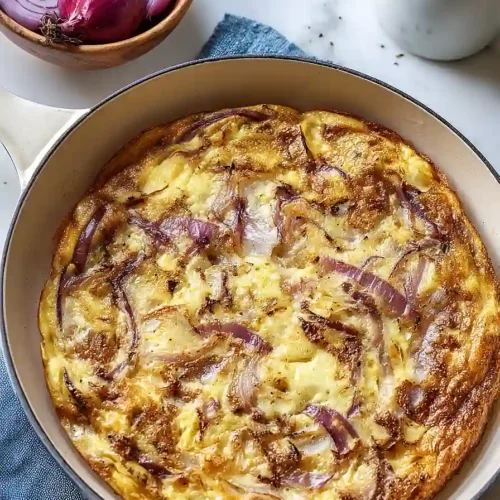
Homemade Frittata di Cipolle
Ingredients
- 3 large onions (thinly sliced, about 1/8-inch thick)
- 4 large eggs
- sea salt, to taste
- freshly ground black pepper, to taste
- extra virgin olive oil (divided, for sautéing and finishing)
- 3 tablespoons grated Parmigiano-Reggiano cheese
- 2 tablespoons fresh minced herbs (such as parsley or chives)
- pinch of red pepper flakes
Instructions
- Slice the onions thinly (about 1/8-inch thick) and add them to a 10-inch nonstick skillet with 3 tablespoons of olive oil over medium heat. Season generously with sea salt and freshly ground black pepper. Cook for about 15-20 minutes, stirring occasionally and adding a splash of water if the onions begin to stick or brown too quickly—this keeps them soft and sweet rather than charred. The onions are ready when they're deeply golden, very soft, and any liquid has evaporated. Transfer to a bowl and let cool slightly while you prepare the egg mixture.
- While the onions cool, crack the eggs into a bowl and beat them well with a fork or whisk until the yolks and whites are fully combined. Add the cooled caramelized onions from Step 1 to the beaten eggs, then fold in the grated Parmigiano-Reggiano cheese, fresh minced herbs, and a pinch of red pepper flakes. Mix gently until everything is evenly distributed. I like to taste the mixture and adjust the seasoning with another pinch of salt or pepper if needed—this ensures every bite is well-seasoned.
- Heat the same 10-inch nonstick skillet over medium-high heat with 2 tablespoons of olive oil until it shimmers and just barely smokes. Pour in the egg and onion mixture from Step 2, immediately stir with a wooden spoon for about 30 seconds while gently shaking the pan, then stop stirring and let it cook undisturbed. After 2-3 minutes, the edges should begin to set and pull away slightly from the pan. Reduce the heat to medium-low and continue cooking for another 3-4 minutes until the bottom is golden brown but the top is still slightly wet.
- Slide the frittata onto a large flat plate, then place the empty skillet on top and carefully flip the whole setup so the frittata lands uncooked-side-down back into the hot pan. Add another tablespoon of olive oil around the edges if needed, then cook for 2-3 minutes over medium-low heat until the second side is golden brown and the center feels just set when gently pressed. I find that letting the frittata rest in the pan for a minute before sliding it onto a serving plate helps it stay intact.
- Slide the finished frittata onto a cutting board or serving plate and let it rest for a minute or two before slicing. Serve warm or at room temperature, drizzling lightly with extra virgin olive oil if desired. This frittata is excellent served as is, with a simple green salad, or with crusty bread.