Finding a weeknight pasta dinner that feels both comforting and a little special can be tricky. You want something that satisfies the whole family but doesn’t require hours in the kitchen, and it gets even more complicated when you’re trying to put a fresh spin on classic favorites.
Luckily, this halloumi carbonara hits all the right notes: it’s creamy and satisfying like traditional carbonara, comes together in under 30 minutes, and the salty halloumi adds a fun twist that makes this dish feel new again.
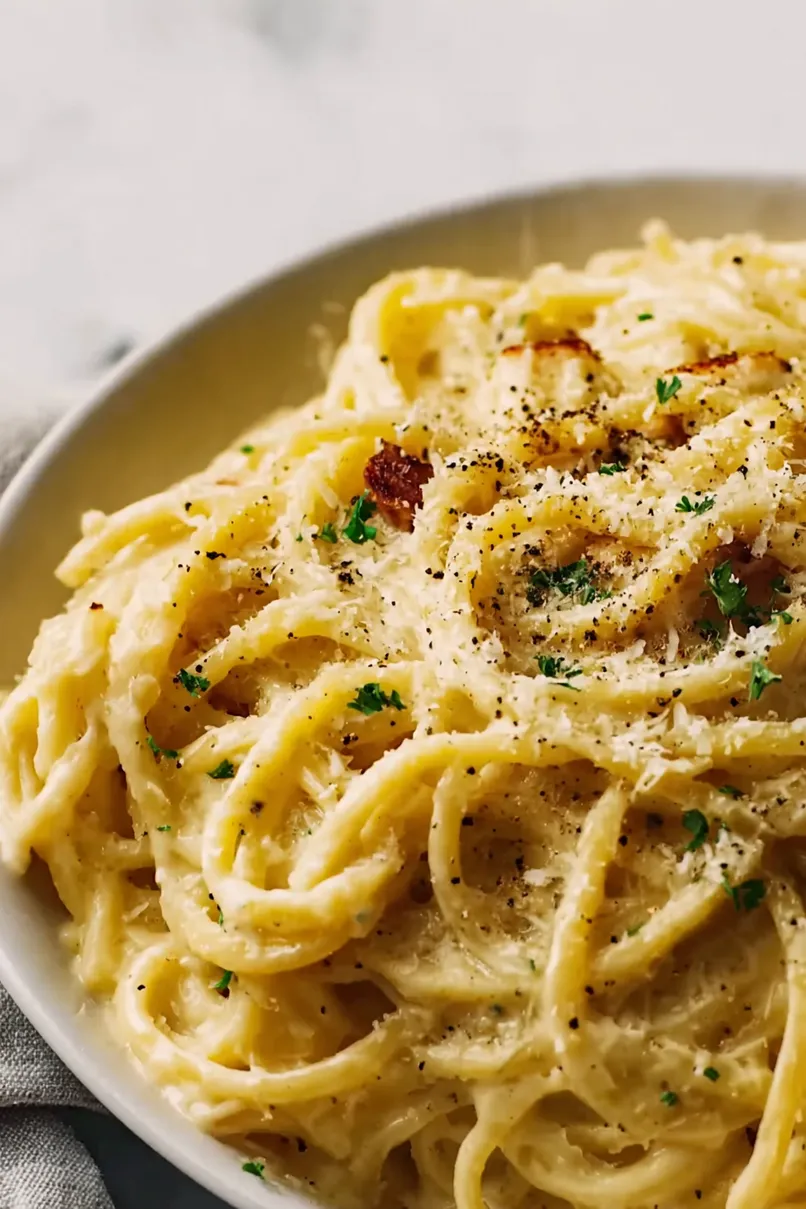
Why You’ll Love This Halloumi Carbonara
- Quick weeknight dinner – Ready in just 25-35 minutes, this pasta is perfect when you want something satisfying without spending hours in the kitchen.
- Simple ingredients – You only need a handful of basic ingredients that you can easily find at any grocery store, making this an accessible recipe for everyone.
- Vegetarian-friendly twist – The halloumi cheese replaces traditional bacon or pancetta, giving you all the salty, savory flavors vegetarians can enjoy without missing out on the classic carbonara experience.
- Creamy without cream – Just like traditional carbonara, this recipe creates its own silky sauce using eggs and cheese, so you get that rich, creamy texture naturally.
- Crispy halloumi texture – The cubed halloumi gets golden and slightly crispy when cooked, adding a delicious contrast to the smooth pasta and sauce.
What Kind of Halloumi Should I Use?
For this carbonara, you’ll want to pick up a good quality halloumi from the refrigerated cheese section of your grocery store. Traditional halloumi made from sheep’s and goat’s milk will give you the most authentic flavor, but cow’s milk versions work just fine too and are easier to find. Look for halloumi that feels firm to the touch and doesn’t have too much liquid in the package – this usually means it’s fresher. When you cut it into cubes, it should hold its shape well and not crumble, which is exactly what you want for getting those nice golden edges when you pan-fry it.
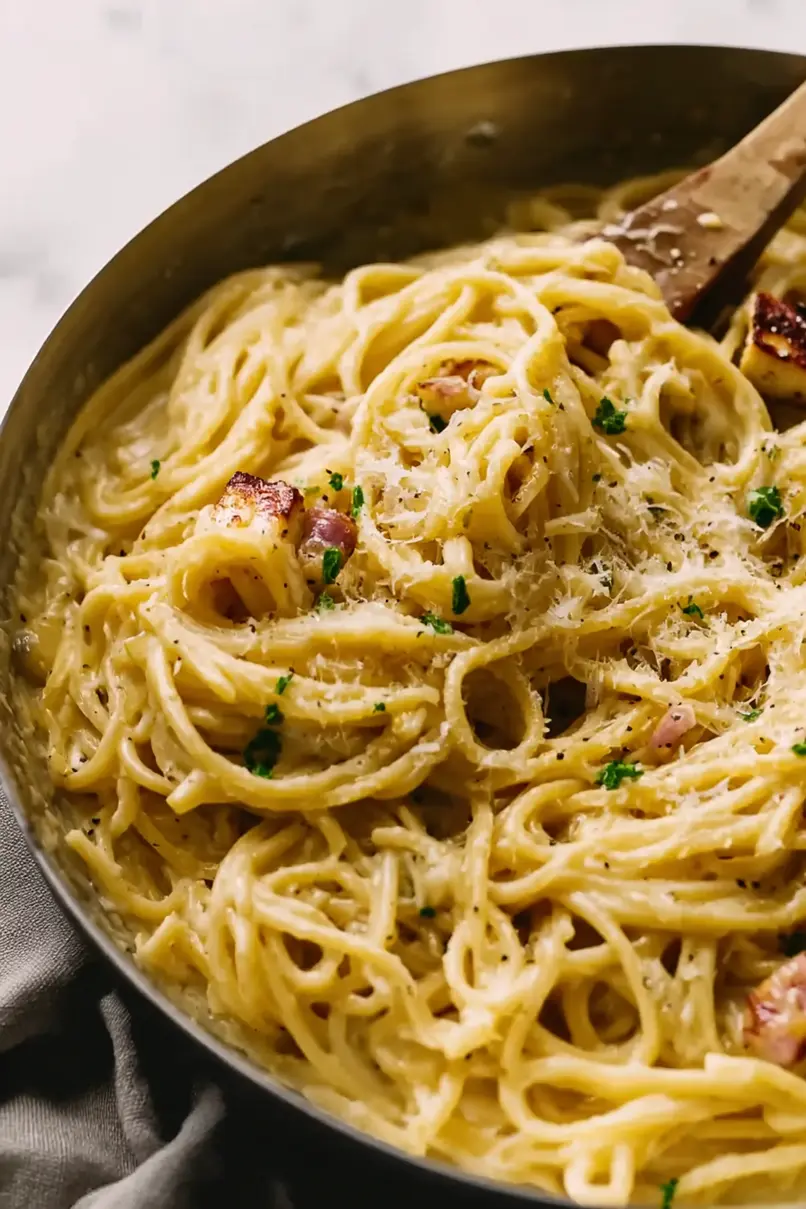
Options for Substitutions
This halloumi carbonara is pretty forgiving when it comes to swaps, but there are a few things to keep in mind:
- Halloumi cheese: This is the star of the dish, so I wouldn’t recommend substituting it. Halloumi’s unique texture and saltiness really make this recipe special. If you absolutely can’t find it, try paneer or firm feta, but the flavor will be quite different.
- Spaghetti: Any long pasta works great here – try linguine, fettuccine, or even bucatini. Short pasta like penne can work too, just make sure it’s something that holds sauce well.
- Parmesan or Pecorino Romano: Both cheeses work perfectly, but pecorino romano gives a sharper, more traditional carbonara flavor. In a pinch, you can use any hard aged cheese like aged cheddar, though the taste will be different.
- Whole egg: For a richer sauce, you can use just the egg yolk instead of the whole egg, or add an extra yolk along with the whole egg. Just be extra careful with the temperature to avoid scrambling.
- Garlic: Fresh garlic is best, but you can use ½ teaspoon of garlic powder if that’s what you have. Add it directly to the egg mixture instead of cooking it in oil.
Watch Out for These Mistakes While Cooking
The biggest mistake with carbonara is adding the egg mixture to pasta that’s too hot, which will scramble your eggs instead of creating that creamy sauce you’re after – always let the pasta cool for about 30 seconds after draining before mixing in the egg and cheese.
Another common error is not saving enough pasta water, so reserve at least a full cup of that starchy liquid before draining, as you’ll need it to help bind everything together into a silky sauce.
When cooking the halloumi, don’t overcrowd the pan or cook it too long, as it can become rubbery – aim for golden brown cubes that are still tender inside.
Finally, work quickly once you start combining everything and keep tossing the pasta constantly while adding small splashes of pasta water until you achieve that glossy, creamy consistency that coats each strand perfectly.
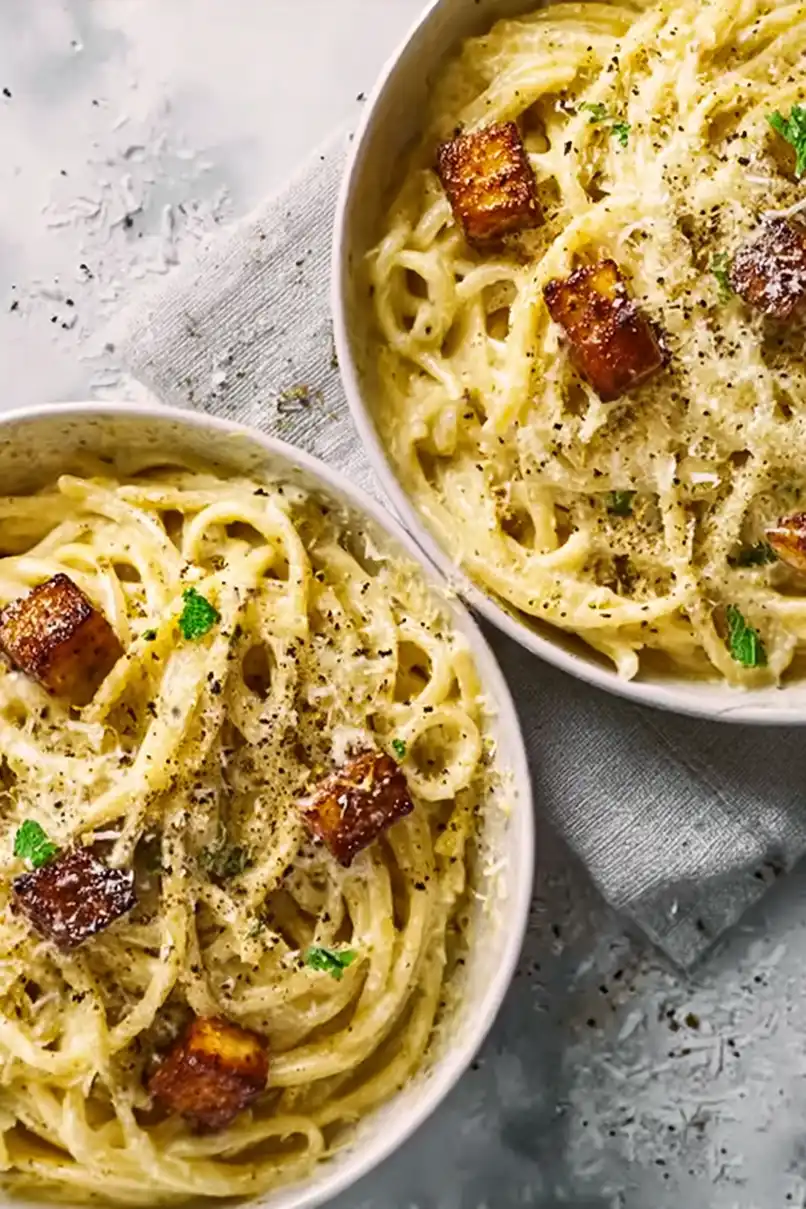
What to Serve With Halloumi Carbonara?
This rich and creamy pasta is perfect on its own, but I love serving it with a simple arugula salad dressed with lemon juice and olive oil to cut through all that cheesy goodness. The peppery greens are a nice contrast to the salty halloumi and creamy sauce. A slice of crusty garlic bread on the side is always welcome for soaking up any extra sauce left in the bowl. If you want to add some color to your plate, roasted cherry tomatoes or steamed broccoli work really well alongside this indulgent pasta dish.
Storage Instructions
Refrigerate: Halloumi carbonara is best enjoyed fresh, but you can store leftovers in the fridge for up to 2 days in an airtight container. The creamy sauce might thicken up a bit, but it’s still delicious. I usually eat mine cold the next day as a pasta salad!
Freeze: I wouldn’t recommend freezing this one since the egg-based sauce doesn’t freeze well and can become grainy when thawed. Plus, the halloumi gets a bit rubbery after freezing. It’s really meant to be enjoyed fresh from the pan.
Warm Up: To bring leftover carbonara back to life, add a splash of pasta water or regular water to a pan over low heat. Toss the pasta gently until warmed through – don’t use high heat or the egg will scramble. You can also eat it at room temperature, which is surprisingly good too!
| Preparation Time | 10-15 minutes |
| Cooking Time | 15-20 minutes |
| Total Time | 25-35 minutes |
| Level of Difficulty | Medium |
Estimated Nutrition
Estimated nutrition for the whole recipe (without optional ingredients):
- Calories: 900-1030
- Protein: 40-48 g
- Fat: 45-55 g
- Carbohydrates: 80-90 g
Ingredients
For the main dish:
- 1 tbsp extra-virgin olive oil (good quality for best flavor)
- 1 egg (room temperature)
- 1/4 cup grated Parmesan cheese (freshly grated preferred)
- 5 oz halloumi cheese (sliced into 1/4-inch thick pieces)
- 1 garlic clove (finely minced)
- 7 oz dried spaghetti (I use Barilla for consistent texture)
For the seasoning:
- kosher salt
- ground black pepper (freshly ground for more flavor)
Step 1: Prepare the Mise en Place and Start the Pasta
- 7 oz dried spaghetti
- kosher salt
- 1 garlic clove, finely minced
- 5 oz halloumi cheese, sliced into 1/4-inch pieces
- 1 egg, room temperature
- 1/4 cup grated Parmesan cheese
Bring a large pot of salted water to a rolling boil.
While waiting, mince the garlic finely, slice the halloumi into 1/4-inch thick pieces, and grate the Parmesan cheese if using whole cheese.
Crack the egg into a bowl and whisk it together with the grated Parmesan until well combined, then set aside at room temperature—this is crucial because a cold egg mixture won’t emulsify properly with the hot pasta.
Once the water boils, add the spaghetti and cook according to package directions until al dente.
Reserve 1/2 cup of pasta water before draining.
Step 2: Sear the Halloumi and Infuse with Garlic
- 1 tbsp extra-virgin olive oil
- 5 oz halloumi cheese, sliced
- 1 garlic clove, finely minced
Heat the extra-virgin olive oil in a large skillet over medium-high heat until it shimmers.
Add the halloumi slices in a single layer and cook for 2 minutes until golden on the bottom, then flip and cook the other side for 2 minutes until lightly browned.
I like to let the halloumi get a slight crust on each side—it adds a textural contrast that makes this dish special.
Add the minced garlic to the pan and let it cook for about 30 seconds until fragrant, then remove the garlic from the pan and discard it, leaving the oil infused with its flavor.
Step 3: Combine Pasta with Halloumi and Pasta Water
- cooked spaghetti from Step 1
- seared halloumi from Step 2
- reserved pasta water
- ground black pepper
Add the cooked spaghetti from Step 1 to the skillet with the seared halloumi, along with 1/3 to 1/2 cup of the reserved pasta water.
The starch in the pasta water is essential—it helps create a silky sauce and helps the egg emulsify properly.
Toss everything together over medium heat for about 1 minute to coat the pasta evenly.
Season generously with freshly ground black pepper, remembering that pepper is a key flavor in carbonara, not just a garnish.
Step 4: Create the Creamy Sauce by Adding Egg Off Heat
- egg and Parmesan mixture from Step 1
- pasta mixture from Step 3
Remove the skillet from heat immediately—this is critical to prevent scrambling the egg.
Working quickly, pour the egg and Parmesan mixture from Step 1 into the pasta while stirring constantly and vigorously.
The residual heat from the pasta and pan will gently cook the egg, creating a creamy, luxurious sauce rather than scrambled eggs.
Keep stirring for about 30 seconds until the mixture looks silky and cohesive.
I find that continuing to stir even after the egg looks incorporated helps distribute the heat evenly and prevents any cooked bits from forming.
Step 5: Season and Serve
- kosher salt
- ground black pepper
Taste the pasta and adjust the seasoning with kosher salt and additional black pepper as needed.
If the sauce seems too thick, add a splash more pasta water and stir to loosen it.
Divide between bowls or plates immediately and serve while hot, finishing with an extra grind of fresh black pepper if desired.