Finding a healthy dinner option that actually gets your family excited about eating their vegetables can feel like an uphill battle. Between picky eaters turning their noses up at anything green and the temptation to just order takeout after a long day, getting a nutritious meal on the table often feels more stressful than it’s worth.
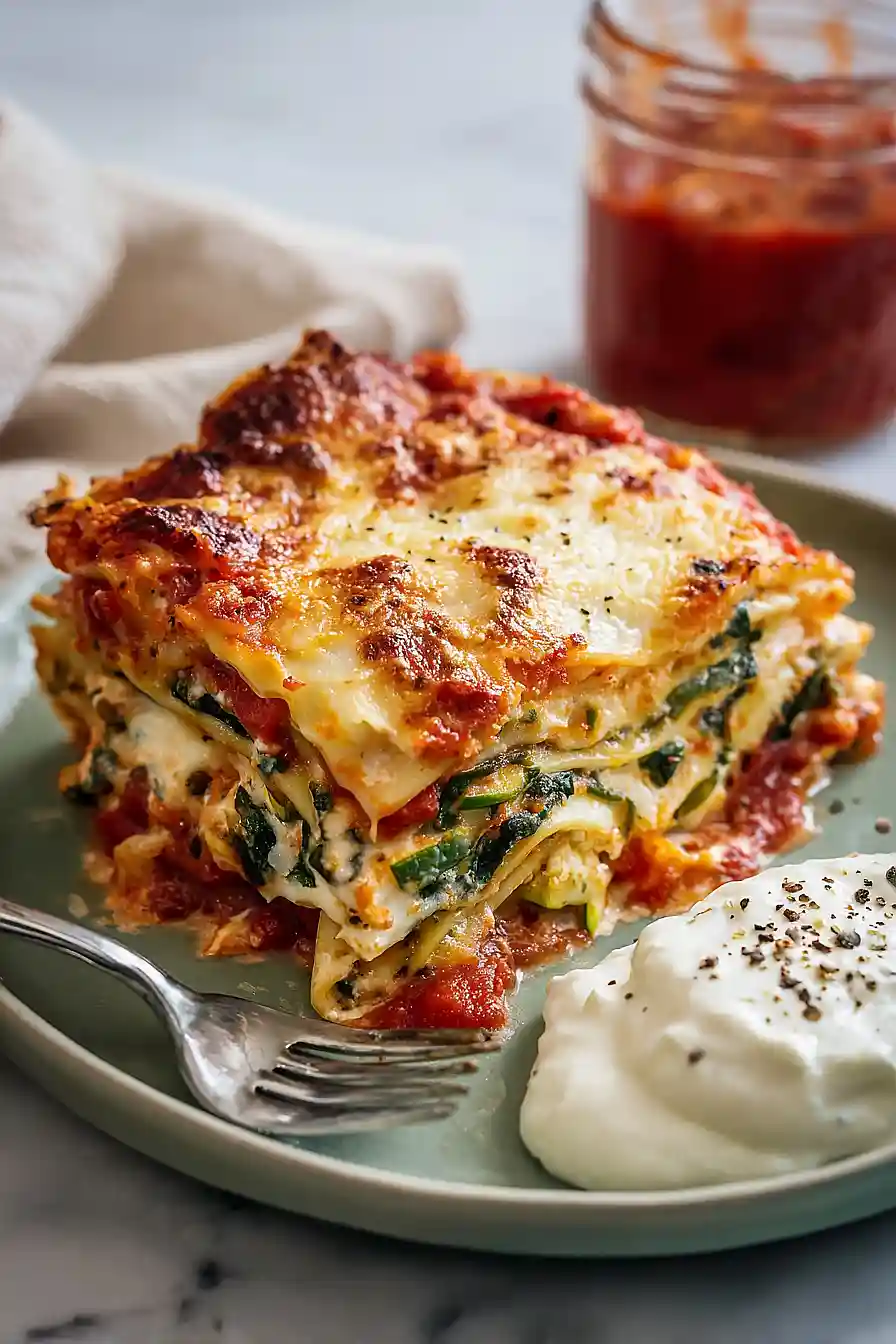
That’s where this cottage cheese veggie lasagna comes in handy. It’s packed with carrots, zucchini, bell peppers, and spinach, but the layers of melty cheese and rich tomato sauce make it taste like pure comfort food. Plus, you can easily swap in whatever vegetables you already have in your fridge, making it perfect for those nights when you need to clean out the crisper drawer.

Why You’ll Love This Cottage Cheese Veggie Lasagna
- Packed with vegetables – This lasagna sneaks in carrots, bell peppers, zucchini, spinach, and onions, making it an easy way to get your daily veggies without even trying.
- High-protein twist – Using cottage cheese instead of ricotta bumps up the protein content while keeping the creamy texture you love in traditional lasagna.
- Healthier comfort food – You get all the cozy, cheesy goodness of classic lasagna with way more nutrition from the veggie-packed layers.
- Great for meal prep – This lasagna tastes even better the next day and reheats beautifully, making it perfect for easy lunches throughout the week.
What Kind of Cottage Cheese Should I Use?
For lasagna, you’ll want to grab a good quality cottage cheese that has a nice creamy texture. Full-fat cottage cheese works best here because it gives you that rich, satisfying layer between the noodles and helps hold everything together. Small curd cottage cheese is my go-to since it spreads more easily and blends better with the other ingredients, but medium or large curd will work just fine too. If you’re not a fan of the lumpy texture, you can give it a quick blend in the food processor before layering it into your lasagna – this creates an almost ricotta-like consistency that some people actually prefer.
Options for Substitutions
This veggie lasagna is really forgiving when it comes to swaps, so feel free to work with what you have:
- Vegetables: The veggie mix is totally flexible. Swap in mushrooms, eggplant, yellow squash, or broccoli for any of the vegetables listed. Just keep the total amount roughly the same and chop everything to similar sizes so it cooks evenly.
- Cottage cheese: If you’re not a cottage cheese fan, ricotta works perfectly here. You can also use a mix of both for a creamier texture. The measurements stay the same.
- Spinach: Fresh spinach can be replaced with 10 ounces of frozen spinach – just make sure to thaw it completely and squeeze out all the excess water before adding it to the recipe.
- Lasagna noodles: Regular lasagna noodles are best for this recipe, but you can use no-boil noodles if that’s what you have. Just add an extra 1/4 cup of water to your sauce and cover the baking dish tightly with foil.
- Mozzarella: Feel free to use a blend of Italian cheeses or add some parmesan to the mozzarella for extra flavor. Provolone also works nicely if you want a sharper taste.
- Fresh basil: If you don’t have fresh basil, use 1 tablespoon of dried basil instead. Add it when you’re cooking the sauce so it has time to release its flavor.
Watch Out for These Mistakes While Baking
The biggest mistake you can make with veggie lasagna is not draining your vegetables properly after cooking – excess moisture will turn your lasagna watery and prevent it from setting up nicely, so press out any liquid with a spatula or let the veggies cool on paper towels before adding them to the cottage cheese mixture. Another common error is skipping the resting time after baking, which might seem unnecessary but those 15-20 minutes are crucial for the layers to firm up and make clean slices possible. Don’t forget to cover the dish tightly with foil during the first baking phase to trap steam and cook the noodles through – if the foil touches the cheese, spray it lightly with cooking spray first to prevent sticking. Finally, resist the urge to cut into the lasagna right away even though it smells amazing, because patience here really pays off with neat, beautiful portions instead of a sloppy mess on the plate.
What to Serve With Cottage Cheese Veggie Lasagna?
This veggie-packed lasagna is pretty filling on its own, so I like to keep the sides simple and fresh. A crisp green salad with a light vinaigrette is perfect for balancing out all that cheesy goodness, and some warm garlic bread on the side is always a crowd-pleaser for soaking up any extra sauce. If you want to add a little more substance to the meal, roasted Brussels sprouts or a side of sautéed green beans with lemon work really well. Sometimes I’ll even serve it with a simple Caesar salad and call it a complete dinner.
Storage Instructions
Store: Leftover lasagna keeps really well in the fridge for up to 4 days. Just cover it tightly with foil or transfer individual portions to airtight containers. It actually tastes even better the next day once all the flavors have had time to meld together!
Freeze: This veggie lasagna is perfect for freezing. You can freeze the whole thing (before or after baking) or cut it into portions first. Wrap it well in plastic wrap and then foil, and it’ll stay good for up to 3 months. I like to freeze individual slices so I can grab one whenever I need a quick dinner.
Reheat: For refrigerated lasagna, cover with foil and warm in a 350°F oven for about 20 minutes, or microwave individual portions for 2-3 minutes. If reheating from frozen, let it thaw in the fridge overnight first, or add an extra 10-15 minutes to the oven time while keeping it covered.
| Preparation Time | 45-60 minutes |
| Cooking Time | 28-33 minutes |
| Total Time | 75-95 minutes |
| Level of Difficulty | Medium |
| Servings | 9 servings |
Estimated Nutrition
Estimated nutrition for the whole recipe (without optional ingredients):
- Calories: 1900-2100
- Protein: 90-105 g
- Fat: 90-105 g
- Carbohydrates: 170-190 g
Ingredients
For the vegetables:
- 2.5 tbsp olive oil
- 4 carrots (diced into 1/4-inch pieces)
- 1 large red bell pepper (diced into 1/2-inch pieces)
- 1 large zucchini (diced into 1/2-inch pieces)
- 1 large onion (finely diced)
- 1/4 tsp salt
- 8 oz spinach
For the tomato sauce:
- 28 oz diced tomatoes
- 1/3 cup fresh basil (finely chopped)
- 2 tbsp olive oil
- 3 cloves garlic (freshly minced for best aroma)
- 1/4 tsp salt
- 1/4 tsp red pepper flakes
- 1/2 tsp dried oregano
For the cheese filling and assembly:
- 2.5 cups cottage cheese
- 1/4 tsp salt
- freshly ground black pepper to taste
- 9 lasagna noodles
- 10 oz mozzarella (freshly shredded for better melting)
Step 1: Prepare Mise en Place and Cook Lasagna Noodles
- 9 lasagna noodles
- 4 carrots
- 1 large red bell pepper
- 1 large zucchini
- 1 large onion
- 3 cloves garlic
- 1/3 cup fresh basil
Start water for the noodles and cook them according to package directions, then set aside to cool slightly.
While the water heats, prepare all your vegetables by dicing the carrots into 1/4-inch pieces, the bell pepper and zucchini into 1/2-inch pieces, and finely dicing the onion.
Mince the garlic and chop the fresh basil.
Preheat your oven to 425°F.
Step 2: Sauté Vegetables and Build the Veggie Layer
- 2.5 tbsp olive oil
- 4 carrots
- 1 large red bell pepper
- 1 large zucchini
- 1 large onion
- 1/4 tsp salt
- 8 oz spinach
Heat 2.5 tablespoons olive oil in a large skillet over medium-high heat.
Add the diced carrots, bell pepper, zucchini, and onion with 1/4 teaspoon salt, cooking for 8-12 minutes until the vegetables soften and begin to caramelize slightly, stirring occasionally.
Add the spinach and cook for another 3 minutes until wilted.
Transfer the cooked vegetables to a food processor and pulse 5-7 times until roughly chopped but still textured—you want some vegetable pieces visible, not a puree.
Step 3: Make the Tomato-Basil Sauce
- 28 oz diced tomatoes
- 1/3 cup fresh basil
- 2 tbsp olive oil
- 3 cloves garlic
- 1/4 tsp salt
- 1/4 tsp red pepper flakes
- 1/2 tsp dried oregano
In a blender, combine the drained diced tomatoes, fresh basil, 2 tablespoons olive oil, minced garlic, 1/4 teaspoon salt, red pepper flakes, and dried oregano.
Blend until smooth, creating a vibrant sauce with visible herbs.
I like to drain the tomatoes well before blending to control the sauce consistency—this prevents the lasagna from becoming watery.
Step 4: Build the Cottage Cheese Filling
- 2.5 cups cottage cheese
- 1/4 tsp salt
- freshly ground black pepper to taste
- cooked and pulsed vegetables from Step 2
Blend 1 cup of the cottage cheese until completely smooth, then transfer to a large mixing bowl.
Add the pulsed cooked vegetables from Step 2 to the blended cottage cheese and mix well.
Fold in the remaining 1.5 cups cottage cheese, 1/4 teaspoon salt, and freshly ground black pepper to taste.
The filling should have a creamy base with visible vegetable pieces throughout.
I prefer to keep some of the cottage cheese chunky rather than fully blending it—it gives the lasagna better texture and helps prevent it from becoming too dense.
Step 5: Assemble the Lasagna
- 9 lasagna noodles
- tomato-basil sauce from Step 3
- cottage cheese filling from Step 4
- 10 oz mozzarella
Spread 1/2 cup of the tomato-basil sauce from Step 3 on the bottom of a 9×13 inch baking dish.
Layer 3 cooked noodles over the sauce, breaking them to fit as needed.
Spread half of the cottage cheese filling from Step 4 over the noodles, then pour 3/4 cup sauce over it and sprinkle 1/2 cup shredded mozzarella.
Add another layer of 3 noodles, followed by the remaining cottage cheese filling, another 1/2 cup shredded mozzarella, then the final 3 noodles.
Top with the remaining 3/4 cup sauce and 1 cup mozzarella, spreading everything evenly to the edges.
Step 6: Bake and Rest the Lasagna
Cover the assembled lasagna with foil and bake at 425°F for 18 minutes.
Remove the foil and bake uncovered for another 10-15 minutes until the cheese is melted and lightly golden on top.
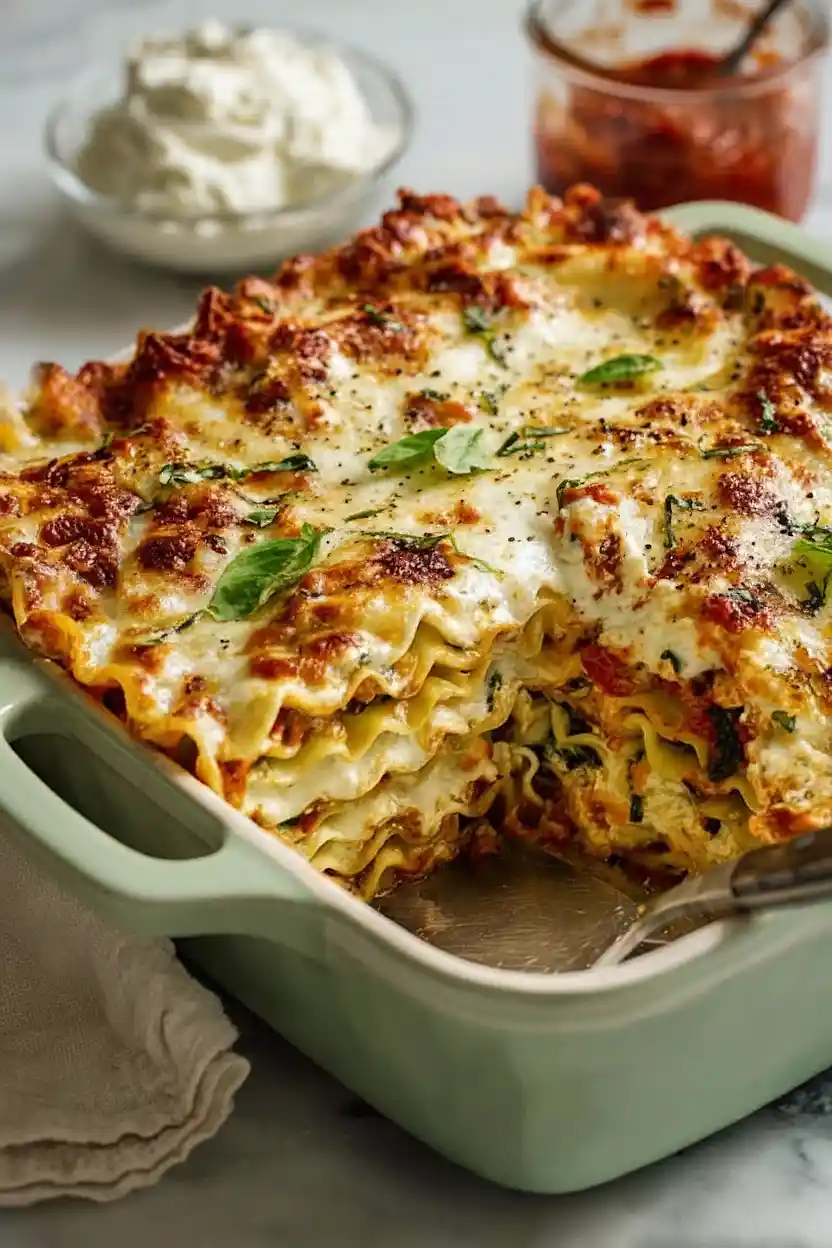
Remove from the oven and let cool for 15-20 minutes before serving—this resting period allows the lasagna to set and makes it much easier to slice cleanly without falling apart.

Layered Cottage Cheese Veggie Lasagna
Ingredients
For the vegetables::
- 2.5 tbsp olive oil
- 4 carrots (diced into 1/4-inch pieces)
- 1 large red bell pepper (diced into 1/2-inch pieces)
- 1 large zucchini (diced into 1/2-inch pieces)
- 1 large onion (finely diced)
- 1/4 tsp salt
- 8 oz spinach
For the tomato sauce::
- 28 oz diced tomatoes
- 1/3 cup fresh basil (finely chopped)
- 2 tbsp olive oil
- 3 cloves garlic (freshly minced for best aroma)
- 1/4 tsp salt
- 1/4 tsp red pepper flakes
- 1/2 tsp dried oregano
For the cheese filling and assembly::
- 2.5 cups cottage cheese
- 1/4 tsp salt
- freshly ground black pepper to taste
- 9 lasagna noodles
- 10 oz mozzarella (freshly shredded for better melting)
Instructions
- Start water for the noodles and cook them according to package directions, then set aside to cool slightly. While the water heats, prepare all your vegetables by dicing the carrots into 1/4-inch pieces, the bell pepper and zucchini into 1/2-inch pieces, and finely dicing the onion. Mince the garlic and chop the fresh basil. Preheat your oven to 425°F.
- Heat 2.5 tablespoons olive oil in a large skillet over medium-high heat. Add the diced carrots, bell pepper, zucchini, and onion with 1/4 teaspoon salt, cooking for 8-12 minutes until the vegetables soften and begin to caramelize slightly, stirring occasionally. Add the spinach and cook for another 3 minutes until wilted. Transfer the cooked vegetables to a food processor and pulse 5-7 times until roughly chopped but still textured—you want some vegetable pieces visible, not a puree.
- In a blender, combine the drained diced tomatoes, fresh basil, 2 tablespoons olive oil, minced garlic, 1/4 teaspoon salt, red pepper flakes, and dried oregano. Blend until smooth, creating a vibrant sauce with visible herbs. I like to drain the tomatoes well before blending to control the sauce consistency—this prevents the lasagna from becoming watery.
- Blend 1 cup of the cottage cheese until completely smooth, then transfer to a large mixing bowl. Add the pulsed cooked vegetables from Step 2 to the blended cottage cheese and mix well. Fold in the remaining 1.5 cups cottage cheese, 1/4 teaspoon salt, and freshly ground black pepper to taste. The filling should have a creamy base with visible vegetable pieces throughout. I prefer to keep some of the cottage cheese chunky rather than fully blending it—it gives the lasagna better texture and helps prevent it from becoming too dense.
- Spread 1/2 cup of the tomato-basil sauce from Step 3 on the bottom of a 9x13 inch baking dish. Layer 3 cooked noodles over the sauce, breaking them to fit as needed. Spread half of the cottage cheese filling from Step 4 over the noodles, then pour 3/4 cup sauce over it and sprinkle 1/2 cup shredded mozzarella. Add another layer of 3 noodles, followed by the remaining cottage cheese filling, another 1/2 cup shredded mozzarella, then the final 3 noodles. Top with the remaining 3/4 cup sauce and 1 cup mozzarella, spreading everything evenly to the edges.
- Cover the assembled lasagna with foil and bake at 425°F for 18 minutes. Remove the foil and bake uncovered for another 10-15 minutes until the cheese is melted and lightly golden on top. Remove from the oven and let cool for 15-20 minutes before serving—this resting period allows the lasagna to set and makes it much easier to slice cleanly without falling apart.