Getting a nutritious dinner on the table during busy weeknights can feel impossible sometimes. Between work, family commitments, and everything else life throws at you, the last thing you want is a complicated recipe with multiple pots and pans to wash afterward.
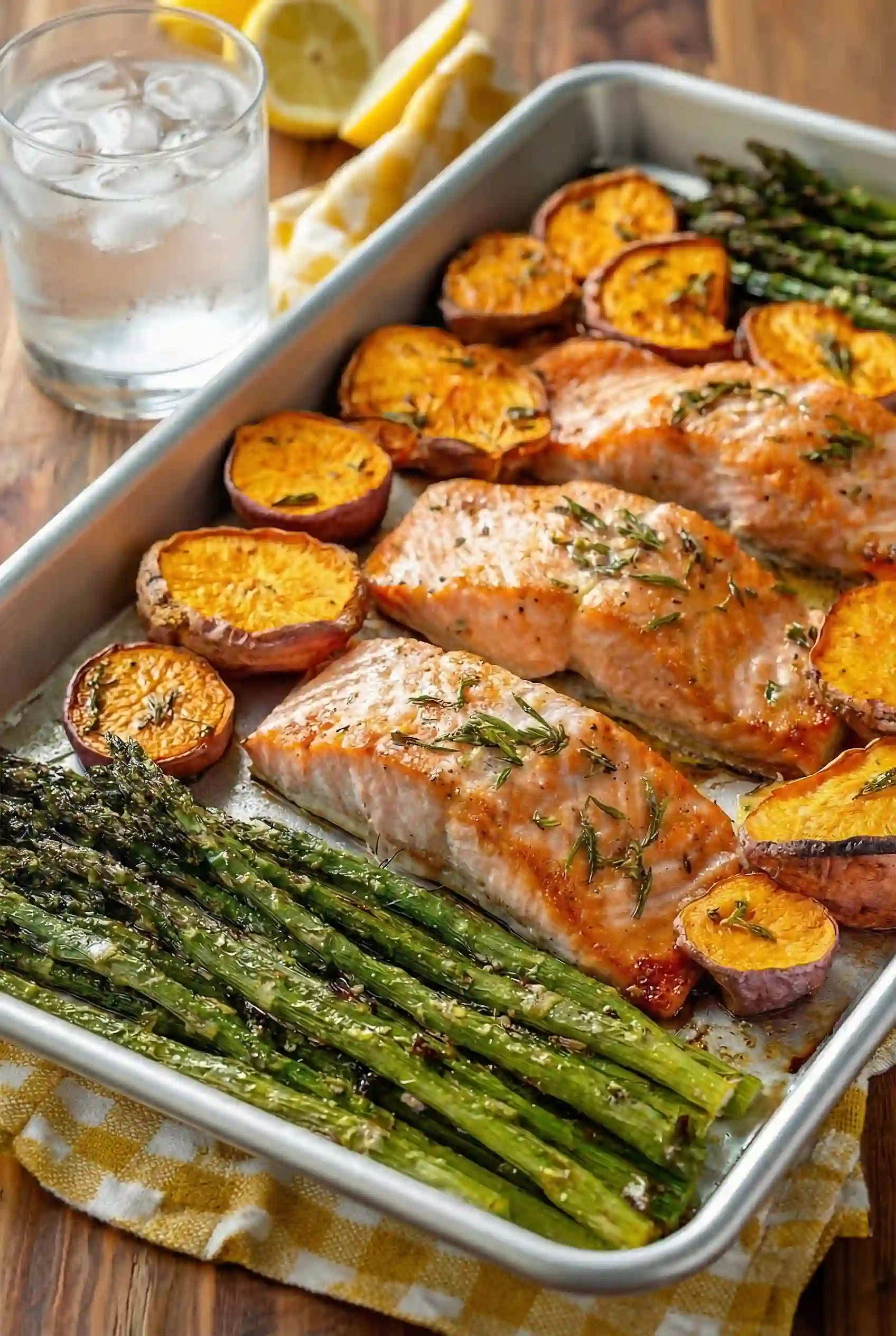
That’s where this sheet pan salmon with asparagus and sweet potatoes comes to the rescue. Everything cooks together on one pan, the flavors are fresh and satisfying, and cleanup is practically effortless. Plus, you can easily swap in different vegetables or seasonings based on what’s in your fridge.
Why You’ll Love This Sheet Pan Salmon
- One-pan dinner – Everything cooks together on a single sheet pan, which means less cleanup and more time to relax after dinner.
- Healthy and balanced – You’re getting protein, veggies, and complex carbs all in one meal, making it perfect for those trying to eat clean without sacrificing flavor.
- Simple ingredients – Fresh salmon, asparagus, and sweet potatoes with basic seasonings you probably already have in your pantry.
- Great for meal prep – This recipe makes enough for leftovers that reheat well, so you can enjoy it for lunch the next day or prep it ahead for the week.
- Impressive but easy – It looks and tastes like something from a restaurant, but it’s actually simple enough for a busy weeknight.
What Kind of Salmon Should I Use?
You can choose farm-raised or wild for this recipe, both will work just fine. And if all you have access to is frozen salmon, don’t worry – you’ll still be good to go. In fact, most fresh salmon at the supermarket has been previously frozen right off the boat. Just be sure it was handled properly by checking for any visible ice crystals or signs of freezer burn. For this sheet pan recipe, you can use a whole side of salmon or individual fillets, whichever is easier for you to find and fits your serving needs.
Options for Substitutions
This sheet pan dinner is pretty forgiving when it comes to swaps:
- Salmon: You can use other fish like trout, arctic char, or even cod. Just keep in mind that thinner fillets like cod will cook faster, so check them around 10-12 minutes instead of the full cooking time.
- Asparagus: Green beans, broccolini, or zucchini spears work great here. They’ll all roast nicely alongside the salmon and potatoes.
- Sweet potatoes: Regular white potatoes or butternut squash are good alternatives. Slice them thin like the recipe calls for to ensure they cook through in time.
- Fresh rosemary: If you don’t have fresh rosemary, use 1 tablespoon of dried rosemary instead. You can also swap in fresh thyme or dill for a different flavor profile.
- Smoked paprika: Regular paprika works fine if that’s what you have. For a little kick, try using cayenne pepper instead, but start with just 1/4 teaspoon.
- Lemon juice: Lime juice or white wine vinegar can step in if you’re out of lemons. Use the same amount for that bright, tangy finish.
Watch Out for These Mistakes While Cooking
The biggest mistake when making sheet pan salmon is adding everything at once, which leads to overcooked vegetables and undercooked potatoes – always give those sweet potatoes a 40-minute head start since they need way more time than the salmon and asparagus.
Another common error is overcrowding the pan, so make sure your ingredients have some breathing room or they’ll steam instead of roast, and if your pan looks packed, use two sheets instead.
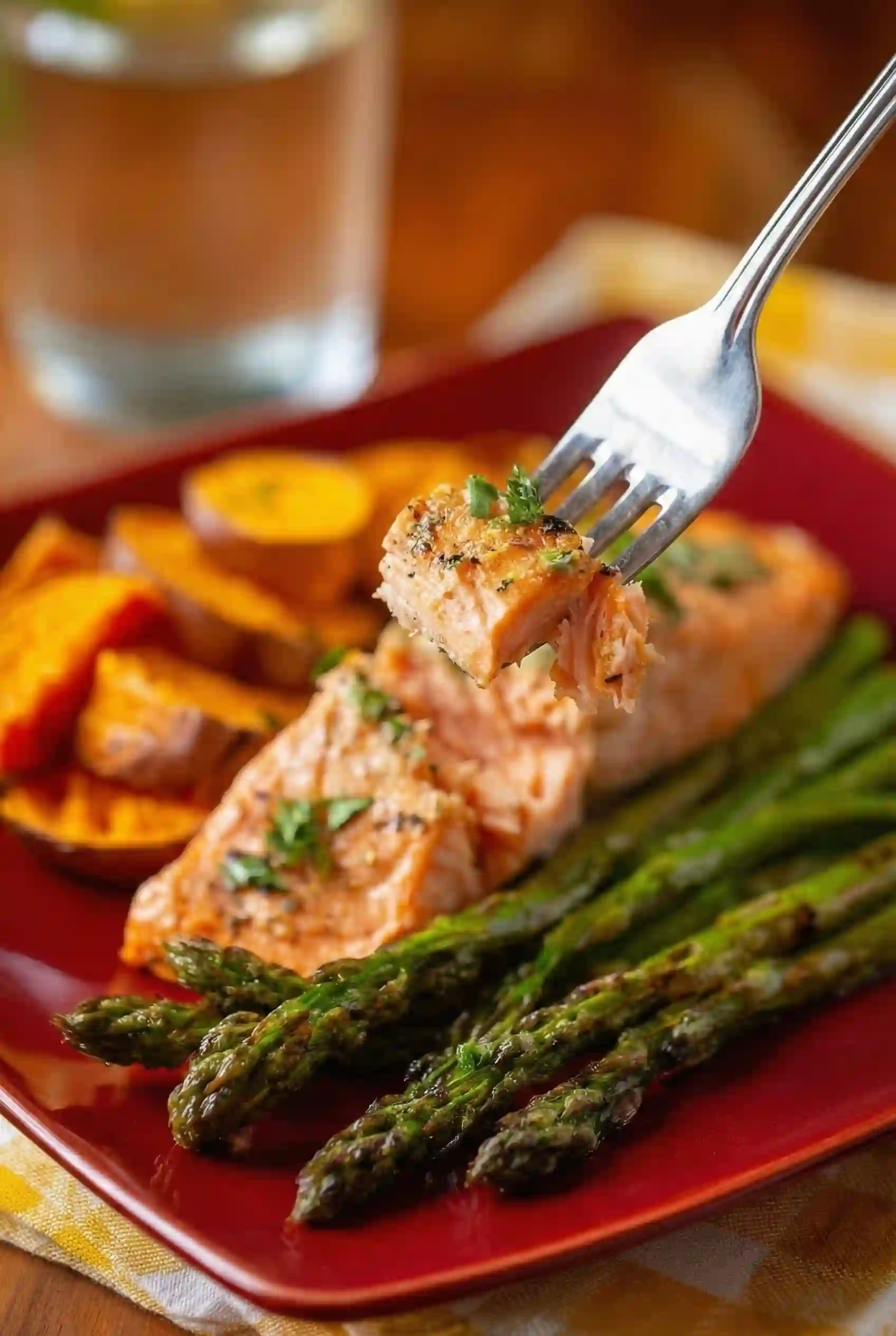
To avoid dry salmon, pull it from the oven when it’s just barely opaque in the center and flakes gently with a fork – it’ll continue cooking for a minute or two after you take it out.
One more tip: cut your sweet potato slices no thicker than 1/4 inch so they actually get tender in time, and flip them at the 35-minute mark to get nice browning on both sides.
What to Serve With Sheet Pan Salmon?
This sheet pan dinner is pretty much a complete meal on its own since you’ve got protein, veggies, and sweet potatoes all in one pan. If you want to round things out a bit more, a simple side salad with lemon vinaigrette works great and keeps the meal feeling light and fresh. You could also serve it with some crusty bread or dinner rolls to soak up any leftover juices from the pan. For something a little different, try adding a dollop of tzatziki or a garlic aioli on the side for dipping – the cool, creamy sauce pairs really nicely with the roasted salmon and veggies.
Storage Instructions
Store: Keep your leftover sheet pan dinner in an airtight container in the fridge for up to 3 days. I like to store the salmon separate from the veggies if possible, since they reheat a bit differently and the salmon can dry out easier.
Reheat: For best results, warm everything up in the oven at 350°F for about 10 minutes until heated through. You can also use the microwave on medium power, but the salmon might lose some of its texture. The asparagus and sweet potatoes hold up really well when reheated!
Meal Prep: This recipe is great for meal prepping! Divide everything into individual containers for easy grab-and-go lunches throughout the week. Just add a squeeze of fresh lemon juice before eating to brighten up the flavors.
| Preparation Time | 10-15 minutes |
| Cooking Time | 55-60 minutes |
| Total Time | 65-75 minutes |
| Level of Difficulty | Easy |
| Servings | 4 servings |
Estimated Nutrition
Estimated nutrition for the whole recipe (without optional ingredients):
- Calories: 1350-1550
- Protein: 95-110 g
- Fat: 55-65 g
- Carbohydrates: 110-130 g
Ingredients
For the sweet potatoes:
- 2 to 3 sweet potatoes (medium, about 8 oz each)
- 1.5 tbsp extra-virgin olive oil (I use Colavita)
- 1 tbsp garlic (minced, about 3 cloves)
- 1 tbsp fresh rosemary (finely chopped)
- black pepper to taste (freshly ground)
- sea salt to taste
For the salmon and asparagus:
- 2 garlic cloves (minced)
- 0.5 tsp smoked paprika (for depth of flavor)
- 1 lb fresh asparagus (woody ends trimmed, cut into 2-inch pieces)
- sea salt to taste
- 0.5 fl oz lemon juice (about 1 lemon)
- black pepper to taste
- 2 tbsp fresh rosemary (chopped)
- 1.5 tbsp extra-virgin olive oil (or neutral oil like canola)
- 1.5 lbs salmon (skin-on fillets, room temperature)
Step 1: Prepare Mise en Place and Preheat Oven
- 1 tbsp garlic
- 2 garlic cloves
- 2 tbsp fresh rosemary
- 1 tbsp fresh rosemary
- 1 lb fresh asparagus
- 0.5 fl oz lemon juice
- 2 to 3 sweet potatoes
Preheat your oven to 350°F.
While it heats, prepare all your ingredients: mince the garlic (you’ll need a total of about 5 cloves), finely chop the fresh rosemary, trim the woody ends from the asparagus and cut into 2-inch pieces, and squeeze your lemon juice.
Bring the salmon fillets to room temperature—this ensures even cooking throughout.
Cut the sweet potatoes into bite-sized cubes or wedges (about ¾-inch pieces for even cooking).
Having everything prepped before you start cooking will keep the workflow smooth.
Step 2: Season and Start Sweet Potatoes
- 2 to 3 sweet potatoes
- 1.5 tbsp extra-virgin olive oil
- sea salt to taste
- black pepper to taste
- 1 tbsp fresh rosemary
- 1 tbsp garlic
Spread the cubed sweet potatoes on a large sheet pan in a single layer.
Drizzle with 1.5 tablespoons of olive oil and toss to coat evenly.
Season generously with sea salt and freshly ground black pepper, then sprinkle with the finely chopped rosemary and minced garlic (about 3 cloves).
Toss again to distribute the seasonings evenly.
Place the pan in the preheated 350°F oven and roast for 35 minutes without stirring—this allows the potatoes to develop a golden edge.
Step 3: Add Salmon and Asparagus to the Pan
- 1.5 lbs salmon
- 1 lb fresh asparagus
- 1.5 tbsp extra-virgin olive oil
After the sweet potatoes have roasted for 35 minutes, remove the pan from the oven and give the potatoes a quick toss.
Create two empty zones on the pan and arrange the salmon fillets skin-side down in one section, leaving space between them for air circulation.
Spread the asparagus pieces in the other section.
I like to keep the vegetables and salmon slightly separate so they cook properly without steaming.
Drizzle the salmon and asparagus with the remaining 1.5 tablespoons of olive oil.
Step 4: Season Salmon and Vegetables for Final Roast
- sea salt to taste
- black pepper to taste
- 0.5 tsp smoked paprika
- 2 garlic cloves
- 2 tbsp fresh rosemary
- 0.5 fl oz lemon juice
Season the salmon fillets with sea salt, freshly ground black pepper, and the smoked paprika, which adds a subtle depth and complements both the salmon and the sweet potatoes.
Season the asparagus with sea salt and pepper as well.
Distribute the remaining minced garlic (about 2 cloves) and chopped fresh rosemary (about 2 tablespoons) over both the salmon and asparagus.
Squeeze the fresh lemon juice evenly over the salmon and vegetables—the acid will brighten the flavors as everything finishes cooking.
Step 5: Finish Roasting Until Salmon is Cooked Through
Return the pan to the 350°F oven and roast for 18 to 20 minutes, until the salmon flakes easily with a fork and the flesh is opaque throughout.
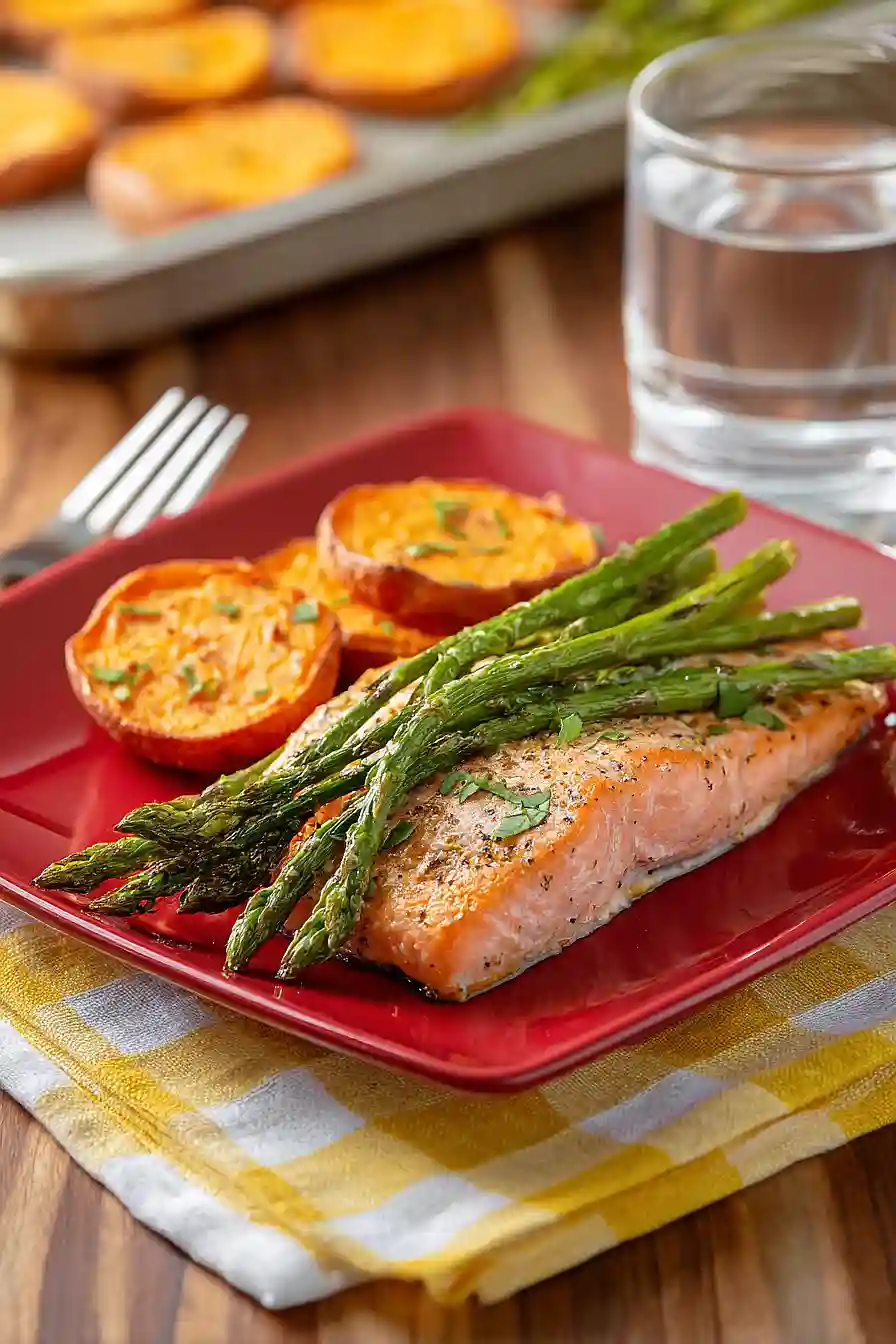
The asparagus should be tender with slightly caramelized tips, and the sweet potatoes should be fork-tender.
I’ve found that the skin-on salmon stays moist when cooked at this moderate temperature—the skin acts as a barrier that prevents the delicate flesh from drying out.
All components should finish cooking at roughly the same time, so your sheet pan dinner comes together perfectly.
Mouthwatering Sheet Pan Salmon Asparagus and Sweet Potatoes
Ingredients
For the sweet potatoes:
- 2 to 3 sweet potatoes (medium, about 8 oz each)
- 1.5 tbsp extra-virgin olive oil (I use Colavita)
- 1 tbsp garlic (minced, about 3 cloves)
- 1 tbsp fresh rosemary (finely chopped)
- black pepper to taste (freshly ground)
- sea salt to taste
For the salmon and asparagus:
- 2 garlic cloves (minced)
- 0.5 tsp smoked paprika (for depth of flavor)
- 1 lb fresh asparagus (woody ends trimmed, cut into 2-inch pieces)
- sea salt to taste
- 0.5 fl oz lemon juice (about 1 lemon)
- black pepper to taste
- 2 tbsp fresh rosemary (chopped)
- 1.5 tbsp extra-virgin olive oil (or neutral oil like canola)
- 1.5 lbs salmon (skin-on fillets, room temperature)
Instructions
- Preheat your oven to 350°F. While it heats, prepare all your ingredients: mince the garlic (you'll need a total of about 5 cloves), finely chop the fresh rosemary, trim the woody ends from the asparagus and cut into 2-inch pieces, and squeeze your lemon juice. Bring the salmon fillets to room temperature—this ensures even cooking throughout. Cut the sweet potatoes into bite-sized cubes or wedges (about ¾-inch pieces for even cooking). Having everything prepped before you start cooking will keep the workflow smooth.
- Spread the cubed sweet potatoes on a large sheet pan in a single layer. Drizzle with 1.5 tablespoons of olive oil and toss to coat evenly. Season generously with sea salt and freshly ground black pepper, then sprinkle with the finely chopped rosemary and minced garlic (about 3 cloves). Toss again to distribute the seasonings evenly. Place the pan in the preheated 350°F oven and roast for 35 minutes without stirring—this allows the potatoes to develop a golden edge.
- After the sweet potatoes have roasted for 35 minutes, remove the pan from the oven and give the potatoes a quick toss. Create two empty zones on the pan and arrange the salmon fillets skin-side down in one section, leaving space between them for air circulation. Spread the asparagus pieces in the other section. I like to keep the vegetables and salmon slightly separate so they cook properly without steaming. Drizzle the salmon and asparagus with the remaining 1.5 tablespoons of olive oil.
- Season the salmon fillets with sea salt, freshly ground black pepper, and the smoked paprika, which adds a subtle depth and complements both the salmon and the sweet potatoes. Season the asparagus with sea salt and pepper as well. Distribute the remaining minced garlic (about 2 cloves) and chopped fresh rosemary (about 2 tablespoons) over both the salmon and asparagus. Squeeze the fresh lemon juice evenly over the salmon and vegetables—the acid will brighten the flavors as everything finishes cooking.
- Return the pan to the 350°F oven and roast for 18 to 20 minutes, until the salmon flakes easily with a fork and the flesh is opaque throughout. The asparagus should be tender with slightly caramelized tips, and the sweet potatoes should be fork-tender. I've found that the skin-on salmon stays moist when cooked at this moderate temperature—the skin acts as a barrier that prevents the delicate flesh from drying out. All components should finish cooking at roughly the same time, so your sheet pan dinner comes together perfectly.