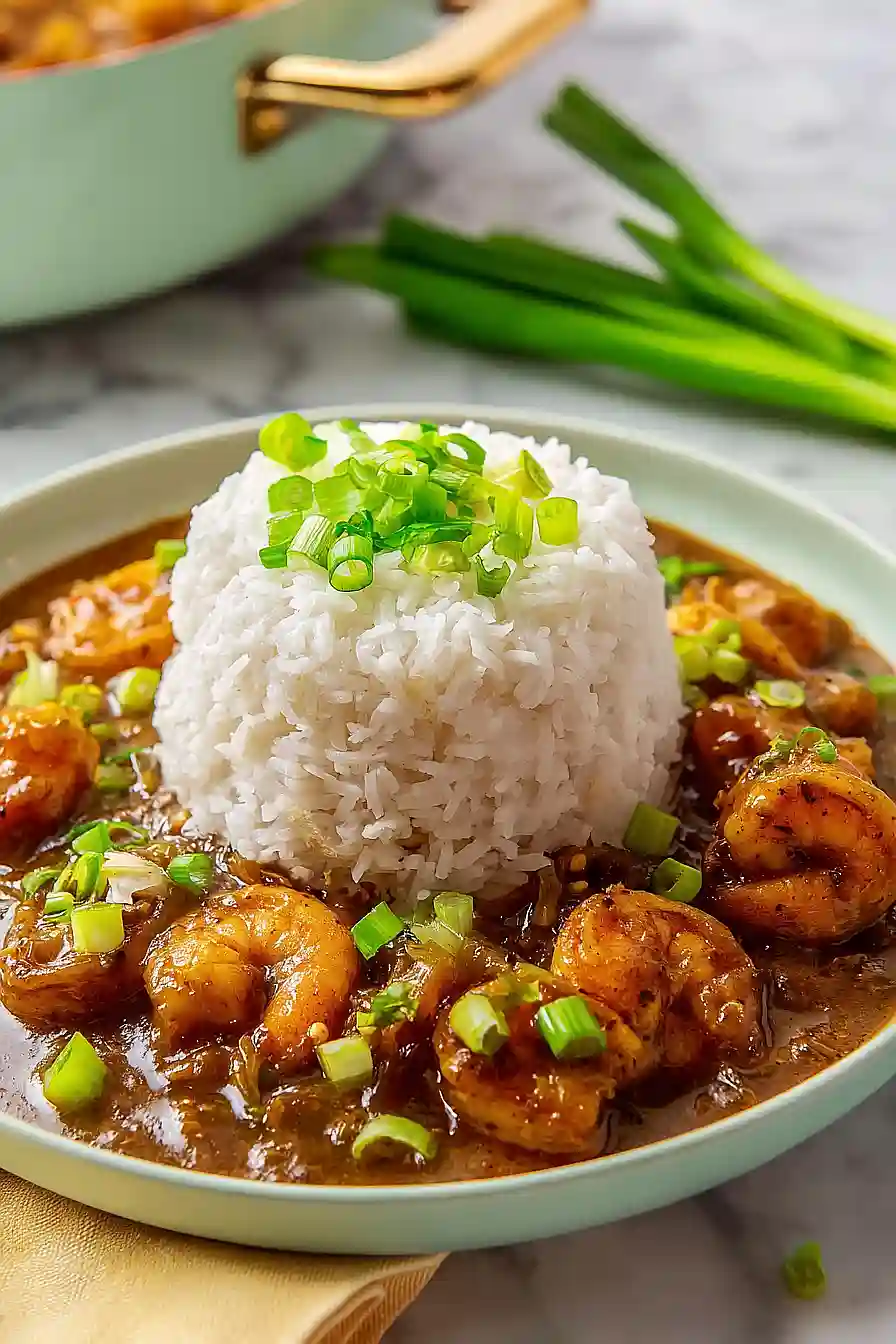
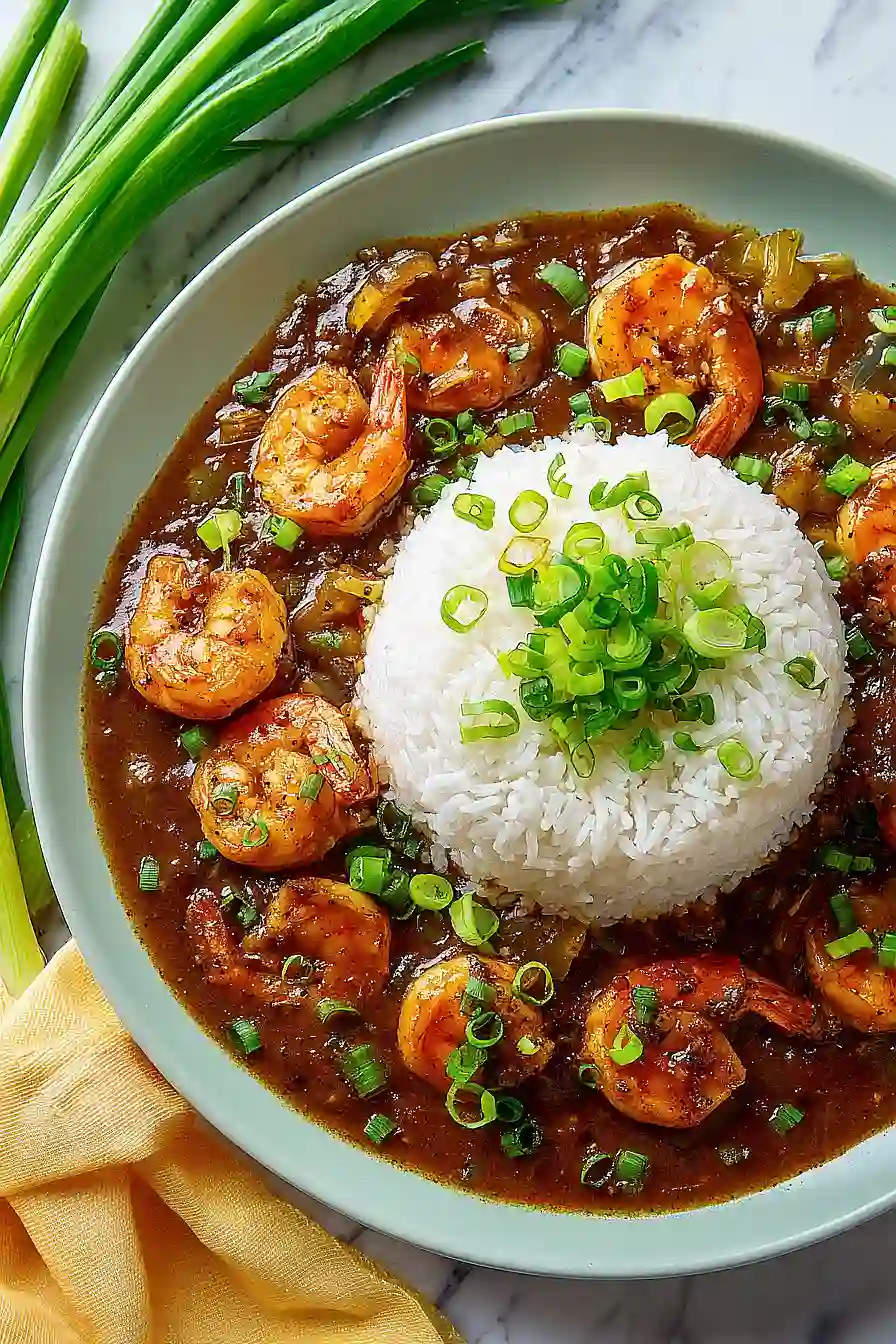
Here is my favorite shrimp etouffee recipe, with a rich, dark roux, the classic Cajun trinity of onions, celery, and green pepper, and tender shrimp simmered in a flavorful tomato-based sauce with just the right amount of spice.
This shrimp etouffee is a weeknight dinner that feels special enough for company. I love serving it over fluffy white rice with plenty of green onions on top. It’s become our go-to when we’re craving something with a little kick and a lot of flavor.
Why You’ll Love This Shrimp Etouffee
- Restaurant-quality flavor at home – This classic Louisiana dish brings authentic Cajun taste to your dinner table without needing to visit New Orleans.
- Perfect for special occasions – While it tastes fancy and impressive, the recipe is straightforward enough to make any night of the week feel like a celebration.
- Rich, flavorful sauce – The combination of a homemade roux with Cajun spices creates a thick, savory gravy that coats every bite of tender shrimp.
- Customizable heat level – You can easily adjust the cayenne and Tabasco to match your spice preference, making it mild for the whole family or extra spicy for heat lovers.
What Kind of Shrimp Should I Use?
For etouffee, you’ll want to use medium to large shrimp, somewhere in the 31-40 or 21-30 count per pound range. Fresh shrimp is great if you can get it, but frozen shrimp works just as well and is often what you’ll find at most grocery stores anyway. Just make sure to thaw them completely in the fridge overnight or under cold running water before cooking. Whether you buy them peeled and deveined or do it yourself is totally up to you, but having them already prepped will save you some time in the kitchen.
Options for Substitutions
This classic Louisiana dish has some room for flexibility, though a few ingredients are pretty important to get that authentic flavor:
- Flour and oil for roux: The roux is the foundation of etouffee, so don’t skip it. However, you can use butter instead of vegetable oil for a richer flavor. Just watch it carefully as butter burns more easily.
- Shrimp: While shrimp is traditional, you can make this with crawfish tails for a more authentic Cajun version, or use chicken cut into bite-sized pieces. If using chicken, add it earlier in the cooking process to ensure it cooks through.
- Clam juice: Seafood stock or chicken stock work well here. You can also use water in a pinch, though you’ll lose some depth of flavor.
- Cajun seasoning: If you don’t have a pre-made blend, make your own with paprika, garlic powder, onion powder, and a bit of oregano. Start with less and adjust to taste.
- Canned tomatoes: Fresh tomatoes work too – just use about 2 medium tomatoes, diced. You might need to cook them a bit longer to break them down.
- The holy trinity vegetables: Onion, celery, and green pepper are traditional in Cajun cooking, but if you’re missing one, you can increase the others. Just don’t skip the onion entirely.
Watch Out for These Mistakes While Cooking
The biggest mistake when making shrimp etouffee is rushing the roux – if you crank up the heat to speed things along, you’ll end up with a burnt, bitter base that ruins the whole dish, so keep it on medium-low and stir constantly for those full 20 minutes until it reaches a dark caramel color.
Overcooking the shrimp is another common problem that leads to rubbery, tough texture, so pull them off the heat as soon as they turn pink and curl up (usually 2-3 minutes max), since they’ll continue cooking in the hot sauce.
Don’t skip stirring in the butter at the end with the heat off – this step adds richness and gives the sauce a silky finish that makes all the difference.
Finally, taste your etouffee before serving and adjust the seasoning, especially the salt and hot sauce, since Cajun seasoning blends vary in intensity and you want to get that perfect balance of spice and flavor.
What to Serve With Shrimp Etouffee?
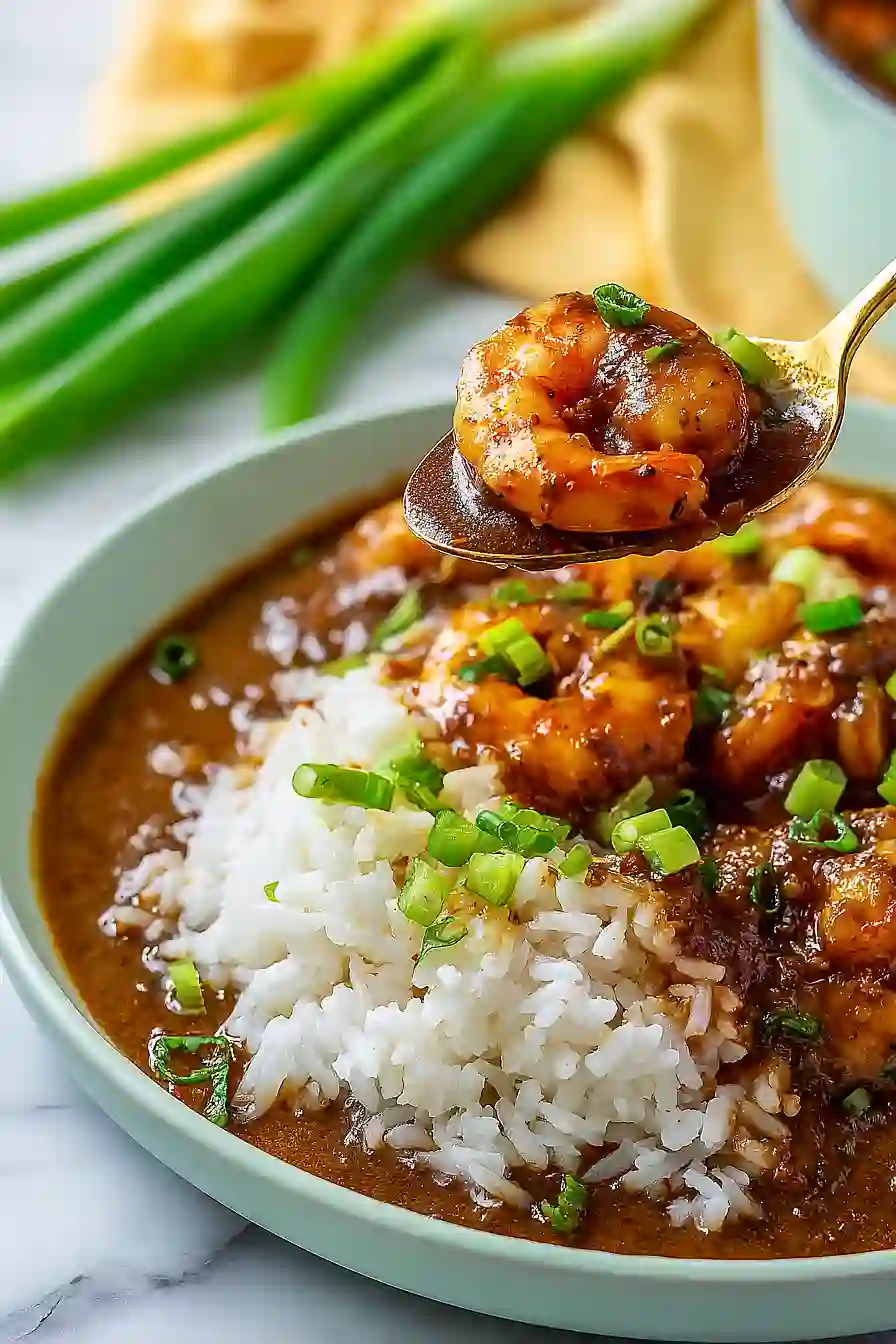
Shrimp etouffee is traditionally served over a big scoop of white rice, which soaks up all that amazing Cajun-spiced sauce. I like to add a side of crusty French bread for mopping up any extra sauce left in the bowl – trust me, you won’t want to waste a drop. A simple side salad with a light vinaigrette helps balance out the richness of the dish, or you could go with classic Southern sides like coleslaw or cornbread. For a true Louisiana-style meal, serve it alongside some red beans or a helping of collard greens.
Storage Instructions
Store: Keep your leftover shrimp etouffee in an airtight container in the fridge for up to 3 days. I like to store the rice separately so it doesn’t get too mushy. The flavors actually get better the next day as everything has time to meld together!
Freeze: This dish freezes pretty well for up to 2 months, though the shrimp texture might change slightly. Let it cool completely first, then portion it into freezer-safe containers. Again, I’d recommend freezing without the rice and making fresh rice when you’re ready to eat.
Reheat: Warm it up gently on the stovetop over medium-low heat, stirring occasionally until heated through. You can also use the microwave, but go with medium power and stir every minute or so to avoid overcooking the shrimp. Add a splash of water or broth if it seems too thick.
| Preparation Time | 10-15 minutes |
| Cooking Time | 45-60 minutes |
| Total Time | 55-75 minutes |
| Level of Difficulty | Medium |
| Servings | 6 servings |
Estimated Nutrition
Estimated nutrition for the whole recipe (without optional ingredients):
- Calories: 2100-2300
- Protein: 170-190 g
- Fat: 110-120 g
- Carbohydrates: 120-140 g
Ingredients
For the roux and vegetables:
- 2/3 cup vegetable oil (I use Wesson for a neutral base)
- 2/3 cup flour (I always use King Arthur all-purpose flour)
- 1.5 cups onion (small diced into 1/4-inch pieces)
- 1/2 cup green pepper
- 1/2 cup celery
- 3 garlic cloves
For the sauce and shrimp:
- 8 fl oz clam juice
- 14 oz tomatoes (chopped and undrained)
- 1.5 tsp Cajun seasoning
- 1 tsp Worcestershire sauce (I prefer Lea & Perrins for depth)
- 1/2 tsp black pepper
- 1/2 tsp cayenne pepper
- 1/2 tsp salt
- 1/4 tsp white pepper
- 1/4 tsp thyme
- 1/4 tsp Tabasco sauce
- 1 bay leaf
- 2 lb shrimp (peeled and deveined)
- 2 tbsp butter (I like Kerrygold unsalted butter for this)
For the base and garnish:
- green onions
- rice
Step 1: Prepare the Mise en Place and Make the Roux
- 2/3 cup vegetable oil
- 2/3 cup flour
- 1.5 cups onion, small diced
- 1/2 cup green pepper, chopped
- 1/2 cup celery, chopped
- 3 garlic cloves, minced
Dice the onion into precise 1/4-inch pieces, chop the green pepper and celery into similar sizes, mince the garlic cloves, and have all other ingredients measured and ready.
This upfront prep work is crucial because the roux-making process demands your full attention and happens quickly once you start.
In a heavy-bottomed pot, combine the vegetable oil and flour over medium-low heat, stirring constantly with a wooden spoon.
The goal is to cook this roux for about 20 minutes, gradually deepening from a blonde color to a rich dark caramel—this is the flavor foundation of your etouffée.
I always use a medium-low heat rather than higher to prevent scorching and to develop a smooth, nutty flavor rather than a bitter one.
Step 2: Build the Flavor Base with the Holy Trinity and Aromatics
- roux from Step 1
- 1.5 cups onion, diced
- 1/2 cup green pepper, diced
- 1/2 cup celery, diced
- 3 garlic cloves, minced
Once your roux reaches a deep caramel brown, immediately add the diced onion, green pepper, and celery (the holy trinity of Cajun cooking).
Stir constantly for about 5 minutes, allowing these vegetables to soften and release their flavors into the roux, creating a deeply aromatic base.
Add the minced garlic and cook for just 30 seconds—this brief cooking time prevents the garlic from burning while still infusing its pungent, fresh character into the sauce.
Step 3: Create the Sauce and Develop the Spice Profile
- 8 fl oz clam juice
- 14 oz tomatoes, chopped and undrained
- 1.5 tsp Cajun seasoning
- 1 tsp Worcestershire sauce
- 1/2 tsp black pepper
- 1/2 tsp cayenne pepper
- 1/2 tsp salt
- 1/4 tsp white pepper
- 1/4 tsp thyme
- 1/4 tsp Tabasco sauce
- 1 bay leaf
Pour in the clam juice and chopped tomatoes (including their liquid), which add briny depth and acidity to balance the rich roux.
Add the bay leaf, then incorporate all the dry seasonings: Cajun seasoning, black pepper, cayenne pepper, salt, white pepper, thyme, Worcestershire sauce, and Tabasco sauce.
Stir everything together until well combined, then bring the mixture to a boil.
Once boiling, reduce the heat to a gentle simmer and cook for 15 minutes, allowing the flavors to meld and the sauce to thicken slightly.
I prefer Lea & Perrins Worcestershire and a quality butter like Kerrygold because these small ingredient choices really elevate the final depth of flavor in this classic dish.
Step 4: Cook the Shrimp and Finish the Etouffée
- sauce from Step 3
- 2 lb shrimp, peeled and deveined
- 2 tbsp butter
Add the peeled and deveined shrimp directly to the simmering sauce and cook for just 2 to 3 minutes, stirring gently.
The shrimp will turn opaque and firm when done—overcooking will make them tough and rubbery, so timing is critical here.
Remove from heat immediately and stir in the butter until fully incorporated, which adds richness and creates a silky mouthfeel that’s essential to authentic etouffée.
Step 5: Plate and Serve
- etouffée from Step 4
- rice, cooked
- green onions, sliced
Ladle the shrimp etouffée over a bed of cooked rice, then garnish generously with fresh green onions for a bright, sharp contrast to the rich, spiced sauce.
Mouthwatering Shrimp Etouffee
Ingredients
For the roux and vegetables::
- 2/3 cup vegetable oil (I use Wesson for a neutral base)
- 2/3 cup flour (I always use King Arthur all-purpose flour)
- 1.5 cups onion (small diced into 1/4-inch pieces)
- 1/2 cup green pepper
- 1/2 cup celery
- 3 garlic cloves
For the sauce and shrimp::
- 8 fl oz clam juice
- 14 oz tomatoes (chopped and undrained)
- 1.5 tsp Cajun seasoning
- 1 tsp Worcestershire sauce (I prefer Lea & Perrins for depth)
- 1/2 tsp black pepper
- 1/2 tsp cayenne pepper
- 1/2 tsp salt
- 1/4 tsp white pepper
- 1/4 tsp thyme
- 1/4 tsp Tabasco sauce
- 1 bay leaf
- 2 lb shrimp (peeled and deveined)
- 2 tbsp butter (I like Kerrygold unsalted butter for this)
For the base and garnish::
- green onions
- rice
Instructions
- Dice the onion into precise 1/4-inch pieces, chop the green pepper and celery into similar sizes, mince the garlic cloves, and have all other ingredients measured and ready. This upfront prep work is crucial because the roux-making process demands your full attention and happens quickly once you start. In a heavy-bottomed pot, combine the vegetable oil and flour over medium-low heat, stirring constantly with a wooden spoon. The goal is to cook this roux for about 20 minutes, gradually deepening from a blonde color to a rich dark caramel—this is the flavor foundation of your etouffée. I always use a medium-low heat rather than higher to prevent scorching and to develop a smooth, nutty flavor rather than a bitter one.
- Once your roux reaches a deep caramel brown, immediately add the diced onion, green pepper, and celery (the holy trinity of Cajun cooking). Stir constantly for about 5 minutes, allowing these vegetables to soften and release their flavors into the roux, creating a deeply aromatic base. Add the minced garlic and cook for just 30 seconds—this brief cooking time prevents the garlic from burning while still infusing its pungent, fresh character into the sauce.
- Pour in the clam juice and chopped tomatoes (including their liquid), which add briny depth and acidity to balance the rich roux. Add the bay leaf, then incorporate all the dry seasonings: Cajun seasoning, black pepper, cayenne pepper, salt, white pepper, thyme, Worcestershire sauce, and Tabasco sauce. Stir everything together until well combined, then bring the mixture to a boil. Once boiling, reduce the heat to a gentle simmer and cook for 15 minutes, allowing the flavors to meld and the sauce to thicken slightly. I prefer Lea & Perrins Worcestershire and a quality butter like Kerrygold because these small ingredient choices really elevate the final depth of flavor in this classic dish.
- Add the peeled and deveined shrimp directly to the simmering sauce and cook for just 2 to 3 minutes, stirring gently. The shrimp will turn opaque and firm when done—overcooking will make them tough and rubbery, so timing is critical here. Remove from heat immediately and stir in the butter until fully incorporated, which adds richness and creates a silky mouthfeel that's essential to authentic etouffée.
- Ladle the shrimp etouffée over a bed of cooked rice, then garnish generously with fresh green onions for a bright, sharp contrast to the rich, spiced sauce.