I used to think beef stroganoff was this fancy dish that only real chefs could make. You know, the kind of thing you’d order at a restaurant but never attempt at home. Then I discovered Gordon Ramsay’s version, and it completely changed my mind.
Turns out, good beef stroganoff isn’t about being fancy—it’s about getting a few key steps right. The secret is in how you handle the beef and when you add that creamy sauce. Gordon’s method breaks it all down so even busy weeknight cooks like us can pull it off without stress.
Why You’ll Love This Beef Stroganoff
- Restaurant-quality results at home – Using rib-eye steak instead of typical stew meat gives you incredibly tender, flavorful beef that tastes like it came from a fancy restaurant.
- Quick weeknight dinner – Ready in under an hour, this stroganoff is perfect when you want something special but don’t have all day to cook.
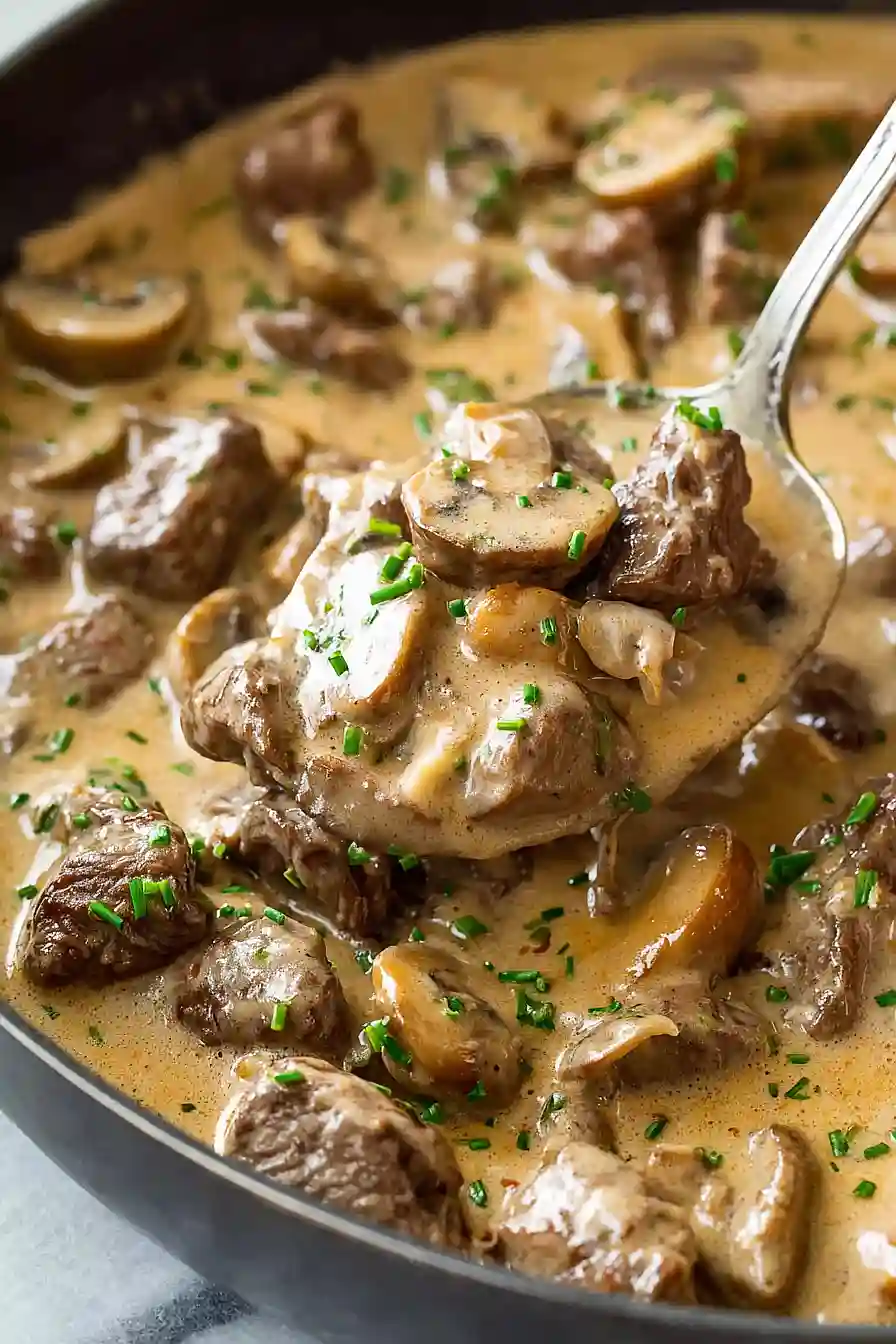
- Rich, creamy sauce – The combination of sour cream, beef broth, and Dijon mustard creates a luxurious sauce that coats every bite of pasta and beef perfectly.
- Simple ingredients – You probably already have most of these pantry staples at home, and the fresh ingredients are easy to find at any grocery store.
- Impressive comfort food – This dish looks and tastes fancy enough for guests but comforting enough for a cozy family dinner.
What Kind of Beef Should I Use?
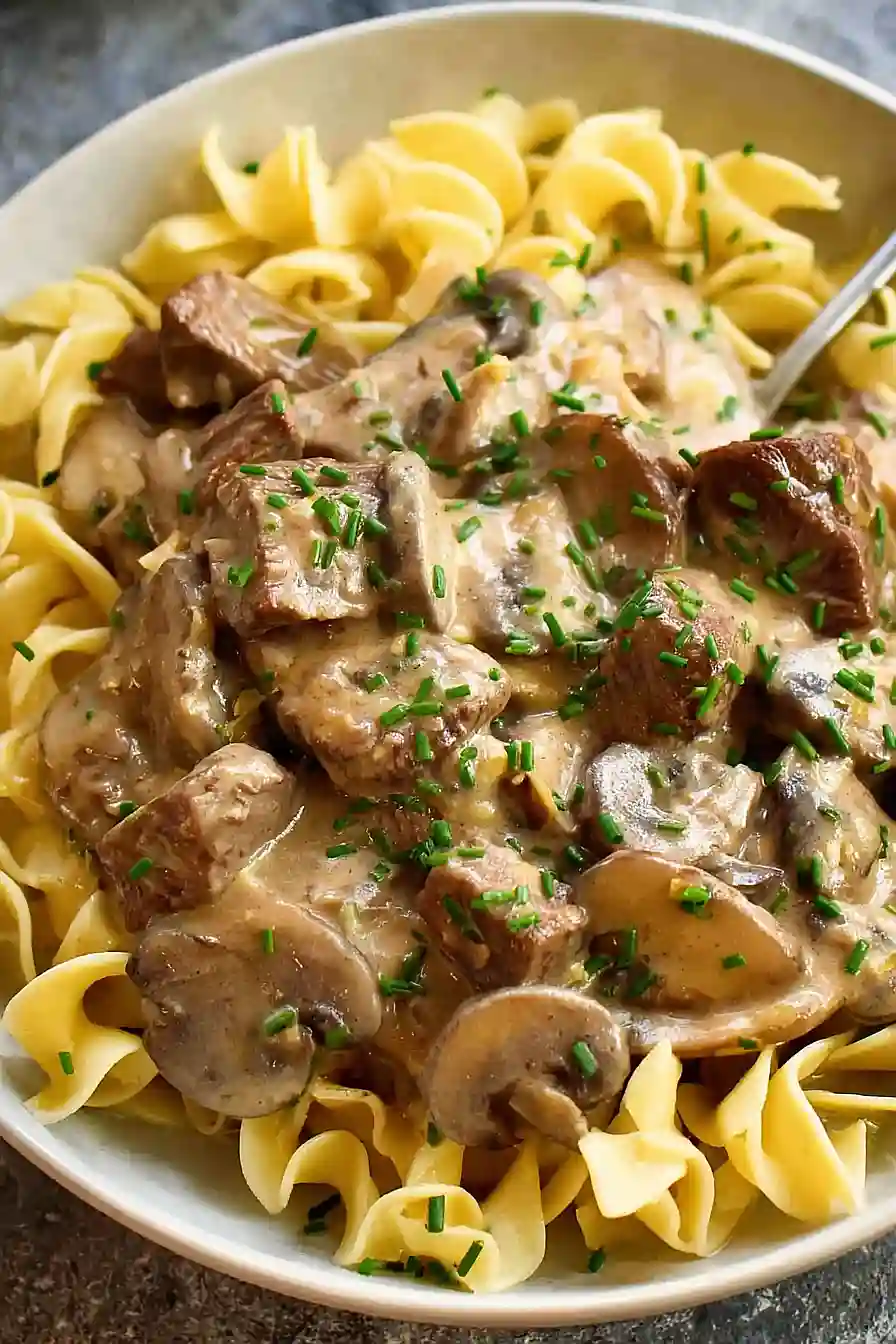
Rib-eye steak is the star of this stroganoff, and it’s honestly the best choice for getting that tender, juicy result Gordon Ramsay is known for. If rib-eye is out of your budget, you can substitute with sirloin or even tenderloin, though rib-eye’s marbling gives you the most flavor. The key is making sure whatever cut you choose gets pounded to about ¾ cm thick – this helps break down the fibers and ensures quick, even cooking. When shopping, look for steaks with good marbling (those white fat streaks) since that’s what keeps your beef tender and adds richness to the sauce.
Options for Substitutions
This stroganoff recipe is pretty adaptable, so here are some swaps you can make if needed:
- Rib-eye steak: If rib-eye is too pricey, sirloin or strip steak work great too. You can even use beef tenderloin if you’re feeling fancy. Just make sure to pound it thin and slice against the grain for tender results.
- Cremini mushrooms: Regular button mushrooms are a fine substitute, or try a mix with shiitake or portobello for extra flavor. Keep the slicing thickness the same for even cooking.
- Sour cream: Greek yogurt can work in a pinch, but add it off the heat and stir gently to prevent curdling. Heavy cream mixed with a squeeze of lemon juice is another option.
- Dijon mustard: Regular yellow mustard works, though you might want to use a bit less since it’s milder. Whole grain mustard adds nice texture if you have it.
- Egg noodles: Any wide pasta like pappardelle, fettuccine, or even rice will do the job. The key is something that can hold onto that creamy sauce.
- Beef broth: Chicken broth works fine, or you can use mushroom broth for extra earthy flavor. Just avoid anything too salty since you’ll be reducing it down.
Watch Out for These Mistakes While Cooking
The biggest mistake when making beef stroganoff is overcooking the rib-eye steak, which turns this tender cut into chewy leather – sear it quickly over high heat for just 2-3 minutes per side, then remove it from the pan and add it back only at the very end.
Another common error is adding the sour cream while the pan is too hot, which causes it to curdle and break – always remove the pan from heat and let it cool for a minute before stirring in the sour cream slowly.
Don’t rush the mushroom cooking process either, as crowding them in the pan will cause them to steam rather than brown, so cook them in batches if needed to get that rich, golden color that adds so much flavor to the dish.
Finally, make sure to slice your steak against the grain after it rests, which makes each bite much more tender and easier to chew.
What to Serve With Beef Stroganoff?
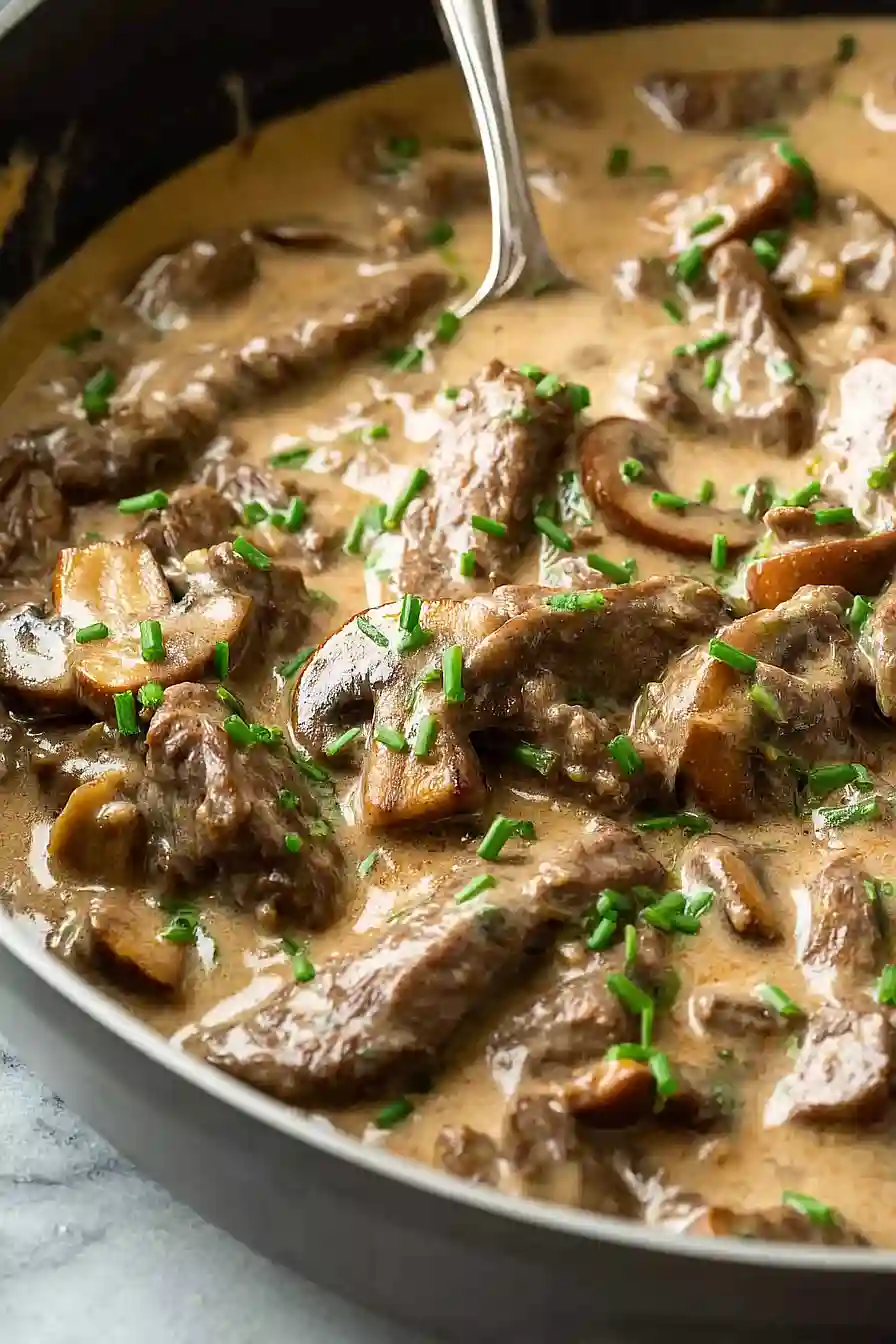
This rich and creamy beef stroganoff is absolutely perfect served over wide egg noodles or fresh tagliatelle – the pasta really soaks up all that amazing sauce. I love pairing it with some simple steamed green beans or roasted asparagus to cut through the richness of the dish. A side of crusty bread or dinner rolls is always a good idea for mopping up any leftover sauce, and a light cucumber salad with dill dressing makes a refreshing contrast to the hearty beef and mushrooms. For something a bit different, try serving it over mashed potatoes or even rice pilaf instead of pasta.
Storage Instructions
Refrigerate: Beef stroganoff keeps really well in the fridge for up to 3 days in an airtight container. The flavors actually get better overnight, so it’s one of those dishes that tastes even more amazing the next day. I like to store it separately from the noodles if possible to prevent them from getting too soft.
Freeze: You can freeze this stroganoff for up to 3 months, but keep in mind that the sour cream might separate a bit when thawed. Don’t worry though – a good stir while reheating usually brings it back together. Freeze it in individual portions for easy weeknight dinners.
Warm Up: Gently reheat your stroganoff on the stovetop over medium-low heat, stirring occasionally to prevent the cream from curdling. If it seems too thick, add a splash of beef broth to loosen it up. You can also use the microwave on 50% power, stirring every minute or so until heated through.
| Preparation Time | 15-20 minutes |
| Cooking Time | 25-30 minutes |
| Total Time | 40-50 minutes |
| Level of Difficulty | Medium |
Estimated Nutrition
Estimated nutrition for the whole recipe (without optional ingredients):
- Calories: 2000-2250
- Protein: 130-150 g
- Fat: 145-160 g
- Carbohydrates: 50-60 g
Ingredients
For the beef:
- Freshly cracked black pepper, to taste
- 2 tbsp neutral oil (or vegetable oil)
- Kosher salt, to taste
- 1 lb 5 oz rib-eye steak (trimmed, pounded to 3/8 inch thick)
For the sauce and vegetables:
- 2 tbsp unsalted butter (I use Kerrygold for richness)
- 10 oz cremini mushrooms (sliced 1/8 inch thick for even cooking)
- 1 tbsp Dijon mustard (adds depth and tang)
- 2 cups low-salt beef broth (use quality stock for better flavor)
- 1 tbsp all-purpose flour (I use King Arthur for consistent results)
- 2/3 cup full-fat sour cream (room temperature, prevents curdling)
- 1 medium yellow onion (thinly sliced)
For serving and garnish:
- Egg noodles or tagliatelle (cooked al dente)
- Chopped chives, for garnish (optional but recommended for fresh brightness)
Step 1: Prepare Mise en Place and Cook Pasta
- 1 lb 5 oz rib-eye steak
- 10 oz cremini mushrooms
- 1 medium yellow onion
- Chopped chives for garnish
- Egg noodles or tagliatelle
Start by cooking your egg noodles or tagliatelle according to package directions until al dente, then drain and set aside.
While the water heats, slice the cremini mushrooms to a consistent 1/8 inch thickness (this ensures even cooking), thinly slice the yellow onion, and chop your chives for garnish.
Pat the rib-eye steak dry with paper towels, then slice it against the grain into thin strips.
This prep work ensures everything is ready when you need it, so you’re not scrambling mid-cook.
Step 2: Season and Sear the Beef
- 1 lb 5 oz rib-eye steak
- Kosher salt, to taste
- Freshly cracked black pepper, to taste
- 2 tbsp neutral oil
Generously season the sliced steak with kosher salt and freshly cracked black pepper on both sides.
Heat 1 tablespoon of neutral oil in a large skillet over high heat until it just begins to smoke.
Working in two batches to avoid overcrowding (which would steam instead of sear), add half the beef and sear for about 30 seconds per side until deeply browned, then transfer to a plate.
Add the remaining 1 tablespoon oil and sear the rest of the beef the same way.
I like to sear beef quickly at high heat to develop that beautiful crust while keeping the interior rare—this prevents it from overcooking when we warm it in the sauce later.
Step 3: Build the Flavor Base with Mushrooms and Onions
- 2 tbsp unsalted butter
- 1 medium yellow onion
- 10 oz cremini mushrooms
Without washing the skillet (those browned bits are liquid gold for flavor), melt the butter over medium heat.
Add the sliced onions and cook for about 1 minute until they just begin to soften.
Add the mushrooms and cook for 4 minutes, stirring occasionally, until they release their moisture and start to brown slightly.
This technique—cooking onions briefly before the mushrooms—allows the onions to start breaking down while the mushrooms develop deeper flavor through their own browning.
Step 4: Create the Sauce Base
- 1 tbsp all-purpose flour
- 2 cups low-salt beef broth
- 1 tbsp Dijon mustard
Sprinkle the flour over the mushroom mixture and stir constantly for 1 minute—this cooks out the raw flour taste and helps thicken the sauce.
Pour in 1/2 cup of beef broth and use a wooden spoon to scrape the bottom of the pan, releasing all those flavorful browned bits.
Add the remaining 1.5 cups of broth and the Dijon mustard, stirring until the mustard is fully incorporated.
Bring to a simmer and cook for 5 minutes, allowing the sauce to thicken slightly and the flavors to meld together.
Step 5: Finish with Sour Cream and Warm the Beef
- 2/3 cup full-fat sour cream
- Seared beef from Step 2
Remove the skillet from heat and let it cool for about 30 seconds—this prevents the sour cream from curdling.
Stir in the room-temperature sour cream until fully incorporated and smooth.
Return the seared beef and any accumulated juices from the plate back into the sauce, then place the skillet over low heat and warm gently for just 1 minute, stirring occasionally.
I always use room-temperature sour cream because cold sour cream can cause the sauce to break when mixed with hot liquid—this one simple step makes a huge difference in achieving that silky, cohesive stroganoff sauce.
Step 6: Plate and Serve
- Cooked egg noodles or tagliatelle from Step 1
- Beef stroganoff from Step 5
- Chopped chives for garnish
Divide the cooked egg noodles or tagliatelle among serving plates or bowls.
Ladle the beef stroganoff generously over the noodles, making sure to distribute the beef and mushroom pieces evenly.
Garnish with fresh chopped chives for a pop of color and a bright, oniony freshness that cuts through the richness of the sour cream.