Finding a creamy, restaurant-quality pasta dish that doesn’t require a culinary degree can feel impossible. After all, most carbonara recipes seem intimidating with their warnings about scrambled eggs and precise timing, and things get even trickier when you’re trying to feed hungry family members who are expecting something amazing.
Luckily, this creamy carbonara recipe checks all the boxes: it’s rich yet approachable, simple enough for weeknight dinners, and forgiving enough that you won’t stress about getting every step perfect.
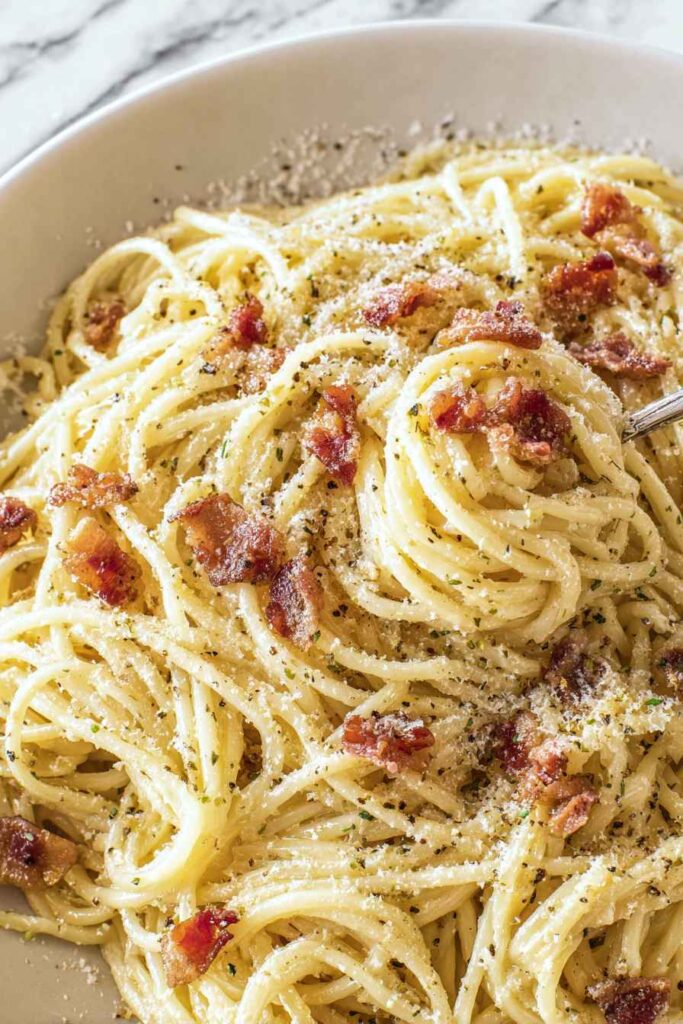
Why You’ll Love This Carbonara
- Quick weeknight dinner – Ready in just 25-35 minutes, this creamy carbonara is perfect when you want something satisfying without spending hours in the kitchen.
- Simple ingredients – With just a handful of pantry staples like pasta, bacon, eggs, and cheese, you can create this restaurant-quality dish at home.
- Rich and creamy texture – The silky sauce made from eggs, cream, and cheese coats every strand of pasta for the most comforting bite.
- Crowd-pleasing comfort food – This classic Italian dish hits all the right notes with its bacon, garlic, and cheese combination that everyone at the table will love.
What Kind of Bacon Should I Use?
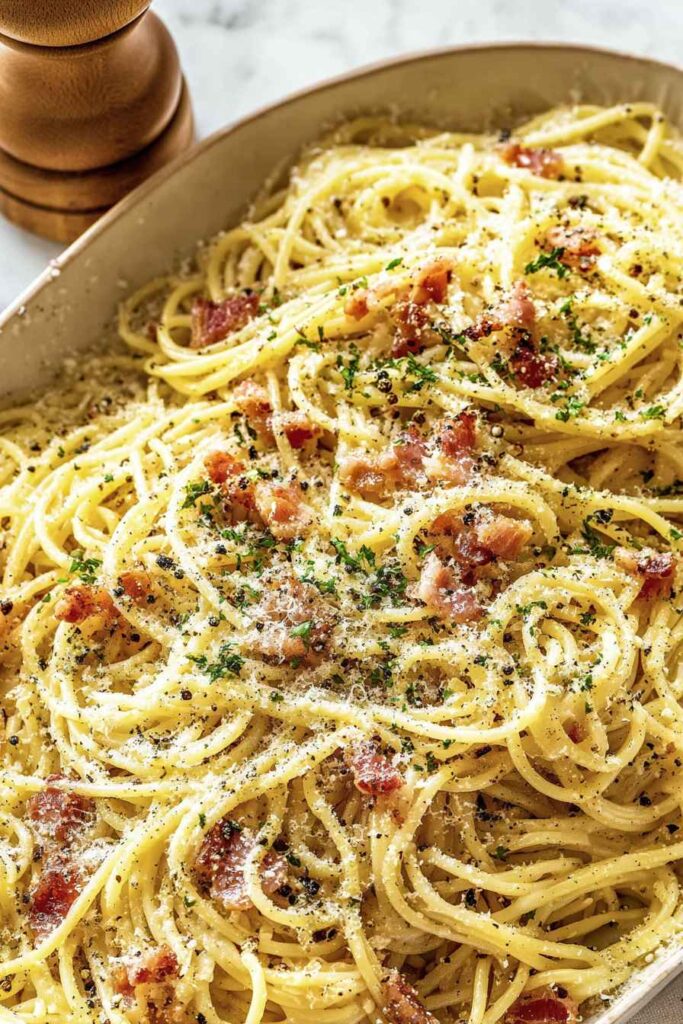
For carbonara, you’ll want to use thick-cut bacon rather than thin slices since it holds up better during cooking and gives you nice, meaty pieces throughout the pasta. Regular bacon works perfectly fine, but if you can find pancetta or guanciale at your grocery store, those are traditional Italian options that will give you an even more authentic flavor. The key is to cook whatever bacon you choose until it’s crispy and renders out plenty of fat – that rendered fat is what helps create the creamy sauce when mixed with the eggs and cheese. Don’t worry too much about the exact type though, as long as it’s good quality bacon, your carbonara will turn out delicious.
Options for Substitutions
While carbonara is a classic that’s best kept traditional, there are a few swaps you can make if needed:
- Spaghetti: You can use other long pasta like linguine, fettuccine, or even bucatini. The key is having enough surface area for the creamy sauce to cling to.
- Bacon: Traditional carbonara uses guanciale or pancetta, but bacon works great too. If you want to get closer to authentic, try pancetta – it has a cleaner pork flavor without the smokiness.
- Parmigiano Reggiano: This cheese is really important for authentic carbonara flavor, so try not to substitute it. If you absolutely must, use Pecorino Romano (which is actually more traditional) or a good quality aged Parmesan.
- Heavy cream: Many purists skip cream entirely in carbonara, relying just on eggs and pasta water for creaminess. You can omit it and use an extra egg yolk instead.
- Whole eggs: For an even richer sauce, try using 3-4 egg yolks instead of whole eggs. This creates a silkier texture and reduces the risk of scrambling.
Watch Out for These Mistakes While Cooking
The biggest mistake when making carbonara is adding the egg mixture to pasta that’s too hot, which will scramble your eggs instead of creating that silky, creamy sauce you’re after – always let the pasta cool for about 30 seconds after draining before mixing.
Another common error is not saving enough pasta water, so make sure to reserve at least a full cup of that starchy cooking liquid before draining, as it’s essential for bringing the sauce together and achieving the right consistency.
Don’t rush the bacon cooking process either – render it slowly over medium heat to get it perfectly crispy while creating plenty of flavorful fat to toss with your pasta.
Finally, work quickly once you start combining everything and keep tossing constantly off the heat, adding pasta water a little at a time until you get that glossy, coating consistency that makes carbonara so special.
What to Serve With Creamy Carbonara?
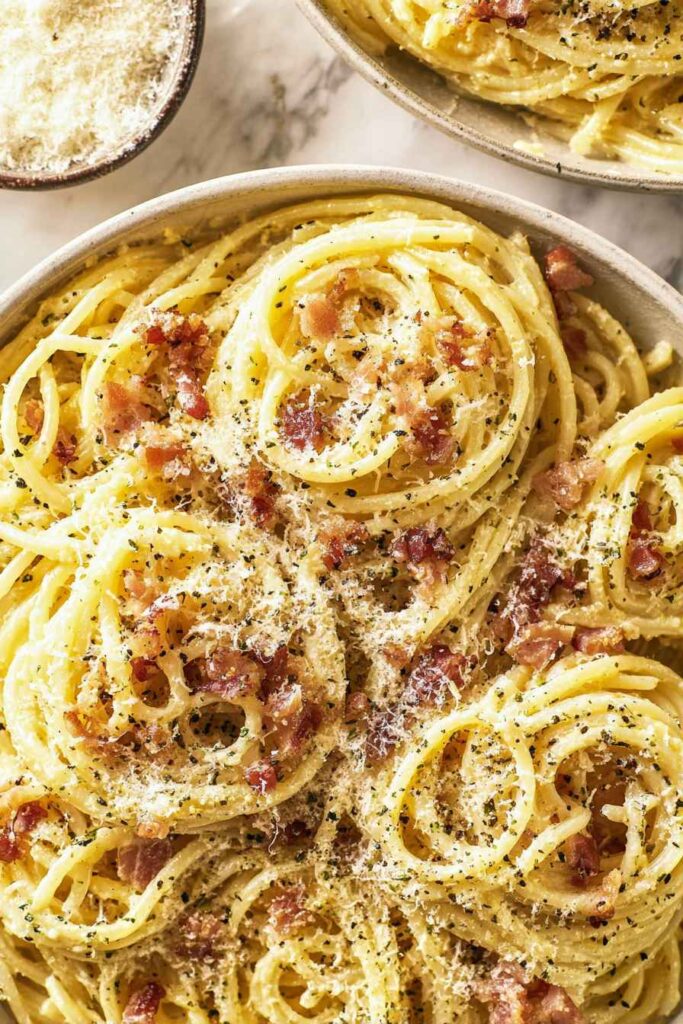
Carbonara is already pretty rich and satisfying on its own, so I like to keep the sides simple and fresh. A crisp Caesar salad or mixed greens with a light lemon vinaigrette helps cut through all that creamy, cheesy goodness. Garlic bread is always a crowd-pleaser too, especially if you want something to help scoop up any extra sauce from the bowl. For a more authentic Italian approach, try serving it with some sautéed spinach or roasted asparagus – the vegetables add a nice balance to the bacon and cheese.
Storage Instructions
Refrigerate: Carbonara is best enjoyed fresh, but leftovers will keep in the fridge for up to 3 days in an airtight container. The creamy sauce might look a bit separated when cold, but don’t worry – that’s totally normal with egg-based sauces.
Freeze: I don’t recommend freezing carbonara since the egg and cream sauce doesn’t freeze well and can become grainy when thawed. It’s really one of those dishes that’s meant to be enjoyed right away for the best texture and flavor.
Reheat: To warm up leftover carbonara, add a splash of heavy cream or pasta water to a pan over low heat. Gently toss the pasta until it’s warmed through and the sauce comes back together. Avoid high heat or the microwave, as this can make the eggs scramble and ruin that silky texture.
| Preparation Time | 10-15 minutes |
| Cooking Time | 15-20 minutes |
| Total Time | 25-35 minutes |
| Level of Difficulty | Medium |
Estimated Nutrition
Estimated nutrition for the whole recipe (without optional ingredients):
- Calories: 3600-3900
- Protein: 140-155 g
- Fat: 190-210 g
- Carbohydrates: 320-340 g
Ingredients
For the pasta:
- 1 lb spaghetti (I use Barilla)
- Salted water, for boiling
For the bacon and garlic:
- 5-6 garlic cloves (minced)
- 1 lb bacon (cut into 1/4-inch pieces)
For the creamy sauce:
- 2 tbsp heavy cream (makes it extra silky)
- 5 oz Parmigiano Reggiano cheese (finely grated, divided)
- Black pepper, to taste (freshly ground preferred)
- 2 eggs (room temperature, separated yolks from whites)
Step 1: Start the Pasta and Prepare the Mise en Place
- 1 lb spaghetti
- Salted water, for boiling
- 5-6 garlic cloves, minced
- 1 lb bacon, cut into 1/4-inch pieces
- 2 eggs, separated
- 5 oz Parmigiano Reggiano cheese, finely grated
Bring a large pot of salted water to a rolling boil—the water should taste like the sea, which seasons the pasta from the inside out.
While waiting for water to boil, mince the garlic cloves, cut the bacon into 1/4-inch pieces, finely grate the Parmigiano Reggiano cheese, and separate the eggs, keeping yolks and whites in separate small bowls.
Once water boils, add the spaghetti and cook until al dente according to package directions, stirring occasionally.
Reserve 1 cup of pasta water before draining—this starchy liquid is essential for creating that signature silky sauce.
Step 2: Render the Bacon and Build the Flavor Base
- 1 lb bacon, cut into 1/4-inch pieces
- 5-6 garlic cloves, minced
In a large skillet or wide pan, cook the bacon pieces over medium heat until they’re golden and crispy, about 8-10 minutes.
Remove the cooked bacon with a slotted spoon and set aside on a paper towel, leaving 3-4 tablespoons of bacon grease in the pan—this fat carries incredible flavor.
Reduce heat to low and add the minced garlic to the warm bacon grease, stirring constantly for about 1 minute until fragrant and just golden.
I find that cooking garlic on low heat is crucial here; high heat will burn it and make it bitter, ruining the delicate balance of the sauce.
Step 3: Create the Silky Egg-Cheese Sauce
- 2 eggs, yolks only
- 2 tbsp heavy cream
- Black pepper, freshly ground
- 5 oz Parmigiano Reggiano cheese
- Reserved pasta water
In a medium bowl, whisk together the egg yolks (reserve the whites for another use) with the heavy cream, grinding in a generous amount of fresh black pepper, and half of the grated Parmigiano Reggiano cheese.
Slowly add about 1/2 cup of the reserved hot pasta water while whisking constantly—this tempers the eggs and prevents them from scrambling when heat is applied.
The mixture should look like thin, pourable custard.
I like to add the pasta water gradually and taste as I go; you want the sauce to be seasoned just right before it touches the pasta.
Step 4: Combine and Finish the Carbonara
- Cooked spaghetti from Step 1
- Garlic and bacon grease pan from Step 2
- Cooked bacon from Step 2
- Egg-cheese sauce from Step 3
- Reserved pasta water, as needed
Add the drained spaghetti directly to the warm pan with the garlic and bacon grease, tossing gently to coat the pasta with the flavorful fat.
Remove the pan from heat and pour the egg-cheese sauce over the spaghetti while tossing constantly with tongs or two forks—the residual heat will cook the eggs and create a creamy coating without scrambling them.
Add the cooked bacon back into the pan and gently toss everything together.
If the sauce seems too thick or dry, add reserved pasta water a tablespoon at a time, stirring until you reach that signature silky, flowing consistency.
The key is to work quickly and keep everything moving so the heat stays low and the sauce stays smooth.
Step 5: Plate and Serve Immediately
- Finished carbonara from Step 4
- 5 oz Parmigiano Reggiano cheese
- Black pepper, freshly ground
Divide the carbonara among warm bowls or plates right away—carbonara waits for no one, as the sauce can tighten or break if it sits.
Top each serving with the remaining grated Parmigiano Reggiano cheese and a generous grind of fresh black pepper.
Serve immediately while the pasta is still hot and the sauce is perfectly creamy and flowing.