I used to be intimidated by cooking salmon at home. It always seemed like something you should order at a restaurant, not make in your own kitchen on a Tuesday night. But then I discovered this parmesan crusted version, and it completely changed my mind.
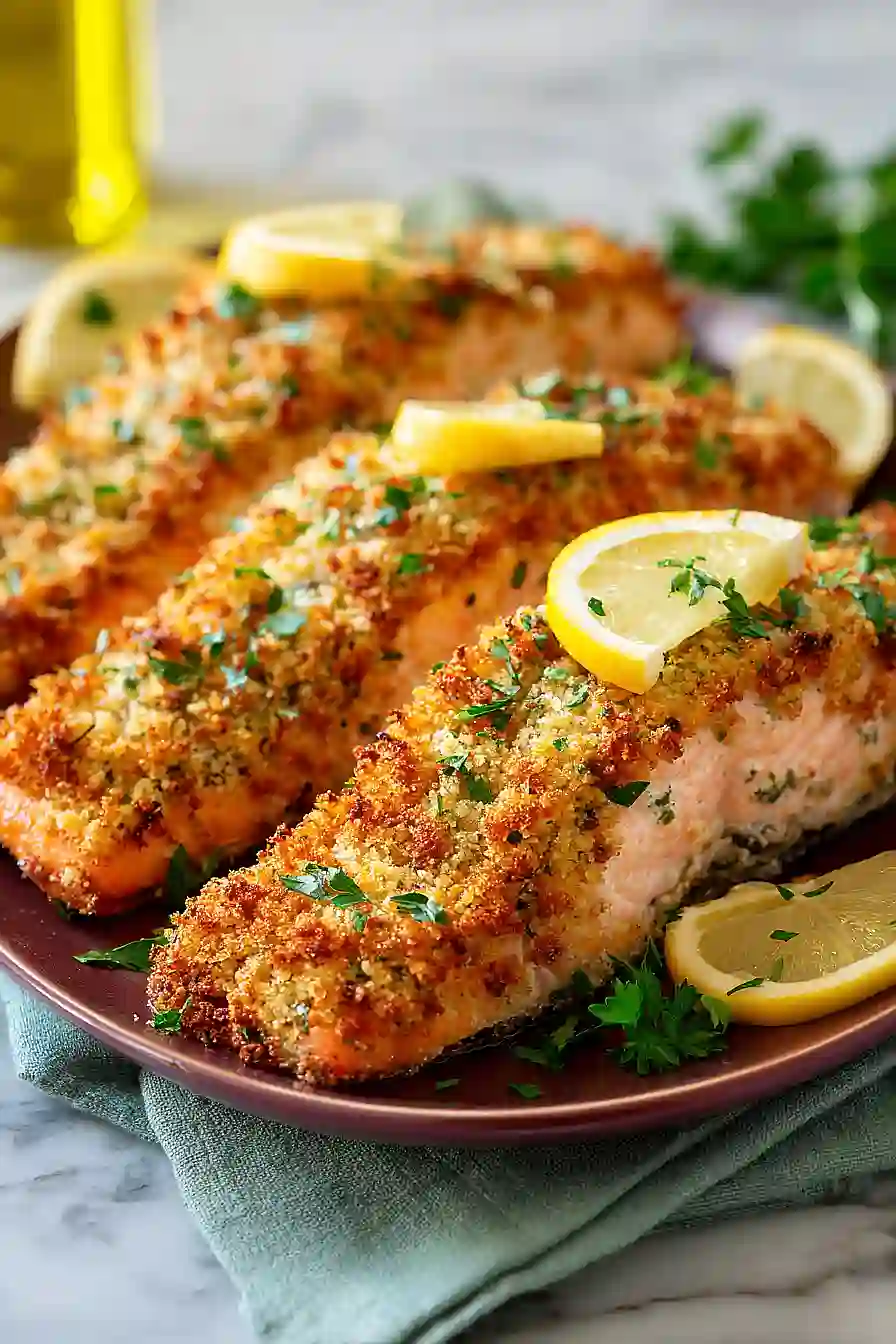
The secret is the crispy coating. You mix panko breadcrumbs with freshly grated parmesan, and it creates this crunchy top layer that makes the salmon feel fancy without any complicated steps. My kids, who normally turn their noses up at fish, actually ask for seconds when I make it this way. The cheesy crust does all the work—you just pat the salmon dry, brush on some beaten egg, press on the topping, and pop it in the oven. Twenty minutes later, dinner’s done.

Why You’ll Love This Baked Parmesan Crusted Salmon
- Restaurant-quality at home – The crispy parmesan and panko crust makes this salmon taste like something you’d order at a fancy restaurant, but you can make it in your own kitchen.
- Quick weeknight dinner – Ready in just 25-35 minutes, this recipe is perfect for busy evenings when you want something special without spending hours in the kitchen.
- Healthy and protein-packed – Salmon is loaded with omega-3s and protein, making this a nutritious choice that doesn’t sacrifice flavor.
- Simple ingredients – You probably have most of these pantry staples on hand already, and the ingredient list is short and straightforward.
- Impressive presentation – The golden, crispy crust and lemon slices make this dish look beautiful on the plate, perfect for both family dinners and when you have guests over.
What Kind of Salmon Should I Use?
You can choose farm-raised or wild for this recipe, both will work great. And if all you have access to is frozen salmon, you’ll still be good to go – just make sure to thaw it completely in the fridge overnight before cooking. For this recipe, you’ll want to use skinless salmon fillets since the parmesan crust is the star of the show here. The crust needs direct contact with the fish to get that nice golden coating, and the skin would just get in the way. Look for fillets that are about the same thickness so they cook evenly, and aim for that 6-7 ounce size per person for a satisfying dinner portion.
Options for Substitutions
This recipe is pretty straightforward, but here are some swaps you can make if needed:
- Salmon fillets: While salmon works best here, you can use other firm fish like cod, halibut, or mahi-mahi. Just adjust the cooking time since thinner fillets will cook faster than salmon.
- Panko bread crumbs: Regular bread crumbs work fine, though your crust won’t be quite as crispy. You can also make your own by toasting bread and pulsing it in a food processor.
- Parmesan cheese: Freshly grated parmesan is really important for this recipe since it creates that signature crust. Pre-shredded cheese won’t melt and stick the same way, so try to use a block of parmesan if possible.
- Fresh parsley: Dried parsley can work in a pinch – just use about 1 tablespoon instead of the fresh amount. You could also try fresh dill or basil for a different flavor profile.
- Egg: The egg helps the crust stick to the fish, so it’s tough to skip. If you’re avoiding eggs, try brushing the salmon with mayonnaise or Dijon mustard instead – both work as good binders.
Watch Out for These Mistakes While Baking
The biggest mistake when making parmesan crusted salmon is pressing the coating on too lightly, which causes it to fall off during baking – make sure to really press that panko mixture firmly onto each fillet so it sticks.
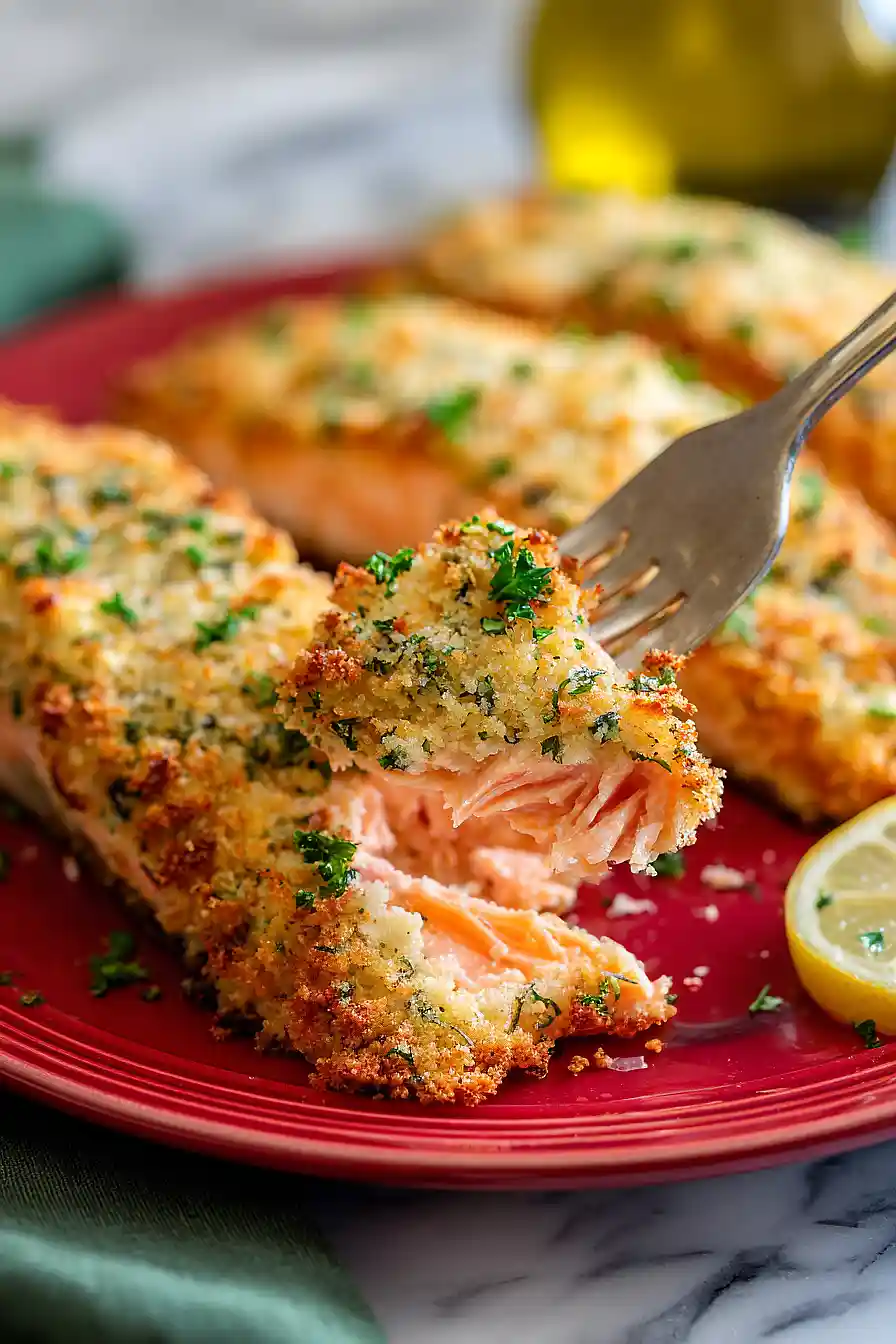
Overbaking is another common issue that leads to dry, tough salmon, so start checking your fillets at the 10-minute mark and remove them when they reach an internal temperature of 145°F or when the flesh flakes easily with a fork.
To get an extra crispy crust, try lightly spraying the coated salmon with cooking spray before baking, and whatever you do, don’t skip the wire rack – placing the salmon directly on the baking sheet will steam the bottom and leave you with a soggy crust instead of a crispy one.
What to Serve With Baked Parmesan Crusted Salmon?
This crispy, cheesy salmon pairs beautifully with simple sides that won’t compete with all those great flavors. I love serving it with roasted vegetables like asparagus, green beans, or Brussels sprouts tossed with a little olive oil and salt. A light arugula salad with lemon vinaigrette is another great option that adds freshness to the plate, or you could go with creamy mashed potatoes or rice pilaf if you want something more filling. Don’t forget to squeeze those lemon slices over the top right before serving – it really brings everything together!
Storage Instructions
Store: Keep any leftover salmon in an airtight container in the fridge for up to 3 days. The parmesan crust might soften a bit, but it still tastes great. I like to flake the leftovers over a salad or toss them with pasta for an easy next-day meal.
Freeze: While you can freeze cooked salmon for up to 2 months, I’ll be honest—the crispy crust won’t be quite the same after thawing. If you do freeze it, wrap each fillet individually in plastic wrap and then place in a freezer bag to prevent freezer burn.
Reheat: To warm up your salmon, place it on a baking sheet and heat in a 350°F oven for about 10 minutes until warmed through. The microwave works in a pinch, but the oven helps keep that crust a bit crispier instead of getting rubbery.
| Preparation Time | 15-20 minutes |
| Cooking Time | 10-15 minutes |
| Total Time | 25-35 minutes |
| Level of Difficulty | Easy |
| Servings | 4 servings |
Estimated Nutrition
Estimated nutrition for the whole recipe (without optional ingredients):
- Calories: 1200-1350
- Protein: 120-135 g
- Fat: 55-65 g
- Carbohydrates: 35-45 g
Ingredients
For the coating:
- 3/4 tsp garlic powder
- 1 tbsp olive oil (or any neutral oil like canola)
- 3/4 cup panko bread crumbs (Japanese-style for extra crunch)
- 3/4 tsp salt
- 1/2 tsp black pepper
- 3/4 cup parmesan (freshly grated preferred for better texture)
- 2.5 tbsp fresh parsley (finely chopped)
For the salmon:
- 4 salmon fillets (6-7 oz each, pat dry before coating)
- 4 lemon slices (for serving)
- 1 large egg (beaten, acts as binder for coating)
Step 1: Prepare the Oven and Mise en Place
- 4 salmon fillets, patted dry
- 2.5 tbsp fresh parsley, finely chopped
Preheat your oven to 425°F and set a wire rack on a baking sheet—this allows heat to circulate underneath the salmon for even cooking and a crispier crust.
While the oven heats, pat your salmon fillets completely dry with paper towels; this is crucial because moisture prevents the coating from adhering properly and browning well.
Finely chop your fresh parsley and have all your ingredients measured and ready to go.
Step 2: Build the Parmesan Crust Mixture
- 3/4 cup panko bread crumbs
- 3/4 cup parmesan, freshly grated
- 2.5 tbsp fresh parsley, finely chopped
- 3/4 tsp garlic powder
- 3/4 tsp salt
- 1/2 tsp black pepper
- 1 tbsp olive oil
In a shallow dish, combine the panko breadcrumbs, freshly grated parmesan, chopped parsley, garlic powder, salt, and black pepper.
Drizzle the olive oil over the mixture and toss everything together with a fork until the oil is evenly distributed throughout the crumbs—this helps the coating brown beautifully and hold together better.
I prefer freshly grated parmesan here because it creates a more cohesive, crisper crust than pre-shredded varieties, which contain anti-caking agents.
Step 3: Set Up Your Coating Station
- 1 large egg, beaten
Beat the egg in a separate shallow dish until the yolk and white are fully combined.
This egg wash acts as the adhesive that helps your panko mixture cling to the salmon during baking.
Arrange your setup in order: salmon on a plate, egg wash in one dish, and your panko mixture in another—this assembly-line approach makes the coating process quick and efficient.
Step 4: Coat the Salmon Fillets
- 4 salmon fillets, from Step 1
- egg wash from Step 3
- panko mixture from Step 2
Working with one salmon fillet at a time, dip it into the beaten egg, coating both sides and the edges thoroughly.
Immediately transfer the egg-coated fillet to the panko mixture and press gently but firmly on all sides, making sure the coating adheres well—I use my fingertips to gently press the crumbs into the fish, which helps create an even, compact crust that won’t fall off during baking.
Place the coated fillet on the prepared wire rack and repeat with the remaining three fillets, spacing them apart so heat can circulate around each one.
Step 5: Bake Until Golden and Cooked Through
- coated salmon fillets from Step 4
Bake the salmon for 10 to 15 minutes, depending on the thickness of your fillets.
The salmon is done when it reaches an internal temperature of 145°F or when the flesh flakes easily with a fork and is opaque throughout.
The panko crust should be golden-brown and crispy.
Start checking at the 10-minute mark to avoid overcooking, which can dry out the delicate fish.
Step 6: Serve Immediately
- baked salmon from Step 5
- 4 lemon slices
Transfer the baked salmon to serving plates while the crust is still crispy.
Serve immediately with a fresh lemon slice on the side—guests can squeeze the lemon juice over the salmon to brighten the rich parmesan flavor.

Simple Baked Parmesan Crusted Salmon
Ingredients
For the coating:
- 3/4 tsp garlic powder
- 1 tbsp olive oil (or any neutral oil like canola)
- 3/4 cup panko bread crumbs (Japanese-style for extra crunch)
- 3/4 tsp salt
- 1/2 tsp black pepper
- 3/4 cup parmesan (freshly grated preferred for better texture)
- 2.5 tbsp fresh parsley (finely chopped)
For the salmon:
- 4 salmon fillets (6-7 oz each, pat dry before coating)
- 4 lemon slices (for serving)
- 1 large egg (beaten, acts as binder for coating)
Instructions
- Preheat your oven to 425°F and set a wire rack on a baking sheet—this allows heat to circulate underneath the salmon for even cooking and a crispier crust. While the oven heats, pat your salmon fillets completely dry with paper towels; this is crucial because moisture prevents the coating from adhering properly and browning well. Finely chop your fresh parsley and have all your ingredients measured and ready to go.
- In a shallow dish, combine the panko breadcrumbs, freshly grated parmesan, chopped parsley, garlic powder, salt, and black pepper. Drizzle the olive oil over the mixture and toss everything together with a fork until the oil is evenly distributed throughout the crumbs—this helps the coating brown beautifully and hold together better. I prefer freshly grated parmesan here because it creates a more cohesive, crisper crust than pre-shredded varieties, which contain anti-caking agents.
- Beat the egg in a separate shallow dish until the yolk and white are fully combined. This egg wash acts as the adhesive that helps your panko mixture cling to the salmon during baking. Arrange your setup in order: salmon on a plate, egg wash in one dish, and your panko mixture in another—this assembly-line approach makes the coating process quick and efficient.
- Working with one salmon fillet at a time, dip it into the beaten egg, coating both sides and the edges thoroughly. Immediately transfer the egg-coated fillet to the panko mixture and press gently but firmly on all sides, making sure the coating adheres well—I use my fingertips to gently press the crumbs into the fish, which helps create an even, compact crust that won't fall off during baking. Place the coated fillet on the prepared wire rack and repeat with the remaining three fillets, spacing them apart so heat can circulate around each one.
- Bake the salmon for 10 to 15 minutes, depending on the thickness of your fillets. The salmon is done when it reaches an internal temperature of 145°F or when the flesh flakes easily with a fork and is opaque throughout. The panko crust should be golden-brown and crispy. Start checking at the 10-minute mark to avoid overcooking, which can dry out the delicate fish.
- Transfer the baked salmon to serving plates while the crust is still crispy. Serve immediately with a fresh lemon slice on the side—guests can squeeze the lemon juice over the salmon to brighten the rich parmesan flavor.