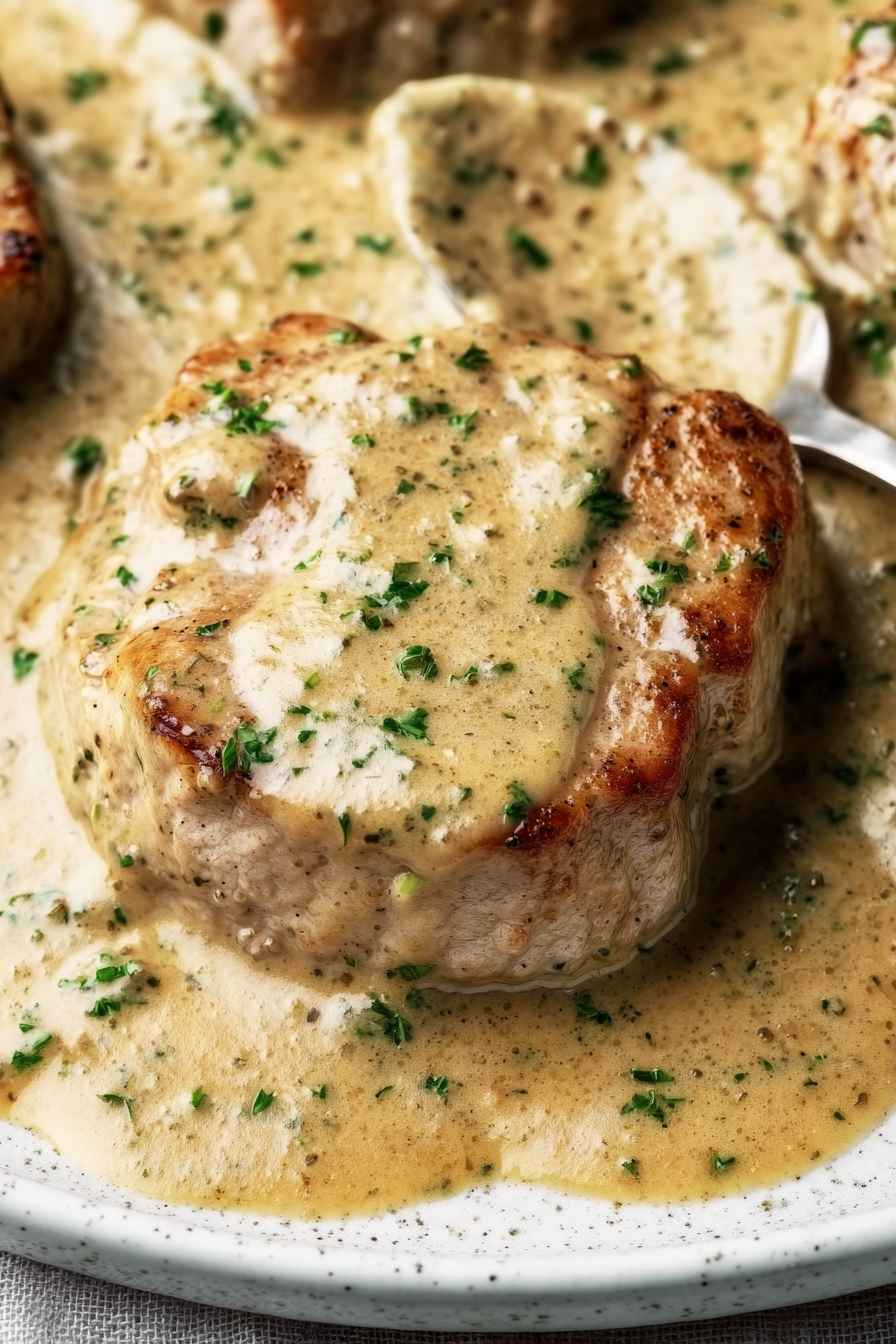
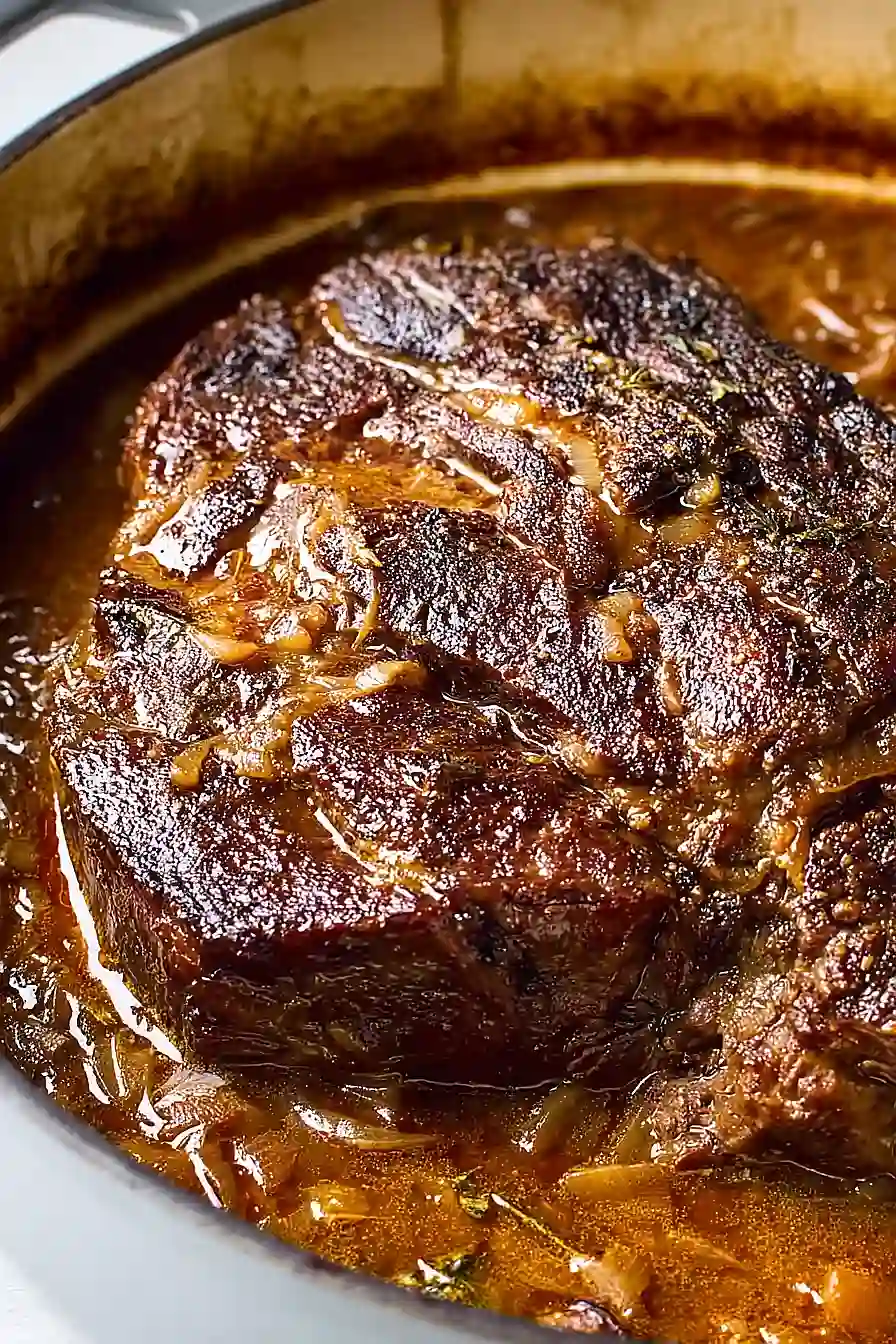
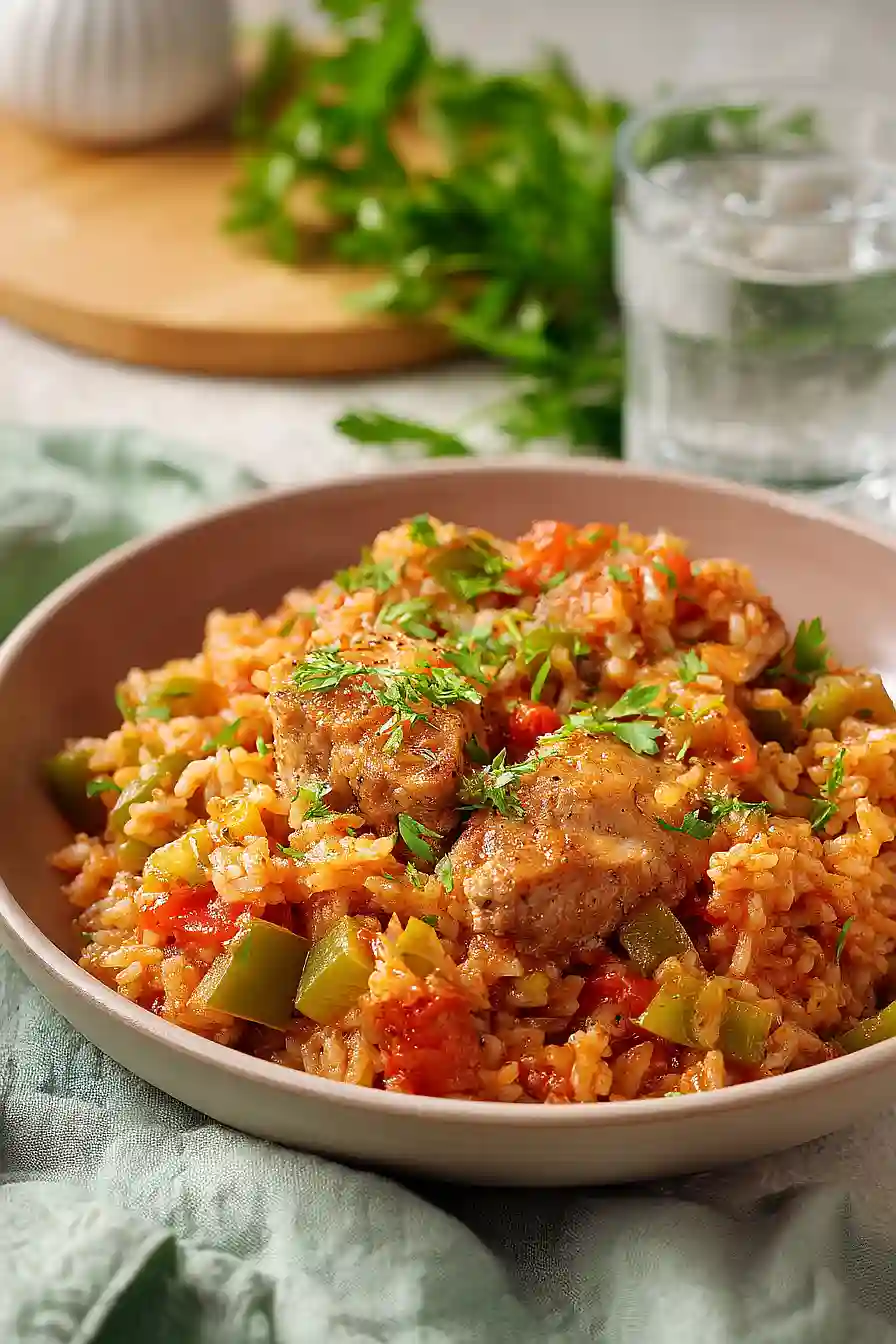
Here is my favorite pork chop jambalaya recipe, with tender bone-in pork chops, rice, tomatoes, and all the classic Creole seasonings that make this one-pot meal so comforting and delicious.
This jambalaya has become our go-to weeknight dinner when I want something hearty that the whole family will actually eat. I love that everything cooks together in one pot, and the leftovers taste even better the next day.

Why You’ll Love This Pork Chop Jambalaya
- One-pot meal – Everything cooks together in a single pot, which means less cleanup and more time to relax after dinner.
- Hearty and filling – The bone-in pork chops add so much flavor to the rice, and you get your protein, veggies, and carbs all in one dish.
- Simple ingredients – You probably have most of these pantry staples on hand already, making this an easy weeknight option without a special grocery run.
- Bold, comforting flavors – The Creole seasoning, tomatoes, and chicken broth create a rich, savory sauce that makes this jambalaya taste like it came straight from Louisiana.
- Feeds a crowd – This recipe makes plenty of servings, so it’s perfect for family dinners or meal prepping for the week ahead.
What Kind of Pork Chops Should I Use?
For this jambalaya, bone-in pork chops are the way to go since the bones add extra flavor to the dish as it cooks. You can use center-cut or rib chops, whichever looks good at your store, and aim for chops that are about 3/4 to 1 inch thick so they don’t dry out during cooking. If you only have boneless pork chops on hand, they’ll still work fine, but you might want to reduce the cooking time a bit since they tend to cook faster. Try to pick chops with a little bit of marbling or fat around the edges, as this will help keep them moist and add more flavor to your jambalaya.
Options for Substitutions
This jambalaya recipe is pretty forgiving when it comes to swaps:
- Pork chops: If you don’t have pork chops, boneless chicken thighs work great and cook in about the same time. You could also use andouille sausage sliced into rounds for a more traditional jambalaya flavor.
- Creole seasoning: No creole seasoning? Make your own by mixing paprika, garlic powder, onion powder, cayenne pepper, oregano, and thyme. Cajun seasoning also works as a substitute since they’re pretty similar.
- Rice: Long-grain white rice is what you want here – don’t substitute with instant rice or it’ll turn mushy. Brown rice won’t work well either since it needs different cooking times and liquid ratios.
- Chicken broth: Vegetable broth or beef broth can step in if needed, though chicken broth gives the best flavor for this dish.
- Bell pepper and celery: These are part of the holy trinity in Cajun cooking along with onions, so try to keep them if you can. But if you’re missing one, just use more of the other two.
- Fresh herbs: If you don’t have fresh green onions or parsley, you can use dried versions (about 1 tablespoon of each), though fresh really does make a difference in the final taste.
Watch Out for These Mistakes While Cooking
The biggest mistake when making jambalaya is lifting the lid during the 45-minute simmer, which releases steam and can leave you with crunchy, undercooked rice – resist the urge to peek and trust the process.
Crowding the pan when browning your pork chops prevents that nice golden crust from forming, so work in batches if needed and make sure each chop has enough space to sear properly.
Another common error is skipping the 10-minute rest at the end, which allows the rice to finish absorbing any remaining liquid and prevents a mushy texture when you fluff it.
If your rice tends to stick to the bottom, try reducing the heat slightly during the simmer and make sure you’re using a heavy-bottomed pot that distributes heat evenly.
What to Serve With Pork Chop Jambalaya?
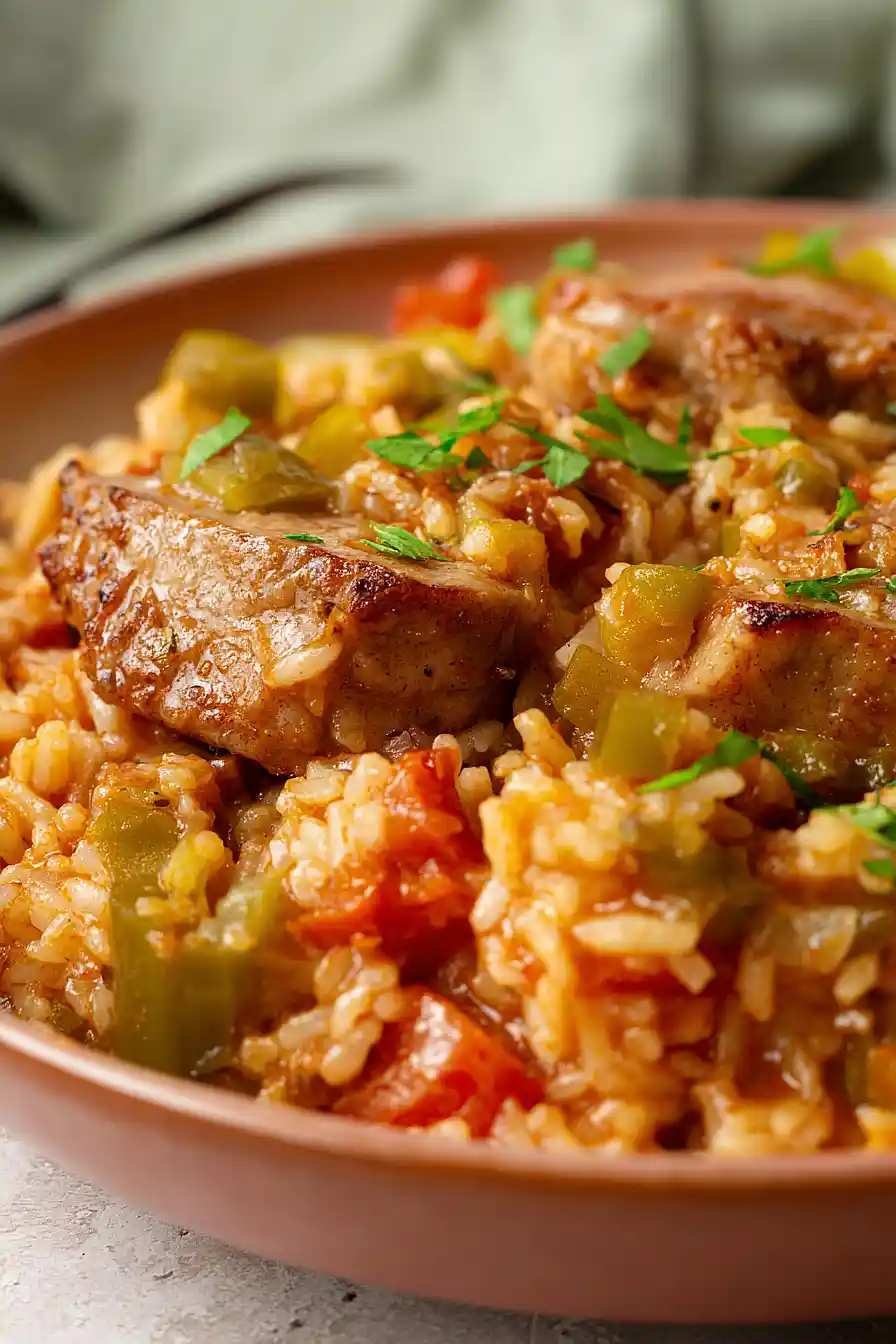
Since jambalaya is already a complete one-pot meal with rice, meat, and vegetables, you really just need a few simple sides to round things out. A slice of warm cornbread with butter is perfect for soaking up all that spicy, tomato-based sauce, and it adds a nice sweet contrast to the creole flavors. I like to keep a bottle of hot sauce on the table so everyone can adjust the heat to their liking, and a cold beer or sweet iced tea helps balance out the spice. For a fresh element, try serving it with a simple cucumber and tomato salad or some crispy coleslaw on the side.
Storage Instructions
Store: Keep your leftover jambalaya in an airtight container in the fridge for up to 4 days. The flavors actually get even better the next day as everything has time to meld together. Just note that the rice will absorb more liquid as it sits, so it might be a bit thicker when you reheat it.
Freeze: This jambalaya freezes really well for up to 3 months. Let it cool completely, then portion it into freezer-safe containers or bags. I like to freeze individual servings so I can grab just what I need for a quick dinner later on.
Reheat: Warm it up on the stovetop over medium-low heat, adding a splash of chicken broth or water if it seems dry. You can also microwave individual portions for 2-3 minutes, stirring halfway through. The pork chops might be a little less tender after reheating, but they’ll still taste great.
| Preparation Time | 15-20 minutes |
| Cooking Time | 45-60 minutes |
| Total Time | 60-80 minutes |
| Level of Difficulty | Medium |
| Servings | 7 servings |
Estimated Nutrition
Estimated nutrition for the whole recipe (without optional ingredients):
- Calories: 3350-3600
- Protein: 155-175 g
- Fat: 95-110 g
- Carbohydrates: 470-500 g
Ingredients
For the pork and base:
- 2.5 tbsp cooking oil (I prefer Wesson vegetable oil for high-heat browning)
- 6 bone-in pork chops
- 1.5 tsp salt
- 0.75 tsp black pepper
- 0.5 tsp creole seasoning (I use Tony Chachere’s for authentic flavor)
- 1 1/2 cups onions (chopped into 1/2-inch pieces)
- 1/2 cup bell pepper
- 1/4 cup celery
- 1.5 oz garlic (freshly minced for best aroma)
- 2 bay leaves
For the rice and assembly:
- 32 oz chicken broth (I use Swanson Less Sodium to control the saltiness)
- 14.5 oz diced tomatoes
- 8 oz tomato sauce (I like Hunt’s for a consistent thick texture)
- 3 cups rice (long-grain white rice works best for fluffiness)
- 1.25 tsp salt
- 1/2 cup green onions
- 1/8 cup parsley
- hot sauce (adds a necessary kick to the rice)
Step 1: Season and Brown the Pork Chops
- 6 bone-in pork chops
- 1.5 tsp salt
- 0.75 tsp black pepper
- 0.5 tsp creole seasoning
- 2.5 tbsp cooking oil
Pat the pork chops dry with paper towels—this is crucial for getting a good brown crust.
In a small bowl, combine salt, black pepper, and Creole seasoning, then rub generously all over both sides of each pork chop.
Heat the cooking oil in a large, heavy-bottomed pot or Dutch oven over medium-high heat until shimmering.
Working in batches if needed to avoid crowding, sear the pork chops for 4-5 minutes per side until deeply browned.
Remove the pork to a plate and set aside.
I like to get that caramelized crust because it adds tremendous depth to the final dish.
Step 2: Build the Flavor Base with the Holy Trinity
- 1.5 cups onions
- 0.5 cup bell pepper
- 0.25 cup celery
- 1.5 oz garlic
- 2 bay leaves
Without draining the oil from the pot, add the chopped onions, bell pepper, and celery.
Sauté over medium heat for 5-6 minutes, stirring occasionally, until the vegetables soften and become fragrant.
Add the minced garlic and bay leaves, cooking for another minute until the garlic blooms and becomes aromatic.
This foundation of aromatics is what gives jambalaya its characteristic depth—don’t rush this step.
Step 3: Create the Jambalaya Liquid and Rice Foundation
- 32 oz chicken broth
- 14.5 oz diced tomatoes
- 8 oz tomato sauce
- 3 cups rice
- 1.25 tsp salt
- 0.25 cup green onions
Pour the chicken broth, diced tomatoes with their juice, and tomato sauce into the pot with the cooked vegetables.
Stir well to combine, then bring to a boil.
Add the rice, 1.25 tsp salt, and half of the green onions, stirring everything together so the rice is evenly distributed.
The liquid should come about 1 inch above the rice—this is your guide for proper consistency.
I find using long-grain white rice gives you that fluffy texture where each grain stays separate.
Step 4: Nestle Pork and Simmer Until Tender
- browned pork chops from Step 1
- rice and liquid mixture from Step 3
Arrange the browned pork chops on top of the rice mixture, nestling them so they’re partially submerged.
Reduce the heat to medium-low, cover the pot with a tight-fitting lid, and simmer for 45 minutes.
The pork will gently finish cooking while the rice absorbs all the flavors from the broth and tomatoes.
Resist the urge to stir or peek too often—each time you lift the lid, you release steam and can affect cooking time.
Step 5: Rest and Finish the Dish
- 0.25 cup green onions
- 0.125 cup parsley
- hot sauce
Remove the pot from heat and keep it covered for 10 minutes.
This resting period allows the rice to finish absorbing any remaining liquid and the pork to become even more tender.
Carefully remove the bay leaves, then fluff the rice gently with a fork to separate the grains.
Scatter the remaining green onions and fresh parsley over the top.
Serve each portion with hot sauce on the side so guests can adjust the heat to their preference.
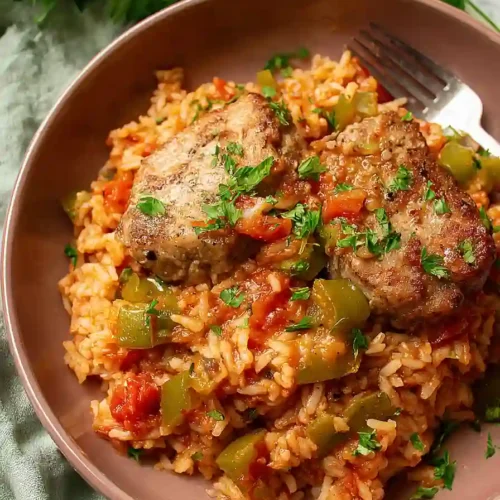
Simple Pork Chop Jambalaya
Ingredients
For the pork and base::
- 2.5 tbsp cooking oil (I prefer Wesson vegetable oil for high-heat browning)
- 6 bone-in pork chops
- 1.5 tsp salt
- 0.75 tsp black pepper
- 0.5 tsp creole seasoning (I use Tony Chachere's for authentic flavor)
- 1 1/2 cups onions (chopped into 1/2-inch pieces)
- 1/2 cup bell pepper
- 1/4 cup celery
- 1.5 oz garlic (freshly minced for best aroma)
- 2 bay leaves
For the rice and assembly::
- 32 oz chicken broth (I use Swanson Less Sodium to control the saltiness)
- 14.5 oz diced tomatoes
- 8 oz tomato sauce (I like Hunt's for a consistent thick texture)
- 3 cups rice (long-grain white rice works best for fluffiness)
- 1.25 tsp salt
- 1/2 cup green onions
- 1/8 cup parsley
- hot sauce (adds a necessary kick to the rice)
Instructions
- Pat the pork chops dry with paper towels—this is crucial for getting a good brown crust. In a small bowl, combine salt, black pepper, and Creole seasoning, then rub generously all over both sides of each pork chop. Heat the cooking oil in a large, heavy-bottomed pot or Dutch oven over medium-high heat until shimmering. Working in batches if needed to avoid crowding, sear the pork chops for 4-5 minutes per side until deeply browned. Remove the pork to a plate and set aside. I like to get that caramelized crust because it adds tremendous depth to the final dish.
- Without draining the oil from the pot, add the chopped onions, bell pepper, and celery. Sauté over medium heat for 5-6 minutes, stirring occasionally, until the vegetables soften and become fragrant. Add the minced garlic and bay leaves, cooking for another minute until the garlic blooms and becomes aromatic. This foundation of aromatics is what gives jambalaya its characteristic depth—don't rush this step.
- Pour the chicken broth, diced tomatoes with their juice, and tomato sauce into the pot with the cooked vegetables. Stir well to combine, then bring to a boil. Add the rice, 1.25 tsp salt, and half of the green onions, stirring everything together so the rice is evenly distributed. The liquid should come about 1 inch above the rice—this is your guide for proper consistency. I find using long-grain white rice gives you that fluffy texture where each grain stays separate.
- Arrange the browned pork chops on top of the rice mixture, nestling them so they're partially submerged. Reduce the heat to medium-low, cover the pot with a tight-fitting lid, and simmer for 45 minutes. The pork will gently finish cooking while the rice absorbs all the flavors from the broth and tomatoes. Resist the urge to stir or peek too often—each time you lift the lid, you release steam and can affect cooking time.
- Remove the pot from heat and keep it covered for 10 minutes. This resting period allows the rice to finish absorbing any remaining liquid and the pork to become even more tender. Carefully remove the bay leaves, then fluff the rice gently with a fork to separate the grains. Scatter the remaining green onions and fresh parsley over the top. Serve each portion with hot sauce on the side so guests can adjust the heat to their preference.