Here is my favorite fresh pumpkin pie recipe, with a smooth, creamy filling made from real pumpkin, warm spices, and a hint of maple syrup, all in a buttery homemade crust.
This fresh pumpkin pie has become our go-to dessert every Thanksgiving. I always make an extra one because my kids love having a slice with their morning coffee (yes, even for breakfast). There’s something special about using fresh pumpkin instead of canned that makes all the difference.
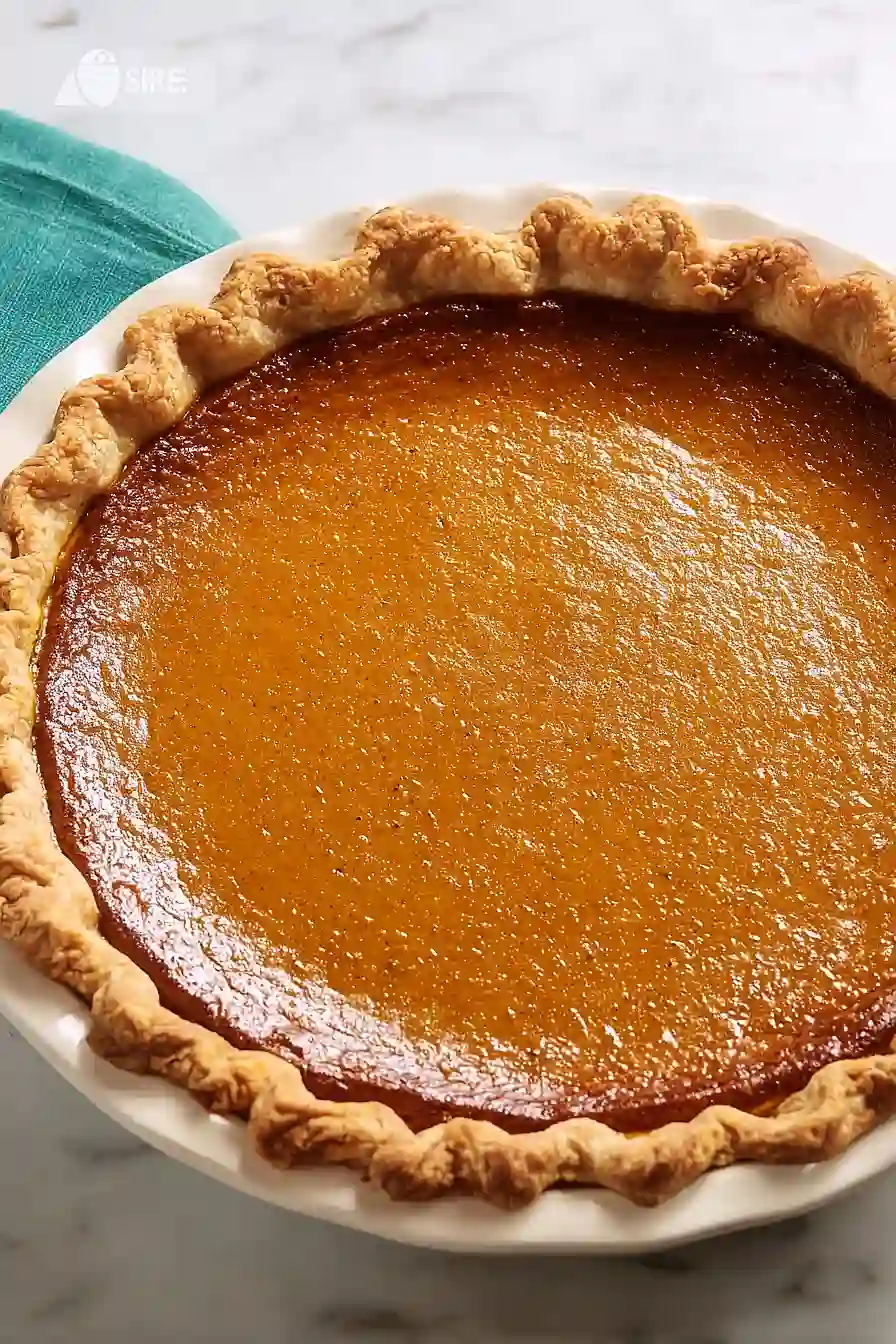
Why You’ll Love This Pumpkin Pie
- Made with fresh pumpkin – Using real pumpkin instead of canned gives you a naturally sweet, authentic flavor that tastes way better than store-bought versions.
- Homemade crust – The flaky, buttery crust made from scratch takes this pie to the next level and is easier to make than you might think.
- Perfect spice blend – The warm combination of cinnamon, ginger, and nutmeg creates that classic fall flavor everyone loves without being overpowering.
- Great for holidays – This recipe is perfect for Thanksgiving or any fall gathering, and it’s sure to impress your family and friends.
- Ready in about an hour – From start to finish, you can have this pie baked and cooling in just over an hour, making it doable even on busy days.
What Kind of Pumpkin Should I Use?
For the best homemade pumpkin pie, you’ll want to use a pie pumpkin (also called sugar pumpkins), not the large carving pumpkins you see at Halloween. Pie pumpkins are smaller, sweeter, and have a smoother, less stringy texture that’s perfect for baking. You can usually find them at farmers markets or grocery stores in the fall, and they’re typically about the size of a small cantaloupe. If fresh pie pumpkins aren’t available, canned pumpkin puree (not pumpkin pie filling) is a totally acceptable substitute and will still give you a delicious pie. To prepare fresh pumpkin, simply cut it in half, scoop out the seeds, roast it until tender, and then mash or puree the flesh until smooth.
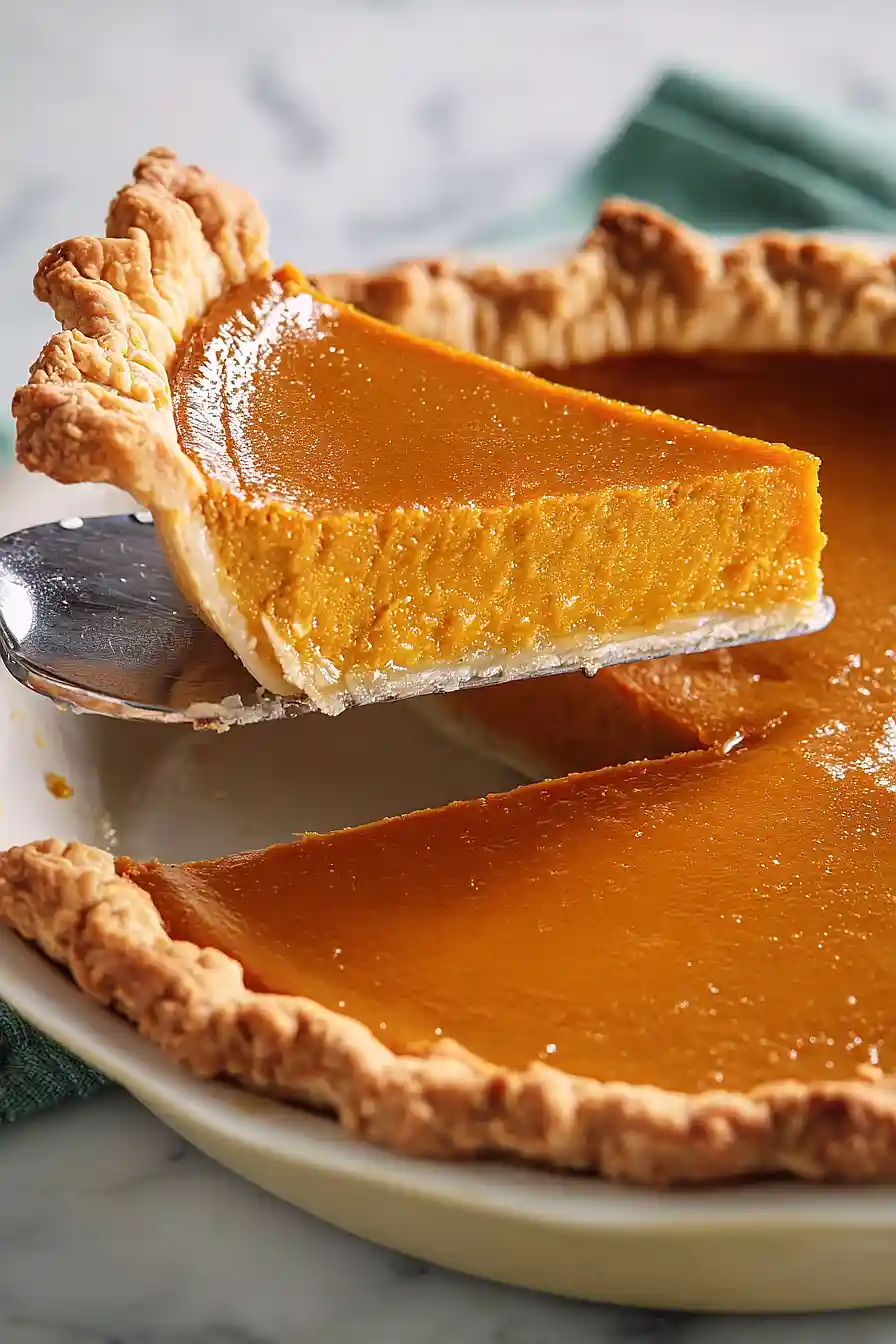
Options for Substitutions
This fresh pumpkin pie recipe gives you some room to work with what you have:
- Fresh pumpkin: If you don’t have fresh pumpkin on hand, canned pumpkin puree works perfectly – just use the same amount. Make sure it’s pure pumpkin, not pumpkin pie filling which already has spices added.
- Evaporated milk: You can swap this with heavy cream for a richer pie, or use regular whole milk if that’s what you have. The texture might be slightly less creamy with regular milk, but it’ll still taste great.
- Brown sugar: White granulated sugar works fine if you’re out of brown sugar. You’ll lose a bit of that molasses flavor, but the pie will still be sweet and delicious.
- Shortening: Butter or lard can replace shortening in the crust. If using butter, keep it very cold and work quickly to maintain a flaky texture.
- Spices: Don’t have all the individual spices? Use 1.5 to 2 teaspoons of pumpkin pie spice instead. Or feel free to adjust the amounts to your taste – some people like more cinnamon, others prefer extra ginger.
Watch Out for These Mistakes While Baking
The biggest mistake when making fresh pumpkin pie is using pumpkin that’s too watery, which leads to a runny filling that never sets properly – after cooking your pumpkin, drain it well in a fine-mesh strainer or cheesecloth for at least 30 minutes to remove excess moisture.
Overmixing the filling is another common error that incorporates too much air and causes cracks on the surface, so gently whisk the ingredients just until combined.
To avoid a soggy bottom crust, blind bake your pie shell for about 10 minutes before adding the filling, and make sure your oven is fully preheated to 425°F before the pie goes in.
The pie is done when the edges are set but the center still has a slight jiggle (like Jello), usually around 50-60 minutes – overbaking creates a grainy texture and cracks, so pull it out even if it seems a bit underdone since it will continue cooking as it cools.
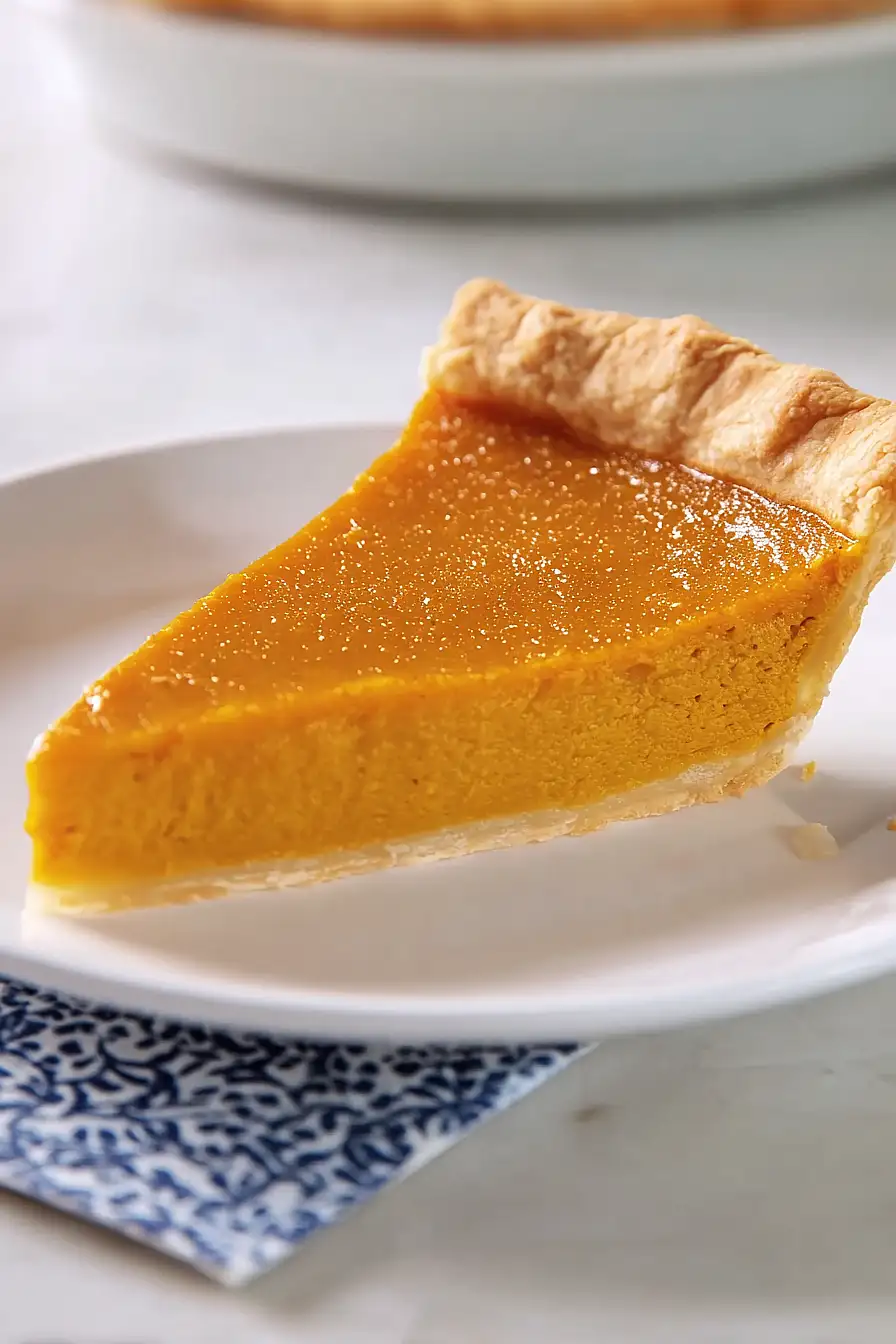
What to Serve With Pumpkin Pie?
A big dollop of whipped cream is pretty much required when serving pumpkin pie – I like to add a pinch of cinnamon to the cream for extra flavor. Vanilla ice cream is another great option, especially if you’re serving the pie while it’s still slightly warm from the oven. For a complete fall dessert spread, pair your pumpkin pie with hot coffee, spiced apple cider, or even a chai latte that complements all those warm spices. If you want to get fancy, a drizzle of caramel sauce or a sprinkle of toasted pecans on top adds a nice finishing touch.
Storage Instructions
Store: Once your pumpkin pie has cooled completely, cover it loosely with foil or plastic wrap and keep it in the fridge for up to 4 days. The custard filling needs to stay cold, so don’t leave it sitting out on the counter for more than 2 hours.
Freeze: You can freeze pumpkin pie for up to a month, though the texture might be a bit softer when thawed. Wrap it tightly in plastic wrap, then again in foil to prevent freezer burn. I like to freeze individual slices so I can grab just one whenever a craving hits.
Serve: Pumpkin pie is best served cold or at room temperature. If you’ve frozen it, let it thaw overnight in the fridge before serving. Some people love it straight from the fridge, while others prefer to let it sit out for about 30 minutes to take the chill off.
| Preparation Time | 30-45 minutes |
| Cooking Time | 40-60 minutes |
| Total Time | 70-105 minutes |
| Level of Difficulty | Medium |
Estimated Nutrition
Estimated nutrition for the whole recipe (without optional ingredients):
- Calories: 1750-1900
- Protein: 35-45 g
- Fat: 70-80 g
- Carbohydrates: 240-260 g
Ingredients
For the crust:
- 1/2 tsp salt
- 3 tbsp cold water, plus extra if needed
- 1/2 cup shortening (chilled for flakier crust)
- 1 1/3 cups all-purpose flour (I use King Arthur all-purpose)
For the pumpkin custard:
- 3/4 cup brown sugar (packed)
- 1/2 tsp ground ginger (more if desired, freshly ground preferred)
- 1/2 tsp salt
- 1/2 tsp ground nutmeg (plus extra if needed)
- 1/2 tsp ground cinnamon (add extra to taste for warmth)
- 2 cups pumpkin puree (freshly cooked and mashed, or canned)
- 1 can evaporated milk (12 fl oz)
- 2 large eggs (lightly beaten, room temperature)
Step 1: Make the Pie Crust
- 1 1/3 cups all-purpose flour
- 1/2 tsp salt
- 1/2 cup shortening
- 3 tbsp cold water, plus extra if needed
In a bowl, whisk together the flour and salt.
Cut the chilled shortening into small cubes and add to the flour mixture, then use a pastry cutter, fork, or your fingertips to work the shortening into the flour until it resembles coarse breadcrumbs with some pea-sized pieces remaining.
This texture is what creates a flaky crust.
Add the cold water one tablespoon at a time, mixing gently with a fork until the dough just comes together—it should be slightly shaggy but hold together when pressed.
Don’t overwork the dough or it will become tough.
Form the dough into a disk, wrap it in plastic wrap, and refrigerate while you prepare the filling.
Step 2: Prepare the Filling
- 2 cups pumpkin puree
- 1 can evaporated milk
- 2 large eggs
- 3/4 cup brown sugar
- 1/2 tsp ground cinnamon
- 1/2 tsp ground ginger
- 1/2 tsp ground nutmeg
- 1/2 tsp salt
In a large bowl, combine the pumpkin puree, evaporated milk, brown sugar, lightly beaten eggs, cinnamon, ginger, nutmeg, and salt.
Whisk the mixture until completely smooth and well blended—this ensures the spices are evenly distributed throughout the filling.
I like to add a little extra cinnamon and ginger beyond what’s called for to give the pie more warmth and depth; taste and adjust to your preference.
Set the filling aside while you roll out the crust.
Step 3: Line the Pie Pan
- pie dough from Step 1
Preheat your oven to 400°F (200°C).
Remove the dough disk from the refrigerator and place it on a lightly floured surface.
Roll it out to about 1/8-inch thickness, rotating the dough frequently to ensure even thickness.
The circle should be about 1 1/2 inches larger than your 9-inch pie pan to allow for the sides and fluting.
Transfer the dough to the pie pan by rolling it loosely around your rolling pin or folding it into quarters, then positioning and unfolding it in the pan.
Trim the excess dough to about 1/2 inch beyond the pan’s edge, then fold this edge under and flute it decoratively by pressing your thumb and forefinger around the perimeter.
This creates an attractive edge and helps contain the filling.
Step 4: Fill and Bake the Pie
- filling mixture from Step 2
- pie crust from Step 3
Pour the filling from Step 2 into the prepared crust, filling it to just below the rim.
Place the pie on a baking sheet (this catches any drips and makes it easier to remove from the oven) and bake at 400°F for 40 to 60 minutes, until a knife inserted near the center comes out clean or with just a few moist crumbs.
The pie should be set but still slightly jiggly in the very center when you gently shake the pan—it will continue to cook slightly as it cools.
I find that starting at 400°F and watching for browning after 30 minutes helps prevent the crust from getting too dark; if it’s browning too quickly, you can loosely tent it with foil or reduce the temperature to 350°F for the remaining time.
Step 5: Cool and Serve
Remove the pie from the oven and let it cool on a wire rack for at least 2 to 3 hours before slicing.
This cooling time allows the filling to set properly, making slicing cleaner and preventing a soupy texture.
The pie can be served at room temperature or chilled.
You can make this pie up to a day ahead and store it covered at room temperature.
Spiced Fresh Pumpkin Pie
Ingredients
Crust
- 1/2 tsp salt
- 3 tbsp cold water, plus extra if needed
- 1/2 cup shortening (chilled for flakier crust)
- 1 1/3 cups all-purpose flour (I use King Arthur all-purpose)
Pumpkin custard
- 3/4 cup brown sugar (packed)
- 1/2 tsp ground ginger (more if desired, freshly ground preferred)
- 1/2 tsp salt
- 1/2 tsp ground nutmeg (plus extra if needed)
- 1/2 tsp ground cinnamon (add extra to taste for warmth)
- 2 cups pumpkin puree (freshly cooked and mashed, or canned)
- 1 can evaporated milk (12 fl oz)
- 2 large eggs (lightly beaten, room temperature)
Instructions
- In a bowl, whisk together the flour and salt. Cut the chilled shortening into small cubes and add to the flour mixture, then use a pastry cutter, fork, or your fingertips to work the shortening into the flour until it resembles coarse breadcrumbs with some pea-sized pieces remaining. This texture is what creates a flaky crust. Add the cold water one tablespoon at a time, mixing gently with a fork until the dough just comes together—it should be slightly shaggy but hold together when pressed. Don’t overwork the dough or it will become tough. Form the dough into a disk, wrap it in plastic wrap, and refrigerate while you prepare the filling.
- In a large bowl, combine the pumpkin puree, evaporated milk, brown sugar, lightly beaten eggs, cinnamon, ginger, nutmeg, and salt. Whisk the mixture until completely smooth and well blended—this ensures the spices are evenly distributed throughout the filling. I like to add a little extra cinnamon and ginger beyond what’s called for to give the pie more warmth and depth; taste and adjust to your preference. Set the filling aside while you roll out the crust.
- Preheat your oven to 400°F (200°C). Remove the dough disk from the refrigerator and place it on a lightly floured surface. Roll it out to about 1/8-inch thickness, rotating the dough frequently to ensure even thickness. The circle should be about 1 1/2 inches larger than your 9-inch pie pan to allow for the sides and fluting. Transfer the dough to the pie pan by rolling it loosely around your rolling pin or folding it into quarters, then positioning and unfolding it in the pan. Trim the excess dough to about 1/2 inch beyond the pan’s edge, then fold this edge under and flute it decoratively by pressing your thumb and forefinger around the perimeter. This creates an attractive edge and helps contain the filling.
- Pour the filling from Step 2 into the prepared crust, filling it to just below the rim. Place the pie on a baking sheet (this catches any drips and makes it easier to remove from the oven) and bake at 400°F for 40 to 60 minutes, until a knife inserted near the center comes out clean or with just a few moist crumbs. The pie should be set but still slightly jiggly in the very center when you gently shake the pan—it will continue to cook slightly as it cools. I find that starting at 400°F and watching for browning after 30 minutes helps prevent the crust from getting too dark; if it’s browning too quickly, you can loosely tent it with foil or reduce the temperature to 350°F for the remaining time.
- Remove the pie from the oven and let it cool on a wire rack for at least 2 to 3 hours before slicing. This cooling time allows the filling to set properly, making slicing cleaner and preventing a soupy texture. The pie can be served at room temperature or chilled. You can make this pie up to a day ahead and store it covered at room temperature.