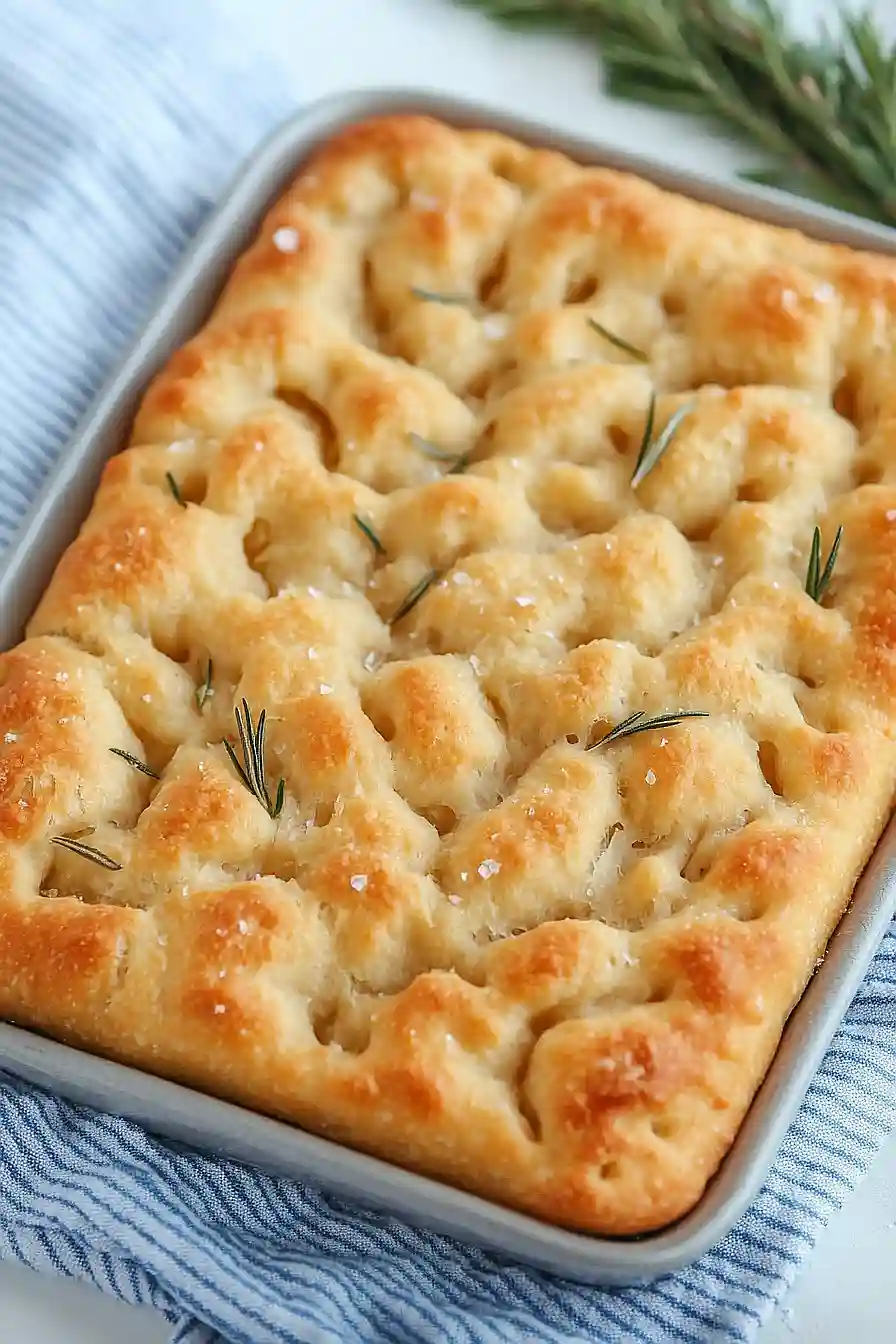
Here is my favorite vegan focaccia recipe, with a simple dough that uses just a few pantry staples, and a topping of fragrant rosemary, flaky sea salt, and plenty of good olive oil.
This focaccia has become our go-to bread for weekend dinners. I love how easy it is to make, and my kids actually fight over the corner pieces with all those crispy, olive oil-soaked edges. Plus, any leftovers make incredible sandwiches the next day.
Why You’ll Love This Vegan Focaccia
- Naturally vegan – This focaccia is completely plant-based, so you can enjoy fresh-baked bread without any animal products.
- Simple pantry ingredients – You probably already have flour, yeast, olive oil, and salt in your kitchen, making this an easy recipe to whip up anytime.
- Impressive but easy – While the dough needs time to rise, the actual hands-on work is minimal, and you’ll end up with bakery-quality bread that looks like you spent hours on it.
- Perfect for sharing – This recipe makes a generous amount of fluffy, olive oil-rich focaccia that’s great for serving at gatherings or enjoying throughout the week.
What Kind of Flour Should I Use?
All-purpose flour is your best bet for this vegan focaccia and will give you that classic chewy texture with a nice crispy crust. Bread flour will also work great if that’s what you have on hand – it actually has a bit more protein, which can make your focaccia even chewier and give it a better rise. If you want to get a little fancy, you can swap out half a cup of the all-purpose flour for whole wheat flour to add some nutty flavor, though keep in mind this will make your bread a bit denser. Whatever you choose, just make sure your flour is fresh and hasn’t been sitting in the pantry for years, as old flour can affect how well your dough rises.

Options for Substitutions
This focaccia recipe is pretty forgiving when it comes to swaps:
- All-purpose flour: You can substitute up to half of the all-purpose flour with whole wheat flour for a nuttier flavor and denser texture. Bread flour also works great and will give you an even chewier result.
- Instant yeast: Active dry yeast works just as well – just dissolve it in the warm water first and let it sit for about 5 minutes until it gets foamy before mixing with the other ingredients.
- Sugar: Honey, maple syrup, or agave work fine here. Use the same amount, though keep in mind liquid sweeteners will add a tiny bit more moisture to your dough.
- Olive oil: While olive oil gives focaccia its classic flavor, you can use any neutral oil like vegetable or canola oil if needed. Just note that the taste won’t be quite as rich.
- Butter: Since this is a vegan recipe, make sure to use vegan butter or simply stick with olive oil throughout. Regular butter would make it non-vegan.
Watch Out for These Mistakes While Baking
The biggest mistake when making focaccia is using cold water instead of warm water, which won’t activate the yeast properly – aim for water that’s around 100-110°F, or about the temperature of a warm bath.
Skipping the long refrigeration time is another common error that leads to flat, dense bread, so make sure to give your dough the full 12 hours (or even up to 24 hours) in the fridge for the best flavor and texture.
When it comes to the dimpling step, being too gentle won’t create those signature pockets that hold olive oil and toppings, so press your fingers all the way down to the bottom of the pan without fear.
One final note: this recipe lists butter as an ingredient, but that would make it non-vegan, so stick with olive oil for coating the pan if you want to keep this recipe plant-based.
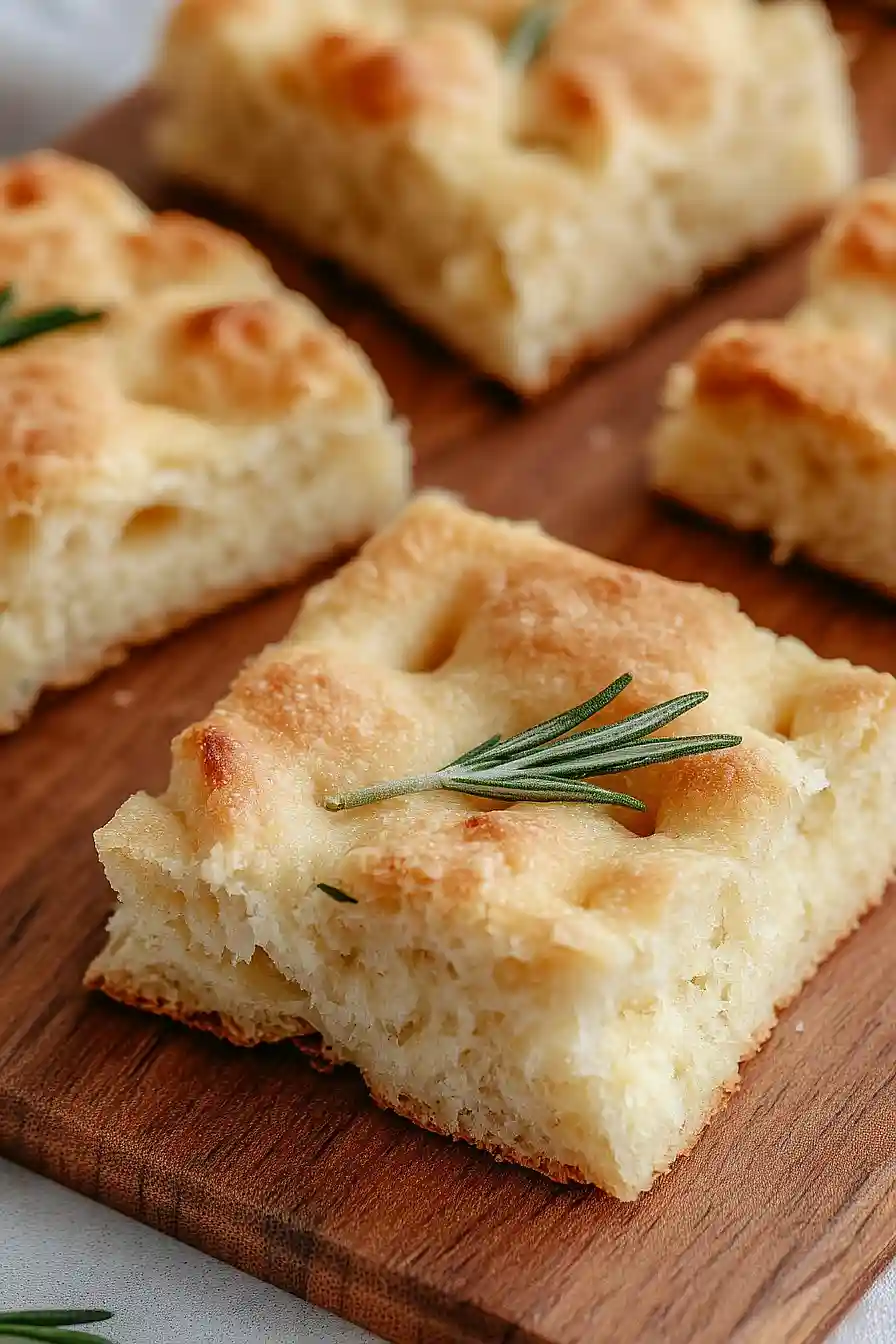
What to Serve With Vegan Focaccia?
Focaccia is perfect for serving alongside a big Italian salad with mixed greens, cherry tomatoes, and a simple vinaigrette. I love pairing it with a hearty minestrone soup or pasta e fagioli, where you can tear off pieces of the bread and dip them right into the broth. It also works great as a side for grilled vegetables or as a base for sandwiches loaded with roasted peppers, arugula, and vegan cheese. If you’re keeping things simple, just serve it warm with a small dish of olive oil and balsamic vinegar for dipping.
Storage Instructions
Store: Keep your focaccia in an airtight container or wrapped tightly in plastic wrap at room temperature for up to 3 days. It stays soft and delicious, making it perfect for sandwiches or snacking throughout the week.
Freeze: Focaccia freezes really well for up to 3 months. Just wrap it tightly in plastic wrap, then again in foil before freezing. You can freeze the whole loaf or cut it into portions first for easier thawing.
Refresh: To bring back that fresh-baked texture, wrap the focaccia in foil and warm it in a 350°F oven for about 10 minutes. If it’s frozen, let it thaw at room temperature first, then warm it up to get that crispy outside and soft inside again.
| Preparation Time | 20-30 minutes |
| Cooking Time | 25-30 minutes |
| Total Time | 175-220 minutes |
| Level of Difficulty | Medium |
| Servings | 12 pieces |
Estimated Nutrition
Estimated nutrition for the whole recipe (without optional ingredients):
- Calories: 2700-2900
- Protein: 50-60 g
- Fat: 90-110 g
- Carbohydrates: 430-460 g
Ingredients
For the dough:
- 4 cups flour (I always use King Arthur Bread Flour for better structure)
- 1.75 tsp salt
- 1 packet instant yeast
- 2 tsp sugar
- 2.25 cups water (lukewarm, ideally between 105-115°F)
- 3 tbsp olive oil
For the assembly and topping:
- vegan butter (I prefer Miyoko’s Creamery for a rich, authentic flavor)
- 4 tbsp olive oil
- fresh rosemary (leaves stripped and roughly chopped)
- flaky sea salt (Maldon is best for that iconic crunch)
Step 1: Mix and Knead the Dough
- 4 cups flour
- 1.75 tsp salt
- 1 packet instant yeast
- 2 tsp sugar
- 2.25 cups water
- 3 tbsp olive oil
In a large bowl, combine the flour, salt, yeast, and sugar.
Add the lukewarm water and stir with a wooden spoon or your hands until a shaggy, sticky dough forms—you’re not aiming for a smooth dough at this stage, just bringing everything together.
Once combined, coat the surface of the dough with 3 tablespoons of olive oil, cover the bowl with plastic wrap or a kitchen towel, and refrigerate for at least 12 hours.
This long, cold fermentation develops incredible flavor and gives the dough better structure for those characteristic focaccia holes.
Step 2: Prepare the Pan and Shape the Dough
- vegan butter
- 2 tbsp olive oil
- dough from Step 1
Remove the dough from the refrigerator and let it sit at room temperature for about 15-20 minutes to take the chill off.
While it warms slightly, coat a 9×13 inch baking pan generously with vegan butter and 2 tablespoons of olive oil, making sure to get into all the corners.
Transfer the cold, sticky dough from the bowl into the prepared pan—it will resist at first, but gently stretch and ease it to fit, letting it relax as you go.
The dough doesn’t need to fill the entire pan perfectly at this point.
Step 3: Final Rise and Oven Prep
- fresh rosemary
Cover the pan loosely with plastic wrap and let the dough rise at room temperature for 2 to 3 hours, until it’s puffy and increased in volume.
About 30 minutes before the dough is done rising, preheat your oven to 425°F.
I like to prep the rosemary during this waiting time—strip the leaves from the stems and give them a rough chop so they’re ready to scatter on top.
Step 4: Dimple, Season, and Bake
- 4 tbsp olive oil
- fresh rosemary
- flaky sea salt
Once the dough has risen, remove the plastic wrap and use your fingertips to press dimples all over the surface, creating those signature focaccia indentations—press deep enough to create wells but not so hard that you deflate all the air.
Drizzle the remaining 4 tablespoons of olive oil evenly over the dough, letting it pool slightly in the dimples.
Scatter the chopped fresh rosemary across the top and finish with a generous sprinkle of flaky sea salt.
Transfer to the preheated oven and bake for 25 to 30 minutes, until the top is golden brown and the edges are deep golden—you want real color for maximum flavor.
Step 5: Cool and Serve
Remove the focaccia from the oven and let it cool in the pan for about 10 minutes.
This resting period allows the crumb to set and makes it easier to slice without tearing.
After cooling, you can slice it directly in the pan or transfer it to a cutting board.
Serve warm or at room temperature—focaccia is wonderful either way.
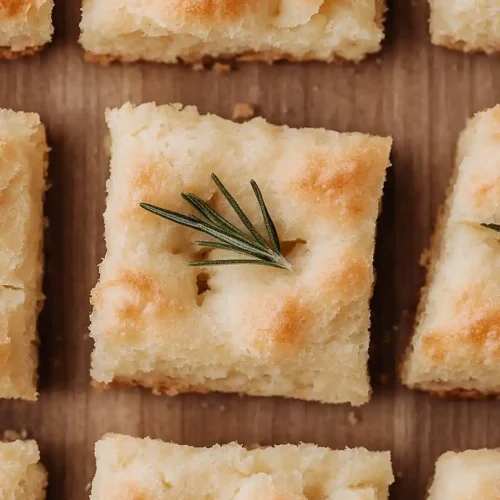
Tasty Vegan Focaccia
Ingredients
For the dough::
- 4 cups flour (I always use King Arthur Bread Flour for better structure)
- 1.75 tsp salt
- 1 packet instant yeast
- 2 tsp sugar
- 2.25 cups water (lukewarm, ideally between 105-115°F)
- 3 tbsp olive oil
For the assembly and topping::
- vegan butter (I prefer Miyoko's Creamery for a rich, authentic flavor)
- 4 tbsp olive oil
- fresh rosemary (leaves stripped and roughly chopped)
- flaky sea salt (Maldon is best for that iconic crunch)
Instructions
- In a large bowl, combine the flour, salt, yeast, and sugar. Add the lukewarm water and stir with a wooden spoon or your hands until a shaggy, sticky dough forms—you're not aiming for a smooth dough at this stage, just bringing everything together. Once combined, coat the surface of the dough with 3 tablespoons of olive oil, cover the bowl with plastic wrap or a kitchen towel, and refrigerate for at least 12 hours. This long, cold fermentation develops incredible flavor and gives the dough better structure for those characteristic focaccia holes.
- Remove the dough from the refrigerator and let it sit at room temperature for about 15-20 minutes to take the chill off. While it warms slightly, coat a 9x13 inch baking pan generously with vegan butter and 2 tablespoons of olive oil, making sure to get into all the corners. Transfer the cold, sticky dough from the bowl into the prepared pan—it will resist at first, but gently stretch and ease it to fit, letting it relax as you go. The dough doesn't need to fill the entire pan perfectly at this point.
- Cover the pan loosely with plastic wrap and let the dough rise at room temperature for 2 to 3 hours, until it's puffy and increased in volume. About 30 minutes before the dough is done rising, preheat your oven to 425°F. I like to prep the rosemary during this waiting time—strip the leaves from the stems and give them a rough chop so they're ready to scatter on top.
- Once the dough has risen, remove the plastic wrap and use your fingertips to press dimples all over the surface, creating those signature focaccia indentations—press deep enough to create wells but not so hard that you deflate all the air. Drizzle the remaining 4 tablespoons of olive oil evenly over the dough, letting it pool slightly in the dimples. Scatter the chopped fresh rosemary across the top and finish with a generous sprinkle of flaky sea salt. Transfer to the preheated oven and bake for 25 to 30 minutes, until the top is golden brown and the edges are deep golden—you want real color for maximum flavor.
- Remove the focaccia from the oven and let it cool in the pan for about 10 minutes. This resting period allows the crumb to set and makes it easier to slice without tearing. After cooling, you can slice it directly in the pan or transfer it to a cutting board. Serve warm or at room temperature—focaccia is wonderful either way.