Chinese takeout has always been my go-to comfort food. There’s something about those long, silky noodles tossed with crisp vegetables that hits the spot every time. But after years of ordering from our local spot, I started wondering if I could make better lo mein at home.
Turns out, I absolutely can. Real lo mein is simpler than you’d think and tastes so much fresher than what you get from most takeout places. The secret is using the right noodles and not overcooking them. I like to prep all my vegetables first, then everything comes together in about 10 minutes.
Want it loaded with vegetables? Perfect. Prefer it with chicken or beef? Easy. The best part is you can customize it however your family likes it. My kids love it with just carrots and snap peas, while my husband piles on the mushrooms and broccoli.
Why You’ll Love This Lo Mein
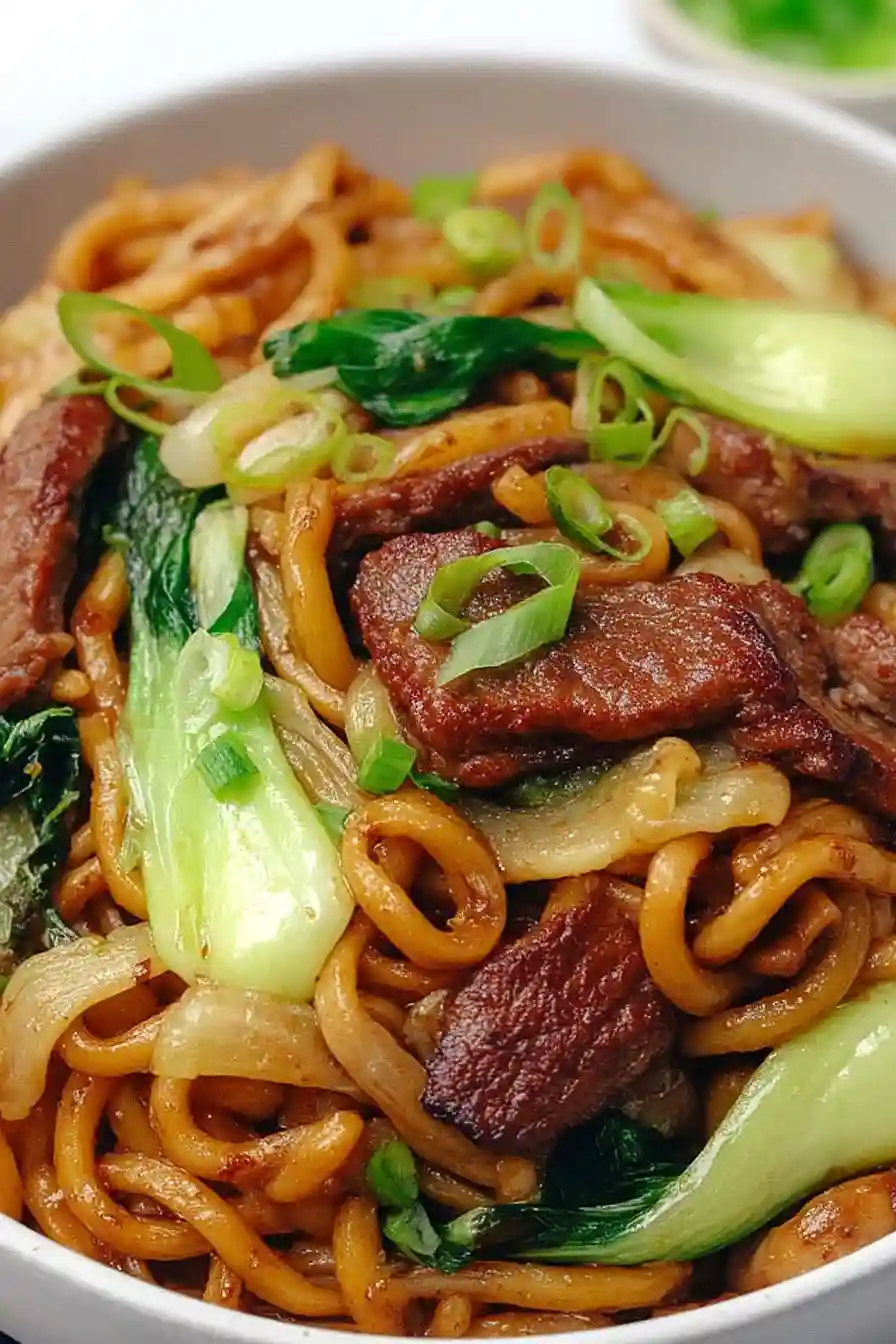
- Restaurant-quality at home – This authentic recipe brings the real flavors of Chinese takeout to your kitchen, complete with homemade roast pork that tastes just like what you’d get from your favorite restaurant.
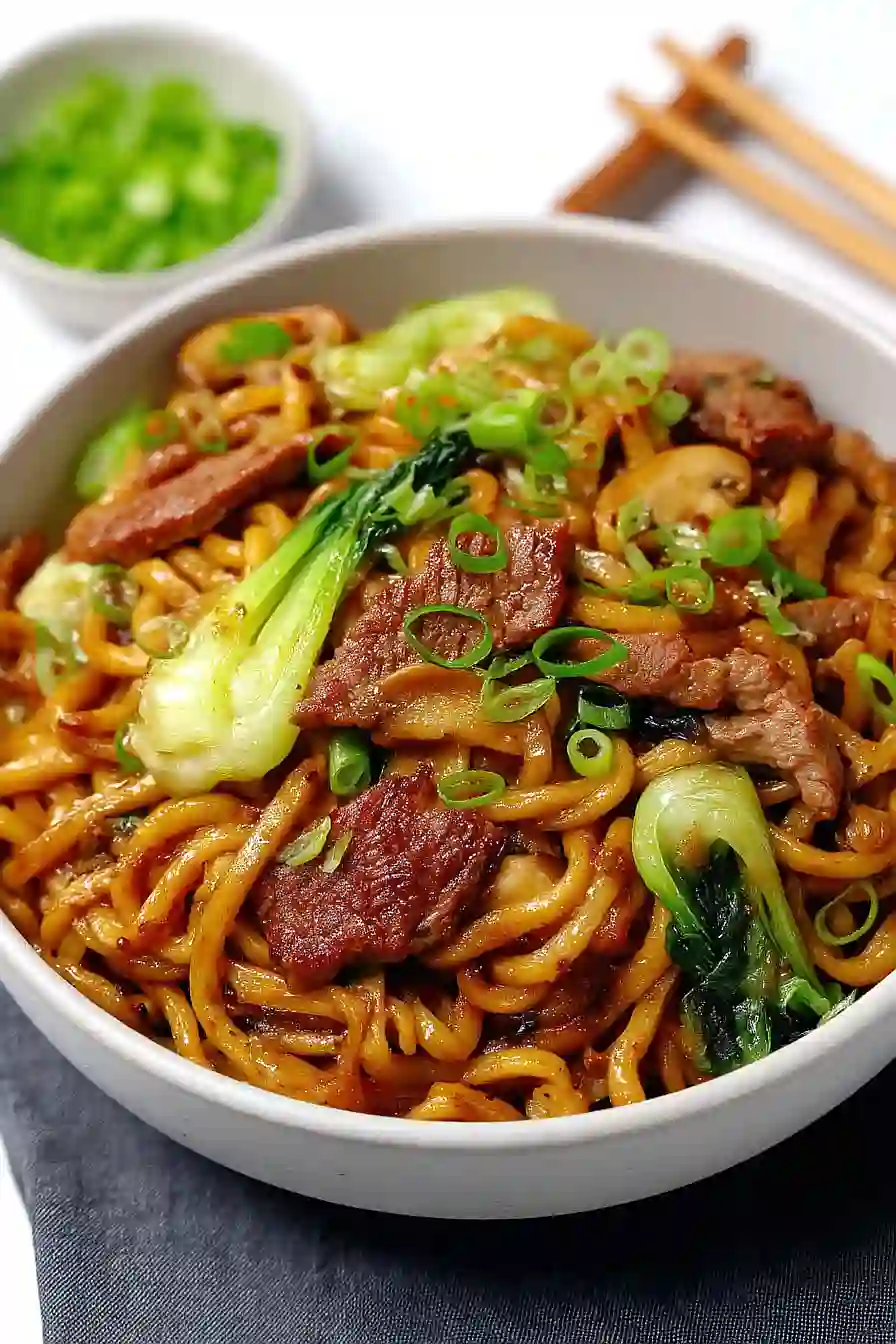
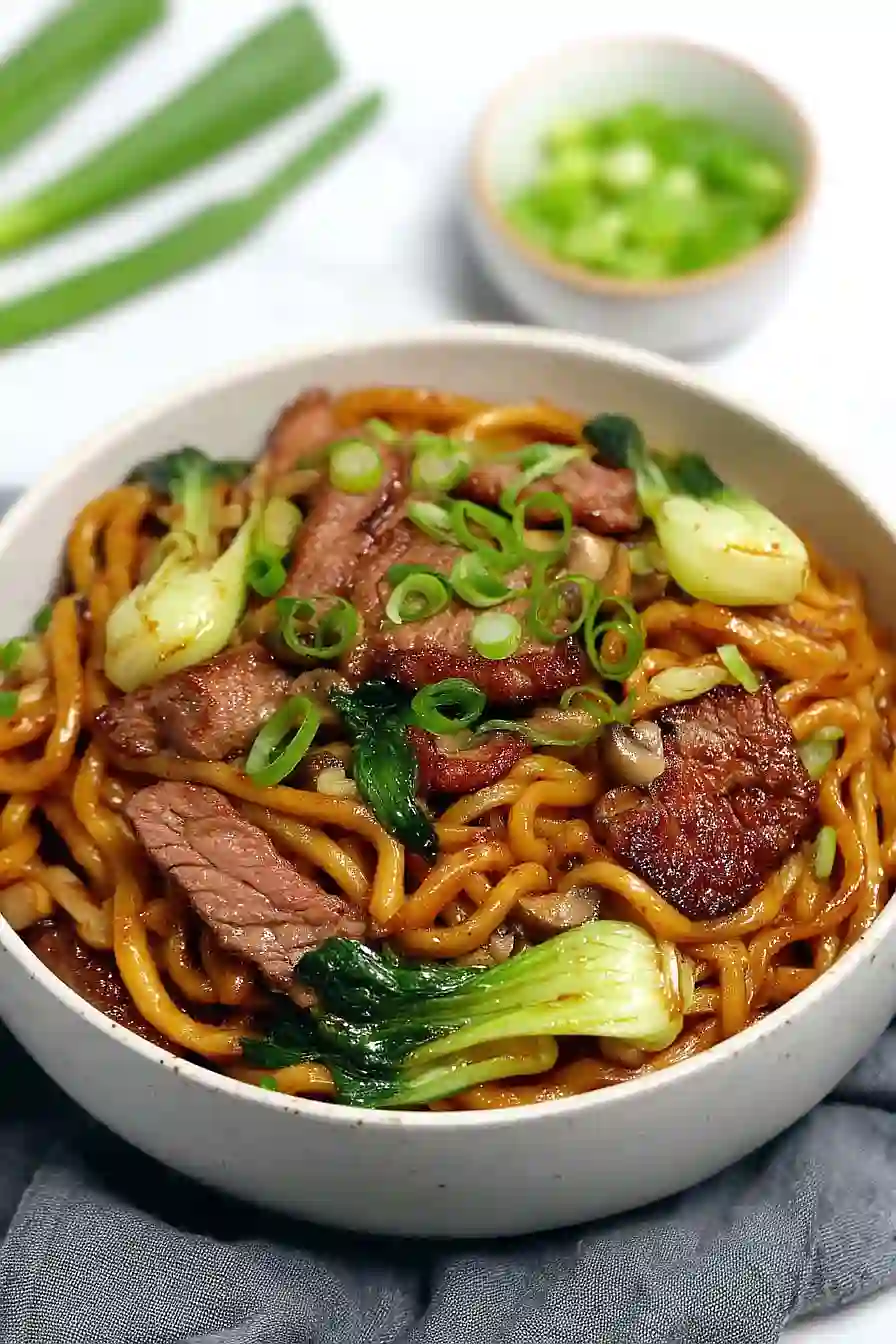
- Fresh vegetables and tender noodles – The combination of crisp bok choy, mushrooms, and perfectly cooked lo mein noodles creates a satisfying texture that’s way better than delivery.
- Make-ahead friendly – You can prepare the roast pork ahead of time and store it in the fridge, making weeknight dinners much easier when you’re craving something special.
- Customizable ingredients – Feel free to swap in your favorite vegetables or adjust the sauce to your taste – this recipe works as a great base for whatever you have on hand.
What Kind of Lo Mein Noodles Should I Use?
For authentic lo mein, you’ll want to look for fresh Chinese lo mein noodles, which are typically found in the refrigerated section of Asian grocery stores. These noodles are slightly thicker than spaghetti and have a chewy texture that holds up well to stir-frying. If you can’t find fresh lo mein noodles, dried Chinese egg noodles or even spaghetti can work as substitutes, though the texture won’t be quite the same. When cooking your noodles, be sure to slightly undercook them since they’ll finish cooking in the wok with the other ingredients – this prevents them from becoming mushy.
Options for Substitutions
This lo mein recipe has some room for swaps, but a few ingredients are pretty important to keep:
- Chinese lo mein noodles: These are key to authentic lo mein, so try to find them at an Asian grocery store. In a pinch, you can use fresh linguine or even spaghetti, but cook them just until al dente since they’ll finish cooking in the pan.
- Chinese roast pork: If you can’t make your own, look for char siu at Chinese restaurants or markets. You can substitute with leftover roast pork, ham, or even cooked chicken or beef strips.
- Bok choy: Baby bok choy works great, or you can swap with napa cabbage, regular cabbage, or even broccoli. Just adjust cooking time – harder vegetables need a bit longer.
- Chinese wine: Dry sherry is the classic substitute, but you can also use mirin or even dry white wine. Rice wine vinegar mixed with a little water works too.
- Dark soy sauce: This gives lo mein its color and deeper flavor. If you only have regular soy sauce, use a bit more and add a splash of molasses or brown sugar for richness.
- Hoisin sauce: You can make a quick substitute by mixing 2 tablespoons soy sauce, 1 tablespoon peanut butter, 1 teaspoon honey, and a pinch of garlic powder.
Watch Out for These Mistakes While Cooking
The biggest mistake when making lo mein is overcooking the noodles, which turns them mushy and breaks them apart during stir-frying – cook them just until al dente since they’ll finish cooking in the wok with the sauce.
Another common error is adding all the vegetables at once, but since bok choy stems need more time than the leaves and mushrooms cook faster than carrots, add them in stages based on their cooking times.
Don’t skip the cornstarch slurry step, as this helps the sauce cling to the noodles instead of pooling at the bottom of the pan, and make sure your wok or pan is smoking hot before adding ingredients to get that authentic “wok hei” flavor.
Finally, have all your ingredients prepped and ready to go before you start cooking, because lo mein comes together quickly and there’s no time to slice vegetables once the heat is on.
What to Serve With Lo Mein?
Lo mein is pretty hearty on its own, but I love serving it alongside some crispy appetizers to round out the meal. Spring rolls or pot stickers are perfect for dipping into sweet and sour sauce or soy sauce while you’re enjoying the noodles. A simple cucumber salad with rice vinegar dressing helps cut through the richness of the pork and adds a nice refreshing crunch. If you want to make it a bigger spread, some steamed dumplings or even a light wonton soup make great additions that won’t compete with the flavors of the lo mein.
Storage Instructions
Refrigerate: Lo mein keeps really well in the fridge for up to 3 days in an airtight container. The noodles will absorb some of the sauce as it sits, which actually makes it taste even better the next day! I always make extra because it’s such a great leftover meal.
Freeze: You can freeze lo mein for up to 2 months, though the texture of the vegetables will be a bit softer when thawed. Let it cool completely first, then store in freezer-safe containers or bags. The roast pork freezes particularly well and keeps all its flavor.
Warm Up: The best way to bring lo mein back to life is in a hot skillet with a splash of oil over medium heat for 3-4 minutes, stirring frequently. You can also microwave it, but add a tablespoon of water to keep the noodles from drying out. The stir-fry method really brings back that fresh texture.
| Preparation Time | 120-120 minutes |
| Cooking Time | 30-35 minutes |
| Total Time | 150-155 minutes |
| Level of Difficulty | Medium |
Estimated Nutrition
Estimated nutrition for the whole recipe (without optional ingredients):
- Calories: 3050-3350
- Protein: 190-210 g
- Fat: 85-100 g
- Carbohydrates: 350-390 g
Ingredients
For the char siu pork (marinade and roast):
- 1/2 tsp red food coloring (optional, for traditional reddish color)
- 1/3 cup ketchup
- 2 lb boneless pork loin (room temperature before marinating)
- 1/3 cup brown sugar
- 1/2 cup soy sauce
- 2 tbsp hoisin sauce (for authentic depth of flavor)
- 1/4 cup Shaoxing wine or dry sherry
- 1/3 cup honey
- Pinch Chinese five-spice powder (freshly ground preferred)
For the lo mein noodles and vegetables:
- 3 tbsp vegetable oil (or peanut oil for authentic flavor)
- 2 tbsp carrots (julienned into thin matchsticks)
- 8 oz uncooked lo mein noodles (fresh or dried, cooked al dente)
- 4 oz char siu pork (cut into thin strips)
- 1 cup bok choy (sliced into 1-inch pieces)
- 1 clove garlic (crushed, about 1 tsp minced)
- 2 scallions (sliced, white and green parts separated for garnish)
- 1 cup mushrooms (thinly sliced, about 1/8-inch thick)
For the lo mein sauce:
- 2 tbsp regular soy sauce (I use Kikkoman)
- 1 tsp creamy peanut butter
- 4 tsp cornstarch (for silky sauce coating)
- 1/2 tsp sesame oil (toasted, adds rich nutty flavor)
- 1/4 tsp ground white pepper (freshly ground for best flavor)
- 1 tsp honey
- 1 tbsp Chinese wine or dry sherry
- 2 tbsp dark soy sauce
Step 1: Prepare the Char Siu Marinade and Marinate the Pork
- 1/2 cup soy sauce
- 1/3 cup honey
- 1/3 cup ketchup
- 1/3 cup brown sugar
- 1/4 cup Shaoxing wine or dry sherry
- 2 tbsp hoisin sauce
- 1/2 tsp red food coloring
- Pinch Chinese five-spice powder
- 2 lb boneless pork loin
Combine soy sauce, honey, ketchup, brown sugar, Shaoxing wine, hoisin sauce, optional food coloring, and Chinese five-spice powder in a bowl and stir until the brown sugar dissolves completely.
Using a fork or skewer, pierce the pork loin all over about 15-20 times—this helps the marinade penetrate the meat and develop deeper flavor.
Place the room-temperature pork into a zip-top bag and pour the marinade over it, pressing out excess air.
Refrigerate for at least 2 hours, though overnight is ideal for maximum flavor development.
I find that letting the pork come to room temperature before marinating helps it absorb the flavors more evenly than cold pork.
Step 2: Roast the Marinated Pork and Prepare the Sauce
- 2 tbsp dark soy sauce
- 2 tbsp regular soy sauce
- 1 tbsp Chinese wine or dry sherry
- 4 tsp cornstarch
- 1/2 tsp sesame oil
- 1 tsp creamy peanut butter
- 1 tsp honey
- 1/4 tsp ground white pepper
- marinated pork from Step 1
Preheat your oven to 375°F.
While the oven heats, prepare the sauce by whisking together dark soy sauce, regular soy sauce, Chinese wine, cornstarch, toasted sesame oil, peanut butter, honey, and white pepper in a small bowl until the cornstarch is fully dissolved and the mixture is smooth—this prevents lumps in the final sauce.
Transfer the marinated pork to a roasting pan and roast for approximately 1 hour, or until it reaches an internal temperature of 145°F at the thickest part.
The low-and-slow roasting develops the characteristic caramelized exterior while keeping the meat tender.
Once cooked, remove the pork from the oven and let it rest for 10 minutes before slicing—this resting period allows the juices to redistribute, keeping the meat moist and tender when you slice it.
Step 3: Cook the Lo Mein Noodles and Prepare Vegetables
- 8 oz uncooked lo mein noodles
- 1 cup mushrooms
- 1 cup bok choy
- 2 tbsp carrots
- 1 clove garlic
Bring a large pot of water to a rolling boil.
While the water heats, prepare your vegetables: thinly slice the mushrooms to about 1/8-inch thickness, cut bok choy into 1-inch pieces, julienne the carrots into thin matchsticks, and crush the garlic clove.
Cook the lo mein noodles according to package directions until al dente (tender but still slightly firm), then drain thoroughly in a colander.
Spread the noodles on a plate or cutting board so they cool slightly and don’t stick together while you’re finishing the other components.
Step 4: Slice the Pork and Slice the Finished Char Siu
- roasted pork from Step 2
- 4 oz char siu pork
Once the roasted pork has rested, slice it into thin strips—this is what you’ll be adding to the lo mein.
From the original marinated pork, cut the roasted char siu pork into thin strips to use as a topping.
Set all pork strips aside on a clean cutting board or plate.
Step 5: Stir-Fry the Vegetables and Build the Dish
- 3 tbsp vegetable oil
- 1 clove garlic
- 1 cup mushrooms
- 1 cup bok choy
- 2 tbsp carrots
- sliced roasted pork from Step 2
Heat vegetable oil in a large skillet or wok over medium-high heat until shimmering.
Add the crushed garlic and cook for just 30 seconds until fragrant and golden, then immediately remove it with a slotted spoon (this prevents burning while infusing the oil with garlic flavor).
Add the sliced mushrooms in a single layer and let them sear undisturbed for 1-2 minutes until they develop a golden-brown color—this creates depth and umami.
Stir the mushrooms and add the bok choy and carrots, tossing constantly for about 1 minute until they soften slightly but remain crisp.
Add the sliced roasted pork strips from Step 2 and toss everything together to combine and heat through.
Step 6: Combine Noodles with Sauce and Vegetables
- cooked noodles from Step 3
- stir-fried vegetables and pork from Step 5
- sauce from Step 2
Pour the cooked noodles from Step 3 into the skillet with the vegetable and pork mixture.
Give the sauce from Step 2 a quick stir to recombine (the cornstarch may have settled), then pour it over the noodles.
Using two utensils or tongs, toss everything together continuously for about 2 minutes, ensuring every noodle is coated with the glossy sauce and the entire mixture is heated through.
The noodles will absorb the sauce and develop a beautiful shine as they toss.
Step 7: Plate and Garnish
- char siu pork strips from Step 4
- 2 scallions
Transfer the lo mein to serving bowls or plates.
Top each portion with strips of the char siu pork that was cut in Step 4, and garnish generously with sliced scallions (using the white parts for a bit of bite and green parts for freshness and color).
Serve immediately while the noodles are hot and the sauce is glossy.