I used to think poached fish was something only fancy restaurants could pull off. Turns out, it’s one of the easiest cooking methods out there. No flipping, no splattering oil, and you don’t have to worry about overcooking. You just let the salmon gently simmer in a flavorful liquid, and it comes out tender every single time.
This poached salmon with dill sauce has become my go-to for weeknight dinners when I want something that feels special without the stress. The white wine and garlic create this aromatic poaching liquid that keeps the fish moist, and the tangy dill sauce takes about two minutes to whisk together. My kids actually eat it without complaining, which is saying something.
The best part? You only need one pan for the fish, and the sauce comes together in a bowl. Less cleanup means more time to actually sit down and eat with everyone.
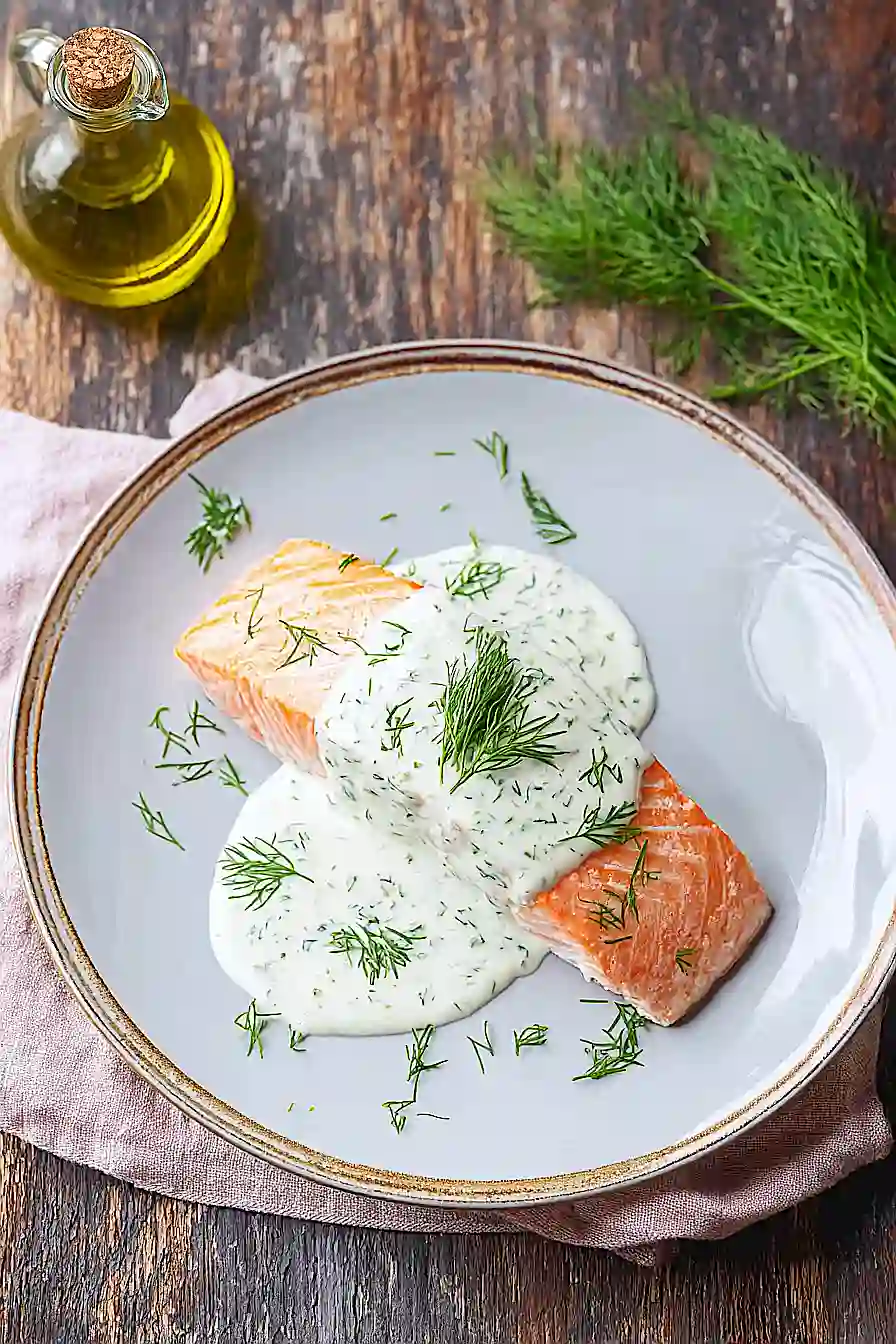
Why You’ll Love This Poached Salmon
- Ready in under 30 minutes – This recipe is perfect for busy weeknights when you want something healthy but don’t have much time to spend in the kitchen.
- Light and healthy – Poaching keeps the salmon moist and tender without adding extra fat, and the Greek yogurt dill sauce is a lighter alternative to heavy cream-based sauces.
- High-protein meal – With salmon and Greek yogurt, you’re getting plenty of protein to keep you satisfied and energized.
- Simple cooking method – Poaching salmon is easier than you might think, and it’s almost impossible to overcook when you follow the steps correctly.
- Fresh, bright flavors – The combination of dill, lemon, and garlic gives this dish a refreshing taste that feels fancy enough for guests but easy enough for any night of the week.
What Kind of Salmon Should I Use?
You can choose farm-raised or wild for this recipe, both will work great for poaching. If all you have access to is frozen salmon, don’t worry – it’ll still turn out delicious. Most fresh salmon at the supermarket has actually been previously frozen right off the boat anyway. Just make sure to check that it was handled properly by looking for any ice crystals or signs of freezer burn. For this poached salmon recipe, you can use skin-on or skinless fillets, though skinless might be slightly easier to serve since the skin won’t get crispy with this cooking method.
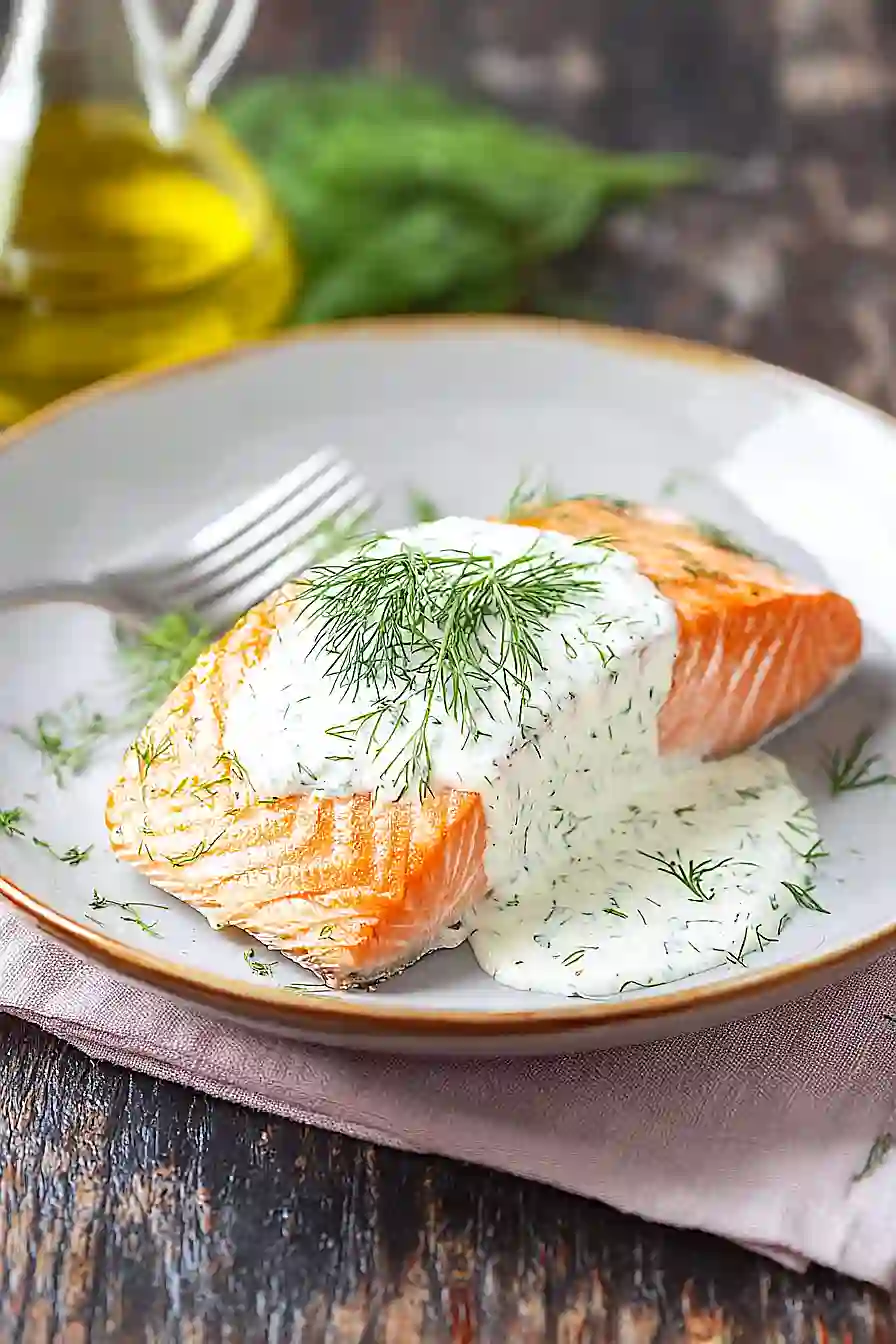
Options for Substitutions
This poached salmon recipe is pretty forgiving when it comes to swaps:
- Salmon: While salmon works great here, you can use other firm fish like halibut, cod, or sea bass. Just keep an eye on cooking time since thinner fillets will cook faster.
- Dry white wine: If you don’t have white wine around, replace it with an equal amount of water or vegetable broth. Add a splash of white wine vinegar or lemon juice to keep that bright, acidic note.
- Fresh dill: No fresh dill? You can use dried dill instead – just use about 1/3 of the amount called for since dried herbs are more concentrated. Fresh parsley or tarragon also work nicely with fish.
- Greek yogurt: Regular sour cream or plain yogurt can stand in for Greek yogurt in the sauce. If using regular yogurt, drain it through a cheesecloth for 30 minutes first to thicken it up.
- Dijon mustard: Regular yellow mustard or whole grain mustard can replace Dijon in the sauce. Start with a bit less and adjust to taste since they have different flavor profiles.
Watch Out for These Mistakes While Cooking
The biggest mistake when poaching salmon is letting the liquid boil instead of maintaining a gentle simmer – boiling water will cause the fish to cook unevenly and become tough and dry on the outside.
Overcooking is another common issue, so start checking your salmon at the 5-minute mark by gently pressing the top with a fork; it should flake easily but still look slightly translucent in the very center since it will continue cooking after you remove it from the heat.
Make sure your poaching liquid covers at least halfway up the sides of the fillets, and if you’re short on liquid, add a bit more water or wine rather than leaving the fish exposed.
Finally, don’t skip seasoning the salmon before poaching – that salt helps flavor the fish from the inside out, and waiting until after cooking won’t give you the same results.
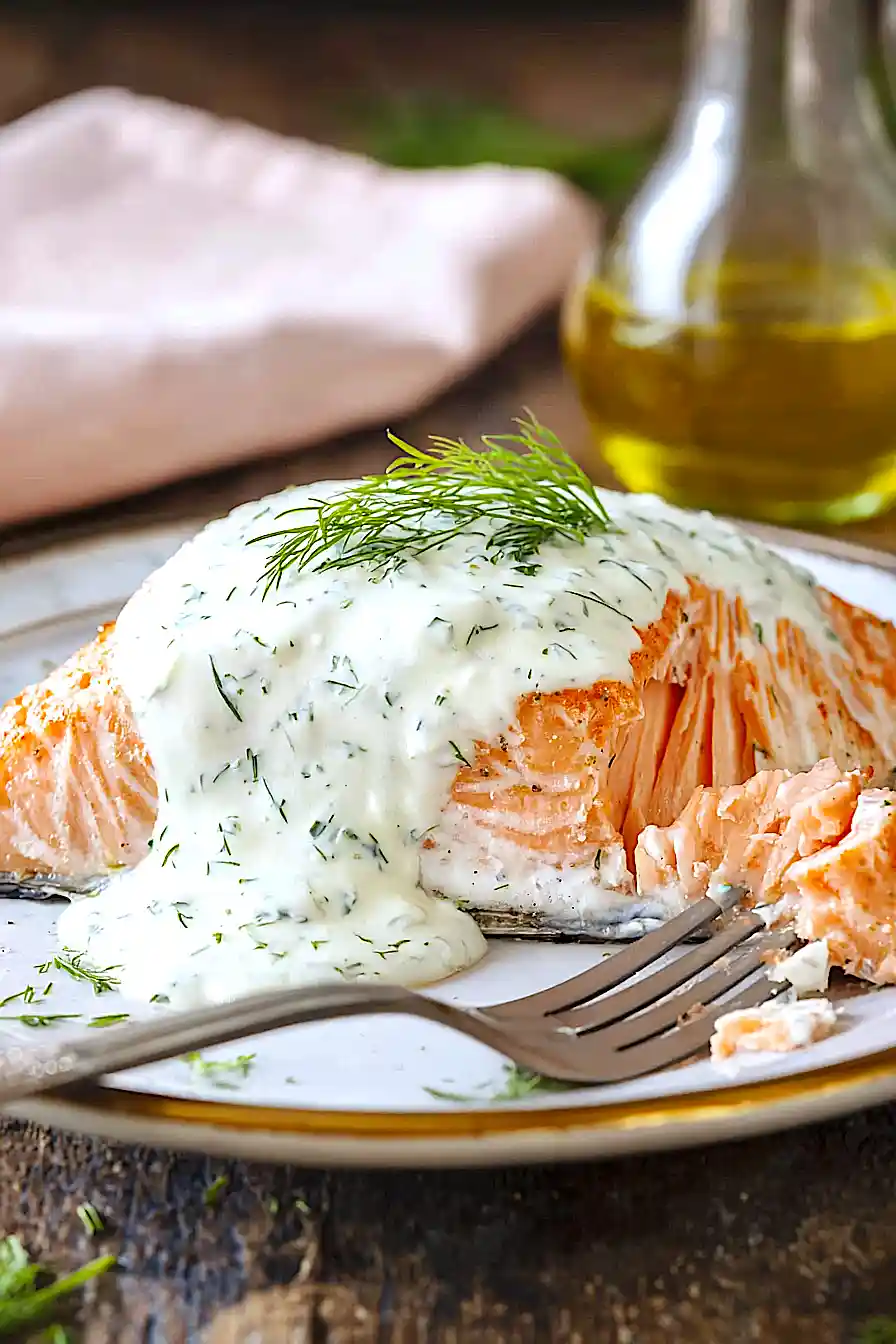
What to Serve With Poached Salmon?
Poached salmon with dill sauce is light and fresh, so it pairs beautifully with simple sides that won’t overpower the delicate fish. I love serving it alongside roasted baby potatoes or a fluffy mound of rice pilaf to soak up that tangy dill sauce. A crisp green salad with cucumber and cherry tomatoes keeps things bright, or you can go with steamed asparagus or green beans for a classic pairing. If you want something a bit heartier, try serving the salmon over a bed of quinoa or couscous mixed with fresh herbs and lemon zest.
Storage Instructions
Store: Keep your leftover poached salmon in an airtight container in the fridge for up to 3 days. Store the dill sauce separately in its own container so the salmon doesn’t get too soggy. The sauce will stay fresh for about 4-5 days, which is great because you can use it on other things too!
Serve Cold: Poached salmon is actually delicious served cold, so you can enjoy it straight from the fridge. Flake it over a salad, toss it with pasta, or make salmon salad sandwiches. Just give it a little drizzle of fresh dill sauce and you’re good to go.
Reheat: If you prefer your salmon warm, reheat it gently in the microwave on low power for about 30-45 seconds, just until it’s warmed through. You can also let it sit at room temperature for 15 minutes before serving. Be careful not to overheat it or the salmon can dry out and get tough.
| Preparation Time | 15-20 minutes |
| Cooking Time | 5-10 minutes |
| Total Time | 20-30 minutes |
| Level of Difficulty | Easy |
| Servings | 2 servings |
Estimated Nutrition
Estimated nutrition for the whole recipe (without optional ingredients):
- Calories: 750-850
- Protein: 95-110 g
- Fat: 25-32 g
- Carbohydrates: 7-10 g
Ingredients
For the salmon:
- 3 garlic cloves (smashed)
- 3/4 cup water
- 1/2 tsp kosher salt
- 3/4 cup dry white wine (such as Sauvignon Blanc)
- 4 dill sprigs (fresh preferred for better flavor)
- 1 lb salmon (skin-on fillets work best)
- 4 lemon slices
For the dill sauce:
- 1/8 tsp kosher salt
- 1/2 cup plain nonfat Greek yogurt
- 1.5 tsp Dijon mustard
- 1.5 tbsp fresh dill (finely chopped)
- 1 tbsp fresh lemon juice
- 1/8 tsp ground pepper
- 1 tsp extra-virgin olive oil
- 1 garlic clove (minced)
Step 1: Prepare the Dill Sauce
- 1/2 cup plain nonfat Greek yogurt
- 1.5 tsp Dijon mustard
- 1.5 tbsp fresh dill
- 1 garlic clove
- 1 tbsp fresh lemon juice
- 1 tsp extra-virgin olive oil
- 1/8 tsp ground pepper
- pinch of kosher salt
While the poaching liquid will be prepared next, make the sauce first so it’s ready when the salmon finishes cooking.
In a small bowl, whisk together the Greek yogurt, Dijon mustard, fresh dill, minced garlic, lemon juice, extra-virgin olive oil, and ground pepper until smooth and well combined.
Taste and adjust seasoning with a pinch of salt if needed.
Set aside at room temperature.
I find whisking the sauce a few minutes ahead allows the flavors to meld beautifully, making it taste more cohesive by the time you serve it.
Step 2: Build the Poaching Liquid
- 3/4 cup water
- 3/4 cup dry white wine
- 3 garlic cloves
- 4 dill sprigs
- 1/2 tsp kosher salt
- 4 lemon slices
Pour the water and dry white wine into a large skillet or shallow pan that’s wide enough to accommodate the salmon fillets comfortably.
Add the smashed garlic cloves, fresh dill sprigs, and 1/2 teaspoon kosher salt.
Arrange the lemon slices in the liquid as well—they’ll add brightness to the poaching liquid and prevent the salmon from sticking to the pan bottom.
Bring this mixture to a gentle simmer over medium-high heat, which should take about 2-3 minutes.
Step 3: Season and Poach the Salmon
- 1 lb salmon
- 1/8 tsp kosher salt
- poaching liquid from Step 2
While the liquid reaches a simmer, pat the salmon fillets dry with a paper towel and season the flesh side evenly with 1/8 teaspoon kosher salt.
Gently place the salmon skin-side down into the simmering poaching liquid, nestling it among the lemon slices.
The liquid should come about halfway up the sides of the salmon; if it doesn’t, add a splash more water or wine.
I prefer keeping the skin-side down because it protects the delicate flesh and keeps it moist during cooking.
Step 4: Poach Until Cooked Through
- poached salmon from Step 3
Reduce the heat to medium-low and cover the pan with a lid or foil.
Poach the salmon for 5 to 10 minutes, depending on the thickness of your fillets—thinner fillets closer to 1/2 inch will take 5 minutes, while thicker 1-inch fillets need closer to 10 minutes.
The salmon is done when it flakes easily with a fork and the thickest part reaches an opaque, pale pink color.
The gentle heat ensures the salmon cooks evenly and stays incredibly moist.
Step 5: Plate and Serve
- poached salmon from Step 4
- dill sauce from Step 1
- lemon slices from Step 2
Carefully transfer the cooked salmon fillets to serving plates using a slotted spatula, letting any excess poaching liquid drip back into the pan.
You can leave the skin on for presentation or gently slip it off—both are delicious.
Discard the poaching liquid and aromatics (or reserve for making stock if desired).
Place a generous spoonful of the dill sauce from Step 1 alongside or on top of each salmon fillet, and add any remaining lemon slices from the poaching liquid as a fresh garnish.
Best Poached Salmon with Dill Sauce
Ingredients
For the salmon:
- 3 garlic cloves (smashed)
- 3/4 cup water
- 1/2 tsp kosher salt
- 3/4 cup dry white wine (such as Sauvignon Blanc)
- 4 dill sprigs (fresh preferred for better flavor)
- 1 lb salmon (skin-on fillets work best)
- 4 lemon slices
For the dill sauce:
- 1/8 tsp kosher salt
- 1/2 cup plain nonfat Greek yogurt
- 1.5 tsp Dijon mustard
- 1.5 tbsp fresh dill (finely chopped)
- 1 tbsp fresh lemon juice
- 1/8 tsp ground pepper
- 1 tsp extra-virgin olive oil
- 1 garlic clove (minced)
Instructions
- While the poaching liquid will be prepared next, make the sauce first so it's ready when the salmon finishes cooking. In a small bowl, whisk together the Greek yogurt, Dijon mustard, fresh dill, minced garlic, lemon juice, extra-virgin olive oil, and ground pepper until smooth and well combined. Taste and adjust seasoning with a pinch of salt if needed. Set aside at room temperature. I find whisking the sauce a few minutes ahead allows the flavors to meld beautifully, making it taste more cohesive by the time you serve it.
- Pour the water and dry white wine into a large skillet or shallow pan that's wide enough to accommodate the salmon fillets comfortably. Add the smashed garlic cloves, fresh dill sprigs, and 1/2 teaspoon kosher salt. Arrange the lemon slices in the liquid as well—they'll add brightness to the poaching liquid and prevent the salmon from sticking to the pan bottom. Bring this mixture to a gentle simmer over medium-high heat, which should take about 2-3 minutes.
- While the liquid reaches a simmer, pat the salmon fillets dry with a paper towel and season the flesh side evenly with 1/8 teaspoon kosher salt. Gently place the salmon skin-side down into the simmering poaching liquid, nestling it among the lemon slices. The liquid should come about halfway up the sides of the salmon; if it doesn't, add a splash more water or wine. I prefer keeping the skin-side down because it protects the delicate flesh and keeps it moist during cooking.
- Reduce the heat to medium-low and cover the pan with a lid or foil. Poach the salmon for 5 to 10 minutes, depending on the thickness of your fillets—thinner fillets closer to 1/2 inch will take 5 minutes, while thicker 1-inch fillets need closer to 10 minutes. The salmon is done when it flakes easily with a fork and the thickest part reaches an opaque, pale pink color. The gentle heat ensures the salmon cooks evenly and stays incredibly moist.
- Carefully transfer the cooked salmon fillets to serving plates using a slotted spatula, letting any excess poaching liquid drip back into the pan. You can leave the skin on for presentation or gently slip it off—both are delicious. Discard the poaching liquid and aromatics (or reserve for making stock if desired). Place a generous spoonful of the dill sauce from Step 1 alongside or on top of each salmon fillet, and add any remaining lemon slices from the poaching liquid as a fresh garnish.