Finding a satisfying weeknight dinner that doesn’t require standing over the stove for an hour can feel nearly impossible. Between work deadlines, family schedules, and the general chaos of everyday life, the last thing you want is a complicated recipe with a mile-long ingredient list and endless steps.
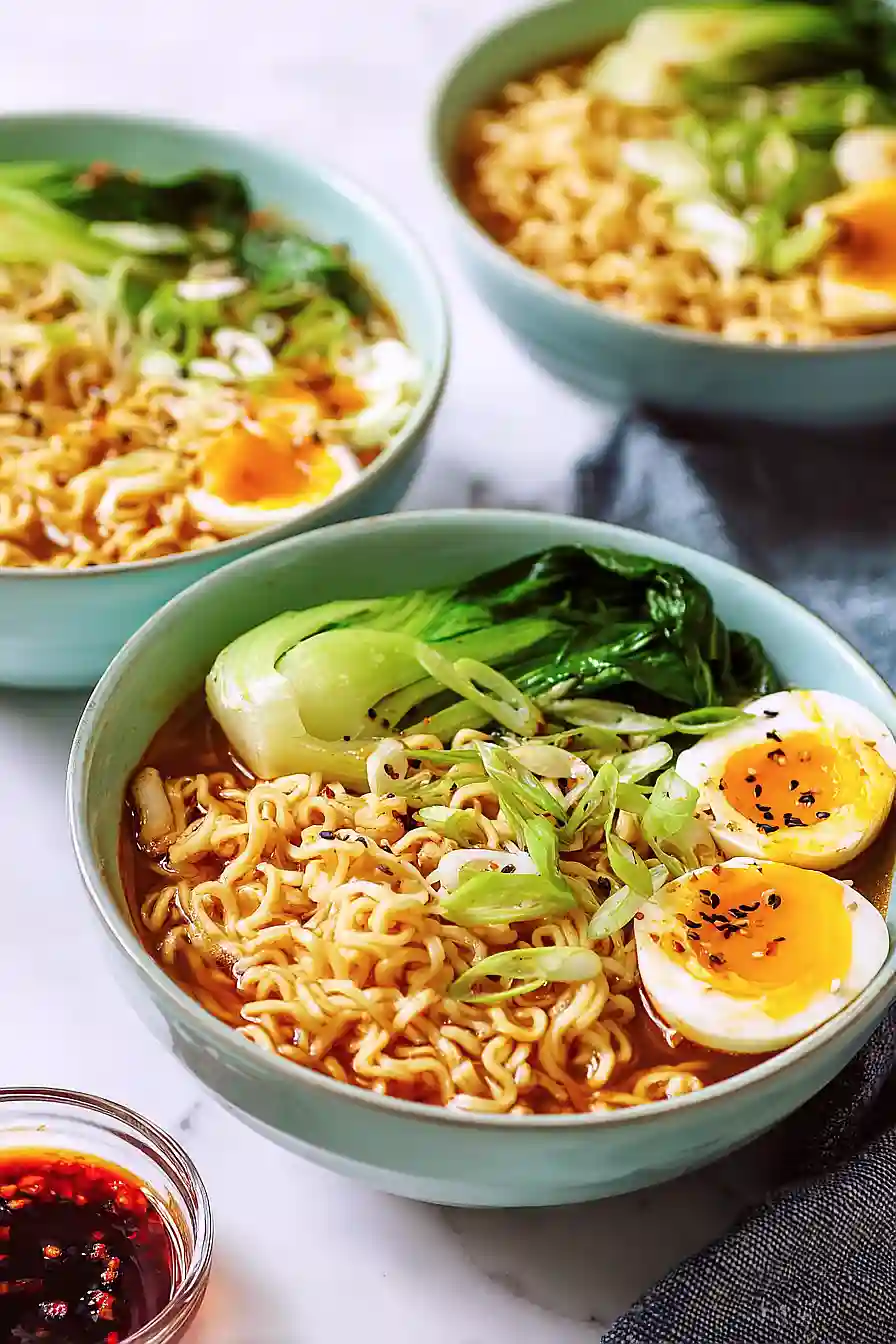
That’s where this Instant Pot ramen comes in clutch. It’s a complete meal that cooks mostly hands-off, uses ingredients you can find at any grocery store, and tastes way better than anything you’d get from a packet. Plus, with tender chicken, soft-boiled eggs, and fresh bok choy, it’s actually filling enough to keep everyone happy until bedtime.
Why You’ll Love This Instant Pot Ramen
- Restaurant-quality ramen at home – You can skip the takeout and make a bowl of delicious ramen in your own kitchen that tastes just as good as your favorite noodle shop.
- Quick and convenient – The Instant Pot does most of the work for you, turning out tender chicken and flavorful broth in under an hour.
- Complete meal in one pot – With protein, veggies, noodles, and eggs all cooked together, you get a balanced dinner without dirtying multiple pans.
- Customizable to your taste – Add as much or as little chili oil as you like, and swap in your favorite toppings to make it your own.
- Budget-friendly comfort food – Using affordable ingredients like ramen noodles and chicken, this recipe gives you a satisfying meal without breaking the bank.
What Kind of Ramen Should I Use?
For this recipe, you can use any brand of instant ramen noodles you find at the grocery store. The good news is that you’ll be tossing out those little seasoning packets and making your own flavorful broth instead, so don’t worry too much about which brand you grab. If you want to get fancy, you can look for fresh ramen noodles in the refrigerated section of Asian markets, which have a chewier texture and cook up really nicely. Just keep in mind that fresh noodles might need a slightly shorter cooking time than the dried instant variety, so keep an eye on them as they cook.
Options for Substitutions
This ramen recipe is pretty forgiving when it comes to swaps:
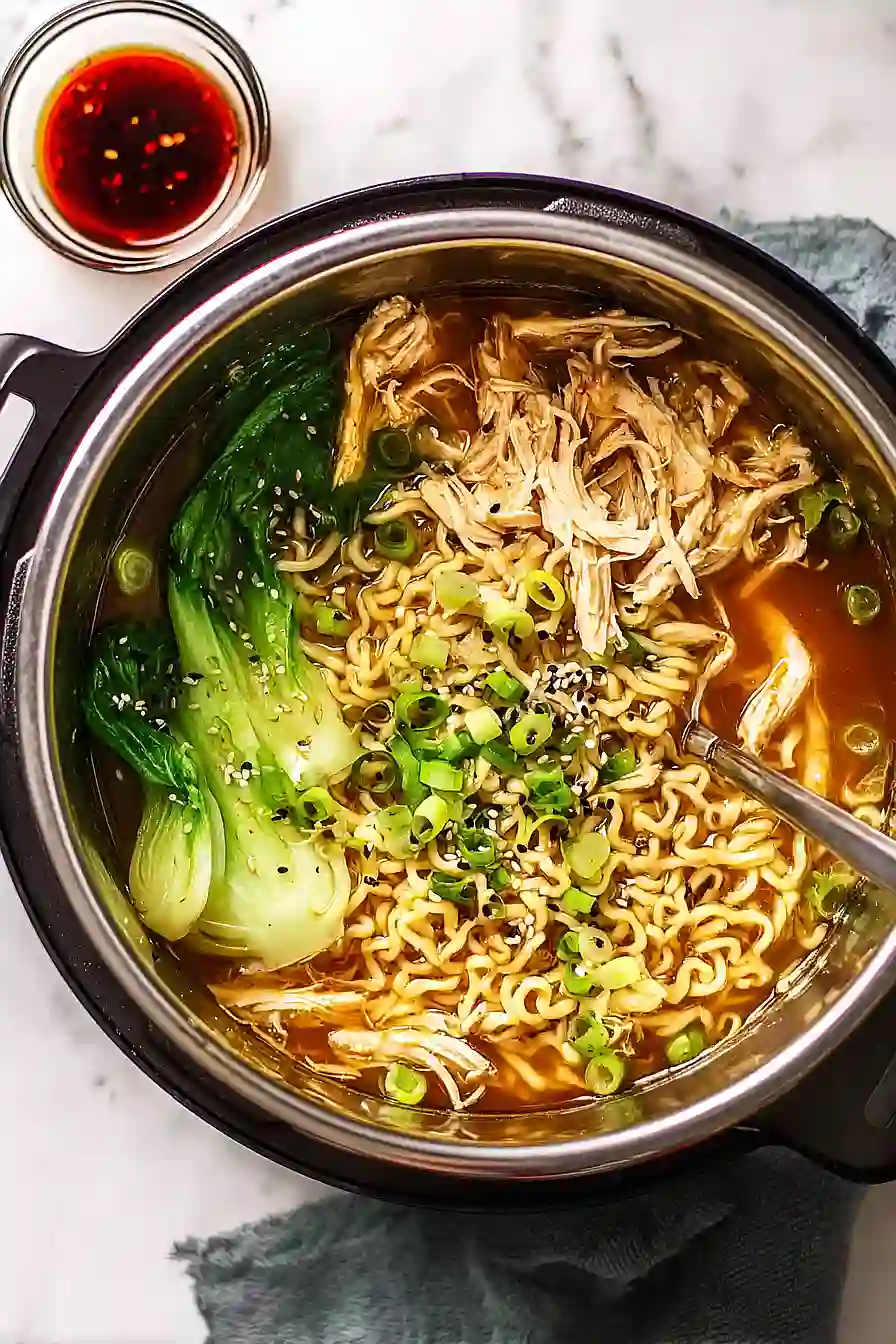
- Chicken: You can easily swap chicken for pork tenderloin, thinly sliced beef, or even tofu for a vegetarian version. Just adjust the cooking time – pork and beef need about the same time as chicken, while tofu only needs a few minutes.
- Broth: While chicken broth is classic, you can use vegetable broth or even beef broth for a richer flavor. If you’re going vegetarian with tofu, definitely stick with vegetable broth.
- Ramen noodles: Fresh ramen noodles work great if you can find them at an Asian market. You can also use dried udon noodles or rice noodles – just follow the package directions for cooking times as they’ll differ from instant ramen.
- Bok choy: No bok choy? Try spinach, napa cabbage, or regular cabbage instead. Spinach wilts quickly, so add it at the very end.
- Eggs: If you prefer, you can skip the soft-boiled eggs or do a simple poached egg dropped right into the broth instead.
- Vegetable oil: Any neutral oil works here – canola, grapeseed, or even olive oil will do the job just fine.
Watch Out for These Mistakes While Cooking
The biggest mistake people make with Instant Pot ramen is adding the noodles before the pressure cooking step, which turns them into complete mush – always add them after you’ve released the pressure and shredded the chicken.
Another common error is doing a natural pressure release instead of a quick release, as the extra cooking time can overcook your chicken and make it dry and stringy rather than tender and juicy.
Don’t skip the ice bath for your eggs, because without it you’ll end up with that gray-green ring around the yolk and eggs that are nearly impossible to peel cleanly.
Finally, remember to remove those white scallion pieces before adding your noodles – they’ve already given their flavor to the broth and leaving them in just makes for an unpleasant stringy texture in your finished bowl.
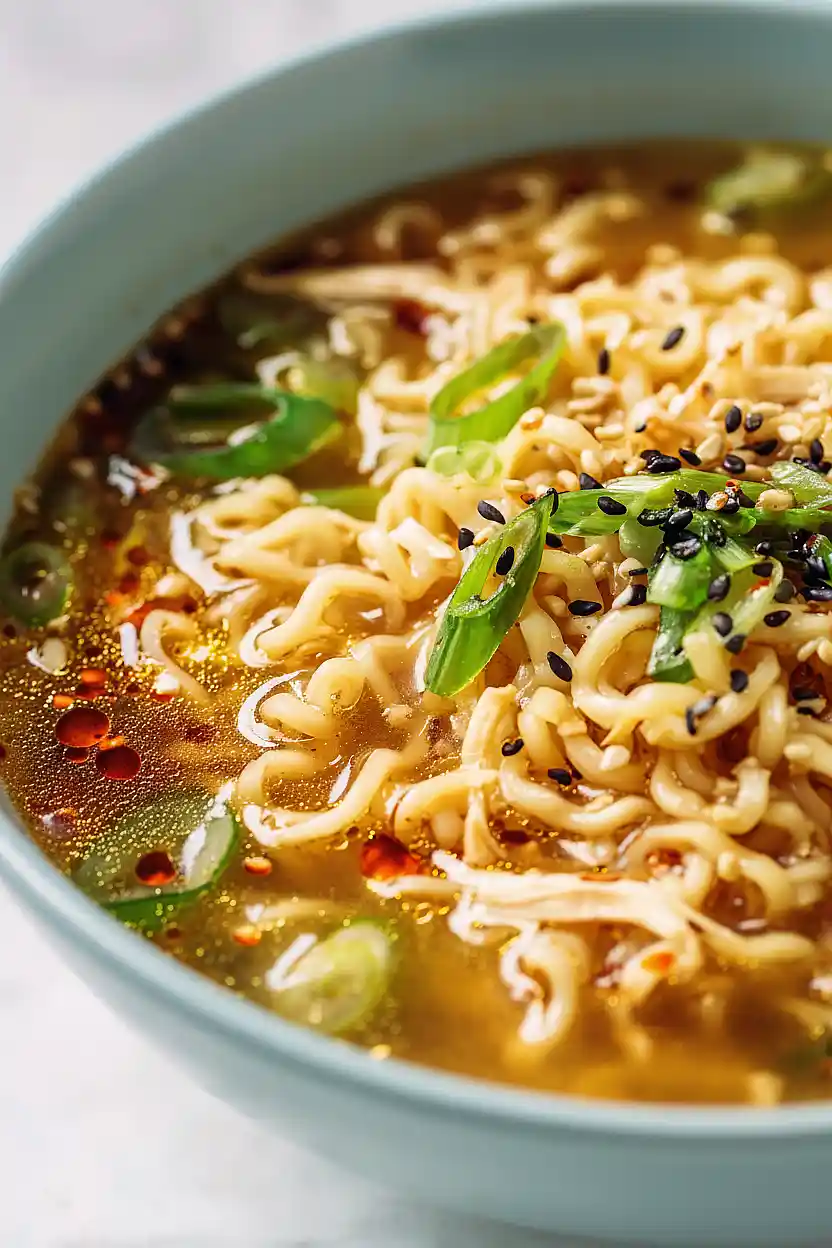
What to Serve With Ramen Noodles?
Ramen is pretty much a complete meal on its own, but I love adding some extra toppings to make it feel more special. A few slices of soft avocado or some crispy seaweed sheets add nice texture and flavor without making you too full. If you’re still hungry after your bowl, some steamed edamame with sea salt or a small cucumber salad with rice vinegar makes a great side. You could also set out extra toppings like soft-boiled eggs, corn kernels, or bean sprouts so everyone can customize their bowl the way they like it.
Storage Instructions
Store: Ramen is best enjoyed fresh, but you can store leftovers in the fridge for up to 3 days. Keep the noodles and broth separate from the toppings if possible, since the noodles will soak up the liquid and get mushy. Store everything in airtight containers and add fresh toppings when you’re ready to eat.
Prep Ahead: You can cook the chicken and make the broth up to 2 days ahead to save time. Just keep them in separate containers in the fridge, then reheat the broth and cook fresh noodles when you’re ready to serve. The soft-boiled eggs can also be made a day ahead and stored peeled in water in the fridge.
Reheat: Warm up your ramen broth on the stove over medium heat until it’s hot and steaming. If your noodles are already in the broth, heat everything together gently and add a splash of water or broth if it’s gotten too thick. Top with fresh scallions and a drizzle of chili oil to bring it back to life.
| Preparation Time | 20-30 minutes |
| Cooking Time | 25-35 minutes |
| Total Time | 45-65 minutes |
| Level of Difficulty | Medium |
| Servings | 4 servings |
Estimated Nutrition
Estimated nutrition for the whole recipe (without optional ingredients):
- Calories: 1950-2150
- Protein: 110-130 g
- Fat: 60-75 g
- Carbohydrates: 240-270 g
Ingredients
For the soup and meat:
- 1.25 lb chicken (cut into 1-inch chunks to ensure even cooking)
- 1/2 tsp salt
- 1/2 tsp pepper
- 2 tbsp vegetable oil (I prefer Wesson for a neutral high-heat sauté)
- 5 cups broth (I always use Swanson Chicken Broth for consistent depth)
- 2.25 cups water
- 4 stalks scallion
- 3 tbsp soy sauce (gives a much better umami profile than salt alone)
- 1 tsp grated fresh ginger
- 10 oz bok choy
For the noodles and assembly:
- 4 eggs (room temperature, about 70°F, ensures a perfect soft-boiled yolk)
- 3 packages ramen (I use Maruchan but discard the flavor packets)
- sesame seeds
- chili oil
Step 1: Prepare Ingredients and Soft-Boil Eggs
- 4 eggs
- 1.25 lb chicken, cut into 1-inch chunks
- 1/2 tsp salt
- 1/2 tsp pepper
- 4 stalks scallion
- 10 oz bok choy, chopped
While you’re prepping, start the egg-boiling process since it happens in parallel with the pressure cooking.
Bring a separate pot of water to a boil and gently add the room-temperature eggs.
Boil for 7 minutes, then immediately transfer them to an ice bath for 5 minutes to stop the cooking and set that perfect jammy yolk.
Once cooled, peel and slice them—I find peeling under cool running water makes the process much easier and prevents those frustrating shell fragments.
While eggs cook, cut the chicken into 1-inch chunks for even cooking, then season generously with salt and pepper.
Slice the white and green parts of the scallions separately (keeping them apart for different cooking times), and chop the bok choy into bite-sized pieces.
Step 2: Sear Chicken and Build the Broth Base
- seasoned chicken from Step 1
- 2 tbsp vegetable oil
- 5 cups chicken broth
- 2.25 cups water
- white scallion parts from Step 1
- 1 tsp grated fresh ginger
Set your Instant Pot to Sauté mode and add the vegetable oil, allowing it to heat until shimmering—about 2 minutes.
Working in batches if needed to avoid overcrowding, sear the seasoned chicken chunks until they develop a golden-brown crust on all sides, roughly 5-7 minutes total.
This browning creates depth through the Maillard reaction, which will carry through the entire broth.
Pour in the chicken broth and water, scraping up any browned bits stuck to the bottom of the pot (these are pure flavor).
Add the white scallion pieces and the grated ginger, stirring to combine.
Step 3: Pressure Cook Chicken Until Tender
- broth mixture from Step 2
- cooked chicken from Step 2
Secure the Instant Pot lid and set it to cook on High pressure for 10 minutes.
This timing cooks the chicken through while keeping it tender for shredding.
Once the cooking cycle completes, perform a quick release of the pressure by carefully turning the valve to Vent.
Remove the white scallion pieces with a slotted spoon and discard them—they’ve given their flavor to the broth.
Transfer the cooked chicken to a cutting board and shred it using two forks, pulling the meat apart into bite-sized strands.
Step 4: Cook Noodles and Build Final Flavor
- broth from Step 3
- shredded chicken from Step 3
- 3 packages ramen noodles
- bok choy from Step 1
- 3 tbsp soy sauce
Set the Instant Pot back to Sauté mode and bring the broth to a rolling boil.
Break the ramen noodles into the pot (discard the flavor packets—I always do this for better control over the seasoning) and stir frequently to prevent clumping.
After about 2 minutes when the noodles begin to soften, add the shredded chicken back into the pot along with the chopped bok choy and soy sauce.
The bok choy will wilt quickly in the hot broth, taking only 1-2 minutes to become tender-crisp.
I add the soy sauce at this point rather than earlier because it has a much more pronounced umami impact on the finished dish when it coats everything at the end.
Step 5: Assemble and Serve
- ramen mixture from Step 4
- soft-boiled eggs from Step 1
- green scallion parts from Step 1
- sesame seeds
- chili oil
Turn off the heat once the noodles and vegetables are cooked through.
Ladle the ramen into bowls, distributing the noodles, chicken, bok choy, and broth evenly.
Top each bowl with two sliced soft-boiled eggs, a generous sprinkle of sesame seeds, a drizzle of chili oil, and the reserved green scallion slices.
Serve immediately while the broth is piping hot.
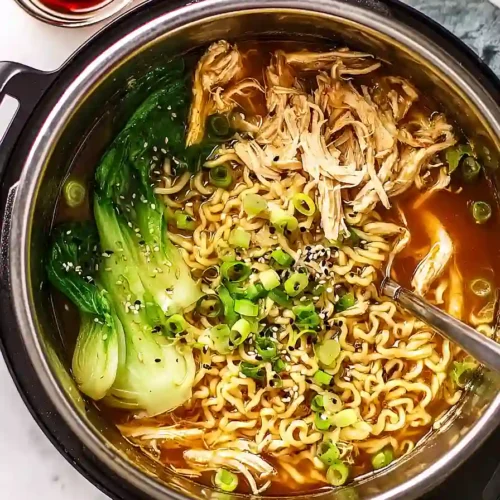
Classic Instant Pot Ramen Noodles
Ingredients
For the soup and meat::
- 1.25 lb chicken (cut into 1-inch chunks to ensure even cooking)
- 1/2 tsp salt
- 1/2 tsp pepper
- 2 tbsp vegetable oil (I prefer Wesson for a neutral high-heat sauté)
- 5 cups broth (I always use Swanson Chicken Broth for consistent depth)
- 2.25 cups water
- 4 stalks scallion
- 3 tbsp soy sauce (gives a much better umami profile than salt alone)
- 1 tsp grated fresh ginger
- 10 oz bok choy
For the noodles and assembly::
- 4 eggs (room temperature, about 70°F, ensures a perfect soft-boiled yolk)
- 3 packages ramen (I use Maruchan but discard the flavor packets)
- sesame seeds
- chili oil
Instructions
- While you're prepping, start the egg-boiling process since it happens in parallel with the pressure cooking. Bring a separate pot of water to a boil and gently add the room-temperature eggs. Boil for 7 minutes, then immediately transfer them to an ice bath for 5 minutes to stop the cooking and set that perfect jammy yolk. Once cooled, peel and slice them—I find peeling under cool running water makes the process much easier and prevents those frustrating shell fragments. While eggs cook, cut the chicken into 1-inch chunks for even cooking, then season generously with salt and pepper. Slice the white and green parts of the scallions separately (keeping them apart for different cooking times), and chop the bok choy into bite-sized pieces.
- Set your Instant Pot to Sauté mode and add the vegetable oil, allowing it to heat until shimmering—about 2 minutes. Working in batches if needed to avoid overcrowding, sear the seasoned chicken chunks until they develop a golden-brown crust on all sides, roughly 5-7 minutes total. This browning creates depth through the Maillard reaction, which will carry through the entire broth. Pour in the chicken broth and water, scraping up any browned bits stuck to the bottom of the pot (these are pure flavor). Add the white scallion pieces and the grated ginger, stirring to combine.
- Secure the Instant Pot lid and set it to cook on High pressure for 10 minutes. This timing cooks the chicken through while keeping it tender for shredding. Once the cooking cycle completes, perform a quick release of the pressure by carefully turning the valve to Vent. Remove the white scallion pieces with a slotted spoon and discard them—they've given their flavor to the broth. Transfer the cooked chicken to a cutting board and shred it using two forks, pulling the meat apart into bite-sized strands.
- Set the Instant Pot back to Sauté mode and bring the broth to a rolling boil. Break the ramen noodles into the pot (discard the flavor packets—I always do this for better control over the seasoning) and stir frequently to prevent clumping. After about 2 minutes when the noodles begin to soften, add the shredded chicken back into the pot along with the chopped bok choy and soy sauce. The bok choy will wilt quickly in the hot broth, taking only 1-2 minutes to become tender-crisp. I add the soy sauce at this point rather than earlier because it has a much more pronounced umami impact on the finished dish when it coats everything at the end.
- Turn off the heat once the noodles and vegetables are cooked through. Ladle the ramen into bowls, distributing the noodles, chicken, bok choy, and broth evenly. Top each bowl with two sliced soft-boiled eggs, a generous sprinkle of sesame seeds, a drizzle of chili oil, and the reserved green scallion slices. Serve immediately while the broth is piping hot.