If you ask me, there’s nothing quite like a good beef stew on a cold day.
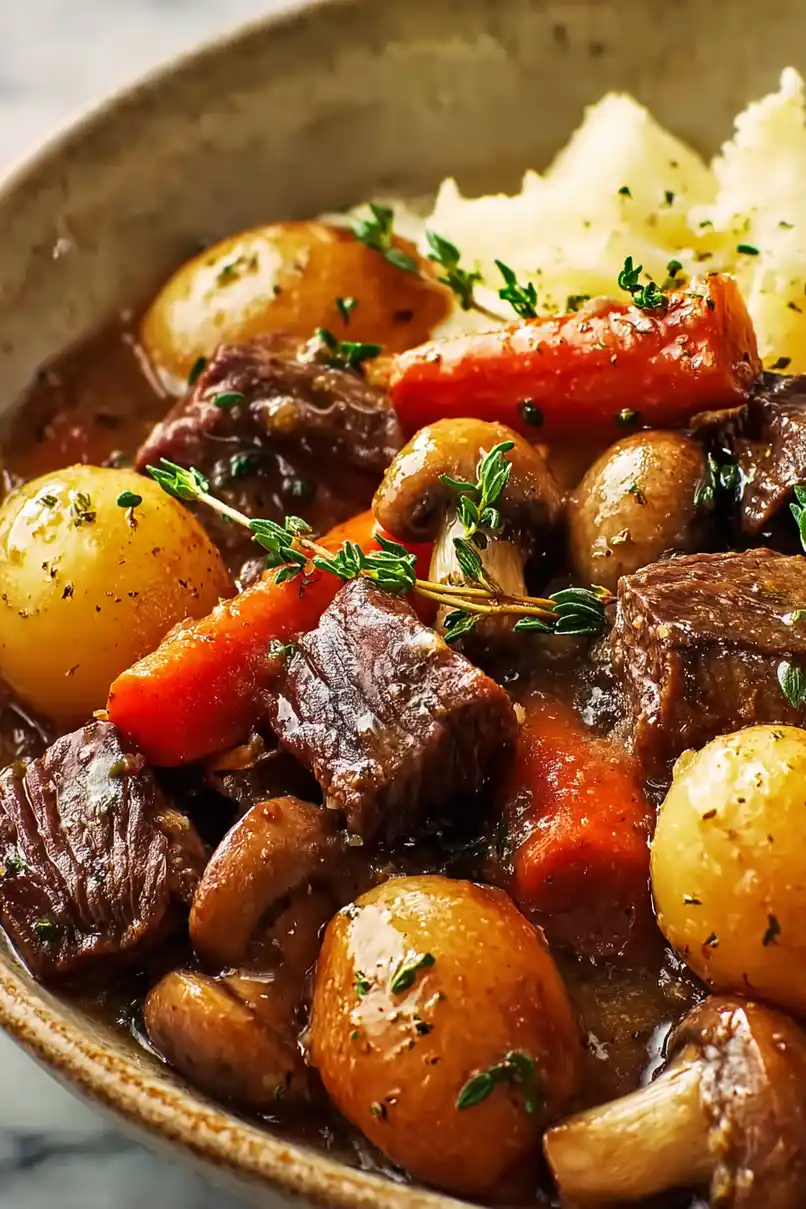
This hearty red wine-braised stew makes a comforting family dinner that’s packed with tender beef and classic vegetables. Rich red wine and slow cooking create deep, satisfying flavors that fill your whole house with amazing smells.
The beef gets beautifully tender after braising, while carrots and potatoes soak up all that good wine sauce. Fresh herbs and a touch of tomato paste help round out the flavors.
It’s the kind of stick-to-your-ribs meal that brings everyone to the table, perfect for chilly evenings when you want something warm and filling.
Why You’ll Love This Beef Stew
- Rich, restaurant-quality flavor – The red wine and bacon create an incredibly deep, savory base that makes this stew taste like something you’d order at a fancy bistro.
- One-pot comfort meal – Everything cooks together in one pot, making cleanup easy while filling your kitchen with amazing aromas.
- Perfect for meal prep – This stew actually tastes even better the next day, so you can make a big batch and enjoy leftovers all week long.
- Hearty and satisfying – With tender chunks of beef, creamy potatoes, and plenty of vegetables, this stew is a complete meal that will keep you full and happy.
- Great for entertaining – You can easily double the recipe to feed a crowd, and it’s the kind of impressive dish that makes guests think you’re a gourmet cook.
What Kind of Beef Should I Use?
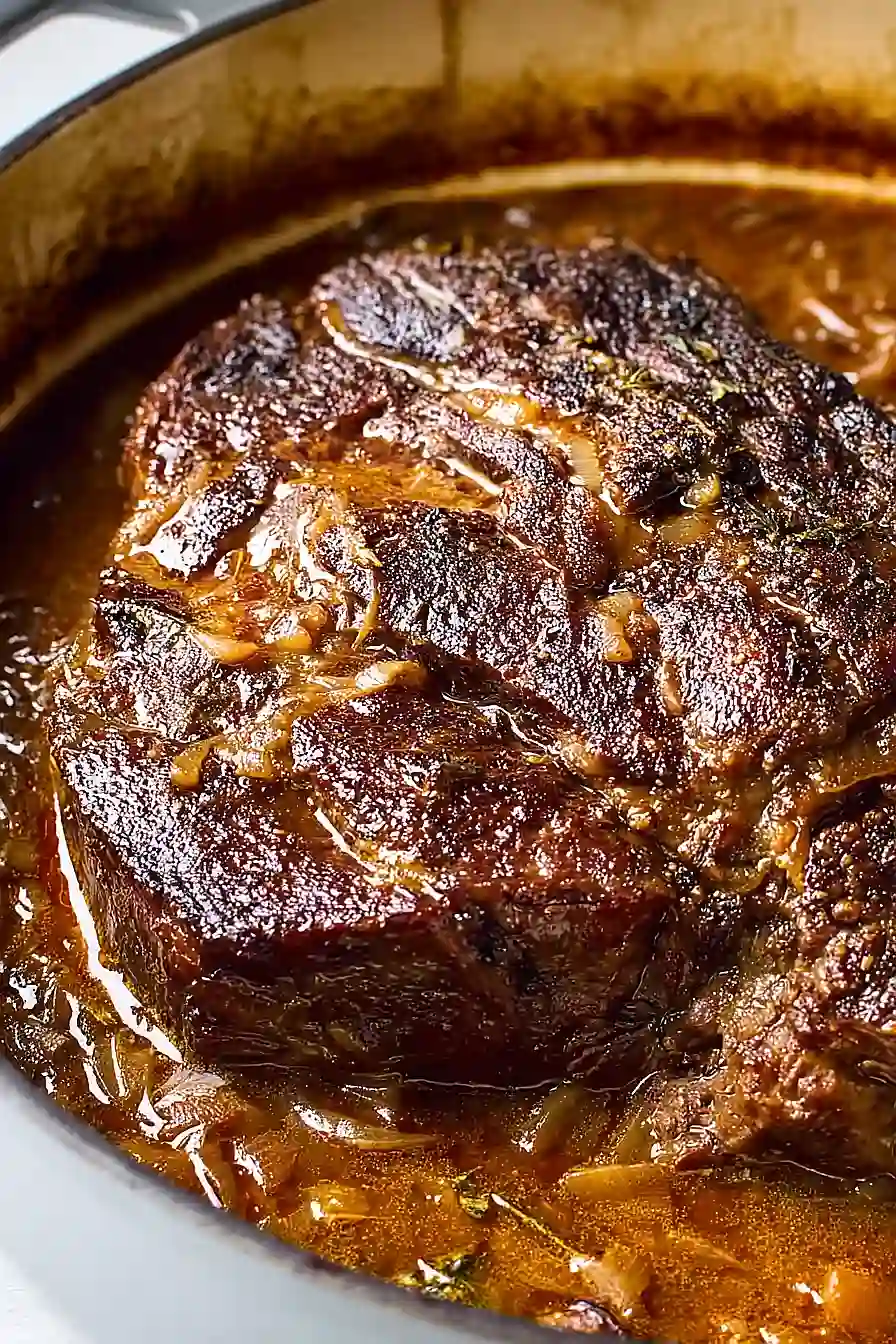
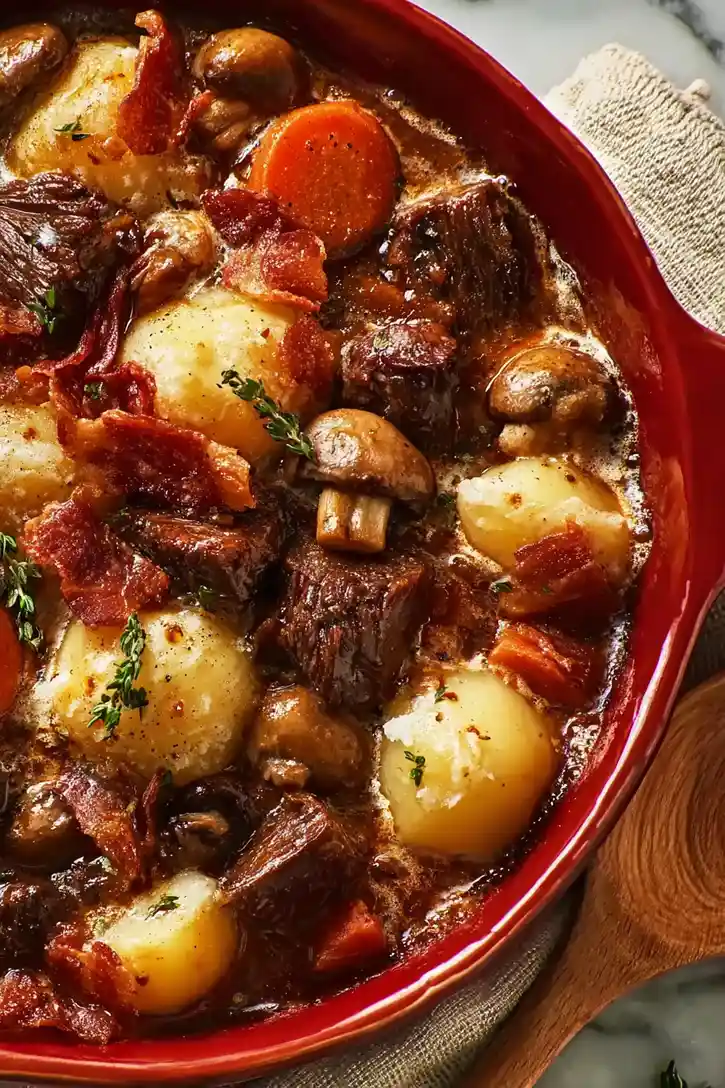
Chuck roast is really the gold standard for beef stew, and that’s exactly what this recipe calls for. This cut comes from the shoulder area of the cow and has just the right amount of marbling and connective tissue that breaks down beautifully during the long braising process. You’ll want to ask your butcher to cut it into 1½-inch pieces, or you can do it yourself at home with a sharp knife. If chuck isn’t available, beef short ribs or bottom round can work as substitutes, though chuck will give you the most tender, flavorful results. Just make sure whatever cut you choose has some fat running through it – lean cuts like sirloin will end up tough and dry in a stew.
Options for Substitutions
This classic braised stew is pretty forgiving when it comes to swaps, so here are some options if you need to make changes:
- Bacon: If you don’t have bacon, you can use pancetta or even skip it entirely and just add 2 tablespoons of olive oil for browning the beef. The stew will still be rich and flavorful.
- Beef chuck: Chuck roast is really the best choice here since it becomes tender during the long braising process. Avoid lean cuts like sirloin as they’ll turn tough and dry.
- Red wine: You can substitute with additional beef stock plus 2 tablespoons of balsamic vinegar for depth, but honestly, the wine really makes this dish special, so I’d try to stick with it if possible.
- Baby potatoes: Regular potatoes work fine – just cut them into similar-sized chunks. Yukon golds or red potatoes hold their shape better than russets.
- Cremini mushrooms: Button mushrooms or even portobello caps (cut into chunks) work well. You could also use a mix of different mushroom varieties for more flavor.
- Fresh thyme: Dried thyme works too – use about 1 tablespoon instead of the fresh sprigs. You can also try rosemary or bay leaves for a different herb profile.
Watch Out for These Mistakes While Cooking
The biggest mistake when making beef stew is not browning the meat properly – you need to sear the beef chunks in small batches to avoid overcrowding the pan, which causes steaming instead of that rich, caramelized crust that adds tons of flavor.
Another common error is adding the potatoes and carrots too early in the cooking process, as they can turn mushy and fall apart during the long braising time – wait until the last 45 minutes to add them for the perfect tender texture.
Don’t skip deglazing the pan with red wine after browning the meat, as those brown bits stuck to the bottom are pure gold for flavor, and make sure to let the wine reduce by half before adding the stock to avoid an overly boozy taste.
Finally, resist the urge to thicken the stew too early – wait until the very end and use a cornstarch slurry gradually, stirring constantly to prevent lumps from forming.
What to Serve With Beef Stew?
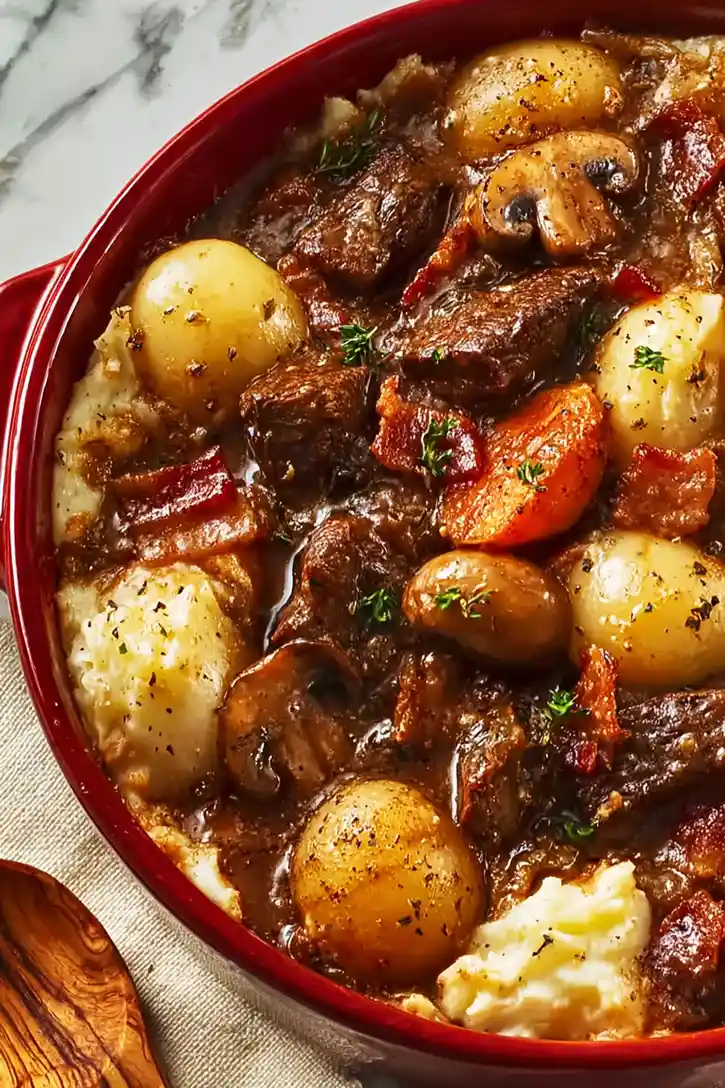
This hearty beef stew is perfect with some crusty bread or warm dinner rolls to soak up all that rich, wine-infused broth. I love serving it over a bed of buttery mashed potatoes or creamy polenta for an extra comforting meal, even though the stew already has potatoes in it. A simple side salad with mixed greens and a light vinaigrette helps cut through the richness of the stew, or you could go with some roasted green beans or steamed broccoli. For a cozy dinner party vibe, pair it with a glass of the same red wine you used for braising – it ties everything together beautifully.
Storage Instructions
Store: This beef stew actually gets better after a day or two in the fridge! Store it in an airtight container for up to 4 days. The flavors really meld together beautifully, and it makes for the perfect comfort meal later in the week. I love having this ready to go for busy weeknights.
Freeze: You can freeze this stew for up to 3 months in freezer-safe containers or bags. Just keep in mind that the potatoes might get a bit softer after freezing and thawing. If you’re planning to freeze it, you might want to slightly undercook the potatoes initially.
Reheat: Warm it up gently on the stovetop over medium-low heat, stirring occasionally until heated through. You can also use the microwave, but I prefer the stovetop method since it heats more evenly. If the stew seems too thick after storing, just add a splash of beef stock or water to loosen it up.
| Preparation Time | 20-30 minutes |
| Cooking Time | 130-135 minutes |
| Total Time | 150-165 minutes |
| Level of Difficulty | Medium |
Estimated Nutrition
Estimated nutrition for the whole recipe (without optional ingredients):
- Calories: 3400-3700
- Protein: 170-190 g
- Fat: 120-140 g
- Carbohydrates: 260-280 g
Ingredients
For the stew:
- Kosher salt, to taste
- 2 cups dry red wine (I use a medium-bodied Côtes du Rhône)
- Freshly ground black pepper, to taste (freshly ground preferred for more flavor)
- 1 lb baby potatoes, cut in half (halving ensures even cooking)
- 6 thyme sprigs, bundled with butcher’s string (tie together for easy removal)
- 2 lb beef chuck, diced into 1 1/2-inch cubes (keeps meat tender during long braise)
- 1 yellow onion, chopped
- 4 cups beef broth (or homemade stock for deeper flavor)
- 4 thick-cut bacon slices, chopped (renders fat for searing the beef)
- 1 lb cremini mushrooms, quartered
- 1 lb carrots, cut into 2-inch pieces (similar size to potatoes for even texture)
For thickening:
- 3 tbsp cornstarch (mixed with cold water to prevent lumps)
- 3 tbsp water
Step 1: Render Bacon and Sear the Beef
- 4 thick-cut bacon slices, chopped
- 2 lb beef chuck, diced into 1 1/2-inch cubes
- Kosher salt, to taste
- Freshly ground black pepper, to taste
Start by chopping the bacon and cooking it in a large Dutch oven or heavy-bottomed pot over medium heat for about 8 minutes, stirring occasionally, until the fat renders and the bacon is crispy.
Transfer the cooked bacon to a plate, leaving the rendered fat in the pot—this flavorful fat is your searing medium.
Pat the beef cubes dry with paper towels, then season them generously with kosher salt and freshly ground black pepper.
Working in batches if necessary to avoid crowding the pot, sear the beef in the hot bacon fat over medium-high heat for 8-10 minutes total, stirring occasionally, until deeply browned on most sides.
This browning step builds flavor through the Maillard reaction.
Transfer the seared beef to the plate with the bacon.
Step 2: Build the Aromatics and Deglaze with Wine
- 1 yellow onion, chopped
- 2 cups dry red wine
Reduce heat to medium and add the chopped yellow onion to the pot, cooking for 4-5 minutes, stirring occasionally, until softened and lightly caramelized.
Pour in the dry red wine and scrape the bottom of the pot with a wooden spoon to release all the browned bits stuck to the surface—this is called deglazing, and it dissolves concentrated flavor into your liquid.
Let the wine simmer for 2-3 minutes to cook off some of the raw alcohol taste and allow the aromatics to infuse the wine.
Step 3: Build the Braise and Begin Low-and-Slow Cooking
- seared beef and bacon from Step 1
- 4 cups beef broth
- 1 lb baby potatoes, cut in half
- 1 lb carrots, cut into 2-inch pieces
- 1 lb cremini mushrooms, quartered
- 6 thyme sprigs, bundled with butcher’s string
Return the seared beef and rendered bacon from Step 1 to the pot, along with the beef broth.
Add the halved baby potatoes, carrot pieces, and quartered cremini mushrooms.
Tuck the bundled thyme sprigs into the stew (bundling with butcher’s string makes them easy to find and remove later).
Stir everything together, then bring the liquid to a gentle boil.
I like to skim any foam that rises to the surface to keep the braise clean and clear.
Reduce heat to low, cover the pot with a lid, and let it simmer undisturbed for 2 hours.
The low temperature and moist environment will break down the connective tissue in the beef chuck, making it incredibly tender.
Step 4: Thicken the Braising Liquid
- 3 tbsp cornstarch
- 3 tbsp water
After the 2-hour braise, the beef should be very tender and the vegetables cooked through.
Remove the thyme bundle from the stew and discard it.
In a small bowl, mix the cornstarch with cold water, stirring until completely smooth—this prevents lumps when you add it to the hot liquid.
Slowly pour the cornstarch slurry into the simmering stew while stirring constantly.
Continue cooking and stirring for about 5 minutes until the sauce thickens to a light gravy-like consistency that coats the back of a spoon.
Step 5: Taste, Season, and Serve
- Kosher salt, to taste
- Freshly ground black pepper, to taste
Remove the pot from heat and taste the stew carefully.
Season with additional kosher salt and freshly ground black pepper as needed—the flavors should be balanced and rich.
Ladle the stew into bowls, making sure each serving gets beef, vegetables, and plenty of the velvety sauce.
Serve hot alongside crusty bread for soaking up every bit of sauce.