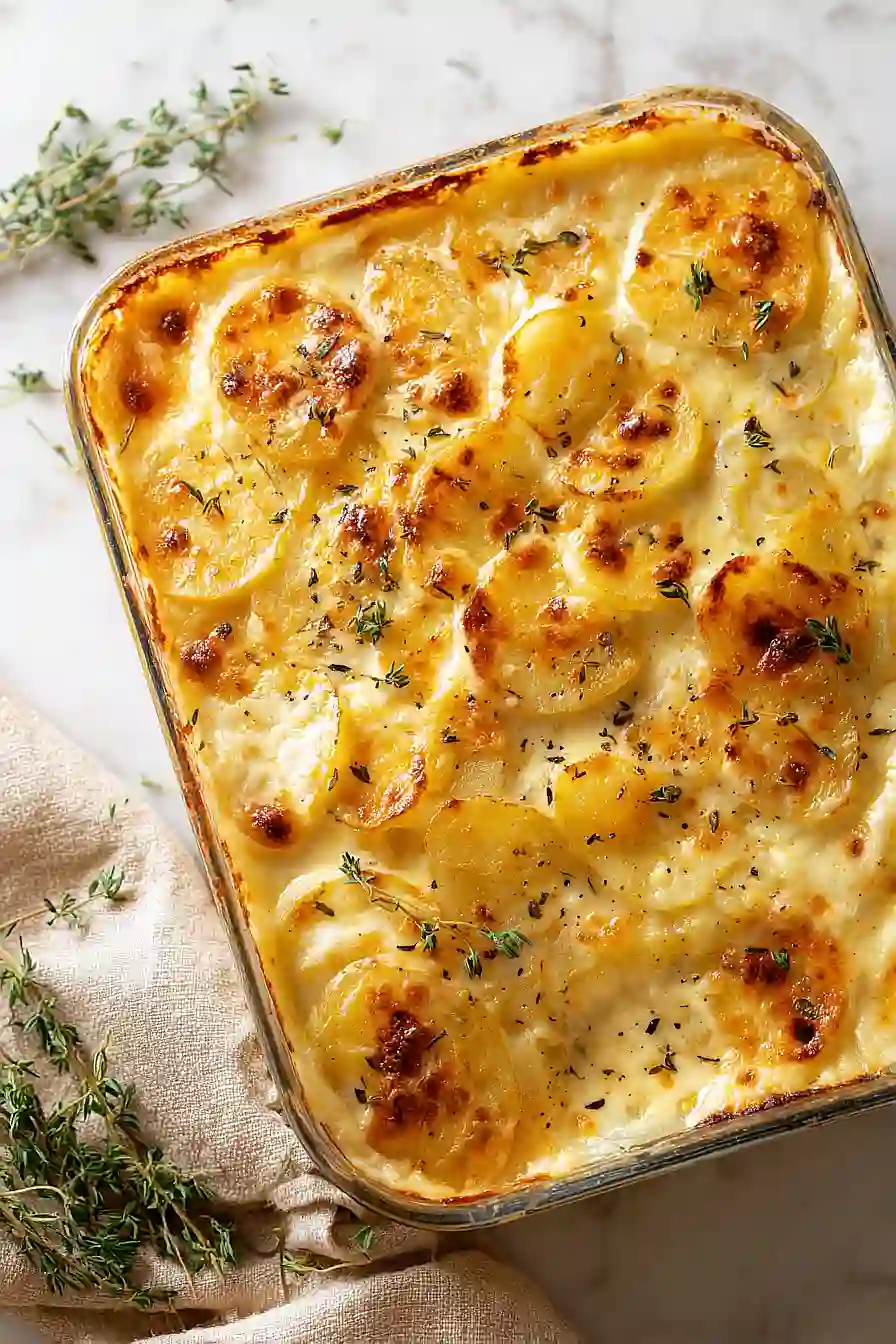
I didn’t discover freezer meal scalloped potatoes until I was in my thirties, and honestly, it changed everything about how I meal plan. Before that, I thought scalloped potatoes were just something you made fresh when company was coming over—you know, standing at the stove stirring cream for what felt like forever.
But here’s the thing: you can make a big batch of these cheesy, creamy potatoes and stash them in the freezer for later. When you need them, just pop them in the oven. No last-minute prep, no stress. I started doing this when my kids’ soccer schedule got crazy, and suddenly weeknight dinners didn’t feel impossible anymore. The trick is getting the potatoes sliced thin enough and making sure the sauce is thick before it goes in the freezer. Do that, and you’ve got yourself restaurant-quality scalloped potatoes any night of the week.
Why You’ll Love These Scalloped Potatoes
- Make-ahead convenience – You can prep this dish in advance and freeze it, making busy weeknights so much easier when you just need to pop it in the oven.
- Creamy, cheesy comfort – The combination of cream, chicken broth, and melted cheddar creates layers of tender potatoes in a rich sauce that everyone at the table will love.
- Simple ingredients – This recipe uses basic pantry staples and fresh potatoes, so you won’t need to hunt down any fancy or hard-to-find items.
- Perfect side dish – These scalloped potatoes pair well with almost any main course, from roasted chicken to holiday ham, making them great for both everyday dinners and special occasions.
What Kind of Potatoes Should I Use?
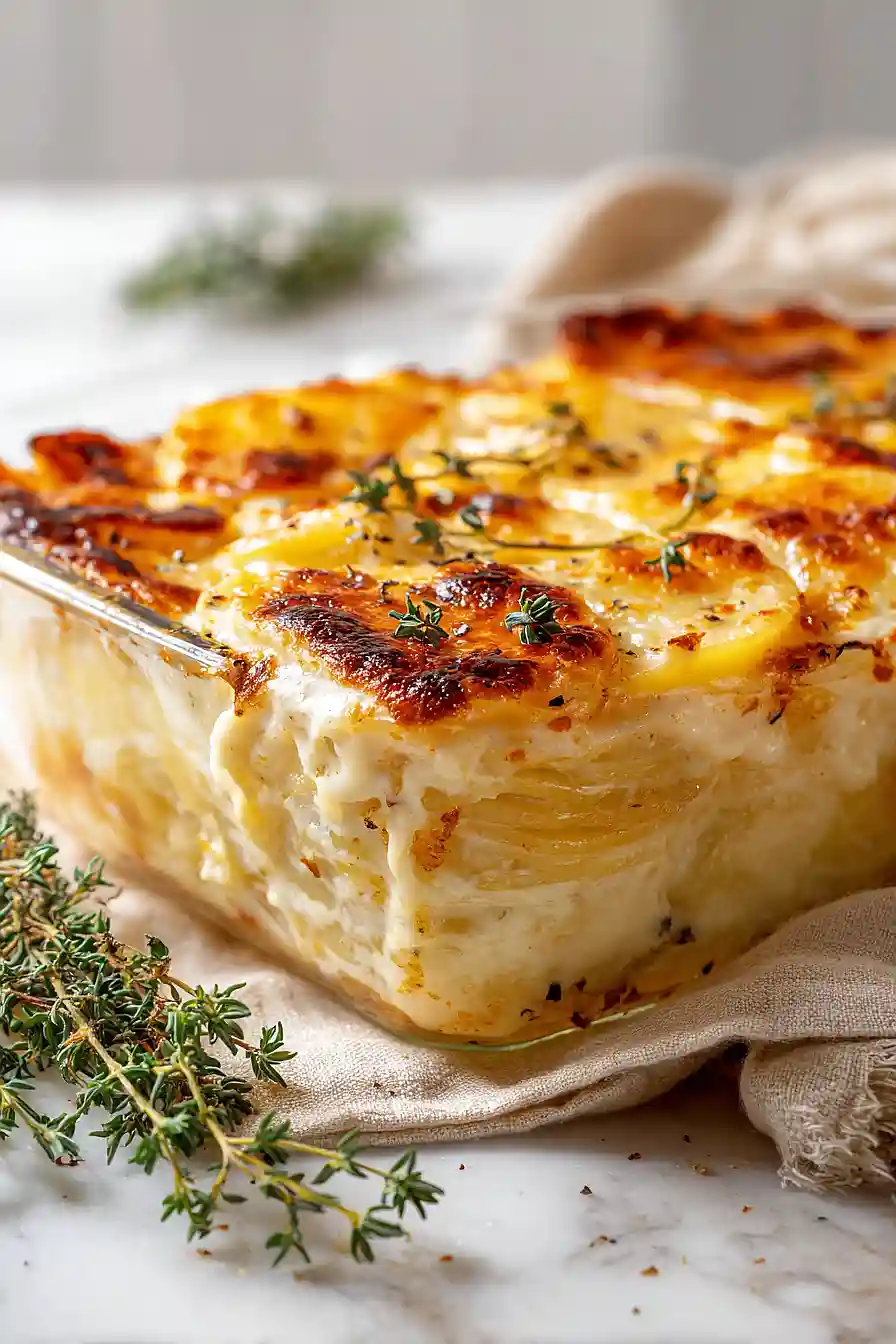
Russet potatoes are the go-to choice for scalloped potatoes because they have a high starch content that helps thicken the sauce as it bakes. That said, Yukon Gold potatoes are also a great option if you prefer a creamier, buttery texture – they hold their shape a bit better and have a naturally richer flavor. You can even mix the two types if you want the best of both worlds. When picking out your potatoes, look for ones that are firm with no soft spots or green tinges, and try to choose potatoes that are similar in size so your slices cook evenly.
Options for Substitutions
This recipe is pretty forgiving when it comes to swaps, so here are some options:
- Russet potatoes: You can use Yukon gold potatoes instead of russets for a creamier texture and slightly buttery flavor. Just slice them to the same thickness (about 1/8 inch) so they cook evenly.
- Cream: Heavy cream works best here, but you can use half-and-half if that’s what you have. The sauce will be slightly thinner, so you might want to add an extra tablespoon of flour to help thicken it up.
- Chicken broth: Vegetable broth is a fine substitute and won’t change the flavor much. You could even use milk in place of half the broth for an extra creamy dish.
- Cheddar cheese: Gruyere, Swiss, or Monterey Jack all melt beautifully in this recipe. You can also mix cheeses – try half cheddar and half Parmesan for a sharper flavor.
- Fresh thyme: If you only have dried thyme, use 1 teaspoon instead of the tablespoon called for, since dried herbs are more concentrated.
- Butter: Olive oil can work in place of butter for sautéing the onions and garlic, though you’ll lose a bit of that rich, buttery taste.
Watch Out for These Mistakes While Baking
The biggest mistake when making scalloped potatoes is slicing your potatoes unevenly, which leads to some pieces being mushy while others stay crunchy – aim for uniform 1/8-inch slices using a mandoline or sharp knife for consistent cooking.
Skipping the 10-minute simmer in step 6 is another common error that results in undercooked potatoes, so make sure the liquid is gently bubbling and the potato slices have softened slightly before transferring to the baking dish.
Don’t forget to remove those bay leaves before baking, as biting into one isn’t pleasant, and resist the urge to skip the 10-minute resting period after baking since this allows the sauce to thicken up and makes serving much cleaner.
For extra insurance against watery scalloped potatoes, you can add an extra tablespoon of flour to the butter and onion mixture in step 3 to help thicken the sauce.
What to Serve With Scalloped Potatoes?
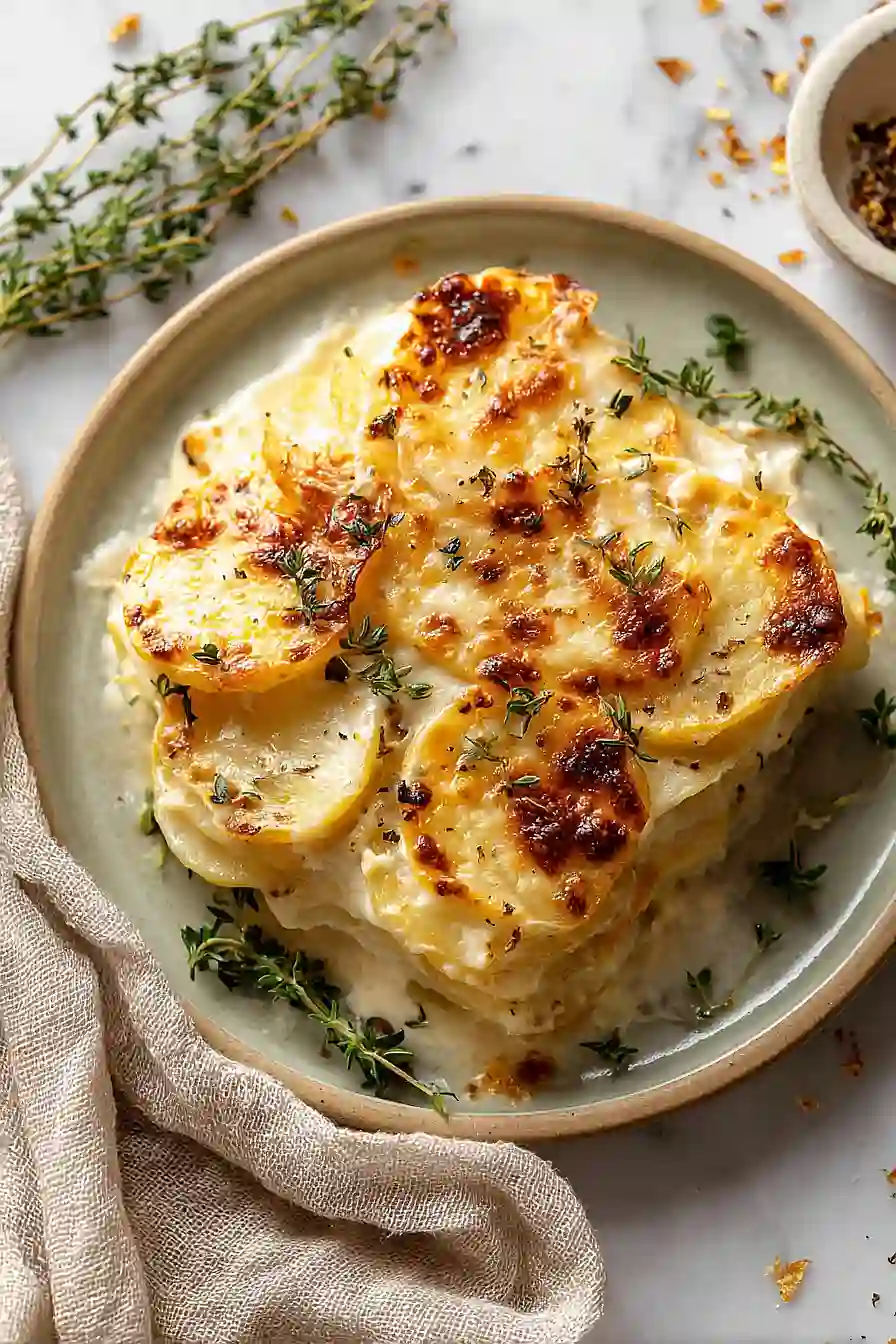
Scalloped potatoes are pretty rich and creamy, so they pair best with simple proteins that won’t compete for attention. I love serving them alongside roasted chicken, baked ham, or grilled pork chops – the potatoes basically act as a built-in side dish that soaks up all the meat juices. A crisp green salad with a tangy vinaigrette helps cut through the richness, or you could go with some roasted green beans or steamed broccoli to keep things balanced. If you’re making this for a holiday meal, scalloped potatoes work great as part of a bigger spread with roasted turkey or prime rib.
Storage Instructions
Refrigerate: Leftover scalloped potatoes will keep in the fridge for about 3-4 days in an airtight container. They’re great for easy lunches or side dishes throughout the week, and honestly taste even better the next day once all those flavors have had time to meld together.
Freeze: You can freeze these either before or after baking, which makes them perfect for meal prep. If freezing unbaked, assemble everything in a freezer-safe dish, cover tightly with plastic wrap and foil, and freeze for up to 3 months. For already baked potatoes, let them cool completely first, then portion into containers and freeze the same way.
Bake from Frozen: If you froze it unbaked, you can bake straight from frozen – just add an extra 30-40 minutes to the baking time and keep it covered with foil for the first hour. For reheating already-baked portions, thaw overnight in the fridge then warm in a 350°F oven for about 20-25 minutes until heated through.
| Preparation Time | 30-40 minutes |
| Cooking Time | 50-70 minutes |
| Total Time | 80-110 minutes |
| Level of Difficulty | Medium |
| Servings | 8 servings |
Estimated Nutrition
Estimated nutrition for the whole recipe (without optional ingredients):
- Calories: 2200-2400
- Protein: 55-65 g
- Fat: 120-130 g
- Carbohydrates: 240-260 g
Ingredients
- 3 tbsp butter (I like Kerrygold unsalted butter for this)
- 1 large onion
- 3 garlic cloves
- 1 tbsp thyme
- 1 1/2 tsp salt
- 1/2 tsp pepper
- 3 lb russet potatoes (peeled and sliced into 1/8-inch thick rounds)
- 1 cup chicken broth (I always use Swanson for the best savory base)
- 1 1/4 cup heavy cream
- 2 bay leaves
- 5 oz cheddar cheese (shredded, makes it extra creamy and rich)
- 1/4 tsp ground nutmeg
Step 1: Prepare Ingredients and Season Base
- 3 lb russet potatoes
- 1 large onion
- 3 garlic cloves
- 5 oz cheddar cheese
Peel and slice the russet potatoes into 1/8-inch thick rounds—I like to use a mandoline for consistent thickness so they cook evenly.
Dice the onion into small pieces, mince the garlic cloves, and shred the cheddar cheese.
Have all ingredients prepped and ready before you start cooking, as the sauce comes together quickly and you won’t have time to chop once the heat is on.
Step 2: Build the Aromatic Sauce Base
- 3 tbsp butter
- 1 large onion, diced from Step 1
- 3 garlic cloves, minced from Step 1
- 1 tbsp thyme
- 1 1/2 tsp salt
- 1/2 tsp pepper
Melt the butter in a large pot over medium heat and add the diced onion.
Cook for about 4 minutes until the onion becomes translucent and softened.
Add the minced garlic, thyme, salt, and pepper, stirring constantly for about 30 seconds until fragrant.
This short cooking time for the garlic and herbs is intentional—it releases their flavors without burning them.
Step 3: Create the Cream Sauce and Partially Cook Potatoes
- 1 cup chicken broth
- 1 1/4 cup heavy cream
- 3 lb sliced potatoes from Step 1
- 2 bay leaves
Pour the chicken broth and heavy cream into the pot with the aromatic base, stirring to combine.
Add the sliced potatoes from Step 1 and the bay leaves, then bring the mixture to a gentle simmer.
Simmer for 10 minutes—this partially cooks the potatoes so they’ll finish properly in the oven and helps thicken the sauce slightly.
The potatoes should still be firm at this point, not tender.
Step 4: Finish the Sauce and Transfer to Baking Dish
- 5 oz shredded cheddar cheese from Step 1
- 1/4 tsp ground nutmeg
- Potato mixture from Step 3
Remove the bay leaves from the pot and discard them.
Stir in the shredded cheddar cheese and the ground nutmeg until the cheese is completely melted and the sauce is creamy and smooth.
Spray a 9×13 inch baking dish (or similar size) with cooking spray, then pour the entire potato mixture, including the sauce, into the prepared pan.
I find the nutmeg adds a subtle warmth that keeps the dish from tasting too heavy.
Step 5: Bake Until Golden and Bubbly
- Assembled potato dish from Step 4
Bake the scalloped potatoes at 425°F for 15-20 minutes until the top is golden brown and the sauce is bubbling around the edges.
The high heat finishes cooking the potatoes while creating a lightly browned top that adds texture and flavor.
If freezing for later, allow the dish to cool completely before covering and freezing—it will keep for up to 3 months.
Step 6: Rest and Serve
Remove the baking dish from the oven and let it sit for 10 minutes before serving.
This resting time allows the sauce to set slightly so the potatoes hold together better when plated, and it makes serving much easier.
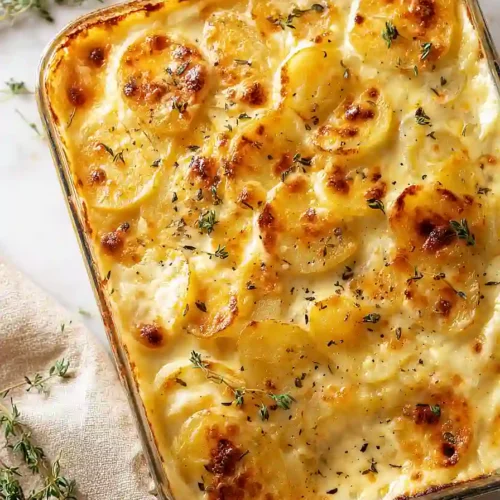
Creamy Freezer Meal Scalloped Potatoes
Ingredients
- 3 tbsp butter (I like Kerrygold unsalted butter for this)
- 1 large onion
- 3 garlic cloves
- 1 tbsp thyme
- 1 1/2 tsp salt
- 1/2 tsp pepper
- 3 lb russet potatoes (peeled and sliced into 1/8-inch thick rounds)
- 1 cup chicken broth (I always use Swanson for the best savory base)
- 1 1/4 cup heavy cream
- 2 bay leaves
- 5 oz cheddar cheese (shredded, makes it extra creamy and rich)
- 1/4 tsp ground nutmeg
Instructions
- Peel and slice the russet potatoes into 1/8-inch thick rounds—I like to use a mandoline for consistent thickness so they cook evenly. Dice the onion into small pieces, mince the garlic cloves, and shred the cheddar cheese. Have all ingredients prepped and ready before you start cooking, as the sauce comes together quickly and you won't have time to chop once the heat is on.
- Melt the butter in a large pot over medium heat and add the diced onion. Cook for about 4 minutes until the onion becomes translucent and softened. Add the minced garlic, thyme, salt, and pepper, stirring constantly for about 30 seconds until fragrant. This short cooking time for the garlic and herbs is intentional—it releases their flavors without burning them.
- Pour the chicken broth and heavy cream into the pot with the aromatic base, stirring to combine. Add the sliced potatoes from Step 1 and the bay leaves, then bring the mixture to a gentle simmer. Simmer for 10 minutes—this partially cooks the potatoes so they'll finish properly in the oven and helps thicken the sauce slightly. The potatoes should still be firm at this point, not tender.
- Remove the bay leaves from the pot and discard them. Stir in the shredded cheddar cheese and the ground nutmeg until the cheese is completely melted and the sauce is creamy and smooth. Spray a 9x13 inch baking dish (or similar size) with cooking spray, then pour the entire potato mixture, including the sauce, into the prepared pan. I find the nutmeg adds a subtle warmth that keeps the dish from tasting too heavy.
- Bake the scalloped potatoes at 425°F for 15-20 minutes until the top is golden brown and the sauce is bubbling around the edges. The high heat finishes cooking the potatoes while creating a lightly browned top that adds texture and flavor. If freezing for later, allow the dish to cool completely before covering and freezing—it will keep for up to 3 months.
- Remove the baking dish from the oven and let it sit for 10 minutes before serving. This resting time allows the sauce to set slightly so the potatoes hold together better when plated, and it makes serving much easier.