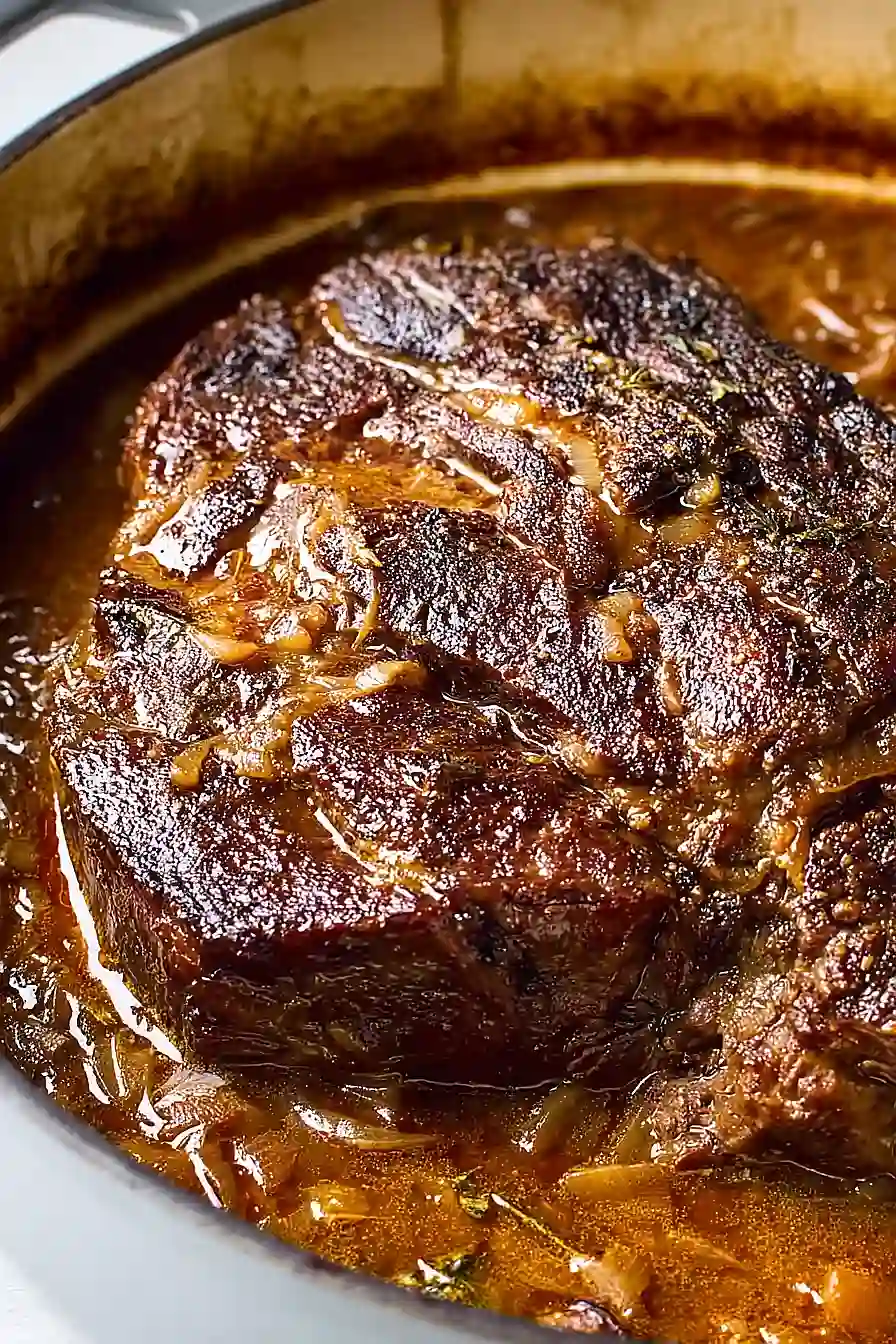
Here is my favorite spatchcock roasted turkey recipe, where you remove the backbone, flatten the bird, and roast it at high heat for a juicy, golden turkey that cooks in almost half the time of a traditional roast.
This method has completely changed how I cook turkey for Thanksgiving. My family loves how the skin comes out crispy all over, and I love that I can get dinner on the table faster with less stress. Plus, it frees up oven space for all those side dishes!
Why You’ll Love This Spatchcock Roasted Turkey
- Faster cooking time – Spatchcocking your turkey cuts the roasting time nearly in half compared to traditional methods, so you’ll have more time to spend with family instead of waiting around the kitchen.
- Crispy skin all over – Since the turkey lays flat, every inch of skin gets exposed to the oven’s heat, giving you that golden, crispy exterior everyone fights over.
- More even cooking – The flattened bird cooks uniformly, so you won’t end up with dry breast meat while waiting for the thighs to finish.
- Simple herb butter flavor – The combination of thyme, garlic, and butter creates a classic, crowd-pleasing taste without any complicated ingredients or techniques.
- Impressive presentation – Your guests will think you’re a culinary expert when you bring this beautifully browned turkey to the table, even though the technique is easier than it looks.
What Kind of Turkey Should I Use?
For spatchcock roasting, you’ll want a turkey in the 12-14 pound range, which is the sweet spot for even cooking and fitting on a standard baking sheet. Fresh or frozen turkey both work great here – just make sure if you’re using frozen that you give it plenty of time to thaw completely in the fridge (usually about 3-4 days). Some people swear by heritage breed turkeys for their richer flavor, but a standard supermarket turkey will give you excellent results too. The most important thing is making sure your turkey is completely thawed and patted dry before you start, as this helps you get that crispy, golden skin everyone loves.
Options for Substitutions
This spatchcock turkey recipe is pretty straightforward, but here are some swaps you can make if needed:
- Kosher salt: The recipe calls for specific amounts depending on the brand, so stick with kosher salt if possible. If you only have table salt, use about half the amount since it’s much saltier by volume.
- Light brown sugar: Dark brown sugar works just fine and will give you a slightly deeper flavor. You can also use regular white sugar in a pinch, though you’ll miss out on that hint of molasses.
- Unsalted butter: If you only have salted butter on hand, go ahead and use it, but reduce the kosher salt in the rub by about 1 teaspoon to balance things out.
- Fresh thyme: Dried thyme can work in a pinch – use about 1 tablespoon instead of ¼ cup fresh. You could also try fresh rosemary or sage for a different herb profile.
- Turkey size: This method works for turkeys ranging from 10 to 16 pounds. Just adjust your cooking time accordingly – smaller birds cook faster, larger ones need more time.
Watch Out for These Mistakes While Roasting
The biggest mistake when spatchcocking a turkey is not using sharp kitchen shears or a knife, which makes cutting through the backbone much harder than it needs to be – take your time and cut along both sides of the backbone to remove it completely.
Another common error is skipping the step of pressing down firmly on the breastbone to flatten the bird, as this ensures even cooking and prevents the breast meat from drying out while waiting for the thighs to finish.
Don’t forget to tuck the wing tips under the breasts to prevent them from burning, and make sure your butter mixture gets under the skin, not just on top, by gently loosening the skin with your fingers before spreading.
Finally, resist the urge to skip resting the turkey for at least 20 minutes after roasting – this allows the juices to redistribute throughout the meat, keeping everything moist when you carve.
What to Serve With Spatchcock Roasted Turkey?
This roasted turkey is perfect for a full Thanksgiving spread with all the traditional sides you love. I always make sure to have creamy mashed potatoes and gravy on the table, along with a big pan of stuffing and some roasted Brussels sprouts or green beans. Don’t forget the cranberry sauce – whether you go homemade or canned, it’s a must for cutting through the richness of the butter and herbs. For a complete meal, add some dinner rolls for soaking up all those delicious pan juices, and maybe a sweet potato casserole if you’re feeling extra festive.
Storage Instructions
Store: Once your turkey has cooled down, carve off the meat and store it in an airtight container in the fridge for up to 4 days. I like to keep the dark and white meat separate since they reheat a bit differently. Don’t toss those bones either – they make incredible turkey stock!
Freeze: Turkey freezes really well for up to 3 months. Slice or shred the meat first, then pack it into freezer bags with as much air pressed out as possible. I sometimes add a little bit of turkey drippings or broth to the bag to keep the meat moist when you thaw it later.
Reheat: The best way to reheat turkey without drying it out is in the oven at 325°F. Place the meat in a baking dish with a splash of broth, cover with foil, and warm for about 20 minutes. For quicker portions, the microwave works fine – just use medium power and cover it with a damp paper towel.
| Preparation Time | 12-18 hours |
| Cooking Time | 85-90 minutes |
| Total Time | 12-19 hours |
| Level of Difficulty | Medium |
Estimated Nutrition
Estimated nutrition for the whole recipe (without optional ingredients):
- Calories: 7200-8600
- Protein: 1000-1200 g
- Fat: 390-460 g
- Carbohydrates: 25-35 g
Ingredients
For the dry brine:
- 1/4 cup diamond crystal kosher salt or 2 tbsp plus 2 tsp morton kosher salt
- 1 tbsp ground black pepper
- 1 tbsp light brown sugar
For the turkey and rub:
- 1 turkey (12 to 14 lb), neck and giblets discarded, patted dry
- 1/2 cup unsalted butter, at room temperature
- 1/4 cup fresh thyme leaves
- 4 garlic cloves, finely minced
- 2 tbsp extra-virgin olive oil
Step 1: Prepare and Apply the Dry Brine
- 1/4 cup Diamond Crystal kosher salt or 2 tbsp plus 2 tsp Morton kosher salt
- 1 tbsp ground black pepper
- 1 tbsp light brown sugar
- 1 turkey (12 to 14 lb), neck and giblets discarded, patted dry
In a small bowl, mix together the kosher salt, ground black pepper, and light brown sugar to create a dry brine.
To spatchcock the turkey, place the turkey breast side down on a cutting board.
Using sharp kitchen shears, cut along both sides of the backbone and remove it.
Using a chef’s knife, make a small incision down the length of the breastbone, then flip the turkey skin side up and press firmly to flatten the bird, you should hear a crack.
Place the prepared turkey on a wire rack set inside a large rimmed baking sheet, skin side up.
Rub the dry brine all over the turkey, ensuring it is well-coated.
Chill the turkey, uncovered, in the refrigerator for 12–18 hours; the skin should become tight and dry.
Step 2: Prepare Turkey for Roasting
Place an oven rack in the bottom third of the oven and preheat it to 425°F (220°C).
Remove the wire rack with the turkey from the baking sheet and set aside.
Rinse off any excess salt from the baking sheet and dry it thoroughly.
Line the baking sheet with a few layers of aluminum foil to make cleanup easier, then return the rack with the brined turkey (from Step 1) to the prepared baking sheet.
Tuck the wing tips behind the breast to protect them from burning.
Let the turkey sit at room temperature for 30 minutes before roasting.
I like giving the bird this time to come closer to room temp as it helps ensure even roasting.
Step 3: Make and Apply the Flavored Butter
- 1/2 cup unsalted butter, at room temperature
- 1/4 cup fresh thyme leaves
- 4 garlic cloves, finely minced
- 2 tbsp extra-virgin olive oil
- brined turkey from Step 1
In a small bowl, combine the unsalted butter (at room temperature), fresh thyme leaves, and finely minced garlic cloves to make a fragrant flavored butter.
Gently separate the turkey skin from the meat as much as possible without tearing it, and using your hands, carefully rub the butter mixture under the skin to flavor the meat directly.
Then, rub the entire turkey all over with extra-virgin olive oil to help the skin crisp and brown during roasting.
Step 4: Roast the Turkey
- brined and buttered turkey from Step 3
Pour 1/2 cup water into the foil-lined baking sheet to prevent drippings from burning and add some extra moisture as the turkey cooks.
Place the prepared turkey (from Step 3) breast side up on the rack and roast in the preheated oven.
Rotate the baking sheet halfway through cooking for even browning.
Roast until the skin is deep golden brown and crisp, and an instant-read thermometer inserted into the thickest part of the breast registers 150°F, about 1 hour and 25 minutes.
(Start checking after 1 hour; or use a meat thermometer probe that can stay in during roasting.)
Step 5: Rest and Carve the Turkey
When the turkey is fully roasted, transfer it to a cutting board.
Let it rest for 15–20 minutes to allow the juices to redistribute before carving.
I always let the turkey rest—this keeps it moist and juicy when you slice into it.
Crispy Spatchcock Roasted Turkey
Ingredients
For the dry brine:
- 1/4 cup Diamond Crystal kosher salt or 2 tbsp plus 2 tsp Morton kosher salt
- 1 tbsp ground black pepper
- 1 tbsp light brown sugar
For the turkey and rub:
- 1 turkey (12 to 14 lb), neck and giblets discarded, patted dry
- 1/2 cup unsalted butter, at room temperature
- 1/4 cup fresh thyme leaves
- 4 garlic cloves, finely minced
- 2 tbsp extra-virgin olive oil
Instructions
- In a small bowl, mix together the kosher salt, ground black pepper, and light brown sugar to create a dry brine. To spatchcock the turkey, place the turkey breast side down on a cutting board. Using sharp kitchen shears, cut along both sides of the backbone and remove it. Using a chef’s knife, make a small incision down the length of the breastbone, then flip the turkey skin side up and press firmly to flatten the bird, you should hear a crack. Place the prepared turkey on a wire rack set inside a large rimmed baking sheet, skin side up. Rub the dry brine all over the turkey, ensuring it is well-coated. Chill the turkey, uncovered, in the refrigerator for 12–18 hours; the skin should become tight and dry.
- Place an oven rack in the bottom third of the oven and preheat it to 425°F (220°C). Remove the wire rack with the turkey from the baking sheet and set aside. Rinse off any excess salt from the baking sheet and dry it thoroughly. Line the baking sheet with a few layers of aluminum foil to make cleanup easier, then return the rack with the brined turkey (from Step 1) to the prepared baking sheet. Tuck the wing tips behind the breast to protect them from burning. Let the turkey sit at room temperature for 30 minutes before roasting. I like giving the bird this time to come closer to room temp as it helps ensure even roasting.
- In a small bowl, combine the unsalted butter (at room temperature), fresh thyme leaves, and finely minced garlic cloves to make a fragrant flavored butter. Gently separate the turkey skin from the meat as much as possible without tearing it, and using your hands, carefully rub the butter mixture under the skin to flavor the meat directly. Then, rub the entire turkey all over with extra-virgin olive oil to help the skin crisp and brown during roasting.
- Pour 1/2 cup water into the foil-lined baking sheet to prevent drippings from burning and add some extra moisture as the turkey cooks. Place the prepared turkey (from Step 3) breast side up on the rack and roast in the preheated oven. Rotate the baking sheet halfway through cooking for even browning. Roast until the skin is deep golden brown and crisp, and an instant-read thermometer inserted into the thickest part of the breast registers 150°F, about 1 hour and 25 minutes. (Start checking after 1 hour; or use a meat thermometer probe that can stay in during roasting.)
- When the turkey is fully roasted, transfer it to a cutting board. Let it rest for 15–20 minutes to allow the juices to redistribute before carving. I always let the turkey rest—this keeps it moist and juicy when you slice into it.