Here is my favorite dill pickle green beans recipe, with crisp fresh green beans, tangy dill pickle brine, garlic, and just the right amount of spices for that perfect pickled crunch.
These dill pickle green beans are always the first thing to disappear at our summer barbecues. I like to make extra jars because my kids will sneak into the fridge and eat them straight from the jar. Can’t blame them – they’re pretty addictive!

Why You’ll Love These Dill Pickle Green Beans
- Simple ingredients – You only need a handful of basic pantry staples and fresh green beans to create these tangy, crunchy pickles.
- Perfect snack or side dish – These pickled green beans are great for munching straight from the jar, adding to charcuterie boards, or serving alongside sandwiches and burgers.
- Long-lasting pantry staple – Once you make a batch, they’ll keep in your fridge for months, giving you a ready-to-eat pickle whenever you want one.
- Easy preservation method – This straightforward pickling process lets you preserve fresh green beans when they’re in season, so you can enjoy them year-round.
- Customizable heat level – The red pepper flakes add just the right amount of kick, but you can easily adjust the spice level to suit your taste.
What Kind of Green Beans Should I Use?
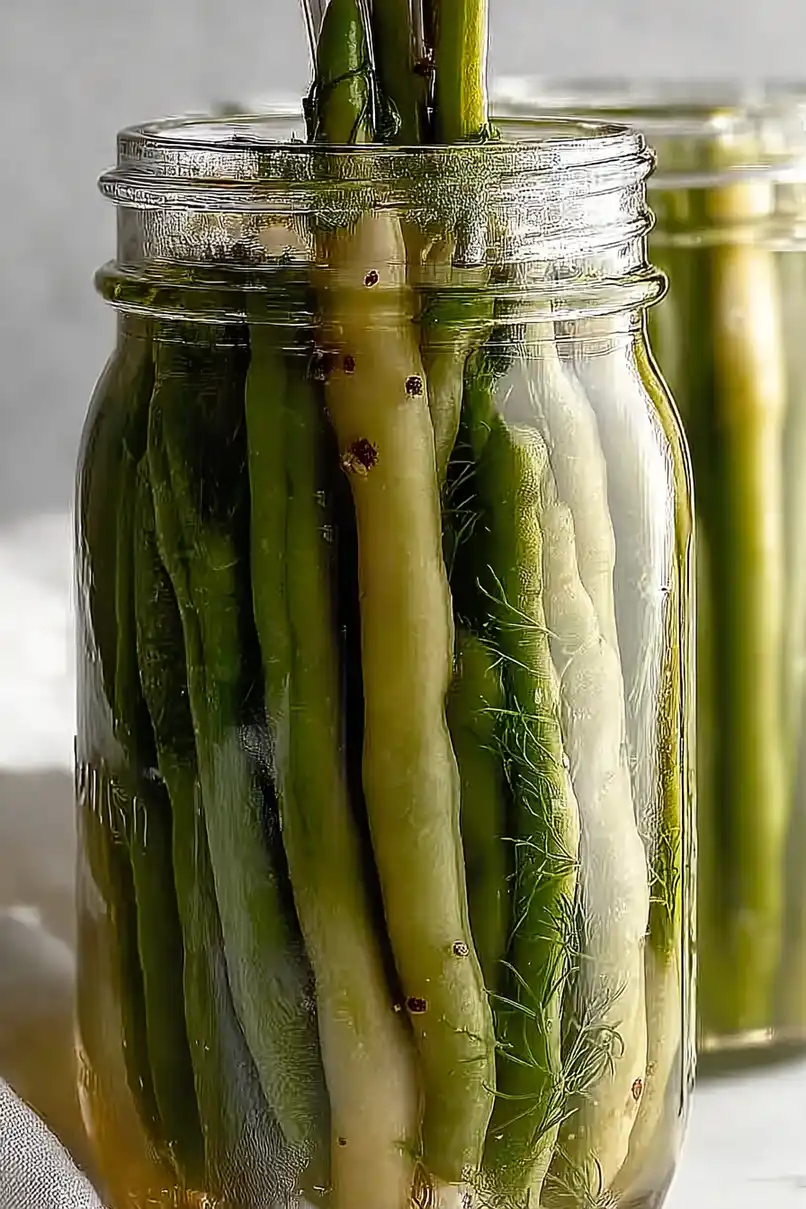
Fresh green beans are definitely the way to go for this pickle recipe – they’ll give you that perfect crisp crunch that makes dill pickles so satisfying. Look for beans that are bright green and snap easily when you bend them, avoiding any that feel limp or have brown spots. You can use either regular green beans or the thinner French beans (haricots verts), though regular green beans tend to hold up better during the pickling process. Make sure to trim the ends before pickling, and try to cut them into similar lengths so they fit nicely in your jars and pickle evenly.
Options for Substitutions
This pickle recipe is pretty forgiving, so here are some swaps you can make:
- Distilled white vinegar: You can use apple cider vinegar instead, but stick with the 5% acidity level for safe pickling. Avoid substituting with other vinegars as they may not have the right acidity for proper preservation.
- Fresh dill: If you can’t find fresh dill sprigs, use 3 tablespoons of dried dill or dill seed instead. Fresh is better for that classic pickle flavor, but dried will work in a pinch.
- Red pepper flakes: Want more heat? Add a whole dried chili pepper to each jar. For less spice, cut the red pepper flakes in half or leave them out completely.
- Fresh green beans: Make sure your beans are fresh and crisp – avoid using older, limp beans as they won’t pickle well. You can also try this recipe with asparagus or carrots, just adjust cooking times accordingly.
- Salt: Use only pickling salt or kosher salt without additives. Table salt contains anti-caking agents that can make your brine cloudy, though it won’t affect safety.
Watch Out for These Mistakes While Cooking
The biggest mistake when making dill pickle green beans is not trimming the beans properly – make sure to cut off both ends and size them so they fit in your jars with about half an inch of headspace to prevent them from getting mushy during the pickling process.
Another common error is not bringing your vinegar brine to a full rolling boil before pouring it over the beans, which can result in weak pickles that don’t have that sharp, tangy flavor you’re looking for.
Don’t skip blanching the green beans for 2-3 minutes in boiling water before packing them into jars, as this step helps them keep their crisp texture and bright color throughout the pickling process.
Finally, resist the urge to open your jars too early – these pickled beans need at least 24-48 hours in the refrigerator to develop their full flavor, and they’ll taste even better after a week.
What to Serve With Dill Pickle Green Beans?
These tangy pickled green beans are perfect as a snack on their own, but they really shine as part of a charcuterie board alongside cheese, crackers, and cured meats. I love serving them with grilled burgers or sandwiches since the pickled flavor cuts through rich foods beautifully. They also make a great side dish for barbecue meals – think pulled pork, ribs, or grilled chicken where you want something bright and acidic to balance out all those smoky flavors. For a simple appetizer, try them with some cream cheese and bagel chips, or just grab a few straight from the jar when you’re craving something crunchy and sour.
Storage Instructions
Refrigerate: Once your dill pickle green beans are done processing, let them cool completely before moving them to the fridge. They’ll keep for up to 2 months in the refrigerator and actually taste better after sitting for at least 24 hours – the flavors really develop overnight!
Pantry Storage: If you properly canned these using a water bath method, you can store the sealed jars in a cool, dark pantry for up to 1 year. Just make sure you hear that satisfying ‘pop’ when the lids seal properly. Once you open a jar, it needs to go in the fridge.
Serve: These pickled green beans are perfect straight from the jar as a snack or side dish. They’re great on charcuterie boards, chopped up in salads, or even as a garnish for bloody marys. Always use clean utensils when grabbing some from the jar to keep them fresh longer.
| Preparation Time | 20-30 minutes |
| Cooking Time | 10-15 minutes |
| Total Time | 2 weeks + 30-45 minutes |
| Level of Difficulty | Medium |
Estimated Nutrition
Estimated nutrition for the whole recipe (without optional ingredients):
- Calories: 100-150
- Protein: 3-5 g
- Fat: 0-1 g
- Carbohydrates: 20-25 g
Ingredients
For the brine:
- 2 cups water
- 1 garlic clove, peeled (smashed slightly for more flavor)
- 1/4 cup salt (pickling salt preferred for clarity)
- 2 1/2 cups distilled white vinegar (I use Heinz for consistent pickling results)
For assembling:
- 3/4 tsp crushed red pepper flakes
- 6 large dill sprigs (fresh preferred for best flavor)
- 2 1/2 lb fresh green beans (trimmed ends, about 4-5 inches long)
Step 1: Prepare Equipment and Ingredients for Pickling
- 2 1/2 lb fresh green beans
- 1 garlic clove, peeled
Start by cleaning your jars thoroughly with hot soapy water and rinsing well, then wash the lids and rings separately—cleanliness is crucial for successful pickling and food safety.
While the jars air-dry, trim the green beans to 4-5 inches long, cutting off both ends to ensure uniform sizing that will pack neatly into the jars.
Smash the garlic clove slightly with the side of your knife to release its oils and maximize its flavor in the brine.
Step 2: Prepare the Pickling Brine
- 2 1/2 cups distilled white vinegar
- 2 cups water
- 1/4 cup salt
- 1 garlic clove
Combine the vinegar, water, salt, and smashed garlic in a large pot and bring to a rolling boil over high heat.
I prefer using distilled white vinegar for its consistency and Heinz brand specifically because it ensures the same results every time.
The salt will dissolve completely, and you’ll want this brine to reach a full boil before using it—a properly heated brine is essential for both flavor and preservation.
Step 3: Layer Seasonings and Pack Beans into Jars
- 6 large dill sprigs
- 3/4 tsp crushed red pepper flakes
- trimmed green beans from Step 1
Divide the fresh dill sprigs and crushed red pepper flakes evenly among your clean, dry jars—place them on the bottom and sides so they’re distributed throughout.
Standing the trimmed green beans upright in the jars helps them pack efficiently and looks beautiful; they should fit snugly but not be overly compressed.
I like to pack them fairly tight since they’ll soften slightly during the pickling process, and you want enough beans per jar for better flavor distribution.
Step 4: Fill Jars with Hot Brine and Seal
- hot brine from Step 2
Carefully pour the hot brine from Step 2 into each jar, filling them to about 1/2 inch from the rim and ensuring the green beans are completely submerged—any beans exposed to air can spoil.
Quickly place the hot lids on the jars and screw on the rings until finger-tight; as the jars cool, the lids will seal with a satisfying pop.
Work quickly with this step since the brine needs to be hot to create a proper seal and maintain food safety.
Step 5: Water Bath Process for Food Safety
- sealed jars from Step 4
Place the sealed jars upright in a large pot and cover them with at least 1 inch of water, then bring to a simmer over medium-high heat.
Maintain a gentle simmer (not a rolling boil, which can shake the jars loose) for 10 minutes to process the jars safely and help ensure a complete seal.
This step is critical for shelf stability and safety, especially important when canning vegetables.
Step 6: Cool and Set the Pickles
Using jar tongs, carefully remove the hot jars from the water bath and place them on a clean kitchen towel or rack where they can cool undisturbed for 8-12 hours at room temperature.
You may hear the lids pop as they seal—this is a good sign!
Avoid moving or tilting the jars during this cooling period, as it allows the seal to set properly and the flavors to meld.
Once fully cooled, check that the lids are concave (slightly dipped in the center), which indicates a proper seal; any jars that didn’t seal can be refrigerated and used within a few weeks.