I never knew almond paste existed until I was in my thirties. Growing up, almonds were just those crunchy nuts my mom put in salads or packed in my lunch box. When I first tasted a slice of almond cake made with almond paste at a friend’s house, I couldn’t believe the difference – it was nothing like the almond-flavored treats I knew.
That’s because almond paste brings something special to baking that regular almonds just can’t match. It adds this rich, sweet almond flavor that goes all the way through the cake, not just in little nutty bites here and there. If you’ve never baked with almond paste before, don’t worry – this cake is actually easier than you might think.
Why You’ll Love This Almond Cake
- Rich almond flavor – With both almond paste and almond essence, this cake delivers an intense, natural almond taste that’s impossible to resist.
- Simple ingredients – Most of these ingredients are basic pantry staples, with almond paste being the only special item you’ll need to pick up.
- Make-ahead friendly – This cake actually tastes better the next day, making it perfect for preparing in advance for special occasions or weekend gatherings.
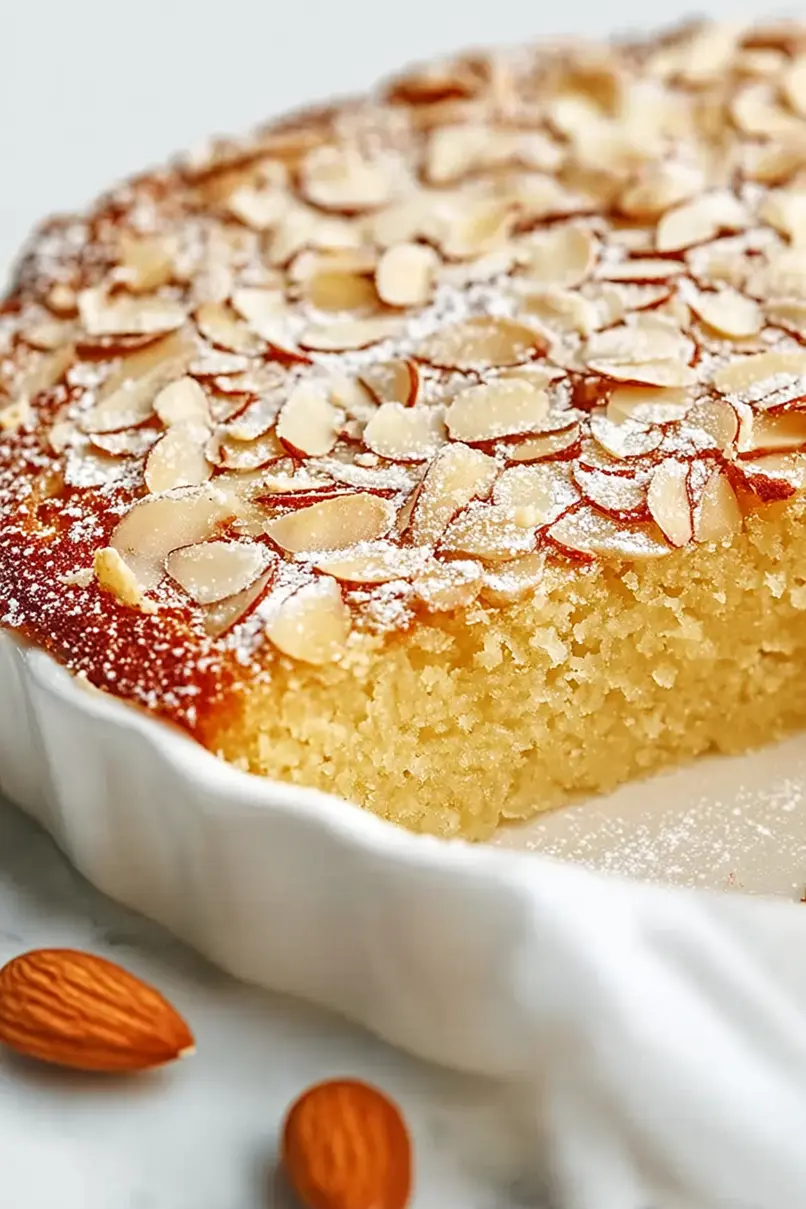
- No fancy decorating needed – A simple dusting of powdered sugar is all you need to make this cake look elegant and ready to serve.
What Kind of Almond Paste Should I Use?
When shopping for almond paste, you’ll find it either in tubes, cans, or sometimes in blocks near the baking supplies. The most common brands like Odense or Solo work perfectly for this cake, but avoid using marzipan as a substitute since it’s much sweeter and has a different texture. Good almond paste should be firm but pliable, with a natural almond color and smell – if it’s too hard or dry, it might be old. For the best results, make sure your almond paste is at room temperature before mixing it into your cake batter, as this will help it blend more smoothly with the other ingredients.
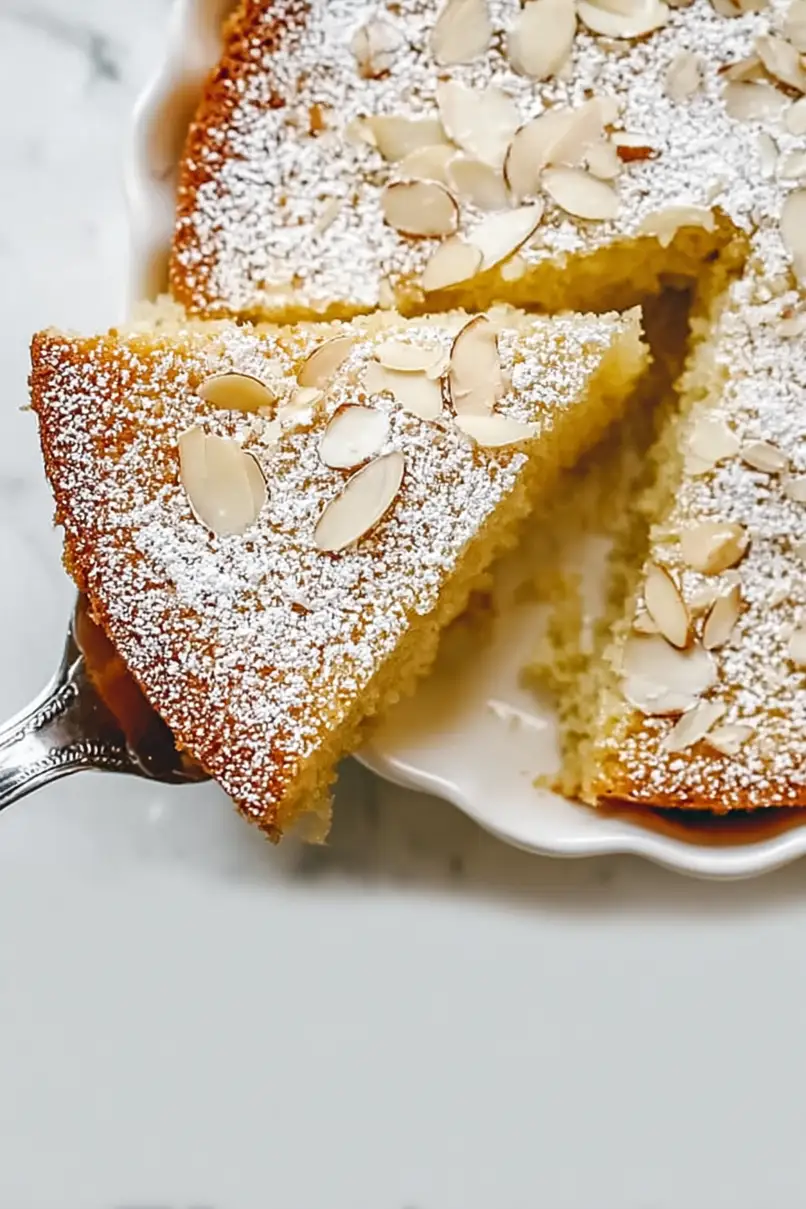
Options for Substitutions
While some ingredients in this almond cake are essential for its signature taste, here are some helpful substitutions you can try:
- Almond paste: This is really the star of the show and can’t be substituted without completely changing the cake. If you can’t find it in stores, you can make your own by grinding blanched almonds with sugar and egg white in a food processor until smooth.
- All-purpose flour: You can swap this with cake flour for an even softer texture (use 1 cup plus 2 tablespoons of cake flour), or use gluten-free all-purpose flour blend with xanthan gum for a gluten-free version.
- Unsalted butter: If you only have salted butter, that’s fine – just reduce the kosher salt to 1/4 teaspoon. For dairy-free needs, you can use a good quality plant-based butter substitute, but the texture might be slightly different.
- Slivered almonds: Feel free to use sliced almonds, chopped whole almonds, or even leave them out if you prefer. The cake will still taste great!
- Almond essence: You can use almond extract instead – they’re basically the same thing. In a pinch, vanilla extract works too, though you’ll lose some of that intense almond flavor.
Watch Out for These Mistakes While Baking
The biggest challenge when making almond cake comes from working with almond paste – if it’s too cold or lumpy, you’ll end up with uneven texture throughout your cake, so make sure to break it into small pieces before beating it with sugar until completely smooth. Another common mistake is using cold eggs and butter, which can cause the batter to curdle and result in a dense, heavy cake – letting these ingredients come to room temperature (about 1 hour on the counter) is crucial for achieving that perfect, tender crumb. To prevent the slivered almonds on top from burning, add them halfway through the baking time rather than at the beginning, and keep an eye on the cake’s color – it should be golden brown, not dark brown. For the most accurate results, use a kitchen scale to measure your ingredients, especially the almond paste, as too much or too little can significantly impact the cake’s texture and moisture level.
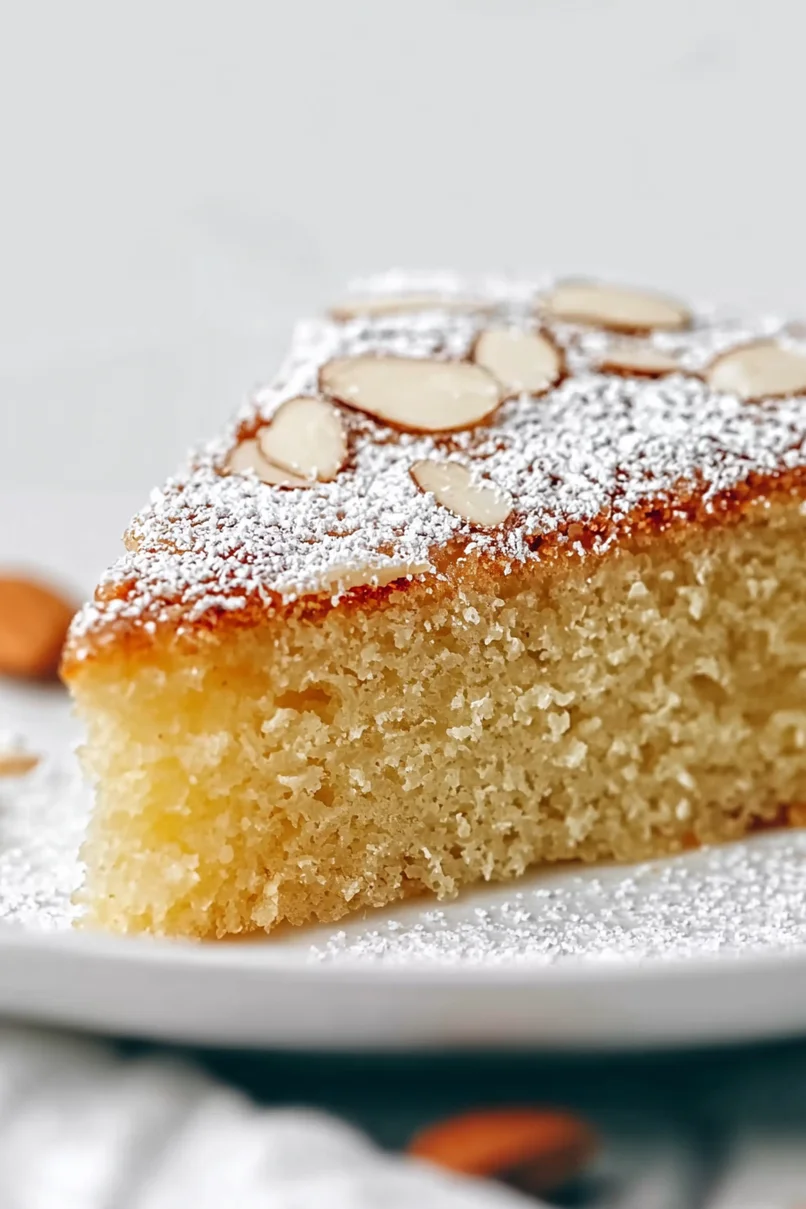
What to Serve With Almond Cake?
This sweet almond cake pairs perfectly with a hot cup of coffee or tea for an afternoon treat. Since it’s rich and nutty, I like to serve it with fresh berries or a berry compote on the side – raspberries and strawberries work especially well with the almond flavor. For a simple but tasty dessert plate, add a dollop of lightly whipped cream or a scoop of vanilla ice cream. If you’re serving this for brunch, consider adding some crispy bacon on the side to balance out the sweetness with a bit of salt.
Storage Instructions
Keep Fresh: This almond cake stays moist and tasty when kept in an airtight container at room temperature for up to 3 days. I like to place a piece of parchment paper on top of the cake before closing the container – this helps maintain its perfect texture and prevents the top from getting sticky.
Refrigerate: Want to keep it longer? Pop it in the fridge in a sealed container, and it’ll stay good for up to a week. Just remember that the texture might become a bit more dense when chilled, but it’s still super yummy!
Freeze: This cake freezes really well for up to 3 months! Wrap it tightly in plastic wrap, then in foil, and place it in a freezer bag. When you’re ready to enjoy it, just thaw it overnight in the fridge. If you want to dust it with powdered sugar, wait until after it’s completely thawed.
| Preparation Time | 15-20 minutes |
| Cooking Time | 45-50 minutes |
| Total Time | 60-70 minutes |
| Level of Difficulty | Medium |
Estimated Nutrition
Estimated nutrition for the whole recipe (without optional ingredients):
- Calories: 1700-1900
- Protein: 20-25 g
- Fat: 100-110 g
- Carbohydrates: 180-200 g
Ingredients
For the cake:
- 4 large eggs (room temperature)
- 1/2 cup slivered almonds (or sliced almonds)
- 3/4 tsp kosher salt
- 1 cup all-purpose flour (I use King Arthur all-purpose flour)
- 1 cup sugar
- 3/4 cup unsalted butter (softened to room temperature)
- 1 tsp baking powder
- 2/3 cup almond paste (room temperature for easier mixing)
- 1/4 tsp almond extract (for best flavor and aroma)
For dusting (optional):
- powdered sugar (optional, for garnish)
Step 1: Prepare the Pan and Preheat the Oven
- 9-inch round cake pan
- parchment paper
- cooking spray
Heat your oven to 325°F and prepare a 9-inch round cake pan by spraying it lightly with cooking spray, then pressing a piece of parchment paper into the bottom.
This ensures your cake releases cleanly and gives you a nice flat base.
While the oven preheats, take your almond paste, butter, and eggs out if they aren’t already at room temperature—this is crucial for proper emulsification and a tender crumb.
Step 2: Mix the Dry Ingredients
- 1 cup all-purpose flour
- 1 tsp baking powder
- 3/4 tsp kosher salt
In a medium bowl, whisk together the flour, baking powder, and kosher salt.
Whisk rather than simply stirring to aerate the flour and distribute the leavening agents evenly throughout—this helps create a more uniform crumb.
Set this mixture aside; you’ll add it to the wet ingredients later.
Step 3: Build the Almond Cake Base
- 2/3 cup almond paste
- 1 cup sugar
- 3/4 cup unsalted butter
- 1/4 tsp almond extract
- 4 large eggs
In a large mixing bowl, combine the room-temperature almond paste and sugar, beating on medium speed until the mixture resembles coarse breadcrumbs—this breaks down the almond paste and begins to incorporate air.
Add the softened butter and continue beating for 2-3 minutes until the mixture becomes pale and fluffy, which typically takes longer than a standard butter-and-sugar cream because almond paste is denser.
I like to use the almond extract here to enhance the almond flavor throughout the cake, so mix it in until well combined.
Now add your room-temperature eggs one at a time, beating well after each addition to ensure proper emulsification—this creates lift and a tender texture in the final cake.
Step 4: Combine Wet and Dry Ingredients
- dry ingredient mixture from Step 2
- almond batter from Step 3
Add the dry ingredient mixture from Step 2 to the almond batter from Step 3, then beat on low speed just until the ingredients are barely combined—overworking the batter at this stage develops gluten and can make the cake tough.
The batter should look slightly streaky; this is perfectly fine.
Pour the batter into your prepared pan from Step 1, spreading it gently to an even thickness.
Step 5: Top and Bake
- 1/2 cup slivered almonds
Scatter the slivered almonds evenly over the top of the batter—they’ll toast slightly during baking and add a pleasant crunch and visual appeal.
Place the pan in your preheated 325°F oven and bake for 45–50 minutes, until a toothpick inserted into the center comes out mostly clean with just a few moist crumbs clinging to it.
The lower temperature ensures the cake bakes evenly without the top browning too quickly.
Step 6: Cool and Finish
- powdered sugar
Remove the cake from the oven and let it cool in the pan for about 15 minutes—this allows the structure to set so it won’t fall apart when you turn it out.
Once cooled slightly, you can run a thin knife around the edges, invert it onto a wire rack to cool completely, or leave it in the pan if you prefer.
I find dusting the top with powdered sugar just before serving gives a lovely finished appearance and a touch of sweetness that complements the almond flavor beautifully.