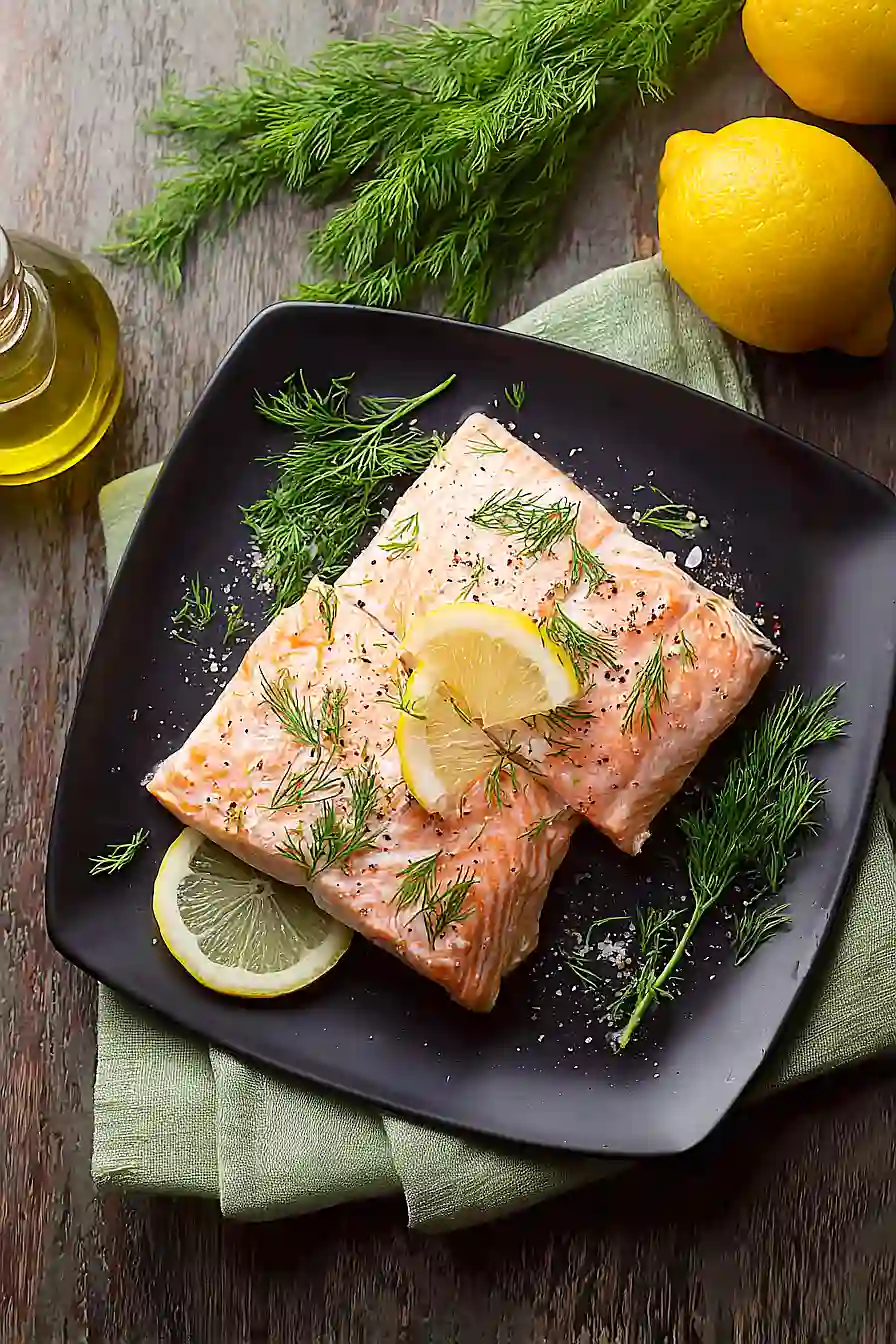
I’ve always thought poached salmon sounds fancy, but honestly, it’s one of the easiest ways to cook fish. You just need a pan, some wine, and about fifteen minutes. No flipping, no splattering oil, and definitely no smoke alarm going off while you’re trying to get dinner on the table.
The best part? You can’t really mess it up. The gentle cooking keeps the salmon moist, and the wine with shallots and fresh herbs makes it taste like you spent way more effort than you actually did. I throw this together on busy weeknights when I want something that feels special without the stress.
Want a light, healthy dinner that doesn’t taste like diet food? This is it. Serve it with lemon slices and whatever sides you have on hand. Rice, roasted vegetables, or even just a simple salad work great.
Why You’ll Love This Poached Salmon
- Ready in under 20 minutes – This is one of the fastest ways to cook salmon, making it perfect for busy weeknights when you need dinner on the table fast.
- Light and healthy – Poaching keeps the salmon moist and tender without adding extra fat, so you get all the omega-3s and protein without any heaviness.
- Foolproof cooking method – Unlike pan-searing or baking, poaching is nearly impossible to mess up. The gentle cooking keeps your salmon from drying out every single time.
- Simple, fresh ingredients – Just a handful of pantry staples and fresh herbs create a flavorful poaching liquid that infuses the fish with subtle, delicious flavor.
- Elegant yet easy – This looks and tastes like something from a fancy restaurant, but it’s so simple that you can make it any night of the week.
What Kind of Salmon Should I Use?
You can choose farm-raised or wild for this recipe, both will work well for poaching. Wild salmon tends to have a firmer texture and richer flavor, while farm-raised is usually more affordable and has a milder taste. If all you have access to is frozen salmon, you’ll still be good to go – just make sure to thaw it completely in the refrigerator overnight before cooking. For this poaching method, you can use salmon with the skin on or off, though skin-on fillets tend to hold together a bit better during cooking. Just be sure to check for any remaining pin bones by running your fingers along the fillet before you start.
Options for Substitutions
This simple poached salmon recipe is forgiving and works well with a few ingredient swaps:
- White wine: If you don’t have white wine or prefer not to use it, replace it with an equal amount of water plus 1 tablespoon of lemon juice or white wine vinegar. You’ll still get that light, bright flavor.
- Fresh dill: Dried dill works fine if that’s what you have – just use about 1 teaspoon since dried herbs are more concentrated. You can also try fresh tarragon or fennel fronds for a different but equally nice flavor.
- Fresh parsley: Dried parsley can work in a pinch, though fresh is better here. You could also skip it entirely or use cilantro if you prefer.
- Shallot: Regular onion slices work perfectly fine as a substitute. You can also use a few slices of leek for a milder flavor.
- Salmon fillets: While salmon is ideal for poaching, you can use this method with other fish like cod, halibut, or sea bass. Just adjust cooking time based on thickness – thinner fillets will cook faster.
Watch Out for These Mistakes While Cooking
The biggest mistake when poaching salmon is letting the liquid boil too vigorously, which can make the fish tough and dry – keep it at a gentle simmer where you see just a few bubbles breaking the surface.
Overcooking is another common issue since salmon continues to cook after you remove it from heat, so take it out when the center is still slightly translucent and it reaches about 125°F on an instant-read thermometer for perfectly moist fish.
Starting with cold salmon straight from the fridge can lead to uneven cooking, so let your fillets sit at room temperature for about 15 minutes before poaching.
Finally, don’t skip covering the pan – the steam helps cook the top of the salmon evenly, and if your fillets are thicker than an inch, you might need to add a few extra minutes to the cooking time.
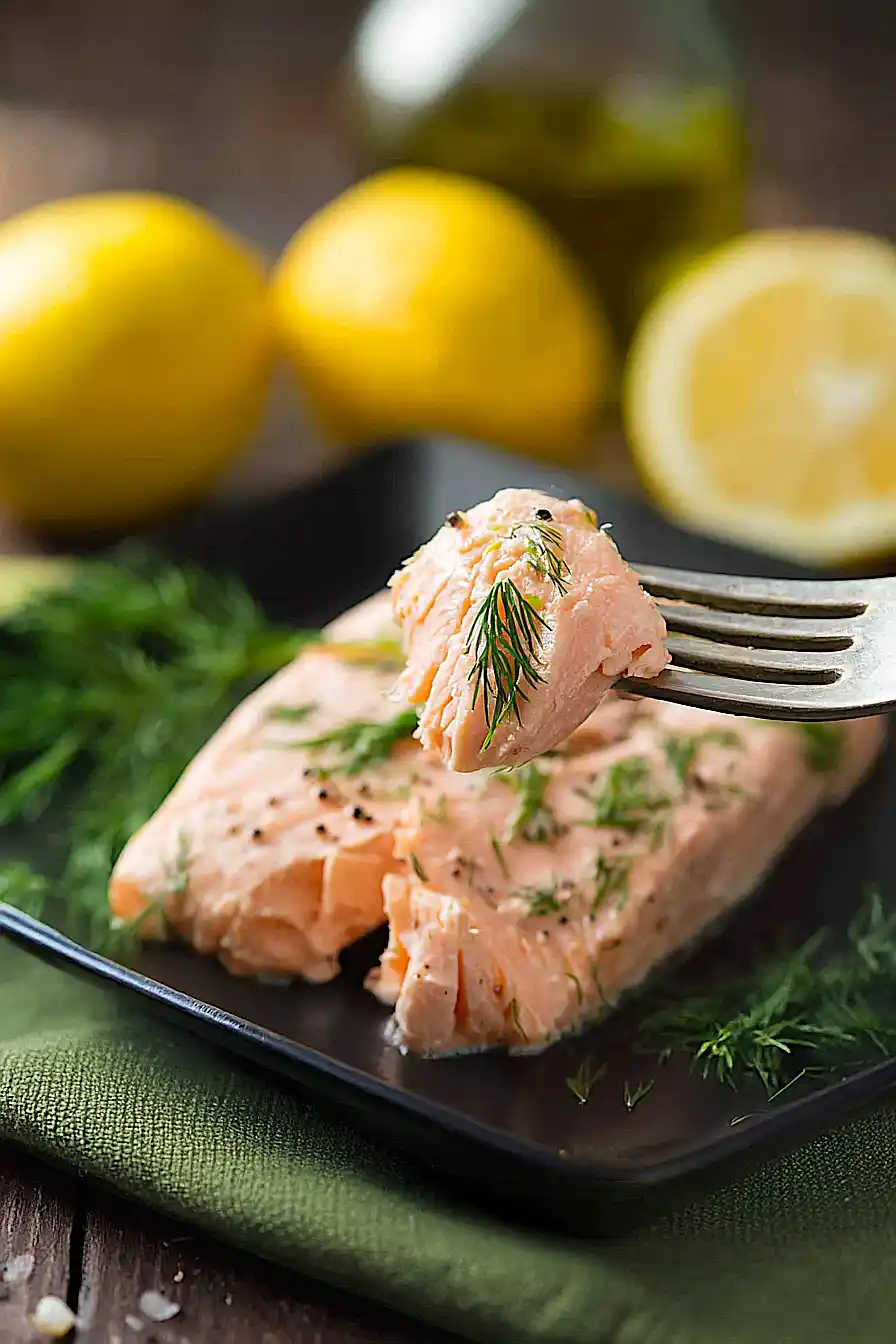
What to Serve With Poached Salmon?
Poached salmon is light and delicate, so it pairs beautifully with simple sides that won’t overpower the fish. I love serving it with roasted asparagus or green beans tossed in a little butter and lemon, along with some baby potatoes or rice pilaf to round out the meal. A crisp cucumber salad with fresh dill makes a refreshing addition that echoes the herbs used in poaching the fish. If you want something a bit heartier, try it alongside a quinoa salad with cherry tomatoes and feta, or serve it over mixed greens for a lighter dinner option.
Storage Instructions
Store: Leftover poached salmon keeps really well in the fridge for up to 3 days. Just let it cool down first, then store it in an airtight container. I actually love eating it cold the next day on top of a salad or in a sandwich with some mayo and fresh greens.
Freeze: You can freeze cooked salmon for up to 2 months, though the texture won’t be quite as tender when you thaw it. Wrap it tightly in plastic wrap, then place it in a freezer bag. It works great flaked into pasta dishes or salmon cakes after freezing.
Serve Cold or Warm: If you want to warm up your leftover salmon, do it gently in the microwave on low power for just 30-45 seconds, or let it sit at room temperature for about 20 minutes. Honestly though, poached salmon is delicious served cold, so don’t feel like you have to reheat it at all.
| Preparation Time | 5-10 minutes |
| Cooking Time | 5-10 minutes |
| Total Time | 10-20 minutes |
| Level of Difficulty | Easy |
| Servings | 4 servings |
Estimated Nutrition
Estimated nutrition for the whole recipe (without optional ingredients):
- Calories: 600-800
- Protein: 70-90 g
- Fat: 28-40 g
- Carbohydrates: 4-8 g
Ingredients
For the poaching liquid:
- 1/2 cup water
- 1 shallot (thinly sliced)
- 1 sprig fresh parsley
- 1/2 cup dry white wine (a crisp sauvignon blanc works well)
- several sprigs fresh dill (about 3-4 sprigs)
For the salmon:
- black pepper to taste (freshly ground preferred)
- salt to taste
- fresh lemon slices for serving
- 1.5 lb salmon fillets (skin-on, room temperature for even cooking)
Step 1: Build the Poaching Liquid
- 1/2 cup water
- 1/2 cup dry white wine
- 1 shallot, thinly sliced
- several sprigs fresh dill
- 1 sprig fresh parsley
In a large skillet or shallow pan, combine the water and dry white wine.
Add the thinly sliced shallot, fresh dill sprigs, and parsley sprig.
Bring the mixture to a gentle simmer over medium heat and let it bubble softly for 2-3 minutes to infuse the flavors into the liquid.
This creates an aromatic base that will gently cook the salmon while imparting subtle herbaceous notes.
Step 2: Season and Poach the Salmon
- 1.5 lb salmon fillets, skin-on, room temperature
- salt to taste
- poaching liquid from Step 1
Season the room-temperature salmon fillets generously with salt on both sides.
Carefully place the fillets skin-side down into the simmering poaching liquid.
The liquid should come about halfway up the sides of the salmon—if needed, add a splash more water.
I like to keep the liquid at a gentle simmer rather than a rolling boil, as this prevents the salmon from cooking too quickly and becoming dry.
Cover the pan with a lid or even just a piece of parchment paper to trap steam and ensure even, gentle cooking.
Step 3: Cook Until Just Done and Plate
- black pepper to taste, freshly ground
- fresh lemon slices for serving
Maintain a gentle simmer and cook for 5-10 minutes, depending on the thickness of your fillets.
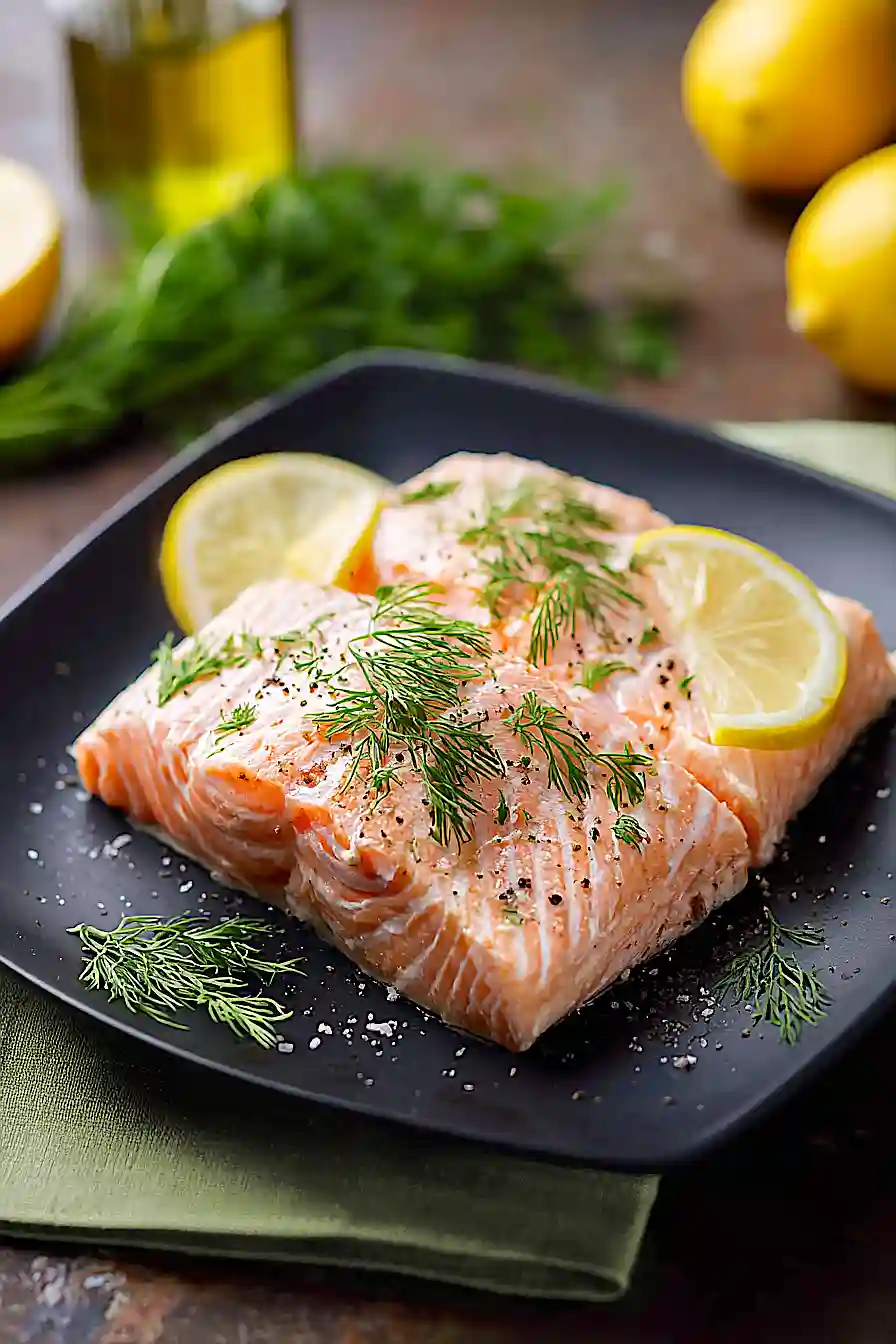
The salmon is perfectly cooked when it flakes easily with a fork and the flesh is opaque throughout but still moist—don’t overcook it.
Using a slotted spatula, carefully transfer the poached salmon to serving plates, skin-side down.
Discard the poaching liquid and aromatics.
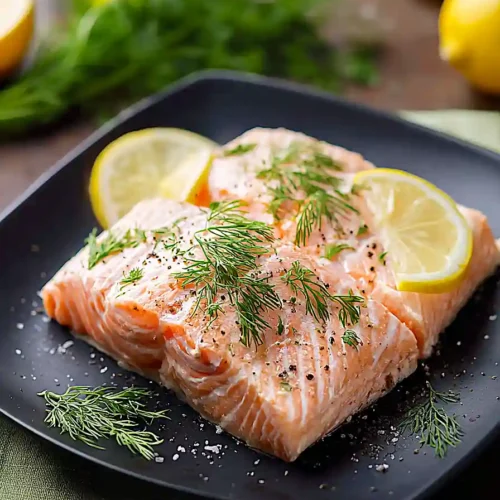
Finish each fillet with a generous grind of fresh black pepper and serve alongside fresh lemon slices for brightness.
I always let guests squeeze their own lemon juice to taste, so they can adjust the acidity to their preference.
Easy Poached Salmon
Ingredients
For the poaching liquid:
- 1/2 cup water
- 1 shallot (thinly sliced)
- 1 sprig fresh parsley
- 1/2 cup dry white wine (a crisp sauvignon blanc works well)
- several sprigs fresh dill (about 3-4 sprigs)
For the salmon:
- black pepper to taste (freshly ground preferred)
- salt to taste
- fresh lemon slices for serving
- 1.5 lb salmon fillets (skin-on, room temperature for even cooking)
Instructions
- In a large skillet or shallow pan, combine the water and dry white wine. Add the thinly sliced shallot, fresh dill sprigs, and parsley sprig. Bring the mixture to a gentle simmer over medium heat and let it bubble softly for 2-3 minutes to infuse the flavors into the liquid. This creates an aromatic base that will gently cook the salmon while imparting subtle herbaceous notes.
- Season the room-temperature salmon fillets generously with salt on both sides. Carefully place the fillets skin-side down into the simmering poaching liquid. The liquid should come about halfway up the sides of the salmon—if needed, add a splash more water. I like to keep the liquid at a gentle simmer rather than a rolling boil, as this prevents the salmon from cooking too quickly and becoming dry. Cover the pan with a lid or even just a piece of parchment paper to trap steam and ensure even, gentle cooking.
- Maintain a gentle simmer and cook for 5-10 minutes, depending on the thickness of your fillets. The salmon is perfectly cooked when it flakes easily with a fork and the flesh is opaque throughout but still moist—don't overcook it. Using a slotted spatula, carefully transfer the poached salmon to serving plates, skin-side down. Discard the poaching liquid and aromatics. Finish each fillet with a generous grind of fresh black pepper and serve alongside fresh lemon slices for brightness. I always let guests squeeze their own lemon juice to taste, so they can adjust the acidity to their preference.