I’ve been milling my own flour for about a year now, and I’m always looking for ways to use it that actually make a difference. Store-bought bagels are fine, but there’s something about making them at home with freshly milled flour that just hits different. Plus, I can pack them with protein and know exactly what’s going into them.
The thing about homemade bagels is they sound way harder than they actually are. Sure, there’s some waiting around for the dough to rise, but the hands-on time is pretty minimal. And when you use fresh flour, you get this depth of flavor that you just can’t buy at the grocery store.
These protein bagels have become my weekend staple. I’ll make a batch on Sunday, freeze half of them, and we’re set for quick breakfasts all week. The kids don’t even realize they’re eating something healthier than what comes from the bagel shop down the street.
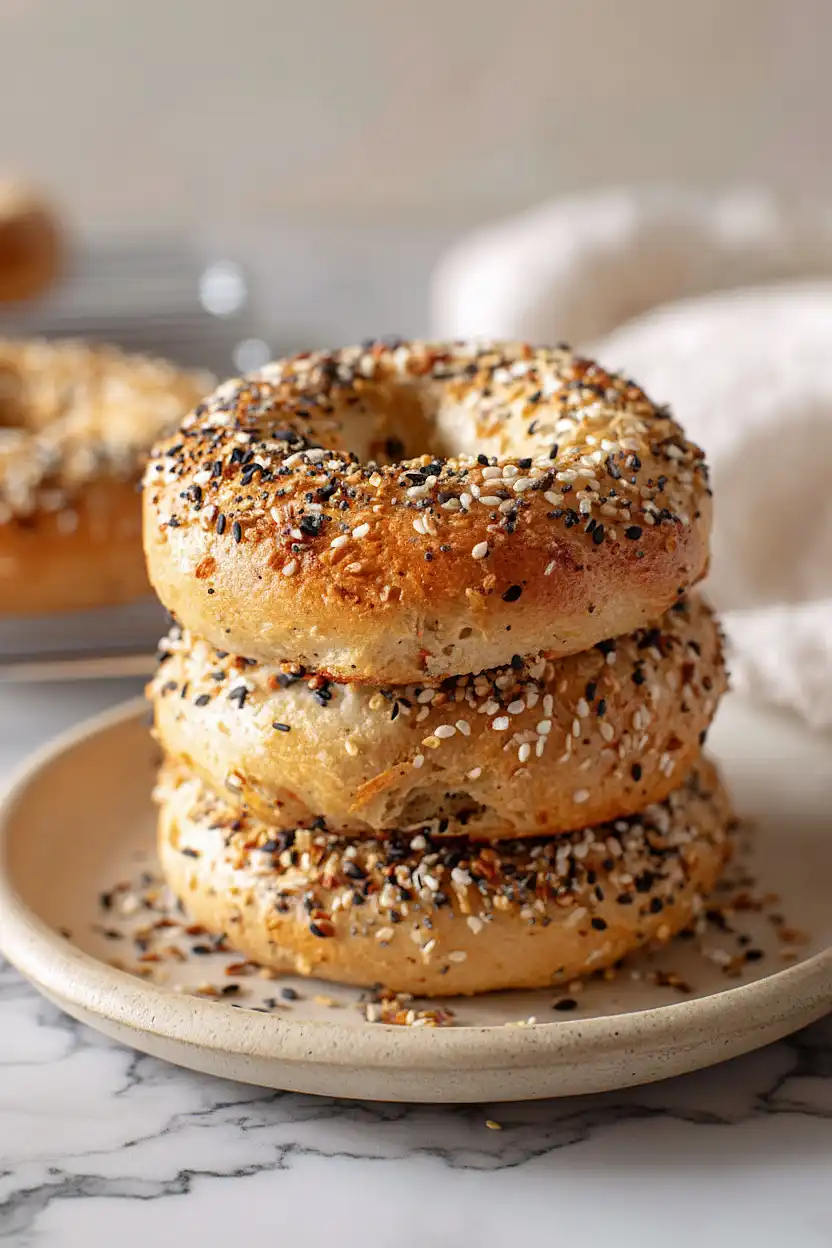
Why You’ll Love These Protein Bagels
- High-protein boost – The added vital wheat gluten gives these bagels extra protein to keep you fuller longer, making them perfect for a satisfying breakfast or post-workout snack.
- Fresh milled flour goodness – Using fresh milled flour means you’re getting more nutrients and a better flavor than store-bought bagels, and you know exactly what’s going into your food.
- Simple ingredients – No weird additives or preservatives here—just wholesome ingredients you can feel good about eating.
- Ready in about an hour – While homemade bagels might sound intimidating, these come together faster than you’d think, and they’re way fresher than anything you’d buy at the store.
- Naturally sweetened – The honey adds a touch of natural sweetness without any refined sugar, making these a healthier option for your morning routine.
What Kind of Flour Should I Use?
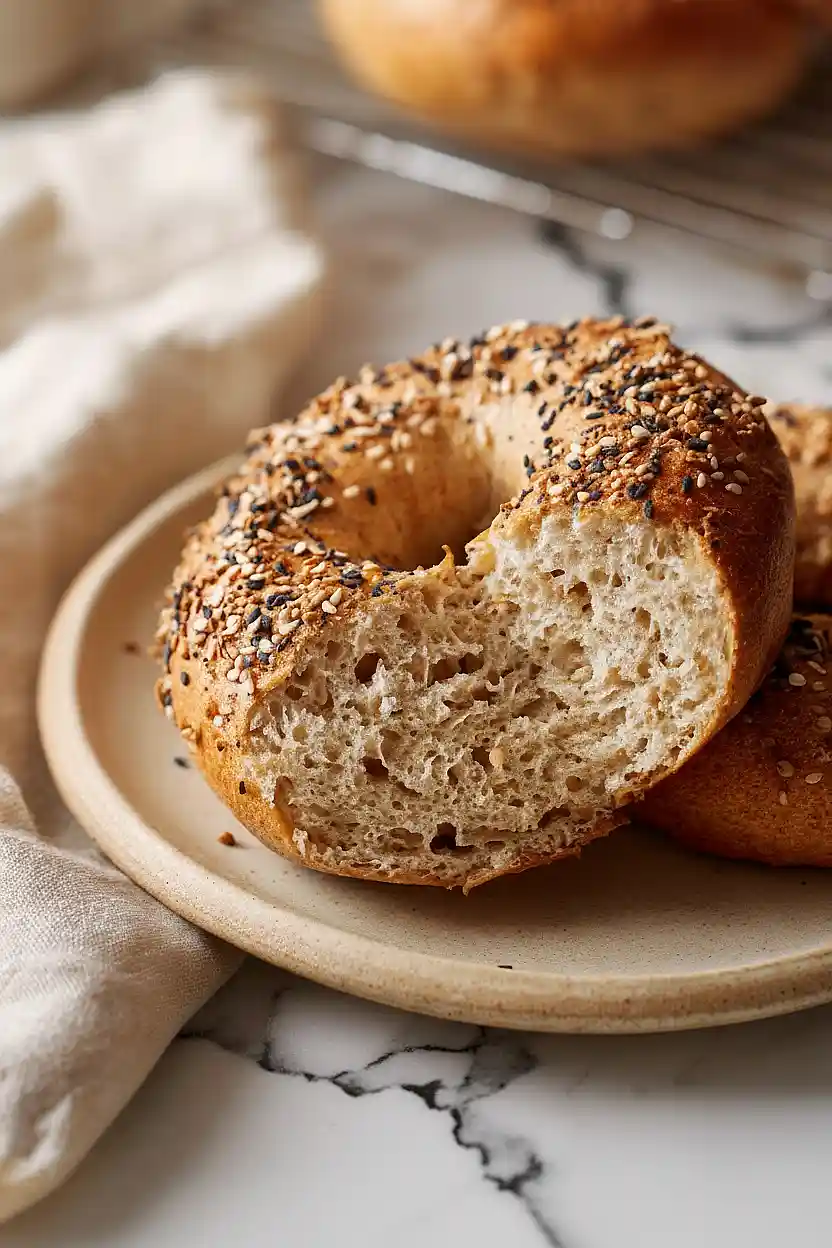
Since this recipe calls for fresh milled flour, you’ll want to mill your own wheat berries at home using a grain mill. Hard white wheat berries are a great choice for bagels because they give you a lighter color and milder flavor, while hard red wheat berries will create a heartier, more traditional whole wheat taste. If you don’t have a grain mill at home, you can substitute with store-bought whole wheat flour, though you might need to adjust the amount slightly since fresh milled flour absorbs liquid differently than pre-ground flour. Just keep in mind that fresh milled flour gives you the best nutrition and flavor since the oils and nutrients haven’t had time to oxidize.
Options for Substitutions
Here are some swaps you can make if you’re missing an ingredient or two:
- Honey: You can swap honey for maple syrup, agave nectar, or even regular sugar (use about 1/3 cup). Keep in mind that sugar won’t add the same moisture, so your bagels might be slightly less tender.
- Olive oil: Any neutral oil works here – try vegetable oil, avocado oil, or melted coconut oil. You could even use melted butter for a richer flavor.
- Vital wheat gluten: This ingredient helps give bagels their chewy texture and boosts protein, but if you don’t have it, you can leave it out. Your bagels will be a bit softer and less chewy, but still tasty.
- Sunflower lecithin: This is totally optional and can be skipped without major changes to the recipe. It helps with texture and shelf life, but your bagels will turn out fine without it.
- Instant yeast: If you only have active dry yeast, use the same amount but dissolve it in the warm water first and let it sit for 5-10 minutes before mixing with other ingredients.
- Fresh milled flour: Regular all-purpose flour or bread flour works perfectly fine. Bread flour will actually give you chewier bagels due to its higher protein content.
Watch Out for These Mistakes While Baking
The biggest mistake when making bagels is skipping the boiling step or not boiling them long enough, which is what gives bagels their signature chewy crust – make sure your honey water is at a rolling boil before adding the bagels.
Fresh milled flour absorbs liquid differently than store-bought flour, so if your dough feels too sticky or too dry, adjust by adding flour or water one tablespoon at a time until you get a firm, workable dough.
Don’t let your bagels over-proof during that 10-15 minute rest after shaping, as puffy bagels will deflate when they hit the boiling water and end up dense instead of chewy.
Finally, resist the urge to open the oven door during baking, since the temperature drop can prevent your bagels from developing that golden-brown exterior you’re looking for.
What to Serve With Protein Bagels?
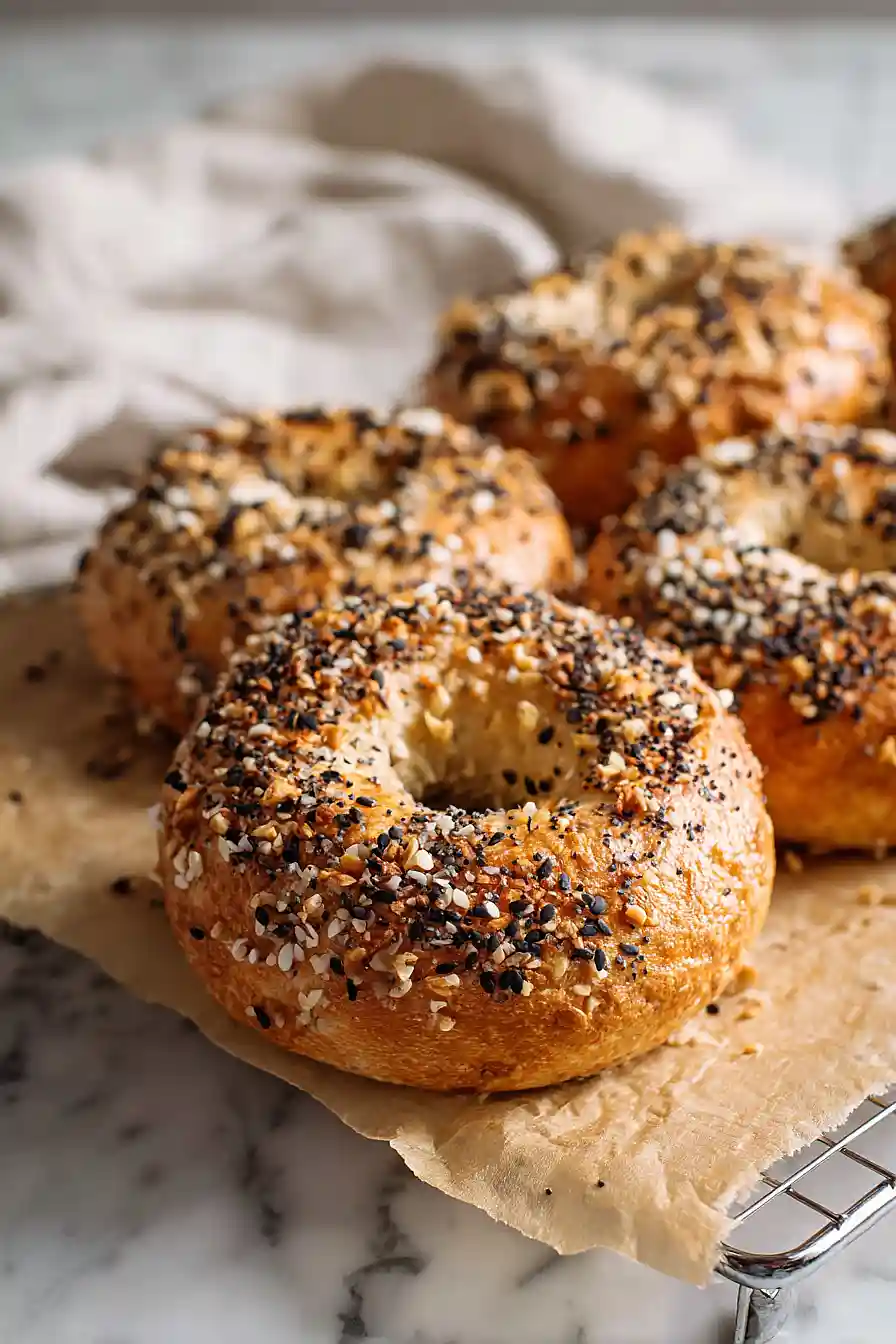
These protein bagels are perfect for breakfast or lunch and pair well with just about any spread you love. I like topping mine with cream cheese and smoked salmon for a classic bagel shop experience, or going simple with butter and a fried egg for a filling breakfast sandwich. If you’re meal prepping, these bagels work great with deli turkey, lettuce, and tomato for an easy lunch option. You can also go the sweet route with peanut butter and sliced banana, or cream cheese with fresh berries and a drizzle of honey.
Storage Instructions
Store: Keep your protein bagels in an airtight container or zip-top bag at room temperature for up to 2 days. If you want them to last longer, store them in the fridge for up to a week. They might firm up a bit in the fridge, but they’re still great toasted!
Freeze: Bagels are perfect for freezing! Slice them in half before freezing so you can pop them straight into the toaster. Store them in a freezer bag with as much air pressed out as possible, and they’ll keep for up to 3 months.
Toast: Whether fresh, refrigerated, or frozen, these bagels taste amazing when toasted. You can toast them straight from the freezer without thawing. Just add an extra minute or two to your usual toasting time and they’ll come out perfectly warm and crispy on the outside.
| Preparation Time | 40-50 minutes |
| Cooking Time | 20-30 minutes |
| Total Time | 60-80 minutes |
| Level of Difficulty | Medium |
| Servings | 8 bagels |
Estimated Nutrition
Estimated nutrition for the whole recipe (without optional ingredients):
- Calories: 2300-2500
- Protein: 55-65 g
- Fat: 45-55 g
- Carbohydrates: 450-480 g
Ingredients
For the dough:
- 1.75 cups water (lukewarm, ideally between 100°F-110°F)
- 2 tbsp olive oil
- 1/4 cup honey
- 1.75 tsp salt
- 5 cups flour (I always use King Arthur all-purpose flour)
- 2.25 tbsp instant yeast (I use SAF-Instant red label for a better rise)
- 2 tsp vital wheat gluten (helps create that classic chewy bagel texture)
- 1 tsp sunflower lecithin
- 1 pinch granulated sugar
- 1 egg
- 1 tsp diastatic malt powder
For the boiling water:
- 1/4 cup honey
Step 1: Prepare the Bagel Dough
- 1.75 cups water
- 2 tbsp olive oil
- 1/4 cup honey
- 1.75 tsp salt
- 5 cups flour
- 2.25 tbsp instant yeast
- 2 tsp vital wheat gluten
- 1 tsp sunflower lecithin
Combine lukewarm water, olive oil, 1/4 cup honey, and salt in a large bowl, stirring gently to combine.
Add the flour gradually while stirring, then incorporate the vital wheat gluten, sunflower lecithin, and instant yeast, mixing until a stiff dough forms.
Knead the dough by hand for about 8-10 minutes until it becomes smooth and elastic—the dough should be firmer than bread dough.
I find that using SAF-Instant yeast specifically gives a noticeably better rise than other brands, so it’s worth seeking out if you can.
Step 2: First Rise
Place the kneaded dough in a lightly oiled bowl, cover with a damp towel, and let it rise at room temperature until doubled in volume, approximately 1.5-2 hours.
Alternatively, if you have a proofing box or warm spot around 150°F, the rise will be faster.
The dough is ready when it springs back slowly when poked with a finger.
Step 3: Shape the Bagels
Once the dough has doubled, turn it out onto a lightly floured surface and divide it into 8 equal pieces using a bench scraper or knife.
Shape each piece into a smooth ball by gently rolling it under your palm.
To form the bagel hole, poke your thumb through the center of each ball and gently stretch it into a ring shape, aiming for a hole about 1.5 inches in diameter—the hole shrinks during boiling and baking, so don’t make it too small.
I like to make the rings slightly thicker than store-bought bagels because they’ll become more tender after boiling.
Step 4: Second Rise and Prepare for Boiling
- 1/4 cup honey
- 1 tsp diastatic malt powder
Arrange the shaped bagels on a parchment-lined baking sheet and let them rise for 10-15 minutes at room temperature—they should puff slightly but not double.
While they rise, fill a large pot with water and bring it to a boil, then stir in 1/4 cup honey and the diastatic malt powder until dissolved.
Preheat your oven to 400°F.
Line another baking sheet with parchment paper for the boiled bagels.
Step 5: Boil the Bagels
Working in batches to avoid overcrowding, carefully lower the bagels into the boiling honey-water mixture using a slotted spoon.
Boil for 2 minutes per side, then remove with the slotted spoon and transfer to the prepared baking sheet.
Let them drip briefly before arranging them on the sheet—the diastatic malt powder in the boiling water gives bagels their characteristic deep golden-brown exterior.
Step 6: Finish and Bake
- 1 egg
If desired, brush the boiled bagels lightly with beaten egg and add your choice of toppings (sesame seeds, everything seasoning, poppy seeds, etc.).
Place the baking sheet in the preheated 400°F oven and bake for 18-20 minutes until the bagels are deep golden brown and firm to the touch.
The bagels should sound hollow when tapped on the bottom when fully baked.
Fresh Milled Flour Protein Bagels
Ingredients
For the dough
- 1.75 cups water (lukewarm, ideally between 100°F-110°F)
- 2 tbsp olive oil
- 1/4 cup honey
- 1.75 tsp salt
- 5 cups flour (I always use King Arthur all-purpose flour)
- 2.25 tbsp instant yeast (I use SAF-Instant red label for a better rise)
- 2 tsp vital wheat gluten (helps create that classic chewy bagel texture)
- 1 tsp sunflower lecithin
- 1 pinch granulated sugar
- 1 egg
- 1 tsp diastatic malt powder
For the boiling water
- 1/4 cup honey
Instructions
- Combine lukewarm water, olive oil, 1/4 cup honey, and salt in a large bowl, stirring gently to combine. Add the flour gradually while stirring, then incorporate the vital wheat gluten, sunflower lecithin, and instant yeast, mixing until a stiff dough forms. Knead the dough by hand for about 8-10 minutes until it becomes smooth and elastic—the dough should be firmer than bread dough. I find that using SAF-Instant yeast specifically gives a noticeably better rise than other brands, so it's worth seeking out if you can.
- Place the kneaded dough in a lightly oiled bowl, cover with a damp towel, and let it rise at room temperature until doubled in volume, approximately 1.5-2 hours. Alternatively, if you have a proofing box or warm spot around 150°F, the rise will be faster. The dough is ready when it springs back slowly when poked with a finger.
- Once the dough has doubled, turn it out onto a lightly floured surface and divide it into 8 equal pieces using a bench scraper or knife. Shape each piece into a smooth ball by gently rolling it under your palm. To form the bagel hole, poke your thumb through the center of each ball and gently stretch it into a ring shape, aiming for a hole about 1.5 inches in diameter—the hole shrinks during boiling and baking, so don't make it too small. I like to make the rings slightly thicker than store-bought bagels because they'll become more tender after boiling.
- Arrange the shaped bagels on a parchment-lined baking sheet and let them rise for 10-15 minutes at room temperature—they should puff slightly but not double. While they rise, fill a large pot with water and bring it to a boil, then stir in 1/4 cup honey and the diastatic malt powder until dissolved. Preheat your oven to 400°F. Line another baking sheet with parchment paper for the boiled bagels.
- Working in batches to avoid overcrowding, carefully lower the bagels into the boiling honey-water mixture using a slotted spoon. Boil for 2 minutes per side, then remove with the slotted spoon and transfer to the prepared baking sheet. Let them drip briefly before arranging them on the sheet—the diastatic malt powder in the boiling water gives bagels their characteristic deep golden-brown exterior.
- If desired, brush the boiled bagels lightly with beaten egg and add your choice of toppings (sesame seeds, everything seasoning, poppy seeds, etc.). Place the baking sheet in the preheated 400°F oven and bake for 18-20 minutes until the bagels are deep golden brown and firm to the touch. The bagels should sound hollow when tapped on the bottom when fully baked.