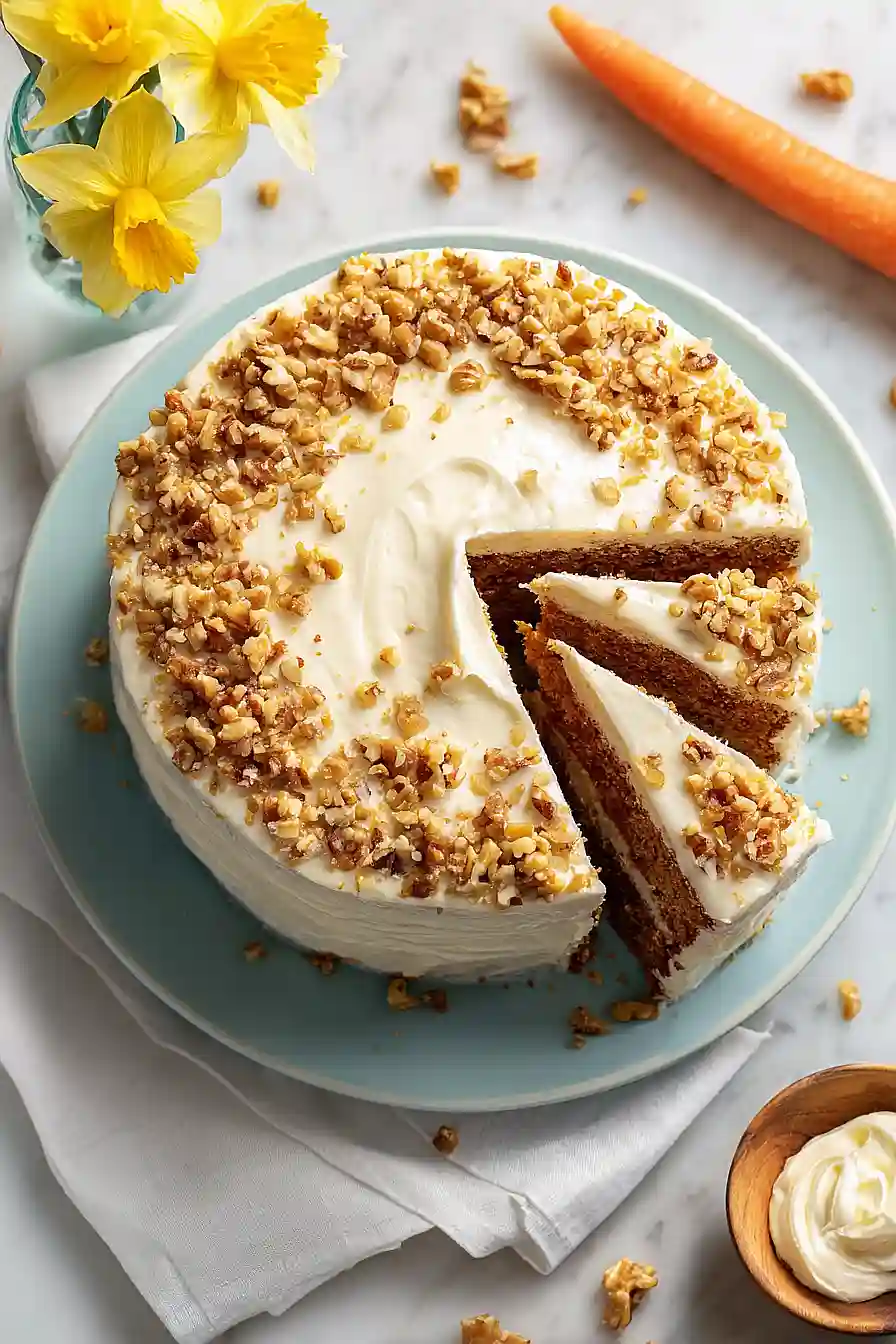
I used to think protein and carrot cake were two things that could never go together. Like, how do you make something sweet and indulgent actually good for you without it tasting like cardboard?
Turns out, you just need the right ingredients. By swapping regular flour for almond flour and loading up on eggs and Greek yogurt, you can pack nearly 15 grams of protein into each slice without sacrificing that moist, spiced flavor we all love. No weird protein powder taste, no dry crumbly texture—just real carrot cake that happens to fuel your body better.
Why You’ll Love This Carrot Cake
- High-protein and nutritious – Made with almond flour, eggs, and yogurt, this carrot cake packs way more protein than traditional versions, making it a smarter choice for your health goals.
- Naturally sweetened – Using honey and pineapple instead of refined sugar means you get all the sweetness without the guilt.
- Gluten-free friendly – The almond and tapioca flour combo makes this cake perfect for anyone avoiding gluten, without sacrificing that moist, tender texture you expect from carrot cake.
- Loaded with good stuff – Between the carrots, walnuts, and raisins, you’re getting real ingredients that add both flavor and nutrition to every bite.
- Perfect for any occasion – Whether it’s a birthday celebration or just a weekend treat, this cake is fancy enough for special moments but easy enough to make any time.
What Kind of Carrots Should I Use?
Fresh carrots are definitely the way to go for this recipe – pre-shredded carrots from a bag tend to be dry and won’t give you the same moist texture. Regular orange carrots work perfectly fine, though you could also use rainbow carrots if you want to mix things up a bit. Make sure to peel your carrots before grating them, and aim for a medium-fine shred so they distribute evenly throughout the cake. If your carrots seem particularly watery after shredding, give them a gentle squeeze with a paper towel, but don’t go overboard since that moisture actually helps keep your cake tender.
Options for Substitutions
This healthy carrot cake is pretty adaptable, so here are some swaps you can make:
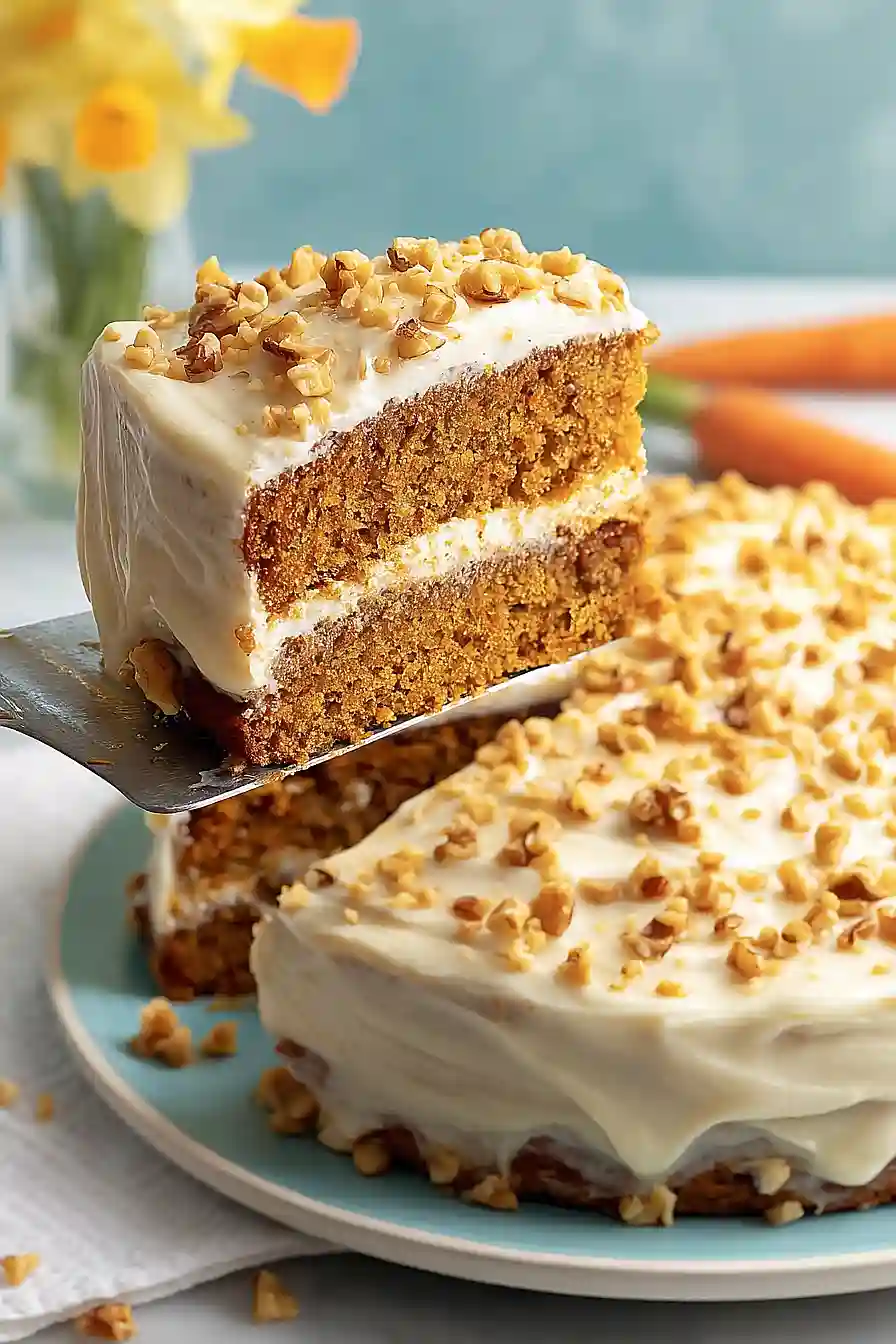
- Almond flour: You can use other nut flours like hazelnut or cashew flour for a similar texture. If you need a nut-free option, try sunflower seed flour, but note that it may turn the cake slightly green due to a reaction with baking powder – it’s totally safe to eat though!
- Tapioca flour: Arrowroot powder works as a 1:1 swap here. You can also use cornstarch in the same amount, though the texture might be slightly different.
- Butter: Coconut oil is a great dairy-free alternative – just use the same amount in its melted form. You can also try Greek yogurt for half the butter to boost the protein even more.
- Honey: Maple syrup or agave nectar work well as substitutes. If you want less sweetness, start with 2/3 cup and taste the batter before adding more.
- Yogurt: Greek yogurt, sour cream, or even mashed banana (about 1/2 cup) can replace regular yogurt. Greek yogurt will add extra protein, which fits the healthy theme.
- Walnuts: Pecans are the classic swap here, but you can also use chopped almonds or leave them out entirely if you have nut allergies.
- Raisins: Try dried cranberries, chopped dates, or even chocolate chips if you want something different. You can skip them altogether if dried fruit isn’t your thing.
- Pineapple: Crushed pineapple adds moisture, but you can use unsweetened applesauce or mashed banana instead. Use the same amount and the cake will still turn out moist.
Watch Out for These Mistakes While Baking
The biggest mistake with almond flour cakes is overmixing the batter, which can make your cake dense and gummy instead of light and moist – mix just until the ingredients are combined and no streaks of flour remain.
Since almond flour behaves differently than regular flour, don’t skip the tapioca flour as it helps bind everything together and prevents a crumbly texture that falls apart when you try to frost it.
Another common error is not squeezing excess moisture from the grated carrots, which can lead to a soggy cake that doesn’t bake through properly, so give them a good squeeze in a clean kitchen towel before adding them to the batter.
To ensure even baking, check your cake at 25 minutes with a toothpick inserted in the center – it should come out with just a few moist crumbs, not wet batter, and make sure the cakes are completely cool before frosting or the cream cheese frosting will melt right off.
What to Serve With Carrot Cake?
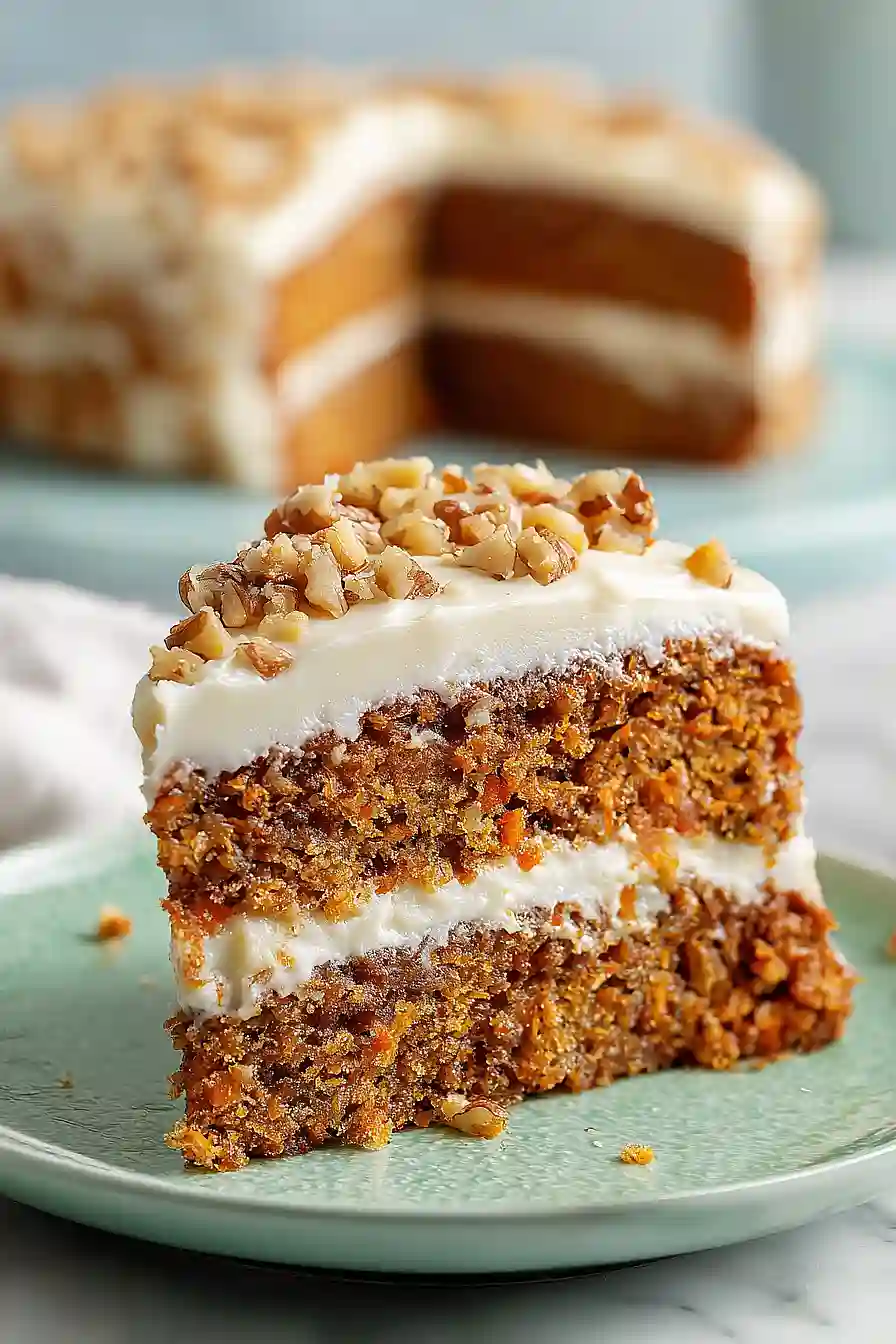
Carrot cake is pretty filling on its own thanks to all that protein from the almond flour and eggs, so I usually just serve it with a hot cup of coffee or tea for an afternoon snack. If you’re making it for a special occasion or brunch, it pairs really well with fresh fruit like berries or sliced oranges to balance out the sweetness. Some people like to add a scoop of vanilla ice cream on the side when serving it as dessert, which melts into the cream cheese frosting in the best way. You could also serve smaller slices alongside a cheese board for a fun dessert spread at parties.
Storage Instructions
Store: This carrot cake stays moist and delicious in the fridge for up to 5 days. Keep it in an airtight container or cover it well with plastic wrap. The cream cheese frosting needs to stay cold, so don’t leave it out on the counter for more than a couple hours.
Freeze: You can freeze this cake for up to 3 months, either frosted or unfrosted. I like to freeze individual slices wrapped in plastic wrap and then placed in a freezer bag so I can grab just one piece when I want it. If you’re freezing the whole cake, wrap it tightly and add the frosting after thawing.
Thaw: Let frozen slices sit at room temperature for about 30 minutes, or thaw them in the fridge overnight for the best texture. The cake will taste just as good as the day you made it!
| Preparation Time | 30-40 minutes |
| Cooking Time | 25-30 minutes |
| Total Time | 55-70 minutes |
| Level of Difficulty | Medium |
| Servings | 12 slices |
Estimated Nutrition
Estimated nutrition for the whole recipe (without optional ingredients):
- Calories: 5400-6000
- Protein: 70-90 g
- Fat: 370-410 g
- Carbohydrates: 480-530 g
Ingredients
For the cake:
- 3 1/4 cups almond flour (I always use Blue Diamond for the finest grind)
- 1/2 cup tapioca flour
- 1 tbsp baking powder
- 2 tsp cinnamon
- 1/4 tsp nutmeg
- 1/4 tsp ground ginger
- 1/2 tsp salt
- 1/2 cup butter (I like Kerrygold unsalted butter for this)
- 1 cup pineapple (drained and crushed into 1/4-inch bits)
- 1 cup honey
- 4 eggs (room temperature, about 70°F)
- 1/2 cup yogurt
- 1/2 tbsp vanilla essence
- 3 cups carrots (finely grated for better moisture and texture)
- 1/2 cup raisins
- 1 1/4 cups walnuts (roughly chopped into 1/2-inch pieces)
For the assembly and topping:
- 2 recipes cream cheese frosting (made with Philadelphia block cheese for stability)
- 1/2 cup walnuts (kept in larger halves for a nice crunch)
Step 1: Prepare Mise en Place and Preheat
- 2 cake pans
- 3 cups carrots, finely grated
- 1 cup pineapple, drained and crushed
- 1 1/4 cups walnuts, roughly chopped
- 1/2 cup walnuts, kept in larger halves
Preheat your oven to 350°F and grease two 9-inch round cake pans or similar size with butter or cooking spray.
While the oven heats, grate the carrots finely using a box grater or food processor—this creates better moisture distribution in the cake.
Drain the crushed pineapple thoroughly in a fine-mesh strainer, pressing gently to remove excess liquid, as too much moisture will affect the cake’s texture.
Roughly chop 1 1/4 cups walnuts into 1/2-inch pieces and keep the remaining 1/2 cup walnut halves separate for topping.
Step 2: Build the Dry Ingredient Mixture
- 3 1/4 cups almond flour
- 1/2 cup tapioca flour
- 1 tbsp baking powder
- 2 tsp cinnamon
- 1/4 tsp nutmeg
- 1/4 tsp ground ginger
- 1/2 tsp salt
In a medium bowl, whisk together the almond flour, tapioca flour, baking powder, cinnamon, nutmeg, ginger, and salt.
Whisking the dry ingredients aerates them and ensures the leavening agents are evenly distributed, which creates a more even rise.
Set this mixture aside—I like to use a fine-mesh sieve to break up any clumps in the almond flour before mixing, as this prevents dense pockets in the final cake.
Step 3: Cream Butter and Build the Wet Base
- 1/2 cup butter, softened
- 1 cup pineapple, drained and crushed
- 1 cup honey
- 4 eggs, room temperature
- 1/2 cup yogurt
- 1/2 tbsp vanilla essence
In a large bowl, beat the softened butter for 2-3 minutes until light and fluffy—this incorporates air and creates a lighter crumb structure.
Add the drained pineapple and mix until combined, allowing the fruit’s natural sweetness and moisture to distribute evenly.
Then add the honey, followed by the room-temperature eggs one at a time, beating well after each addition to create an emulsion.
Finally, mix in the yogurt and vanilla essence until fully incorporated.
This wet mixture forms the foundation for binding all components together.
Step 4: Combine Dry and Wet Ingredients, Then Add Mix-ins
- wet ingredient mixture from Step 3
- dry ingredient mixture from Step 2
- 3 cups carrots, finely grated
- 1/2 cup raisins
- 1 1/4 cups walnuts, roughly chopped
Pour the wet ingredient mixture from Step 3 into the dry mixture from Step 2, folding gently with a spatula until just combined—don’t overmix, as this can develop gluten in the almond flour and make the cake dense.
Once the batter is just blended, fold in the finely grated carrots, raisins, and chopped walnuts until evenly distributed.
I find it helps to fold in the carrots and mix-ins in two additions rather than all at once, ensuring they’re well incorporated without overworking the batter.
Step 5: Bake the Cake Layers
- batter from Step 4
Divide the batter evenly between the two prepared pans, using an offset spatula or the back of a spoon to smooth the tops.
Bake at 350°F for 25-30 minutes, until a toothpick inserted in the center comes out clean with just a few moist crumbs—don’t overbake, as almond flour cakes can dry out quickly.
The cakes should spring back lightly when touched in the center and have a light golden color on top.
Step 6: Cool and Prepare for Frosting
- 2 recipes cream cheese frosting
Let the cakes cool in the pans for 10 minutes, then turn them out onto a wire rack to cool completely—this prevents condensation from making the bottoms soggy.
While the cakes cool, prepare the two recipes of cream cheese frosting according to your preferred recipe, using Philadelphia block cream cheese for the best stability and structure.
Once the cakes are completely cooled, place one layer on a serving plate and spread a thick layer of frosting on top.
Step 7: Assemble and Garnish the Cake
- 1/2 cup walnuts, kept in larger halves
Place the second cake layer on top of the frosted base, pressing gently to secure it.
Frost the top and sides of the assembled cake with the remaining frosting, using an offset spatula or knife to create an even finish.
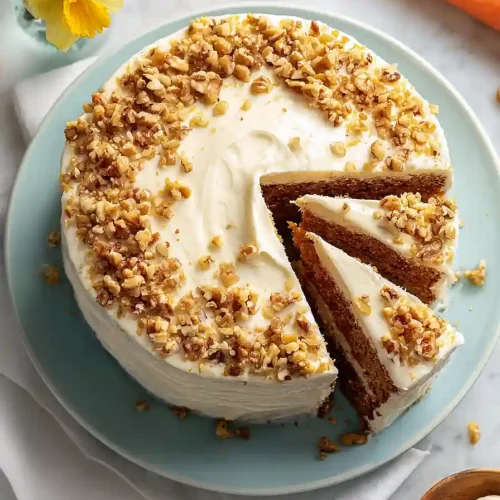
Top the cake with the reserved walnut halves, arranging them in a decorative pattern or pressing them into the frosting around the top edge for visual appeal and that satisfying crunch.
Gluten-Free Carrot Cake High Protein
Ingredients
For the cake::
- 3 1/4 cups almond flour (I always use Blue Diamond for the finest grind)
- 1/2 cup tapioca flour
- 1 tbsp baking powder
- 2 tsp cinnamon
- 1/4 tsp nutmeg
- 1/4 tsp ground ginger
- 1/2 tsp salt
- 1/2 cup butter (I like Kerrygold unsalted butter for this)
- 1 cup pineapple (drained and crushed into 1/4-inch bits)
- 1 cup honey
- 4 eggs (room temperature, about 70°F)
- 1/2 cup yogurt
- 1/2 tbsp vanilla essence
- 3 cups carrots (finely grated for better moisture and texture)
- 1/2 cup raisins
- 1 1/4 cups walnuts (roughly chopped into 1/2-inch pieces)
For the assembly and topping::
- 2 recipes cream cheese frosting (made with Philadelphia block cheese for stability)
- 1/2 cup walnuts (kept in larger halves for a nice crunch)
Instructions
- Preheat your oven to 350°F and grease two 9-inch round cake pans or similar size with butter or cooking spray. While the oven heats, grate the carrots finely using a box grater or food processor—this creates better moisture distribution in the cake. Drain the crushed pineapple thoroughly in a fine-mesh strainer, pressing gently to remove excess liquid, as too much moisture will affect the cake's texture. Roughly chop 1 1/4 cups walnuts into 1/2-inch pieces and keep the remaining 1/2 cup walnut halves separate for topping.
- In a medium bowl, whisk together the almond flour, tapioca flour, baking powder, cinnamon, nutmeg, ginger, and salt. Whisking the dry ingredients aerates them and ensures the leavening agents are evenly distributed, which creates a more even rise. Set this mixture aside—I like to use a fine-mesh sieve to break up any clumps in the almond flour before mixing, as this prevents dense pockets in the final cake.
- In a large bowl, beat the softened butter for 2-3 minutes until light and fluffy—this incorporates air and creates a lighter crumb structure. Add the drained pineapple and mix until combined, allowing the fruit's natural sweetness and moisture to distribute evenly. Then add the honey, followed by the room-temperature eggs one at a time, beating well after each addition to create an emulsion. Finally, mix in the yogurt and vanilla essence until fully incorporated. This wet mixture forms the foundation for binding all components together.
- Pour the wet ingredient mixture from Step 3 into the dry mixture from Step 2, folding gently with a spatula until just combined—don't overmix, as this can develop gluten in the almond flour and make the cake dense. Once the batter is just blended, fold in the finely grated carrots, raisins, and chopped walnuts until evenly distributed. I find it helps to fold in the carrots and mix-ins in two additions rather than all at once, ensuring they're well incorporated without overworking the batter.
- Divide the batter evenly between the two prepared pans, using an offset spatula or the back of a spoon to smooth the tops. Bake at 350°F for 25-30 minutes, until a toothpick inserted in the center comes out clean with just a few moist crumbs—don't overbake, as almond flour cakes can dry out quickly. The cakes should spring back lightly when touched in the center and have a light golden color on top.
- Let the cakes cool in the pans for 10 minutes, then turn them out onto a wire rack to cool completely—this prevents condensation from making the bottoms soggy. While the cakes cool, prepare the two recipes of cream cheese frosting according to your preferred recipe, using Philadelphia block cream cheese for the best stability and structure. Once the cakes are completely cooled, place one layer on a serving plate and spread a thick layer of frosting on top.
- Place the second cake layer on top of the frosted base, pressing gently to secure it. Frost the top and sides of the assembled cake with the remaining frosting, using an offset spatula or knife to create an even finish. Top the cake with the reserved walnut halves, arranging them in a decorative pattern or pressing them into the frosting around the top edge for visual appeal and that satisfying crunch.