If you ask me, Greek salad is one of those recipes that never goes out of style.
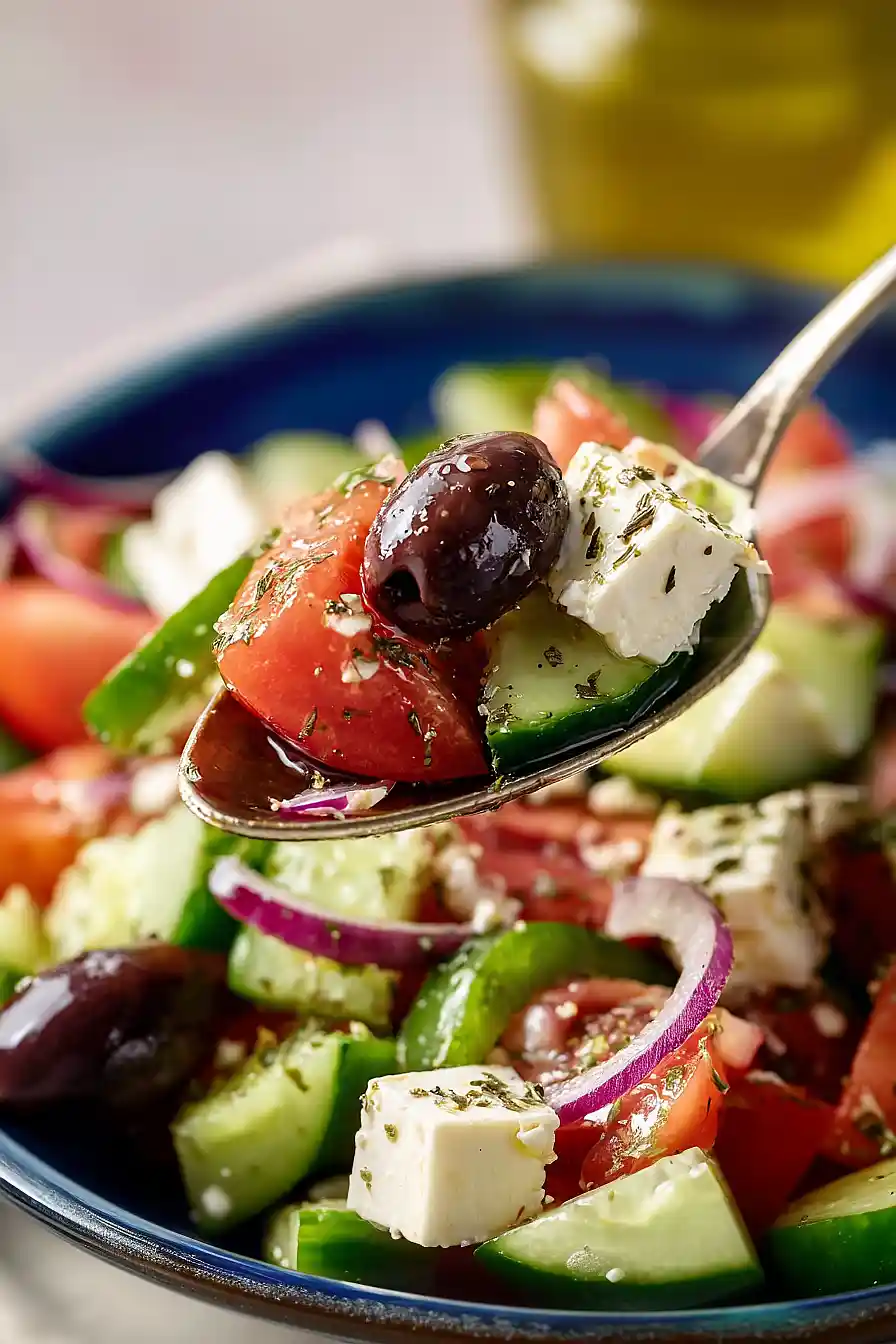
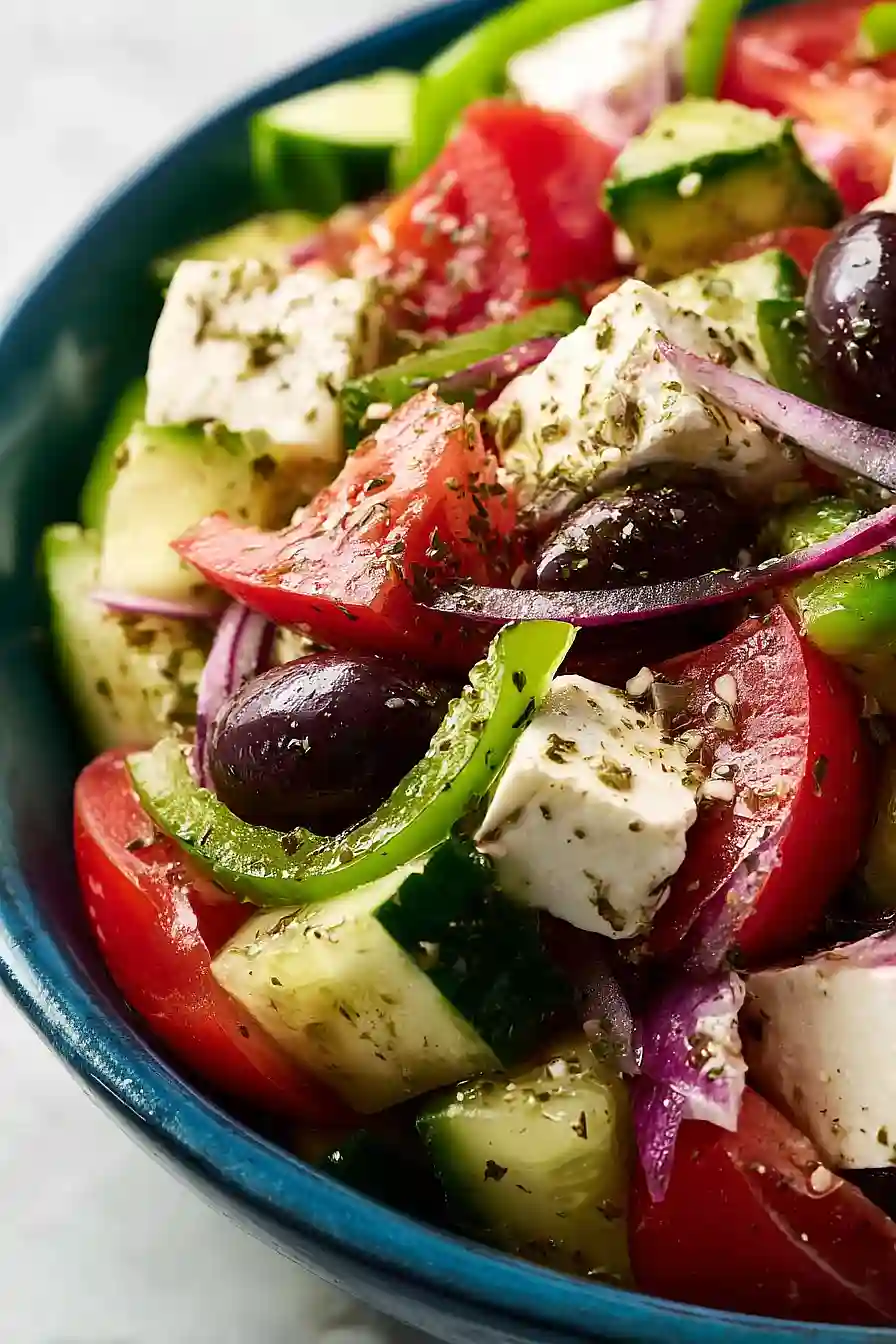
This classic Mediterranean dish brings together crisp cucumbers, juicy tomatoes, and briny Kalamata olives in every bite. Chunks of creamy feta cheese and rings of red onion add layers of flavor that keep things interesting.
It’s all tossed with a simple dressing made from olive oil, red wine vinegar, and dried oregano that ties everything together. Green bell peppers add a fresh crunch, while garlic and lemon juice round out the flavors.
It’s an easy side dish that works for weeknight dinners or backyard gatherings, perfect for when you want something fresh and satisfying.

Why You’ll Love This Greek Salad
- Ready in minutes – This salad comes together in just 10-15 minutes with simple chopping and tossing, making it perfect for busy weeknights or last-minute gatherings.
- Fresh, crisp ingredients – The combination of juicy tomatoes, crunchy cucumbers, and creamy feta creates a refreshing side dish that pairs well with almost anything.
- No cooking required – Just chop your vegetables, whisk together the dressing, and toss everything together – no stove or oven needed.
- Healthy and light – Packed with fresh vegetables and a simple olive oil dressing, this salad is naturally nutritious without feeling heavy.
- Great for meal prep – The flavors actually get better as it sits, so you can make it ahead and enjoy it throughout the week.
What Kind of Feta Should I Use?
For a Greek salad, you’ll want to grab a block of feta cheese rather than the pre-crumbled stuff. Block feta has a much better texture and flavor since it’s stored in brine, which keeps it moist and tangy. Greek feta is the traditional choice and it’s made from sheep’s milk or a blend of sheep and goat’s milk, giving it that classic salty, creamy taste. If you can find feta labeled “Greek” or “imported from Greece” at your store, that’s your best bet. The pre-crumbled feta you see in tubs tends to be drier and less flavorful because it’s often made from cow’s milk and lacks that briny punch you want in an authentic Greek salad.
Options for Substitutions
This classic Greek salad is pretty straightforward, but here are some swaps you can make:
- Lebanese/Persian cucumbers: If you can’t find these smaller cucumbers, regular cucumbers work fine. Just remove the seeds first since they tend to be watery and can make your salad soggy.
- Feta block: A block of feta is best here since it holds its shape nicely, but crumbled feta will work if that’s what you have. Just be gentle when tossing the salad so it doesn’t turn mushy.
- Kalamata olives: Other black olives can be used, but kalamata olives really give this salad its authentic Greek flavor. If you must substitute, try using green olives or a mix of both.
- Red wine vinegar: White wine vinegar or even lemon juice can step in if needed. Start with 2 tablespoons of lemon juice and add more to taste.
- Green bell pepper: Red or yellow bell peppers work just as well and actually add a bit more sweetness to the salad.
- Red onion: White or yellow onion can substitute, though they’re a bit sharper. If using either, soak the sliced onion in cold water for 10 minutes first to mellow the bite.
Watch Out for These Mistakes While Cooking
The biggest mistake people make with Greek salad is adding the dressing too early, which causes the vegetables to release water and makes everything watery and diluted – always dress your salad right before serving to keep it crisp and fresh. Another common error is cutting the vegetables too small, so aim for chunky, bite-sized pieces (about 1-inch) that give you a satisfying crunch in every forkful. Don’t skip the 20-minute resting time for the dressing either, as this allows the garlic and oregano to infuse into the oil and vinegar, creating much better flavor. Finally, resist the urge to crumble the feta – keeping it in cubes means it stays creamy inside while maintaining its shape, rather than turning into a mushy coating on your vegetables.
What to Serve With Greek Salad?
Greek salad is perfect alongside grilled chicken, lamb kebabs, or any Mediterranean-style protein you’re cooking up. I love serving it with warm pita bread and hummus for a light lunch, or pairing it with grilled fish like salmon or sea bass for dinner. If you want to make it more filling, add some cooked quinoa or orzo pasta right into the salad, or serve it next to spanakopita (Greek spinach pie) for a totally satisfying meal. For a casual weeknight dinner, this salad goes great with rotisserie chicken from the store – just shred some meat on top and you’re good to go.
Storage Instructions
Store: Greek salad is best enjoyed fresh, but you can prep it ahead by keeping the dressing separate from the vegetables. Store the chopped veggies and feta in one container and the dressing in another, both in the fridge for up to 2 days. Toss everything together right before serving so it stays crisp.
Leftovers: If you’ve already dressed the salad, it’ll keep in the fridge for about a day, though the vegetables will release some water and get a bit softer. The flavors actually meld together nicely overnight, so it still tastes great even if the texture isn’t quite as crisp.
| Preparation Time | 10-15 minutes |
| Cooking Time | 0-0 minutes |
| Total Time | 10-15 minutes |
| Level of Difficulty | Easy |
| Servings | 4 servings |
Estimated Nutrition
Estimated nutrition for the whole recipe (without optional ingredients):
- Calories: 950-1100
- Protein: 22-28 g
- Fat: 85-95 g
- Carbohydrates: 26-34 g
Ingredients
For the salad:
- 3 large ripe tomatoes (seeded and cut into wedges)
- 2 Persian cucumbers (sliced)
- 1/2 small red onion (thinly sliced into rings)
- 1 green bell pepper (sliced into strips)
- 7 oz feta cheese (cubed)
- 6 oz Kalamata olives (pitted)
- 2 1/2 tsp dried Greek oregano
For the dressing:
- 1 garlic clove (finely minced)
- 1/2 tsp sea salt
- 1/4 tsp freshly cracked black pepper
- 3 tbsp red wine vinegar
- 7 tbsp extra virgin olive oil
- 1 tsp fresh lemon juice
Step 1: Prepare the Dressing and Let It Infuse
- 3 tbsp red wine vinegar
- 7 tbsp extra virgin olive oil
- 1 garlic clove, finely minced
- 2 1/2 tsp dried Greek oregano
- 1/2 tsp sea salt
- 1/4 tsp freshly cracked black pepper
- 1 tsp fresh lemon juice
Combine the red wine vinegar, extra virgin olive oil, minced garlic, dried oregano, sea salt, and fresh lemon juice in a jar with a tight-fitting lid.
Seal and shake vigorously for about 30 seconds until the dressing emulsifies and the oregano begins to bloom.
Set aside at room temperature for at least 15-20 minutes while you prepare the vegetables—this allows the garlic and oregano to fully infuse into the oil and vinegar, developing deeper flavor.
I like to make the dressing first so the flavors have time to meld while I’m chopping, rather than rushing to combine everything at once.
Step 2: Prepare All the Vegetables and Cheese
- 3 large ripe tomatoes
- 2 Persian cucumbers
- 1/2 small red onion
- 1 green bell pepper
- 7 oz feta cheese
- 6 oz Kalamata olives
While the dressing infuses, prepare your mise en place.
Seed the tomatoes and cut them into wedges, slice the Persian cucumbers into rounds or half-moons, thinly slice the red onion into rings (this helps it soften slightly and distribute evenly), and slice the green bell pepper into strips.
Cut the feta cheese into roughly 1cm cubes—don’t worry about perfect uniformity, as irregular pieces actually look more appetizing and authentic.
Have the Kalamata olives pitted and ready.
I find it easier to pit olives by gently pressing them with the side of a knife before I start assembling, so they’re ready to go without interrupting the final assembly.
Step 3: Assemble and Dress the Salad
- prepared vegetables from Step 2
- prepared feta cheese from Step 2
- prepared Kalamata olives from Step 2
- dressing mixture from Step 1
Add all the prepared tomatoes, cucumbers, red onion, and green bell pepper to a large serving bowl.
Scatter the cubed feta cheese and pitted Kalamata olives over the vegetables.
Give the dressing a final shake to recombine any ingredients that may have settled, then pour it over the salad.
Gently toss everything together until the vegetables are evenly coated with dressing and the cheese is distributed throughout.
Serve immediately while the vegetables are crisp and fresh—Greek salad is best enjoyed right after assembly, as the salt and acidity begin to soften the vegetables over time.
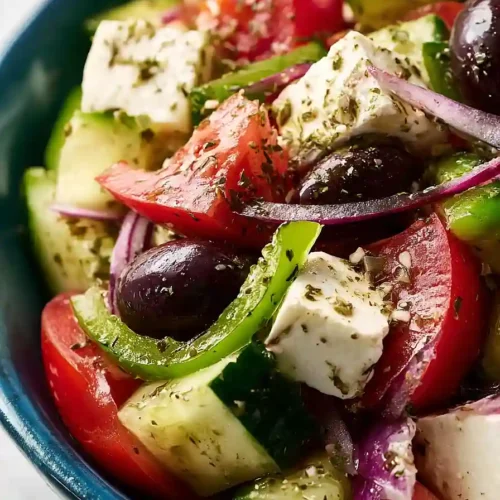
Gluten-Free Greek Salad
Ingredients
For the salad:
- 3 large ripe tomatoes (seeded and cut into wedges)
- 2 Persian cucumbers (sliced)
- 1/2 small red onion (thinly sliced into rings)
- 1 green bell pepper (sliced into strips)
- 7 oz feta cheese (cubed)
- 6 oz Kalamata olives (pitted)
- 2 1/2 tsp dried Greek oregano
For the dressing:
- 1 garlic clove (finely minced)
- 1/2 tsp sea salt
- 1/4 tsp freshly cracked black pepper
- 3 tbsp red wine vinegar
- 7 tbsp extra virgin olive oil
- 1 tsp fresh lemon juice
Instructions
- Combine the red wine vinegar, extra virgin olive oil, minced garlic, dried oregano, sea salt, and fresh lemon juice in a jar with a tight-fitting lid. Seal and shake vigorously for about 30 seconds until the dressing emulsifies and the oregano begins to bloom. Set aside at room temperature for at least 15-20 minutes while you prepare the vegetables—this allows the garlic and oregano to fully infuse into the oil and vinegar, developing deeper flavor. I like to make the dressing first so the flavors have time to meld while I'm chopping, rather than rushing to combine everything at once.
- While the dressing infuses, prepare your mise en place. Seed the tomatoes and cut them into wedges, slice the Persian cucumbers into rounds or half-moons, thinly slice the red onion into rings (this helps it soften slightly and distribute evenly), and slice the green bell pepper into strips. Cut the feta cheese into roughly 1cm cubes—don't worry about perfect uniformity, as irregular pieces actually look more appetizing and authentic. Have the Kalamata olives pitted and ready. I find it easier to pit olives by gently pressing them with the side of a knife before I start assembling, so they're ready to go without interrupting the final assembly.
- Add all the prepared tomatoes, cucumbers, red onion, and green bell pepper to a large serving bowl. Scatter the cubed feta cheese and pitted Kalamata olives over the vegetables. Give the dressing a final shake to recombine any ingredients that may have settled, then pour it over the salad. Gently toss everything together until the vegetables are evenly coated with dressing and the cheese is distributed throughout. Serve immediately while the vegetables are crisp and fresh—Greek salad is best enjoyed right after assembly, as the salt and acidity begin to soften the vegetables over time.