If you ask me, Korean fried chicken is one of the best things to happen to weeknight dinners.
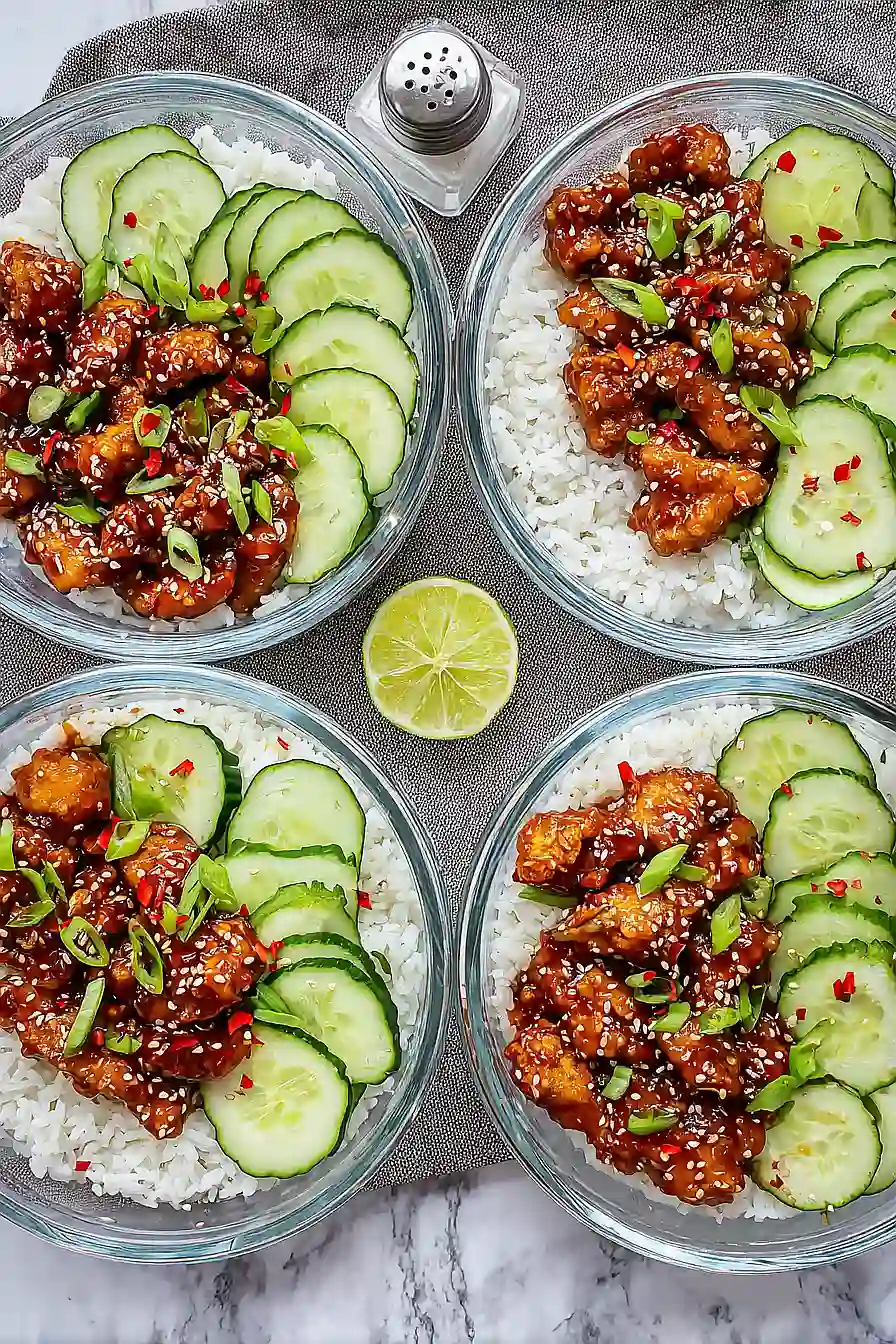
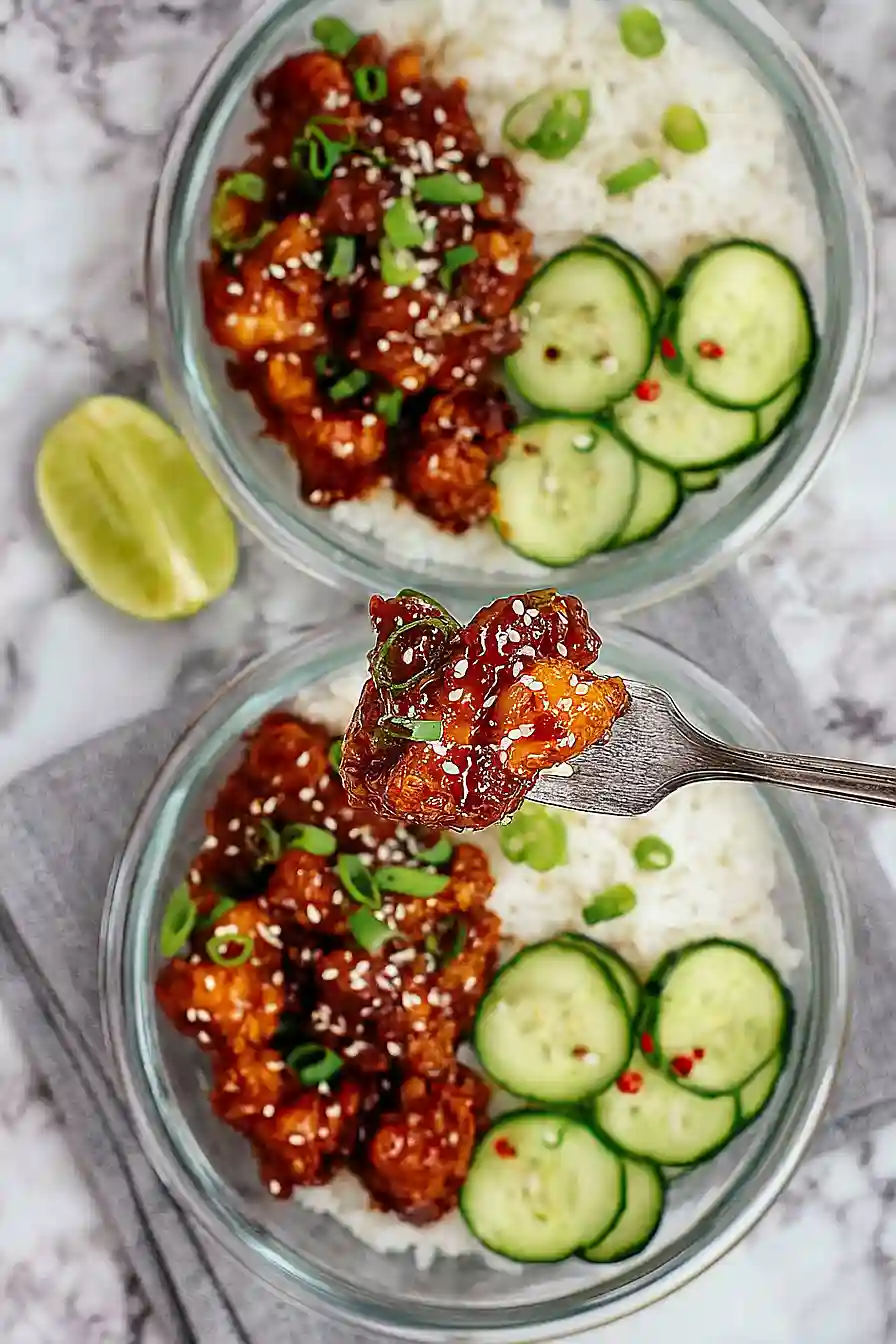
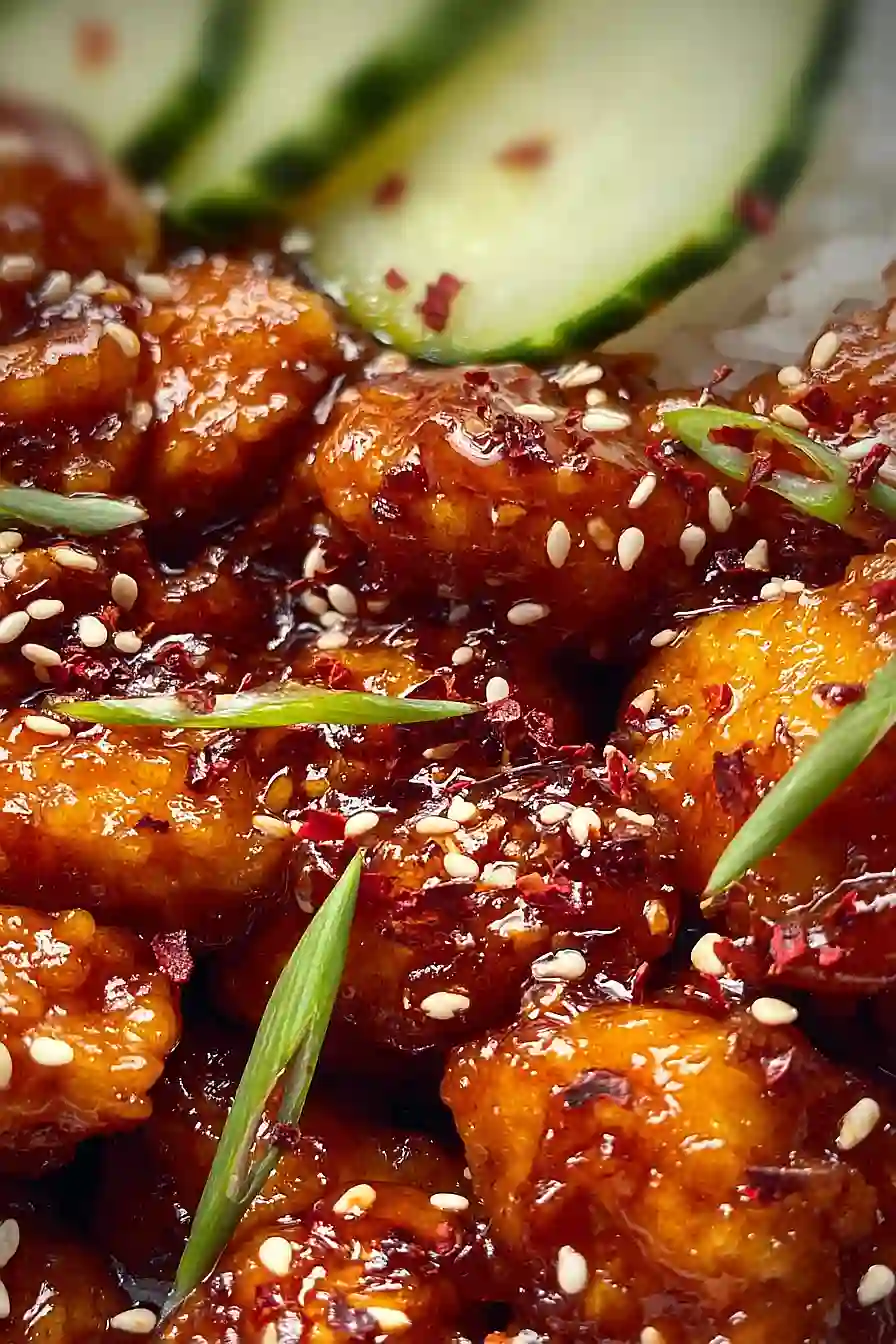
This protein-packed bowl brings together crispy chicken coated in a sweet and spicy gochujang glaze with quick-pickled cucumbers. The chicken gets its crunch from a simple flour and cornstarch mixture, then gets tossed in a sauce that’s both sticky and full of flavor.
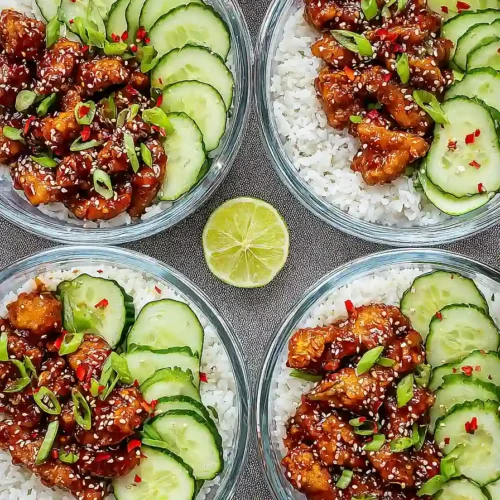
It’s served over rice with sesame seeds sprinkled on top and those tangy cucumbers on the side. The pickled cucumbers cut through the richness of the chicken and add a nice crunch.
It’s a satisfying meal that feels a bit special but comes together pretty easily on a busy night.
Why You’ll Love This Korean Fried Chicken and Rice Bowl
- High-protein meal – With 1.5 pounds of chicken, this bowl packs plenty of protein to keep you satisfied and fueled throughout the day.
- Restaurant-quality flavor at home – The sweet and spicy gochujang sauce gives you that authentic Korean fried chicken taste without having to order takeout.
- Complete meal in one bowl – You get crispy chicken, fluffy rice, and crunchy cucumber all together, so there’s no need to prepare multiple side dishes.
- Perfect for meal prep – This recipe makes multiple servings that you can portion out for easy lunches or dinners throughout the week.
- Customizable spice level – You can adjust the gochujang and red pepper to match your heat preference, making it mild for kids or spicy for those who love a kick.
What Kind of Chicken Should I Use?
For this Korean fried chicken recipe, boneless, skinless chicken thighs are your best bet since they stay juicy and tender even after frying. That said, chicken breasts will work just fine if that’s what you have on hand or if you prefer white meat – just be careful not to overcook them so they don’t dry out. You’ll want to cut your chicken into bite-sized pieces, about 1 to 2 inches each, so they cook evenly and get nicely coated in that sticky gochujang sauce. If you’re using frozen chicken, make sure it’s completely thawed and patted dry with paper towels before you start cooking, as any excess moisture will prevent that crispy coating from forming properly.
Options for Substitutions
This recipe is pretty adaptable, so here are some swaps you can make based on what you have:
- Chicken: You can use chicken thighs, breasts, or even boneless skinless pieces – whatever you prefer. Thighs stay juicier, but breasts work great too if you don’t overcook them.
- Tamari: Regular soy sauce works perfectly here if you don’t have tamari. Tamari is just a gluten-free option with a slightly richer taste, but soy sauce gives you the same salty, savory flavor.
- Gochujang: This Korean chili paste is really what gives the dish its signature flavor, so I’d recommend keeping it if possible. But if you’re in a bind, mix sriracha with a bit of miso paste for a similar spicy-savory kick.
- Rice: White rice, brown rice, jasmine, or even cauliflower rice all work here. Just adjust your cooking time accordingly – brown rice takes longer, while cauliflower rice cooks much faster.
- Honey: Maple syrup or agave nectar can replace honey in the same amount if you need a different sweetener.
- Corn starch: If you’re out of corn starch, use an equal amount of potato starch or double the amount of flour for the coating.
Watch Out for These Mistakes While Cooking
The biggest mistake when making Korean fried chicken is overcrowding the air fryer, which traps steam and prevents that crispy coating from forming – cook in batches and give each piece space to breathe.
Don’t skip the cornstarch in your coating mix, as it’s what creates that signature crackly texture that makes Korean fried chicken different from regular fried chicken.
Another common error is adding the chicken to the sauce while it’s still boiling, which can make your coating soggy – let the sauce simmer down to a thick glaze first, then toss your chicken quickly and serve immediately.
Finally, make sure your chicken reaches an internal temperature of 165°F by checking the thickest pieces with a thermometer, since air fryer cooking times can vary depending on the size of your chicken chunks.
What to Serve With Korean Fried Chicken and Rice Bowls?
Since this bowl already comes with rice and cucumber, I like to add some extra veggies on the side to round out the meal. A simple cabbage slaw with a sesame-ginger dressing works really well with the spicy-sweet chicken, or you can throw together some quick pickled radishes for a tangy crunch. If you want something warm, steamed edamame sprinkled with sea salt is always a hit, or try some stir-fried bok choy with garlic. For anyone who really loves heat, keep some extra gochujang or sriracha on the table for drizzling over everything.
Storage Instructions
Store: Keep your Korean fried chicken and rice in separate airtight containers in the fridge for up to 4 days. I like storing the chicken separately from the rice and cucumber so everything stays at its best texture. The sauce can be stored in a small jar and drizzled on when you’re ready to eat.
Freeze: The chicken freezes really well for up to 2 months, though I’d skip freezing the cucumber since it gets watery. Just let the chicken cool completely, then freeze in portion-sized containers. The rice also freezes great separately for quick meal prep later.
Reheat: For the best crispy texture, reheat the chicken in the oven at 375°F for about 10 minutes or pop it in an air fryer for 5-7 minutes. The rice can go in the microwave with a splash of water to keep it from drying out. Toss everything with fresh cucumber and sauce right before serving.
| Preparation Time | 10-15 minutes |
| Cooking Time | 40-50 minutes |
| Total Time | 50-65 minutes |
| Level of Difficulty | Medium |
| Servings | 4 servings |
Estimated Nutrition
Estimated nutrition for the whole recipe (without optional ingredients):
- Calories: 3250-3550
- Protein: 135-155 g
- Fat: 30-40 g
- Carbohydrates: 615-655 g
Ingredients
For the chicken:
- 1.5 lb chicken (boneless, skinless thighs cut into 1-inch pieces)
- 5 tsp garlic powder
- 5 tsp paprika
- 2 tbsp flour
- 2 tbsp corn starch (helps create a crispy coating)
- 1.25 tsp salt
- 1.25 tsp black pepper
For the Korean sauce:
- 1/4 cup tamari (or soy sauce)
- 1/4 cup water
- 2.5 oz honey
- 2 oz gochujang (Korean chili paste, essential for authentic flavor)
- 3 tbsp brown sugar
- 2.5 tsp ginger (freshly grated for best flavor)
For the pickled cucumber:
- 2 cups cucumber (thinly sliced or mandolined)
- 2 tbsp tamari
- 1.5 tbsp rice vinegar (I use Marukan rice vinegar)
- 1/2 tbsp red pepper flakes
- 1 tsp garlic powder
- 1 tsp garlic salt
For serving:
- 4 cups rice
- 1/2 tbsp sesame seeds (toasted for enhanced nutty flavor)
Step 1: Prepare Mise en Place and Season Chicken
- 1.5 lb chicken thighs, cut into 1-inch pieces
- 5 tsp garlic powder
- 5 tsp paprika
- 2 tbsp flour
- 2 tbsp corn starch
- 1.25 tsp salt
- 1.25 tsp black pepper
- 2 cups cucumber, thinly sliced
Cut the chicken thighs into 1-inch pieces and place in a large bowl.
In a separate small bowl, combine the garlic powder, paprika, flour, corn starch, salt, and black pepper.
Toss the chicken pieces with this seasoning mixture until evenly coated—this dry coating will help create that signature crispy exterior when air-fried.
While the chicken seasons, slice the cucumber thinly (a mandoline works great here) and set aside.
Step 2: Cook Chicken in Air Fryer and Start Rice
- seasoned chicken from Step 1
Preheat the air fryer to 400°F.
While it heats, place half of the seasoned chicken in the air fryer basket in a single layer—don’t overcrowd, as this ensures crispiness.
Cook for 17 minutes, shaking the basket and flipping pieces halfway through for even browning.
Once the first batch goes in, start cooking your rice according to package directions; this timing allows everything to finish around the same time.
When the first batch is golden and cooked through, transfer to a bowl and immediately cook the remaining chicken using the same method.
Step 3: Prepare Pickled Cucumber Topping
- 2 cups cucumber, sliced from Step 1
- 2 tbsp tamari
- 1.5 tbsp rice vinegar
- 1/2 tbsp red pepper flakes
- 1 tsp garlic powder
- 1 tsp garlic salt
While the chicken cooks, combine the sliced cucumber with tamari, rice vinegar, red pepper flakes, garlic powder, and garlic salt in a bowl.
Mix well and set aside at room temperature—the cucumber will soften slightly and absorb the flavors as it sits.
I like to let this pickle for at least 10 minutes while everything else finishes cooking; it adds a bright, tangy contrast to the rich, savory chicken and sauce.
Step 4: Build the Korean Gochujang Sauce
- 1/4 cup tamari
- 1/4 cup water
- 2.5 oz honey
- 2 oz gochujang
- 3 tbsp brown sugar
- 2.5 tsp ginger, freshly grated
While the second batch of chicken finishes cooking, combine tamari, water, honey, gochujang, brown sugar, and freshly grated ginger in a medium saucepan over medium-high heat.
Whisk until the gochujang dissolves and the mixture comes to a gentle boil, then reduce heat to medium-low and simmer for 3-4 minutes, stirring occasionally, until the sauce thickens slightly and deepens in color.
The sauce should coat the back of a spoon—this is when you know it’s reached the right consistency.
Step 5: Coat Chicken in Sauce
- cooked chicken from Step 2
- Korean gochujang sauce from Step 4
Once all the chicken from Step 2 is cooked and the sauce from Step 4 has thickened, add the cooked chicken pieces to the sauce pan.
Fold and stir gently until every piece is evenly coated with the glossy, caramelized gochujang sauce.
I find that gently folding rather than aggressively stirring helps keep the chicken pieces intact and prevents them from breaking apart.
Step 6: Assemble and Serve Bowls
- 4 cups rice, cooked
- sauce-coated chicken from Step 5
- pickled cucumber from Step 3
- 1/2 tbsp sesame seeds, toasted
Divide the cooked rice from Step 2 among serving bowls, creating a base for each bowl.
Top each portion of rice with a generous serving of the sauce-coated chicken from Step 5, spooning any extra sauce over the rice.
Add a handful of the pickled cucumber mixture from Step 3 to each bowl, then garnish with toasted sesame seeds for a nutty finish and visual appeal.
Gochujang Protein Korean Fried Chicken and Rice Bowls
Ingredients
For the chicken::
- 1.5 lb chicken (boneless, skinless thighs cut into 1-inch pieces)
- 5 tsp garlic powder
- 5 tsp paprika
- 2 tbsp flour
- 2 tbsp corn starch (helps create a crispy coating)
- 1.25 tsp salt
- 1.25 tsp black pepper
For the Korean sauce::
- 1/4 cup tamari (or soy sauce)
- 1/4 cup water
- 2.5 oz honey
- 2 oz gochujang (Korean chili paste, essential for authentic flavor)
- 3 tbsp brown sugar
- 2.5 tsp ginger (freshly grated for best flavor)
For the pickled cucumber::
- 2 cups cucumber (thinly sliced or mandolined)
- 2 tbsp tamari
- 1.5 tbsp rice vinegar (I use Marukan rice vinegar)
- 1/2 tbsp red pepper flakes
- 1 tsp garlic powder
- 1 tsp garlic salt
For serving::
- 4 cups rice
- 1/2 tbsp sesame seeds (toasted for enhanced nutty flavor)
Instructions
- Cut the chicken thighs into 1-inch pieces and place in a large bowl. In a separate small bowl, combine the garlic powder, paprika, flour, corn starch, salt, and black pepper. Toss the chicken pieces with this seasoning mixture until evenly coated—this dry coating will help create that signature crispy exterior when air-fried. While the chicken seasons, slice the cucumber thinly (a mandoline works great here) and set aside.
- Preheat the air fryer to 400°F. While it heats, place half of the seasoned chicken in the air fryer basket in a single layer—don't overcrowd, as this ensures crispiness. Cook for 17 minutes, shaking the basket and flipping pieces halfway through for even browning. Once the first batch goes in, start cooking your rice according to package directions; this timing allows everything to finish around the same time. When the first batch is golden and cooked through, transfer to a bowl and immediately cook the remaining chicken using the same method.
- While the chicken cooks, combine the sliced cucumber with tamari, rice vinegar, red pepper flakes, garlic powder, and garlic salt in a bowl. Mix well and set aside at room temperature—the cucumber will soften slightly and absorb the flavors as it sits. I like to let this pickle for at least 10 minutes while everything else finishes cooking; it adds a bright, tangy contrast to the rich, savory chicken and sauce.
- While the second batch of chicken finishes cooking, combine tamari, water, honey, gochujang, brown sugar, and freshly grated ginger in a medium saucepan over medium-high heat. Whisk until the gochujang dissolves and the mixture comes to a gentle boil, then reduce heat to medium-low and simmer for 3-4 minutes, stirring occasionally, until the sauce thickens slightly and deepens in color. The sauce should coat the back of a spoon—this is when you know it's reached the right consistency.
- Once all the chicken from Step 2 is cooked and the sauce from Step 4 has thickened, add the cooked chicken pieces to the sauce pan. Fold and stir gently until every piece is evenly coated with the glossy, caramelized gochujang sauce. I find that gently folding rather than aggressively stirring helps keep the chicken pieces intact and prevents them from breaking apart.
- Divide the cooked rice from Step 2 among serving bowls, creating a base for each bowl. Top each portion of rice with a generous serving of the sauce-coated chicken from Step 5, spooning any extra sauce over the rice. Add a handful of the pickled cucumber mixture from Step 3 to each bowl, then garnish with toasted sesame seeds for a nutty finish and visual appeal.