I grew up thinking meat sauce had to simmer all day to taste good. My mom would start hers at sunrise for Sunday dinner, and the whole house would smell like an Italian restaurant by noon.
Then I had kids and realized I don’t have eight hours to stand over a pot. This meat sauce comes together in about an hour, and honestly? It tastes just as rich and deep as the all-day version. The secret is layering your flavors right—starting with a good sear on the beef, then building up with wine, three types of tomatoes, and a bunch of herbs and spices that do the heavy lifting for you.
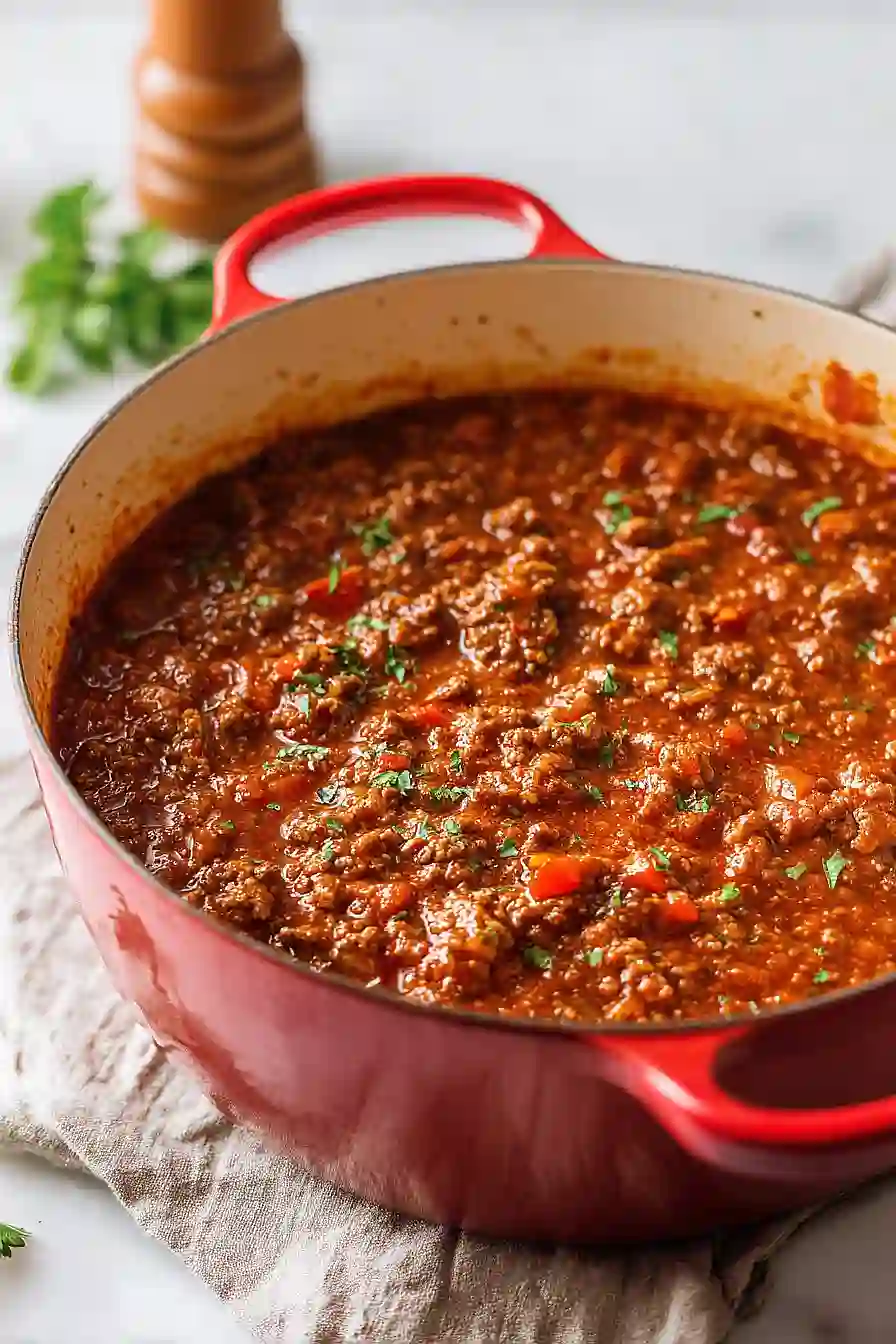
Why You’ll Love This Meat Sauce
- Perfect for meal prep – This recipe makes a big batch that you can freeze in portions and pull out whenever you need a quick dinner during busy weeknights.
- Rich, layered flavor – The combination of red wine, Worcestershire sauce, and a blend of herbs creates a deep, restaurant-quality sauce that tastes like it simmered all day.
- Versatile weeknight staple – Use it over pasta, in lasagna, on pizza, or even as a topping for baked potatoes—one sauce, endless possibilities.
- Simple ingredients – Everything you need is probably already in your pantry and fridge, making this an easy go-to recipe without a special grocery run.
What Kind of Ground Beef Should I Use?
For meat sauce, you’ll want to pick ground beef with the right fat content to get good flavor without ending up with a greasy sauce. I usually go with 85/15 ground beef, which gives you enough fat for flavor but won’t leave you with a pool of grease at the bottom of your pot. If you prefer leaner meat, 90/10 works too, though your sauce might be a bit less rich. You can also mix things up by using half ground beef and half ground pork or Italian sausage for extra depth of flavor. Whatever you choose, just make sure to break it up well while browning so you don’t end up with big chunks in your finished sauce.
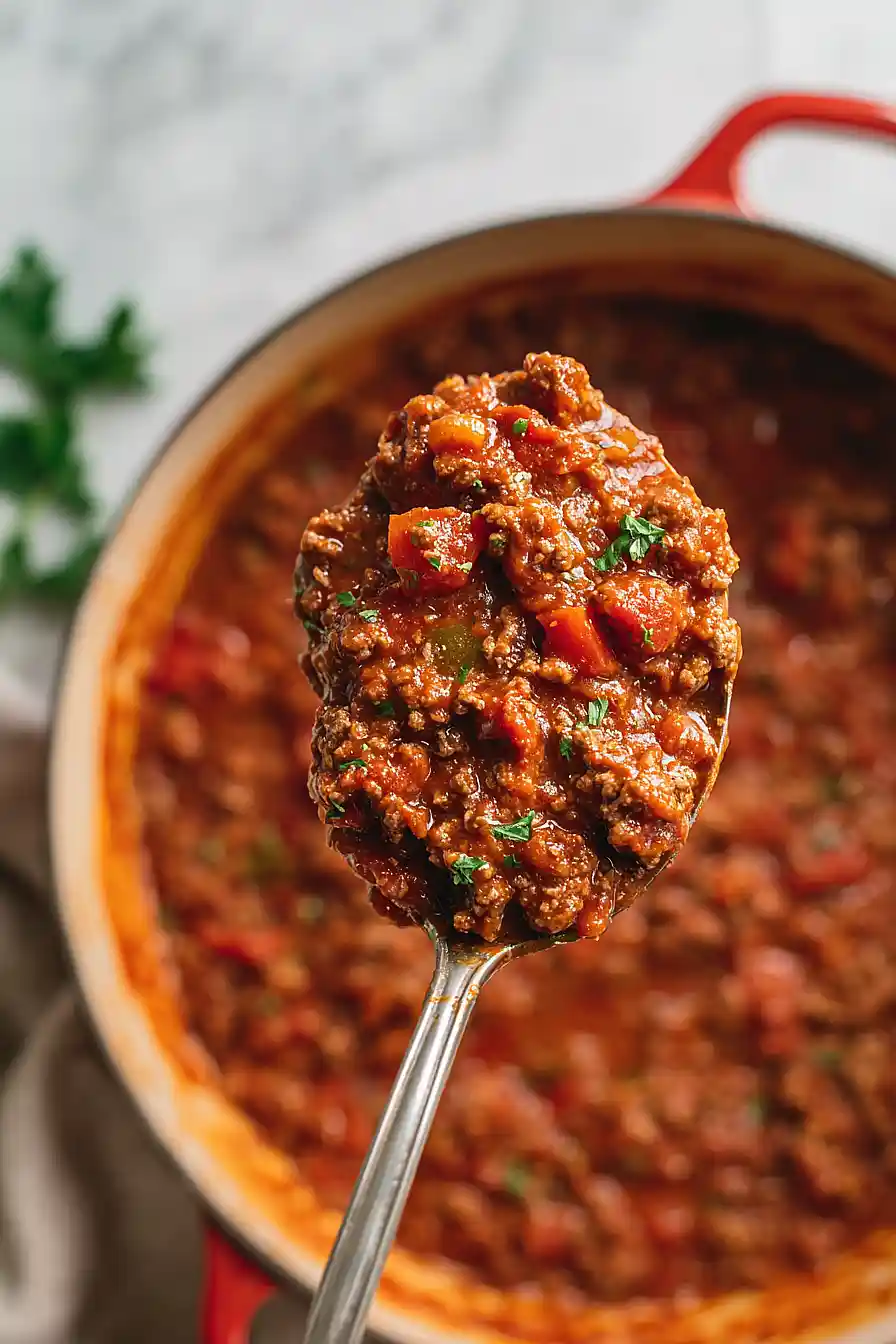
Options for Substitutions
This meat sauce is pretty forgiving when it comes to swapping ingredients:
- Ground beef: You can use ground turkey, ground pork, or Italian sausage (removed from casings) instead. For a leaner option, try ground chicken. You could also do a mix of beef and pork for extra flavor.
- Red wine: If you don’t have wine or prefer not to use it, replace it with beef broth plus 1 tablespoon of red wine vinegar to keep that tangy depth.
- Bell pepper: Any color bell pepper works here – red, yellow, or orange will add a bit more sweetness than green. You can also leave it out if you’re not a fan.
- Crushed and diced tomatoes: You can use all crushed tomatoes (about 42 oz total) or all diced if that’s what you have. The texture will be slightly different, but the flavor stays great.
- Fresh herbs: If you have fresh basil, parsley, or oregano, use about 3 times the amount of dried herbs called for, and add them toward the end of cooking.
- Sugar: Honey or a grated carrot can replace the sugar to balance the acidity of the tomatoes. Start with less and adjust to taste.
Watch Out for These Mistakes While Cooking
The biggest mistake when making meat sauce is not draining the grease after browning the beef, which leaves you with a greasy, oily sauce that separates – make sure to tilt the pot and spoon out excess fat before adding your wine and tomatoes. Another common error is skipping the wine reduction step or not letting it cook long enough, so give it the full 5-6 minutes until the alcohol smell fades and the liquid reduces by about half for a deeper flavor. Don’t rush the simmering time either, as 45 minutes allows the flavors to blend and the sauce to thicken properly – if you cut it short, you’ll end up with a watery, one-dimensional sauce. Finally, remember to fish out those bay leaves before serving, since biting into one isn’t pleasant, and consider tasting for seasoning at the end since the long cooking time can mellow out the salt and spices.
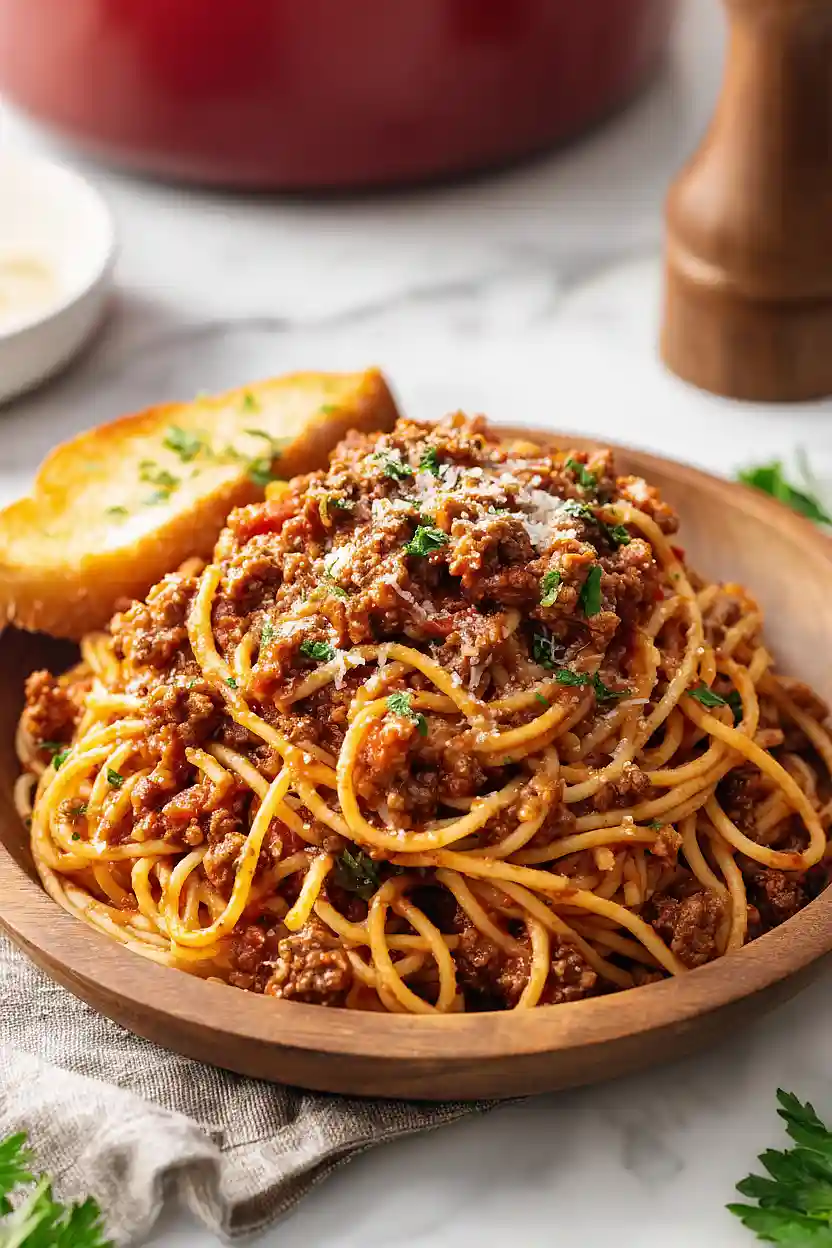
What to Serve With Meat Sauce?
The obvious choice is to toss this meat sauce with your favorite pasta – spaghetti, penne, or rigatoni all work great because they hold onto the sauce really well. I love serving it over a big bowl of pasta with plenty of grated parmesan cheese and some garlic bread on the side for mopping up extra sauce. You can also use this meat sauce as a base for lasagna, spoon it over baked potatoes, or even serve it on toasted sub rolls for a quick meat sauce sandwich. If you want to round out the meal, a simple Caesar salad or a side of roasted vegetables like zucchini or broccoli pairs nicely without competing with all those rich tomato flavors.
Storage Instructions
Store: This meat sauce actually gets better after a day or two in the fridge! Keep it in an airtight container for up to 5 days. The flavors really meld together overnight, so it’s perfect for making ahead on Sunday and using throughout the week for quick dinners.
Freeze: Meat sauce is one of those things I always keep stashed in my freezer. Let it cool completely, then portion it into freezer bags or containers and freeze for up to 4 months. I like to freeze it in different sized portions so I can grab exactly what I need.
Reheat: Thaw frozen sauce in the fridge overnight, then warm it up on the stove over medium-low heat, stirring occasionally. You can also reheat it straight from frozen if you’re in a hurry, just add a splash of water and keep the heat low so it doesn’t stick to the bottom of the pot.
| Preparation Time | 15-30 minutes |
| Cooking Time | 50-70 minutes |
| Total Time | 65-100 minutes |
| Level of Difficulty | Medium |
| Servings | 8 servings |
Estimated Nutrition
Estimated nutrition for the whole recipe (without optional ingredients):
- Calories: 2700-3100
- Protein: 155-175 g
- Fat: 130-150 g
- Carbohydrates: 170-200 g
Ingredients
- 3 tbsp olive oil (I prefer Bertolli Extra Virgin for a robust base)
- 1 onion (finely diced into 1/4-inch pieces)
- 2 lb ground beef (80/20 blend gives better texture and moisture)
- 1 bell pepper
- 4 garlic cloves (freshly minced for best aroma)
- 3/4 cup red wine
- 6 oz tomato paste (I use Hunt’s to thicken the sauce)
- 2 tsp Worcestershire sauce
- 2 tsp hot sauce
- 2 tbsp sugar
- 28 oz crushed tomatoes
- 14.5 oz diced tomatoes
- 8 oz tomato sauce
- 2 bay leaves
- 2 tsp parsley
- 2.5 tsp basil
- 2 tsp mustard powder
- 2 tsp salt
- 1.5 tsp oregano
- 2 pinches red pepper flakes
- 1/4 tsp nutmeg
- salt
- pepper
Step 1: Prepare Mise en Place and Sauté the Aromatics
- 3 tbsp olive oil
- 1 onion, finely diced
- 4 garlic cloves, freshly minced
- 1 bell pepper, diced
Finely dice the onion into 1/4-inch pieces and mince the garlic cloves fresh—this makes a real difference in the final aroma.
Dice the bell pepper into similar-sized pieces so everything cooks evenly.
Heat the olive oil in a large pot over medium heat and add the diced onion.
Cook for about 8 minutes, stirring occasionally, until the onion becomes translucent and starts to soften.
This is your flavor foundation, so take your time here.
Step 2: Brown the Ground Beef and Build Flavor
- 2 lb ground beef
- salt
- pepper
Increase heat to medium-high and add the ground beef to the pot with the softened onions.
Season generously with salt and pepper, then cook for about 5 minutes, breaking up the meat with a wooden spoon as it cooks.
You want the beef to brown nicely and release its natural juices—this caramelization is crucial for depth of flavor.
Don’t rush this step or stir constantly; let the meat sit for a minute or two between stirs so it develops a golden crust.
Step 3: Add Garlic and Peppers, Then Deglaze with Wine
- garlic and bell pepper from Step 1
- 3/4 cup red wine
Add the minced garlic and diced bell pepper to the pot and cook for 3 minutes until fragrant and slightly softened.
Pour in the red wine and scrape the bottom of the pot with your wooden spoon to release all the flavorful browned bits stuck to the bottom—this is called deglazing and it adds tremendous depth.
Simmer for 5-6 minutes to reduce the wine slightly and cook off the raw alcohol flavor.
I like to let the wine reduce a bit because it concentrates the flavors and creates a richer sauce base.
Step 4: Remove Excess Grease and Build the Sauce Base
- 6 oz tomato paste
- 2 tsp Worcestershire sauce
- 2 tsp hot sauce
- 2 tbsp sugar
Carefully tilt the pot and skim off any excess grease that has accumulated on the surface using a spoon or ladle—you want some fat for flavor, but not so much that the sauce becomes greasy.
Stir in the tomato paste first and let it cook for about 1-2 minutes, which helps deepen its flavor and prevents it from clumping.
Then add the Worcestershire sauce, hot sauce, and sugar, stirring well to combine.
These ingredients build layers of savory, tangy, and slightly sweet flavors that make the sauce truly complex.
Step 5: Add Tomatoes, Spices, and Bay Leaves to Simmer
- 28 oz crushed tomatoes
- 14.5 oz diced tomatoes
- 8 oz tomato sauce
- 2 bay leaves
- 2.5 tsp basil
- 1.5 tsp oregano
- 2 tsp parsley
- 2 tsp mustard powder
- 2 pinches red pepper flakes
- 1/4 tsp nutmeg
- 2 tsp salt
Add the crushed tomatoes, diced tomatoes, and tomato sauce to the pot and stir to combine.
Add the bay leaves and all the dry spices: basil, oregano, parsley, mustard powder, red pepper flakes, and nutmeg.
Stir everything together thoroughly so the spices distribute evenly throughout.
Bring the sauce to a gentle boil, then immediately reduce the heat to low and let it simmer uncovered for 45 minutes.
Stir occasionally—I like to stir every 10 minutes or so—and taste as it cooks.
The long simmer allows the flavors to marry together and the sauce to thicken naturally from the tomatoes.
Step 6: Finish and Serve
After 45 minutes of simmering, remove the bay leaves and taste the sauce.
Adjust the seasoning with additional salt, pepper, or a touch of sugar if needed—the sauce should be rich, complex, and deeply flavorful.
Serve the meat sauce over cooked pasta with crusty bread on the side for soaking up the delicious sauce.
Homemade Meat Sauce
Ingredients
- 3 tbsp olive oil (I prefer Bertolli Extra Virgin for a robust base)
- 1 onion (finely diced into 1/4-inch pieces)
- 2 lb ground beef (80/20 blend gives better texture and moisture)
- 1 bell pepper
- 4 garlic cloves (freshly minced for best aroma)
- 3/4 cup red wine
- 6 oz tomato paste (I use Hunt's to thicken the sauce)
- 2 tsp Worcestershire sauce
- 2 tsp hot sauce
- 2 tbsp sugar
- 28 oz crushed tomatoes
- 14.5 oz diced tomatoes
- 8 oz tomato sauce
- 2 bay leaves
- 2 tsp parsley
- 2.5 tsp basil
- 2 tsp mustard powder
- 2 tsp salt
- 1.5 tsp oregano
- 2 pinches red pepper flakes
- 1/4 tsp nutmeg
- salt
- pepper
Instructions
- Finely dice the onion into 1/4-inch pieces and mince the garlic cloves fresh—this makes a real difference in the final aroma. Dice the bell pepper into similar-sized pieces so everything cooks evenly. Heat the olive oil in a large pot over medium heat and add the diced onion. Cook for about 8 minutes, stirring occasionally, until the onion becomes translucent and starts to soften. This is your flavor foundation, so take your time here.
- Increase heat to medium-high and add the ground beef to the pot with the softened onions. Season generously with salt and pepper, then cook for about 5 minutes, breaking up the meat with a wooden spoon as it cooks. You want the beef to brown nicely and release its natural juices—this caramelization is crucial for depth of flavor. Don't rush this step or stir constantly; let the meat sit for a minute or two between stirs so it develops a golden crust.
- Add the minced garlic and diced bell pepper to the pot and cook for 3 minutes until fragrant and slightly softened. Pour in the red wine and scrape the bottom of the pot with your wooden spoon to release all the flavorful browned bits stuck to the bottom—this is called deglazing and it adds tremendous depth. Simmer for 5-6 minutes to reduce the wine slightly and cook off the raw alcohol flavor. I like to let the wine reduce a bit because it concentrates the flavors and creates a richer sauce base.
- Carefully tilt the pot and skim off any excess grease that has accumulated on the surface using a spoon or ladle—you want some fat for flavor, but not so much that the sauce becomes greasy. Stir in the tomato paste first and let it cook for about 1-2 minutes, which helps deepen its flavor and prevents it from clumping. Then add the Worcestershire sauce, hot sauce, and sugar, stirring well to combine. These ingredients build layers of savory, tangy, and slightly sweet flavors that make the sauce truly complex.
- Add the crushed tomatoes, diced tomatoes, and tomato sauce to the pot and stir to combine. Add the bay leaves and all the dry spices: basil, oregano, parsley, mustard powder, red pepper flakes, and nutmeg. Stir everything together thoroughly so the spices distribute evenly throughout. Bring the sauce to a gentle boil, then immediately reduce the heat to low and let it simmer uncovered for 45 minutes. Stir occasionally—I like to stir every 10 minutes or so—and taste as it cooks. The long simmer allows the flavors to marry together and the sauce to thicken naturally from the tomatoes.
- After 45 minutes of simmering, remove the bay leaves and taste the sauce. Adjust the seasoning with additional salt, pepper, or a touch of sugar if needed—the sauce should be rich, complex, and deeply flavorful. Serve the meat sauce over cooked pasta with crusty bread on the side for soaking up the delicious sauce.