Fall mornings are made for cozy breakfasts. There’s something about the crisp air that makes me want to bake something warm and comforting. But I don’t always have time to make pancakes or waffles from scratch on busy school mornings.
That’s where these pumpkin scones come to the rescue. I can whip up a batch on Sunday afternoon and have breakfast ready all week long. The vanilla glaze makes them feel special, but they’re simple enough that I’m not stressed about measuring ingredients while my coffee is still brewing.
Want something that tastes like fall but doesn’t require hours in the kitchen? These scones are your answer. They’re tender, lightly spiced, and that glaze on top makes them taste like a treat from your favorite bakery.

Why You’ll Love These Pumpkin Scones
- Quick and easy – These scones come together in under 40 minutes, making them perfect for weekend mornings or when you want fresh-baked treats without spending all day in the kitchen.
- Perfect fall flavors – The combination of pumpkin purée, cinnamon, and pumpkin pie spice gives you all those cozy autumn tastes you crave in one bite.
- Simple pantry ingredients – You probably already have most of these basic baking staples at home, so no special shopping trip required.
- Bakery-style results – The vanilla glaze on top makes these scones look and taste like something you’d pay good money for at a coffee shop, but you can make them right in your own kitchen.
- Great for sharing – This recipe makes enough scones to enjoy with family or bring to work, and they’re impressive enough for brunch guests too.
What Kind of Pumpkin Purée Should I Use?
For these scones, you’ll want to use plain pumpkin purée, not pumpkin pie filling – there’s a big difference! Pumpkin pie filling already has spices and sugar added, which will throw off the balance of your recipe. Look for canned pumpkin purée that lists only pumpkin as the ingredient, like Libby’s 100% Pure Pumpkin. If you’re feeling ambitious, you can absolutely make your own by roasting a sugar pumpkin and pureeing the flesh, but the canned stuff works just as well and saves you time. Just make sure to give the can a good stir before measuring, as the purée can separate a bit while sitting on the shelf.

Options for Substitutions
These pumpkin scones are pretty forgiving when it comes to swaps, so here’s what you can switch up:
- Pumpkin purée: If you’re out of pumpkin purée, try sweet potato purée or butternut squash purée for a similar texture and sweetness. You could even use mashed banana, though the flavor will be different.
- Buttermilk: No buttermilk? Make your own by adding 1 tablespoon of lemon juice or white vinegar to regular milk and let it sit for 5 minutes. You can also use plain yogurt thinned with a little milk.
- Pumpkin pie spice: Don’t have pumpkin pie spice? Mix together 1 teaspoon cinnamon, 1/2 teaspoon ground ginger, 1/4 teaspoon nutmeg, and 1/4 teaspoon allspice or cloves.
- Brown sugar: You can swap this with regular white sugar, though you’ll lose some of that caramel-like depth. Coconut sugar works well too and adds a slight molasses flavor.
- All-purpose flour: For a heartier texture, you can replace up to 1 cup of the all-purpose flour with whole wheat flour or white whole wheat flour.
- Salted butter: Unsalted butter works fine – just add an extra pinch of salt to the dry ingredients. Cold coconut oil can work as a dairy-free option, though the texture will be slightly different.
Watch Out for These Mistakes While Baking
The biggest mistake when making pumpkin scones is overworking the dough, which leads to tough, dense scones instead of the light, flaky texture you want – mix just until the ingredients come together and don’t worry if the dough looks a bit shaggy.
Another common error is using warm butter, so make sure your butter is very cold (even grated frozen butter works great) and handle the dough as little as possible to keep those butter pieces intact for maximum flakiness.
Don’t skip brushing the tops with buttermilk before baking, as this creates a beautiful golden color, and resist the urge to open the oven door during the first 15 minutes of baking since the temperature drop can cause your scones to fall flat.
For the best results, let the scones cool completely before adding the glaze – warm scones will cause the glaze to melt right off instead of creating that perfect sweet coating.
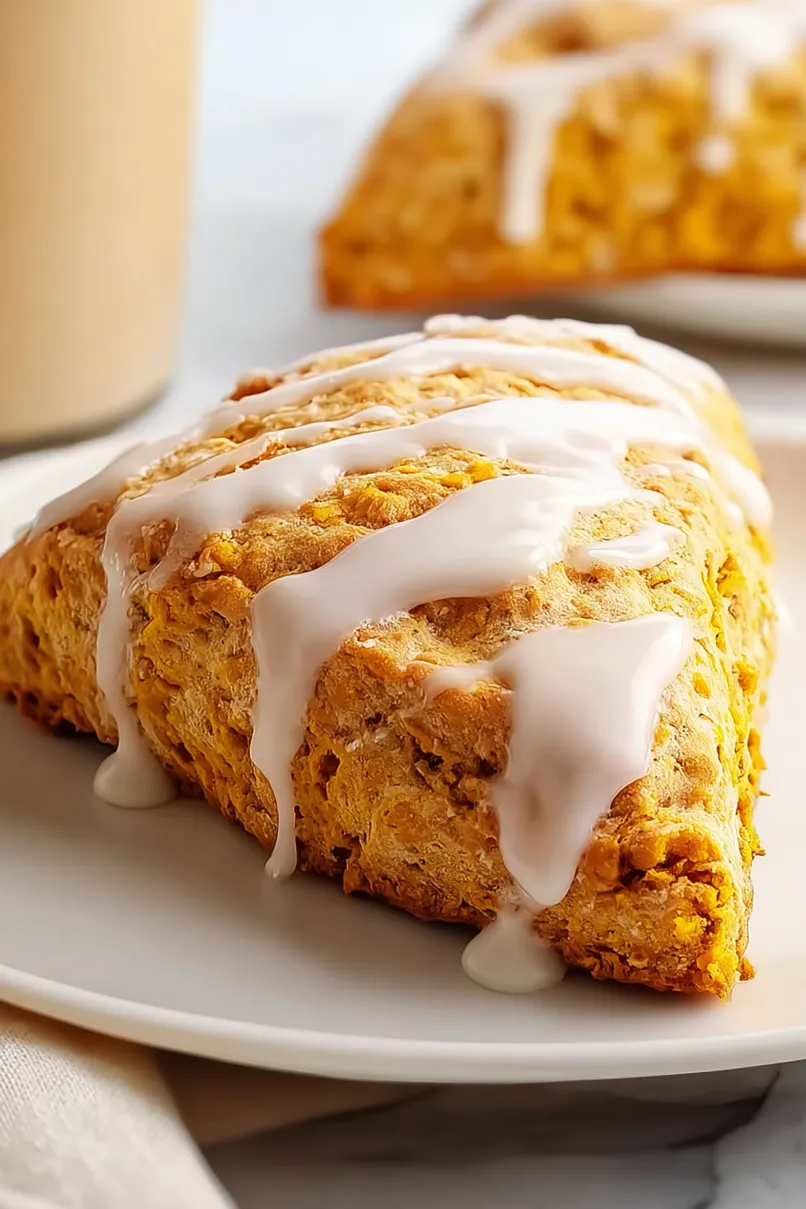
What to Serve With Pumpkin Scones?
These pumpkin scones are perfect for a cozy fall breakfast or afternoon tea break, and they pair beautifully with a hot cup of coffee or spiced chai tea. I love serving them alongside some fresh fruit like sliced apples or pears to balance out the warm spices and sweetness. For a more indulgent treat, try them with a dollop of whipped cream or even some maple butter for spreading. They’re also great on their own as a grab-and-go breakfast or packed in a lunchbox for a sweet afternoon snack.
Storage Instructions
Keep Fresh: These pumpkin scones are best enjoyed within 2-3 days when stored in an airtight container at room temperature. The glaze might soften a bit, but they’ll still taste amazing! If you want to keep that crispy exterior, store them uncovered for the first day, then cover after that.
Freeze: You can freeze these scones for up to 3 months, either glazed or unglazed. I like to freeze them individually on a baking sheet first, then transfer to a freezer bag. If you’re planning to freeze them, I’d recommend adding the glaze after thawing for the best texture.
Warm Up: To bring back that fresh-baked taste, warm your scones in a 300°F oven for about 5-8 minutes. You can also pop them in the toaster for a minute or two. If they’re frozen, let them thaw at room temperature first, then warm them up and add fresh glaze if needed.
| Preparation Time | 20-25 minutes |
| Cooking Time | 13-15 minutes |
| Total Time | 33-40 minutes |
| Level of Difficulty | Medium |
Estimated Nutrition
Estimated nutrition for the whole recipe (without optional ingredients):
- Calories: 2100-2300
- Protein: 25-30 g
- Fat: 60-70 g
- Carbohydrates: 370-410 g
Ingredients
For the scone dough:
- 1/3 cup buttermilk (plus extra for brushing)
- 1/2 cup salted butter (very cold, diced into small cubes)
- 2 tsp ground cinnamon
- 2 tsp pumpkin spice blend (freshly blended if possible for better flavor)
- 3/4 cup pumpkin puree (I use Libby’s)
- 1/2 cup light brown sugar (packed)
- 1 tbsp baking powder
- 1/2 tsp fine sea salt
- 2 1/2 cups all-purpose flour (I use King Arthur)
- 1 tsp vanilla extract (pure vanilla preferred)
For the glaze:
- Optional: 1/4 tsp ground cinnamon (adds warmth and depth to the glaze)
- 1/2 tsp vanilla extract
- 1/2 cup confectioners’ sugar (sifted to remove lumps)
- 2 to 3 tsp buttermilk
Step 1: Prepare Mise en Place and Preheat Oven
- 1/2 cup confectioners’ sugar
Start by preheating your oven to 425°F so it reaches temperature while you prepare the dough.
Measure out all your dry ingredients and sift the confectioners’ sugar for the glaze to remove any lumps—this ensures a smooth, lump-free glaze later.
Cut your cold butter into small cubes and keep it in the freezer until you’re ready to use it.
Having everything measured and ready will make the mixing process smooth and quick.
Step 2: Create the Dry Ingredient Base
- 2 1/2 cups all-purpose flour
- 1/2 cup light brown sugar
- 1 tbsp baking powder
- 2 tsp ground cinnamon
- 2 tsp pumpkin spice blend
- 1/2 tsp fine sea salt
In a large mixing bowl, combine the flour, brown sugar, baking powder, cinnamon, pumpkin spice blend, and sea salt.
Whisk these together thoroughly to distribute the leavening agent and spices evenly throughout the flour—this prevents pockets of baking powder and ensures even seasoning in every bite.
I like to use freshly blended pumpkin spice if I have time, as it delivers a more vibrant flavor than pre-mixed blends that have been sitting on the shelf.
Step 3: Cut in Cold Butter Until Crumbly
- dry ingredient mixture from Step 2
- 1/2 cup salted butter
Add the cold butter cubes to your dry ingredient mixture and cut them in using a pastry cutter, two knives, or your fingertips until the mixture resembles coarse breadcrumbs with pea-sized pieces of butter still visible.
This is crucial for achieving flaky scones—the small pockets of cold butter create steam pockets as they melt in the oven, giving you that tender, layered texture.
Work quickly and keep everything cold; if the mixture warms up too much, refrigerate it for 5 minutes before continuing.
Step 4: Combine Wet Ingredients and Bring Dough Together
- dry ingredient mixture with butter from Step 3
- 3/4 cup pumpkin puree
- 1/3 cup buttermilk
- 1 tsp vanilla extract
In a small bowl, whisk together the pumpkin puree, buttermilk, and vanilla extract until smooth.
Create a well in the center of your dry ingredients and pour in the wet mixture, then stir gently with a wooden spoon or spatula until just combined—the dough should be shaggy and slightly moist but not overmixed.
Overmixing develops too much gluten and results in tough, dense scones, so stop as soon there are no dry flour streaks remaining.
Step 5: Shape, Freeze, and Prepare for Baking
- pumpkin scone dough from Step 4
- 1/3 cup buttermilk
Turn your dough out onto a lightly floured surface and gently pat it into an 8-inch circle about 3/4 inch thick—don’t overwork it or knead it.
Cut the circle into 8 equal wedges like a pie, then transfer them to a parchment-lined baking sheet.
Brush the tops with a little buttermilk for a golden finish, then freeze the shaped scones for at least 15 minutes (this keeps them flaky and helps them hold their shape).
By the time the scones are ready to bake, your oven should be fully preheated.
Step 6: Bake Until Golden Brown
- frozen scones from Step 5
Bake the frozen scones at 425°F for 13 to 15 minutes, until the tops are light golden brown.
You’ll know they’re done when they feel set on top but still have a slight give when gently pressed.
Transfer them to a wire cooling rack immediately and let them cool completely before glazing—this prevents the glaze from melting off into puddles on warm scones.
Step 7: Make the Glaze and Finish
- sifted confectioners’ sugar from Step 1
- 2 to 3 tsp buttermilk
- 1/2 tsp vanilla extract
- Optional: 1/4 tsp ground cinnamon
- cooled scones from Step 6
While the scones cool, prepare the glaze by whisking together the sifted confectioners’ sugar, 2 to 3 teaspoons of buttermilk, vanilla extract, and the optional ground cinnamon (I always add it for a touch of warmth and spice complexity).
Start with 2 teaspoons of buttermilk and add more gradually until you reach a pourable but not watery consistency—it should drizzle over the scones in thin ribbons.
Once the scones are completely cool, drizzle the glaze generously over the tops and let it set for a few minutes before serving.