I never thought I’d be the person making tabbouleh at home. Growing up, I only knew it as that mysterious salad at Mediterranean restaurants that I’d order once in a while. But after trying to recreate it in my own kitchen, I realized how simple it actually is. No fancy techniques or hard-to-find ingredients needed.
The best part about tabbouleh is that it gets better as it sits. I’ll make a big batch on Sunday and eat it all week long. It works as a side dish, a light lunch, or even stuffed into pita bread for the kids’ school lunches. Plus, it’s one of those recipes where you can’t really mess it up.
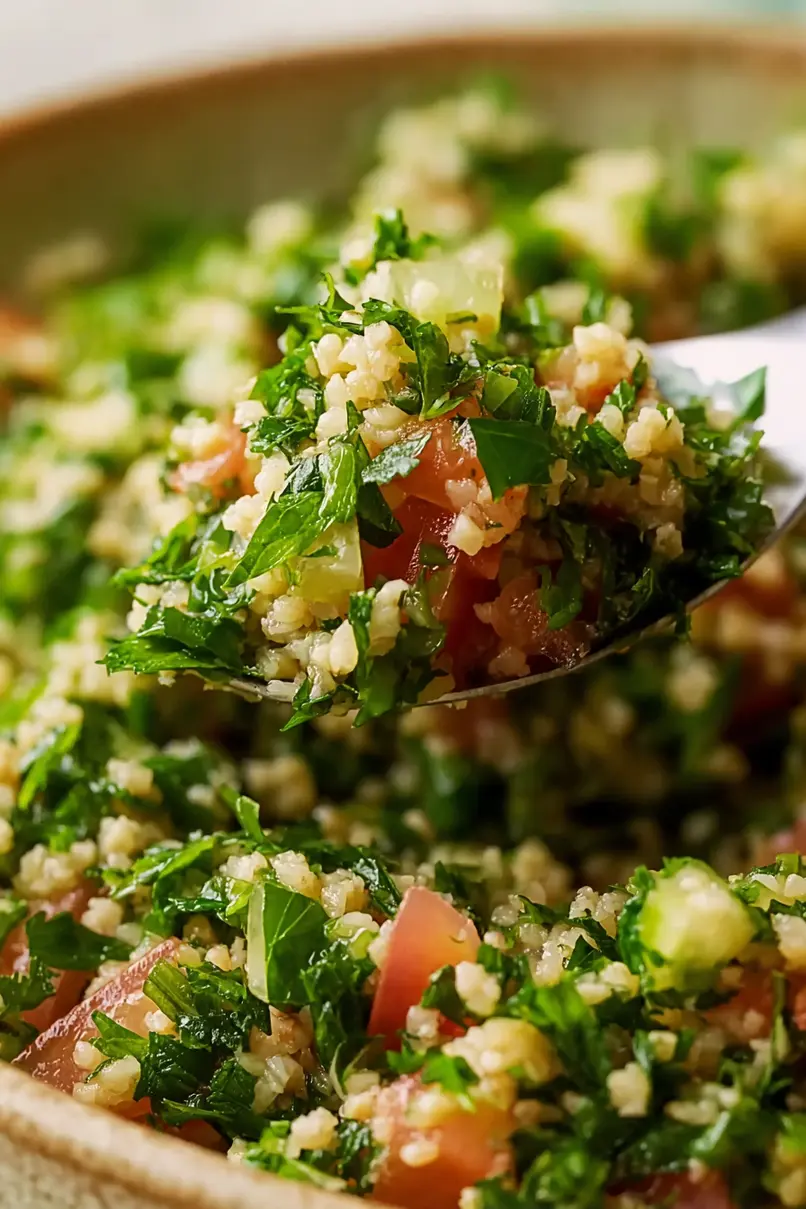
Fresh parsley is the star here, not the bulgur like most people think. Once you get that ratio right, you’re basically done. The lemon juice and olive oil do all the work of bringing everything together.
Why You’ll Love This Tabbouleh
- Fresh and healthy – Packed with fresh herbs, tomatoes, and bulgur, this Mediterranean salad is naturally nutritious and makes you feel good about what you’re eating.
- Simple preparation – Just soak the bulgur, chop your vegetables and herbs, and toss everything together with a basic lemon-olive oil dressing.
- Make-ahead friendly – This salad actually gets better as it sits, making it perfect for meal prep or bringing to potlucks and gatherings.
- Light and refreshing – The bright lemon juice and fresh mint make this a perfect side dish for hot summer days or when you want something that won’t weigh you down.
- Naturally vegan and gluten-friendly – This recipe works for almost any dietary restriction, so everyone at the table can enjoy it together.
What Kind of Bulgur Should I Use?
For tabbouleh, you’ll want to use fine bulgur, which is exactly what this recipe calls for. Fine bulgur has a smaller grain size that soaks up the boiling water quickly and gives you that perfect tender texture without being mushy. You might see medium or coarse bulgur at the store, but these take longer to soften and can make your tabbouleh feel too chewy. Fine bulgur is usually labeled as “#1” or “fine” on the package, and you can find it in the grain aisle of most grocery stores or Middle Eastern markets. If you can only find medium bulgur, just let it soak a bit longer until it’s tender to the bite.
Options for Substitutions
This classic tabbouleh recipe is pretty forgiving when it comes to swaps, though some ingredients are key to getting that authentic taste:
- Fine bulgur: This is one ingredient I wouldn’t mess with – fine bulgur gives tabbouleh its signature texture. Coarse bulgur will be too chewy, and quinoa or couscous will change the dish entirely.
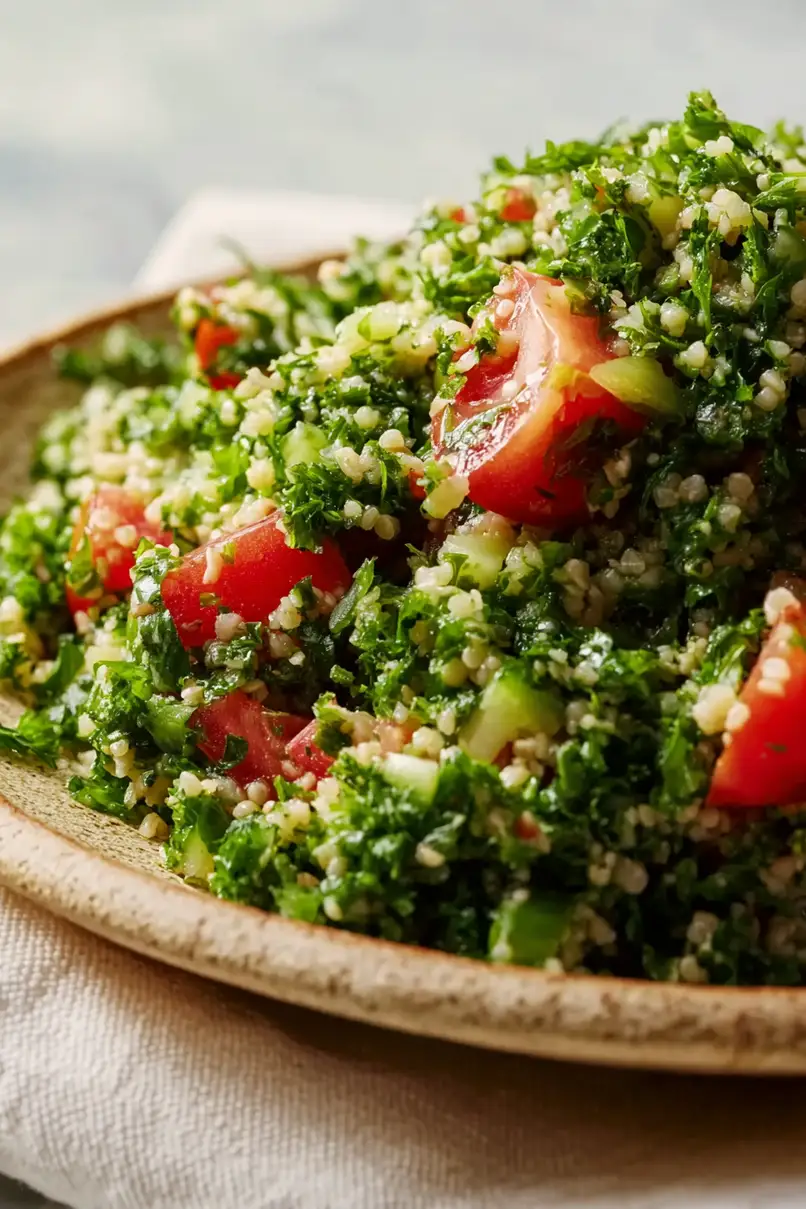
- Curly parsley: Flat-leaf parsley works too, but curly parsley is traditional and holds up better in the salad. Don’t use dried parsley – it just won’t give you the fresh, bright flavor you need.
- Fresh mint: If you can’t find fresh mint, you can leave it out rather than using dried. The parsley will still carry the fresh herb flavor, though you’ll miss that cool mint note.
- Roma tomatoes: Any ripe tomato works here – cherry tomatoes, beefsteak, or vine tomatoes are all fine. Just make sure they’re not too watery or your tabbouleh will get soggy.
- Green onions: Regular yellow onion can work if that’s what you have – just use about half the amount and soak the diced onion in cold water for 10 minutes to mellow the bite.
- Fresh lemon juice: Bottled lemon juice can work in a pinch, but fresh really makes a difference here. If you’re out of lemons, try lime juice for a slightly different but still tasty twist.
Watch Out for These Mistakes While Cooking
The biggest mistake when making tabbouleh is not draining the bulgur properly after soaking, which can leave you with a watery salad that dilutes all the fresh flavors – make sure to squeeze out excess water using a fine mesh strainer or clean kitchen towel.
Another common error is chopping the parsley too coarsely, since this herb is the star of the dish and should be minced very finely to distribute evenly throughout the salad.
Don’t skip the resting time either – tabbouleh needs at least 30 minutes in the refrigerator for the bulgur to fully absorb the lemon juice and olive oil, and the flavors to meld together properly.
Finally, avoid adding the tomatoes too early, as they can release excess moisture and make your tabbouleh soggy – dice them just before serving and gently fold them in at the last minute.
What to Serve With Tabbouleh?
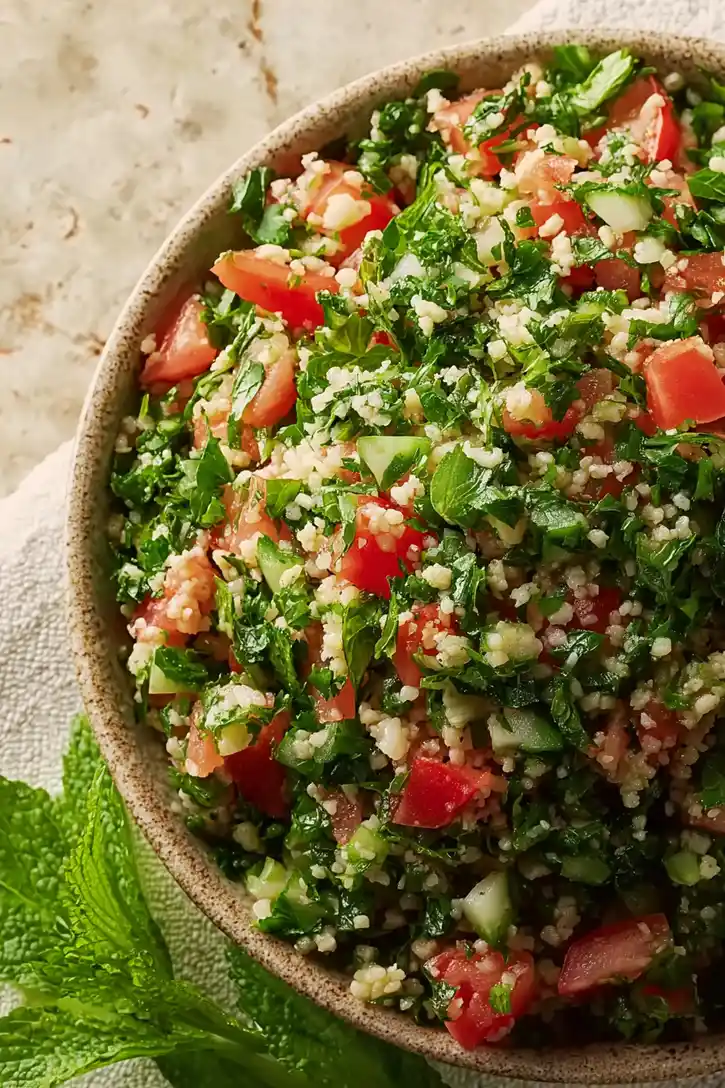
Tabbouleh is perfect as part of a Mediterranean mezze spread alongside hummus, baba ganoush, and warm pita bread for scooping. I love serving it with grilled chicken, lamb, or fish since the fresh herbs and lemon really complement those flavors nicely. It also makes a great side dish for any barbecue or cookout, especially with grilled vegetables like eggplant or zucchini. For a lighter meal, try stuffing the tabbouleh into pita pockets with some crumbled feta cheese and cucumber slices.
Storage Instructions
Refrigerate: Tabbouleh actually gets better after sitting for a while! Store it covered in the fridge for up to 4 days, and the flavors will meld together beautifully. I like to give it a quick stir and taste before serving since it might need a pinch more salt or a squeeze of lemon after sitting.
Make Ahead: This is one of those dishes that’s perfect for meal prep. You can make it a day or two ahead of time, and it’ll taste even more flavorful. Just keep it chilled and covered until you’re ready to serve. It’s great for potlucks and picnics since it doesn’t need to be heated up.
Serve: Always serve tabbouleh cold or at room temperature – never warm it up! If it seems a bit dry after storing, just drizzle in a little extra olive oil and lemon juice to freshen it up. Give it a good toss and you’re ready to go.
| Preparation Time | 15-20 minutes |
| Cooking Time | 30-35 minutes |
| Total Time | 45-55 minutes |
| Level of Difficulty | Easy |
Estimated Nutrition
Estimated nutrition for the whole recipe (without optional ingredients):
- Calories: 1300-1450
- Protein: 10-14 g
- Fat: 62-70 g
- Carbohydrates: 180-200 g
Ingredients
For the salad:
- 3 cups curly parsley, chopped (freshly minced for best flavor)
- 1 1/2 cups diced roma tomatoes (about 2 large, cut into 1/2-inch cubes)
- 1/4 cup minced fresh mint (finely chopped, about 1/4-inch pieces)
- 2 cups hot water
- 3/4 cup chopped green onions (about 1 bunch, white and light green parts)
- 1 cup fine bulgur (soaked in hot water until tender, about 15 minutes)
For the dressing:
- 1/2 cup freshly squeezed lemon juice (about 3-4 lemons)
- 1 1/2 tsp kosher salt (adjust to taste)
- 1/2 cup extra-virgin olive oil (I use Bariani California olive oil)
Step 1: Prepare the Bulgur
- 1 cup fine bulgur
- 2 cups hot water
Pour the hot water over the bulgur in a bowl and let it soak until tender and fluffy, about 15 minutes.
The bulgur will absorb the water and become light and nutty.
While the bulgur soaks, you can move on to prepping your vegetables.
Step 2: Prepare All the Fresh Ingredients
- 3 cups curly parsley
- 3/4 cup chopped green onions
- 1/4 cup fresh mint
- 1 1/2 cups diced roma tomatoes
While the bulgur soaks, finely mince the parsley, green onions (using the white and light green parts), and fresh mint into roughly 1/4-inch pieces.
Dice the roma tomatoes into 1/2-inch cubes.
Keep the tomatoes separate from the herbs to prevent them from releasing too much liquid.
I find that mincing the herbs by hand rather than using a food processor gives you better texture and flavor—the processor can bruise delicate herbs and release bitter compounds.
Step 3: Make the Lemon-Olive Oil Dressing
- 1/2 cup extra-virgin olive oil
- 1/2 cup freshly squeezed lemon juice
- 1 1/2 tsp kosher salt
In a small bowl, whisk together the extra-virgin olive oil, fresh lemon juice, and kosher salt until well combined.
The acidity of the lemon will help preserve the vibrant color of the herbs and brighten all the flavors.
Taste it and adjust the salt if needed—this dressing carries the entire dish, so it should taste balanced and bold.
Step 4: Drain and Combine Everything
- soaked bulgur from Step 1
- minced herbs and diced tomatoes from Step 2
Once the bulgur has finished soaking and is tender, pour it into a fine-mesh colander or sieve lined with cheesecloth and gently squeeze out the excess water—this prevents the tabbouleh from becoming watery and mushy.
Transfer the drained bulgur to a large serving bowl, then add the minced herbs and diced tomatoes.
Mix gently to combine.
Step 5: Dress and Rest the Tabbouleh
- bulgur and vegetable mixture from Step 4
- lemon-olive oil dressing from Step 3
Pour the lemon-olive oil dressing from Step 3 over the bulgur and vegetable mixture, then toss everything together until well combined.
Let the tabbouleh rest for at least 30 minutes at room temperature (or chill for up to 2 hours) before serving—this allows the flavors to meld and the bulgur to fully absorb the dressing.
I like to give it another gentle toss before serving to redistribute the dressing evenly.