Finding a fresh, make-ahead side dish for your Easter gathering that actually tastes good the next day can feel impossible. You want something that feeds a crowd, travels well to potlucks, and doesn’t leave you stuck in the kitchen while everyone else is enjoying the celebration.
That’s exactly why this Easter orzo salad has become my secret weapon for spring gatherings. It comes together in about 20 minutes, tastes even better after sitting in the fridge for a few hours, and the bright lemon dressing with artichokes and fresh herbs makes it feel special enough for a holiday table without any fussy techniques.
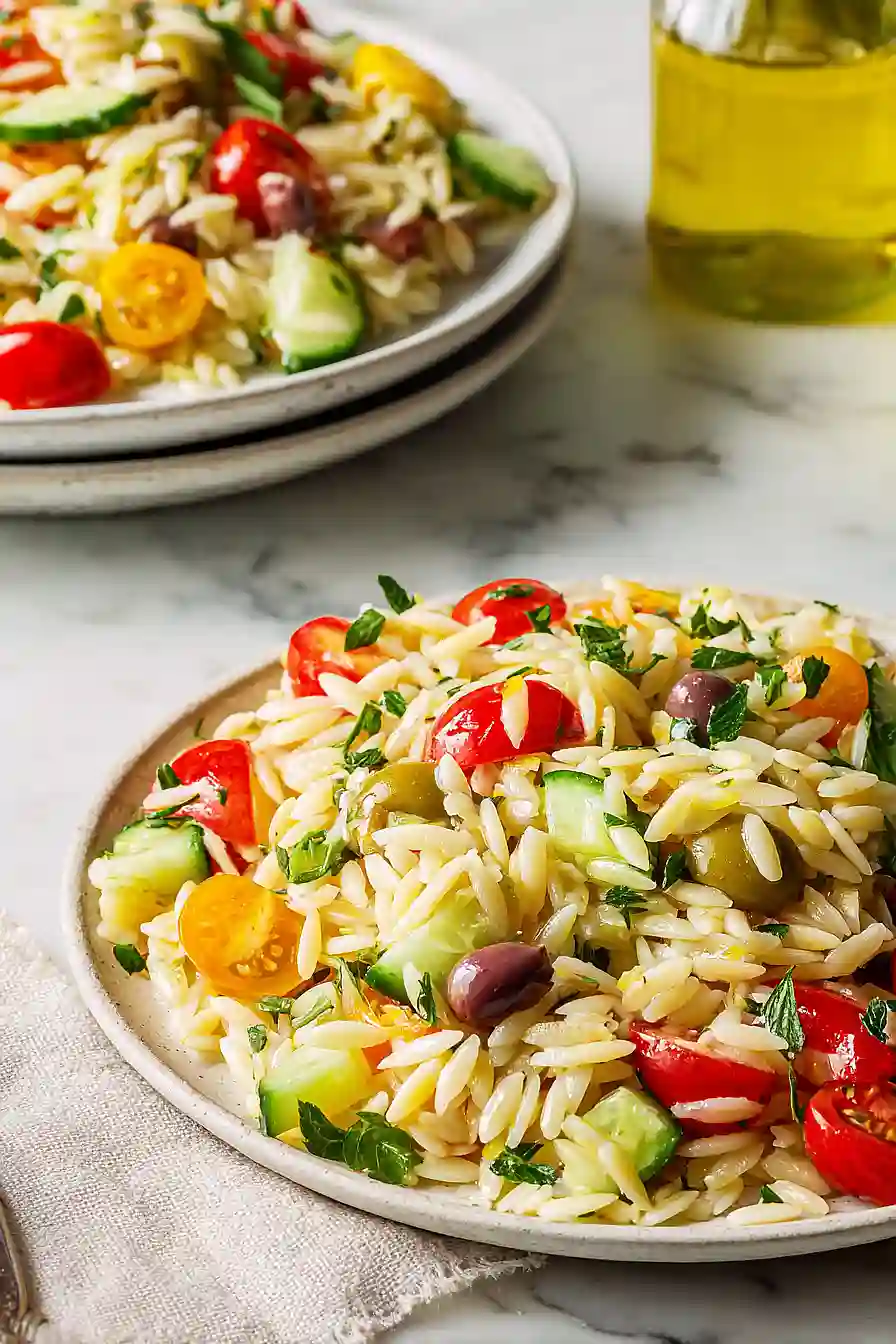
Why You’ll Love This Orzo Salad
- Quick and easy – Ready in under 30 minutes, this salad comes together fast, making it perfect for busy weeknights or last-minute gatherings.
- Fresh and flavorful – The combination of crisp vegetables, tangy lemon dressing, and fresh herbs makes every bite taste bright and satisfying.
- Great for meal prep – This orzo salad actually tastes better after sitting in the fridge for a few hours, so you can make it ahead for lunches or potlucks throughout the week.
- Customizable ingredients – You can swap in whatever fresh herbs or vegetables you have on hand, making this recipe flexible and forgiving.
- Perfect side or main dish – Serve it alongside grilled chicken or fish, or add some feta cheese and chickpeas to turn it into a complete vegetarian meal.
What Kind of Orzo Should I Use?
Any standard dried orzo pasta from your grocery store will work perfectly for this salad. You’ll find orzo in the pasta aisle, and it looks like large grains of rice – don’t worry if you see it labeled as “orzo pasta” or “risoni,” they’re the same thing. If you want to add more nutrition to your salad, whole wheat orzo is a great option that adds a slightly nuttier flavor and more fiber. Just cook your orzo according to the package directions until it’s al dente, then rinse it under cold water to stop the cooking process and cool it down for your salad.
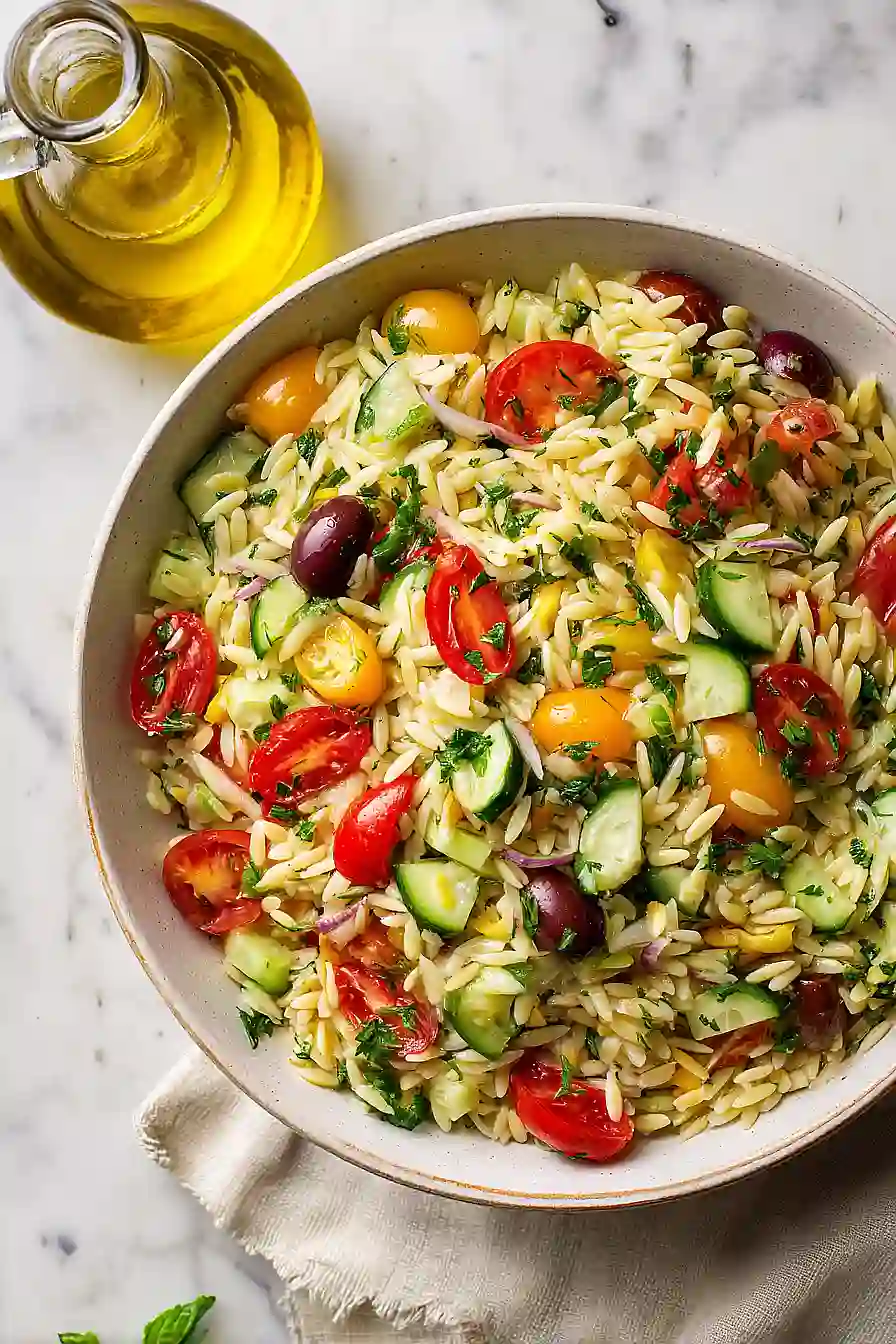
Options for Substitutions
This salad is really forgiving when it comes to swaps, so feel free to work with what you have:
- Orzo pasta: This is the one ingredient I’d recommend keeping as is – orzo’s small, rice-like shape is what makes this salad work. Other small pastas like ditalini or acini di pepe could work in a pinch, but the texture won’t be quite the same.
- English cucumber: Regular cucumbers work just fine here. Just peel them and scoop out the seeds with a spoon before dicing to avoid excess water in your salad.
- Fresh herbs: Mix and match whatever herbs you have on hand or prefer. A combination of parsley and dill is classic, but you can use just one herb if that’s what you’ve got.
- Olives: Any type works – kalamata, green, black, or a mix. Not a fan of olives? Try capers or sun-dried tomatoes instead for that briny, tangy element.
- Artichoke hearts: You can leave these out entirely or swap them for roasted red peppers, marinated mushrooms, or even chickpeas for added protein.
- Honey or maple syrup: Either one works to balance the acidity in the dressing. You can also use agave nectar or a pinch of sugar.
Watch Out for These Mistakes While Cooking
The biggest mistake when making orzo salad is rinsing the pasta after draining, which washes away the starch that helps the dressing cling to each piece – skip the rinse and toss the warm orzo directly with the dressing instead.
Overcooking orzo is easy to do since it’s so small, so start checking it a minute or two before the package directions suggest and aim for al dente, as it will continue to soften slightly as it sits in the salad.
Another common error is adding all the vegetables while the orzo is still hot, which can make cucumbers and tomatoes release too much water and dilute your dressing – that’s why waiting those 5 minutes for the pasta to cool down matters.
For the best flavor, make sure to taste and adjust your lemon juice and salt at the end, since orzo really soaks up seasoning and what tastes good when you first mix it might need a boost before serving.
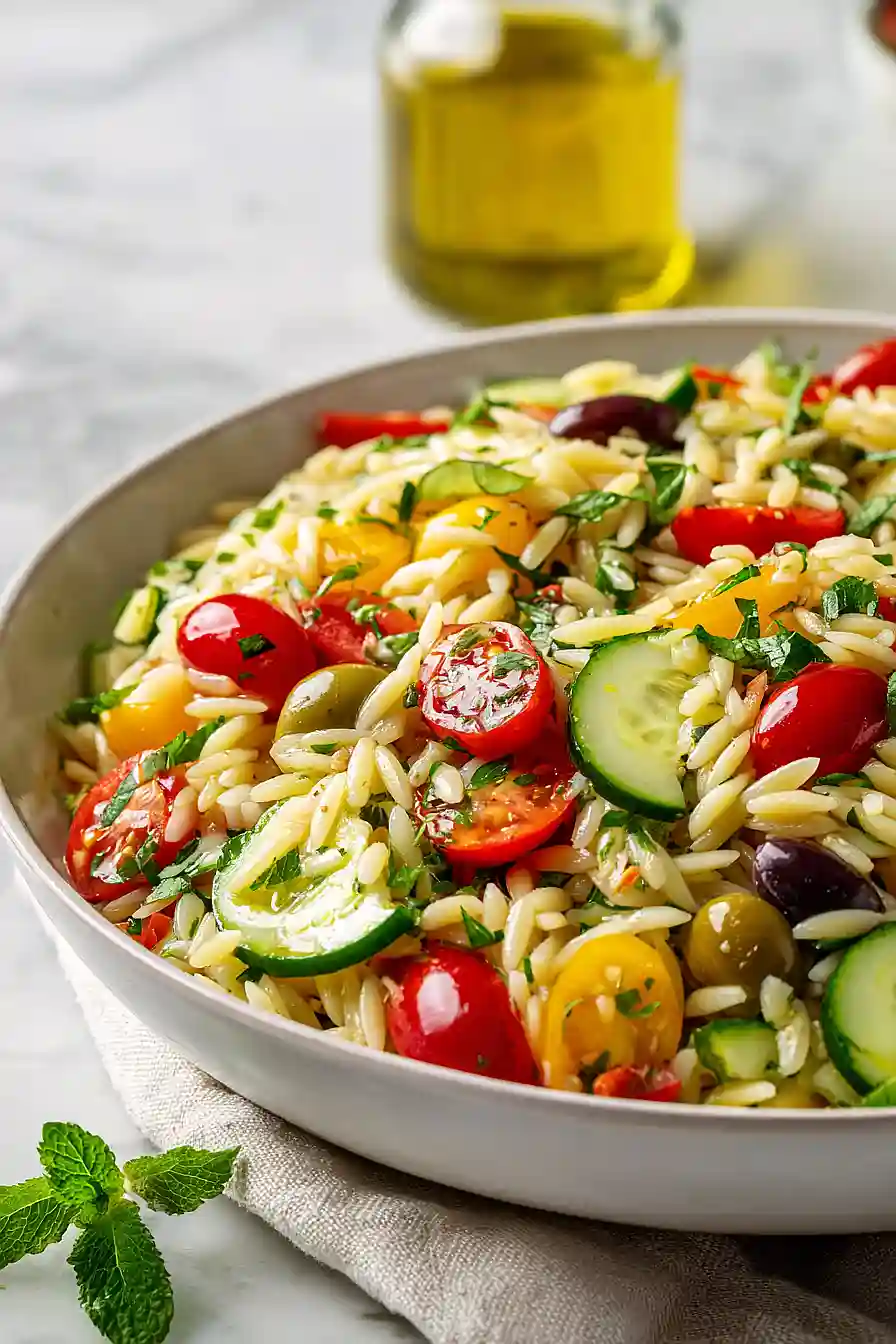
What to Serve With Orzo Salad?
This orzo salad is pretty filling on its own, but it pairs beautifully with grilled chicken, salmon, or shrimp if you want to add some protein. It’s also perfect alongside grilled lamb chops or kebabs for a Mediterranean-style meal, especially during spring and summer gatherings. Since the salad is already packed with fresh flavors, I like to keep things simple and serve it with warm pita bread or flatbread on the side. You could also turn it into a bigger spread by adding some hummus, tzatziki, or a simple Greek yogurt dip for everyone to share.
Storage Instructions
Store: This orzo salad actually gets better as it sits and the flavors meld together. Keep it in an airtight container in the fridge for up to 4 days. You might need to give it a good stir before serving since the dressing can settle at the bottom.
Make Ahead: This is a great make-ahead dish for Easter brunch or potlucks. You can prep it the night before, and it’ll taste even better the next day. If you’re worried about the herbs wilting, you can add those fresh right before serving.
Refresh: After a day or two in the fridge, the pasta might absorb some of the dressing. Just drizzle a little extra olive oil and a squeeze of lemon juice over it, toss well, and it’ll taste fresh again.
| Preparation Time | 15-20 minutes |
| Cooking Time | 10-15 minutes |
| Total Time | 25-35 minutes |
| Level of Difficulty | Easy |
| Servings | 6 servings |
Estimated Nutrition
Estimated nutrition for the whole recipe (without optional ingredients):
- Calories: 1100-1250
- Protein: 20-25 g
- Fat: 50-58 g
- Carbohydrates: 145-165 g
Ingredients
For the salad:
- 1.5 cups dry orzo (I always use Barilla for the best al dente texture)
- 1 large english cucumber (diced into 1/2-inch pieces)
- 1 large tomato (seeded and chopped into 1/2-inch cubes)
- 0.5 cup fresh herbs
- 0.5 cup pitted olives
- 1.5 cups artichoke hearts (cut into 1-inch chunks)
For the dressing:
- 0.33 cup olive oil (I prefer Lucini Premium Select for its peppery finish)
- 1.5 tsp dijon mustard (helps emulsify the dressing for a creamy finish)
- 0.5 tsp honey
- 1 tsp lemon zest
- 4 tbsp lemon juice (freshly squeezed for best acidity)
- salt
- black pepper
- 0.25 tsp red pepper flakes
Step 1: Prepare the Vegetables and Mise en Place
- 1 large english cucumber
- 1 large tomato
- 1.5 cups artichoke hearts
- 0.5 cup fresh herbs
- 0.5 cup pitted olives
While the water comes to a boil, prepare all your vegetables: dice the English cucumber into 1/2-inch pieces, seed and chop the tomato into 1/2-inch cubes, cut the artichoke hearts into 1-inch chunks, and chop your fresh herbs.
Measure out the olives and set everything aside in separate bowls.
This prep work ensures you won’t be scrambling when the orzo finishes cooking, and it allows the warm pasta to absorb the dressing without interruption.
Step 2: Cook the Orzo
- 1.5 cups dry orzo
- salt
Bring a large pot of salted water to a rolling boil, then add the dry orzo and cook for 6-10 minutes until al dente—the pasta should have a slight firmness when you bite it, not mushy.
Reserve about 1/4 cup of the starchy pasta water before draining (this can help loosen the dressing if needed), then drain the orzo thoroughly in a colander.
Step 3: Build the Dressing
- 0.33 cup olive oil
- 1.5 tsp dijon mustard
- 0.5 tsp honey
- 1 tsp lemon zest
- 4 tbsp lemon juice
- salt
- black pepper
- 0.25 tsp red pepper flakes
In a small bowl, whisk together the olive oil, Dijon mustard, honey, lemon zest, and lemon juice.
The mustard acts as an emulsifier, creating a creamy vinaigrette that clings beautifully to the pasta.
Season with salt, black pepper, and red pepper flakes, whisking until everything is well combined.
Step 4: Dress the Warm Pasta
- cooked orzo from Step 2
- dressing from Step 3
Pour the dressing from Step 3 over the hot orzo while it’s still warm—this is crucial because warm pasta absorbs the dressing much better than cold pasta, creating deeper flavor throughout.
Toss gently but thoroughly to coat every piece.
Let the dressed orzo sit for about 5 minutes so the pasta continues to absorb the flavors.
I like this resting period because it allows the starches to relax and really drink in that lemon and olive oil goodness.
Step 5: Assemble the Salad
- warm dressed orzo from Step 4
- prepared vegetables and herbs from Step 1
Add the prepared cucumber, tomato, herbs, olives, and artichoke hearts from Step 1 to the dressed orzo.
Gently fold everything together, being careful not to break up the vegetables.
Taste and adjust the seasoning with additional salt and pepper as needed—remember that the pasta itself is already salted, so taste before adding too much more.
Step 6: Chill and Serve
The salad can be served warm right away for a softer pasta texture, or you can refrigerate it for 30 minutes to 2 hours for a chilled version—both are delicious.
If the salad seems a bit dry after chilling, drizzle with a touch more olive oil or the reserved pasta water and toss gently.
Serve as a fresh side dish for your Easter meal or any spring gathering.
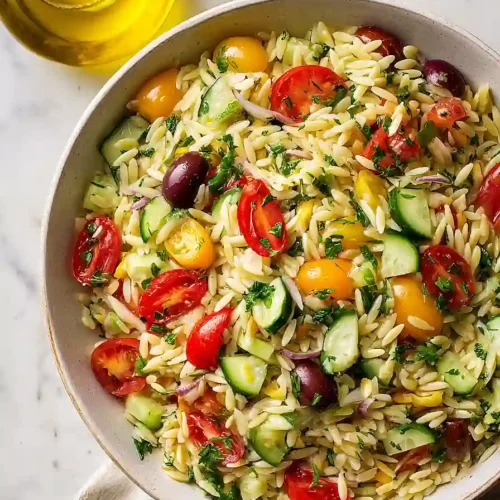
Mediterranean Easter Orzo Salad
Ingredients
For the salad
- 1.5 cups dry orzo (I always use Barilla for the best al dente texture)
- 1 large english cucumber (diced into 1/2-inch pieces)
- 1 large tomato (seeded and chopped into 1/2-inch cubes)
- 0.5 cup fresh herbs
- 0.5 cup pitted olives
- 1.5 cups artichoke hearts (cut into 1-inch chunks)
For the dressing
- 0.33 cup olive oil (I prefer Lucini Premium Select for its peppery finish)
- 1.5 tsp dijon mustard (helps emulsify the dressing for a creamy finish)
- 0.5 tsp honey
- 1 tsp lemon zest
- 4 tbsp lemon juice (freshly squeezed for best acidity)
- salt
- black pepper
- 0.25 tsp red pepper flakes
Instructions
- While the water comes to a boil, prepare all your vegetables: dice the English cucumber into 1/2-inch pieces, seed and chop the tomato into 1/2-inch cubes, cut the artichoke hearts into 1-inch chunks, and chop your fresh herbs. Measure out the olives and set everything aside in separate bowls. This prep work ensures you won't be scrambling when the orzo finishes cooking, and it allows the warm pasta to absorb the dressing without interruption.
- Bring a large pot of salted water to a rolling boil, then add the dry orzo and cook for 6-10 minutes until al dente—the pasta should have a slight firmness when you bite it, not mushy. Reserve about 1/4 cup of the starchy pasta water before draining (this can help loosen the dressing if needed), then drain the orzo thoroughly in a colander.
- In a small bowl, whisk together the olive oil, Dijon mustard, honey, lemon zest, and lemon juice. The mustard acts as an emulsifier, creating a creamy vinaigrette that clings beautifully to the pasta. Season with salt, black pepper, and red pepper flakes, whisking until everything is well combined.
- Pour the dressing from Step 3 over the hot orzo while it's still warm—this is crucial because warm pasta absorbs the dressing much better than cold pasta, creating deeper flavor throughout. Toss gently but thoroughly to coat every piece. Let the dressed orzo sit for about 5 minutes so the pasta continues to absorb the flavors. I like this resting period because it allows the starches to relax and really drink in that lemon and olive oil goodness.
- Add the prepared cucumber, tomato, herbs, olives, and artichoke hearts from Step 1 to the dressed orzo. Gently fold everything together, being careful not to break up the vegetables. Taste and adjust the seasoning with additional salt and pepper as needed—remember that the pasta itself is already salted, so taste before adding too much more.
- The salad can be served warm right away for a softer pasta texture, or you can refrigerate it for 30 minutes to 2 hours for a chilled version—both are delicious. If the salad seems a bit dry after chilling, drizzle with a touch more olive oil or the reserved pasta water and toss gently. Serve as a fresh side dish for your Easter meal or any spring gathering.