Finding a way to use up fresh rhubarb before it goes bad can be tricky, especially when you’re tired of making the same old pie or crumble. Plus, baking with rhubarb can feel intimidating if you’ve never worked with it before, and it’s hard to know which recipes will actually turn out moist and flavorful instead of dense or too tart.
That’s where this glazed rhubarb bread comes in handy: it’s perfectly balanced between sweet and tangy, simple enough for beginner bakers to master, and the lemon glaze adds just the right finishing touch without any fuss.
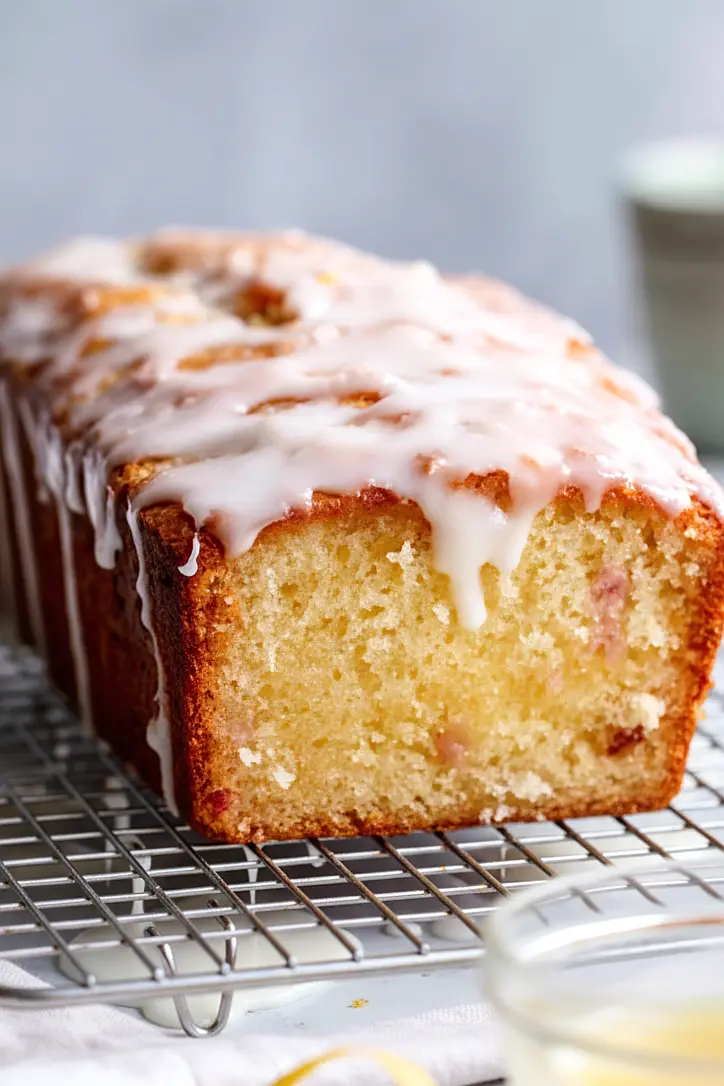
Why You’ll Love This Rhubarb Bread
- Perfect balance of sweet and tart – The tangy rhubarb paired with the sweet glaze creates a flavor combination that’s refreshing and not too heavy.
- Simple ingredients – You probably have most of these pantry staples on hand already, and fresh rhubarb is easy to find in season or freeze for later use.
- Quick baking time – This bread comes together in about an hour, making it perfect for weekend baking or when you need a homemade treat without spending all day in the kitchen.
- Great for sharing – This recipe makes a generous loaf that’s ideal for bringing to potlucks, gifting to neighbors, or enjoying with your morning coffee throughout the week.
What Kind of Rhubarb Should I Use?
Fresh rhubarb is always your best bet for this recipe, and you’ll want to look for stalks that are firm and crisp without any soft spots. The color of rhubarb can range from green to deep red, but here’s the thing – the color doesn’t actually affect the flavor, so don’t worry if you can only find the greener stalks. When you’re prepping your rhubarb, make sure to trim off and discard the leaves since they’re toxic, and focus on using just the stalks. If fresh rhubarb isn’t in season, frozen rhubarb will work too, just be sure to thaw it completely and drain off any excess liquid before dicing it up for your bread.
Options for Substitutions
This recipe is pretty forgiving, so here are some swaps you can make if needed:
- Rhubarb: Fresh rhubarb is best here, but if you only have frozen, that works too. Just thaw it completely and drain off any excess liquid before folding it into the batter to avoid a soggy loaf.
- Butter: You can use vegetable oil instead (use about 1/2 cup plus 2 tablespoons), though the bread will have a slightly different texture. Margarine works in a pinch, but stick with butter if you can for the best flavor.
- Milk: Any milk works here – whole, 2%, almond, oat, or even buttermilk. If using buttermilk, reduce the baking powder to 2 teaspoons and add 1/2 teaspoon baking soda.
- Lemon juice and zest: Orange juice and zest make a nice substitute if you don’t have lemons. The flavor will be a bit sweeter and less tangy, but it pairs nicely with rhubarb.
- All purpose flour: You can replace up to half the flour with whole wheat flour for a heartier loaf, but don’t go beyond that or the bread will be too dense.
Watch Out for These Mistakes While Baking
The biggest mistake when baking with rhubarb is not dicing it small enough – pieces larger than half an inch can release too much moisture and create soggy pockets in your bread, so aim for uniform quarter-inch cubes.
Overmixing the batter after adding the flour is another common error that leads to tough, dense bread instead of a tender crumb, so stir just until the dry ingredients are incorporated and you no longer see streaks of flour.
Don’t skip the cooling time before glazing, because pouring the lemon glaze over hot bread will cause it to soak in completely instead of creating that nice sweet coating on top – wait until the bread is warm but not hot to the touch.
Finally, check for doneness with a toothpick inserted in the center, and if it comes out with wet batter (not just moist crumbs), give it another 5-10 minutes since underbaked quick breads can be gummy in the middle.
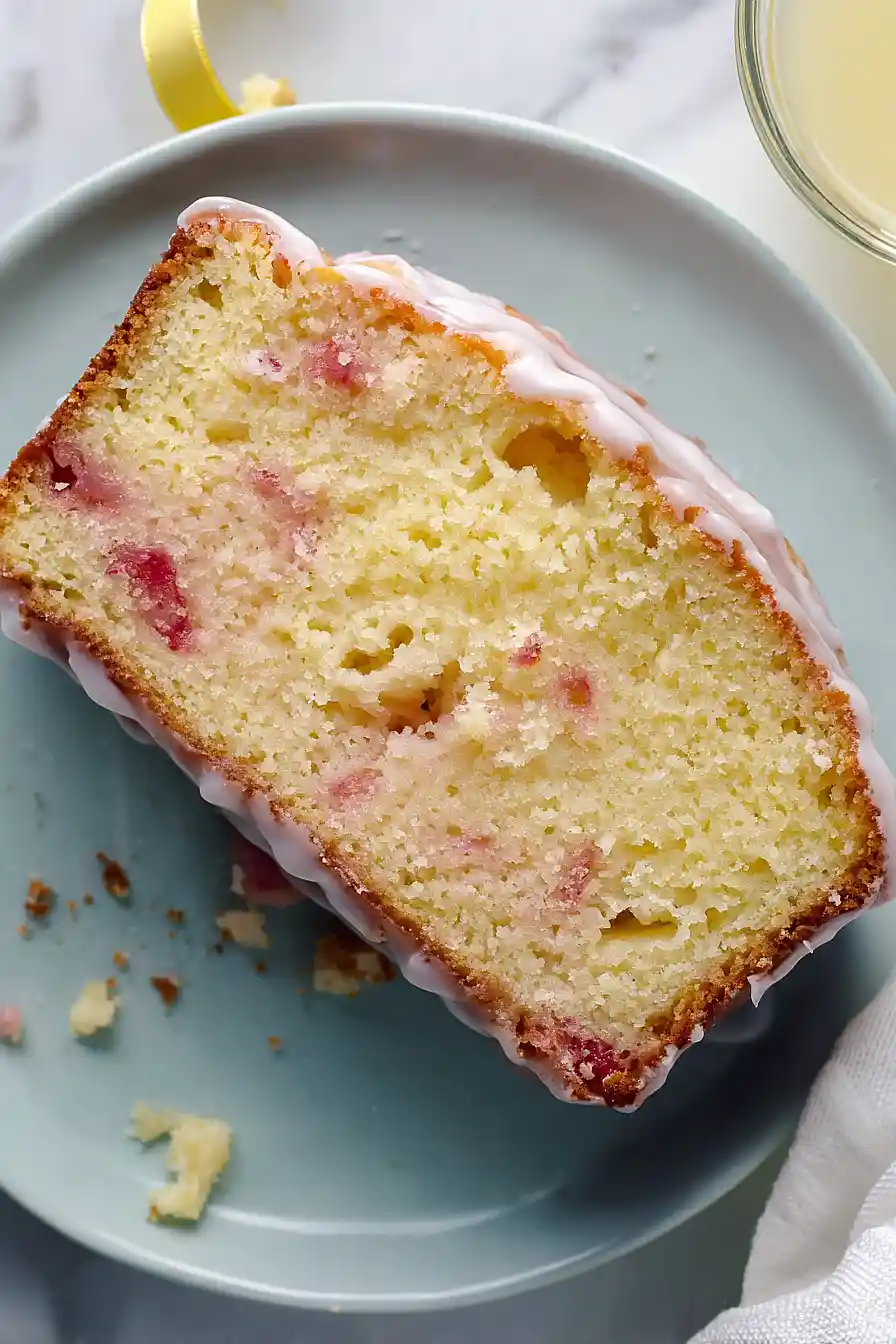
What to Serve With Rhubarb Bread?
This glazed rhubarb bread is perfect for breakfast or an afternoon snack with a hot cup of coffee or tea. I love serving it with a pat of softened butter that melts right into the warm bread, or you can spread on some cream cheese for extra richness. It also pairs nicely with fresh berries on the side – strawberries are especially good since they complement the tart rhubarb flavor. For a more indulgent treat, try serving a slice alongside vanilla ice cream or whipped cream for dessert.
Storage Instructions
Store: Keep your glazed rhubarb bread wrapped tightly in plastic wrap or in an airtight container at room temperature for up to 3 days. If you want it to last longer, pop it in the fridge where it’ll stay fresh for about a week.
Freeze: This bread freezes really well! Wrap it tightly in plastic wrap, then again in aluminum foil, and freeze for up to 3 months. You can freeze the whole loaf or slice it first and freeze individual pieces for easy grab-and-go portions.
Thaw: When you’re ready to enjoy your frozen rhubarb bread, just let it thaw at room temperature for a few hours. If you froze individual slices, they’ll thaw in about 30 minutes, or you can warm them in the microwave for 15-20 seconds for a fresh-baked feel.
| Preparation Time | 15-30 minutes |
| Cooking Time | 40-50 minutes |
| Total Time | 55-80 minutes |
| Level of Difficulty | Easy |
| Servings | 10 slices |
Estimated Nutrition
Estimated nutrition for the whole recipe (without optional ingredients):
- Calories: 3500-3800
- Protein: 35-40 g
- Fat: 130-140 g
- Carbohydrates: 540-570 g
Ingredients
For the bread:
- 1 1/2 cups granulated sugar
- 3/4 cup unsalted butter, softened
- 3 large eggs, room temperature
- 1 tablespoon fresh lemon juice
- 3/4 cup whole milk
- 1 tablespoon fresh lemon zest
- 1 teaspoon vanilla extract
- 3 cups all-purpose flour
- 3 teaspoons baking powder
- 3/4 teaspoon salt
- 1/4 teaspoon ground ginger
- 2 1/4 cups fresh rhubarb, chopped into 1/2-inch pieces
For the glaze:
- 1 1/4 cups icing sugar, sifted
- 2 tablespoons fresh lemon juice
Step 1: Prepare the Pan and Mise en Place
- 1 loaf pan
- 2 1/4 cups fresh rhubarb, chopped into 1/2-inch pieces
- 3 cups all-purpose flour
- 3 teaspoons baking powder
- 3/4 teaspoon salt
- 1/4 teaspoon ground ginger
Preheat your oven to 375°F and grease a 9×5 inch loaf pan or similar size, making sure to coat the bottom and sides thoroughly to prevent sticking.
While the oven preheats, chop the fresh rhubarb into 1/2-inch pieces and set aside in a bowl.
Measure out all your dry ingredients (flour, baking powder, salt, and ginger) into a separate bowl and whisk them together to distribute the leavening agents evenly—this prevents lumps when you combine the wet and dry mixtures.
Step 2: Cream Butter and Sugar
- 1 1/2 cups granulated sugar
- 3/4 cup unsalted butter, softened
In a large mixing bowl, combine the softened butter and granulated sugar, then beat on medium speed for 3-4 minutes until the mixture is light, fluffy, and pale in color.
This creaming process incorporates air into the batter, which helps the bread rise and creates a tender crumb.
The butter should be soft enough to combine easily but still hold its shape—if it’s too warm, the mixture won’t incorporate air properly.
Step 3: Build the Wet Ingredient Base
- 3 large eggs, room temperature
- 1 tablespoon fresh lemon juice
- 1 tablespoon fresh lemon zest
- 1 teaspoon vanilla extract
- 3/4 cup whole milk
Add the room-temperature eggs one at a time to the creamed butter mixture, beating well after each addition to fully incorporate.
Then stir in the lemon juice, fresh lemon zest, vanilla extract, and milk until everything is well combined.
The mixture may look slightly curdled at this stage, which is normal—the dry ingredients will bring it together.
I like to add the milk last to help smooth out any texture issues before mixing with the dry ingredients.
Step 4: Combine Wet and Dry Ingredients
- dry ingredient mixture from Step 1
- wet ingredient mixture from Step 3
Pour the dry ingredient mixture from Step 1 into the wet mixture from Step 3, then stir gently with a spatula or wooden spoon just until combined—do not overmix, as this can lead to a tough, dense crumb.
The batter should look slightly lumpy; overmixing develops gluten, which is the enemy of tender quick breads.
Stop stirring as soon as you don’t see streaks of flour.
Step 5: Add Rhubarb and Bake
- rhubarb from Step 1
- batter from Step 4
- prepared pan from Step 1
Fold the chopped rhubarb from Step 1 gently into the batter using a spatula, being careful not to crush the fruit pieces or overmix.
Pour the batter into the prepared loaf pan and smooth the top gently.
Bake at 375°F for approximately 40 minutes, until a toothpick inserted into the center comes out with just a few moist crumbs—it should not be wet with batter.
I let the bread cool in the pan for about 10 minutes before turning it out onto a cooling rack, which helps it set without breaking apart.
Step 6: Make the Glaze and Finish
- 1 1/4 cups icing sugar, sifted
- 2 tablespoons fresh lemon juice
While the bread cools, whisk together the sifted icing sugar and the 2 tablespoons of fresh lemon juice in a small bowl until you achieve a smooth, pourable consistency.
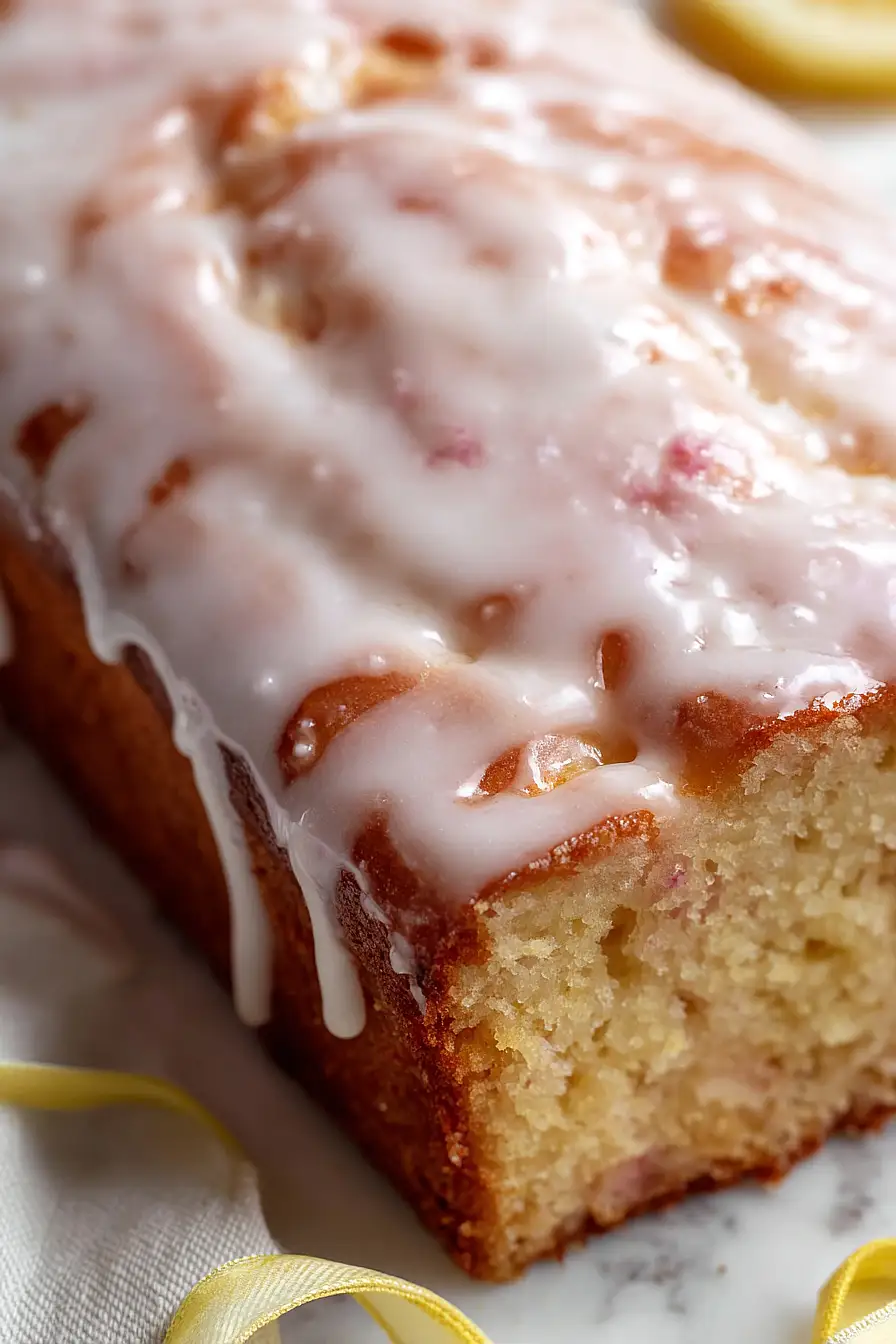
The glaze should be thick enough to coat the bread but thin enough to drip slightly down the sides.
Once the bread has cooled completely on the rack, drizzle the glaze over the top, letting it flow naturally across the surface for an attractive finish.
Mouthwatering Glazed Rhubarb Bread
Ingredients
For the bread
- 1 1/2 cups granulated sugar
- 3/4 cup unsalted butter, softened
- 3 large eggs, room temperature
- 1 tablespoon fresh lemon juice
- 3/4 cup whole milk
- 1 tablespoon fresh lemon zest
- 1 teaspoon vanilla extract
- 3 cups all-purpose flour
- 3 teaspoons baking powder
- 3/4 teaspoon salt
- 1/4 teaspoon ground ginger
- 2 1/4 cups fresh rhubarb, chopped into 1/2-inch pieces
For the glaze
- 1 1/4 cups icing sugar, sifted
- 2 tablespoons fresh lemon juice
Instructions
- Preheat your oven to 375°F and grease a 9x5 inch loaf pan or similar size, making sure to coat the bottom and sides thoroughly to prevent sticking. While the oven preheats, chop the fresh rhubarb into 1/2-inch pieces and set aside in a bowl. Measure out all your dry ingredients (flour, baking powder, salt, and ginger) into a separate bowl and whisk them together to distribute the leavening agents evenly—this prevents lumps when you combine the wet and dry mixtures.
- In a large mixing bowl, combine the softened butter and granulated sugar, then beat on medium speed for 3-4 minutes until the mixture is light, fluffy, and pale in color. This creaming process incorporates air into the batter, which helps the bread rise and creates a tender crumb. The butter should be soft enough to combine easily but still hold its shape—if it's too warm, the mixture won't incorporate air properly.
- Add the room-temperature eggs one at a time to the creamed butter mixture, beating well after each addition to fully incorporate. Then stir in the lemon juice, fresh lemon zest, vanilla extract, and milk until everything is well combined. The mixture may look slightly curdled at this stage, which is normal—the dry ingredients will bring it together. I like to add the milk last to help smooth out any texture issues before mixing with the dry ingredients.
- Pour the dry ingredient mixture from Step 1 into the wet mixture from Step 3, then stir gently with a spatula or wooden spoon just until combined—do not overmix, as this can lead to a tough, dense crumb. The batter should look slightly lumpy; overmixing develops gluten, which is the enemy of tender quick breads. Stop stirring as soon as you don't see streaks of flour.
- Fold the chopped rhubarb from Step 1 gently into the batter using a spatula, being careful not to crush the fruit pieces or overmix. Pour the batter into the prepared loaf pan and smooth the top gently. Bake at 375°F for approximately 40 minutes, until a toothpick inserted into the center comes out with just a few moist crumbs—it should not be wet with batter. I let the bread cool in the pan for about 10 minutes before turning it out onto a cooling rack, which helps it set without breaking apart.
- While the bread cools, whisk together the sifted icing sugar and the 2 tablespoons of fresh lemon juice in a small bowl until you achieve a smooth, pourable consistency. The glaze should be thick enough to coat the bread but thin enough to drip slightly down the sides. Once the bread has cooled completely on the rack, drizzle the glaze over the top, letting it flow naturally across the surface for an attractive finish.