I didn’t start grilling asparagus until my late twenties, which feels like a waste of good years now. Before that, I’d steam it or roast it in the oven, and it was fine—but nothing special. Then a friend tossed some spears on the grill at a backyard cookout, and I realized what I’d been missing.
The thing about grilled asparagus is that it’s actually easier than most other methods. You’re not hovering over a pot of boiling water or waiting around for your oven to preheat. Just oil them up, throw them on the grill, and flip once or twice. Add some balsamic vinegar and garlic to the mix, and you’ve got a side dish that tastes like you put in way more effort than you actually did.

Why You’ll Love This Grilled Balsamic Asparagus
- Ready in under 30 minutes – This quick side dish goes from prep to plate in no time, making it perfect for busy weeknights or last-minute dinner guests.
- Simple ingredients – You probably have everything you need in your pantry already—just asparagus, olive oil, balsamic vinegar, and a few seasonings.
- Healthy and light – This naturally gluten-free side is packed with nutrients and won’t weigh you down, making it a great option for anyone watching their diet.
- Flavorful without the fuss – The tangy balsamic vinegar and garlic create a delicious glaze that makes plain asparagus taste restaurant-worthy with minimal effort.
What Kind of Asparagus Should I Use?
When picking out asparagus for grilling, you’ll want to look for medium to thick spears rather than the super thin ones. The thicker spears hold up better on the grill and won’t fall through the grates or turn mushy before they get those nice char marks. Fresh asparagus should have firm stalks with tight, compact tips – if the tips look wilted or the stalks seem bendy, pass on that bunch. You’ll also want to snap off the woody ends before grilling, which happens naturally when you bend the spear and let it break where it wants to.

Options for Substitutions
This simple grilled asparagus recipe is easy to customize with what you have in your kitchen:
- Balsamic vinegar: If you’re out of balsamic, try red wine vinegar or sherry vinegar instead. You might want to add a tiny pinch of sugar to balance the acidity since balsamic has a natural sweetness.
- Fresh garlic: No fresh garlic? Use about ¼ teaspoon of garlic powder mixed into the oil and vinegar. It won’t be quite as punchy, but it’ll still give you that garlicky flavor.
- Dried thyme: Swap this with dried oregano, Italian seasoning, or even rosemary for a different herb profile. If you have fresh thyme, use about three times as much (roughly 1 teaspoon chopped).
- Olive oil: Avocado oil or grapeseed oil work great for grilling since they have high smoke points. Just avoid butter here – it’ll burn on the grill.
- Asparagus: This is the one ingredient you really can’t substitute – it’s the star of the dish! Just make sure to choose spears that are about the same thickness so they cook evenly.
Watch Out for These Mistakes While Grilling
The biggest mistake when grilling asparagus is using spears that are too thin, which cook unevenly and fall through the grill grates – stick with medium to thick asparagus or use a grill basket for thinner ones.
Overcooking is another common issue that turns your asparagus mushy and gray instead of tender-crisp and bright green, so aim for just 5-8 minutes total on medium heat, depending on thickness.
To get the best char and flavor, make sure your grill grates are clean and well-oiled before adding the asparagus, and don’t skip tossing them in the leftover marinade after grilling since that’s when they really soak up all that balsamic goodness.
If your asparagus keeps rolling around on the grill, try threading several spears onto skewers to make flipping easier and more even.
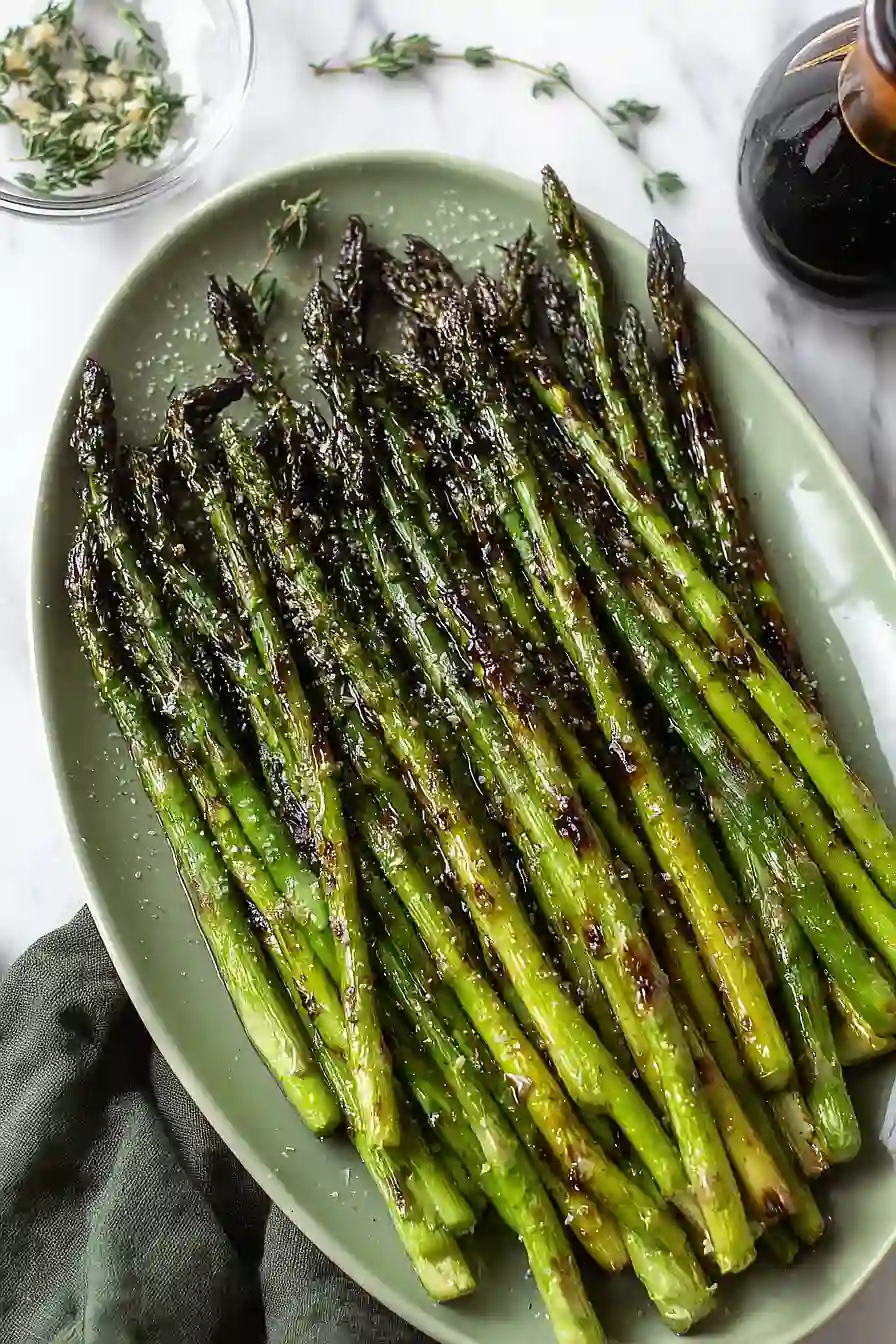
What to Serve With Grilled Balsamic Asparagus?
Grilled balsamic asparagus is a great side dish that pairs well with just about any protein you’re throwing on the grill. I love serving it alongside grilled chicken breasts, steak, or salmon for an easy weeknight dinner that feels a bit fancy. If you’re keeping things vegetarian, it goes perfectly with grilled portobello mushrooms or a big grain bowl with quinoa or farro. The tangy balsamic flavor also makes it a nice match for roasted potatoes or a simple pasta tossed with olive oil and parmesan.
Storage Instructions
Store: Grilled asparagus tastes best fresh off the grill, but leftovers will keep in an airtight container in the fridge for 2-3 days. The texture gets a bit softer after storing, but it’s still good eaten cold in salads or grain bowls.
Serve Cold: Leftover grilled asparagus is actually great straight from the fridge. Toss it into a pasta salad, chop it up for an omelet, or just eat it as a quick snack. No need to reheat if you don’t want to!
Warm Up: If you prefer your asparagus warm, just heat it gently in a skillet over medium heat for a minute or two. You can also microwave it for about 30 seconds, though it won’t be quite as crispy as when it was first grilled.
| Preparation Time | 10-15 minutes |
| Cooking Time | 10-15 minutes |
| Total Time | 20-30 minutes |
| Level of Difficulty | Easy |
| Servings | 4 servings |
Estimated Nutrition
Estimated nutrition for the whole recipe (without optional ingredients):
- Calories: 130-160
- Protein: 4-6 g
- Fat: 14-16 g
- Carbohydrates: 7-10 g
Ingredients
For the asparagus:
- 1 bunch fresh asparagus (woody ends trimmed off, about 1-2 inches from the bottom)
For the marinade:
- 3 tbsp olive oil (Filippio Berio for a smooth finish)
- 2 tbsp balsamic vinegar (Colavita for balanced acidity)
- 1 garlic clove (freshly minced)
- 1/4 tsp fresh thyme
- 1/4 tsp salt
- 1/4 tsp freshly ground black pepper
- 1/2 tsp Dijon mustard
Step 1: Prepare the Asparagus and Preheat the Grill
- 1 bunch fresh asparagus
Trim the woody ends from the asparagus by snapping or cutting off about 1-2 inches from the bottom of each spear—they’ll naturally break at the tender point if you bend them gently.
Rinse the trimmed asparagus and pat completely dry with paper towels, as moisture will prevent proper browning on the grill.
While preparing the asparagus, preheat your grill to medium heat (around 400-425°F) so it’s ready when you need it.
Step 2: Create the Balsamic Marinade
- 3 tbsp olive oil
- 2 tbsp balsamic vinegar
- 1 garlic clove, freshly minced
- 1/4 tsp fresh thyme
- 1/4 tsp salt
- 1/4 tsp freshly ground black pepper
- 1/2 tsp Dijon mustard
In a small bowl, whisk together the olive oil, balsamic vinegar, minced garlic, fresh thyme, salt, pepper, and Dijon mustard until well combined.
The mustard acts as an emulsifier, helping the oil and vinegar stay together and adding subtle depth to the marinade.
Taste the mixture and adjust seasoning if needed—I like to add just a touch extra salt since it brings out the balsamic’s natural sweetness.
Step 3: Coat Asparagus and Grill
- asparagus from Step 1
- balsamic marinade from Step 2
Place the dried asparagus on a large plate or baking sheet and drizzle with about two-thirds of the balsamic marinade from Step 2, tossing gently with your hands or tongs to coat evenly.
Lay the asparagus perpendicular to the grill grates (so they don’t fall through) and grill for 8-12 minutes depending on thickness, turning every 2-3 minutes to develop an even char and ensure tender, evenly cooked spears.
The asparagus is done when the tips are slightly caramelized and the stalks are tender when pierced with a fork but still have a bit of bite.
Step 4: Finish and Serve
- grilled asparagus from Step 3
- remaining balsamic marinade from Step 2
Transfer the grilled asparagus back to a serving bowl or platter and drizzle with the remaining marinade from Step 2, tossing gently to coat.
Serve immediately while warm so the asparagus retains its tender-crisp texture and the residual heat allows the balsamic glaze to coat each spear beautifully.
I find that serving it right away ensures the best flavor and prevents the asparagus from becoming too soft.

Mouthwatering Grilled Balsamic Asparagus
Ingredients
For the asparagus
- 1 bunch fresh asparagus (woody ends trimmed off, about 1-2 inches from the bottom)
For the marinade
- 3 tbsp olive oil (Filippio Berio for a smooth finish)
- 2 tbsp balsamic vinegar (Colavita for balanced acidity)
- 1 garlic clove (freshly minced)
- 1/4 tsp fresh thyme
- 1/4 tsp salt
- 1/4 tsp freshly ground black pepper
- 1/2 tsp Dijon mustard
Instructions
- Trim the woody ends from the asparagus by snapping or cutting off about 1-2 inches from the bottom of each spear—they'll naturally break at the tender point if you bend them gently. Rinse the trimmed asparagus and pat completely dry with paper towels, as moisture will prevent proper browning on the grill. While preparing the asparagus, preheat your grill to medium heat (around 400-425°F) so it's ready when you need it.
- In a small bowl, whisk together the olive oil, balsamic vinegar, minced garlic, fresh thyme, salt, pepper, and Dijon mustard until well combined. The mustard acts as an emulsifier, helping the oil and vinegar stay together and adding subtle depth to the marinade. Taste the mixture and adjust seasoning if needed—I like to add just a touch extra salt since it brings out the balsamic's natural sweetness.
- Place the dried asparagus on a large plate or baking sheet and drizzle with about two-thirds of the balsamic marinade from Step 2, tossing gently with your hands or tongs to coat evenly. Lay the asparagus perpendicular to the grill grates (so they don't fall through) and grill for 8-12 minutes depending on thickness, turning every 2-3 minutes to develop an even char and ensure tender, evenly cooked spears. The asparagus is done when the tips are slightly caramelized and the stalks are tender when pierced with a fork but still have a bit of bite.
- Transfer the grilled asparagus back to a serving bowl or platter and drizzle with the remaining marinade from Step 2, tossing gently to coat. Serve immediately while warm so the asparagus retains its tender-crisp texture and the residual heat allows the balsamic glaze to coat each spear beautifully. I find that serving it right away ensures the best flavor and prevents the asparagus from becoming too soft.