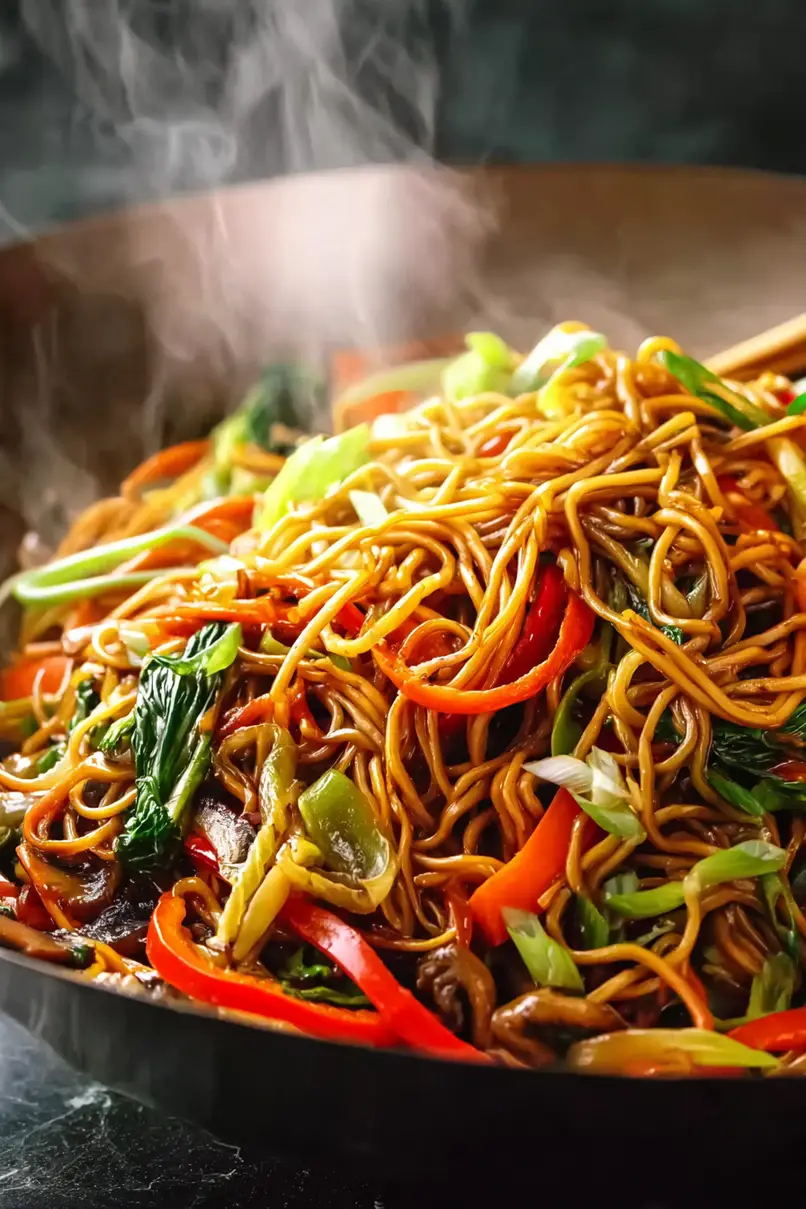
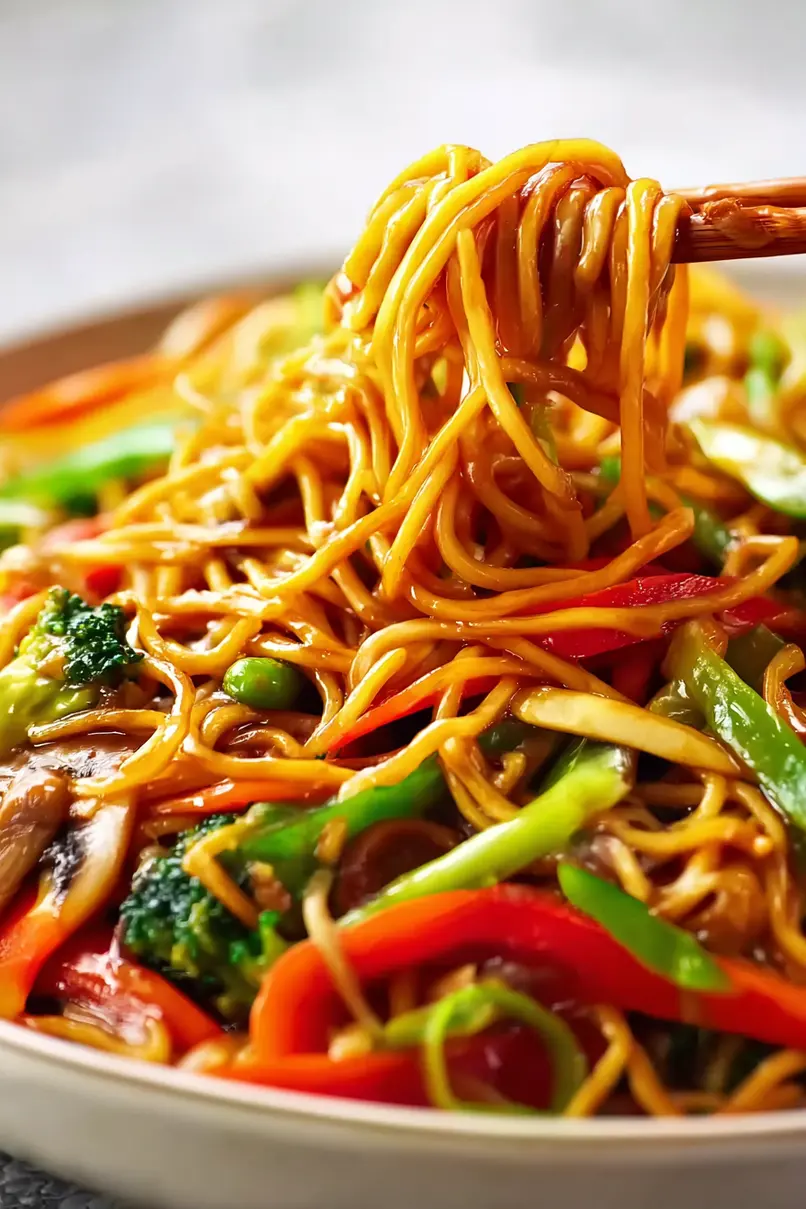
Here is my favorite lo mein with ramen noodles recipe, with tender vegetables, savory sauce, and quick-cooking ramen noodles that make this dish come together in just 15 minutes.
This lo mein is my go-to weeknight dinner when I need something fast and satisfying. The kids love it because it tastes like takeout, and I love it because it’s so much cheaper than ordering in. Plus, you probably already have most of the ingredients in your pantry!

Why You’ll Love This Lo Mein
- Quick weeknight dinner – Ready in just 20-30 minutes, this lo mein is perfect when you need a satisfying meal fast without spending hours in the kitchen.
- Budget-friendly ingredients – Using affordable ramen noodles instead of traditional lo mein noodles makes this dish accessible and easy on your wallet while still delivering great flavor.
- Flexible with vegetables – You can use whatever vegetables you have on hand – carrots, peppers, cabbage, or broccoli all work great, making it perfect for cleaning out your fridge.
- Simple pantry staples – Most of the sauce ingredients like soy sauce, oyster sauce, and sesame oil are common Asian pantry items you probably already have at home.
- Restaurant-style flavor at home – The combination of dark and light soy sauces with oyster sauce creates that authentic takeout taste you crave without the delivery fees.
What Kind of Ramen Noodles Should I Use?
For this lo mein recipe, you’ll want to use fresh ramen noodles if you can find them in the refrigerated section of your grocery store – they have the best texture and closest resemblance to traditional lo mein noodles. If fresh isn’t available, dried ramen noodles work perfectly fine and are much easier to find. Just make sure to use plain ramen noodles without the seasoning packet, or you can use the noodles from instant ramen and toss the flavor packet. The key is to cook them just until they’re tender but still have a slight bite to them, since they’ll continue cooking a bit when you toss them with the sauce and vegetables.
Options for Substitutions
This lo mein recipe is super forgiving and works great with whatever you have on hand:
- Ramen noodles: Fresh lo mein noodles are ideal, but dried ramen works perfectly fine. You can also use spaghetti, linguine, or even udon noodles – just cook according to package directions.
- Dark and light soy sauce: If you only have regular soy sauce, use 3 tablespoons total. For a gluten-free option, tamari works just as well and tastes nearly identical.
- Oyster sauce: For a vegetarian version, use mushroom sauce or hoisin sauce. You can also make a quick substitute by mixing 1 tablespoon soy sauce with 1 teaspoon sugar and a pinch of cornstarch.
- Mirin: No mirin? Mix 1 tablespoon rice vinegar with 1 teaspoon sugar, or use dry sherry. In a pinch, you can skip it entirely and add a tiny bit more sugar to the sauce.
- Vegetables: Use whatever vegetables you have – frozen stir-fry mix works great, or try snap peas, bean sprouts, or zucchini. Just adjust cooking times based on how tender your veggies are.
- Sesame oil: While sesame oil adds that authentic flavor, you can use vegetable oil or peanut oil if that’s what you have. The taste will be slightly different but still delicious.
Watch Out for These Mistakes While Cooking
The biggest mistake when making lo mein with ramen noodles is overcooking the noodles, which turns them mushy and ruins the dish’s texture – cook them just until they’re al dente since they’ll continue cooking when you toss them with the sauce and vegetables.
Another common error is adding all your vegetables at once, but harder vegetables like carrots and broccoli need more time than softer ones like mushrooms and bok choy, so add them to the pan in stages based on their cooking times.
Don’t forget to have your sauce mixed and ready before you start cooking, because once those noodles hit the pan, everything moves fast and you won’t have time to whisk ingredients together.
For the best flavor, make sure your pan is hot enough to create a slight sear on the vegetables, and always add the sauce at the very end to prevent it from burning and becoming bitter.
What to Serve With Lo Mein?
This lo mein is pretty satisfying on its own, but I love pairing it with some crispy appetizers to round out the meal. Spring rolls or pot stickers are perfect for dipping into sweet and sour sauce or soy sauce while you’re enjoying the noodles. If you want to add some protein, grilled chicken, beef, or shrimp work great either mixed right into the lo mein or served on the side. A simple cucumber salad with rice vinegar dressing also makes a nice, refreshing contrast to the savory noodles.
Storage Instructions
Refrigerate: Lo mein keeps really well in the fridge! Store it in an airtight container for up to 4 days. The noodles will absorb some of the sauce as it sits, which actually makes the flavors even better the next day. I love having leftovers of this for quick lunches during the week.
Freeze: You can freeze lo mein for up to 2 months in freezer-safe containers or bags. Just know that the vegetables might get a bit softer after thawing, but it’s still totally delicious. I like to portion it out into individual servings before freezing for easy grab-and-go meals.
Warm Up: The best way to reheat lo mein is in a large skillet or wok over medium heat with a splash of water or broth to loosen things up. Stir frequently until heated through. You can also microwave it in 30-second intervals, stirring between each one, but the stovetop method gives you better texture.
| Preparation Time | 10-15 minutes |
| Cooking Time | 10-15 minutes |
| Total Time | 20-30 minutes |
| Level of Difficulty | Easy |
Estimated Nutrition
Estimated nutrition for the whole recipe (without optional ingredients):
- Calories: 500-650
- Protein: 12-18 g
- Fat: 15-22 g
- Carbohydrates: 80-100 g
Ingredients
For the stir-fry sauce:
- 1 garlic clove, grated (freshly minced preferred)
- 1 tbsp light soy sauce
- 2 tbsp dark soy sauce
- 1 tsp sesame oil (for best flavor and aroma)
- 1 tsp sugar
- 3 tbsp oyster sauce (I use Kikkoman)
For the noodles and vegetables:
- 4 to 6 oz dry ramen noodles
- 1 to 2 tbsp mirin (adds a subtle sweetness)
- 2 to 3 cups assorted vegetables, julienned or chopped (carrot, bell pepper, napa cabbage, bok choy, mushroom, or broccoli florets)
- 3 green onions (greens and whites separated)
- 1 tbsp sesame oil
Step 1: Prepare the Sauce and Mise en Place
- 2 tbsp dark soy sauce
- 1 tbsp light soy sauce
- 3 tbsp oyster sauce
- 1 tsp sesame oil
- 1 tsp sugar
- 1 garlic clove, grated
- 3 green onions
- 2 to 3 cups assorted vegetables, julienned or chopped
In a small jar or bowl, combine the dark soy sauce, light soy sauce, oyster sauce, sesame oil, sugar, and freshly grated garlic.
Shake or whisk well until the sugar dissolves completely and the sauce is well blended.
While the sauce rests, prepare your mise en place: separate the green onion whites from the greens (setting greens aside for garnish), and julienne or chop your assorted vegetables into bite-sized, uniform pieces so they cook evenly.
I like to have everything prepped and ready before I start cooking the noodles, since the actual cooking happens quickly.
Step 2: Cook the Ramen Noodles
- 4 to 6 oz dry ramen noodles
Bring a pot of water to a rolling boil and cook the dry ramen noodles according to package directions, usually 3-4 minutes.
Drain the noodles in a colander and set aside.
Don’t rinse them—the starch on the noodles helps the sauce cling better and creates that signature glossy finish.
Step 3: Sauté the Vegetables and Build the Base
- 1 tbsp sesame oil
- green onion whites from Step 1
- assorted vegetables from Step 1
- 1 to 2 tbsp mirin
Heat 1 tablespoon of sesame oil in a large pan or wok over medium-high heat.
Once shimmering, add the green onion whites and cook for about 1 minute until fragrant.
Add your prepared assorted vegetables and stir-fry for 4-5 minutes, stirring frequently, until they’re tender-crisp and beginning to caramelize slightly.
This develops deeper flavor and prevents them from becoming mushy.
Add the mirin in the last minute of cooking to glaze the vegetables lightly.
Step 4: Combine Noodles with Vegetables and Sauce
- cooked ramen noodles from Step 2
- sautéed vegetables from Step 3
- sauce mixture from Step 1
Add the cooked ramen noodles from Step 2 to the pan with the sautéed vegetables.
Pour about half of the sauce mixture over the noodles and vegetables, then toss everything together using two utensils or a tossing technique, breaking up any clumps of noodles and coating everything evenly.
Cook for 1-2 minutes over medium-high heat, stirring constantly, until the noodles are heated through and take on a glossy, browned appearance from the sauce.
I find it’s better to start with half the sauce and add more gradually—this gives you control over the final consistency and prevents the noodles from becoming too wet.
Step 5: Finish and Serve
- green onion greens from Step 1
Divide the lo mein between bowls or plates and garnish generously with the reserved green onion greens.
Taste a quick bite and adjust the sauce level if needed—add more sauce if you prefer it saucier, or cook a bit longer if you want it drier.







Hello yes I would like to know if you would send this to my email if you would please THANK YOU RICKIE