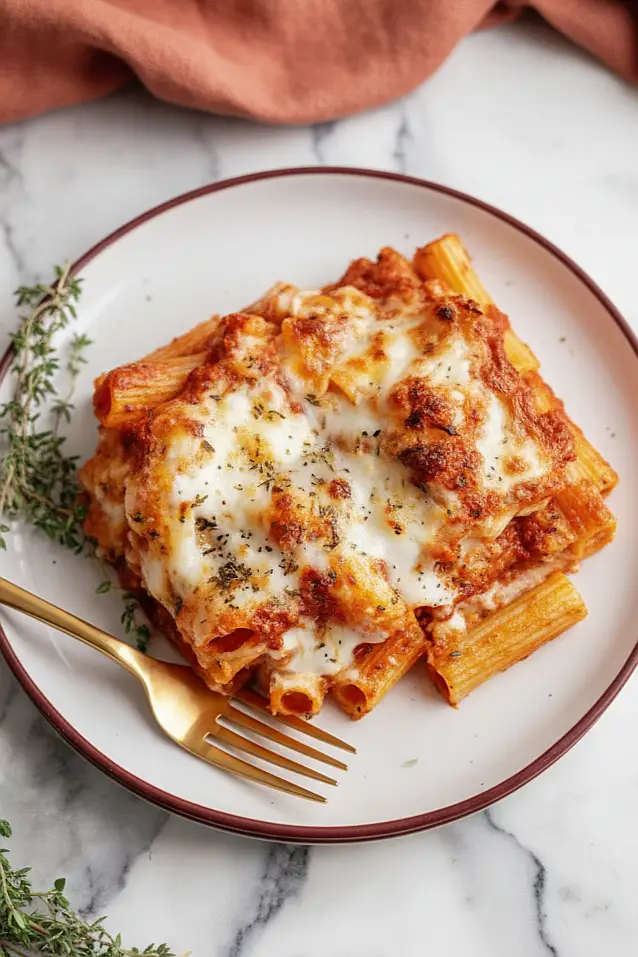
Pasta night is always a winner at my house, but baked mostaccioli takes it to another level. It’s everything I love about a good pasta dinner—hearty Italian sausage, melty cheese, and plenty of marinara—all baked together in one dish. Even better, I can prep it ahead and just pop it in the oven when I’m ready to eat.
The secret to really good baked mostaccioli is using quality ingredients where they count. I always reach for Barilla pasta because it cooks up perfectly al dente, and Rao’s marinara sauce tastes like you simmered it all day (even though you didn’t). The combination of mozzarella and parmesan on top gets all bubbly and golden in the oven.
This recipe is great for busy weeknights or when you’re feeding a crowd. Make it on Sunday and you’ll have leftovers that taste even better the next day. Trust me, your family will be asking for this one on repeat.
Why You’ll Love This Baked Mostaccioli
- Quick and easy weeknight dinner – This baked pasta comes together in under an hour, making it perfect for busy evenings when you need something satisfying on the table fast.
- Simple, everyday ingredients – You probably have most of these staples in your pantry and fridge already, so no special shopping trip required.
- Crowd-pleasing comfort food – The combination of Italian sausage, melted cheese, and marinara sauce makes this a hit with kids and adults alike.
- Great for meal prep – This dish reheats beautifully, so you can make it ahead or enjoy leftovers throughout the week without sacrificing flavor.
- One-dish wonder – Everything bakes together in one pan, which means less cleanup and more time to relax after dinner.
What Kind of Italian Sausage Should I Use?
You can use either sweet or hot Italian sausage for this baked mostaccioli, depending on your preference. Sweet Italian sausage has a milder flavor with hints of fennel and herbs, while hot Italian sausage brings some spicy kick to the dish. If you’re cooking for a crowd with mixed tastes, sweet sausage is usually the safer bet since you can always add extra red pepper flakes for those who want more heat. You can buy it in links and remove the casings yourself, or save time by grabbing the ground Italian sausage that’s already loose in the package.
Options for Substitutions
This baked pasta dish is pretty forgiving when it comes to swaps:
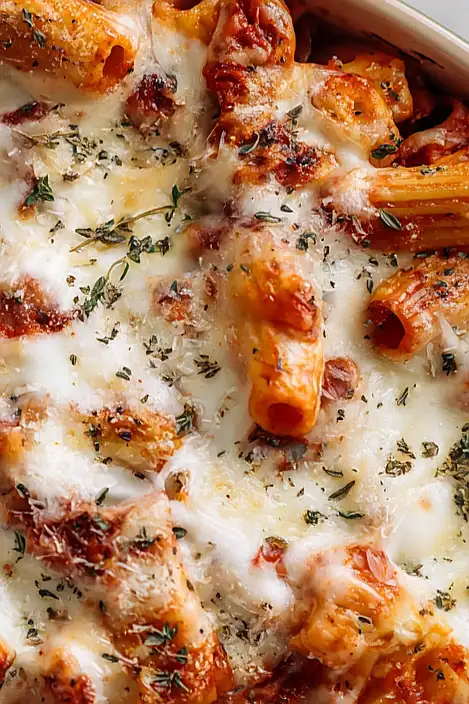
- Rigatoni: The recipe calls for rigatoni, but you can definitely use actual mostaccioli, penne, or ziti. Any tube-shaped pasta works great here since it holds onto the sauce nicely.
- Italian sausage: Ground beef or ground turkey are solid alternatives if you don’t have Italian sausage. Just add an extra 1/2 teaspoon each of fennel seeds and Italian seasoning to mimic that sausage flavor.
- Marinara sauce: Any tomato-based pasta sauce works here. You can use regular spaghetti sauce, or even crushed tomatoes with some extra seasoning if that’s what you have on hand.
- Mozzarella: Fresh mozzarella, shredded mozzarella, or even provolone will melt beautifully. If you’re out, a mild cheddar can work in a pinch, though it’ll change the flavor profile a bit.
- Fresh herbs: If you have fresh basil and oregano, use about 1 tablespoon of each instead of the dried versions for a brighter taste. Add them at the end of cooking.
- Red pepper flakes: Skip these entirely if you prefer a milder dish, or bump them up to 3/4 teaspoon if you like more heat.
Watch Out for These Mistakes While Baking
The biggest mistake people make with baked mostaccioli is overcooking the pasta during the initial boil – since it bakes for another 20 minutes in the oven, you’ll want to undercook it by about 2 minutes so it doesn’t turn mushy. Another common error is not draining the sausage after browning, which leaves your casserole swimming in grease instead of being nicely coated in sauce. Make sure to keep a close eye during the broiling step at the end, as cheese can go from perfectly golden to burnt in less than a minute – stay near the oven and check every 30 seconds. For extra flavor, try browning your onions and garlic for a full 5 minutes before adding the spices, which brings out their natural sweetness and adds depth to the whole dish.
What to Serve With Baked Mostaccioli?
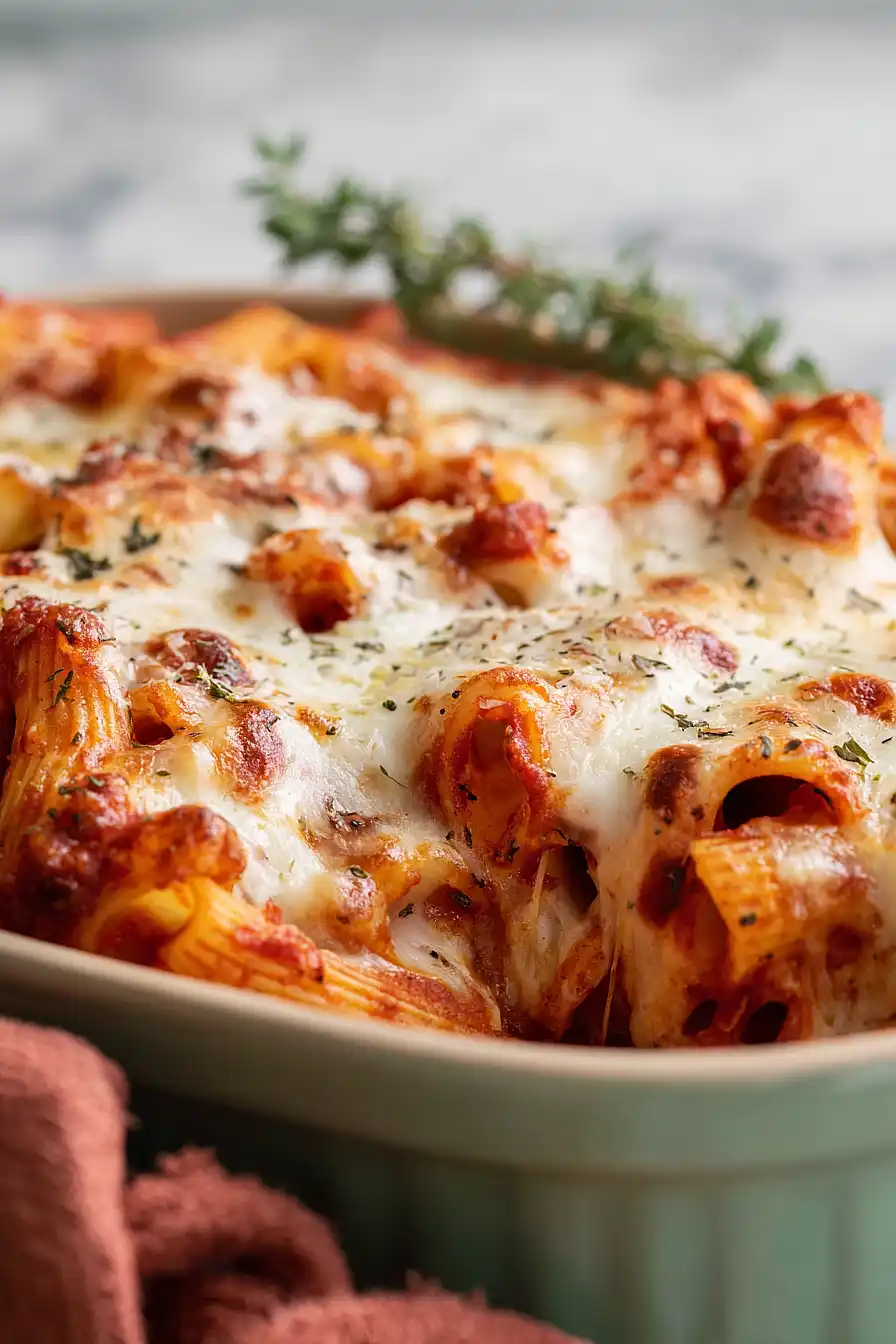
A simple side salad is my go-to when serving baked mostaccioli – something like mixed greens with cherry tomatoes, cucumbers, and Italian dressing keeps things light and fresh. Garlic bread is another must-have since there’s nothing better than using it to scoop up any extra marinara sauce from your plate. If you want to add more veggies to the meal, roasted broccoli or green beans tossed with a little olive oil and garlic work really well alongside the rich, cheesy pasta. For a complete Italian-style dinner, you could also throw together some bruschetta or serve it with a Caesar salad on the side.
Storage Instructions
Store: Leftover baked mostaccioli keeps really well in the fridge for up to 4 days. Just cover your baking dish tightly with foil or transfer portions to airtight containers once it’s cooled down. The flavors actually get even better the next day as everything has time to meld together.
Freeze: This is one of those dishes that’s perfect for freezing. You can freeze the whole casserole before or after baking for up to 3 months. I like to portion it out into individual servings in freezer-safe containers so I can grab just what I need for a quick dinner.
Reheat: To reheat, cover with foil and warm in a 350°F oven for about 20-25 minutes until heated through. If you’re reheating from frozen, add an extra 15-20 minutes. You can also microwave individual portions for 2-3 minutes, stirring halfway through to heat evenly.
| Preparation Time | 25-35 minutes |
| Cooking Time | 20-25 minutes |
| Total Time | 45-60 minutes |
| Level of Difficulty | Medium |
| Servings | 6 servings |
Estimated Nutrition
Estimated nutrition for the whole recipe (without optional ingredients):
- Calories: 3500-3800
- Protein: 130-150 g
- Fat: 160-180 g
- Carbohydrates: 320-340 g
Ingredients
For the pasta and sauce:
- 1 lb rigatoni (I always use Barilla for the perfect al dente texture)
- 2 tsp olive oil
- 1 lb italian sausage (casing removed and crumbled into 1/2-inch pieces)
- 28 oz marinara sauce (I prefer Rao’s Homemade for the best flavor)
- 1 yellow onion
- 2 tsp minced garlic
- 1.5 tsp oregano
- 1.5 tsp basil
- 1/2 tsp salt
- 1/4 tsp pepper
- 3/4 tsp red pepper flakes
For the topping:
- 9 oz mozzarella (freshly shredded for a better melt)
- 3/4 cup parmesan (I like Sargento for a nice salty finish)
Step 1: Prepare Mise en Place and Start Pasta
- 1 lb rigatoni
- 1 yellow onion
- 2 tsp minced garlic
- 1.5 tsp oregano
- 1.5 tsp basil
- 1/2 tsp salt
- 1/4 tsp pepper
- 3/4 tsp red pepper flakes
Dice the yellow onion into small pieces and measure out the minced garlic, oregano, basil, salt, pepper, and red pepper flakes into a small bowl.
Fill a large pot with salted water and bring it to a boil, then add the rigatoni and cook according to box instructions until al dente—don’t overcook, as the pasta will continue cooking in the oven.
While the pasta cooks, preheat your oven to 350°F.
I like to prep all my seasonings together so they’re ready to go when the sausage finishes cooking, which keeps the workflow smooth.
Step 2: Brown the Sausage and Build the Flavor Base
- 2 tsp olive oil
- 1 lb italian sausage
- diced onion and minced garlic from Step 1
- spice mixture from Step 1
Heat the olive oil in a large skillet over medium-high heat for about 30 seconds until shimmering.
Add the crumbled Italian sausage and cook for 7 minutes, breaking it up with a wooden spoon as it cooks to ensure it’s evenly browned and broken into small pieces.
Once the sausage is cooked through and has good color, add the diced onion, minced garlic, and the spice mixture from Step 1.
Sauté for 3 minutes, stirring occasionally, until the onion softens and the aromatics become fragrant—this is where the deep flavors develop.
Step 3: Combine Pasta, Sauce, and Sausage Mixture
- cooked pasta from Step 1
- sausage mixture from Step 2
- 28 oz marinara sauce
- 4.5 oz mozzarella
Drain the cooked pasta from Step 1 and transfer it to a large pot or mixing bowl.
Add the sausage mixture from Step 2 and the marinara sauce, then stir in half of the shredded mozzarella (about 4.5 oz).
Fold everything together gently but thoroughly, ensuring the sauce coats all the pasta evenly and the ingredients are well combined.
I find that freshly shredded mozzarella melts much better than pre-shredded cheese, which has anti-caking agents that interfere with a smooth, creamy texture.
Step 4: Transfer to Baking Dish and Layer Cheeses
- pasta mixture from Step 3
- 4.5 oz mozzarella
- 3/4 cup parmesan
Pour the pasta mixture from Step 3 into a 9×13 inch baking dish, spreading it evenly.
Top with the remaining 4.5 oz of shredded mozzarella and the 3/4 cup of grated parmesan, distributing them evenly across the surface.
This two-cheese topping creates a wonderful contrast—the mozzarella provides creaminess while the parmesan adds a sharp, salty finish.
Step 5: Bake and Finish with Broiler
- prepared dish from Step 4
Place the baking dish in the preheated 350°F oven and bake for 20 minutes, until the edges are bubbling and the cheese is melted and starting to set.
After 20 minutes, switch the oven to broil on high and broil for 3 to 5 minutes, watching carefully, until the cheese topping is golden brown and slightly charred in spots.
The broil step creates a beautiful, crispy top layer that contrasts perfectly with the creamy pasta underneath.
Step 6: Rest and Serve
- baked mostaccioli from Step 5
Remove the baking dish from the oven and let it rest for 2 to 3 minutes.
This short rest allows the cheeses to set slightly and makes serving cleaner.
Garnish with fresh basil if desired and serve hot directly from the dish or portioned into bowls.
Simple Baked Mostaccioli
Ingredients
For the pasta and sauce::
- 1 lb rigatoni (I always use Barilla for the perfect al dente texture)
- 2 tsp olive oil
- 1 lb italian sausage (casing removed and crumbled into 1/2-inch pieces)
- 28 oz marinara sauce (I prefer Rao's Homemade for the best flavor)
- 1 yellow onion
- 2 tsp minced garlic
- 1.5 tsp oregano
- 1.5 tsp basil
- 1/2 tsp salt
- 1/4 tsp pepper
- 3/4 tsp red pepper flakes
For the topping::
- 9 oz mozzarella (freshly shredded for a better melt)
- 3/4 cup parmesan (I like Sargento for a nice salty finish)
Instructions
- Dice the yellow onion into small pieces and measure out the minced garlic, oregano, basil, salt, pepper, and red pepper flakes into a small bowl. Fill a large pot with salted water and bring it to a boil, then add the rigatoni and cook according to box instructions until al dente—don't overcook, as the pasta will continue cooking in the oven. While the pasta cooks, preheat your oven to 350°F. I like to prep all my seasonings together so they're ready to go when the sausage finishes cooking, which keeps the workflow smooth.
- Heat the olive oil in a large skillet over medium-high heat for about 30 seconds until shimmering. Add the crumbled Italian sausage and cook for 7 minutes, breaking it up with a wooden spoon as it cooks to ensure it's evenly browned and broken into small pieces. Once the sausage is cooked through and has good color, add the diced onion, minced garlic, and the spice mixture from Step 1. Sauté for 3 minutes, stirring occasionally, until the onion softens and the aromatics become fragrant—this is where the deep flavors develop.
- Drain the cooked pasta from Step 1 and transfer it to a large pot or mixing bowl. Add the sausage mixture from Step 2 and the marinara sauce, then stir in half of the shredded mozzarella (about 4.5 oz). Fold everything together gently but thoroughly, ensuring the sauce coats all the pasta evenly and the ingredients are well combined. I find that freshly shredded mozzarella melts much better than pre-shredded cheese, which has anti-caking agents that interfere with a smooth, creamy texture.
- Pour the pasta mixture from Step 3 into a 9x13 inch baking dish, spreading it evenly. Top with the remaining 4.5 oz of shredded mozzarella and the 3/4 cup of grated parmesan, distributing them evenly across the surface. This two-cheese topping creates a wonderful contrast—the mozzarella provides creaminess while the parmesan adds a sharp, salty finish.
- Place the baking dish in the preheated 350°F oven and bake for 20 minutes, until the edges are bubbling and the cheese is melted and starting to set. After 20 minutes, switch the oven to broil on high and broil for 3 to 5 minutes, watching carefully, until the cheese topping is golden brown and slightly charred in spots. The broil step creates a beautiful, crispy top layer that contrasts perfectly with the creamy pasta underneath.
- Remove the baking dish from the oven and let it rest for 2 to 3 minutes. This short rest allows the cheeses to set slightly and makes serving cleaner. Garnish with fresh basil if desired and serve hot directly from the dish or portioned into bowls.