I didn’t grow up eating a lot of shrimp. My mom wasn’t big on seafood, and when she did make it, it was usually fish sticks from a box. So when I married into a family that ate shrimp like it was going out of style, I had to learn fast.
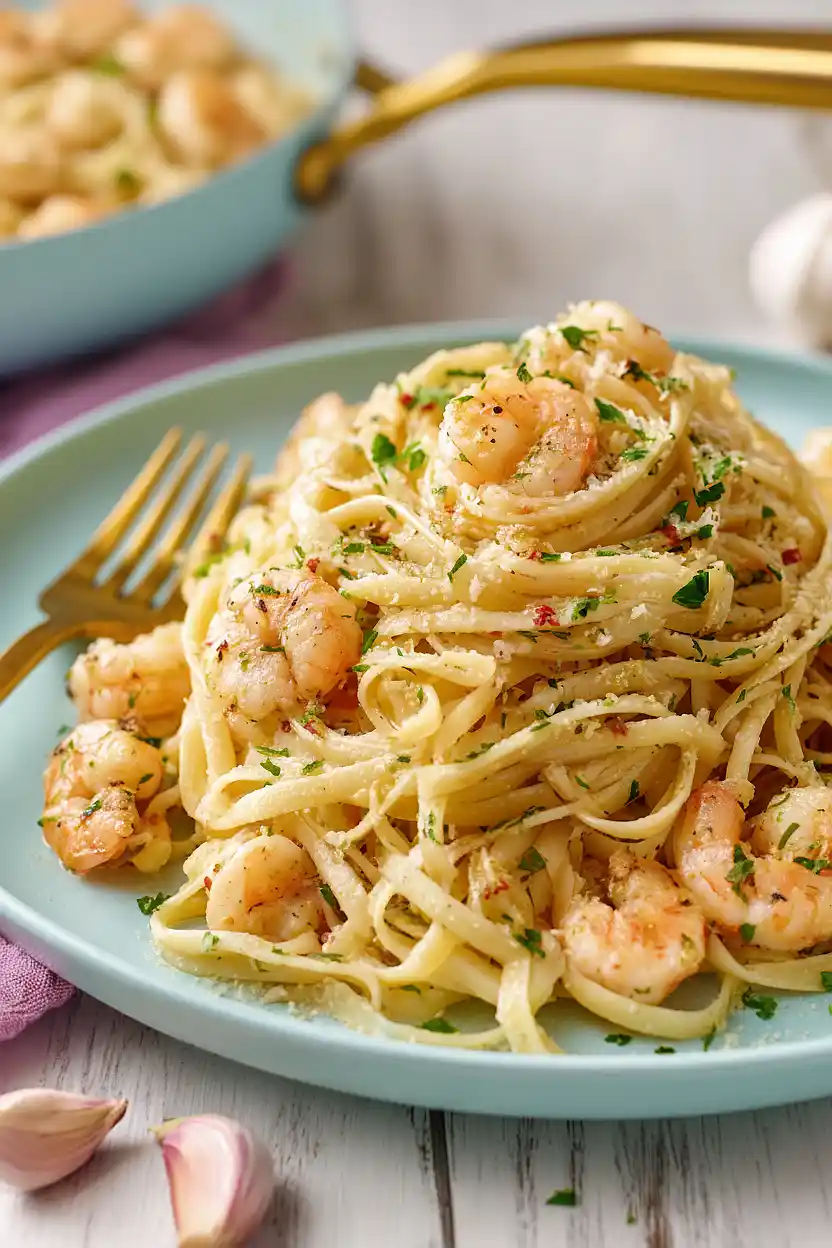
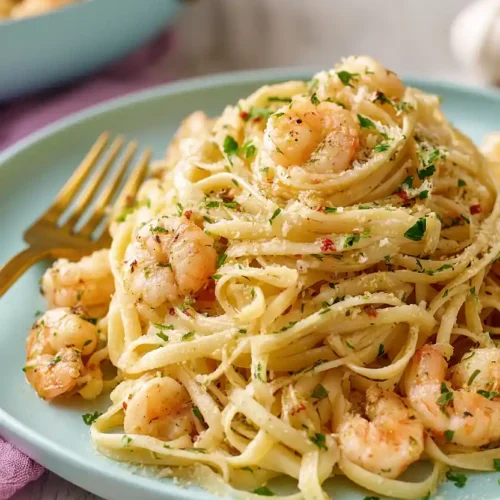
This garlic shrimp pasta was one of the first seafood dishes I felt confident making. It’s quick—about 20 minutes from start to finish—and the creamy garlic sauce makes even my kids forget they’re eating something from the ocean. The trick is not overcooking the shrimp. They only need a few minutes per side, and if you leave them on too long, they turn rubbery. Once I figured that out, this became a weeknight regular at our house.
Why You’ll Love This Garlic Shrimp Pasta
- Ready in 30 minutes – This quick weeknight dinner comes together faster than ordering takeout, making it perfect for busy evenings when you want something homemade.
- Simple ingredients – You probably have most of these pantry staples on hand already, and the ingredient list is short and straightforward.
- Restaurant-quality flavor at home – The creamy garlic sauce with parmesan tastes like something you’d order at an Italian restaurant, but you can make it in your own kitchen for a fraction of the price.
- Impressive yet easy – This dish looks and tastes fancy enough to serve to guests, but it’s simple enough for a regular Tuesday night dinner.
What Kind of Shrimp Should I Use?
For this garlic shrimp pasta, you’ll want to use medium to large shrimp (around 31-40 count per pound) since they’re easier to work with and won’t overcook as quickly. Fresh or frozen shrimp both work great here, and honestly, most “fresh” shrimp at the grocery store has been previously frozen anyway, so don’t stress about it. If you’re buying frozen, just make sure to thaw them properly in the fridge overnight or under cold running water for about 15 minutes before cooking. You can use either peeled and deveined shrimp to save time, or buy them with shells on and do it yourself – just remember that shell-on shrimp tend to have a bit more flavor.
Options for Substitutions
This pasta dish is pretty forgiving when it comes to swaps:
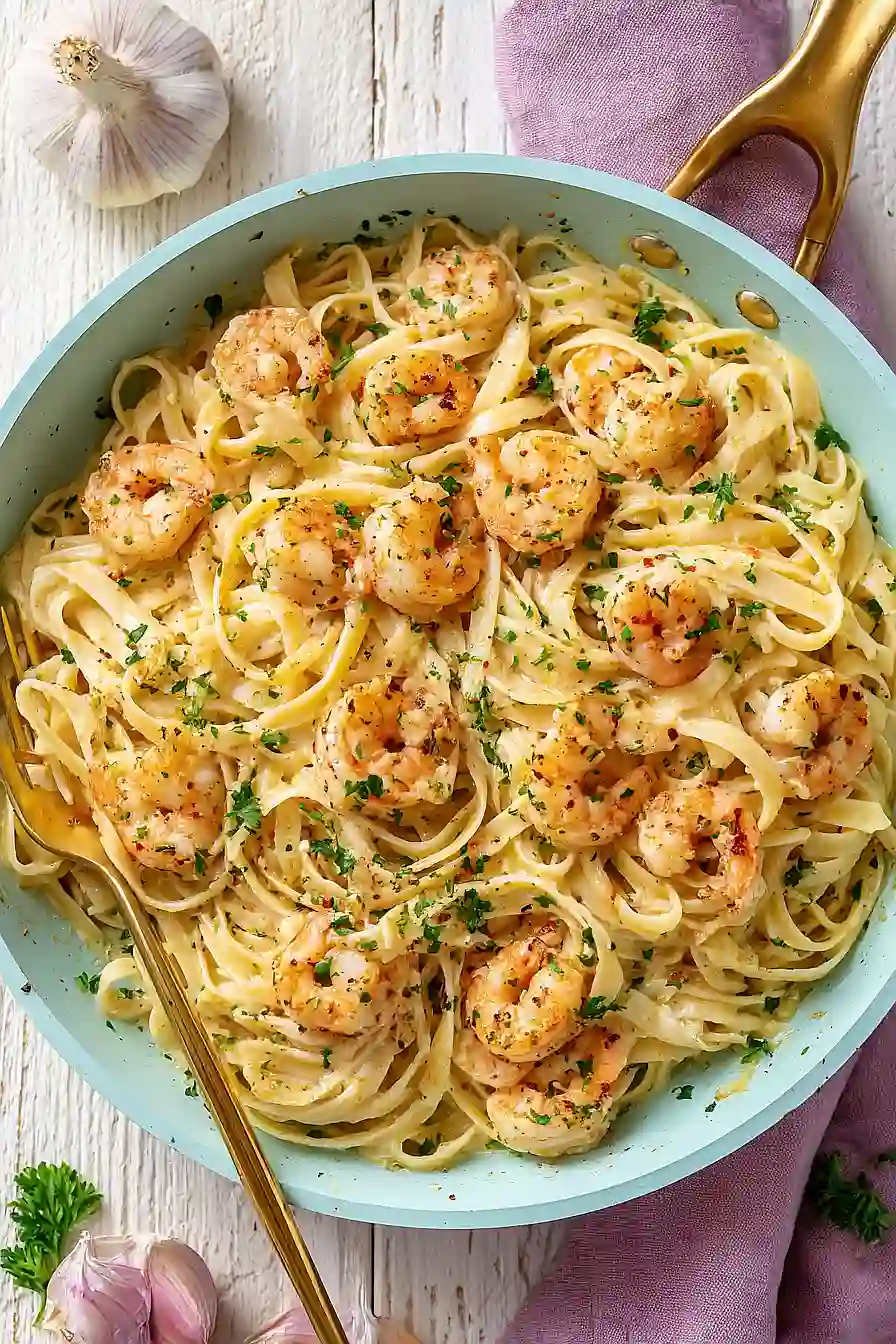
- Linguine: Any long pasta works great here – try spaghetti, fettuccine, or angel hair. You can also use penne or rigatoni if that’s what you have in the pantry.
- Shrimp: If shrimp isn’t your thing, swap it for scallops, chunks of white fish like cod, or even chicken cut into bite-sized pieces. Just adjust your cooking time – chicken will need a few extra minutes.
- Heavy cream: Half-and-half works in a pinch, though your sauce will be a bit thinner. You can also use whole milk mixed with a tablespoon of flour to help it thicken up.
- Parmesan: Pecorino Romano or Asiago cheese make good substitutes. Just keep in mind they’re a bit saltier, so you might want to ease up on the added salt.
- Old Bay seasoning: Don’t have Old Bay? Mix together paprika, celery salt, and a pinch of cayenne pepper for a similar flavor profile.
- Fresh parsley: Dried parsley works fine – just use about 1 tablespoon instead. Fresh basil also makes a nice alternative if you want to switch things up.
Watch Out for These Mistakes While Cooking
The biggest mistake you can make with shrimp is overcooking them, which turns them rubbery and tough – pull them off the heat as soon as they turn pink and curl into a C shape, usually just 2-3 minutes total.
Don’t skip saving that pasta water before draining, as the starchy liquid is what helps the cream sauce cling to your linguine and brings everything together smoothly.
When cooking the garlic, keep a close eye on it since burnt garlic tastes bitter and can ruin your whole dish – 30 seconds over medium heat is really all you need until it smells good.
For extra flavor, try adding a squeeze of lemon juice at the end and make sure your parmesan is freshly grated rather than the pre-shredded stuff, which doesn’t melt as smoothly into the sauce.
What to Serve With Garlic Shrimp Pasta?
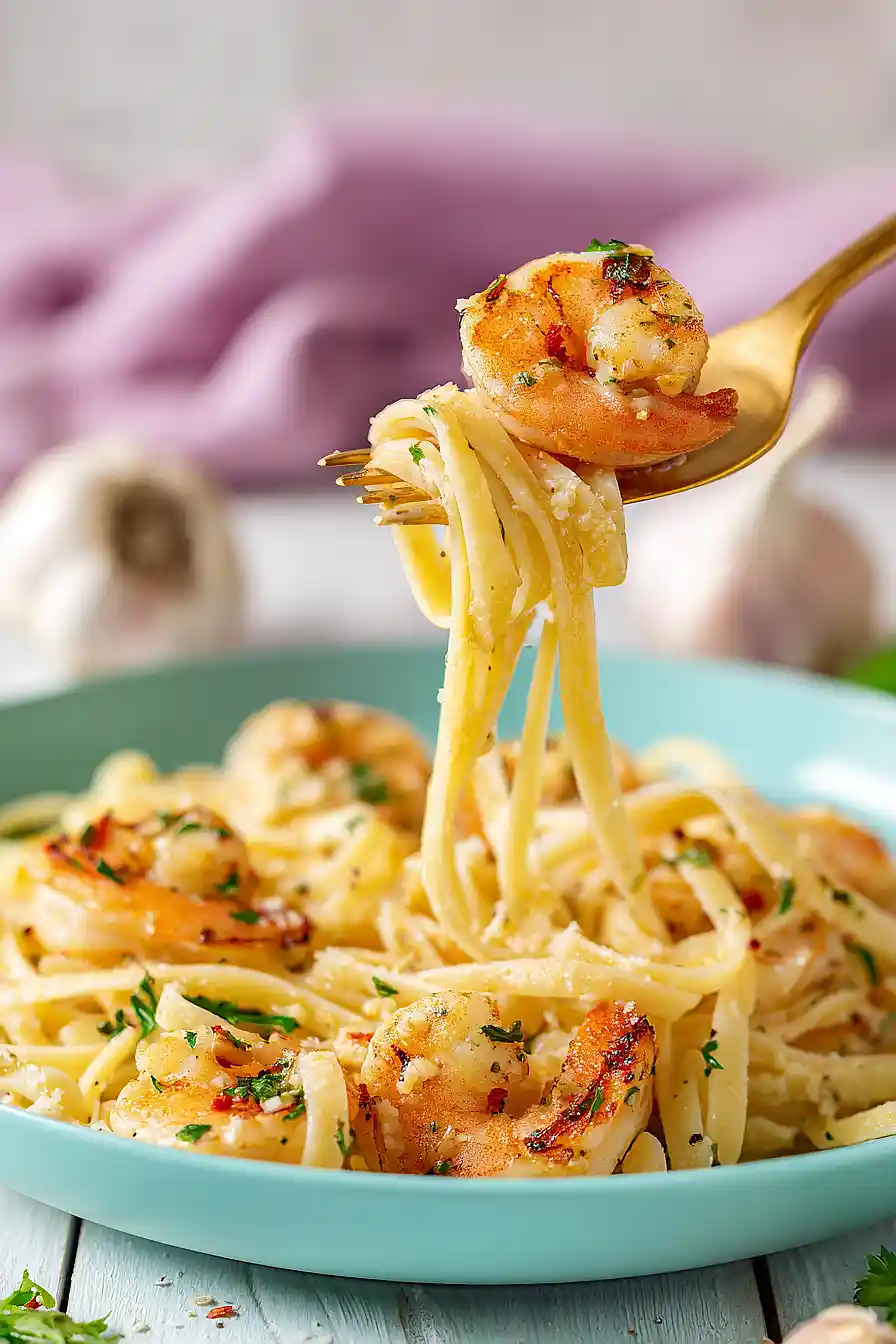
This garlic shrimp pasta is pretty filling on its own, but I love serving it with a simple side salad dressed with lemon vinaigrette to cut through the richness of the cream sauce. Garlic bread is always a winner here – you can never have too much garlic when shrimp is involved! If you want to bulk up the meal, roasted asparagus or sautéed green beans make great veggie sides that won’t compete with the pasta. A crisp white wine like Pinot Grigio or Sauvignon Blanc pairs beautifully with the shrimp and garlic flavors too.
Storage Instructions
Store: Keep your leftover garlic shrimp pasta in an airtight container in the fridge for up to 3 days. The cream sauce might thicken up a bit as it sits, but it comes back together nicely when you reheat it with a splash of milk or pasta water.
Freeze: I don’t recommend freezing this one since cream-based sauces can separate and get grainy when thawed, and the shrimp can turn rubbery. It’s best enjoyed fresh or within a few days from the fridge.
Reheat: Warm it up gently in a skillet over medium-low heat with a tablespoon or two of milk to loosen the sauce. You can also microwave it in 30-second intervals, stirring between each one, but the stovetop method keeps the shrimp from getting tough.
| Preparation Time | 10-15 minutes |
| Cooking Time | 20-30 minutes |
| Total Time | 30-45 minutes |
| Level of Difficulty | Easy |
| Servings | 4 servings |
Estimated Nutrition
Estimated nutrition for the whole recipe (without optional ingredients):
- Calories: 1700-1900
- Protein: 90-110 g
- Fat: 75-90 g
- Carbohydrates: 140-160 g
Ingredients
For the pasta:
- 8 oz linguine (I always use Barilla for the best al dente texture)
For the shrimp:
- 1 lb shrimp (peeled and deveined with tails removed)
- 1.5 tbsp olive oil
- 1.5 tbsp unsalted butter (I like Kerrygold for its rich golden color)
- 3/4 tsp salt
- 1/2 tsp pepper
- 1.5 tbsp Old Bay seasoning
For the sauce and garnish:
- 2 tbsp unsalted butter
- 3 garlic cloves (freshly minced for the best aroma)
- 6 fl oz heavy cream
- 3/4 cup parmesan (freshly grated for better melting)
- 1/4 cup fresh parsley
- 1 tsp lemon zest
- 2 tbsp chopped chives
Step 1: Start the Pasta and Prepare Mise en Place
- 8 oz linguine
- 3 garlic cloves, freshly minced
- 3/4 cup parmesan, freshly grated
- 1/4 cup fresh parsley, chopped
- Salt for pasta water
Bring a large pot of salted water to a boil and add the linguine, cooking until al dente according to package directions (usually 9-11 minutes).
While the pasta cooks, mince the garlic cloves finely, grate the parmesan cheese, chop the parsley, and measure out the heavy cream and reserved pasta water bowl.
Before draining the pasta, reserve 1 cup of the starchy cooking water in a separate bowl—this will be crucial for adjusting the sauce consistency later.
Drain the pasta and set aside.
Step 2: Sear the Shrimp with Aromatics and Seasoning
- 1 lb shrimp, peeled and deveined
- 1.5 tbsp olive oil
- 1.5 tbsp unsalted butter
- 3/4 tsp salt
- 1/2 tsp pepper
- 1.5 tbsp Old Bay seasoning
Heat 1.5 tablespoons of olive oil with 1.5 tablespoons of unsalted butter in a large skillet over medium-high heat until the butter foams.
Once foaming, add the shrimp and cook undisturbed for about 1 minute to develop a light golden color on one side.
Season with 3/4 teaspoon salt, 1/2 teaspoon pepper, and 1.5 tablespoons Old Bay seasoning, then toss and continue cooking for another 1-2 minutes until the shrimp are just pink and cooked through (they should still be slightly firm—don’t overcook or they’ll toughen).
Transfer the cooked shrimp to a clean plate.
Step 3: Build the Garlic Cream Sauce
- 2 tbsp unsalted butter
- 3 garlic cloves, minced from Step 1
- 6 fl oz heavy cream
- 3/4 cup parmesan, grated from Step 1
- Reserved pasta water from Step 1
In the same skillet with the shrimp drippings, add 2 tablespoons of fresh unsalted butter and let it melt over medium heat.
Add the minced garlic and cook for just 30 seconds, stirring constantly—you want it fragrant but not browned, as burnt garlic becomes bitter.
Pour in the heavy cream and bring to a gentle simmer, then add the freshly grated parmesan cheese, stirring constantly until the cheese melts completely and the sauce becomes smooth and velvety.
I like to add the reserved pasta water gradually (about 1/4 cup at first) to reach the right sauce consistency—it should coat the back of a spoon but still flow slightly.
Step 4: Combine Pasta with Sauce and Finish
- Cooked linguine from Step 1
- Cream sauce from Step 3
- Cooked shrimp from Step 2
- 1/4 cup fresh parsley, chopped from Step 1
- 1 tsp lemon zest
- 2 tbsp chopped chives
Add the cooked linguine from Step 1 directly to the cream sauce and toss gently to coat every strand, adding a splash more reserved pasta water if needed to achieve a silky, flowing consistency.
Return the cooked shrimp from Step 2 to the skillet and fold them in carefully to distribute evenly throughout the dish.
Taste and adjust seasoning with salt and pepper as needed.
Remove from heat and finish with the fresh parsley, lemon zest, and chopped chives, tossing everything together one final time for a bright, fresh burst of flavor.
Simple Garlic Shrimp Pasta
Ingredients
For the pasta
- 8 oz linguine (I always use Barilla for the best al dente texture)
For the shrimp
- 1 lb shrimp (peeled and deveined with tails removed)
- 1.5 tbsp olive oil
- 1.5 tbsp unsalted butter (I like Kerrygold for its rich golden color)
- 3/4 tsp salt
- 1/2 tsp pepper
- 1.5 tbsp Old Bay seasoning
For the sauce and garnish
- 2 tbsp unsalted butter
- 3 garlic cloves (freshly minced for the best aroma)
- 6 fl oz heavy cream
- 3/4 cup parmesan (freshly grated for better melting)
- 1/4 cup fresh parsley
- 1 tsp lemon zest
- 2 tbsp chopped chives
Instructions
- Bring a large pot of salted water to a boil and add the linguine, cooking until al dente according to package directions (usually 9-11 minutes). While the pasta cooks, mince the garlic cloves finely, grate the parmesan cheese, chop the parsley, and measure out the heavy cream and reserved pasta water bowl. Before draining the pasta, reserve 1 cup of the starchy cooking water in a separate bowl—this will be crucial for adjusting the sauce consistency later. Drain the pasta and set aside.
- Heat 1.5 tablespoons of olive oil with 1.5 tablespoons of unsalted butter in a large skillet over medium-high heat until the butter foams. Once foaming, add the shrimp and cook undisturbed for about 1 minute to develop a light golden color on one side. Season with 3/4 teaspoon salt, 1/2 teaspoon pepper, and 1.5 tablespoons Old Bay seasoning, then toss and continue cooking for another 1-2 minutes until the shrimp are just pink and cooked through (they should still be slightly firm—don't overcook or they'll toughen). Transfer the cooked shrimp to a clean plate.
- In the same skillet with the shrimp drippings, add 2 tablespoons of fresh unsalted butter and let it melt over medium heat. Add the minced garlic and cook for just 30 seconds, stirring constantly—you want it fragrant but not browned, as burnt garlic becomes bitter. Pour in the heavy cream and bring to a gentle simmer, then add the freshly grated parmesan cheese, stirring constantly until the cheese melts completely and the sauce becomes smooth and velvety. I like to add the reserved pasta water gradually (about 1/4 cup at first) to reach the right sauce consistency—it should coat the back of a spoon but still flow slightly.
- Add the cooked linguine from Step 1 directly to the cream sauce and toss gently to coat every strand, adding a splash more reserved pasta water if needed to achieve a silky, flowing consistency. Return the cooked shrimp from Step 2 to the skillet and fold them in carefully to distribute evenly throughout the dish. Taste and adjust seasoning with salt and pepper as needed. Remove from heat and finish with the fresh parsley, lemon zest, and chopped chives, tossing everything together one final time for a bright, fresh burst of flavor.