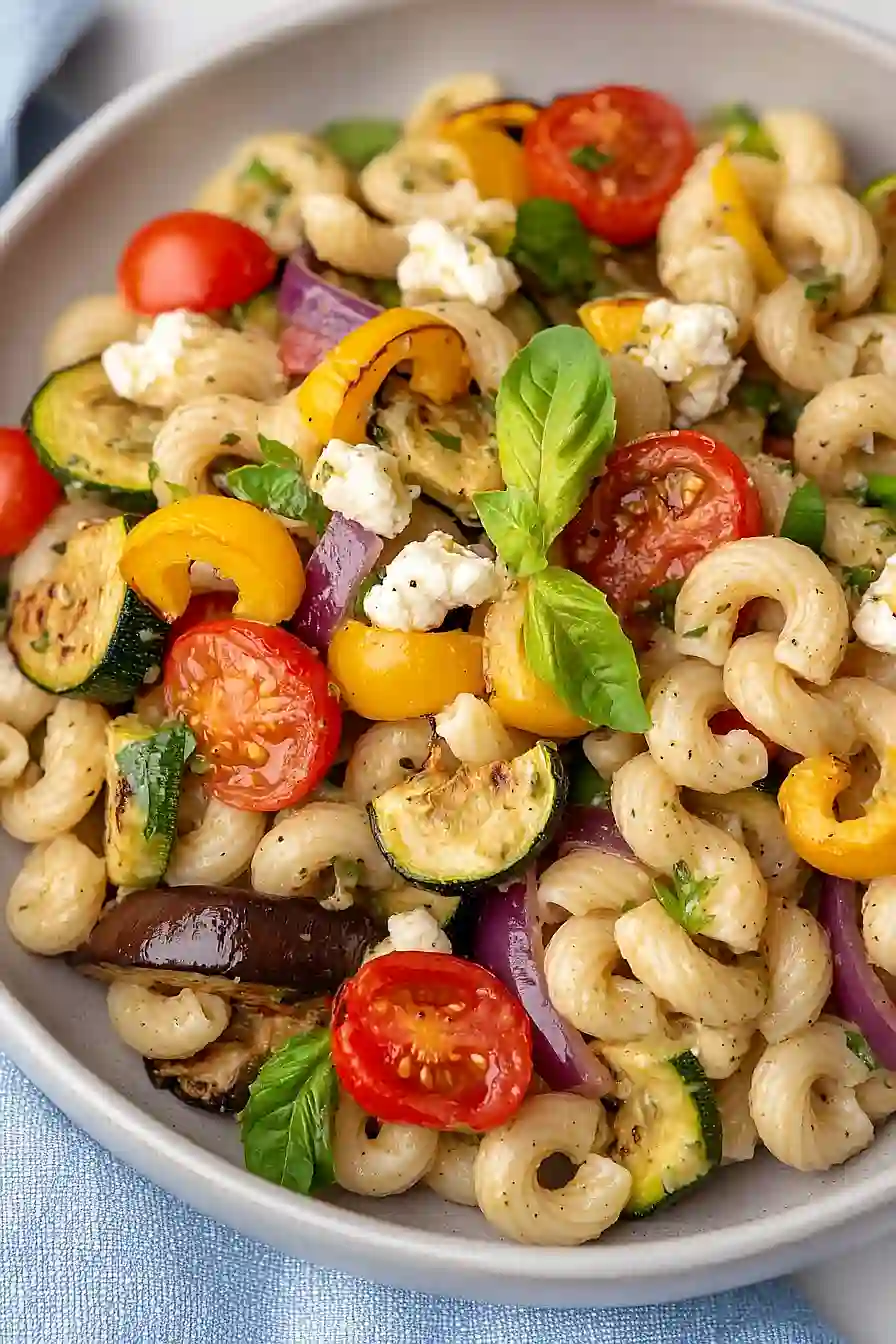
If you ask me, pasta salad gets a major upgrade when you add roasted vegetables.
This colorful dish combines tender penne with roasted bell peppers, zucchini, eggplant, and tomatoes, all tossed with creamy goat cheese. The vegetables get sweet and caramelized in the oven, while fresh herbs like basil, parsley, and chives keep things bright.
A simple dressing made with olive oil, verjus, and a touch of Dijon mustard brings everything together without overpowering the roasted flavors. The goat cheese melts slightly into the warm pasta, creating little pockets of creaminess throughout.
It’s a satisfying dish that works great for potlucks or weeknight dinners, and it tastes even better the next day.
Why You’ll Love This Pasta Salad
- Packed with vegetables – This recipe uses a rainbow of roasted veggies, making it an easy way to get your daily servings while actually enjoying every bite.
- Perfect for meal prep – You can make this pasta salad ahead of time and it actually tastes better the next day once all the flavors have had time to meld together.
- Ready in under an hour – From start to finish, you’ll have this colorful dish on the table in less than 50 minutes, making it great for busy weeknights or last-minute gatherings.
- Works hot or cold – Serve it warm right after making it or chilled from the fridge—either way, the creamy goat cheese and roasted vegetables taste amazing.
- Vegetarian-friendly – This dish is naturally meat-free but still satisfying and filling enough to work as a main course or hearty side.
What Kind of Goat Cheese Should I Use?
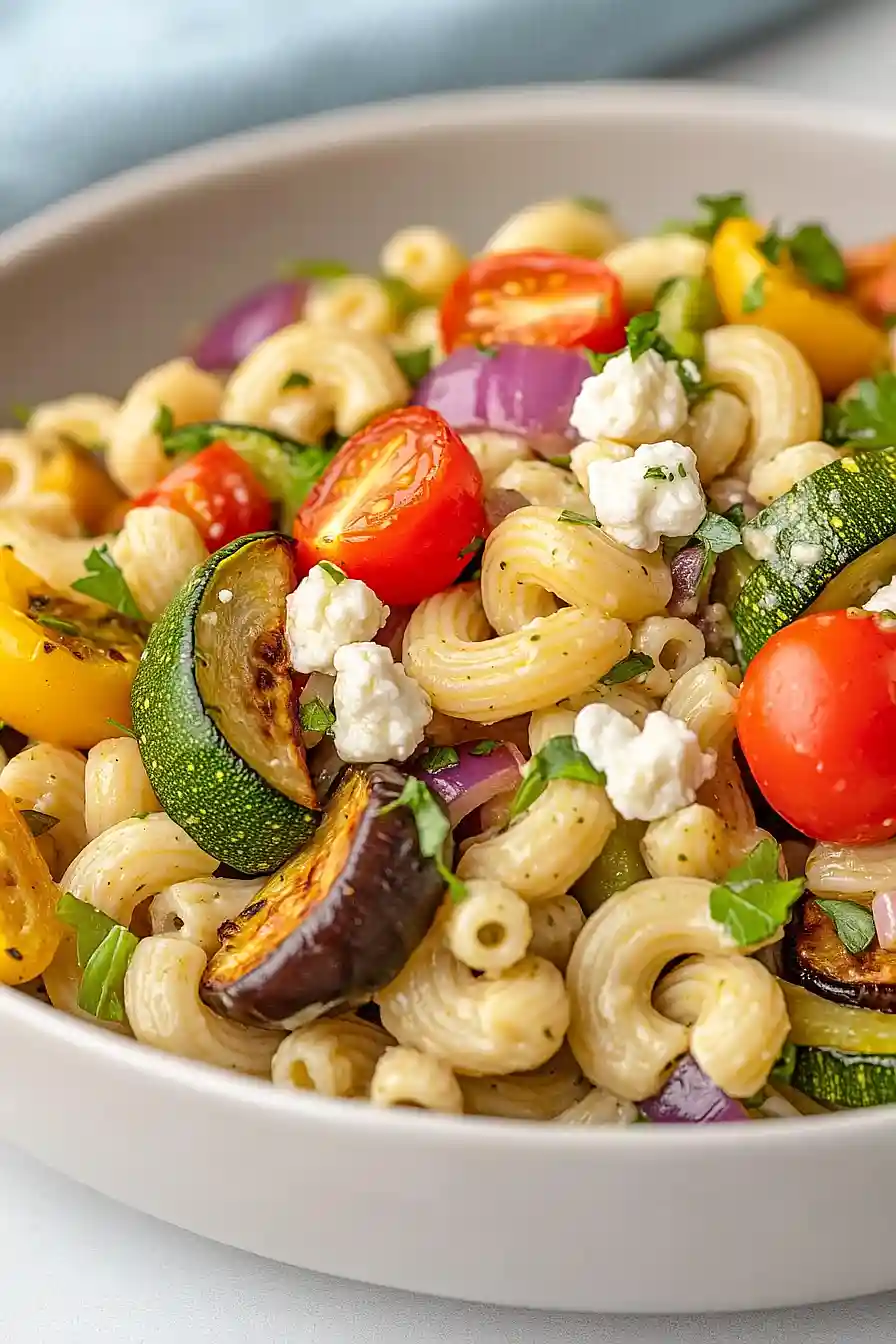
For this pasta salad, you’ll want to use a soft, creamy goat cheese that crumbles easily – the kind that comes in a log wrapped in plastic. Avoid aged or hard goat cheeses since they won’t blend into the salad as nicely. If you find goat cheese a bit too tangy for your taste, look for a milder variety or consider mixing in a little cream cheese to mellow out the flavor. You can also substitute feta cheese if goat cheese isn’t your thing, though it will give you a slightly different taste and texture.
Options for Substitutions
This pasta salad is really forgiving when it comes to swapping ingredients:
- Pasta: Any short pasta shape works great here – try penne, fusilli, farfalle, or even orzo. Whole wheat or gluten-free pasta are good options too if that’s your preference.
- Bell peppers: Don’t stress about having all three colors. Use whatever bell peppers you have on hand, or even substitute some with poblano peppers for a mild kick.
- Vegetables: Feel free to swap in other roastable vegetables like cherry tomatoes, mushrooms, asparagus, or summer squash. Just keep the total amount roughly the same and adjust roasting time if needed.
- Goat cheese: If goat cheese isn’t your thing, crumbled feta works wonderfully and gives a similar tangy flavor. You could also use fresh mozzarella pearls for a milder taste.
- Verjus: This might be the trickiest ingredient to find. Swap it with white wine vinegar or a mix of white wine and lemon juice (use about half the amount and taste as you go).
- Fresh herbs: Use whatever fresh herbs you have available. If you’re short on one, just increase another – the key is having about 1 cup total of fresh herbs for that bright, summery flavor.
Watch Out for These Mistakes While Cooking
The biggest mistake when roasting vegetables for pasta salad is overcrowding the baking sheet, which causes them to steam instead of roast – spread them out in a single layer with space between each piece so they get those nice caramelized edges.
Another common error is cutting your vegetables in different sizes, which means some will burn while others stay undercooked, so aim for uniform pieces about 1-inch thick for even roasting.
Don’t skip rinsing your cooked pasta with cold water, as this stops the cooking process and removes excess starch that would otherwise make your salad gummy and clumpy.
Finally, make sure to toss the pasta with the vinaigrette while the vegetables are still slightly warm – this helps the flavors absorb better and prevents the goat cheese from melting into a greasy puddle when you add it at the end.
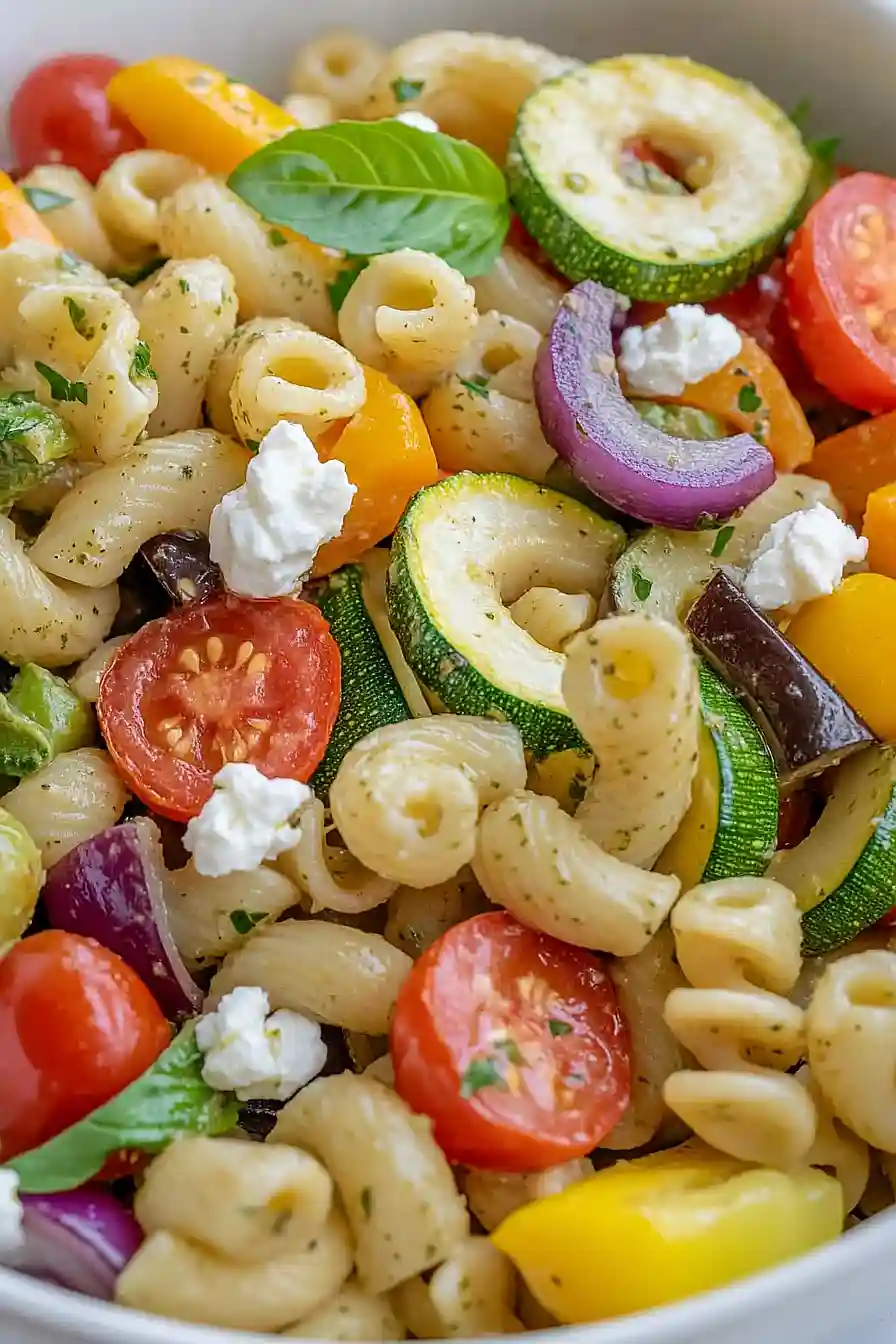
What to Serve With Roasted Vegetable and Goat Cheese Pasta Salad?
This pasta salad is pretty filling on its own, but it pairs really well with grilled chicken or shrimp if you want to add some protein. A crusty baguette or focaccia is perfect for serving alongside, especially if you want something to mop up any extra dressing at the bottom of your bowl. Since the salad is already packed with veggies, I like to keep sides simple – maybe some marinated olives or a light arugula salad with lemon vinaigrette. This dish also works great as a side at barbecues, where it goes nicely with grilled steaks, burgers, or Italian sausages.
Storage Instructions
Store: This pasta salad actually gets better after sitting for a few hours as the flavors meld together. Keep it in an airtight container in the fridge for up to 4 days. The roasted veggies hold up really well, though you might want to add a drizzle of olive oil before serving since the pasta can absorb some of the dressing.
Make Ahead: You can roast the vegetables up to 2 days in advance and store them separately in the fridge. Cook the pasta the day you plan to serve it, then toss everything together with the goat cheese and herbs. This makes it super easy to prep for potlucks or meal prep for the week.
Serve: This salad is meant to be enjoyed cold or at room temperature, so just pull it out of the fridge about 20 minutes before serving. Give it a good toss and taste it – you might want to add a splash more verjus or a pinch of salt to brighten things up after it’s been chilled.
| Preparation Time | 15-20 minutes |
| Cooking Time | 20-30 minutes |
| Total Time | 35-50 minutes |
| Level of Difficulty | Easy |
| Servings | 8 servings |
Estimated Nutrition
Estimated nutrition for the whole recipe (without optional ingredients):
- Calories: 1100-1300
- Protein: 35-45 g
- Fat: 45-55 g
- Carbohydrates: 140-160 g
Ingredients
For the pasta and vegetables:
- 2.5 cups pasta (I use Barilla Penne for a firm texture)
- olive oil cooking spray
- 1 red bell pepper (seeded and cut into 1-inch pieces)
- 1 green bell pepper
- 1 yellow bell pepper
- 1 red onion (cut into 1-inch chunks to match peppers)
- 1 zucchini
- 1 eggplant
- 1.5 cups tomatoes (halved cherry or grape tomatoes work best)
- 6 oz goat cheese (I prefer Montchevre for its creaminess)
For the vinaigrette:
- 1 garlic clove (freshly minced for best flavor)
- 1/4 tsp salt
- 1/4 tsp pepper
- 3 tbsp olive oil (I always use Lucini Extra Virgin)
- 3/4 cup chives
- 1/2 cup parsley
- 3/4 cup basil
- 4 oz verjus (adds a gentle acidity without the bite of vinegar)
- 1/4 tsp Dijon mustard (for emulsification and subtle tang)
Step 1: Prepare Mise en Place and Start Roasting
- 1 red bell pepper, seeded and cut into 1-inch pieces
- 1 green bell pepper, seeded and cut into 1-inch pieces
- 1 yellow bell pepper, seeded and cut into 1-inch pieces
- 1 red onion, cut into 1-inch chunks
- 1 zucchini, cut into 1-inch pieces
- 1 eggplant, cut into 1-inch pieces
- 1.5 cups tomatoes, halved
- 1 garlic clove, freshly minced
- 3/4 cup chives, roughly chopped
- 1/2 cup parsley, roughly chopped
- 3/4 cup basil, roughly chopped
Preheat your oven to 400°F.
While it heats, prepare all vegetables: seed and cut the red, green, and yellow bell peppers into 1-inch pieces; cut the red onion into 1-inch chunks to match the pepper size; cut the zucchini and eggplant into similar 1-inch pieces; and halve the cherry or grape tomatoes.
Mince the garlic clove and roughly chop the chives, parsley, and basil—I find having all my herbs prepped prevents them from wilting while you’re assembling everything else.
Bring a large pot of salted water to boil for the pasta.
Step 2: Roast Vegetables in Batches for Even Cooking
- olive oil cooking spray
- roasted peppers, onions, zucchini, and eggplant from Step 1
- 1.5 cups tomatoes, halved
Spray a large sheet pan with olive oil cooking spray and arrange the bell peppers and red onion chunks in a single layer.
Roast for 10 minutes at 400°F until they begin to soften and caramelize slightly.
Transfer to a large bowl.
On the same sheet pan (no need to clean), arrange the zucchini and eggplant pieces in a single layer and roast for 8-10 minutes until they start to brown.
Add these to the bowl with the peppers and onions, then add the halved tomatoes to the same bowl—I keep the tomatoes separate until the end because they soften quickly and release their juices at the last moment, which keeps the salad from getting watery.
Step 3: Cook Pasta and Prepare Vinaigrette
- 2.5 cups pasta
- 4 oz verjus
- 1 garlic clove, freshly minced
- 1/4 tsp Dijon mustard
- 1/4 tsp salt
- 1/4 tsp pepper
- 3 tbsp olive oil
While vegetables roast, add the pasta to the boiling salted water and cook according to package directions until it reaches a firm, al dente texture (usually 9-11 minutes for penne).
In a small bowl, combine the verjus, minced garlic, Dijon mustard, salt, and pepper.
Whisk in the 3 tablespoons of olive oil slowly to create an emulsified vinaigrette—the mustard acts as an emulsifier, helping the oil and verjus come together smoothly.
Taste and adjust seasoning if needed.
Step 4: Drain Pasta and Combine with Vegetables and Vinaigrette
- cooked pasta from Step 3
- roasted vegetables from Step 2
- vinaigrette from Step 3
When pasta is cooked, drain it thoroughly in a colander and rinse with cold water to stop the cooking process and remove excess starch.
Transfer the cooled pasta to the bowl with the roasted vegetables.
Pour the vinaigrette from Step 3 over the pasta and vegetables, then gently toss everything together until well coated.
The cold pasta will gradually absorb the vinaigrette flavors, so don’t worry if it seems lightly dressed at first.
Step 5: Finish with Herbs, Cheese, and Final Seasoning
- 3/4 cup chives, chopped
- 1/2 cup parsley, chopped
- 3/4 cup basil, chopped
- 6 oz goat cheese
Add the chopped chives, parsley, and basil from Step 1 to the pasta salad and toss gently to combine.
Crumble the goat cheese directly over the top just before serving—I prefer Montchevre for its creamy texture that contrasts beautifully with the roasted vegetables.
Taste the salad and adjust salt and pepper if needed.
The fresh herbs and creamy cheese add brightness and richness that complete the dish perfectly.
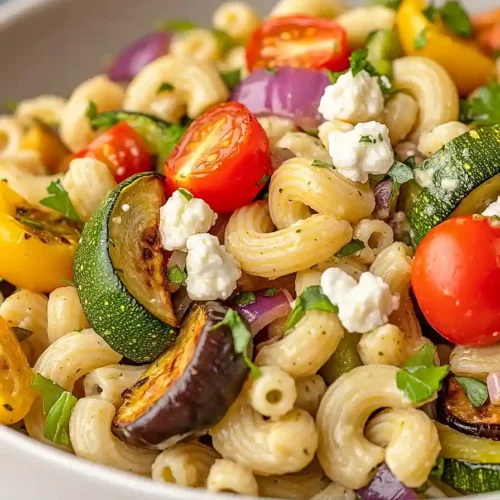
Simple Roasted Vegetable and Goat Cheese Pasta Salad
Ingredients
For the pasta and vegetables::
- 2.5 cups pasta (I use Barilla Penne for a firm texture)
- olive oil cooking spray
- 1 red bell pepper (seeded and cut into 1-inch pieces)
- 1 green bell pepper
- 1 yellow bell pepper
- 1 red onion (cut into 1-inch chunks to match peppers)
- 1 zucchini
- 1 eggplant
- 1.5 cups tomatoes (halved cherry or grape tomatoes work best)
- 6 oz goat cheese (I prefer Montchevre for its creaminess)
For the vinaigrette::
- 1 garlic clove (freshly minced for best flavor)
- 1/4 tsp salt
- 1/4 tsp pepper
- 3 tbsp olive oil (I always use Lucini Extra Virgin)
- 3/4 cup chives
- 1/2 cup parsley
- 3/4 cup basil
- 4 oz verjus (adds a gentle acidity without the bite of vinegar)
- 1/4 tsp Dijon mustard (for emulsification and subtle tang)
Instructions
- Preheat your oven to 400°F. While it heats, prepare all vegetables: seed and cut the red, green, and yellow bell peppers into 1-inch pieces; cut the red onion into 1-inch chunks to match the pepper size; cut the zucchini and eggplant into similar 1-inch pieces; and halve the cherry or grape tomatoes. Mince the garlic clove and roughly chop the chives, parsley, and basil—I find having all my herbs prepped prevents them from wilting while you're assembling everything else. Bring a large pot of salted water to boil for the pasta.
- Spray a large sheet pan with olive oil cooking spray and arrange the bell peppers and red onion chunks in a single layer. Roast for 10 minutes at 400°F until they begin to soften and caramelize slightly. Transfer to a large bowl. On the same sheet pan (no need to clean), arrange the zucchini and eggplant pieces in a single layer and roast for 8-10 minutes until they start to brown. Add these to the bowl with the peppers and onions, then add the halved tomatoes to the same bowl—I keep the tomatoes separate until the end because they soften quickly and release their juices at the last moment, which keeps the salad from getting watery.
- While vegetables roast, add the pasta to the boiling salted water and cook according to package directions until it reaches a firm, al dente texture (usually 9-11 minutes for penne). In a small bowl, combine the verjus, minced garlic, Dijon mustard, salt, and pepper. Whisk in the 3 tablespoons of olive oil slowly to create an emulsified vinaigrette—the mustard acts as an emulsifier, helping the oil and verjus come together smoothly. Taste and adjust seasoning if needed.
- When pasta is cooked, drain it thoroughly in a colander and rinse with cold water to stop the cooking process and remove excess starch. Transfer the cooled pasta to the bowl with the roasted vegetables. Pour the vinaigrette from Step 3 over the pasta and vegetables, then gently toss everything together until well coated. The cold pasta will gradually absorb the vinaigrette flavors, so don't worry if it seems lightly dressed at first.
- Add the chopped chives, parsley, and basil from Step 1 to the pasta salad and toss gently to combine. Crumble the goat cheese directly over the top just before serving—I prefer Montchevre for its creamy texture that contrasts beautifully with the roasted vegetables. Taste the salad and adjust salt and pepper if needed. The fresh herbs and creamy cheese add brightness and richness that complete the dish perfectly.