Finding a simple way to enjoy grilled vegetables without ending up with bland, boring results can feel like an impossible task. Sure, you can throw some veggies on the grill and call it a day, but they often lack that special something that makes you actually crave them.
That’s where these Korean grilled vegetables come in. They’re packed with flavor thanks to a savory-sweet-spicy sauce made with soy sauce, sesame oil, and gochugaru, and they come together quickly enough for a weeknight dinner. Plus, you can easily adjust the heat level and swap in whatever vegetables are in your fridge.
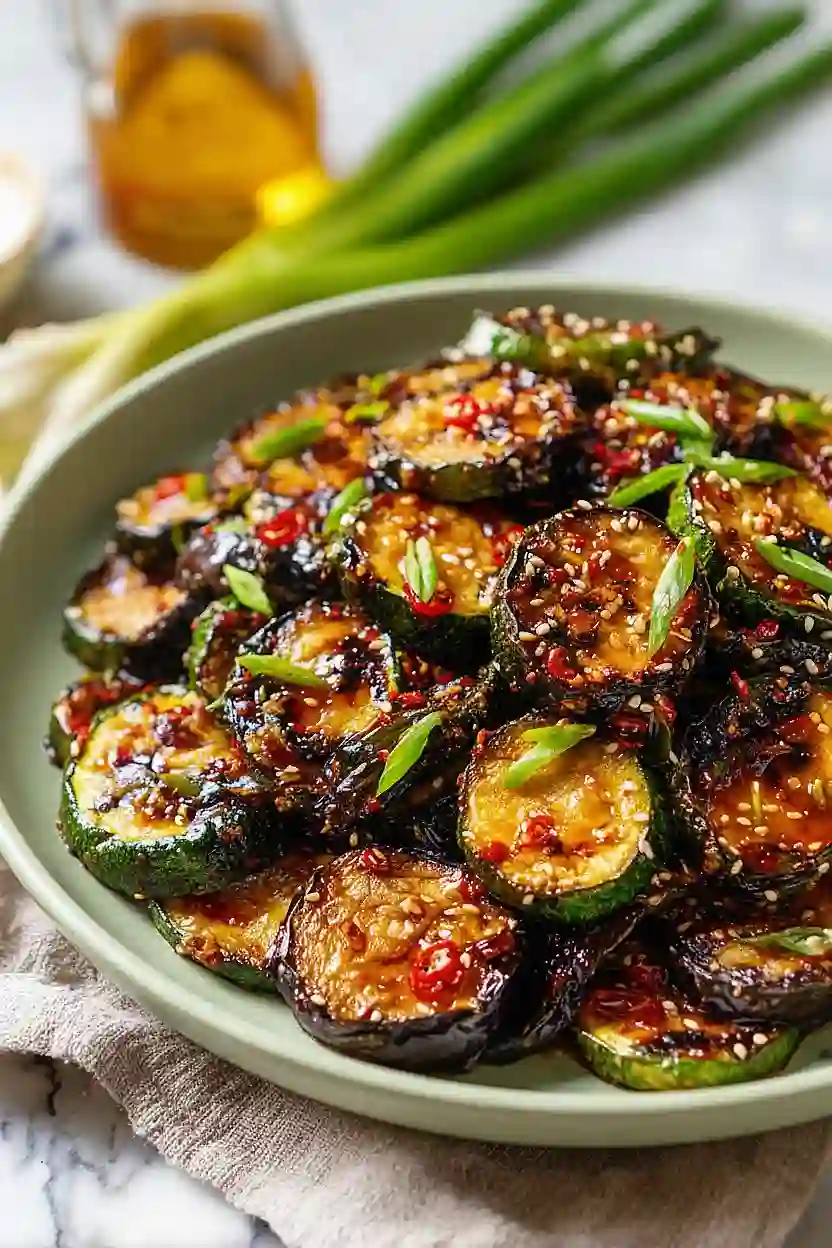
Why You’ll Love These Korean Grilled Vegetables
- Quick and easy – Ready in under an hour, this recipe is perfect for busy weeknights when you want something flavorful without spending all evening in the kitchen.
- Healthy and light – Made with just eggplant and zucchini as the main ingredients, this dish is naturally low in calories while still being satisfying and full of flavor.
- Simple ingredients – You probably have most of these pantry staples on hand already, like soy sauce, garlic, and sesame oil.
- Customizable spice level – You can keep it mild for the whole family or add gochugaru and chili peppers to give it a nice kick, making it work for everyone at the table.
- Great as a side or main – These grilled vegetables work perfectly alongside rice and protein, or you can enjoy them on their own for a lighter meal.
What Kind of Eggplant Should I Use?
For this recipe, Korean or Asian eggplant is your best bet because it has a thinner skin and fewer seeds than the larger globe eggplant you typically see at American grocery stores. These slender eggplants are usually around 6-8 inches long and have a sweeter, less bitter flavor that works perfectly for grilling. If you can’t find Korean eggplant, Japanese eggplant is basically the same thing and makes a great substitute. In a pinch, you can use regular globe eggplant, but you’ll want to slice it thinner and maybe salt it for about 15 minutes beforehand to draw out any bitterness.
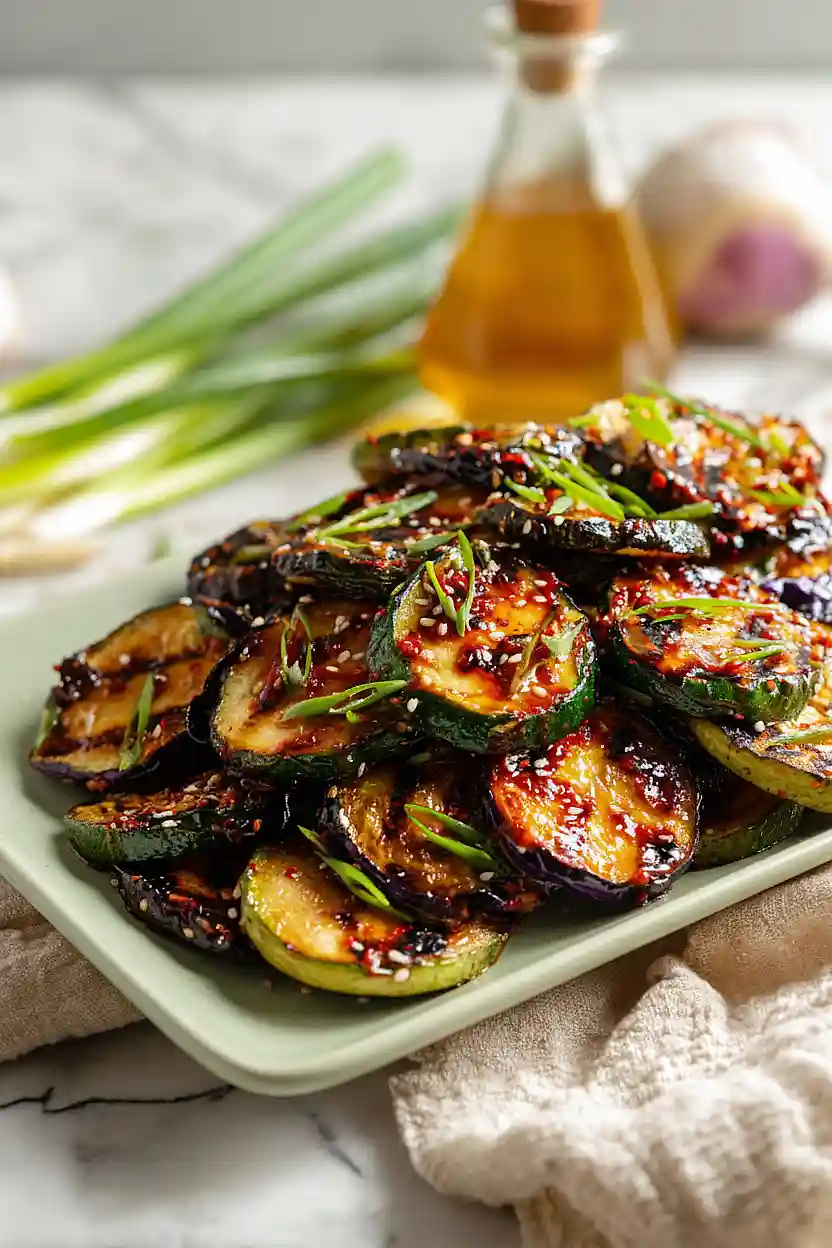
Options for Substitutions
This recipe is pretty forgiving when it comes to swaps, so here are some options if you need them:
- Korean/Asian eggplant: If you can’t find Korean eggplant, regular globe eggplant works fine. Just cut it into similar-sized pieces and you might need to salt it a bit longer (about 15-20 minutes) to draw out any bitterness.
- Zucchini: Yellow squash is basically interchangeable with zucchini here. You could also try adding bell peppers or mushrooms for variety.
- Sesame oil: Sesame oil gives this dish its signature flavor, so I’d recommend keeping it if possible. In a pinch, you could use a neutral oil with a tiny splash of tahini mixed in.
- Gochugaru: Don’t have Korean chili flakes? Red pepper flakes work as a substitute, though they’re a bit spicier, so start with half the amount and adjust from there.
- Soy sauce: Tamari or coconut aminos can replace soy sauce if you need a gluten-free option. Just note that coconut aminos are slightly sweeter, so you might want to reduce the sugar a touch.
- Roasted sesame seeds: If you only have raw sesame seeds, just toast them in a dry pan over medium heat for 2-3 minutes until golden and fragrant.
Watch Out for These Mistakes While Grilling
The biggest mistake when grilling Korean vegetables is skipping the salting step, which draws out excess moisture and prevents your eggplant and zucchini from turning mushy on the grill – just make sure to pat them completely dry with paper towels after draining.
Cutting your vegetables too thin (less than 1/3 inch) will cause them to overcook and fall apart, while cutting them too thick means they won’t cook through properly, so aim for consistent slices using a ruler if needed.
Don’t crank up the heat too high thinking it will give you better char marks – medium-high is ideal because it allows the vegetables to cook through without burning on the outside.
Finally, wait until after grilling to toss the vegetables with the sesame oil and soy sauce mixture, as adding it beforehand can cause flare-ups and make the vegetables stick to your grill grates.
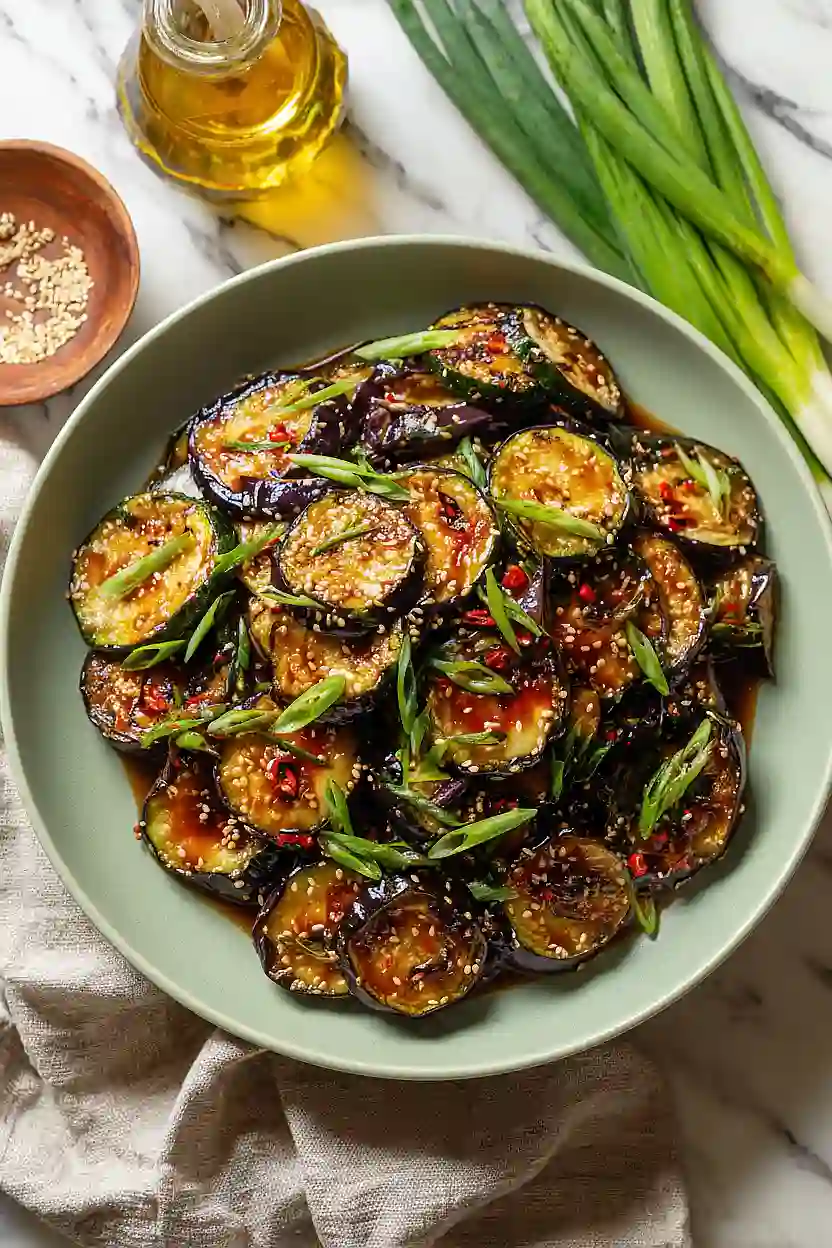
What to Serve With Korean Grilled Vegetables?
These Korean grilled vegetables are perfect as a side dish for any grilled meat like Korean BBQ short ribs, bulgogi, or even simple grilled chicken thighs. They also work great as part of a bigger spread with steamed rice, kimchi, and other banchan (Korean side dishes) for a complete meal. If you want to make it more filling, serve the vegetables over a bowl of warm white or brown rice and top with a fried egg. You can also tuck them into lettuce wraps with some extra sesame seeds and a drizzle of gochujang sauce for a lighter option.
Storage Instructions
Store: These grilled vegetables taste great cold or at room temperature, so they’re perfect for meal prep. Keep them in an airtight container in the fridge for up to 4 days. They make a fantastic side dish throughout the week alongside rice bowls or as part of a Korean banchan spread.
Serve: You can enjoy these straight from the fridge as a cold side dish, which is actually pretty common in Korean cuisine. If you prefer them warm, just heat them gently in a skillet over medium heat for a few minutes, or microwave them for about 30 seconds.
| Preparation Time | 25-35 minutes |
| Cooking Time | 10-20 minutes |
| Total Time | 35-55 minutes |
| Level of Difficulty | Easy |
| Servings | 3 servings |
Estimated Nutrition
Estimated nutrition for the whole recipe (without optional ingredients):
- Calories: 180-220
- Protein: 4-5 g
- Fat: 10-13 g
- Carbohydrates: 20-26 g
Ingredients
For the vegetables:
- 8 oz eggplant (sliced into 1/2-inch thick rounds)
- 8 oz zucchini (cut into 1/2-inch thick diagonal slices)
- 3/4 tsp salt
- 2 tbsp grapeseed oil (or other high-heat oil)
For the seasoning:
- 1 scallion (finely chopped, about 1/4-inch pieces)
- 2 tsp garlic (minced)
- 1 tbsp soy sauce
- 1 tbsp toasted sesame oil
- 1 1/4 tsp sugar
- 1 1/2 tsp toasted sesame seeds
- 1/4 tsp black pepper
- 1 tbsp gochugaru (Korean chili flakes)
- 1 red chili pepper (thinly sliced)
- 1 tsp rice vinegar
Step 1: Prep and Salt the Vegetables
- 8 oz eggplant
- 8 oz zucchini
- 3/4 tsp salt
Slice the eggplant into 1/2-inch thick rounds and cut the zucchini into 1/2-inch thick diagonal slices.
Place both vegetables in a bowl and toss with 3/4 teaspoon of salt.
Let them sit for 20 minutes—this draws out excess moisture so the vegetables will caramelize beautifully on the grill instead of steaming.
After 20 minutes, drain any liquid that has accumulated in the bowl.
Step 2: Prepare the Seasoning Mixture
- 2 tsp garlic, minced
- 1 scallion, finely chopped
- 1 tbsp gochugaru
- 1 red chili pepper, thinly sliced
- 1 tbsp soy sauce
- 1 tbsp toasted sesame oil
- 1 tsp rice vinegar
- 1 1/4 tsp sugar
- 1/4 tsp black pepper
While the vegetables are salting, prepare your seasoning base.
In a small bowl, combine the minced garlic, finely chopped scallion, gochugaru, thinly sliced red chili pepper, soy sauce, toasted sesame oil, rice vinegar, sugar, and black pepper.
Stir until well combined.
This mixture will be ready to coat the hot vegetables right after grilling.
Step 3: Grill the Vegetables
- salted vegetables from Step 1
- 2 tbsp grapeseed oil
Heat a grill pan or outdoor grill to medium-high heat and lightly brush or coat with 2 tablespoons of grapeseed oil.
I find that working in batches prevents overcrowding, which gives you better caramelization.
Grill the eggplant and zucchini for about 2 minutes on each side until they develop golden-brown char marks and are tender but still have a slight firmness.
The vegetables should be cooked through but not mushy.
Step 4: Season and Finish
- grilled vegetables from Step 3
- seasoning mixture from Step 2
- 1 1/2 tsp toasted sesame seeds
Transfer the hot grilled vegetables to a serving platter or bowl while they’re still warm.
Pour the seasoning mixture from Step 2 over the vegetables and toss gently to coat evenly.
I like to let them sit for a few minutes while the flavors meld before serving, but they’re delicious warm or at room temperature.
Sprinkle the toasted sesame seeds over the top just before serving for a final garnish and nutty flavor boost.
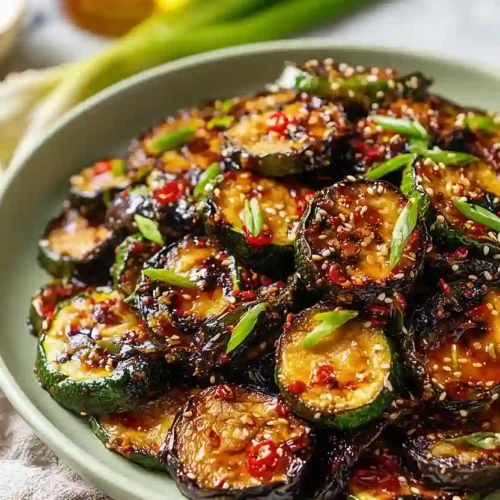
Spicy Korean Grilled Vegetables
Ingredients
For the vegetables
- 8 oz eggplant (sliced into 1/2-inch thick rounds)
- 8 oz zucchini (cut into 1/2-inch thick diagonal slices)
- 3/4 tsp salt
- 2 tbsp grapeseed oil (or other high-heat oil)
For the seasoning
- 1 scallion (finely chopped, about 1/4-inch pieces)
- 2 tsp garlic (minced)
- 1 tbsp soy sauce
- 1 tbsp toasted sesame oil
- 1 1/4 tsp sugar
- 1 1/2 tsp toasted sesame seeds
- 1/4 tsp black pepper
- 1 tbsp gochugaru (Korean chili flakes)
- 1 red chili pepper (thinly sliced)
- 1 tsp rice vinegar
Instructions
- Slice the eggplant into 1/2-inch thick rounds and cut the zucchini into 1/2-inch thick diagonal slices. Place both vegetables in a bowl and toss with 3/4 teaspoon of salt. Let them sit for 20 minutes—this draws out excess moisture so the vegetables will caramelize beautifully on the grill instead of steaming. After 20 minutes, drain any liquid that has accumulated in the bowl.
- While the vegetables are salting, prepare your seasoning base. In a small bowl, combine the minced garlic, finely chopped scallion, gochugaru, thinly sliced red chili pepper, soy sauce, toasted sesame oil, rice vinegar, sugar, and black pepper. Stir until well combined. This mixture will be ready to coat the hot vegetables right after grilling.
- Heat a grill pan or outdoor grill to medium-high heat and lightly brush or coat with 2 tablespoons of grapeseed oil. I find that working in batches prevents overcrowding, which gives you better caramelization. Grill the eggplant and zucchini for about 2 minutes on each side until they develop golden-brown char marks and are tender but still have a slight firmness. The vegetables should be cooked through but not mushy.
- Transfer the hot grilled vegetables to a serving platter or bowl while they're still warm. Pour the seasoning mixture from Step 2 over the vegetables and toss gently to coat evenly. I like to let them sit for a few minutes while the flavors meld before serving, but they're delicious warm or at room temperature. Sprinkle the toasted sesame seeds over the top just before serving for a final garnish and nutty flavor boost.