Growing up, lasagna was always this big production at our house – layers of noodles that had to be perfectly cooked, multiple pots and pans, and what felt like hours of prep work. My mom would only make it for special occasions because it was such a hassle.
But here’s the thing about lasagna – it doesn’t have to be complicated. This skillet version with zucchini instead of pasta came from a night when I was craving those classic Italian flavors but didn’t want to deal with all the fuss. It’s simpler, lighter, and honestly, cleanup is so much easier when everything comes together in one pan.
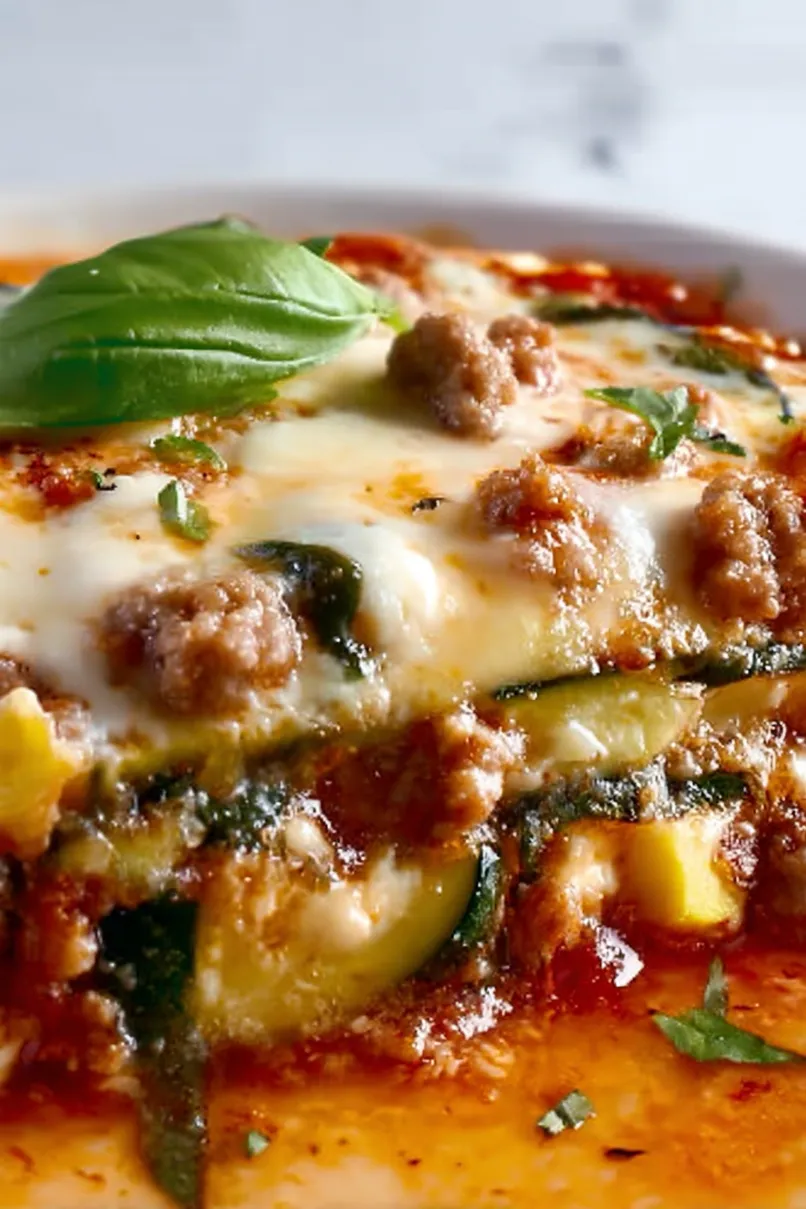
Why You’ll Love This Zucchini Lasagna
- Low-carb and keto-friendly – Using zucchini instead of pasta noodles makes this a perfect choice for anyone watching their carbs while still craving Italian comfort food.
- Quick preparation – Ready in just 30-40 minutes, this one-pan meal is perfect for busy weeknights when you don’t have time for traditional lasagna.
- High in protein – With lean turkey sausage, cottage cheese, and mozzarella, you’re getting plenty of protein while keeping the calories in check.
- Extra vegetables – Between the zucchini and spinach, you’re sneaking in two servings of vegetables without compromising on taste.
- One-pan cleanup – Everything cooks in a single skillet, which means less time doing dishes and more time enjoying your meal.
What Kind of Zucchini Should I Use?
For this skillet lasagna, medium-sized zucchini that are about 6-8 inches long work best since they’re easier to slice evenly and aren’t too seedy in the middle. Look for zucchini that feel firm and heavy for their size, with smooth, shiny dark green skin without any soft spots or blemishes. If you can only find larger zucchini, they’ll work too, but you might want to remove the seedy center portion since it can make your dish watery. When slicing your zucchini, try to keep the thickness consistent – about 1/4 inch thick works well for this recipe to ensure even cooking and the right texture in your final dish.

Options for Substitutions
This healthy skillet lasagna is pretty flexible – here are some easy swaps you can try:
- Zucchini: Since zucchini is the base of this recipe, you’ll want to keep some type of squash. You can use yellow summer squash or even eggplant slices (though eggplant should be salted and drained first to remove bitterness).
- Turkey sausage: Feel free to swap with regular Italian pork sausage, ground turkey, or for a vegetarian version, use crumbled firm tofu or your favorite meat substitute. If using plain ground meat, add 1 teaspoon Italian seasoning to match the flavor profile.
- Cottage cheese: Ricotta cheese is a natural substitute here, or try Greek yogurt for a protein-rich option. Just make sure to strain the yogurt for 30 minutes before using to remove excess moisture.
- Mozzarella cheese: Any melting cheese works well – try provolone, fontina, or a mix of Italian cheeses. For dairy-free needs, use your favorite plant-based shredded cheese.
- Spinach: You can swap spinach with kale (chopped finely), Swiss chard, or arugula. If using kale, add it a bit earlier in the cooking process as it takes longer to soften.
- Marinara sauce: Any tomato-based pasta sauce works here – try arrabbiata for extra heat, or make your own with canned crushed tomatoes and Italian seasonings.
Watch Out for These Mistakes While Cooking
The biggest challenge when making zucchini lasagna is dealing with excess moisture – if you skip salting and draining your zucchini slices beforehand, you’ll end up with a watery dish that falls apart on your plate. To prevent this, lay out your sliced zucchini on paper towels, sprinkle with salt, and let them sit for 15-20 minutes to draw out excess water. Another common mistake is overcooking the turkey sausage – cook it just until it’s no longer pink, as it will continue cooking in the skillet with the sauce. When layering your ingredients, resist the urge to add extra sauce, as zucchini releases more liquid while cooking – stick to the recommended amount to maintain the perfect consistency. For the best results, let your skillet lasagna rest for 5-10 minutes after cooking, allowing the cheese to set and making it much easier to serve without falling apart.

What to Serve With Skillet Zucchini Lasagna?
Since this zucchini lasagna is already packed with veggies and protein, you can keep the sides simple and light. A fresh arugula salad with lemon dressing makes a perfect partner, cutting through the richness of the cheese and sausage. If you’re feeding a hungry crowd, some warm garlic bread or crusty Italian bread on the side helps soak up all that tasty sauce. For a complete Italian-inspired meal, start with a small bowl of minestrone soup or serve some roasted cherry tomatoes on the vine alongside the lasagna – they add a nice pop of color and extra flavor to your plate.
Storage Instructions
Keep Fresh: This skillet zucchini lasagna stays good in the fridge for up to 4 days when stored in an airtight container. The zucchini might release a bit more water as it sits, but don’t worry – it’s still perfectly fine to eat and tastes great!
Freeze: You can freeze portions of this dish for up to 3 months in freezer-safe containers. Just keep in mind that the zucchini texture might be a bit softer when thawed, but the flavors will still be there. I like to portion it out before freezing for easy grab-and-go meals.
Reheat: To warm up your leftovers, pop them in the microwave for 2-3 minutes, stirring halfway through. If you’re using the oven, heat it at 350°F for about 15-20 minutes. You might want to drain any excess liquid that comes from the zucchini after reheating.
Meal Prep: This dish is perfect for meal prep! You can make it on Sunday and portion it out for lunches throughout the week. The flavors actually get better after a day or two as everything melds together.
| Preparation Time | 15-20 minutes |
| Cooking Time | 15-20 minutes |
| Total Time | 30-40 minutes |
| Level of Difficulty | Easy |
Estimated Nutrition
Estimated nutrition for the whole recipe (without optional ingredients):
- Calories: 800-900
- Protein: 70-80 g
- Fat: 40-50 g
- Carbohydrates: 40-50 g
Ingredients
- 4 cloves minced garlic (freshly minced for best flavor)
- salt (to taste)
- 2 cups marinara sauce (I use Rao’s for quality)
- 1 lb raw lean Italian turkey sausage (casings removed)
- 3/4 cup low-fat cottage cheese (blended smooth for creamier texture)
- 2 cups torn spinach leaves (fresh, packed before measuring)
- black pepper (freshly ground preferred)
- 1/4 tsp crushed red pepper flakes (or less if heat-sensitive)
- 5 to 6 medium zucchini (sliced lengthwise into 1/4-inch planks)
- 1 cup shredded part-skim mozzarella cheese
Step 1: Prepare Zucchini Planks and Mise en Place
- 5 to 6 medium zucchini
- 4 cloves minced garlic
- 2 cups torn spinach leaves
Slice zucchini lengthwise into 1/4-inch planks—these will act as your lasagna noodles.
Pat them completely dry with paper towels; this is crucial because excess moisture will steam the dish instead of allowing proper browning and sauce absorption.
While the zucchini drains, mince your garlic fresh and tear your spinach into bite-sized pieces.
Having everything prepped before you start cooking ensures the cooking process stays efficient and nothing burns while you’re chopping.
Step 2: Brown the Turkey Sausage and Build the Base Flavor
- 1 lb raw lean Italian turkey sausage
- 1/4 tsp crushed red pepper flakes
- 4 cloves minced garlic
- 2 cups marinara sauce
Heat a large skillet over medium-high heat and add the raw turkey sausage, breaking it into small crumbles as it cooks.
Cook for 5-7 minutes until the sausage is completely browned and any rendered fat has begun to evaporate.
Add the crushed red pepper flakes at the end of browning, then immediately stir in the minced garlic and cook for just 30 seconds—this brief window prevents the garlic from burning while allowing its flavor to infuse the oil.
Pour in the marinara sauce and stir well to combine everything evenly.
Step 3: Layer and Cook the Zucchini Noodles
- zucchini planks from Step 1
- turkey sausage and sauce mixture from Step 2
Add the dried zucchini planks to the skillet with the sausage and sauce mixture, stirring gently to coat them evenly.
The zucchini will initially seem crowded, but it will release moisture and begin to soften.
Cover the skillet and reduce heat to medium, cooking for 2-3 minutes.
I find that covering the skillet traps just enough steam to soften the zucchini without making it mushy—you want it tender but still holding its shape.
Step 4: Wilt the Spinach and Finish Cooking Vegetables
- spinach from Step 1
- cooked zucchini and sausage mixture from Step 3
Stir in the torn spinach, distributing it throughout the skillet so it makes contact with the hot mixture.
Cover again and cook for 3-4 minutes until the spinach is completely wilted and the zucchini is tender when pierced with a fork.
The residual heat and steam will finish cooking both vegetables perfectly while you prepare the cheese components.
Step 5: Incorporate Cheese and Create Creamy Texture
- 3/4 cup low-fat cottage cheese
- 1 cup shredded part-skim mozzarella cheese
- salt
- black pepper
- cooked zucchini, sausage, and spinach mixture from Step 4
Turn off the heat and stir in half of the mozzarella cheese along with all of the blended cottage cheese, stirring gently until everything is well combined and the cheeses begin to melt slightly from the residual heat.
Season to taste with additional salt and freshly ground black pepper.
Sprinkle the remaining mozzarella evenly across the top of the skillet.
I like using pre-blended cottage cheese because it creates a much smoother, creamier texture throughout the dish rather than leaving little lumps that don’t integrate well.
Step 6: Melt Cheese and Rest Before Serving
- completed lasagna from Step 5
Cover the skillet and let it sit for 5-8 minutes, allowing the residual heat to gently melt the top layer of mozzarella and bring all the flavors together.
This resting period also allows the cottage cheese to fully integrate and creates a more cohesive dish.
Divide into bowls or plates and serve warm.