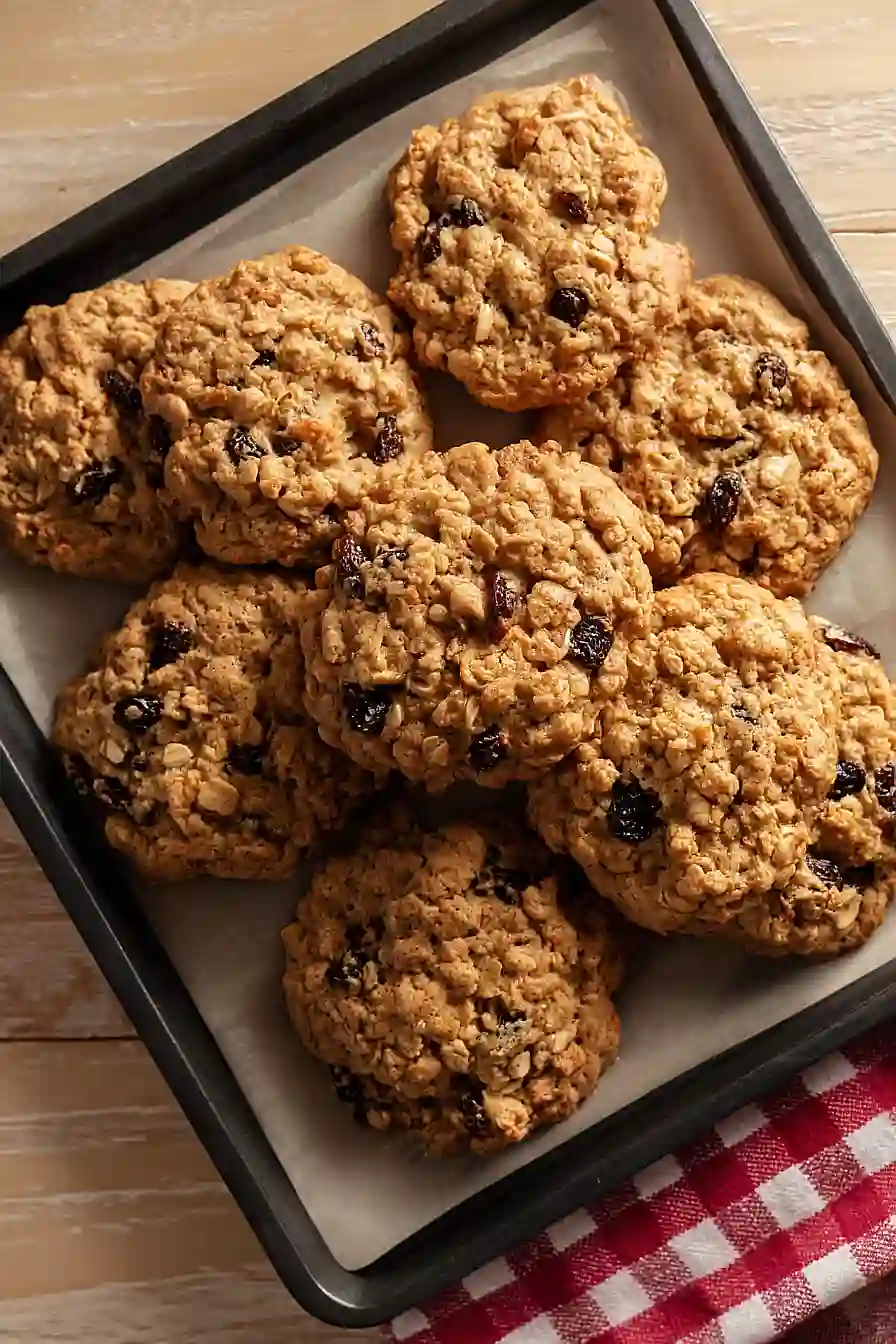
If you ask me, oatmeal raisin cookies get a bad rap they don’t deserve.
These cookies swap butter for olive oil, which gives them a tender texture and keeps them soft for days. Brown sugar and cinnamon add warmth, while plump raisins give you little bursts of sweetness in every bite.
They come together in one bowl with pantry staples you probably already have on hand. Old-fashioned oats give them that classic chewy texture, and the hint of olive oil makes them just a bit different from the cookies you grew up with.
They’re the kind of cookie that makes your kitchen smell like home, perfect for lunch boxes or an afternoon snack with coffee.
Why You’ll Love These Oatmeal Raisin Cookies
- Quick and easy – These cookies come together in just 20-30 minutes, making them perfect for when you need a homemade treat without spending hours in the kitchen.
- Classic comfort food – There’s something nostalgic about chewy oatmeal raisin cookies with warm cinnamon that brings back childhood memories and makes your house smell amazing.
- Simple pantry ingredients – You probably have most of these ingredients already, so you can whip up a batch whenever the cookie craving hits.
- Healthier than most cookies – With hearty oats and naturally sweet raisins, these cookies offer a bit more nutrition than your typical chocolate chip cookie without sacrificing flavor.
What Kind of Oats Should I Use?
For oatmeal raisin cookies, old-fashioned rolled oats are really your best bet and will give you that classic chewy texture everyone loves. Quick oats can work in a pinch, but they’ll make your cookies a bit more dense and less textured since they’re cut smaller and absorb moisture differently. I’d stay away from steel-cut oats for this recipe – they’re too hard and won’t soften up enough during baking, leaving you with crunchy bits that just don’t work in a cookie. If you only have quick oats on hand, just know your cookies might spread a little more and have a softer, less distinct oat presence throughout.
Options for Substitutions
This cookie recipe is pretty forgiving and works well with a few simple swaps:
- Butter: Since the recipe mentions olive oil in the name, you can replace the butter with 1/2 cup of light olive oil for a slightly different texture. The cookies will spread a bit more and have a chewier consistency.
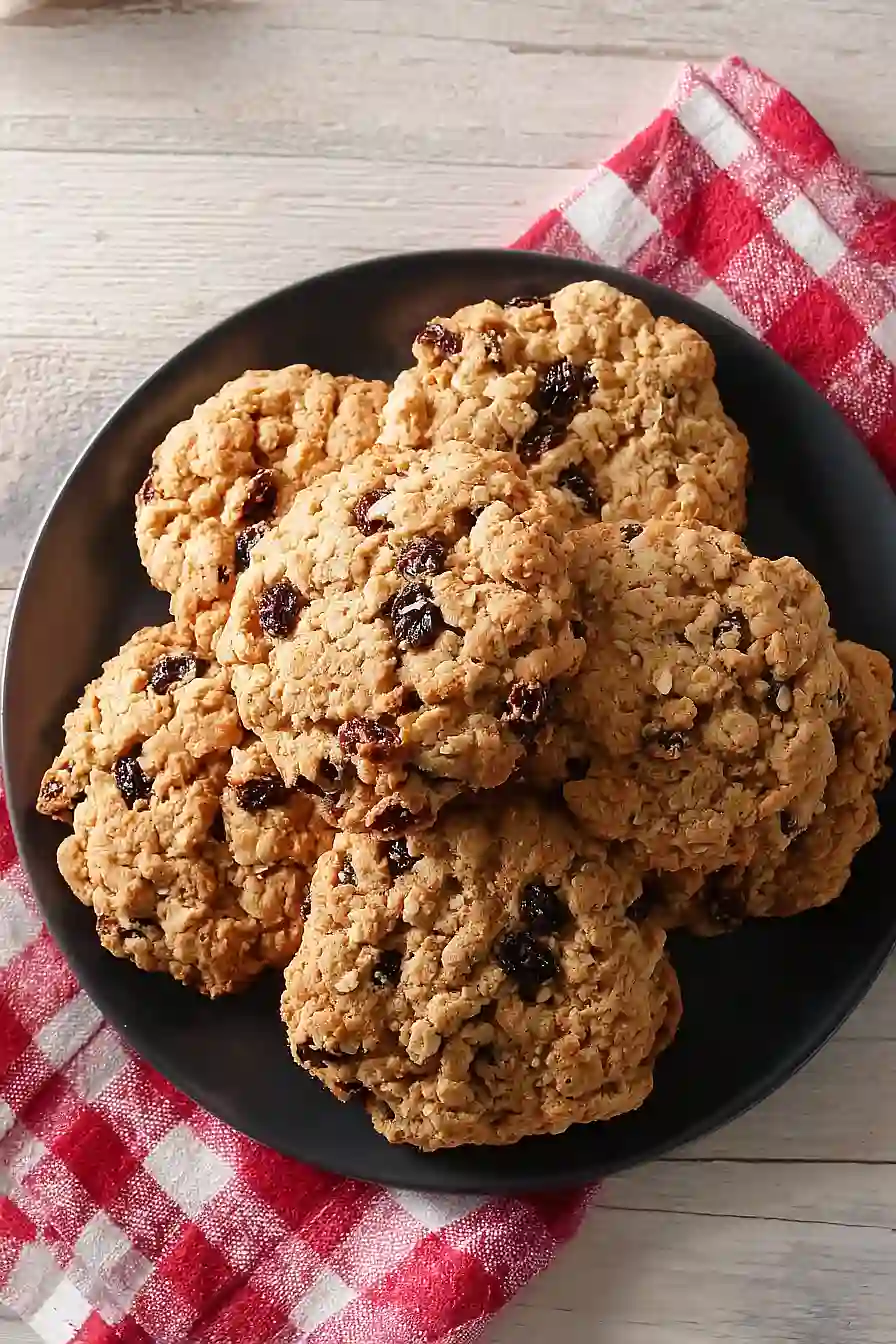
- Raisins: Not a raisin fan? Swap them out for chocolate chips, dried cranberries, chopped dates, or even butterscotch chips. You can also mix and match – try half raisins and half chocolate chips.
- Old-fashioned rolled oats: Stick with old-fashioned oats for this recipe – quick oats will make the cookies too dense and mushy, while steel-cut oats won’t soften properly during baking.
- Brown sugar: If you’re out of brown sugar, mix 1 cup of granulated sugar with 1 tablespoon of molasses to create your own.
- All-purpose flour: You can use whole wheat flour for half of the all-purpose flour to add a nuttier flavor and more fiber, but don’t replace all of it or the cookies will be too heavy.
Watch Out for These Mistakes While Baking
The biggest mistake when making oatmeal raisin cookies is overbaking them, which turns chewy cookies into hard, dry pucks – pull them from the oven when the edges are golden but the centers still look slightly underdone, as they’ll continue cooking on the baking sheet.
Another common error is skipping the step of soaking your raisins in warm water for 10 minutes before adding them to the dough, which keeps them plump and prevents them from stealing moisture from your cookies during baking.
Make sure you’re using old-fashioned rolled oats rather than quick oats, since quick oats will absorb too much moisture and give you a denser, cake-like texture instead of that classic chewy cookie.
Finally, don’t flatten the dough balls before baking – let them spread naturally in the oven for the best texture, and give them at least 2 inches of space on the baking sheet to prevent them from merging together.
What to Serve With Oatmeal Raisin Cookies?
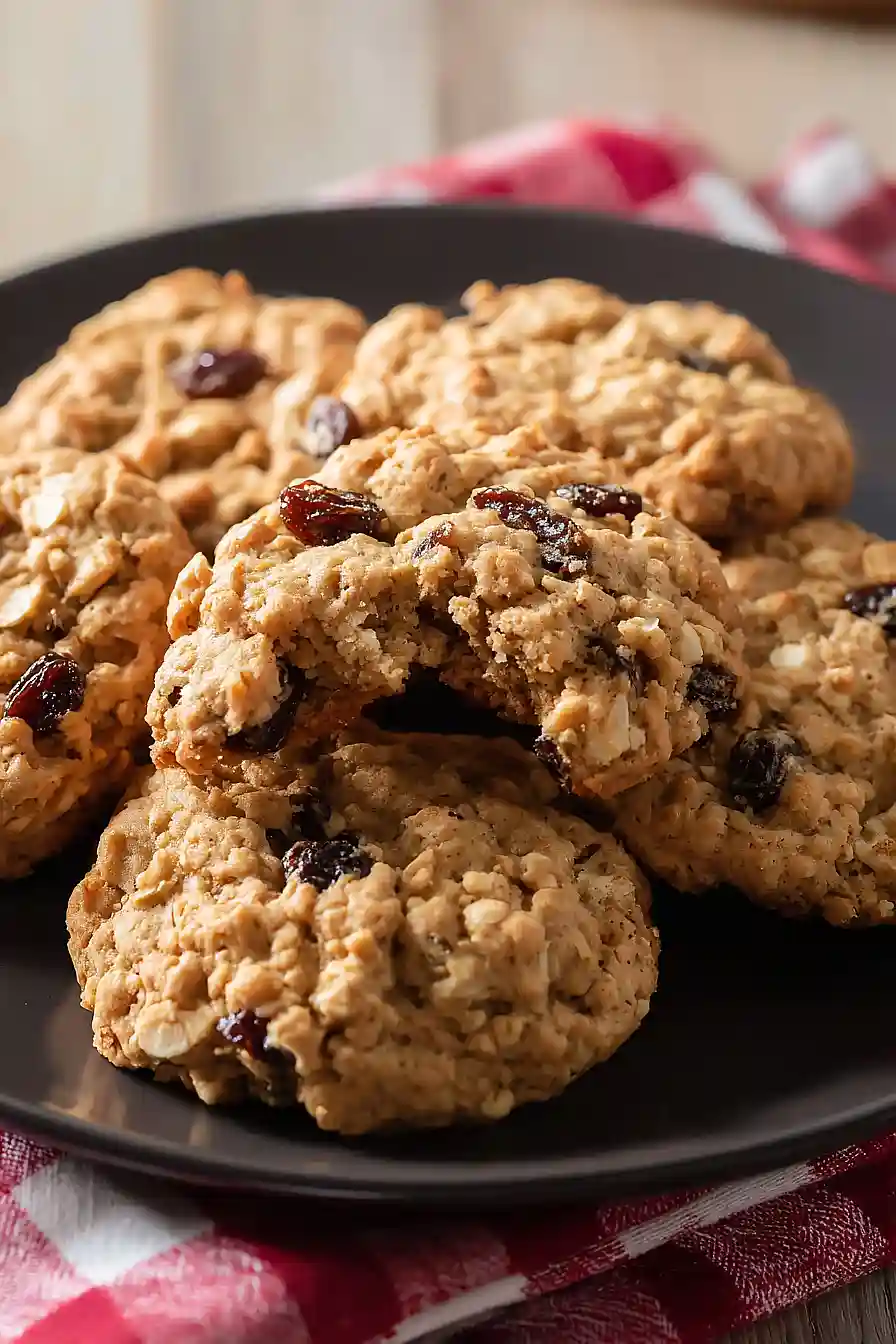
These cookies are perfect alongside a cold glass of milk for dunking, or pair them with a hot cup of coffee or tea for an afternoon snack. I love packing them in lunchboxes with some apple slices and cheese cubes for a balanced treat, or serving them as a simple dessert after dinner with a scoop of vanilla ice cream. They also make a great addition to a cookie platter when you’re hosting, especially when mixed with chocolate chip cookies and snickerdoodles to give everyone some variety.
Storage Instructions
Store: Keep your oatmeal raisin cookies in an airtight container at room temperature for up to a week. I like to toss a piece of bread in the container to help keep them soft and chewy. They’re perfect for grabbing as a quick snack or packing in lunchboxes throughout the week.
Freeze: These cookies freeze really well, either baked or as dough. For baked cookies, layer them between parchment paper in a freezer-safe container for up to 3 months. You can also scoop the dough into balls, freeze them on a baking sheet, then transfer to a freezer bag so you can bake fresh cookies whenever a craving hits.
Enjoy: Frozen baked cookies thaw at room temperature in about 30 minutes, or you can warm them in the microwave for 10-15 seconds. If you’re baking from frozen dough, just add a couple extra minutes to the baking time—no need to thaw first.
| Preparation Time | 10-15 minutes |
| Cooking Time | 10-12 minutes |
| Total Time | 20-30 minutes |
| Level of Difficulty | Easy |
Estimated Nutrition
Estimated nutrition for the whole recipe (without optional ingredients):
- Calories: 3200-3500
- Protein: 40-48 g
- Fat: 95-110 g
- Carbohydrates: 540-580 g
Ingredients
- 1 cup brown sugar (packed)
- 1/2 cup granulated sugar
- 1/2 cup unsalted butter (softened to room temperature)
- 2 large eggs (room temperature for better mixing)
- 2 cups all-purpose flour (King Arthur brand recommended for consistent results)
- 1 tsp vanilla extract
- 3 cups old-fashioned rolled oats (not instant oats)
- 1/2 tsp salt
- 1 cup raisins (plump and fresh)
- 1 tsp baking soda
- 1 tsp ground cinnamon (freshly ground preferred for better flavor)
Step 1: Prepare Mise en Place and Preheat Oven
- 1 cup brown sugar
- 1/2 cup granulated sugar
- 2 cups all-purpose flour
- 1 tsp baking soda
- 1 tsp ground cinnamon
- 1/2 tsp salt
- 1 cup raisins
Preheat your oven to 350°F and position racks in the upper and lower thirds so you can bake two sheets simultaneously.
While the oven heats, measure out all your ingredients into separate bowls: brown sugar, granulated sugar, flour, baking soda, cinnamon, and salt.
I like to plump my raisins by soaking them in warm water for 5 minutes while I prep everything else—this keeps them moist and flavorful in the finished cookies.
Pat them dry with a paper towel before adding them to the dough.
Having everything measured and ready ensures smooth mixing without interruptions.
Step 2: Cream Butter and Sugars
- 1/2 cup unsalted butter
- 1 cup brown sugar
- 1/2 cup granulated sugar
In a large bowl, combine the softened butter, brown sugar, and granulated sugar.
Using an electric mixer on medium speed, beat for 2-3 minutes until the mixture is light, fluffy, and noticeably pale.
This creaming process incorporates air into the dough, which helps the cookies spread evenly and develop a tender crumb.
You should see the color lighten and the texture become almost mousse-like.
Step 3: Incorporate Eggs and Vanilla
- 2 large eggs
- 1 tsp vanilla extract
Add the room-temperature eggs and vanilla extract to the creamed butter and sugar mixture.
Beat on medium speed for 1-2 minutes until the eggs are fully incorporated and the mixture appears smooth and homogeneous.
Room-temperature eggs emulsify more smoothly with the fat, creating a better texture in the final cookies.
Scrape down the sides of the bowl with a spatula to ensure everything is evenly combined.
Step 4: Combine Dry Ingredients and Mix Into Wet
- dry ingredient mixture from Step 1
In a separate bowl, whisk together the flour, baking soda, cinnamon, and salt.
This combines all your dry ingredients evenly and prevents baking soda streaks in your cookies.
Add the dry ingredient mixture from Step 1 to the wet ingredients from Step 3, mixing on low speed just until combined—don’t overmix, as this can toughen the dough.
The mixture should come together without any visible flour streaks, but you want to preserve the tender crumb structure you developed during creaming.
Step 5: Fold in Oats and Raisins
- 3 cups old-fashioned rolled oats
- plumped raisins from Step 1
Using a wooden spoon or sturdy spatula, fold the old-fashioned rolled oats and plumped raisins (from Step 1) into the dough until evenly distributed.
Folding rather than beating keeps the dough tender by minimizing gluten development.
The cookies should have oats and raisins throughout without any pockets of just dough.
I find that slightly moist oats from folding in the plumped raisins add extra moisture and chewiness to the final cookies.
Step 6: Shape and Bake Cookies
- shaped dough from Step 5
Drop rounded tablespoon-sized portions of dough onto baking sheets, spacing them about 2 inches apart to allow for spreading.
Bake for 10-12 minutes on the preheated oven racks (use both the upper and lower thirds) until the edges are golden but the centers still look slightly underbaked.
The cookies will continue to set as they cool, resulting in crispy edges and a chewy center.
Rotate the baking sheets halfway through baking if your oven has hot spots.
Step 7: Cool and Finish
Allow the cookies to rest on the baking sheets for 5 minutes—this lets them set up enough to handle without falling apart, while still retaining the chewy texture that makes these cookies special.
Transfer the cookies to a wire rack to cool completely.
Store them in an airtight container at room temperature for up to 5 days.
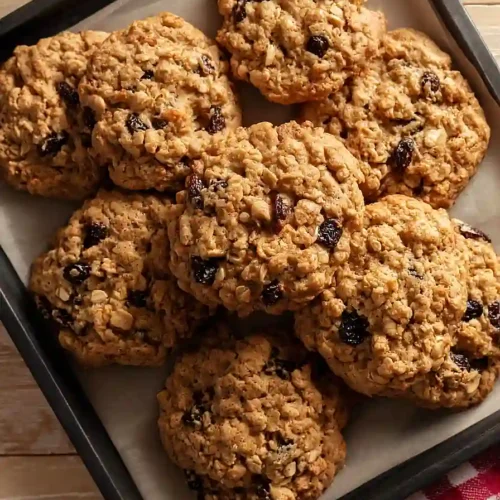
Sweet Oatmeal Raisin Cookies With Olive Oil
Ingredients
- 1 cup brown sugar (packed)
- 1/2 cup granulated sugar
- 1/2 cup unsalted butter (softened to room temperature)
- 2 large eggs (room temperature for better mixing)
- 2 cups all-purpose flour (King Arthur brand recommended for consistent results)
- 1 tsp vanilla extract
- 3 cups old-fashioned rolled oats (not instant oats)
- 1/2 tsp salt
- 1 cup raisins (plump and fresh)
- 1 tsp baking soda
- 1 tsp ground cinnamon (freshly ground preferred for better flavor)
Instructions
- Preheat your oven to 350°F and position racks in the upper and lower thirds so you can bake two sheets simultaneously. While the oven heats, measure out all your ingredients into separate bowls: brown sugar, granulated sugar, flour, baking soda, cinnamon, and salt. I like to plump my raisins by soaking them in warm water for 5 minutes while I prep everything else—this keeps them moist and flavorful in the finished cookies. Pat them dry with a paper towel before adding them to the dough. Having everything measured and ready ensures smooth mixing without interruptions.
- In a large bowl, combine the softened butter, brown sugar, and granulated sugar. Using an electric mixer on medium speed, beat for 2-3 minutes until the mixture is light, fluffy, and noticeably pale. This creaming process incorporates air into the dough, which helps the cookies spread evenly and develop a tender crumb. You should see the color lighten and the texture become almost mousse-like.
- Add the room-temperature eggs and vanilla extract to the creamed butter and sugar mixture. Beat on medium speed for 1-2 minutes until the eggs are fully incorporated and the mixture appears smooth and homogeneous. Room-temperature eggs emulsify more smoothly with the fat, creating a better texture in the final cookies. Scrape down the sides of the bowl with a spatula to ensure everything is evenly combined.
- In a separate bowl, whisk together the flour, baking soda, cinnamon, and salt. This combines all your dry ingredients evenly and prevents baking soda streaks in your cookies. Add the dry ingredient mixture from Step 1 to the wet ingredients from Step 3, mixing on low speed just until combined—don't overmix, as this can toughen the dough. The mixture should come together without any visible flour streaks, but you want to preserve the tender crumb structure you developed during creaming.
- Using a wooden spoon or sturdy spatula, fold the old-fashioned rolled oats and plumped raisins (from Step 1) into the dough until evenly distributed. Folding rather than beating keeps the dough tender by minimizing gluten development. The cookies should have oats and raisins throughout without any pockets of just dough. I find that slightly moist oats from folding in the plumped raisins add extra moisture and chewiness to the final cookies.
- Drop rounded tablespoon-sized portions of dough onto baking sheets, spacing them about 2 inches apart to allow for spreading. Bake for 10-12 minutes on the preheated oven racks (use both the upper and lower thirds) until the edges are golden but the centers still look slightly underbaked. The cookies will continue to set as they cool, resulting in crispy edges and a chewy center. Rotate the baking sheets halfway through baking if your oven has hot spots.
- Allow the cookies to rest on the baking sheets for 5 minutes—this lets them set up enough to handle without falling apart, while still retaining the chewy texture that makes these cookies special. Transfer the cookies to a wire rack to cool completely. Store them in an airtight container at room temperature for up to 5 days.