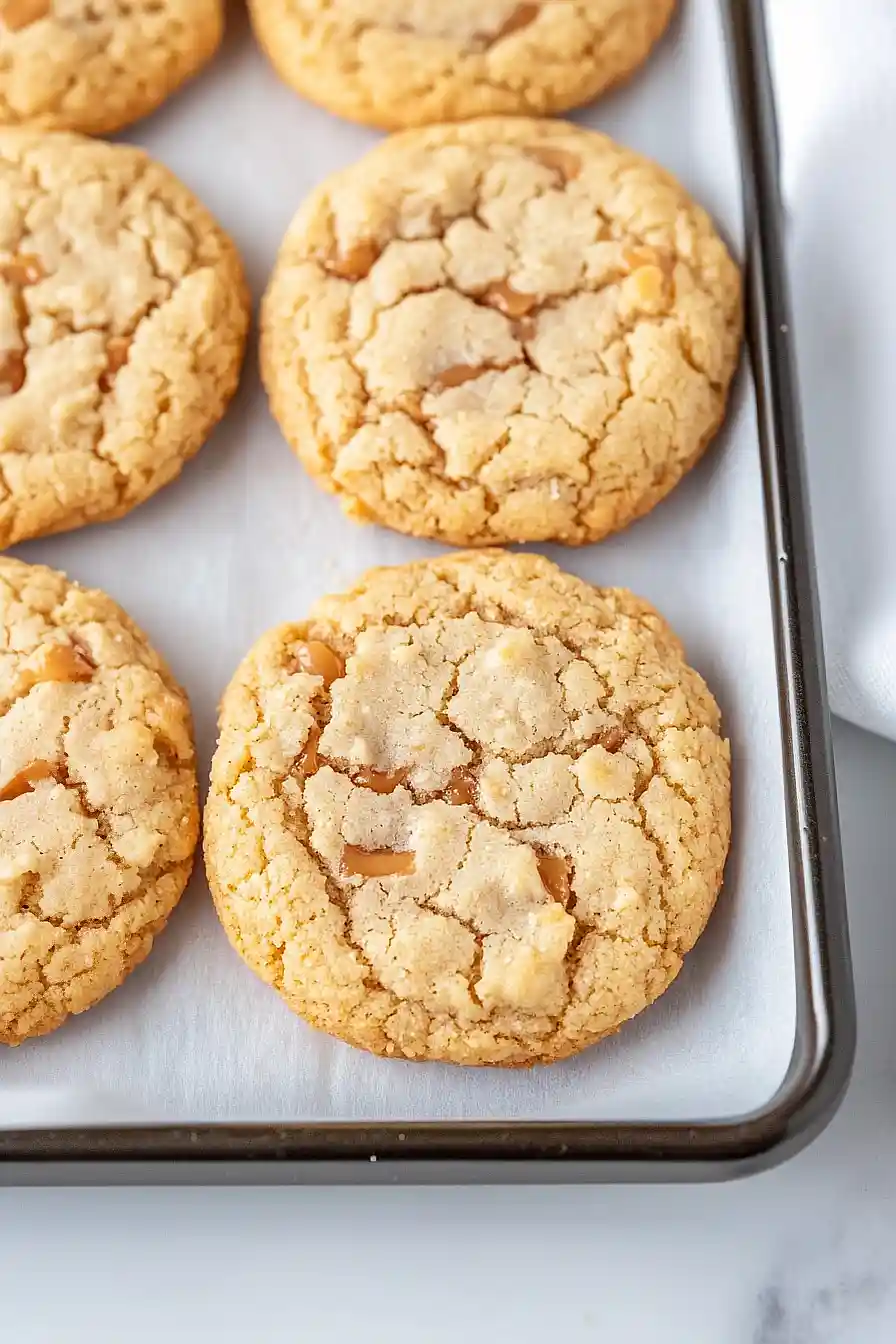
I never understood why people made such a big deal about toffee cookies until I tried making them myself. Growing up, the only “toffee” I knew came from those little bits in a plastic bag at the grocery store.
But real toffee cookies? That’s a whole different story. The buttery, caramel-like flavor mixed with just the right amount of crunch makes these cookies pretty special. And here’s the thing—they’re way easier to make than you’d think. No candy thermometer required.
Why You’ll Love These Toffee Cookies
- Simple ingredients – These cookies use basic baking staples you probably already have in your pantry, plus delicious toffee pieces for that extra special touch.
- Quick and easy – With just 40-72 minutes from start to finish, you can have fresh, homemade cookies ready for any occasion or craving.
- Perfect texture combination – The soft, chewy cookie base paired with crunchy toffee pieces creates an irresistible bite that keeps you coming back for more.
- Great for sharing – This recipe makes plenty of cookies, perfect for family gatherings, bake sales, or bringing to work to share with colleagues.
What Kind of Toffee Pieces Should I Use?
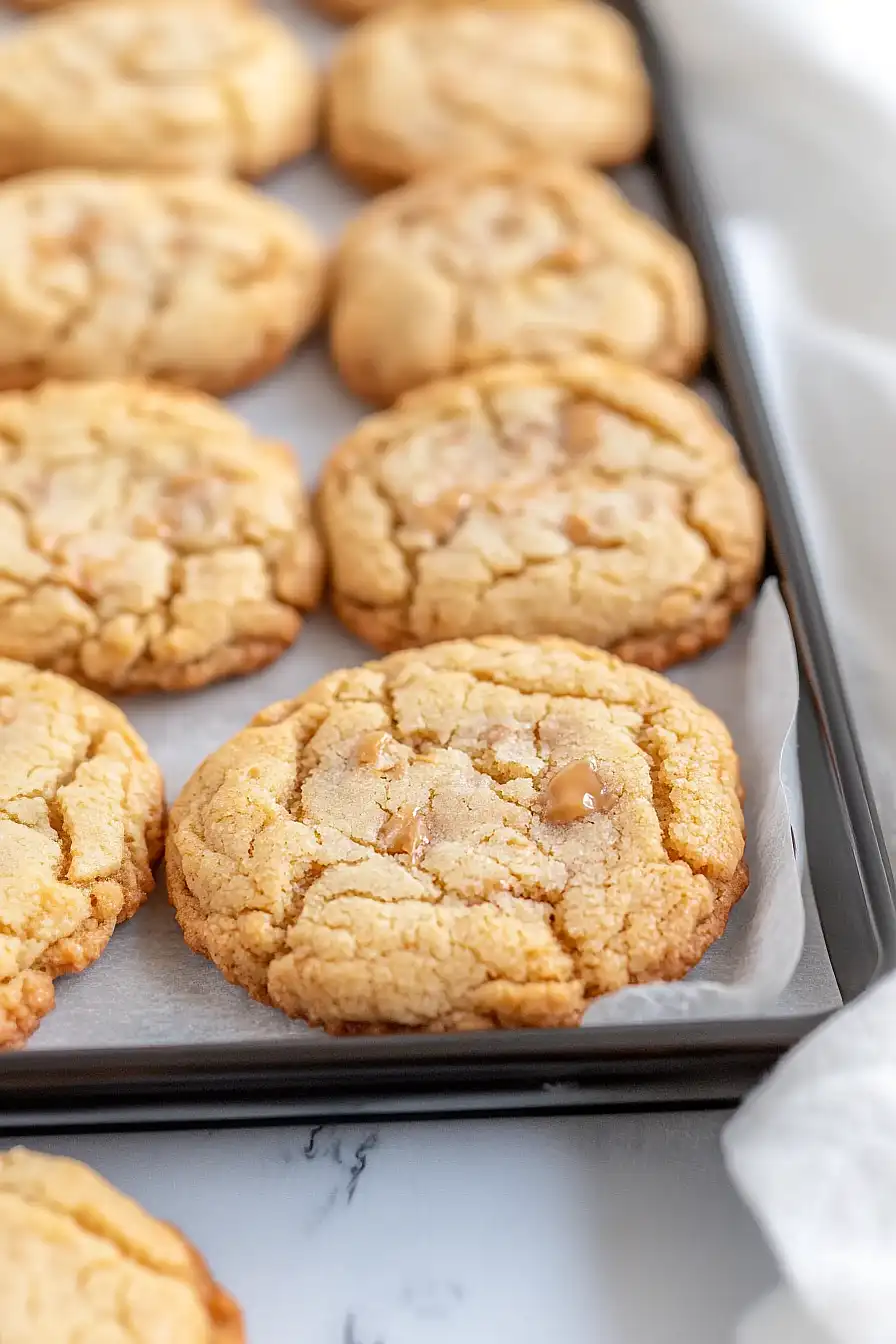
You’ve got a few great options when it comes to toffee pieces for these cookies. The most convenient choice is store-bought toffee bits like Heath or Skor pieces, which you can find in the baking aisle right next to the chocolate chips. If you want to go the homemade route, you can make your own toffee and chop it into small chunks, though this will add some extra time to your baking day. Another option is to buy toffee candy bars and roughly chop them into bite-sized pieces – just make sure they’re not too big or they might sink to the bottom of your cookies while baking.
Options for Substitutions
These toffee cookies are pretty forgiving when it comes to swaps – here’s what you can change up:
- All-purpose flour: You can substitute with a 1:1 gluten-free flour blend if needed, though the texture might be slightly different. Avoid substituting with other flours as it will change the cookie structure too much.
- Salted butter: Unsalted butter works fine – just add a pinch of salt to the dry ingredients. You can also use margarine, but stick butter gives better flavor and texture than tub varieties.
- Brown sugar: If you’re out of brown sugar, mix 3/4 cup granulated sugar with 1 tablespoon molasses. Light and dark brown sugar are interchangeable here.
- Vanilla extract: Almond extract makes a nice change (use half the amount), or you can skip it entirely if you don’t have any on hand.
- Toffee pieces: Chocolate chips, butterscotch chips, or chopped up candy bars work great. You can also crush up toffee candy bars if you can’t find toffee bits.
- Eggs: For each egg, you can substitute with 1/4 cup applesauce or 1 tablespoon ground flaxseed mixed with 3 tablespoons water (let it sit for 5 minutes first).
Watch Out for These Mistakes While Baking
The biggest mistake when making toffee cookies is using melted butter instead of softened butter, which can cause your cookies to spread too much and become thin and crispy rather than chewy.
Make sure your butter is properly softened at room temperature – it should give slightly when pressed but not be melty or greasy.
Another common error is overbaking these cookies since the toffee pieces can make it hard to judge doneness – pull them from the oven when the edges are just set and the centers still look slightly underbaked, as they’ll continue cooking on the hot pan.
To prevent your toffee pieces from sinking to the bottom of the cookies, lightly coat them in flour before folding them into the dough, and don’t skip chilling the dough for at least 30 minutes if it seems too soft to handle.
What to Serve With Toffee Cookies?
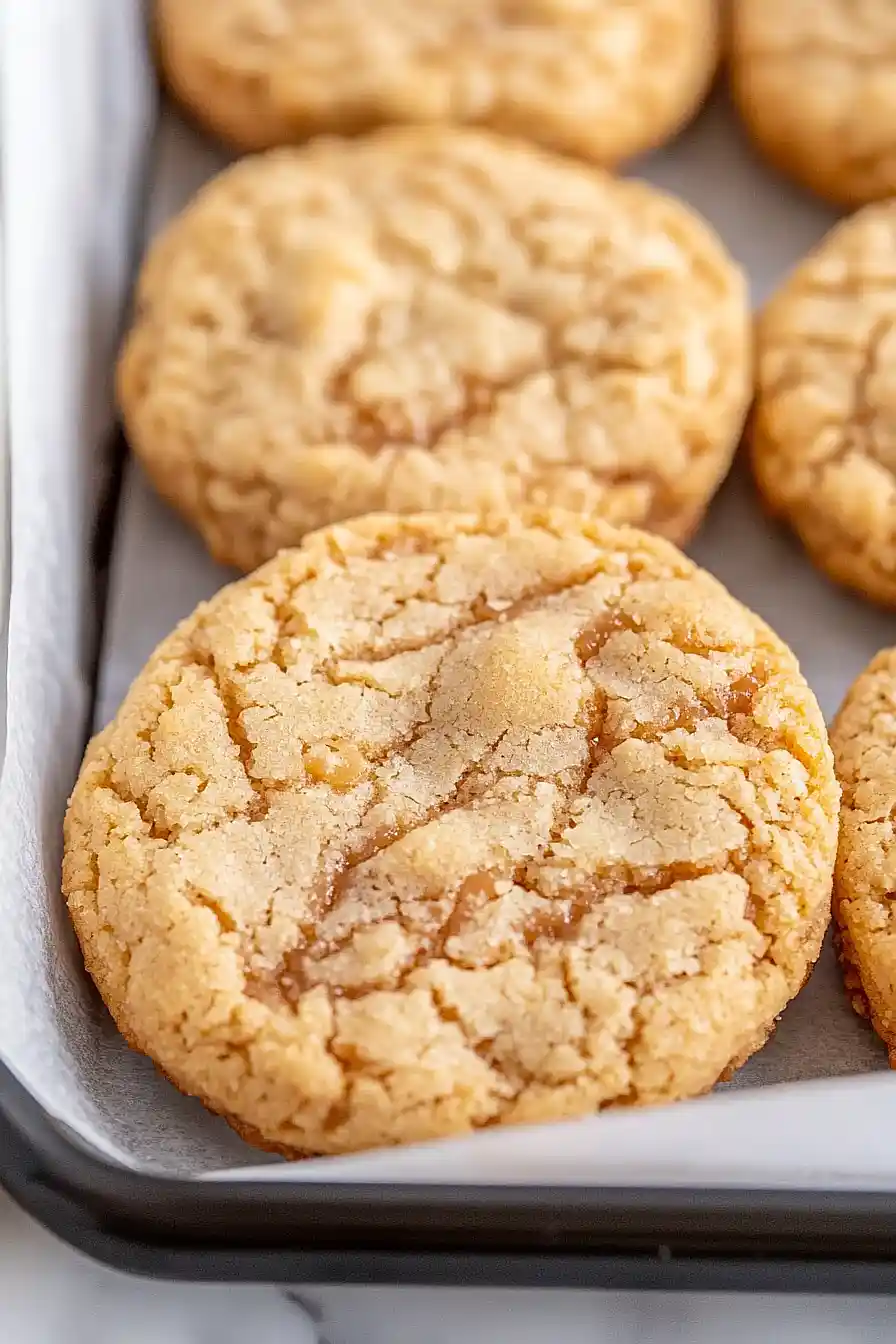
These rich, buttery toffee cookies are perfect on their own, but they really shine when paired with a cold glass of milk for dunking. I love serving them alongside a hot cup of coffee or tea – the warm drink balances out the sweet toffee crunch beautifully. For a fun dessert spread, try setting them out with some vanilla ice cream for an easy cookie sandwich, or crumble them over fresh berries and whipped cream. They also make a great addition to any cookie platter when you’re entertaining guests.
Storage Instructions
Store: These toffee cookies stay soft and chewy when stored in an airtight container at room temperature for up to a week. I like to toss a slice of bread in the container to help keep them from getting too crispy. Just make sure they’re completely cooled before storing or they’ll get soggy.
Freeze: You can freeze baked cookies in a freezer-safe container for up to 3 months, or freeze the cookie dough balls on a baking sheet and then transfer to bags. Frozen dough balls can go straight from freezer to oven – just add an extra minute or two to the baking time.
Make Ahead: The cookie dough can be made up to 2 days ahead and kept covered in the fridge. Cold dough actually bakes up a bit thicker, which I love! You can also portion the dough into balls and refrigerate them on a baking sheet, then just pop them in the oven when you want fresh cookies.
| Preparation Time | 30-60 minutes |
| Cooking Time | 10-12 minutes |
| Total Time | 40-72 minutes |
| Level of Difficulty | Medium |
Estimated Nutrition
Estimated nutrition for the whole recipe (without optional ingredients):
- Calories: 3500-3700
- Protein: 32-38 g
- Fat: 140-155 g
- Carbohydrates: 510-540 g
Ingredients
For the dry ingredients:
- 2 1/2 cups all-purpose flour (I use King Arthur for consistent results)
- 1 tsp baking soda
For the wet ingredients:
- 1/2 cup salted butter (softened to room temperature)
- 1 tbsp vanilla extract (pure vanilla preferred)
- 2 large eggs (room temperature for better mixing)
- 3/4 cup white sugar
- 3/4 cup light brown sugar (packed for moisture)
For the add-ins:
- 2 cups toffee bits (I use Ghirardelli for rich flavor)
Step 1: Prepare Mise en Place and Preheat
- 2 1/2 cups all-purpose flour
- 1 tsp baking soda
Start by preheating your oven to 350°F and ensuring your butter and eggs are at room temperature—this is crucial for proper emulsification and a lighter, fluffier cookie texture.
While the oven heats, sift together the flour and baking soda in a medium bowl to aerate the flour and distribute the leavening evenly.
Set this dry mixture aside and have all your other ingredients measured and ready to go.
Step 2: Cream Butter and Sugars for Maximum Lightness
- 1/2 cup salted butter
- 3/4 cup white sugar
- 3/4 cup light brown sugar
- 1 tbsp vanilla extract
In a large mixing bowl, beat the softened butter with both the white sugar and packed brown sugar for 2-3 minutes until the mixture is noticeably pale, fluffy, and increased in volume.
This creaming process incorporates air into the butter, which creates lift in the finished cookies.
Add the vanilla extract in the final minute of beating and mix until fully combined.
Step 3: Incorporate Eggs and Toffee Bits
- 2 large eggs
- 2 cups toffee bits
Add the eggs one at a time to the creamed butter mixture, beating well after each addition to ensure proper emulsification.
Once both eggs are fully incorporated, gently fold in the toffee bits until they’re evenly distributed throughout the batter.
I like to reserve a small handful of toffee bits and sprinkle them on top of each cookie before baking for extra visual appeal and concentrated toffee flavor in each bite.
Step 4: Combine Wet and Dry Ingredients
- dry ingredient mixture from Step 1
- wet ingredient mixture from Step 3
Add the dry ingredient mixture from Step 1 to the wet batter in two or three additions, stirring gently between each addition until just combined.
Avoid overmixing once the flour is added, as this can develop gluten and lead to tough cookies.
Stop mixing as soon as you see no visible streaks of flour—the dough should come together as a cohesive mass.
Step 5: Scoop and Chill Dough
Using a cookie scoop or spoon, portion the dough onto an ungreased or parchment-lined baking sheet, spacing the cookies about 2 inches apart to allow for spreading.
If you have time, chill the dough for 30-60 minutes in the refrigerator—this prevents excessive spreading and helps the cookies develop better structure and a chewier interior.
However, if you’re short on time, you can bake them immediately without significantly compromising the result.
Step 6: Bake and Cool
Bake the cookies in the preheated 350°F oven for 10-12 minutes, watching for the edges to turn golden brown while the centers still appear slightly underdone—they’ll continue cooking on the hot baking sheet after removal.
Let the cookies cool on the baking sheet for 3-5 minutes to set, then transfer them to a wire cooling rack to cool completely.
I find that cookies removed from the sheet too early tend to break apart, so be patient with that initial resting period.