I’ll be honest—I used to think galettes were one of those fancy French things that required culinary school to pull off. Turns out, they’re basically just rustic pies that are supposed to look a little messy. No pie pan needed, no perfect crimping required. You just fold the edges over and call it a day.
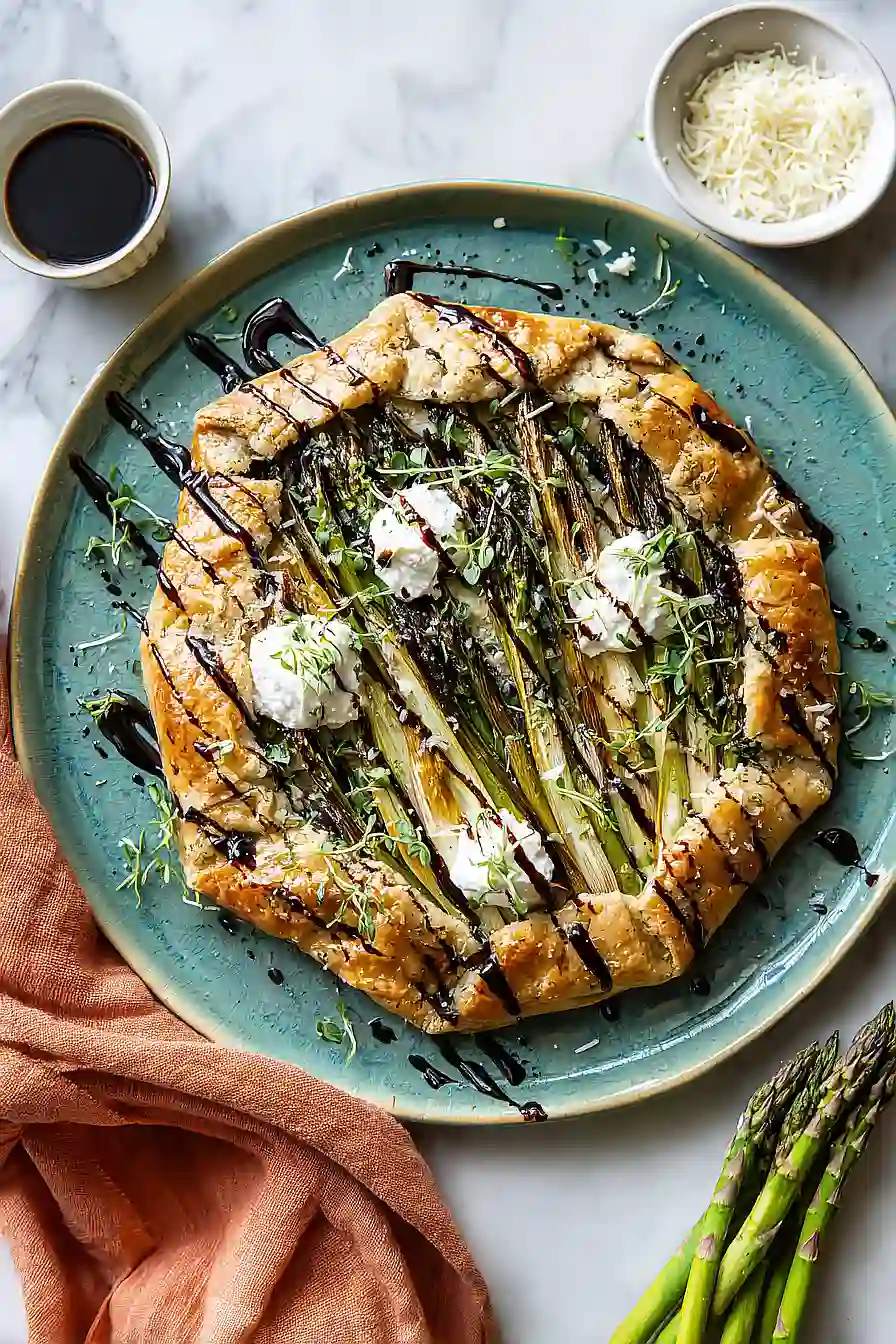
This asparagus galette with leeks is my go-to when I want something that tastes impressive but doesn’t stress me out. The buttery, flaky crust comes together in minutes, and the filling is just caramelized leeks, creamy ricotta, and fresh asparagus. Pop some burrata on top after it bakes, drizzle with balsamic glaze, and suddenly you’ve got something that looks like it came from a bistro. But really, it’s just simple ingredients doing their thing.

Why You’ll Love This Asparagus Galette
- Impressive presentation – This rustic galette looks like it came from a fancy bakery, but it’s actually simple to make at home. Your guests will think you spent hours on it.
- Fresh spring flavors – The combination of tender asparagus, sweet caramelized leeks, and creamy ricotta and burrata makes this a light and satisfying meal that celebrates seasonal produce.
- Versatile serving options – Serve it as a main dish for lunch or dinner, cut it into smaller pieces for appetizers, or pack leftovers for an easy work lunch the next day.
- Homemade buttery crust – Making your own flaky pastry dough is easier than you think, and it tastes so much better than store-bought. Plus, you can make the dough ahead of time.
What Kind of Asparagus Should I Use?
When shopping for asparagus, look for spears that are firm and straight with tightly closed tips – this means they’re fresh. Medium-thickness asparagus works best for galettes since thin spears can get too crispy and thick ones might not cook through properly in the baking time. You’ll want to snap off the woody ends before using them, which is easy – just bend each spear until it naturally breaks at the point where it becomes tender. If you can only find thicker asparagus, you can slice them in half lengthwise so they cook evenly and look pretty on your galette.

Options for Substitutions
This galette is pretty forgiving when it comes to swaps, so here are some options if you need them:
- Whole-wheat flour: If you don’t have whole-wheat flour, just use 2 cups of all-purpose flour instead. The crust will be slightly lighter in texture and color, but it’ll still taste great.
- Leeks: Leeks can be swapped with 2 medium yellow onions or 3-4 shallots. Slice them thin and cook them the same way until they’re soft and sweet.
- Ricotta: You can use cottage cheese blended until smooth, or even cream cheese mixed with a bit of milk to thin it out. Goat cheese works too if you like that tangy flavor.
- Burrata: Fresh mozzarella makes a good substitute here. You could also use more ricotta or even crumbled goat cheese if that’s what you have.
- Asparagus: Green beans, broccolini, or even zucchini ribbons work well in place of asparagus. Just adjust cooking time as needed – zucchini needs less time than asparagus.
- Balsamic glaze: If you don’t have balsamic glaze, you can make your own by simmering regular balsamic vinegar over low heat until it reduces and thickens, about 10-15 minutes.
Watch Out for These Mistakes While Baking
The biggest mistake when making this galette is overworking the dough, which develops too much gluten and results in a tough, chewy crust instead of a flaky one – pulse the butter just until you have pea-sized pieces and stop mixing as soon as the dough comes together.
Another common error is skipping the step to properly dry your leeks after washing them, since excess water will make your galette soggy and prevent the crust from getting crispy on the bottom.
Don’t forget to let your dough rest at room temperature before rolling, as cold dough will crack and tear easily, making it nearly impossible to shape into that rustic circle.
Finally, resist the urge to overfill the galette or place toppings too close to the edge – leave at least a 2-inch border so you have enough dough to fold over and create a proper seal that keeps all those delicious juices inside.
What to Serve With Asparagus Galette?
This asparagus galette is pretty filling on its own, but I love serving it with a simple arugula salad dressed with lemon juice and olive oil to balance out the richness of the ricotta and burrata. A light soup like a spring pea or carrot ginger soup makes a nice starter if you’re serving this for dinner guests. Since the galette has such nice spring flavors, it pairs really well with a crisp white wine or sparkling water with lemon. You can also cut it into smaller slices and serve it as an appetizer at a brunch or dinner party alongside other small bites.
Storage Instructions
Store: Keep your leftover galette in an airtight container in the fridge for up to 3 days. The crust might soften a bit as it sits, but it still tastes great. I like to save a slice or two for a quick lunch the next day with a simple green salad on the side.
Reheat: To bring back some of that crispy crust, warm your galette in a 350°F oven for about 10-15 minutes. You can also use a toaster oven if you’re just reheating a slice or two. Skip the microwave if you can, since it’ll make the pastry soggy.
Make Ahead: You can prepare the dough up to 2 days in advance and keep it wrapped in the fridge, or freeze it for up to a month. The caramelized leeks can also be made a day ahead, which makes assembly super quick when you’re ready to bake.
| Preparation Time | 45-60 minutes |
| Cooking Time | 40-50 minutes |
| Total Time | 90-120 minutes |
| Level of Difficulty | Medium |
| Servings | 8 slices |
Estimated Nutrition
Estimated nutrition for the whole recipe (without optional ingredients):
- Calories: 3000-3200
- Protein: 75-85 g
- Fat: 185-200 g
- Carbohydrates: 265-285 g
Ingredients
For the dough:
- 1 cup all-purpose flour
- 1 cup whole-wheat flour
- 18 tbsp salted butter (cold and cut into 1/2-inch cubes)
- 5 tbsp ice water
For the filling:
- 2 leeks (white and light green parts only, sliced into 1/4-inch rounds)
- 2 tbsp butter
- 1/2 tsp sea salt
- 1/4 tsp garlic powder
- 2 tbsp olive oil
- 1.75 cups ricotta (strain first for a much better pastry texture)
- 3/4 cup parmesan
- 0.5 lb asparagus (woody ends trimmed off)
- 1/2 tsp fresh thyme, chopped
For the assembly and garnish:
- 1 egg
- 1 tbsp cream or milk
- 4 oz burrata (I prefer BelGioioso for its extra creamy center)
- balsamic glaze
- flaky sea salt
- freshly ground black pepper
Step 1: Make the Pastry Dough
- 1 cup all-purpose flour
- 1 cup whole-wheat flour
- 18 tbsp salted butter
- 5 tbsp ice water
Combine all-purpose flour and whole-wheat flour in a food processor.
Add the cold, cubed salted butter and pulse until the mixture resembles coarse breadcrumbs with pea-sized pieces of butter still visible.
Add ice water a tablespoon at a time, pulsing gently until the dough just comes together—it should hold when pinched but still look shaggy.
Form the dough into a disk, wrap in plastic wrap, and refrigerate for at least 1 hour.
This resting time allows the gluten to relax and the butter to firm up, which creates those beautiful, flaky layers.
Step 2: Prepare the Leek Filling
- 2 leeks
- 2 tbsp butter
- 1/2 tsp sea salt
While the dough chills, slice the leeks into 1/4-inch rounds, keeping only the white and light green parts, and rinse thoroughly between layers to remove any sand.
In a large skillet, melt 2 tablespoons butter over medium heat and add the sliced leeks with 1/2 teaspoon sea salt.
Cook, stirring occasionally, for about 10 minutes until the leeks are completely softened and golden—this slow cooking sweetens them and removes excess moisture so they won’t make your pastry soggy.
Set aside to cool slightly.
Step 3: Prepare the Ricotta Mixture and Asparagus
- 1.75 cups ricotta
- 0.5 lb asparagus
Strain the ricotta through fine-mesh cheesecloth or a fine sieve for 15-20 minutes to remove excess whey—I find this step makes a huge difference in the final texture of the galette, preventing a watery filling.
Trim the woody ends from the asparagus and set aside.
Preheat your oven to 400°F while you finish the other components.
Step 4: Shape and Prepare the Pastry Base
- dough from Step 1
- 2 tbsp olive oil
Remove the dough from the refrigerator and let it sit at room temperature for 20 minutes to soften slightly for easier rolling.
Place the dough between two sheets of parchment paper and roll it into a 14-inch circle, rotating and flipping occasionally for even thickness.
Transfer the dough (still on parchment) to a large baking sheet.
Lightly brush the entire surface with 2 tablespoons olive oil, leaving about a 1.5-inch border uncovered—this will crisp up nicely during baking.
Step 5: Assemble and Bake the Galette
- ricotta mixture from Step 3
- 3/4 cup parmesan
- cooked leeks from Step 2
- asparagus from Step 3
- 1/2 tsp fresh thyme, chopped
- 1 egg
- 1 tbsp cream or milk
Spread the strained ricotta in an even layer over the oiled dough, leaving the border clear, then scatter half of the parmesan cheese over it.
Arrange the cooked leeks from Step 2 and asparagus spears over the cheese in a somewhat organized pattern.
Top with the remaining parmesan and 1/2 teaspoon fresh thyme.
Fold the dough border up and over the filling, overlapping it slightly as you go around—it doesn’t need to be perfect; rustic is the beauty of a galette.
Whisk together the egg and cream or milk to make an egg wash, then brush it generously over the exposed dough edges.
Bake for 35-40 minutes until the crust is deep golden brown and crispy.
Step 6: Finish and Serve
- 4 oz burrata
- balsamic glaze
- flaky sea salt
- freshly ground black pepper
Remove the galette from the oven and let it cool for 5 minutes.
Tear the burrata into chunks and scatter it over the warm galette—the heat will slightly soften its creamy center.
Drizzle generously with balsamic glaze, then finish with flaky sea salt and freshly ground black pepper.
I like to add the burrata and glaze right after baking so the warmth of the galette releases the burrata’s incredible creamy texture.
Slice into wedges and serve warm or at room temperature.

Tasty Asparagus Galette with Leeks
Ingredients
For the dough::
- 1 cup all-purpose flour
- 1 cup whole-wheat flour
- 18 tbsp salted butter (cold and cut into 1/2-inch cubes)
- 5 tbsp ice water
For the filling::
- 2 leeks (white and light green parts only, sliced into 1/4-inch rounds)
- 2 tbsp butter
- 1/2 tsp sea salt
- 1/4 tsp garlic powder
- 2 tbsp olive oil
- 1.75 cups ricotta (strain first for a much better pastry texture)
- 3/4 cup parmesan
- 0.5 lb asparagus (woody ends trimmed off)
- 1/2 tsp fresh thyme, chopped
For the assembly and garnish::
- 1 egg
- 1 tbsp cream or milk
- 4 oz burrata (I prefer BelGioioso for its extra creamy center)
- balsamic glaze
- flaky sea salt
- freshly ground black pepper
Instructions
- Combine all-purpose flour and whole-wheat flour in a food processor. Add the cold, cubed salted butter and pulse until the mixture resembles coarse breadcrumbs with pea-sized pieces of butter still visible. Add ice water a tablespoon at a time, pulsing gently until the dough just comes together—it should hold when pinched but still look shaggy. Form the dough into a disk, wrap in plastic wrap, and refrigerate for at least 1 hour. This resting time allows the gluten to relax and the butter to firm up, which creates those beautiful, flaky layers.
- While the dough chills, slice the leeks into 1/4-inch rounds, keeping only the white and light green parts, and rinse thoroughly between layers to remove any sand. In a large skillet, melt 2 tablespoons butter over medium heat and add the sliced leeks with 1/2 teaspoon sea salt. Cook, stirring occasionally, for about 10 minutes until the leeks are completely softened and golden—this slow cooking sweetens them and removes excess moisture so they won't make your pastry soggy. Set aside to cool slightly.
- Strain the ricotta through fine-mesh cheesecloth or a fine sieve for 15-20 minutes to remove excess whey—I find this step makes a huge difference in the final texture of the galette, preventing a watery filling. Trim the woody ends from the asparagus and set aside. Preheat your oven to 400°F while you finish the other components.
- Remove the dough from the refrigerator and let it sit at room temperature for 20 minutes to soften slightly for easier rolling. Place the dough between two sheets of parchment paper and roll it into a 14-inch circle, rotating and flipping occasionally for even thickness. Transfer the dough (still on parchment) to a large baking sheet. Lightly brush the entire surface with 2 tablespoons olive oil, leaving about a 1.5-inch border uncovered—this will crisp up nicely during baking.
- Spread the strained ricotta in an even layer over the oiled dough, leaving the border clear, then scatter half of the parmesan cheese over it. Arrange the cooked leeks from Step 2 and asparagus spears over the cheese in a somewhat organized pattern. Top with the remaining parmesan and 1/2 teaspoon fresh thyme. Fold the dough border up and over the filling, overlapping it slightly as you go around—it doesn't need to be perfect; rustic is the beauty of a galette. Whisk together the egg and cream or milk to make an egg wash, then brush it generously over the exposed dough edges. Bake for 35-40 minutes until the crust is deep golden brown and crispy.
- Remove the galette from the oven and let it cool for 5 minutes. Tear the burrata into chunks and scatter it over the warm galette—the heat will slightly soften its creamy center. Drizzle generously with balsamic glaze, then finish with flaky sea salt and freshly ground black pepper. I like to add the burrata and glaze right after baking so the warmth of the galette releases the burrata's incredible creamy texture. Slice into wedges and serve warm or at room temperature.