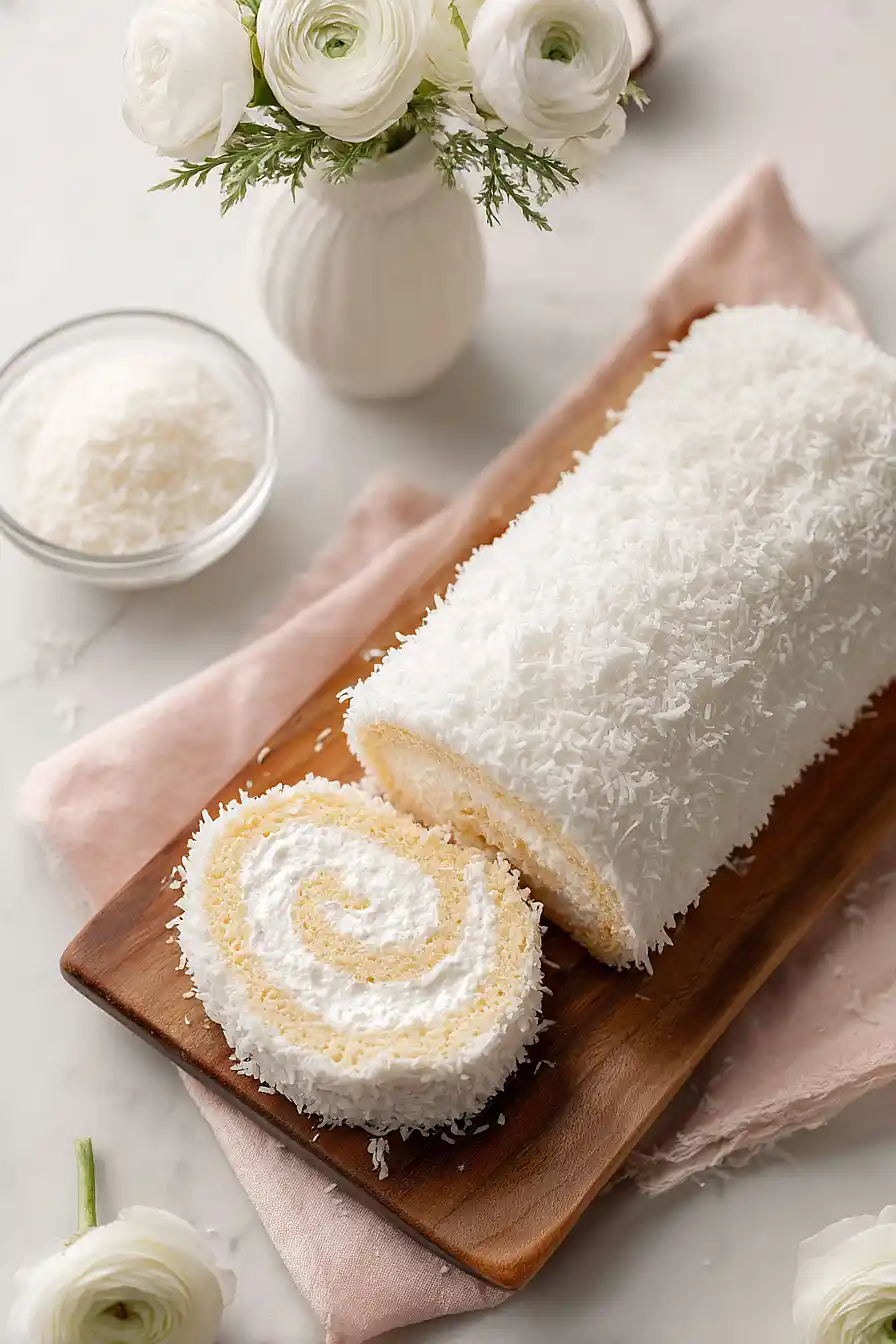
If you ask me, coconut cake rolls are one of the best desserts to make when you want to impress without too much fuss.
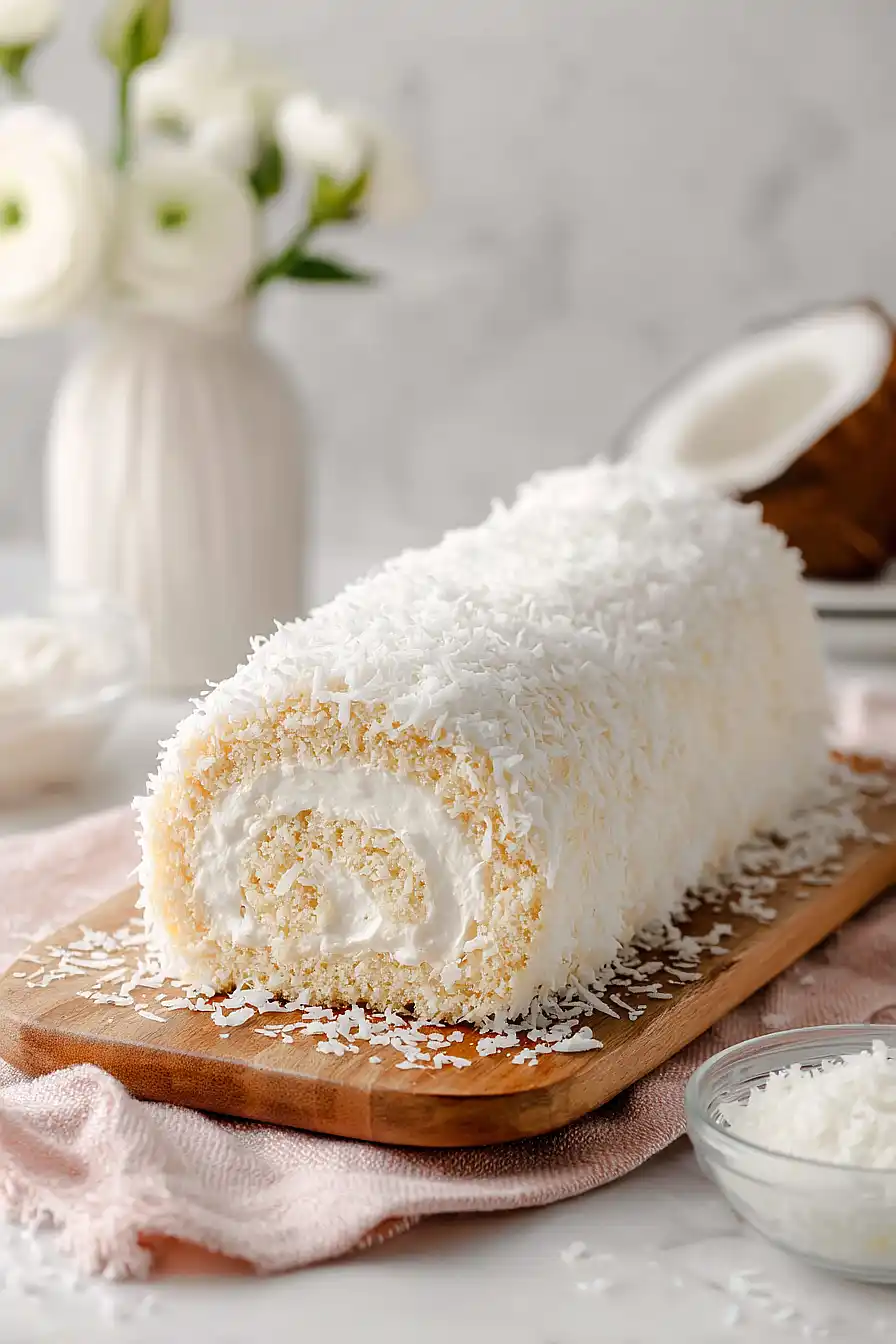
This soft, springy cake gets rolled up with a creamy coconut frosting that’s rich but not too heavy. The cake itself is light and tender, with just enough coconut flavor to make it interesting without going overboard.
The cream cheese frosting is sweetened just right and mixed with shredded coconut for a bit of texture. Rolling it all up looks fancy, but it’s actually pretty straightforward once you get the hang of it.
It’s a crowd-pleasing dessert that works great for potlucks or Sunday dinners, and honestly tastes like something from a bakery.
Why You’ll Love This Coconut Cake Roll
- Impressive presentation – This rolled cake looks like it came from a fancy bakery, but it’s surprisingly easy to make at home. Your guests will think you spent hours on it.
- Light and fluffy texture – The soft sponge cake paired with creamy filling creates a dessert that’s satisfying without being too heavy.
- Perfect for coconut lovers – With coconut essence in both the cake and filling, plus shredded coconut throughout, this recipe delivers that tropical flavor in every bite.
- Ready in about an hour – From mixing to rolling, you can have this beautiful dessert ready to serve in just 45-70 minutes, making it great for last-minute entertaining.
- Make-ahead friendly – You can prepare this cake roll a day in advance and keep it chilled until you’re ready to serve, which takes the stress out of party planning.
What Kind of Coconut Should I Use?
For this coconut cake roll, you’ll want to use sweetened shredded coconut, which you can find in the baking aisle of most grocery stores. The sweetened variety works better here because it adds extra flavor and moisture to the filling. If you only have unsweetened coconut on hand, it’ll still work, but you might want to add a tablespoon or two of extra sugar to the filling to make up for it. Before using your coconut, give it a quick look to make sure it’s still fresh and hasn’t dried out too much – it should feel slightly moist and pliable, not hard and brittle.
Options for Substitutions
This cake roll is pretty forgiving when it comes to swaps, so here are some options if you need them:
- Coconut essence: If you can’t find coconut essence, vanilla extract works fine – just use the same amount. You could also try almond extract for a different flavor profile, but use half the amount since it’s stronger.
- Cream cheese: Regular full-fat cream cheese is best here since it needs to hold its shape in the filling. I wouldn’t recommend substituting this one, as lower-fat versions or mascarpone might make the filling too soft to roll properly.
- Heavy cream: You need cream with at least 35% fat content to whip properly for the filling. Half-and-half or milk won’t work here since they won’t whip up.
- Shredded coconut: Both sweetened and unsweetened coconut work, but if using sweetened, you might want to reduce the sugar in the filling by 2-3 tablespoons. Toasting the coconut before adding it gives a nice nutty flavor.
- Milk: Any milk works here – whole, 2%, or even a dairy-free option like almond or oat milk will do the job in the cake batter.
Watch Out for These Mistakes While Baking
The biggest mistake when making a cake roll is overbaking, which creates a dry, cracked cake that won’t roll properly – pull it from the oven as soon as it springs back when lightly touched, usually around 13-14 minutes.
Rolling the cake while it’s still warm is critical because once it cools flat, it will crack when you try to roll it, so don’t skip the step of rolling it in the towel immediately after baking.
When spreading the frosting, leave about a half-inch border around the edges since the filling will naturally spread as you roll, preventing it from oozing out the sides.
Finally, make sure your cream cheese is fully softened to room temperature before mixing – cold cream cheese creates lumps in your frosting that are nearly impossible to smooth out, ruining the texture of your filling.
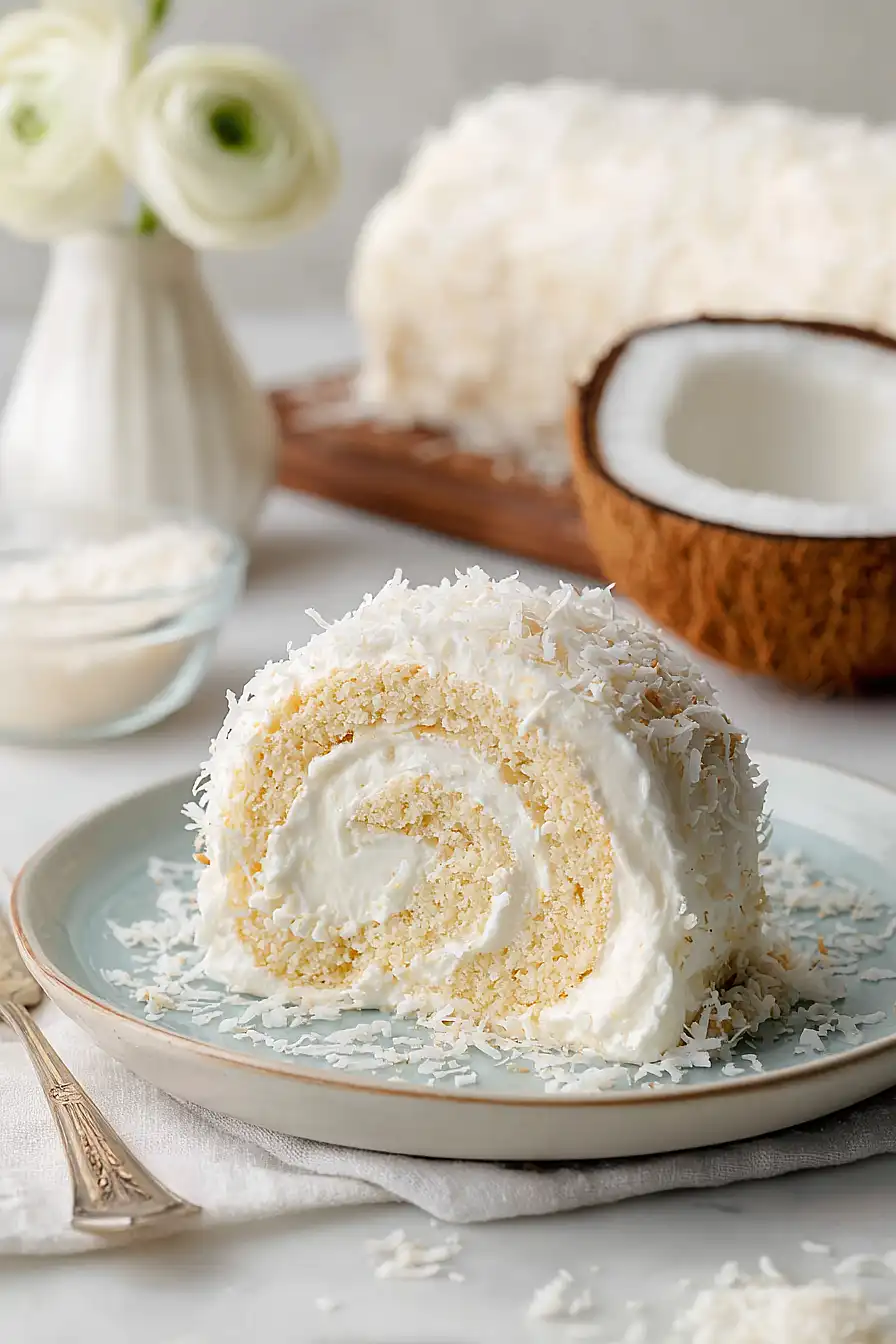
What to Serve With Coconut Cake Roll?
This coconut cake roll is pretty rich and sweet on its own, so I like to keep the sides simple and let it be the star of the show. A hot cup of coffee or tea is perfect for balancing out the sweetness, and the warm drink really complements the creamy filling. If you’re serving this for a special occasion, fresh berries like strawberries or raspberries on the side add a nice pop of freshness without competing with the coconut flavor. You could also drizzle a little chocolate or caramel sauce on the plate for an extra fancy presentation, though honestly, this cake roll doesn’t need much help looking impressive.
Storage Instructions
Store: Keep your coconut cake roll wrapped tightly in plastic wrap or in an airtight container in the fridge for up to 4 days. The cream cheese filling needs to stay cold, so don’t leave it out on the counter for more than an hour or two when serving.
Freeze: This cake roll freezes really well for up to 2 months. Wrap it tightly in plastic wrap, then again in foil to prevent freezer burn. When you’re ready to serve, just move it to the fridge overnight to thaw slowly.
Serve: For the best taste and texture, let the cake roll sit at room temperature for about 10-15 minutes before slicing. This makes the cream cheese filling softer and easier to cut through without squishing the cake.
| Preparation Time | 30-40 minutes |
| Cooking Time | 15-30 minutes |
| Total Time | 45-70 minutes |
| Level of Difficulty | Medium |
| Servings | 8 slices |
Estimated Nutrition
Estimated nutrition for the whole recipe (without optional ingredients):
- Calories: 4800-5200
- Protein: 60-70 g
- Fat: 270-300 g
- Carbohydrates: 540-590 g
Ingredients
For the cake:
- 4 eggs (room temperature, about 70°F)
- 1 1/8 cup sugar
- 2 tbsp milk
- 1 tsp coconut essence
- 1 1/4 cups flour (I always use King Arthur all-purpose flour)
- 1 tsp baking powder
- 1/4 tsp salt
- 1/4 cup powdered sugar
For the filling and topping:
- 18 oz cream cheese (I prefer Philadelphia brand for a stable frosting)
- 1 1/4 cup sugar
- 1/8 tsp salt
- 1 tsp coconut essence
- 1.75 cups cream (heavy whipping cream, chilled for better peaks)
- 2.5 cups coconut (sweetened shredded variety provides the best moisture)
- 1/2 tsp vanilla extract
- 1/2 cup powdered sugar (sifted to remove lumps)
Step 1: Prepare Equipment and Make the Cake Batter
- 4 eggs
- 1 1/8 cup sugar
Preheat your oven to 375°F and prepare a sheet pan (approximately 9×13 inches or similar size) by lining it with parchment paper and lightly spraying with cooking spray.
While the oven heats, bring your 4 eggs to room temperature—this is crucial because room temperature eggs whip to greater volume, creating a lighter, airier cake.
Beat the eggs alone for 3 minutes until they become pale and frothy.
Gradually add the 1 1/8 cup sugar while continuing to beat for another 6-10 minutes until the mixture reaches the ribbon stage (thick, pale, and falls in ribbons when you lift the beater).
This long beating time incorporates air, which is your primary leavening agent in this delicate sponge cake.
Step 2: Complete the Cake Batter and Bake
- 2 tbsp milk
- 1 tsp coconut essence
- 1 1/4 cups flour
- 1 tsp baking powder
- 1/4 tsp salt
Gently stir the 2 tbsp milk and 1 tsp coconut essence into the egg mixture.
In a separate small bowl, whisk together the 1 1/4 cups flour, 1 tsp baking powder, and 1/4 tsp salt.
Fold this dry mixture into the wet ingredients using a spatula, being careful not to deflate the eggs—fold just until no streaks of flour remain.
Pour the batter onto your prepared pan and spread it into an even layer.
Bake for 13-16 minutes until a toothpick inserted in the center comes out clean and the cake is lightly golden.
The cake should spring back when lightly touched.
Step 3: Roll the Warm Cake
- 1/4 cup powdered sugar
While the cake bakes, lay out a clean kitchen towel and dust it evenly with the 1/4 cup powdered sugar—this prevents sticking and adds subtle sweetness to the exterior.
When the cake comes out of the oven, immediately turn it out onto the prepared towel.
Carefully peel away the parchment paper.
Working quickly while the cake is still warm (warmth makes it pliable), roll the cake tightly in the towel and set it aside to cool completely, about 30 minutes.
I like to let it cool seam-side down so it holds its shape better; the towel acts as a mold that helps prevent cracking.
Step 4: Make the Coconut Cream Cheese Frosting
- 18 oz cream cheese
- 1 1/4 cup sugar
- 1/8 tsp salt
- 1 tsp coconut essence
- 1.75 cups heavy whipping cream
- 1/2 tsp vanilla extract
- 1/2 cup powdered sugar
While the cake cools, prepare the frosting.
Using an electric mixer, beat the 18 oz softened cream cheese, 1 1/4 cup sugar, 1/8 tsp salt, and 1 tsp coconut essence together until smooth and creamy, about 2-3 minutes.
Make sure to scrape down the bowl as you go.
In a separate bowl, whip the 1.75 cups chilled heavy cream with the 1/2 tsp vanilla extract and 1/2 cup sifted powdered sugar until stiff peaks form.
I prefer chilled cream because it whips faster and holds its structure better, especially important in a frosting that will sit in the fridge.
Gently fold the whipped cream into the cream cheese mixture just until combined, being careful not to deflate the peaks.
Step 5: Fill and Coat the Cake Roll
- frosting from Step 4
- 2.5 cups coconut
Once the cake has cooled completely, carefully unroll it from the towel.
Spread about one-third of the frosting from Step 4 evenly over the cake, leaving a small border around the edges.
Sprinkle 1 cup of the sweetened shredded coconut over the frosting.
Tightly roll the cake back up (without the towel this time), using the bare edge to seal it.
Place the roll seam-side down on a serving plate or cake board.
Spread the remaining frosting over the outside of the roll, creating an even coating.
Press the remaining 1.5 cups coconut all over the outside, covering it completely for that signature look.
Step 6: Chill and Serve
Refrigerate the finished cake roll for 1-2 hours before serving.
This chilling time allows the frosting to set and makes slicing much cleaner.
The roll will hold together better when cold, and the flavors will have time to meld beautifully.
Slice with a sharp, warm knife, wiping it between cuts for neat presentation.
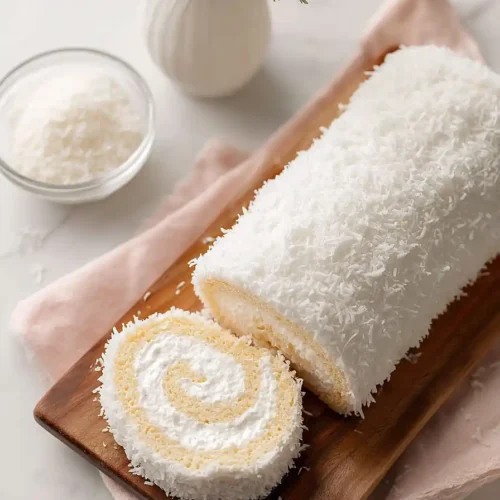
Tasty Coconut Cake Roll
Ingredients
For the cake::
- 4 eggs (room temperature, about 70°F)
- 1 1/8 cup sugar
- 2 tbsp milk
- 1 tsp coconut essence
- 1 1/4 cups flour (I always use King Arthur all-purpose flour)
- 1 tsp baking powder
- 1/4 tsp salt
- 1/4 cup powdered sugar
For the filling and topping::
- 18 oz cream cheese (I prefer Philadelphia brand for a stable frosting)
- 1 1/4 cup sugar
- 1/8 tsp salt
- 1 tsp coconut essence
- 1.75 cups cream (heavy whipping cream, chilled for better peaks)
- 2.5 cups coconut (sweetened shredded variety provides the best moisture)
- 1/2 tsp vanilla extract
- 1/2 cup powdered sugar (sifted to remove lumps)
Instructions
- Preheat your oven to 375°F and prepare a sheet pan (approximately 9x13 inches or similar size) by lining it with parchment paper and lightly spraying with cooking spray. While the oven heats, bring your 4 eggs to room temperature—this is crucial because room temperature eggs whip to greater volume, creating a lighter, airier cake. Beat the eggs alone for 3 minutes until they become pale and frothy. Gradually add the 1 1/8 cup sugar while continuing to beat for another 6-10 minutes until the mixture reaches the ribbon stage (thick, pale, and falls in ribbons when you lift the beater). This long beating time incorporates air, which is your primary leavening agent in this delicate sponge cake.
- Gently stir the 2 tbsp milk and 1 tsp coconut essence into the egg mixture. In a separate small bowl, whisk together the 1 1/4 cups flour, 1 tsp baking powder, and 1/4 tsp salt. Fold this dry mixture into the wet ingredients using a spatula, being careful not to deflate the eggs—fold just until no streaks of flour remain. Pour the batter onto your prepared pan and spread it into an even layer. Bake for 13-16 minutes until a toothpick inserted in the center comes out clean and the cake is lightly golden. The cake should spring back when lightly touched.
- While the cake bakes, lay out a clean kitchen towel and dust it evenly with the 1/4 cup powdered sugar—this prevents sticking and adds subtle sweetness to the exterior. When the cake comes out of the oven, immediately turn it out onto the prepared towel. Carefully peel away the parchment paper. Working quickly while the cake is still warm (warmth makes it pliable), roll the cake tightly in the towel and set it aside to cool completely, about 30 minutes. I like to let it cool seam-side down so it holds its shape better; the towel acts as a mold that helps prevent cracking.
- While the cake cools, prepare the frosting. Using an electric mixer, beat the 18 oz softened cream cheese, 1 1/4 cup sugar, 1/8 tsp salt, and 1 tsp coconut essence together until smooth and creamy, about 2-3 minutes. Make sure to scrape down the bowl as you go. In a separate bowl, whip the 1.75 cups chilled heavy cream with the 1/2 tsp vanilla extract and 1/2 cup sifted powdered sugar until stiff peaks form. I prefer chilled cream because it whips faster and holds its structure better, especially important in a frosting that will sit in the fridge. Gently fold the whipped cream into the cream cheese mixture just until combined, being careful not to deflate the peaks.
- Once the cake has cooled completely, carefully unroll it from the towel. Spread about one-third of the frosting from Step 4 evenly over the cake, leaving a small border around the edges. Sprinkle 1 cup of the sweetened shredded coconut over the frosting. Tightly roll the cake back up (without the towel this time), using the bare edge to seal it. Place the roll seam-side down on a serving plate or cake board. Spread the remaining frosting over the outside of the roll, creating an even coating. Press the remaining 1.5 cups coconut all over the outside, covering it completely for that signature look.
- Refrigerate the finished cake roll for 1-2 hours before serving. This chilling time allows the frosting to set and makes slicing much cleaner. The roll will hold together better when cold, and the flavors will have time to meld beautifully. Slice with a sharp, warm knife, wiping it between cuts for neat presentation.