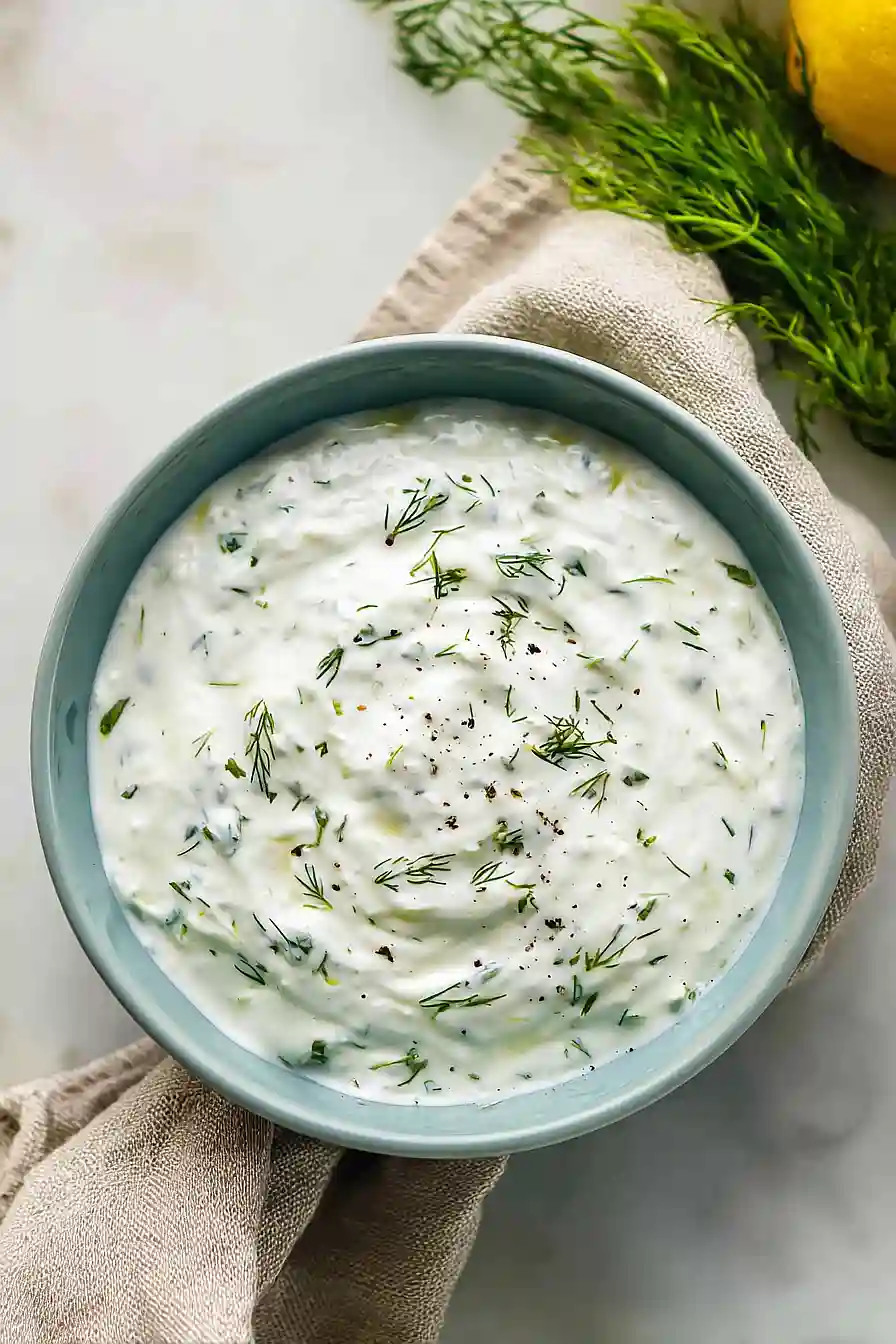
I made my first batch of Greek yogurt dressing on a Tuesday night when I realized I’d run out of ranch and had a fridge full of salad ingredients staring back at me. I grabbed the tub of Greek yogurt I always keep on hand, threw in some garlic and lemon juice, and hoped for the best.
Turns out, Greek yogurt makes a seriously good base for salad dressing. It’s thick enough that you don’t need any fancy emulsifiers or techniques—just whisk everything together and you’re done. The tanginess from the yogurt plays well with lemon and garlic, and a handful of fresh dill gives it that herby brightness that makes you want to eat salad for every meal. Plus, it takes about five minutes to make, which is less time than it would take me to run to the store for a bottle of the store-bought stuff.

Why You’ll Love This Greek Yogurt Dressing
- Ready in minutes – This dressing comes together in just 5-10 minutes with minimal effort, making it perfect for busy weeknights when you need something quick.
- High-protein and healthy – Greek yogurt gives you a creamy dressing that’s packed with protein and much lighter than traditional mayo-based options.
- Simple, fresh ingredients – You probably have most of these items in your kitchen already, and the fresh dill and lemon juice bring bright, tangy flavors to your salads.
- Versatile – Use it on salads, as a veggie dip, drizzled over grilled chicken, or even as a sauce for gyros and wraps.
What Kind of Greek Yogurt Should I Use?
For this dressing, full-fat Greek yogurt will give you the creamiest, most luxurious texture, but 2% or even non-fat versions work just fine if that’s what you have on hand. The key is to make sure you’re using actual Greek yogurt (the thick, strained kind) rather than regular yogurt, since the thicker consistency is what makes this dressing so rich and creamy. If your Greek yogurt seems a bit watery on top, just give it a quick stir before measuring it out. Store brands work just as well as name brands here, so don’t feel like you need to splurge on the fancy stuff.
Options for Substitutions
This dressing is pretty forgiving when it comes to swaps, so feel free to work with what you have:
- Greek yogurt: Regular yogurt works fine here, though your dressing will be a bit thinner. You can also use sour cream for a tangier version, or try half yogurt and half mayo for a creamier texture.
- Fresh dill: No fresh dill? Use about 1 tablespoon of dried dill instead, or switch it up with fresh parsley, cilantro, or basil for a different flavor profile.
- Lemon juice: Lime juice or white wine vinegar can step in if you’re out of lemons. Start with 3 tablespoons and add more to taste since vinegar can be stronger.
- Fresh garlic: Garlic powder works in a pinch – use about 1/2 teaspoon. Just mix it in well and let the dressing sit for 10 minutes so the powder can hydrate and distribute evenly.
- Olive oil: Any neutral oil like avocado or vegetable oil will work here. The olive oil adds flavor, but the dressing will still taste great with other options.
Watch Out for These Mistakes While Cooking
The biggest mistake when making Greek yogurt dressing is using full-fat yogurt without adjusting the consistency, which can make your dressing too thick to drizzle – add water one tablespoon at a time until it reaches your desired texture.
Another common error is adding raw garlic without mincing it finely or letting the dressing sit, which can result in an overpowering, harsh garlic flavor that takes over the whole dish.
To get the most flavor from your dill, chop it fresh right before mixing and avoid using dried dill, which lacks the bright, herby taste that makes this dressing special.
Finally, taste and adjust your lemon juice and salt before serving, since Greek yogurt brands vary in tanginess and you might need a bit more or less depending on what you’re using.

What to Serve With Greek Yogurt Dressing?
This tangy dressing is perfect for drizzling over a big Greek salad loaded with cucumbers, tomatoes, red onions, and feta cheese. It also works great as a dip for fresh veggies like carrots, bell peppers, and celery sticks, or as a spread for wraps and pita sandwiches. I love using it on grilled chicken or fish – the lemon and dill really brighten up the flavors. You can also toss it with roasted vegetables like zucchini and eggplant, or use it as a sauce for gyros and falafel.
Storage Instructions
Store: This dressing keeps really well in the fridge! Transfer it to a jar or airtight container and it’ll stay fresh for up to 5 days. Just give it a good stir before using since the olive oil might separate a bit as it sits.
Make Ahead: I actually think this dressing tastes even better the next day after all the flavors have had time to mingle. Make it a day or two ahead and you’ll have one less thing to worry about when you’re throwing together a quick salad for dinner.
| Preparation Time | 5-10 minutes |
| Cooking Time | 0-0 minutes |
| Total Time | 5-10 minutes |
| Level of Difficulty | Easy |
| Servings | 2 cups of dressing |
Estimated Nutrition
Estimated nutrition for the whole recipe (without optional ingredients):
- Calories: 250-300
- Protein: 15-18 g
- Fat: 16-19 g
- Carbohydrates: 13-16 g
Ingredients
- 1 1/4 cups greek yogurt (I prefer Fage Total for its thick, creamy texture)
- 3 garlic cloves (finely minced to distribute through the dressing)
- 5 tbsp lemon juice
- 1 tsp salt
- 1/4 tsp pepper
- 3 tbsp olive oil (I like Bertolli Extra Virgin for the robust flavor)
- 1/3 cup fresh dill
- 2 tbsp water
Step 1: Prepare the Yogurt Base with Aromatics
- 1 1/4 cups Greek yogurt
- 3 garlic cloves, finely minced
- 5 tbsp lemon juice
- 1 tsp salt
- 1/4 tsp pepper
Add the Greek yogurt to a medium bowl and create a small well in the center.
Place your finely minced garlic directly into this well—this prevents the garlic from clumping and ensures it distributes evenly throughout the dressing.
Pour in the lemon juice and add the salt and pepper.
Whisk these ingredients together until the garlic is fully incorporated and the mixture is smooth.
I like to use a fork rather than a whisk for Greek yogurt dressing, as it’s less likely to overwork the yogurt and cause it to become too thin.
Step 2: Emulsify with Oil and Adjust Consistency
- yogurt base from Step 1
- 3 tbsp olive oil
- 2 tbsp water
Slowly drizzle in the olive oil while whisking constantly to help it emulsify smoothly into the yogurt base.
This gradual incorporation creates a more cohesive, creamy dressing rather than one that appears separated.
Once the oil is fully incorporated, add the water a tablespoon at a time, whisking after each addition, until you reach your desired consistency.
I find that starting with 2 tablespoons of water gives a nice pourable dressing, but you can adjust based on whether you’re using it for salads or as a dip.
Step 3: Finish with Fresh Herbs
- dressing from Step 2
- 1/3 cup fresh dill
Roughly chop the fresh dill and fold it gently into the dressing using a spatula or wooden spoon.
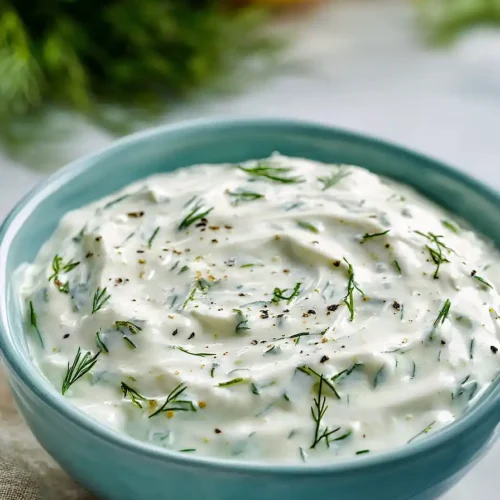
Reserve a small pinch of dill to sprinkle on top just before serving for a fresh, vibrant appearance.
Taste and adjust the lemon juice, salt, or garlic to your preference—the dressing should be bright and well-balanced.
Tasty Greek Yogurt Dressing
Ingredients
- 1 1/4 cups greek yogurt (I prefer Fage Total for its thick, creamy texture)
- 3 garlic cloves (finely minced to distribute through the dressing)
- 5 tbsp lemon juice
- 1 tsp salt
- 1/4 tsp pepper
- 3 tbsp olive oil (I like Bertolli Extra Virgin for the robust flavor)
- 1/3 cup fresh dill
- 2 tbsp water
Instructions
- Add the Greek yogurt to a medium bowl and create a small well in the center. Place your finely minced garlic directly into this well—this prevents the garlic from clumping and ensures it distributes evenly throughout the dressing. Pour in the lemon juice and add the salt and pepper. Whisk these ingredients together until the garlic is fully incorporated and the mixture is smooth. I like to use a fork rather than a whisk for Greek yogurt dressing, as it's less likely to overwork the yogurt and cause it to become too thin.
- Slowly drizzle in the olive oil while whisking constantly to help it emulsify smoothly into the yogurt base. This gradual incorporation creates a more cohesive, creamy dressing rather than one that appears separated. Once the oil is fully incorporated, add the water a tablespoon at a time, whisking after each addition, until you reach your desired consistency. I find that starting with 2 tablespoons of water gives a nice pourable dressing, but you can adjust based on whether you're using it for salads or as a dip.
- Roughly chop the fresh dill and fold it gently into the dressing using a spatula or wooden spoon. Reserve a small pinch of dill to sprinkle on top just before serving for a fresh, vibrant appearance. Taste and adjust the lemon juice, salt, or garlic to your preference—the dressing should be bright and well-balanced.