If you ask me, a good veggie side dish shouldn’t be complicated.
This simple sauté brings together fresh asparagus and zucchini with colorful bell peppers for a side that works with just about any main course. The vegetables stay a bit crisp, and get tossed with garlic, thyme, and a squeeze of lemon at the end.
Everything cooks in one skillet in about 15 minutes. A little butter added at the finish gives it a nice richness without weighing things down.
It’s an easy weeknight side that tastes like you put in more effort than you actually did.
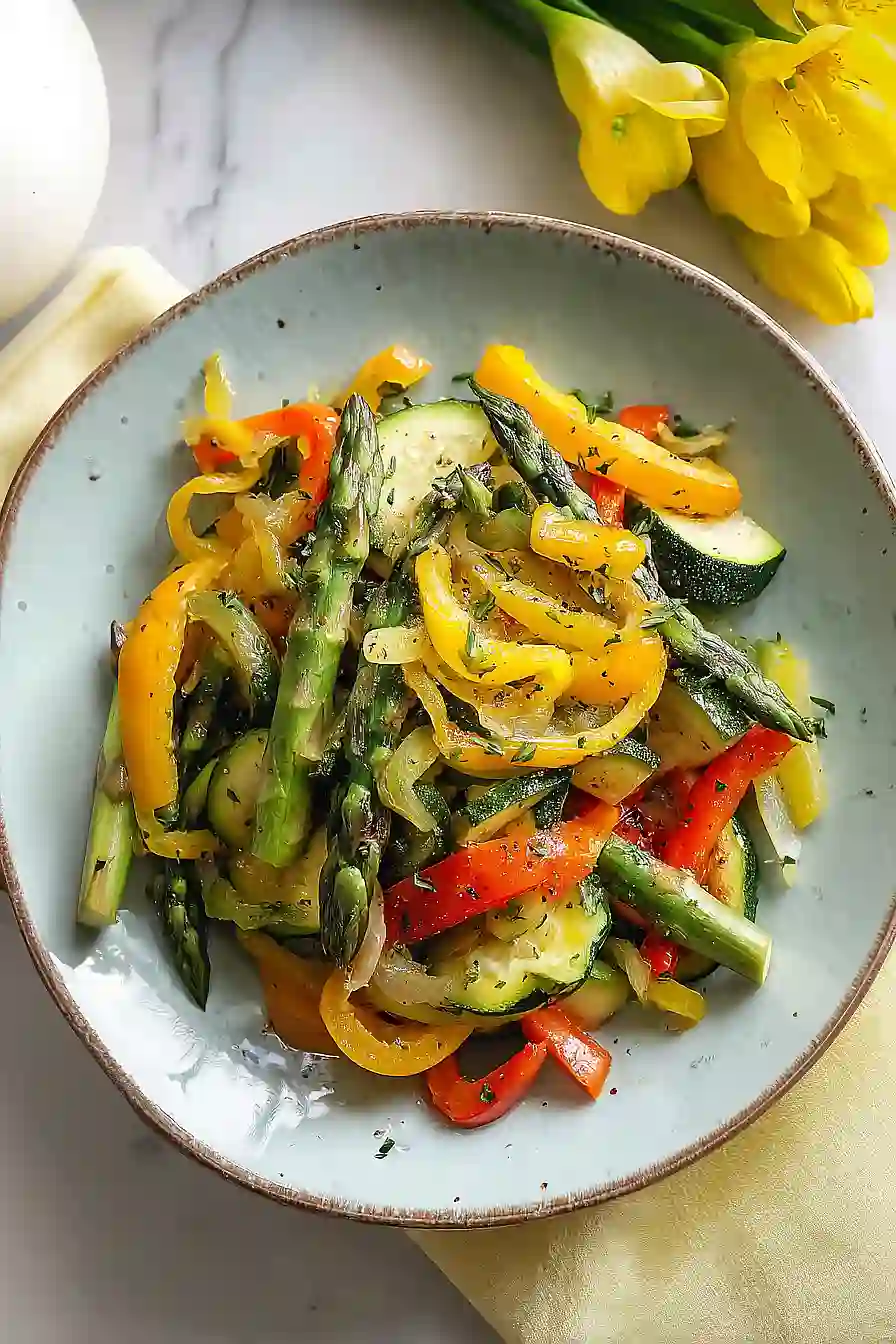
Why You’ll Love This Sautéed Asparagus and Zucchini
- Quick and easy – This colorful veggie side comes together in just 15-25 minutes, making it perfect for busy weeknights when you need something healthy on the table fast.
- Healthy and nutritious – Packed with fresh vegetables and using minimal oil, this dish is a guilt-free way to get your daily servings of veggies.
- Simple ingredients – You only need a handful of fresh produce and basic pantry staples to create this flavorful side dish.
- Versatile pairing – This sautéed veggie medley goes well with practically any main course, from grilled chicken to fish to steak.
What Kind of Asparagus Should I Use?
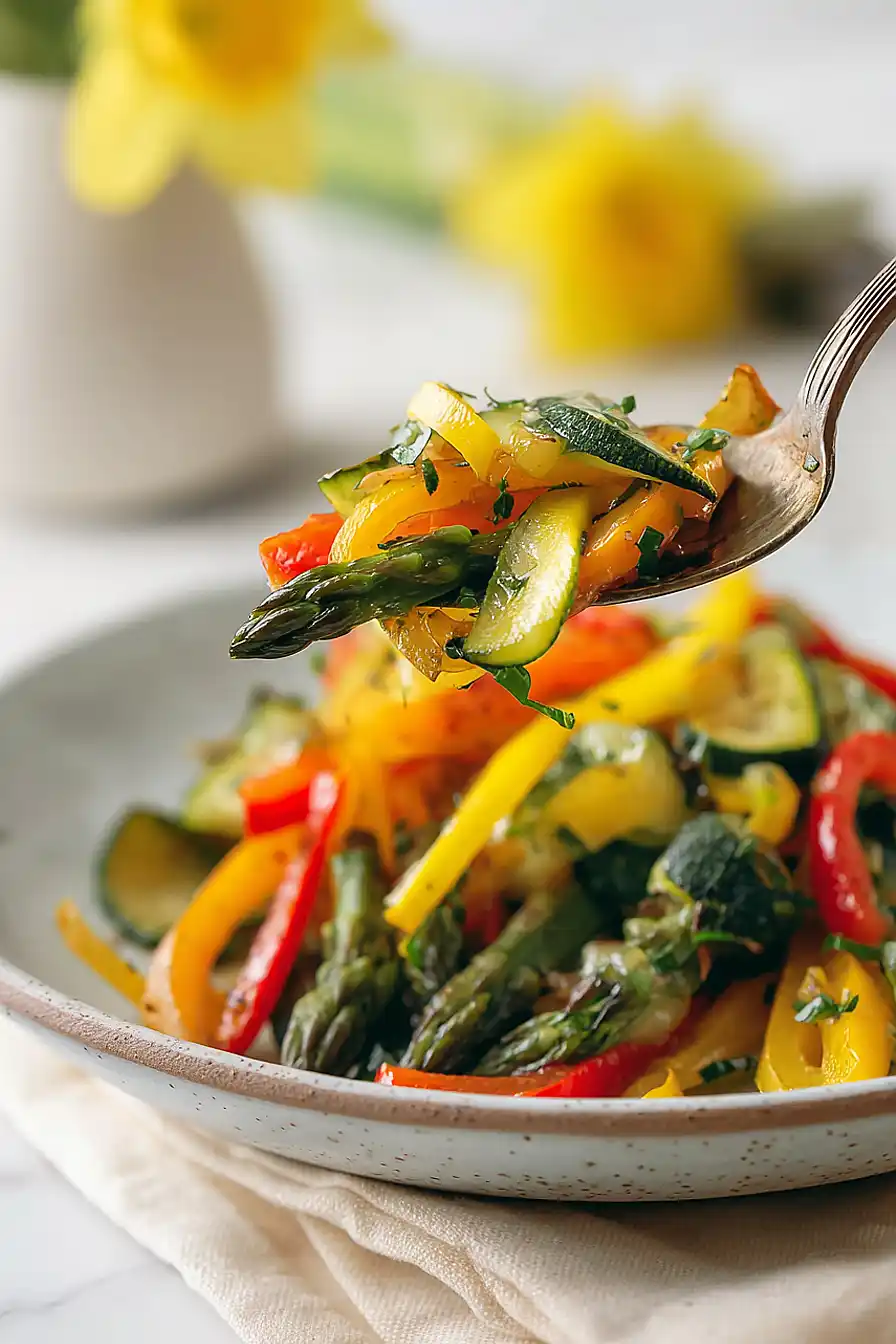
Fresh asparagus is really the way to go for this recipe since you’re sautéing it quickly over high heat. Look for spears that are firm and bright green with tightly closed tips – avoid any that look wilted or have mushy ends. Medium-thickness spears work best here because they cook evenly with the other vegetables, while thick spears might stay too crunchy and thin ones can get mushy. Before cooking, just snap off the woody ends at the natural breaking point (usually about an inch or two from the bottom), or you can trim them with a knife if you prefer.
Options for Substitutions
This veggie sauté is pretty forgiving when it comes to swapping ingredients:
- Red and yellow sweet peppers: Any color bell pepper works great here – green, orange, or even a mix of whatever you have on hand. You can also use just one color if that’s what’s available.
- Zucchini: Yellow summer squash is basically interchangeable with zucchini in this recipe. You could also try thinly sliced eggplant, though it may need an extra minute or two of cooking time.
- Asparagus: Green beans make a good substitute – just trim them and cut into similar-sized pieces. They might need a bit more cooking time to get tender.
- Fresh thyme: If you don’t have fresh thyme, use about ¼ teaspoon of dried thyme instead. You could also swap in fresh basil or oregano for a different flavor profile.
- Butter: You can skip the butter and use an extra teaspoon of olive oil instead, or try a plant-based butter if you’re keeping things dairy-free.
Watch Out for These Mistakes While Cooking
The biggest mistake when sautéing vegetables is overcrowding the pan, which causes them to steam instead of getting that nice caramelized edge – if your pan looks too full, cook the vegetables in batches or use a larger skillet.
Cutting your vegetables into uneven sizes means some pieces will be mushy while others stay undercooked, so take an extra minute to slice everything uniformly, especially the zucchini and peppers.
Adding the garlic too early is a recipe for burnt, bitter garlic that ruins the whole dish, so always wait until the last minute or two of cooking before tossing it in.
Keep your heat at medium-high and resist the urge to constantly stir – letting the vegetables sit undisturbed for a minute or two between stirs helps them develop better flavor and texture.
What to Serve With Sauteed Asparagus and Zucchini?
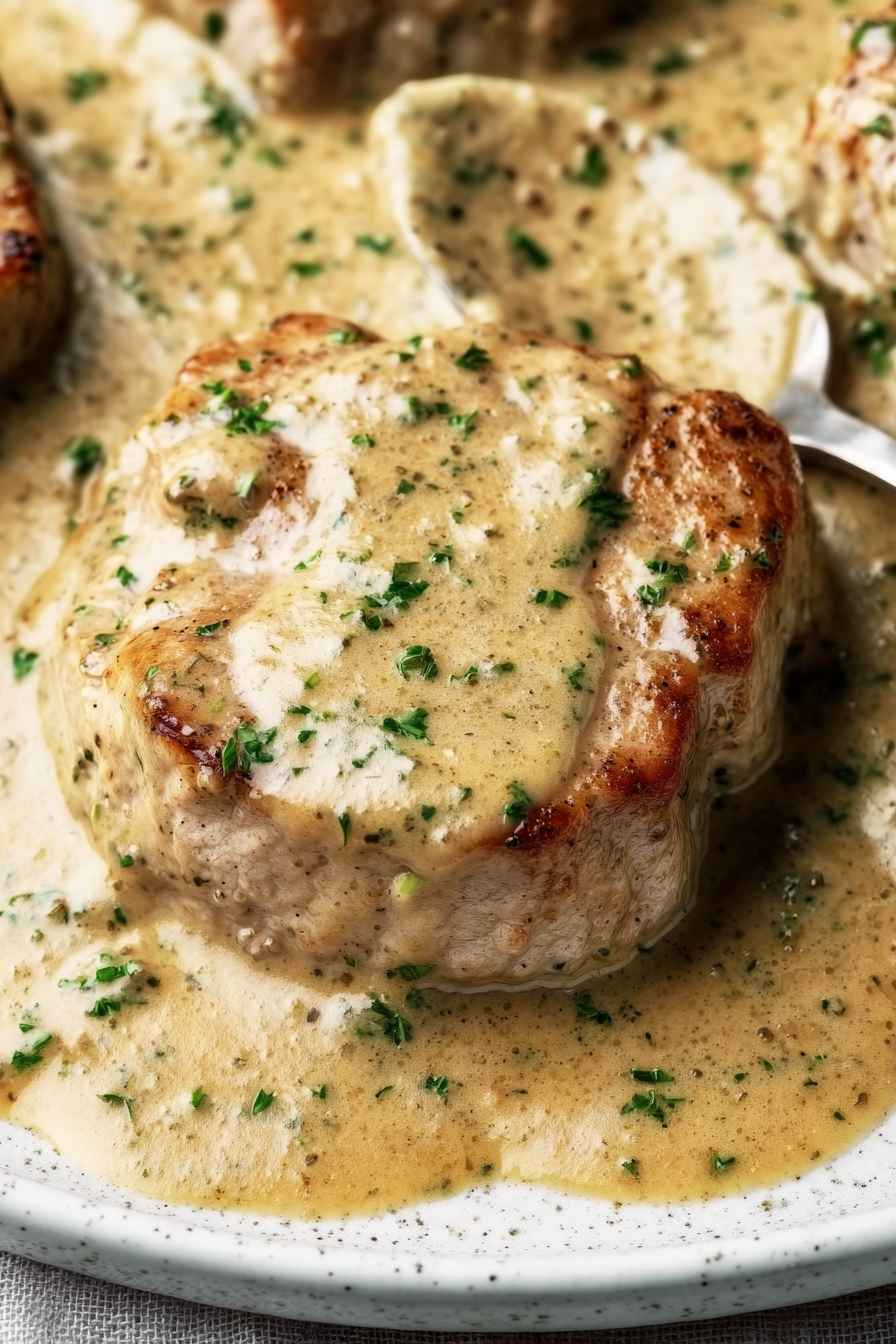
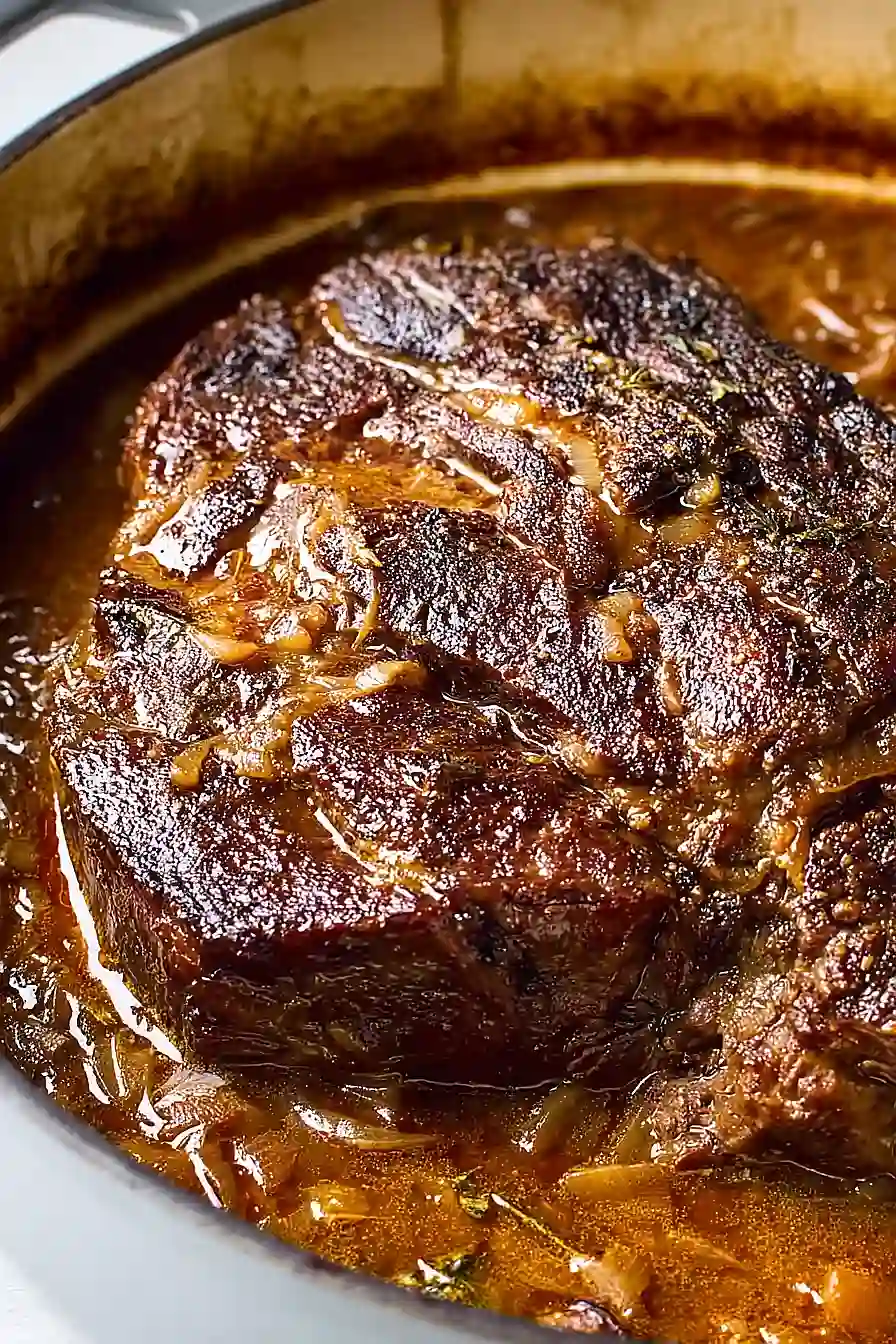
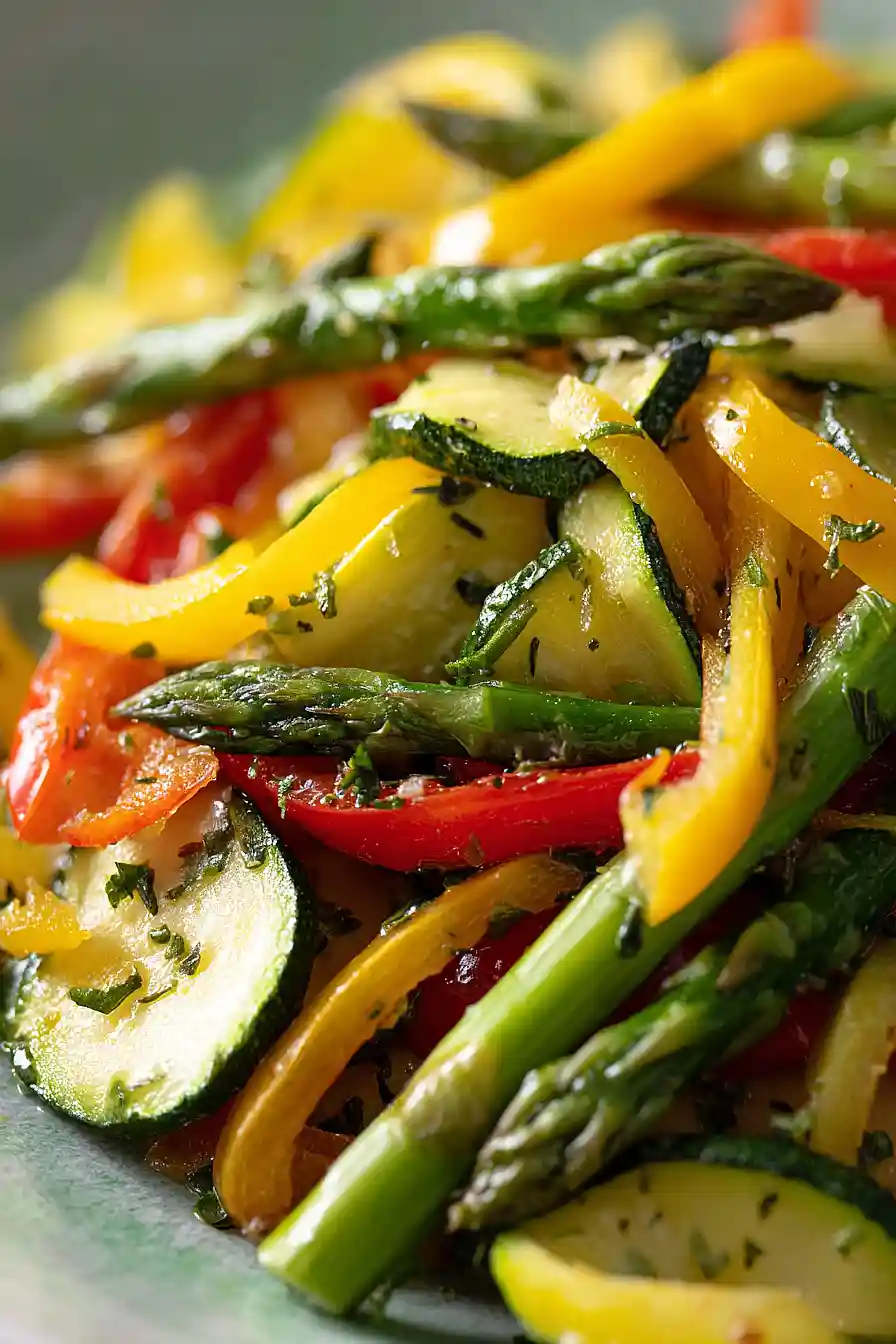
This veggie side dish pairs perfectly with just about any protein you’re cooking for dinner. I love serving it alongside grilled chicken breasts, pan-seared salmon, or even a simple steak – the light, garlicky vegetables balance out richer main courses really nicely. If you’re keeping things vegetarian, try it over quinoa or brown rice with some crumbled feta cheese on top. For a complete meal, add some roasted potatoes or serve it with pasta tossed in a little olive oil and parmesan.
Storage Instructions
Store: Keep your leftover sautéed veggies in an airtight container in the fridge for up to 3 days. They’re great to toss into scrambled eggs for breakfast or mix with some pasta for a quick lunch.
Reheat: Warm them up in a skillet over medium heat for a few minutes until heated through. You can also microwave them, but the stovetop method helps keep them from getting too mushy and brings back some of that nice texture.
| Preparation Time | 5-10 minutes |
| Cooking Time | 10-15 minutes |
| Total Time | 15-25 minutes |
| Level of Difficulty | Easy |
| Servings | 4 servings |
Estimated Nutrition
Estimated nutrition for the whole recipe (without optional ingredients):
- Calories: 175-225
- Protein: 4-6 g
- Fat: 13-16 g
- Carbohydrates: 17-22 g
Ingredients
- 1 tablespoon extra virgin olive oil
- 1 red pepper, sliced into 1/4-inch thick strips
- 1 yellow pepper, sliced into 1/4-inch thick strips
- 1 medium zucchini, cut into 1/2-inch thick half-moons
- 6 oz asparagus, woody ends trimmed and cut into 2-inch pieces
- 3 garlic cloves, minced
- 1/4 teaspoon salt
- 1/4 teaspoon freshly ground black pepper
- 2 teaspoons unsalted butter
- 3/4 teaspoon fresh thyme
- 1 teaspoon fresh lemon juice
Step 1: Prepare the Mise en Place
- 1 red pepper, sliced into 1/4-inch thick strips
- 1 yellow pepper, sliced into 1/4-inch thick strips
- 1 medium zucchini, cut into 1/2-inch thick half-moons
- 6 oz asparagus, woody ends trimmed and cut into 2-inch pieces
- 3 garlic cloves, minced
- 1/4 teaspoon salt
- 1/4 teaspoon freshly ground black pepper
- 3/4 teaspoon fresh thyme
- 1 teaspoon fresh lemon juice
Slice the red and yellow peppers into 1/4-inch thick strips, cut the zucchini into 1/2-inch thick half-moons, and trim the woody ends from the asparagus before cutting into 2-inch pieces.
Mince the garlic cloves and measure out the salt, pepper, thyme, and lemon juice.
Having everything prepped and ready will allow you to work quickly once the pan gets hot, ensuring the vegetables cook evenly and maintain their bright color and crisp-tender texture.
Step 2: Sauté the Peppers
- 1 tablespoon extra virgin olive oil
- 1 red pepper, sliced into 1/4-inch thick strips
- 1 yellow pepper, sliced into 1/4-inch thick strips
Heat the olive oil in a large skillet over medium-high heat until it shimmers, about 1-2 minutes.
Add the red and yellow pepper strips and sauté for 2 minutes, stirring occasionally.
The peppers should begin to soften slightly while maintaining their bright color and slight crunch.
I like to use medium-high heat for vegetables like peppers because it helps them develop a subtle caramelization while staying crisp.
Step 3: Add Zucchini and Asparagus
- 1 medium zucchini, cut into 1/2-inch thick half-moons
- 6 oz asparagus, woody ends trimmed and cut into 2-inch pieces
Stir in the zucchini and asparagus pieces from the mise en place and cook for 6 to 7 minutes, stirring occasionally.
The vegetables should become tender but still maintain some bite—the zucchini will soften and lighten in color, while the asparagus will turn bright green.
This timing allows the longer-cooking zucchini and asparagus to soften properly while the peppers don’t become mushy.
Step 4: Build Flavor with Aromatics and Seasonings
- 3 garlic cloves, minced
- 1/4 teaspoon salt
- 1/4 teaspoon freshly ground black pepper
Add the minced garlic, salt, and black pepper from the mise en place and cook for 1 minute, stirring constantly.
The garlic will become fragrant and distributed throughout the vegetables without burning, adding a pungent depth to the dish.
I always add garlic near the end of cooking rather than at the start because it can burn easily and turn bitter at high temperatures.
Step 5: Finish with Butter, Thyme, and Lemon
- 2 teaspoons unsalted butter
- 3/4 teaspoon fresh thyme
- 1 teaspoon fresh lemon juice
Remove the skillet from heat and stir in the butter and fresh thyme, allowing the residual heat to melt the butter into the vegetables.
Add the fresh lemon juice and toss everything together gently.
The butter enriches the dish with a subtle richness, the thyme adds an herbaceous note, and the lemon juice brightens everything while enhancing the natural flavors of the vegetables.
Step 6: Serve Immediately
Transfer the sautéed vegetables to a serving dish or individual plates right away.
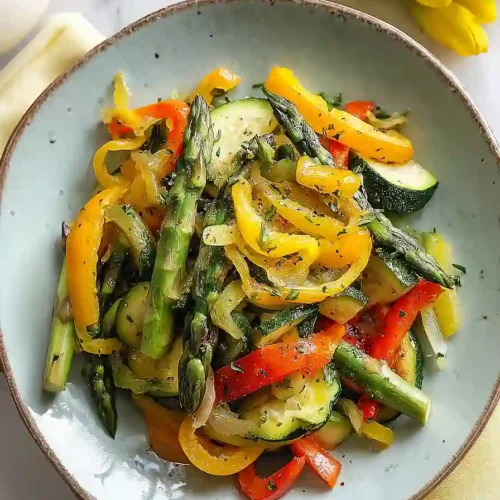
The vegetables are best enjoyed hot when their textures are at their peak—tender yet still slightly crisp, and their fresh flavors are most vibrant.
Tasty Sauteed Asparagus and Zucchini
Ingredients
- 1 tablespoon extra virgin olive oil
- 1 red pepper, sliced into 1/4-inch thick strips
- 1 yellow pepper, sliced into 1/4-inch thick strips
- 1 medium zucchini, cut into 1/2-inch thick half-moons
- 6 oz asparagus, woody ends trimmed and cut into 2-inch pieces
- 3 garlic cloves, minced
- 1/4 teaspoon salt
- 1/4 teaspoon freshly ground black pepper
- 2 teaspoons unsalted butter
- 3/4 teaspoon fresh thyme
- 1 teaspoon fresh lemon juice
Instructions
- Slice the red and yellow peppers into 1/4-inch thick strips, cut the zucchini into 1/2-inch thick half-moons, and trim the woody ends from the asparagus before cutting into 2-inch pieces. Mince the garlic cloves and measure out the salt, pepper, thyme, and lemon juice. Having everything prepped and ready will allow you to work quickly once the pan gets hot, ensuring the vegetables cook evenly and maintain their bright color and crisp-tender texture.
- Heat the olive oil in a large skillet over medium-high heat until it shimmers, about 1-2 minutes. Add the red and yellow pepper strips and sauté for 2 minutes, stirring occasionally. The peppers should begin to soften slightly while maintaining their bright color and slight crunch. I like to use medium-high heat for vegetables like peppers because it helps them develop a subtle caramelization while staying crisp.
- Stir in the zucchini and asparagus pieces from the mise en place and cook for 6 to 7 minutes, stirring occasionally. The vegetables should become tender but still maintain some bite—the zucchini will soften and lighten in color, while the asparagus will turn bright green. This timing allows the longer-cooking zucchini and asparagus to soften properly while the peppers don't become mushy.
- Add the minced garlic, salt, and black pepper from the mise en place and cook for 1 minute, stirring constantly. The garlic will become fragrant and distributed throughout the vegetables without burning, adding a pungent depth to the dish. I always add garlic near the end of cooking rather than at the start because it can burn easily and turn bitter at high temperatures.
- Remove the skillet from heat and stir in the butter and fresh thyme, allowing the residual heat to melt the butter into the vegetables. Add the fresh lemon juice and toss everything together gently. The butter enriches the dish with a subtle richness, the thyme adds an herbaceous note, and the lemon juice brightens everything while enhancing the natural flavors of the vegetables.
- Transfer the sautéed vegetables to a serving dish or individual plates right away. The vegetables are best enjoyed hot when their textures are at their peak—tender yet still slightly crisp, and their fresh flavors are most vibrant.