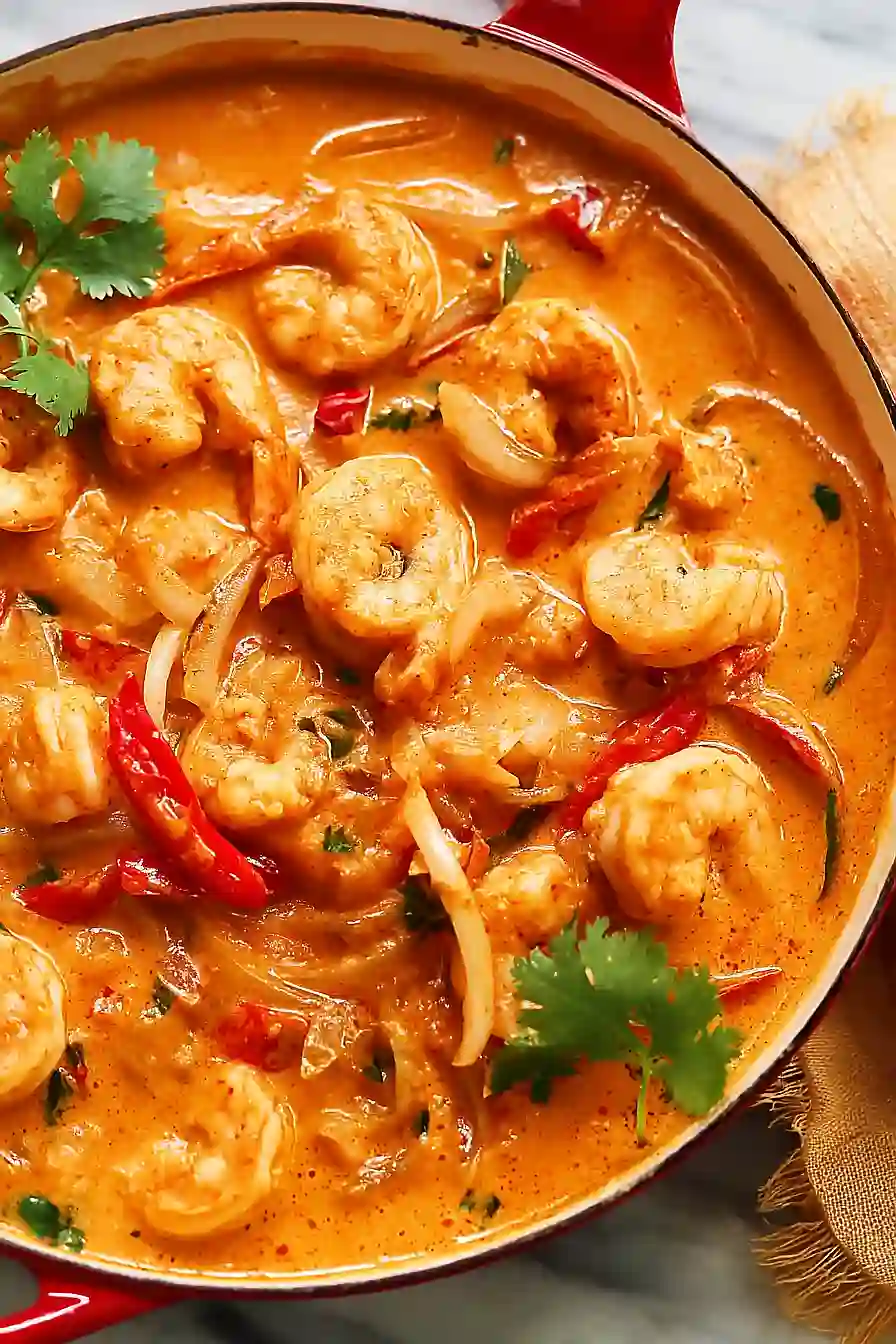
Here is my favorite shrimp curry recipe, with tender seared shrimp, a rich coconut milk base, red curry paste for the perfect amount of heat, and fresh vegetables that simmer together in under 30 minutes.
This shrimp curry is one of those recipes I make when I want something flavorful but don’t have a lot of time to spend in the kitchen. My family loves it over steamed rice, and I love that it tastes like takeout but costs half the price.
Why You’ll Love This Shrimp Curry
- Quick weeknight dinner – Ready in under 35 minutes, this shrimp curry is perfect for those busy evenings when you want something satisfying without spending hours in the kitchen.
- Simple ingredients – With just a handful of pantry staples and fresh shrimp, you can create a restaurant-quality curry at home without hunting down specialty items.
- Rich and creamy flavor – The coconut milk creates a silky sauce that balances the spicy curry paste perfectly, making every bite comforting and delicious.
- One-pan meal – Everything cooks in a single pan, which means less cleanup and more time to relax after dinner.
- Budget-friendly – Shrimp cooks fast and goes a long way in this flavorful curry, making it an affordable option that feels special enough for guests.
What Kind of Shrimp Should I Use?
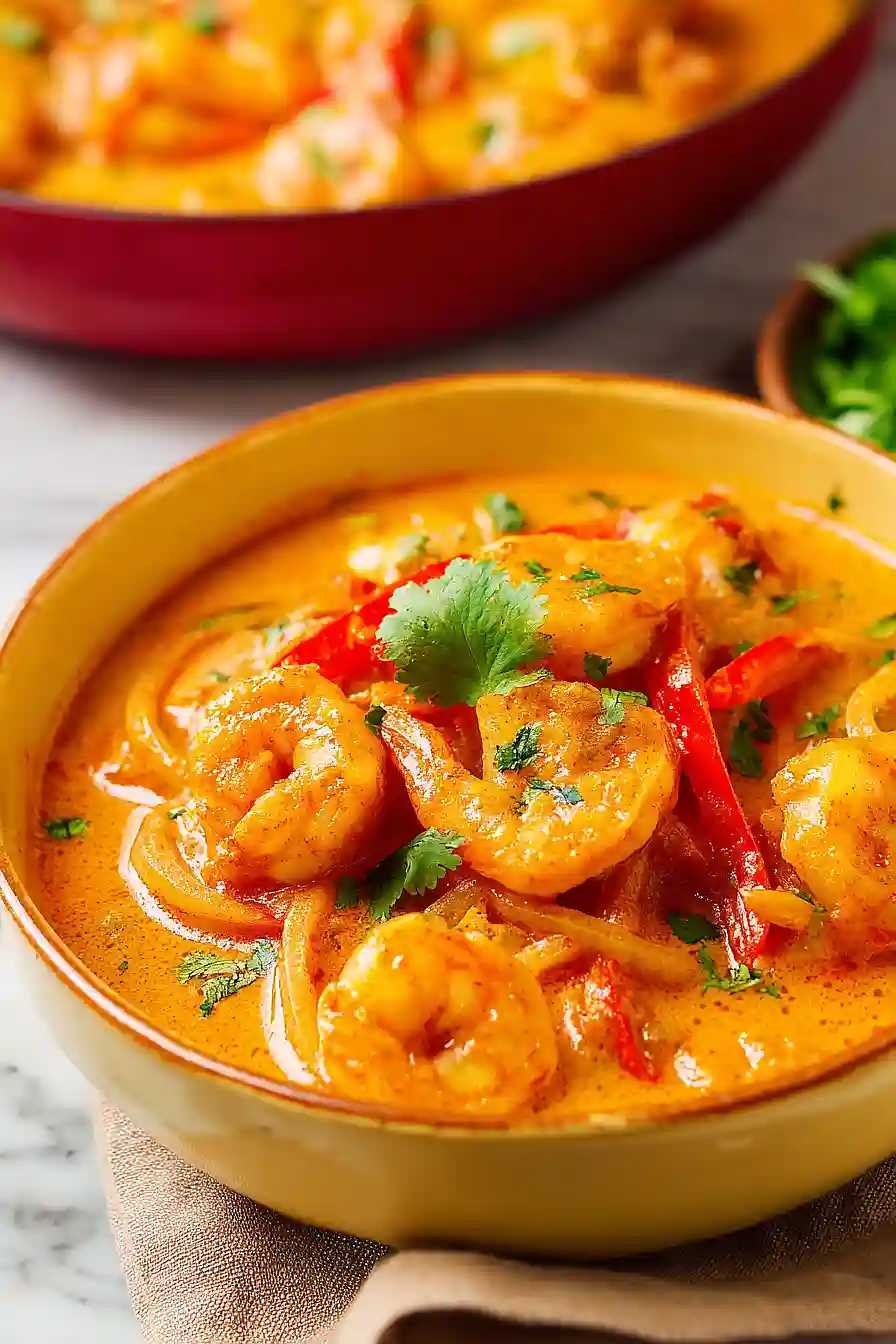
For this curry, you can use either fresh or frozen shrimp – both work great. If you’re going with frozen, just make sure to thaw them completely and pat them dry before cooking so they don’t release extra water into your curry. Size-wise, medium to large shrimp (around 31-40 count per pound) are ideal since they’re meaty enough to stand up to the curry sauce without overcooking. You can buy them peeled and deveined to save time, or do it yourself if you prefer – just remember that shrimp cook quickly, so keep an eye on them to avoid that rubbery texture.
Options for Substitutions
This curry is pretty forgiving when it comes to swapping ingredients around:
- Shrimp: You can easily swap shrimp for chicken breast (cut into bite-sized pieces and cook a bit longer), firm tofu, or even chunks of white fish like cod or halibut. Just adjust cooking times accordingly – chicken needs about 6-8 minutes, while fish only needs 3-4 minutes.
- Red curry paste: Green or yellow curry paste work just as well if that’s what you have. Each has a slightly different flavor profile, but all will give you that classic Thai curry taste. Start with less if you’re sensitive to spice.
- Coconut milk: Full-fat coconut milk gives the best creamy texture, but light coconut milk works if you want to cut calories. You can also use half coconut milk and half chicken or vegetable broth for a lighter sauce.
- Red bell pepper: Feel free to use any color bell pepper, or swap in other vegetables like snap peas, broccoli florets, zucchini, or mushrooms. Just add harder vegetables earlier in cooking and softer ones near the end.
- Brown sugar: White sugar, honey, or maple syrup all work to balance the curry’s heat. Start with a little less if using honey or maple syrup as they’re sweeter.
- Fresh ginger: In a pinch, you can use 1/2 teaspoon of ground ginger, though fresh really does make a difference in this dish.
Watch Out for These Mistakes While Cooking
The biggest mistake when making shrimp curry is overcooking the shrimp, which turns them rubbery and tough – since they cook in just a minute or two, pull them from the pan when they’re still slightly translucent in the center, as they’ll finish cooking when you add them back to the sauce.
Another common error is adding the coconut milk straight from the can without stirring it first, which can lead to an oily, separated sauce instead of a creamy one – give the can a good shake before opening or whisk it in a bowl before adding.
Don’t skip blooming the curry paste in oil for that full minute, as this step releases the flavors and prevents a raw, bitter taste in your final dish.
For the best texture, make sure your pan is hot enough before adding the shrimp so they get a light sear rather than steaming in their own juices.
What to Serve With Shrimp Curry?
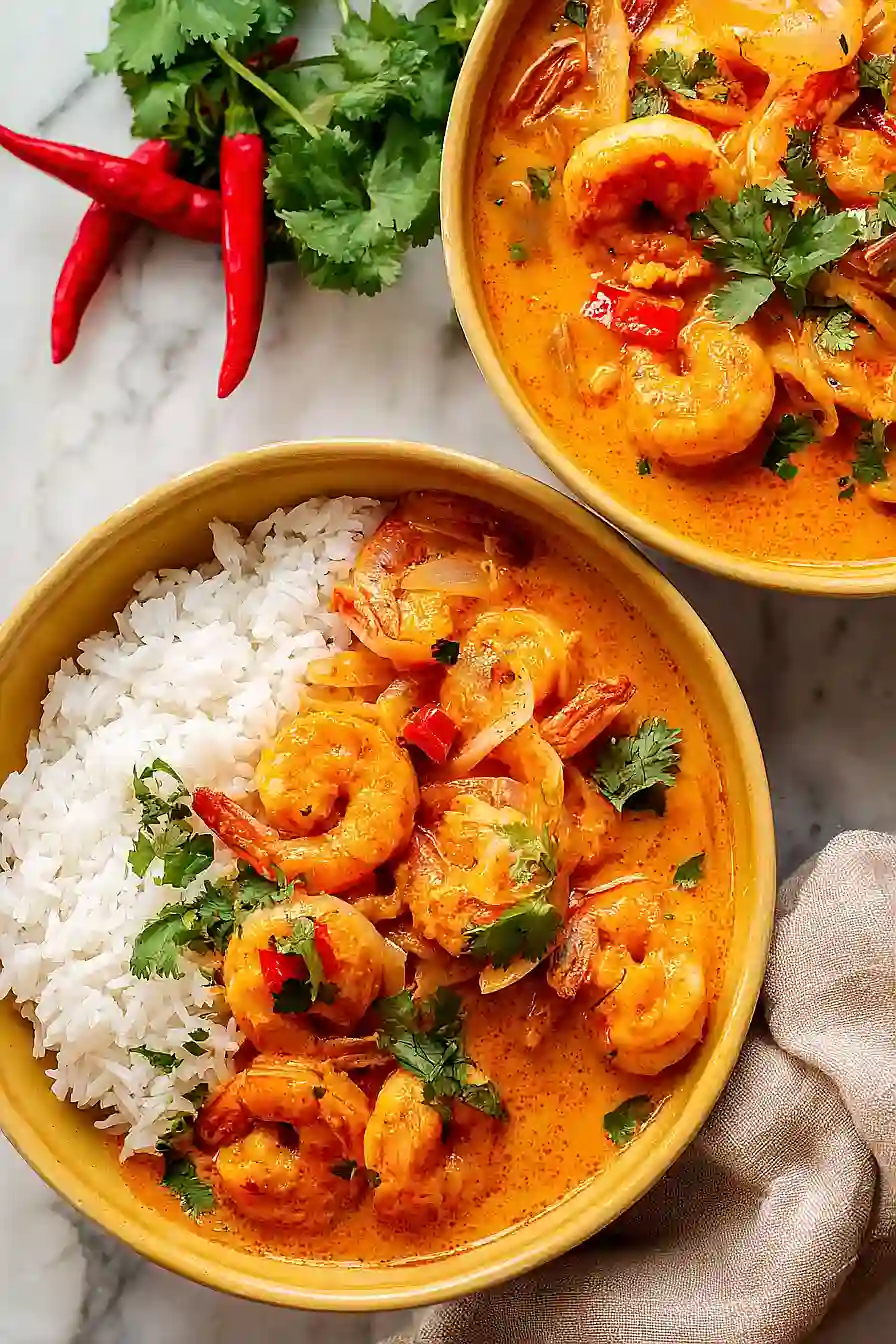
This shrimp curry is begging to be served over a big bowl of steamed jasmine rice or basmati rice to soak up all that creamy coconut sauce. If you want to mix things up, try serving it with warm naan bread or even rice noodles for a different take on the meal. A simple cucumber salad with rice vinegar and a pinch of sugar makes a great cooling side dish that balances out the spicy curry flavors. For extra veggies, I like to add some steamed broccoli or snap peas on the side, which you can even toss right into the curry during the last few minutes of cooking.
Storage Instructions
Store: Keep your leftover shrimp curry in an airtight container in the fridge for up to 3 days. The flavors actually get even better as they sit together, so it’s great for meal prep. Just remember that shrimp doesn’t last as long as other proteins, so try to eat it within those few days.
Freeze: You can freeze this curry for up to 2 months, though the shrimp texture might change slightly when thawed. Let it cool completely first, then store in freezer-safe containers or bags. I’d recommend freezing it in portion sizes so you can thaw just what you need.
Reheat: Warm it up gently on the stovetop over medium-low heat, stirring occasionally until heated through. You can also microwave it, but use lower power and stir every minute or so to keep the shrimp from getting rubbery. Add a splash of coconut milk if it seems too thick after reheating.
| Preparation Time | 10-15 minutes |
| Cooking Time | 15-20 minutes |
| Total Time | 25-35 minutes |
| Level of Difficulty | Easy |
| Servings | 4 servings |
Estimated Nutrition
Estimated nutrition for the whole recipe (without optional ingredients):
- Calories: 1100-1300
- Protein: 60-70 g
- Fat: 75-95 g
- Carbohydrates: 35-45 g
Ingredients
For the shrimp:
- 1.5 tbsp oil (I prefer Chosen Foods avocado oil for high-heat searing)
- 1 lb shrimp
For the curry:
- 1 tbsp oil
- 2 garlic cloves (minced for best flavor and aroma)
- 3 slices ginger
- 4 oz red curry paste (I always use Maesri for authentic spice)
- 2 tsp brown sugar
- 1 onion (thinly sliced into 1/4-inch half-moons)
- 1/2 red bell pepper
- 13.5 oz coconut milk (I use Thai Kitchen for its rich and creamy texture)
- 1 tsp fish sauce
- salt
For the garnish:
- cilantro
Step 1: Prepare Mise en Place and Sear the Shrimp
- 2 garlic cloves
- 3 slices ginger
- 1 onion
- 1/2 red bell pepper
- 1 lb shrimp
- 1.5 tbsp oil
Mince the garlic cloves and slice the ginger into thin matchsticks.
Thinly slice the onion into 1/4-inch half-moons and dice the red bell pepper into bite-sized pieces.
Pat the shrimp dry with paper towels—this is crucial for getting a good sear and preventing them from steaming.
Heat 1.5 tablespoons of oil in a large pan over medium-high heat until shimmering, then add the shrimp in a single layer.
Sear for about 1 minute until mostly opaque, then transfer to a clean bowl.
The shrimp will finish cooking later in the curry, so don’t worry if they’re not completely cooked through at this stage.
Step 2: Build the Curry Base with Aromatics and Paste
- 1 tbsp oil
- 2 garlic cloves from Step 1
- 3 slices ginger from Step 1
- 4 oz red curry paste
Add 1 tablespoon of oil to the same pan over medium heat.
Add the minced garlic and sliced ginger, stirring constantly for about 30 seconds until fragrant—this blooms the aromatics and develops the curry’s flavor foundation.
Add the red curry paste and stir well to combine, cooking for 1 minute.
I like to give the paste time to caramelize slightly in the oil, which deepens its spice complexity and reduces any raw paste taste.
Step 3: Add Vegetables and Sugar to the Curry Base
- 2 tsp brown sugar
- 1 onion from Step 1
- 1/2 red bell pepper from Step 1
Stir in the brown sugar, sliced onion, and diced bell pepper from your mise en place.
Cook for about 2 minutes, stirring occasionally, until the onion begins to soften and the vegetables start to release their moisture.
The sugar will help balance the heat of the curry paste and add subtle sweetness.
Step 4: Simmer the Curry Sauce with Coconut Milk
- 13.5 oz coconut milk
Pour in the coconut milk and stir well to incorporate all the curry paste and spices into the creamy base.
Bring the mixture to a gentle simmer over medium heat and let it cook for about 2 minutes.
This allows the flavors to meld together and the sauce to thicken slightly.
The bubbling coconut milk will help the vegetables finish cooking and create a silky, cohesive sauce.
Step 5: Finish the Curry and Serve
- cooked shrimp from Step 1
- 1 tsp fish sauce
- salt
- cilantro
Return the seared shrimp from Step 1 to the pan and gently stir to coat them in the curry sauce.
Simmer for 1 minute until the shrimp are heated through and fully cooked.
Add the fish sauce and taste the curry—season with salt as needed.
I always add fish sauce at the end rather than the beginning because it’s pungent and its flavor can intensify during cooking.
Transfer to serving bowls and garnish generously with fresh cilantro.
Thai Shrimp Curry
Ingredients
For the shrimp
- 1.5 tbsp oil (I prefer Chosen Foods avocado oil for high-heat searing)
- 1 lb shrimp
For the curry
- 1 tbsp oil
- 2 garlic cloves (minced for best flavor and aroma)
- 3 slices ginger
- 4 oz red curry paste (I always use Maesri for authentic spice)
- 2 tsp brown sugar
- 1 onion (thinly sliced into 1/4-inch half-moons)
- 1/2 red bell pepper
- 13.5 oz coconut milk (I use Thai Kitchen for its rich and creamy texture)
- 1 tsp fish sauce
- salt
For the garnish
- cilantro
Instructions
- Mince the garlic cloves and slice the ginger into thin matchsticks. Thinly slice the onion into 1/4-inch half-moons and dice the red bell pepper into bite-sized pieces. Pat the shrimp dry with paper towels—this is crucial for getting a good sear and preventing them from steaming. Heat 1.5 tablespoons of oil in a large pan over medium-high heat until shimmering, then add the shrimp in a single layer. Sear for about 1 minute until mostly opaque, then transfer to a clean bowl. The shrimp will finish cooking later in the curry, so don't worry if they're not completely cooked through at this stage.
- Add 1 tablespoon of oil to the same pan over medium heat. Add the minced garlic and sliced ginger, stirring constantly for about 30 seconds until fragrant—this blooms the aromatics and develops the curry's flavor foundation. Add the red curry paste and stir well to combine, cooking for 1 minute. I like to give the paste time to caramelize slightly in the oil, which deepens its spice complexity and reduces any raw paste taste.
- Stir in the brown sugar, sliced onion, and diced bell pepper from your mise en place. Cook for about 2 minutes, stirring occasionally, until the onion begins to soften and the vegetables start to release their moisture. The sugar will help balance the heat of the curry paste and add subtle sweetness.
- Pour in the coconut milk and stir well to incorporate all the curry paste and spices into the creamy base. Bring the mixture to a gentle simmer over medium heat and let it cook for about 2 minutes. This allows the flavors to meld together and the sauce to thicken slightly. The bubbling coconut milk will help the vegetables finish cooking and create a silky, cohesive sauce.
- Return the seared shrimp from Step 1 to the pan and gently stir to coat them in the curry sauce. Simmer for 1 minute until the shrimp are heated through and fully cooked. Add the fish sauce and taste the curry—season with salt as needed. I always add fish sauce at the end rather than the beginning because it's pungent and its flavor can intensify during cooking. Transfer to serving bowls and garnish generously with fresh cilantro.