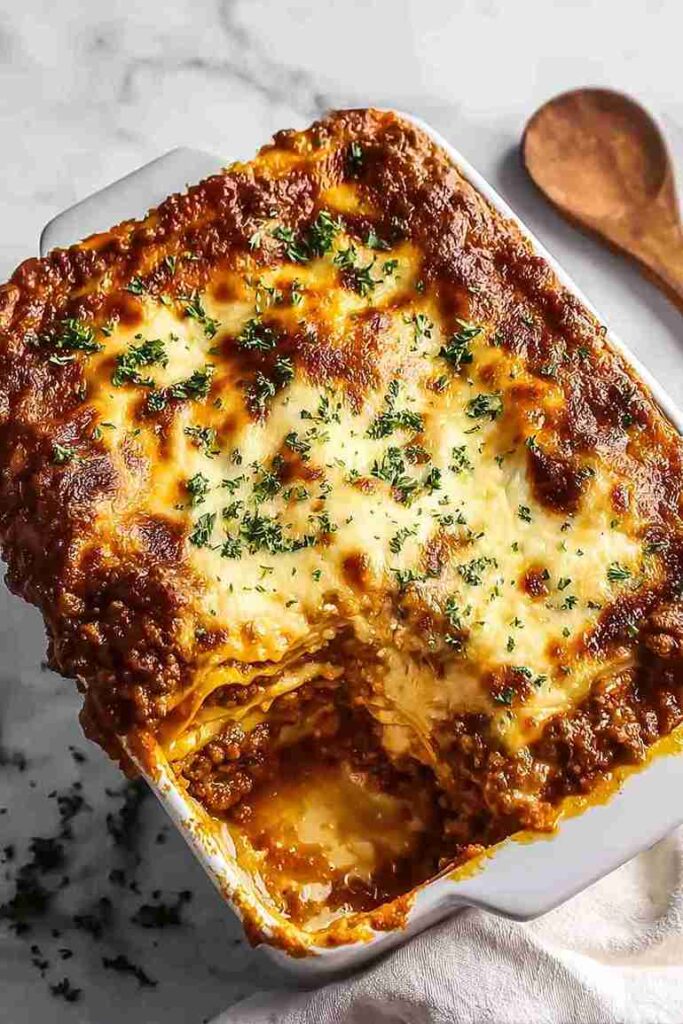
If you ask me, beef lasagna is comfort food at its finest.
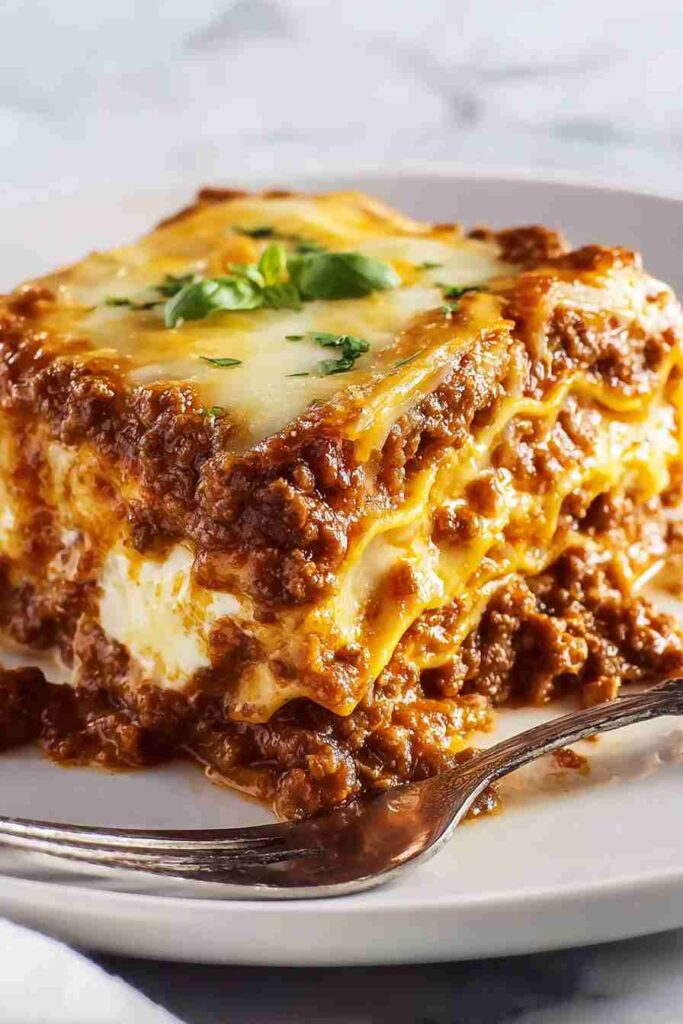
This hearty Italian-inspired dish makes a satisfying family dinner that’s packed with rich flavors and melted cheese. Tender ground beef and tangy marinara sauce layer perfectly with creamy ricotta and mozzarella.
It’s baked until bubbly with sheets of pasta that soak up all those savory juices. Fresh herbs and a golden cheese top help the whole thing come together.
It’s a crowd-pleasing meal that fills everyone up, perfect for Sunday dinners or feeding a hungry bunch.

Why You’ll Love This Beef Lasagna
- Rich, meaty flavor – The combination of Italian sausage and ground beef creates a hearty, satisfying sauce that’s packed with flavor in every bite.
- Fresh ingredients make a difference – Using fresh basil, parsley, and freshly grated cheeses gives this lasagna a homemade taste that beats any store-bought version.
- Perfect for feeding a crowd – This recipe makes a full pan that easily serves 8-10 people, making it ideal for family dinners, potlucks, or meal prep for the week.
- Oven-ready noodles save time – No need to boil noodles separately – these cook perfectly right in the casserole, making assembly much easier.
- Freezer-friendly comfort food – You can make this ahead and freeze it, or freeze leftovers for those busy nights when you need a quick, satisfying dinner.
What Kind of Ground Beef Should I Use?
For lasagna, you’ll want to go with extra lean ground beef, which is typically 90/10 or 93/7 lean-to-fat ratio. This helps prevent your lasagna from becoming greasy since you’re already getting plenty of fat from the Italian sausage and cheese. Regular ground beef with higher fat content can make your dish too oily and cause the layers to slide around. If you can only find regular ground beef, just drain it really well after browning and maybe even pat it with paper towels to remove excess grease. The leaner meat will give you a cleaner flavor that lets the herbs and cheese shine through.
Options for Substitutions
This lasagna recipe is pretty forgiving when it comes to swaps – here are some options that work well:
- Italian sausage: You can replace the sausage with more ground beef, ground turkey, or even ground chicken. If you go this route, add an extra ½ teaspoon of fennel seeds and Italian seasoning to make up for the lost flavor.
- Ground beef: Ground turkey or ground chicken work great here too. Since they’re leaner, you might need to add a tablespoon of olive oil to the pan to prevent sticking.
- Fresh mozzarella: Regular shredded mozzarella from the store works just fine and is often easier to work with. You can also use a blend of Italian cheeses if that’s what you have on hand.
- Ricotta cheese: Cottage cheese can work as a substitute – just drain it well and maybe give it a quick blend to smooth it out a bit.
- Oven-ready lasagna noodles: Regular lasagna noodles work too, but you’ll need to boil them first according to package directions. Don’t skip this step or your lasagna will be crunchy!
- Fresh herbs: If you don’t have fresh basil or parsley, use about 1 teaspoon dried basil and 2 teaspoons dried parsley instead. Add them to the meat sauce while it’s cooking.
Watch Out for These Mistakes While Cooking
The biggest mistake people make with beef lasagna is not draining the grease properly after browning the meat, which can leave you with a greasy, unappetizing dish – make sure to drain off excess fat before adding your tomatoes and sauce. Another common error is skipping the resting time after baking, but letting your lasagna sit for 15-20 minutes allows the layers to set and makes slicing much cleaner and easier. Don’t forget to cover your lasagna with foil for the first part of baking to prevent the cheese from browning too quickly, then remove it for the last 15 minutes to get that perfect golden top. Finally, if you’re using regular lasagna noodles instead of oven-ready ones, make sure they’re cooked just shy of al dente since they’ll continue cooking in the oven and can become mushy if overdone.
What to Serve With Beef Lasagna?
A crisp Caesar salad is my go-to side for beef lasagna since the fresh lettuce and tangy dressing cut through all that rich cheese and meat sauce perfectly. Garlic bread is another must-have – you’ll want something to soak up any extra sauce on your plate, and the buttery, garlicky flavor pairs so well with the Italian herbs in the lasagna. A simple side of roasted vegetables like zucchini, bell peppers, or broccoli adds some color and lightness to balance out this hearty dish. For wine lovers, a medium-bodied red like Chianti or Sangiovese complements the tomato sauce and herbs beautifully.
Storage Instructions
Refrigerate: Leftover beef lasagna keeps really well in the fridge for up to 4 days when covered tightly with foil or plastic wrap. I actually think it tastes even better the next day because all those flavors have time to meld together. Cut it into individual portions before storing to make reheating easier.
Freeze: This lasagna is perfect for freezing! You can freeze the whole pan (wrapped well in plastic wrap and foil) for up to 3 months, or cut it into portions and freeze individually for quick weeknight dinners. If you’re planning to freeze it, I like to slightly undercook it by about 10 minutes so it doesn’t get mushy when reheated.
Reheat: To warm up refrigerated lasagna, cover with foil and bake at 350°F for about 20-30 minutes until heated through. For frozen portions, thaw overnight in the fridge first, then reheat the same way. Individual slices reheat great in the microwave too – just cover with a damp paper towel and heat in 30-second intervals.
| Preparation Time | 20-30 minutes |
| Cooking Time | 100-110 minutes |
| Total Time | 120-140 minutes |
| Level of Difficulty | Medium |
Estimated Nutrition
Estimated nutrition for the whole recipe (without optional ingredients):
- Calories: 4100-4400
- Protein: 260-280 g
- Fat: 220-240 g
- Carbohydrates: 260-290 g
Ingredients
For the meat sauce:
- 1 tbsp sugar
- 1 can tomato paste
- 1/2 tsp salt (or more to taste)
- 8 oz tomato sauce
- 1 tbsp Italian seasoning
- 1/4 cup fresh parsley (finely chopped)
- 4 basil leaves (freshly chopped for better flavor)
- 1 small onion (finely chopped, about 1/2 cup)
- 1 can crushed tomatoes (I use San Marzano)
- 3 garlic cloves (freshly minced)
- 1/2 cup water (if needed to adjust consistency)
- 1 lb Italian sausage (casings removed, mild or spicy)
- 1/2 tsp black pepper (or more to taste)
- 3/4 lb extra-lean ground beef
- 1/2 tsp fennel seeds
For the cheese filling:
- 16 oz ricotta cheese
- 2 tbsp fresh parsley (finely chopped)
- 1 large egg (room temperature)
For assembling:
- 1 cup Parmesan cheese (freshly grated for best melting)
- 1 lb mozzarella cheese (freshly shredded, not pre-shredded)
- 12 oven-ready lasagna noodles
Step 1: Prepare Mise en Place and Build the Meat Sauce Base
- 1 lb Italian sausage
- 3/4 lb extra-lean ground beef
- 1 small onion
- 3 garlic cloves
- 4 basil leaves
- 1/4 cup fresh parsley
Begin by preparing all your ingredients so cooking flows smoothly.
Finely chop the onion and mince the garlic cloves; set them aside.
Chop the fresh basil and parsley for the sauce, keeping them separate from the parsley that goes in the ricotta mixture.
Remove the casings from the Italian sausage and break it into small pieces.
In a large, heavy-bottomed pot or Dutch oven over medium-high heat, add the sausage and ground beef.
Cook for 8-10 minutes, breaking the meat apart with a wooden spoon as it browns, until no pink remains.
I like to render out the fat from the sausage first before adding other ingredients—it gives the sauce incredible depth.
Add the chopped onion and garlic, stirring continuously for about 2 minutes until fragrant and the onion begins to soften.
Step 2: Simmer the Sauce to Develop Flavor
- browned meat mixture from Step 1
- 1 can crushed tomatoes
- 1 can tomato paste
- 8 oz tomato sauce
- 1/2 cup water
- 1 tbsp sugar
- 1/2 tsp fennel seeds
- 1 tbsp Italian seasoning
- 1/2 tsp salt
- 1/2 tsp black pepper
Stir in the crushed tomatoes, tomato paste, and tomato sauce, breaking up any lumps in the paste to ensure even distribution.
Add the sugar (which balances acidity), fennel seeds, Italian seasoning, salt, and pepper.
Stir well to combine all ingredients, then reduce heat to low and cover the pot.
Simmer gently for 1.5 hours, stirring occasionally to prevent sticking and ensure even cooking.
The long simmer allows the flavors to meld and deepen—this is where the lasagna gets its soul.
If the sauce becomes too thick during simmering, add water a little at a time to reach a consistency that’s thick but still pourable.
Taste near the end of cooking and adjust seasonings as needed.
Step 3: Prepare the Ricotta Mixture and Preheat the Oven
- 16 oz ricotta cheese
- 1 large egg
- 2 tbsp fresh parsley
While the sauce simmers (around the 30-minute mark), prepare the cheese filling.
In a medium bowl, combine the ricotta cheese, room-temperature egg, and finely chopped fresh parsley.
Mix gently with a fork until just combined—don’t overmix, as this keeps the ricotta light and fluffy.
Season lightly with a pinch of salt and pepper.
Set aside at room temperature.
Preheat your oven to 375°F (190°C) so it reaches temperature by the time you’re ready to assemble.
Have your mozzarella freshly shredded and Parmesan freshly grated nearby—freshly grated cheeses melt much more smoothly than pre-shredded varieties, which contain anti-caking agents.
Step 4: Assemble the Lasagna in Layers
- meat sauce from Step 2
- 12 oven-ready lasagna noodles
- ricotta mixture from Step 3
- 1 lb mozzarella cheese
- 1 cup Parmesan cheese
Once the meat sauce has finished simmering and the oven is preheated, begin assembling.
Spread 1.5 cups of meat sauce from Step 2 over the bottom of a 9×13-inch baking dish.
Layer 4 oven-ready noodles directly over the sauce (they’ll soften as it bakes).
Spread half of the ricotta mixture from Step 3 over the noodles in an even layer.
Sprinkle 1/3 of the shredded mozzarella over the ricotta.
Pour 1.5 cups more meat sauce over the mozzarella, then sprinkle with 1/4 cup of the Parmesan.
Repeat this layering: 4 noodles, remaining ricotta mixture, another 1/3 of the mozzarella, 1.5 cups meat sauce, and 1/4 cup Parmesan.
Finally, top with the last 4 noodles, the remaining meat sauce (roughly 1.5 cups), the remaining mozzarella, and the final 1/4 cup Parmesan.
This structured layering ensures every bite has all the elements in proper proportion.
Step 5: Bake Covered and Uncovered for Proper Texture
Cover the assembled lasagna tightly with aluminum foil, making sure it seals well around the edges.
This traps steam and allows the noodles to cook through while the sauce heats.
Bake for 25 minutes.
After 25 minutes, carefully remove the foil—watch out for the steam that escapes—and bake uncovered for another 25 minutes.
The second baking phase allows the top cheeses to brown and develop a light golden crust, creating that signature textured top we love in lasagna.
The cheese should be bubbling at the edges and lightly browned on top when done.
Step 6: Rest and Serve
Remove the lasagna from the oven and let it rest for 15 minutes before cutting and serving.
This resting period is crucial—it allows the layers to set so each slice holds together neatly rather than falling apart.
The residual heat also continues to gently cook everything through.
Use a sharp knife to cut clean portions, and serve while still warm.