I didn’t grow up eating German potato soup, but the first time I tried it at a little restaurant in Milwaukee, I knew I had to figure out how to make it at home. There’s something about the combination of creamy broth, tender potatoes, and those fluffy dumplings that just feels like a warm hug on a cold day.
The dumplings are what really make this soup special. They’re not hard to make—just a simple dough that you drop by spoonfuls into the simmering soup—but they turn a regular potato soup into something your family will ask for again and again. My kids actually get excited when they see me pulling out the ingredients for this one, which is saying something since getting them excited about soup is usually a tough sell.
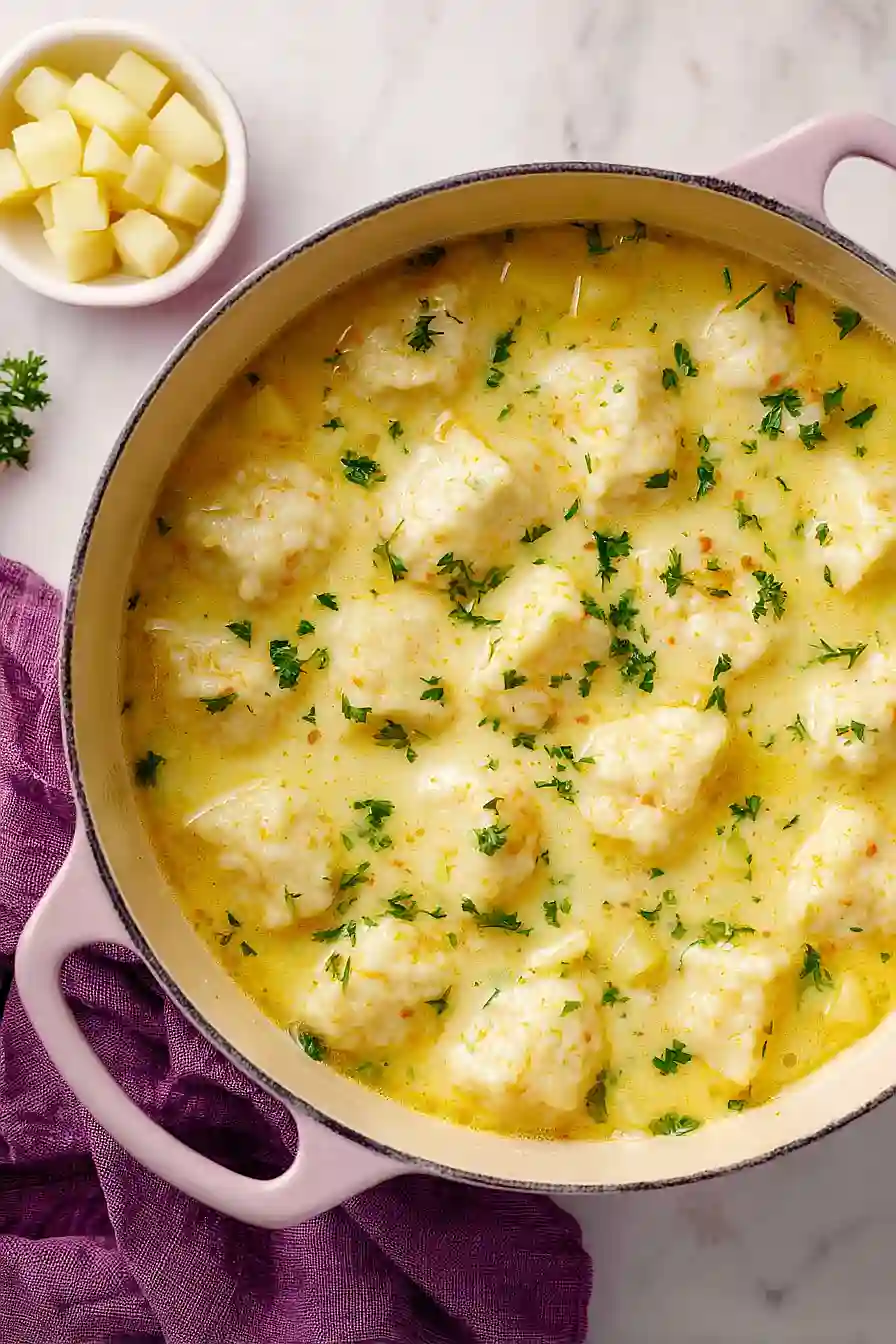
Why You’ll Love This German Potato Soup
- Cozy, filling comfort food – This creamy potato soup with fluffy dumplings is the kind of meal that warms you up from the inside out, perfect for chilly days or when you need something satisfying.
- Homemade dumplings – Making dumplings from scratch is easier than you think, and they add a special touch that makes this soup feel like a big hug in a bowl.
- Bacon adds amazing flavor – The crispy bacon brings a smoky, savory depth to the soup that makes every spoonful taste incredible.
- One-pot meal – Everything cooks together in one pot, making cleanup a breeze while you get a complete, hearty dinner.
- Great for meal prep – This soup keeps well in the fridge and tastes even better the next day, so you can enjoy leftovers all week long.
What Kind of Potatoes Should I Use?
For German potato soup, you’ll want to reach for Yukon Gold or russet potatoes. Yukon Golds are my go-to because they have a naturally creamy texture and hold their shape nicely in soup, plus they add a slightly buttery flavor that works great with the bacon and cream. Russets are a solid choice too – they’ll break down a bit more as they cook, which actually helps thicken the soup and gives it that hearty, comforting consistency. Whatever you choose, just make sure to peel and cube them into similar-sized pieces so they cook evenly. If you’re short on time, you can even leave the peels on Yukon Golds for a more rustic soup with extra nutrients.
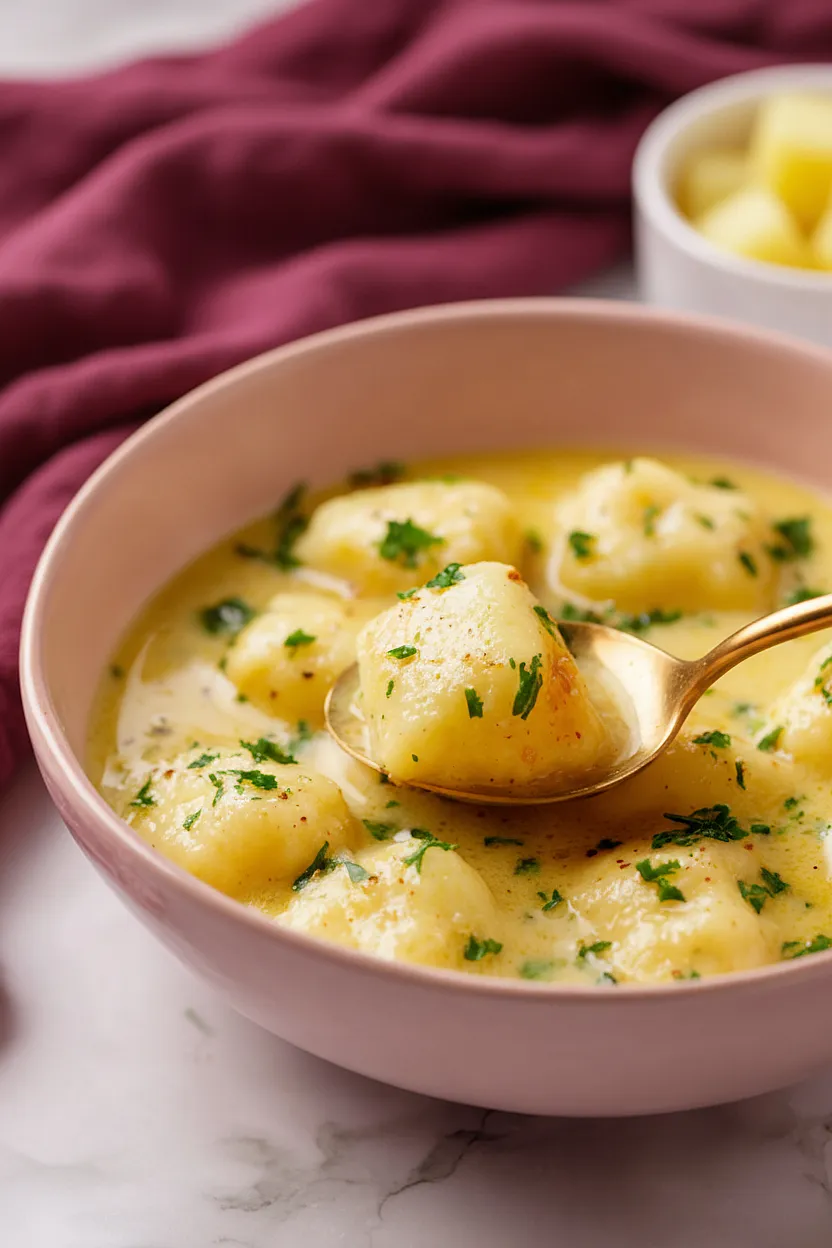
Options for Substitutions
This comforting soup is pretty forgiving when it comes to swaps:
- Bacon: If you’re out of bacon, you can use diced ham or pancetta instead. For a vegetarian version, skip the meat entirely and add a teaspoon of smoked paprika to get that smoky flavor.
- Chicken broth: Vegetable broth works just fine here if you’re going meatless. You can also use beef broth, though it’ll give the soup a darker color and richer taste.
- Potatoes: Russet, Yukon gold, or red potatoes all work well. Just keep in mind that russets will break down more and make the soup thicker, while waxy potatoes like reds will hold their shape better.
- Heavy cream: You can use half-and-half for a lighter soup, or whole milk if that’s what you have. For a dairy-free option, try coconut cream or cashew cream.
- Fresh herbs for dumplings: Don’t have fresh parsley, dill, or thyme? Dried herbs work too – just use about 1/3 of the amount called for since dried herbs are more concentrated.
- Milk for dumplings: Any milk works here – dairy, almond, oat, or soy. You can even use buttermilk for extra fluffy dumplings.
Watch Out for These Mistakes While Cooking
The biggest mistake when making this soup is adding dumplings to boiling broth, which causes them to fall apart and turn gummy – keep your soup at a gentle simmer between 180°F-205°F and drop the dumplings in one at a time so they don’t stick together.
Another common error is overcooking the flour roux in step 5, so stir constantly for those 2 minutes and stop before it browns too much, or your soup will taste bitter instead of rich and creamy.
Don’t skip cutting your potatoes into similar-sized pieces (about 1-inch cubes work best), as uneven chunks mean some will be mushy while others stay hard.
Finally, add the cream at the very end after removing from high heat to prevent it from curdling, and if you’re reheating leftovers, warm the soup gently on low heat for the same reason.

What to Serve With German Potato Soup?
This hearty soup is pretty filling on its own thanks to those dumplings, but I love serving it with a simple side salad dressed with a tangy vinaigrette to cut through all that richness. A basket of warm pretzel rolls or crusty rye bread is perfect for soaking up the creamy broth, and honestly, that’s all you really need for a complete meal. If you want to make it more of a spread, some pickled vegetables like sauerkraut or pickled cucumbers add a nice acidic contrast that really complements the bacon and cream. For a lighter option, steamed green beans or roasted Brussels sprouts work well alongside this comforting bowl of soup.
Storage Instructions
Store: Keep your German potato soup in an airtight container in the fridge for up to 4 days. I like to store the dumplings separately if I can, since they tend to soak up a lot of liquid and can get a bit mushy sitting in the soup. If you’ve already combined them, no worries – it still tastes great, just with softer dumplings.
Freeze: The soup base freezes really well for up to 3 months, but I’d recommend leaving out the dumplings if you’re planning to freeze it. Make fresh dumplings when you’re ready to serve, or freeze them separately on a baking sheet first, then transfer to a freezer bag once solid.
Reheat: Warm the soup gently on the stovetop over medium-low heat, stirring occasionally so the cream doesn’t separate. If it seems too thick after storing, just add a splash of chicken broth or milk to thin it out. For frozen soup, thaw it overnight in the fridge before reheating.
| Preparation Time | 30-40 minutes |
| Cooking Time | 25-35 minutes |
| Total Time | 55-75 minutes |
| Level of Difficulty | Medium |
| Servings | 8 servings |
Estimated Nutrition
Estimated nutrition for the whole recipe (without optional ingredients):
- Calories: 4000-4400
- Protein: 100-120 g
- Fat: 200-230 g
- Carbohydrates: 440-480 g
Ingredients
For the soup base:
- 10 oz bacon (chopped into 1/2-inch pieces)
- 3 tbsp butter (I prefer Kerrygold for a richer flavor)
- 1 cup onions
- 1 cup carrots
- 1/2 cup celery
- 2 garlic cloves
- 1/2 cup flour
- 2 bay leaves
- 8 cups chicken broth (I use Swanson Less Sodium for better salt control)
- 2 lb potatoes (peeled and cut into 1/2-inch cubes)
- 1 cup cream (room temperature to prevent curdling)
- 1/4 tsp nutmeg
- salt
- pepper
For the dumplings:
- 3 cups flour (I always use King Arthur all-purpose flour)
- 2 tsp baking powder
- 1 1/4 tsp salt
- 1 1/2 tsp dried parsley
- 1 1/2 tsp dried dill
- 1 1/2 tsp dried thyme
- 1 cup milk
- 1 egg (lightly beaten before adding)
Step 1: Render Bacon and Build the Soup Base
- 10 oz bacon
- 3 tbsp butter
- 1 cup onions
- 1 cup carrots
- 1/2 cup celery
- 2 garlic cloves
Chop the bacon into 1/2-inch pieces and cook in a large pot over medium heat until crispy, about 8-10 minutes, stirring occasionally.
Remove the bacon with a slotted spoon and set aside, leaving about 3 tablespoons of rendered fat in the pot.
Add the butter to the fat and let it melt, then add the diced onions, carrots, and celery.
Sauté for 3-4 minutes until the vegetables begin to soften.
Add the minced garlic and cook for another 30 seconds until fragrant.
Step 2: Create the Roux and Build Soup Body
- 1/2 cup flour
- 8 cups chicken broth
- 2 bay leaves
- 2 lb potatoes
Sprinkle the 1/2 cup flour over the sautéed vegetables and stir constantly for about 2 minutes, allowing the flour to cook into the fat and develop a nutty flavor—this creates a roux that will thicken the soup.
Pour in the chicken broth slowly while stirring to avoid lumps, then add the bay leaves and the peeled, cubed potatoes.
Bring the soup to a boil, then reduce the heat to low and simmer for 20-30 minutes until the potatoes are completely tender and easily pierced with a fork.
Step 3: Prepare the Dumpling Dough
- 3 cups flour
- 2 tsp baking powder
- 1 1/4 tsp salt
- 1 1/2 tsp dried parsley
- 1 1/2 tsp dried dill
- 1 1/2 tsp dried thyme
- 1 egg
- 1 cup milk
While the soup simmers, combine 3 cups flour, baking powder, 1 1/4 tsp salt, dried parsley, dried dill, and dried thyme in a medium bowl.
In another bowl, lightly beat the egg, then stir it together with the milk.
Pour the wet ingredients into the dry ingredients and mix until a shaggy dough forms.
Knead the dough for about 5 minutes by hand until it becomes smooth and elastic.
I like to knead dumplings on a lightly floured surface—it helps prevent sticking without adding too much flour that would toughen them.
Step 4: Shape and Cook the Dumplings
- dumpling dough from Step 3
Roll out the dumpling dough on a lightly floured surface to about 1/2-inch thickness.
Using a sharp knife or bench scraper, cut the dough into 1/2-inch squares.
When the potatoes in the soup are tender, increase the heat so the soup reaches a gentle boil at around 180°F-205°F (you want a rolling simmer, not a vigorous boil).
Carefully add the dumplings to the hot broth one at a time, stirring gently to prevent them from sticking together.
Simmer for about 5 minutes until the dumplings float and are cooked through.
Step 5: Finish the Soup with Cream and Seasonings
- 1 cup cream
- 1/4 tsp nutmeg
- salt
- pepper
Reduce the heat to low and slowly stir in the room-temperature cream to prevent curdling—this is important since adding cold cream to hot soup can break it.
Season the soup with nutmeg, salt, and pepper to taste.
Remove the bay leaves with a spoon or tongs.
I use room-temperature cream because cold cream can shock the hot soup and cause the fat and milk solids to separate, which breaks the silky texture we’re aiming for.
Step 6: Serve with Crispy Bacon
- bacon from Step 1
Ladle the hot soup into bowls and top each serving with some of the reserved crispy bacon pieces.
Serve immediately while the soup is piping hot and the dumplings are still tender.

Traditional German Potato Soup with Dumplings
Ingredients
For the soup base::
- 10 oz bacon (chopped into 1/2-inch pieces)
- 3 tbsp butter (I prefer Kerrygold for a richer flavor)
- 1 cup onions
- 1 cup carrots
- 1/2 cup celery
- 2 garlic cloves
- 1/2 cup flour
- 2 bay leaves
- 8 cups chicken broth (I use Swanson Less Sodium for better salt control)
- 2 lb potatoes (peeled and cut into 1/2-inch cubes)
- 1 cup cream (room temperature to prevent curdling)
- 1/4 tsp nutmeg
- salt
- pepper
For the dumplings::
- 3 cups flour (I always use King Arthur all-purpose flour)
- 2 tsp baking powder
- 1 1/4 tsp salt
- 1 1/2 tsp dried parsley
- 1 1/2 tsp dried dill
- 1 1/2 tsp dried thyme
- 1 cup milk
- 1 egg (lightly beaten before adding)
Instructions
- Chop the bacon into 1/2-inch pieces and cook in a large pot over medium heat until crispy, about 8-10 minutes, stirring occasionally. Remove the bacon with a slotted spoon and set aside, leaving about 3 tablespoons of rendered fat in the pot. Add the butter to the fat and let it melt, then add the diced onions, carrots, and celery. Sauté for 3-4 minutes until the vegetables begin to soften. Add the minced garlic and cook for another 30 seconds until fragrant.
- Sprinkle the 1/2 cup flour over the sautéed vegetables and stir constantly for about 2 minutes, allowing the flour to cook into the fat and develop a nutty flavor—this creates a roux that will thicken the soup. Pour in the chicken broth slowly while stirring to avoid lumps, then add the bay leaves and the peeled, cubed potatoes. Bring the soup to a boil, then reduce the heat to low and simmer for 20-30 minutes until the potatoes are completely tender and easily pierced with a fork.
- While the soup simmers, combine 3 cups flour, baking powder, 1 1/4 tsp salt, dried parsley, dried dill, and dried thyme in a medium bowl. In another bowl, lightly beat the egg, then stir it together with the milk. Pour the wet ingredients into the dry ingredients and mix until a shaggy dough forms. Knead the dough for about 5 minutes by hand until it becomes smooth and elastic. I like to knead dumplings on a lightly floured surface—it helps prevent sticking without adding too much flour that would toughen them.
- Roll out the dumpling dough on a lightly floured surface to about 1/2-inch thickness. Using a sharp knife or bench scraper, cut the dough into 1/2-inch squares. When the potatoes in the soup are tender, increase the heat so the soup reaches a gentle boil at around 180°F-205°F (you want a rolling simmer, not a vigorous boil). Carefully add the dumplings to the hot broth one at a time, stirring gently to prevent them from sticking together. Simmer for about 5 minutes until the dumplings float and are cooked through.
- Reduce the heat to low and slowly stir in the room-temperature cream to prevent curdling—this is important since adding cold cream to hot soup can break it. Season the soup with nutmeg, salt, and pepper to taste. Remove the bay leaves with a spoon or tongs. I use room-temperature cream because cold cream can shock the hot soup and cause the fat and milk solids to separate, which breaks the silky texture we're aiming for.
- Ladle the hot soup into bowls and top each serving with some of the reserved crispy bacon pieces. Serve immediately while the soup is piping hot and the dumplings are still tender.